Straight Road to Timber Creek

UNADJUSTEDNONRAW_thumb_218.jpg

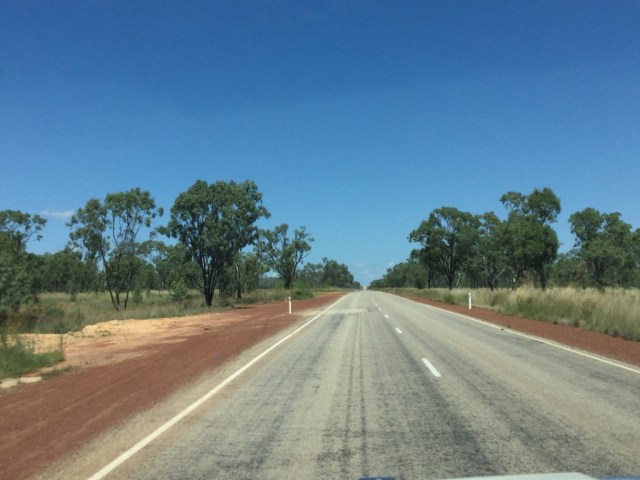
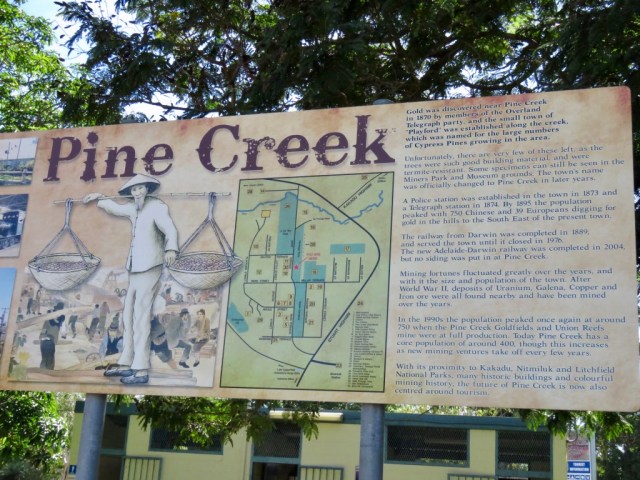
The endless blue skies and long straight road led us out of Darwin south towards Katherine.  First we stopped at Pine Creek, a small town with a historical past.  I was interested to see that at one time the Chinese well outnumbered the Europeans who were all there for the Gold Rush.
35+53liATrK7HJ2UPkqSig_thumb_1c3.jpg

Today it is a quiet town which services the tourist industry mainly. However, it is a good stopping point to take a small rest before conquering many more kilometres.
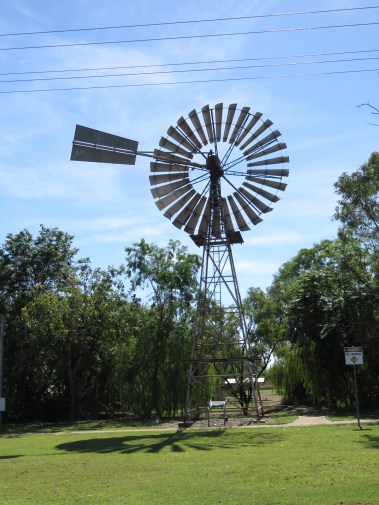
IMG_3203.JPG

The iconic windmill which was so common in the past and now is seen less often in favour of solar power.

The next stop was Victoria River Roadhouse which also has accommodation and where many keen fishermen make their base before setting off on the Victoria River for barramundi.  It was very hot, very dry and there were lots of flies, so I was keen to keep moving but not before we called in for a chat with the owners.  Someone has a great sense of humour – see below:

gqhi728WTtSqZWLnqL7qHg_thumb_1c5.jpg

UNADJUSTEDNONRAW_thumb_1ca.jpg

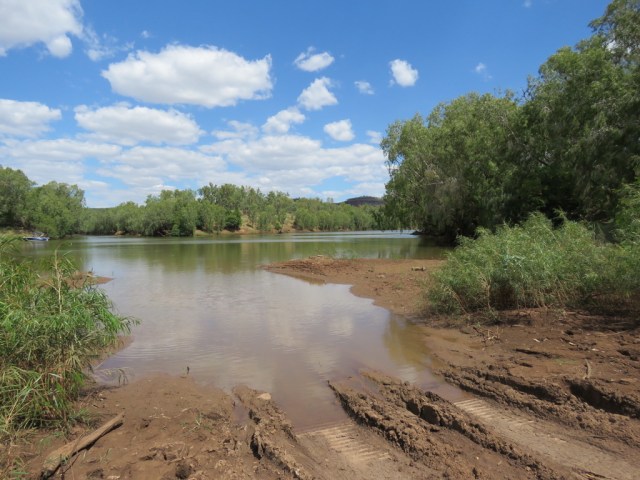
Crocodiles live here so no swimming and great care is taken to put boats in and out of the water.

D8%oZ8MRSLigOnVfnCivJQ_thumb_1c8.jpg

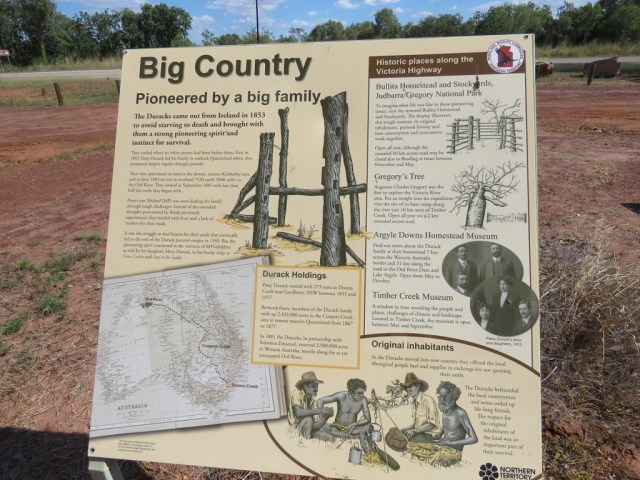
The road began to curve after this and the scenery started to change to hills and escarpments. A nice change from the flat terrain we had become accustomed to. Now we are in The Big Country and this is where the Durack Family made their mark by settling on leases in the Northern Territory and walking hundreds of cattle up here from Queensland.  Several books have been written about the family at this time – the most well known being “Kings in Grass Castles” by Mary Durack.
UNADJUSTEDNONRAW_thumb_1cd.jpg

Finally we arrived at Timber Creek after some 610km from Darwin. It was a relief to find the Hotel/Motel/Caravan Park and the big surprise was the amazing location.  In a dry, dusty landscape, this was a little oasis.

xwCKR4lIRaOtoZDYYaYcAw_thumb_1d5.jpg

UNADJUSTEDNONRAW_thumb_1d4.jpg

Lovely grassy areas where children could play and shady barbecue and picnic areas were dotted around all with the creek in the background.  8MECkBhQRf6lNkFEZH4Y6g_thumb_1f4.jpgOHnUrFO0SL2qqMlSA%2fdg_thumb_1f2.jpg

UNADJUSTEDNONRAW_thumb_1fb.jpg

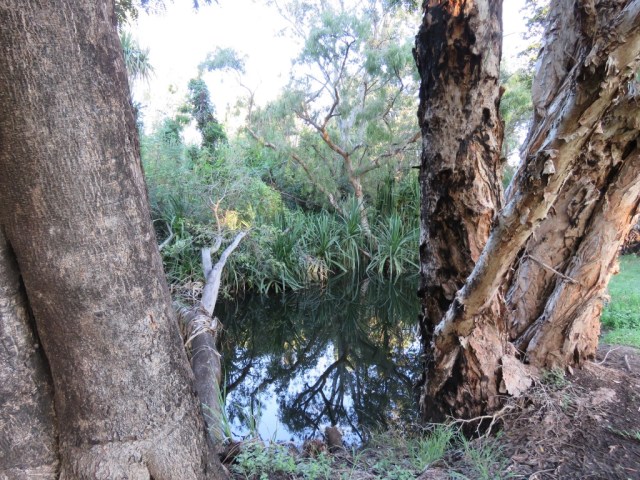
Huge timber trees along the creek edge obviously gave the place its name and the creek now has several resident freshwater crocodiles.  Wandering down to the water’s edge I was amazed to see quite a large croc just slowly surface from what seemed the calmest millpond.  There was absolutely no indication that the reptile was there!

UNADJUSTEDNONRAW_thumb_1d3.jpgDkiEgurOQwSHOmsHiNcj5g_thumb_201.jpg

Other residents of this gorgeous place are the fruit bats – of which we have lots in North Queensland and consider them a pest – however there are some people who think they are “cute”.

COQNBDOTTM+Rj4E0gMJgGg_thumb_1f8.jpg

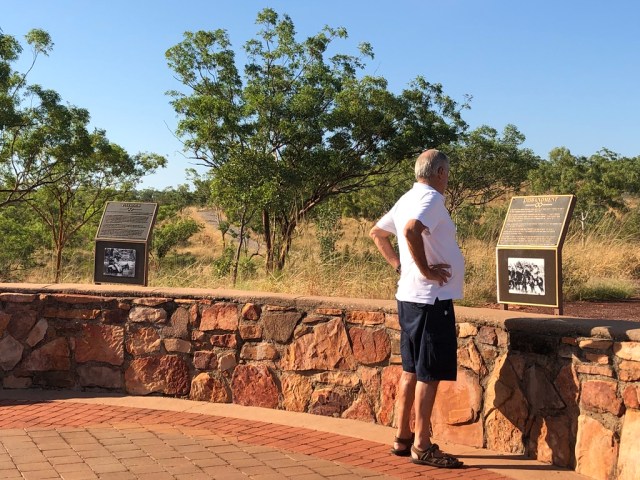
This morning we drove up to a lookout and learned the story of the “Nackeroos” – The North Australian Observation Unit (NAOU)  or “Curtin’s Cowboys” which was formed in March 1942 after  the bombing of Darwin and was made up of a group of soldiers and Aboriginal guides who patrolled Northern Australia looking for signs of enemy activity.  They operated in small groups and most of the patrols were on horseback. They lived in the harsh bush conditions and were aided by Aboriginal locals who had knowledge of the area. Their story is inspiring and a monument has been built to honour them.
UNADJUSTEDNONRAW_thumb_1d9.jpg

IMG_3670.jpg

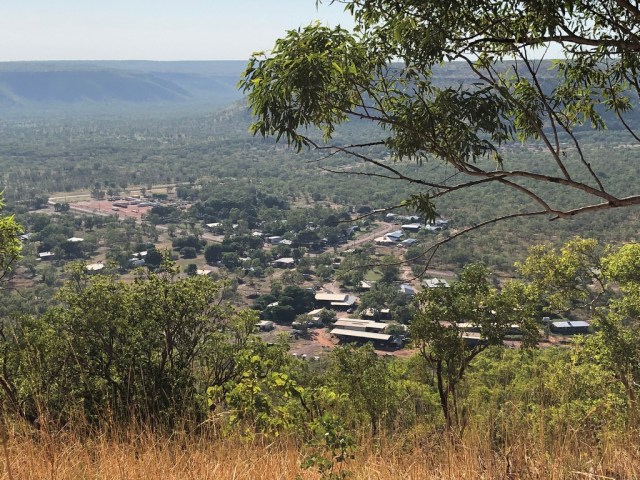
From this location is a great view of the town of Timber Creek and the Victoria River in the distance.
UNADJUSTEDNONRAW_thumb_1de.jpg

UNADJUSTEDNONRAW_thumb_1d8.jpg

Now it is on to Western Australia and Lake Argyle in the Kimberley – the road changes from here on!



The Road Leads to Darwin

Darwin, known as The Gateway to Northern Australia, is a lovely tropical city.  With so much history to devour, you really need several days here.  Then there are  the world famous markets, festivals, cafes and a thriving arts scene and yet things move at a slower pace than down south and I can’t help feeling this would be a great place to settle for a while.

QG2KVwDMTMiDRqtTot2Jwg_thumb_1a4.jpg

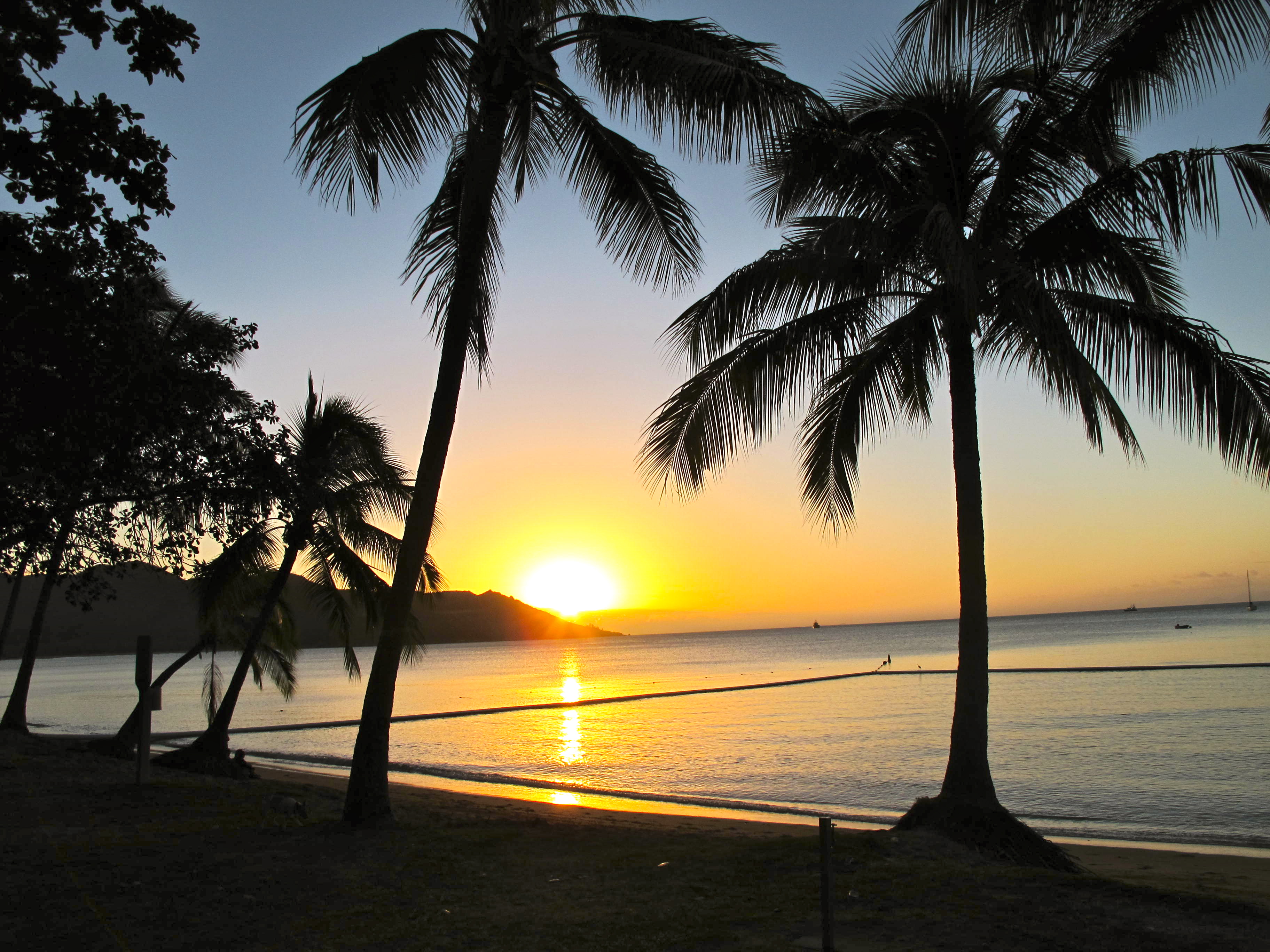
For a start there are fabulous sunsets and this one is from the balcony of a friend’s apartment very close to the city.  There don’t seem to be traffic problems and on a drive to the museum yesterday this is what we came across :

+9CcVvcXQby+BokdNCADMQ_thumb_185.jpg


FAe4PuxpQMuoSa0T%EUrSQ_thumb_186.jpg

Hardly what you expect to see in the middle of a city!

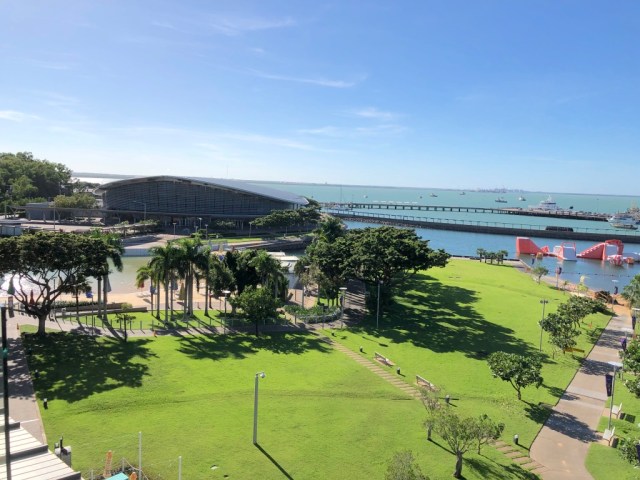
We walked along the Esplanade and came to The Waterfront area which is both residential and recreational with a big wave pool and swimming lagoon and a park for the kids.

UNADJUSTEDNONRAW_thumb_1a9.jpg

5pApV90HTUaOQTinrD%0%w_thumb_1aa.jpg

There are restaurants galore and we settled for a coffee before walking back – with the bonus of a lift to take us back up to the Esplanade thus avoiding the slog of walking up the hill in the heat!

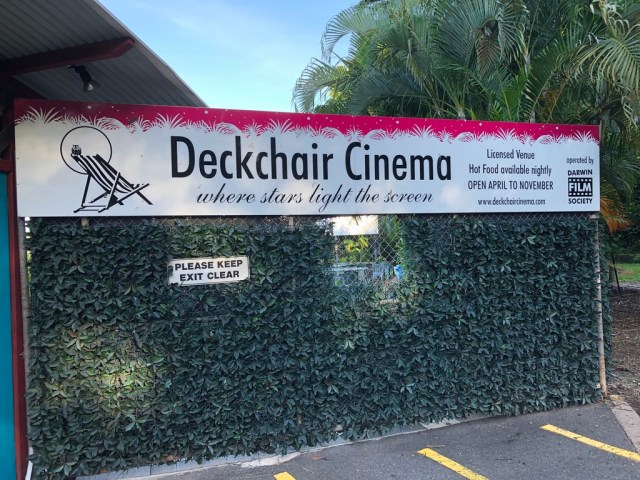
One activity the Darwinites love apparently is the Deckchair Cinema.  This is down by the water and screens films nightly with a bar and restaurant food available if you don’t want to bring a picnic. How tropical is that?!

UNADJUSTEDNONRAW_thumb_1a8.jpg

F0WgnzexRzGE8niBvbO7wA_thumb_1a3.jpg

Keen to see the MAGNT (Museum and Art Gallery Northern Territory) we drove through the attractive seaside suburb of Fannie Bay and past the Botanical Gardens to find the Northern Territory’s premier cultural organisation set in a scenic coastal location at Bullocky Point with a restaurant/cafe alongside with views over the bay. The museum features collections of art from the region as well as natural science, history and culture. There is a lot of local history and there is a huge exhibit featuring Cyclone Tracey which devastated the city on Christmas Eve in 1974.

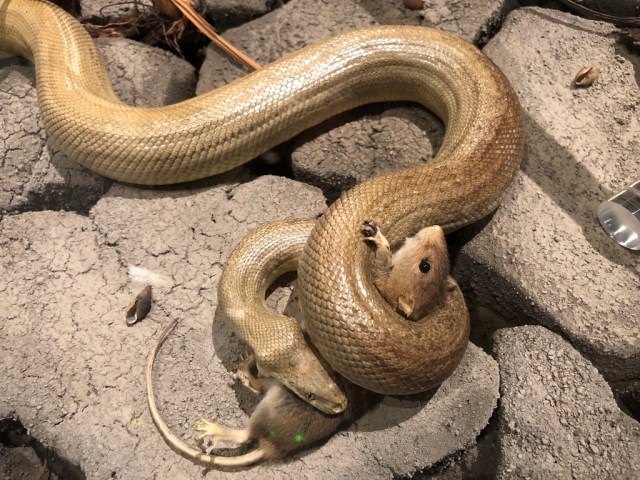
The collection of animals, insects, reptiles, shells and sea life is huge and it is all presented so well and the exhibits are so real that it is easy to imagine all this outside in the environment.

UNADJUSTEDNONRAW_thumb_1af.jpg

UNADJUSTEDNONRAW_thumb_1b0.jpg

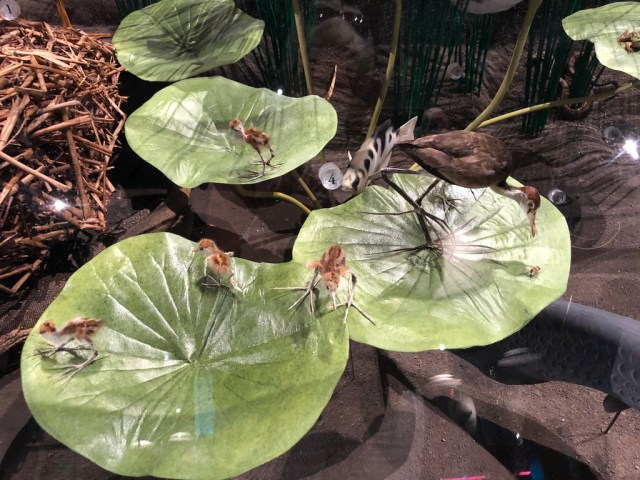
This is the little Jacana and babies – we saw several in Kakadu but they are shy and elusive so to be able to gaze upon these without missing anything is a real bonus.

IMG_3599


UNADJUSTEDNONRAW_thumb_1a5.jpg

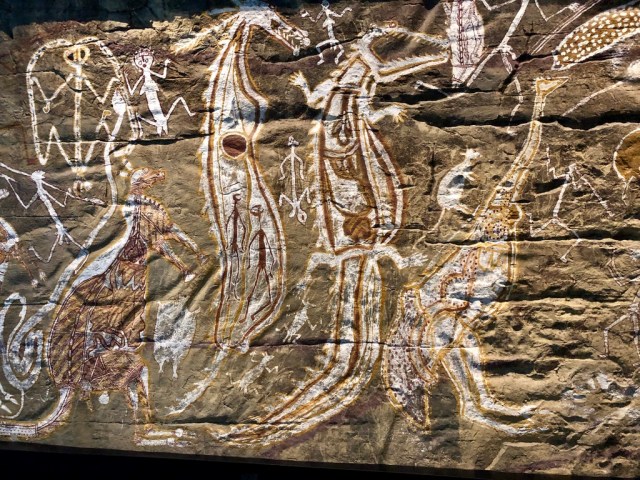
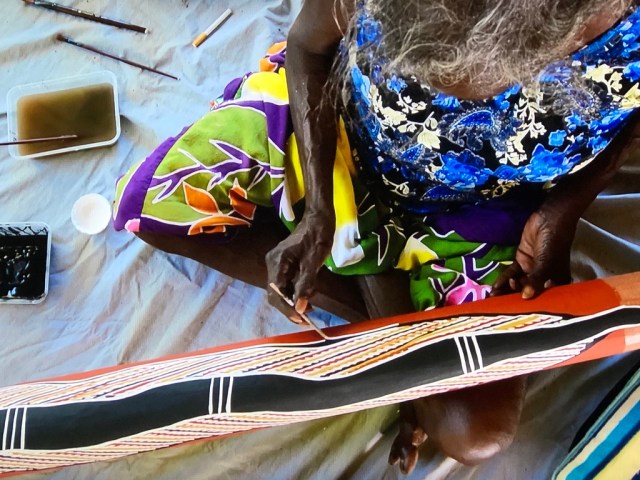
Some fascinating aboriginal art is presented along with comprehensive explanations and even a desert artist shows her skill with a paintbrush fashioned from the tail hair of a dog – her intricate and steady lines were quite amazing.  Her hand never faltered.

UNADJUSTEDNONRAW_thumb_1b3.jpg

One immersive exhibition tells the story of the didgeridoo – or yidaki as it is known here. It illustrates the importance of the instrument in Aboriginal life and culture and begins with exploring a stringybark forest to find the right tree and then carving the yidaki and finally experiencing the mesmerising power of the sounds.  The painting on the wood – as shown above – all has significance to the owner, the artist and the tribe.  I actually felt goosebumps at the end of the performance.

And for those who are fascinated by dinosaurs this prehistoric skeleton is that of a giant goose – something I am sure 6 year old Hamish would love to see!

UNADJUSTEDNONRAW_thumb_1ae.jpg

Tomorrow we will immerse ourselves in the era of World War 2 in Darwin and there is much to see and experience.

The Road is Straight – Mt. Isa to Katherine

UNADJUSTEDNONRAW_thumb_d9.jpg

Two days of roads like this – we are now in Katherine in the Northern Territory and I am more in awe than ever of the Road Train drivers.  The distances are immense and the landscape from Mt. Isa to Katherine rarely changes.  Just flat nothing and occasionally a few trees or scrub.  Some of the roads are unfenced which means cattle wander across at night and often get hit by a vehicle so dead animals line the side of the road, particularly from Tennant Creek to Katherine.

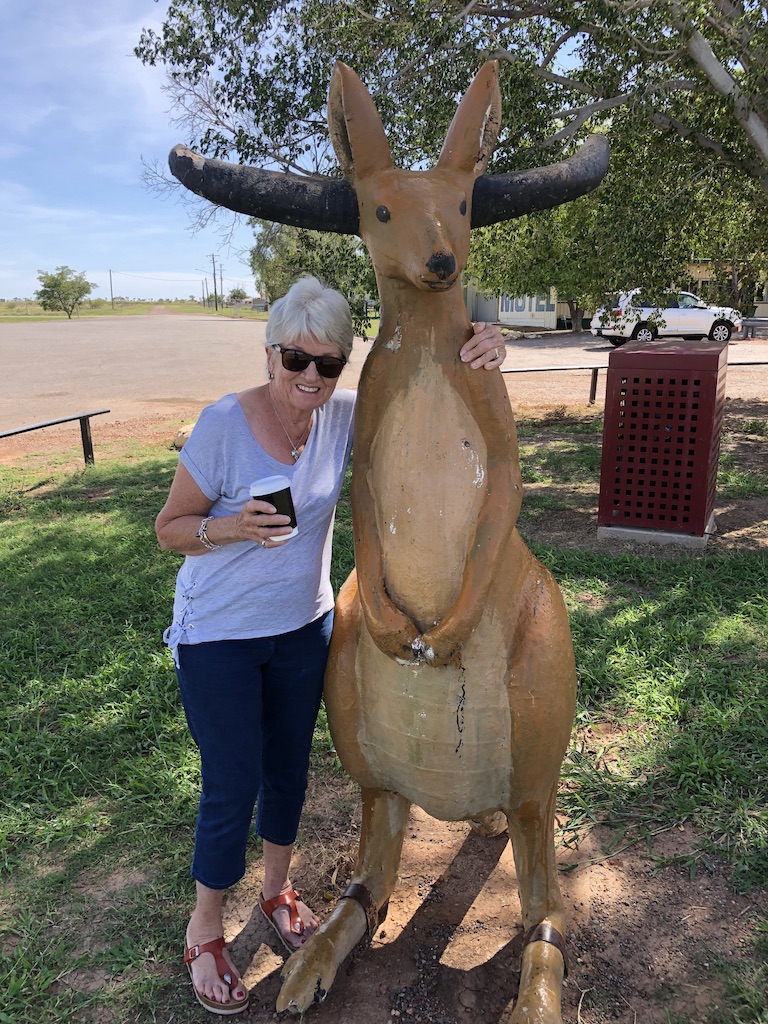
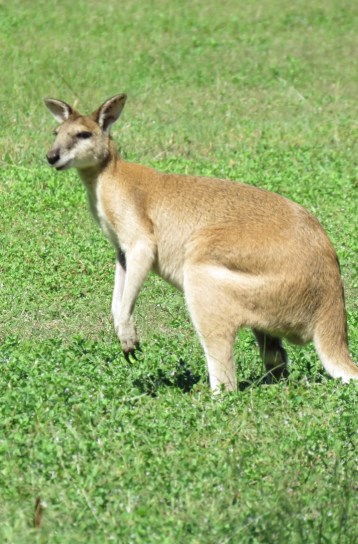
The border is just after Camooweal where we stopped for a quick coffee at the roadhouse and I met Skippy…….


UNADJUSTEDNONRAW_thumb_d3.jpg

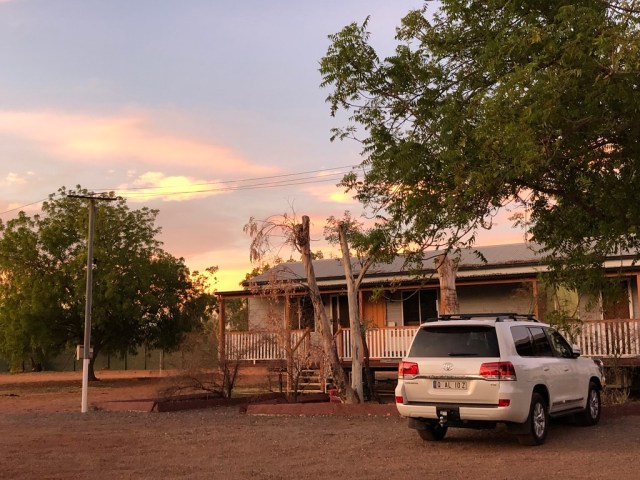
We decided to stay the night at Three Ways Roadhouse which meant we covered over 700km that day and this was a good choice.  We had a comfortable motel style room with air conditioning – essential as it was stinking hot and the flies were unbearable! One plus was the sunset – it was simply amazing and became more vivid as the minutes ticked by.

UNADJUSTEDNONRAW_thumb_d4.jpg

UNADJUSTEDNONRAW_thumb_d5.jpg

Dinner at the Roadhouse Bar was interesting meeting locals and a couple of truck drivers.  We were convinced we had made the right decision to stay here after numerous stories about Tennant Creek and the problems with crime which is rampant at the moment.

We set off bright and early and came across quite a few cattle grazing quietly.  I just had to stop at a waterhole and capture a young calf having a drink.

QVUJCR%JTS+HiNEAKDaRpQ_thumb_b8.jpg

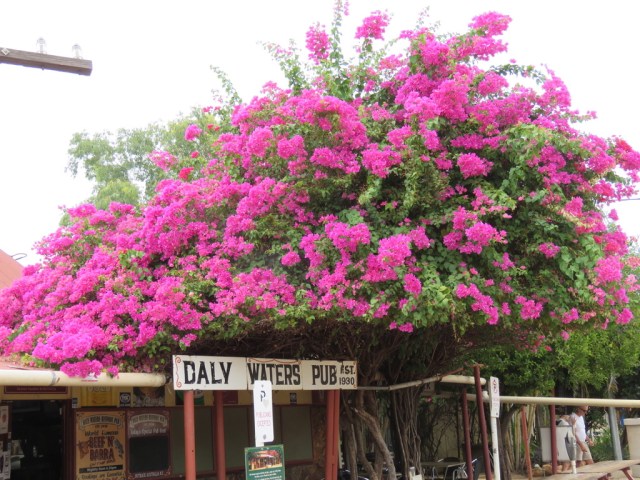
Then it was on to Katherine but not without a stop at the iconic Daly Waters Pub.

UNADJUSTEDNONRAW_thumb_bc.jpg

This has to be seen to be believed. The bar is draped with hundreds of bras in every size and colour.  The legend is that a coach driver had a bet with his female passengers and they decided to leave their mark – and the tradition has apparently continued!  The walls are lined with mementoes and outside the bark shed hang thousands of thongs!

HxDLV45FT0SzqV5HUrQKNw_thumb_bd.jpg

zdWFpbgeRcaBS5OtsOGvHA_thumb_be.jpg

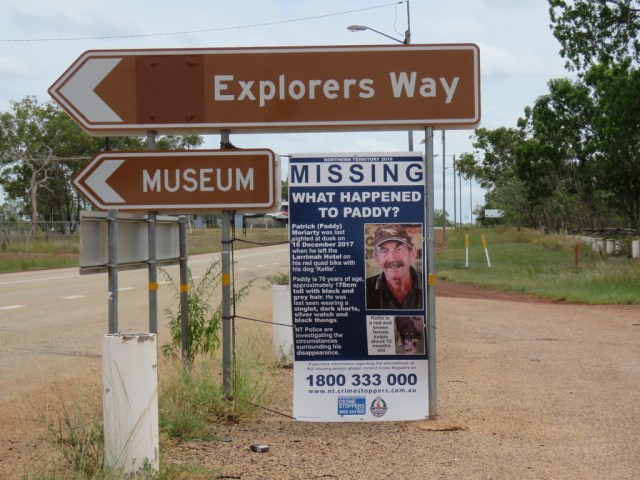
This area is famous for locals with attitude and many stories to tell.  Recently the country has been fascinated about the disappearance of a well liked local in Larrimah, just up the road from Daly Waters.  No body has been found, neither has his dog and lots of theories abound but so far no one has been charged with anything.  It seems this mystery will go on.  A popular Podcast throws light on the story and it seems people are still talking about Paddy and are still looking for him.  Of course, we had to stop and investigate for ourselves!

UNADJUSTEDNONRAW_thumb_c0.jpg

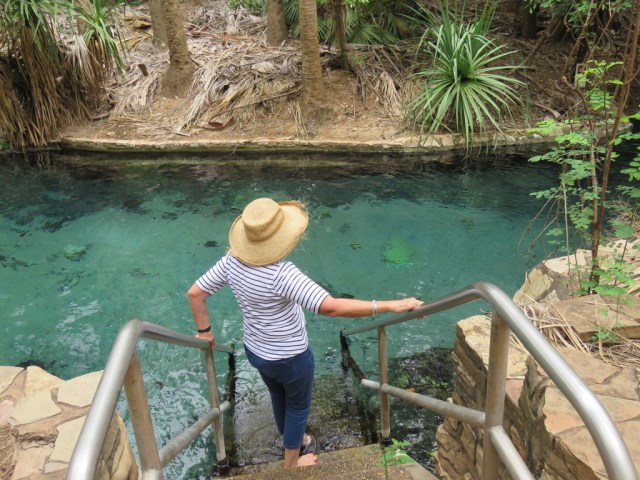
With that story firmly in our minds we drove on to Mataranka where the thermal Pool in the National Park is a constant 34C and flows from Rainbow Springs at an amazing 30.5million litres a day.

UNADJUSTEDNONRAW_thumb_c8.jpg

UNADJUSTEDNONRAW_thumb_ca.jpg

Mataranka is known as the “Capital of the Never Never” and was home to Aeneas and Jeannie Gunn at the turn of the century.  Jeannie wrote the book “We of the Never Never” which has become a classic and a film was made in 1981.  A replica of the homestead was made for the film and stands in the park today as a little museum.  I was fascinated by the history and constantly wonder how women coped with the hardships of the day dressed in all the flowing skirts and long sleeves which were expected of “ladies” .  I complained about the heat and flies today and I was wearing much lighter clothing.  It kind of puts things into perspective somewhat!

oMiRkSyRThO98odrNdvldg_thumb_c2.jpg


UNADJUSTEDNONRAW_thumb_c3.jpg

So now we are here in Katherine and tomorrow will visit the famous Nitmiluk Gorge.  There is a rich indigenous and pioneer history here so a visit to the cultural centre is planned as well as the art gallery.  First of all tonight we will see what dinner awaits – crocodile steaks perhaps?


A ROAD TRIP – THEN AND NOW

It has been almost three years since I wrote a blog – time has intervened in lots of ways and in spite of all my good intentions, the blog suffered even though we have made several wonderful trips since then. Intentions have been renewed and as we are about to embark on a huge road trip, I started to reflect on a similar one I made way back in 1969 – dare I say it “50 years ago”.

We will leave next week to drive to Darwin via Mt. Isa and then to Kakadu and on to the Kimberleys and the North West staying in places such as Lake Argyle, Derby, El Questro, Karijini National Park and down the coast to Perth, on to Albany and Esperance in the south west and then across the 1200 kms of the Nullarbor to South Australia, Adelaide and finally homeward bound through the bush. All this is anticipated to take about 7 weeks and quite a lot of forward planning has taken place.

In 1969, newly arrived from the UK, I was invited to make a trip from Perth to Darwin and down to Alice Springs and Ayers Rock. Of course I jumped at the chance, little knowing the hazards or what to expect. I had never even been in the bush before! I set off with a friend in an old Holden Panel Van with a roof rack on top holding gerry cans of fuel as well as our suitcases and water, our mattresses in the back along with food supplies and a stove. The road to Geraldton – some 400km – was sealed but the rest – all 11,300 km (or 7000 miles) was gravel or just plain red dirt. There were no fuel stops along the way after Geraldton.  I never paused to think about breakdowns or wrecked tyres……….

12-14-2013_3

The first time we needed to refuel I was told to get up on the roof, attach the hose to the gerry can and siphon the fuel down to the petrol tank.  Of course, I had never done this before and the result was a mouthful of fuel at the first attempt!

We drove many kilometres and stayed in remote bush clearings or on the coast and from time to time stayed on stations such as Fossil Downs, Frazier Downs and others near Derby and in the Gulf.  These were owned by friends of my friend and so I was lucky enough to experience life on huge stations – some larger than small countries in Europe. It was all mind boggling for a young 22 year old fresh from London and working for a film company.

Staying near Broome we visited the town often and got to know several locals.  I was fascinated by the story of the Japanese pearl divers and the influx of Asians all of whom seemed familiar to me after growing up in the Far East.  The children especially charmed me and we visited several schools and Missions all along the coast.

We had lots of adventures, staked a couple of tyres on lonely outback roads, met some fascinating people from the bush, learned a lot about Aboriginal folklore and The Dreamtime, appreciated the beauty of the rugged coastline and witnessed the birth of Kununurra and the Ord River project.  All these memories are imprinted on my mind and I wonder what I will feel revisiting some of these places.

When we arrived in Darwin we decided to go on to Alice Springs and Ayers Rock.  Tourists were not nearly as numerous then and at times we felt we had the place to ourselves.  The Resort was yet to be built and roads were very basic.  Back in Darwin we couldn’t face the long drive back so bought a couple of berths on the State Shipping Service ocean trader plying between Perth and Darwin

The ship was called the Koojarra and we spent ten days relaxing on the high seas with our trusty van in the hold! Calling in at various ports en route, we were able to go ashore and explore more of the coastal towns we had driven through just weeks before.

Koojarra

Now it is time to explore once again – but in a little more comfort this time and with many more facilities along the route including “glamping tents” and caravan parks.

Reflections on Magnetic Island and Times Past

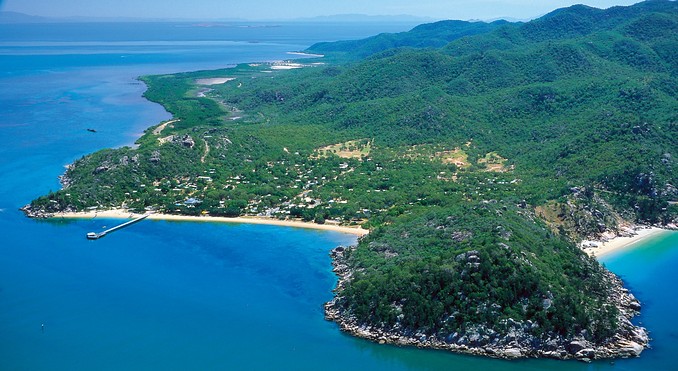
Magnetic Island is a jewel in North Queensland’s crown and I look forward to each weekend when we can take the ferry across the bay and completely relax in our little paradise.

 P1000159

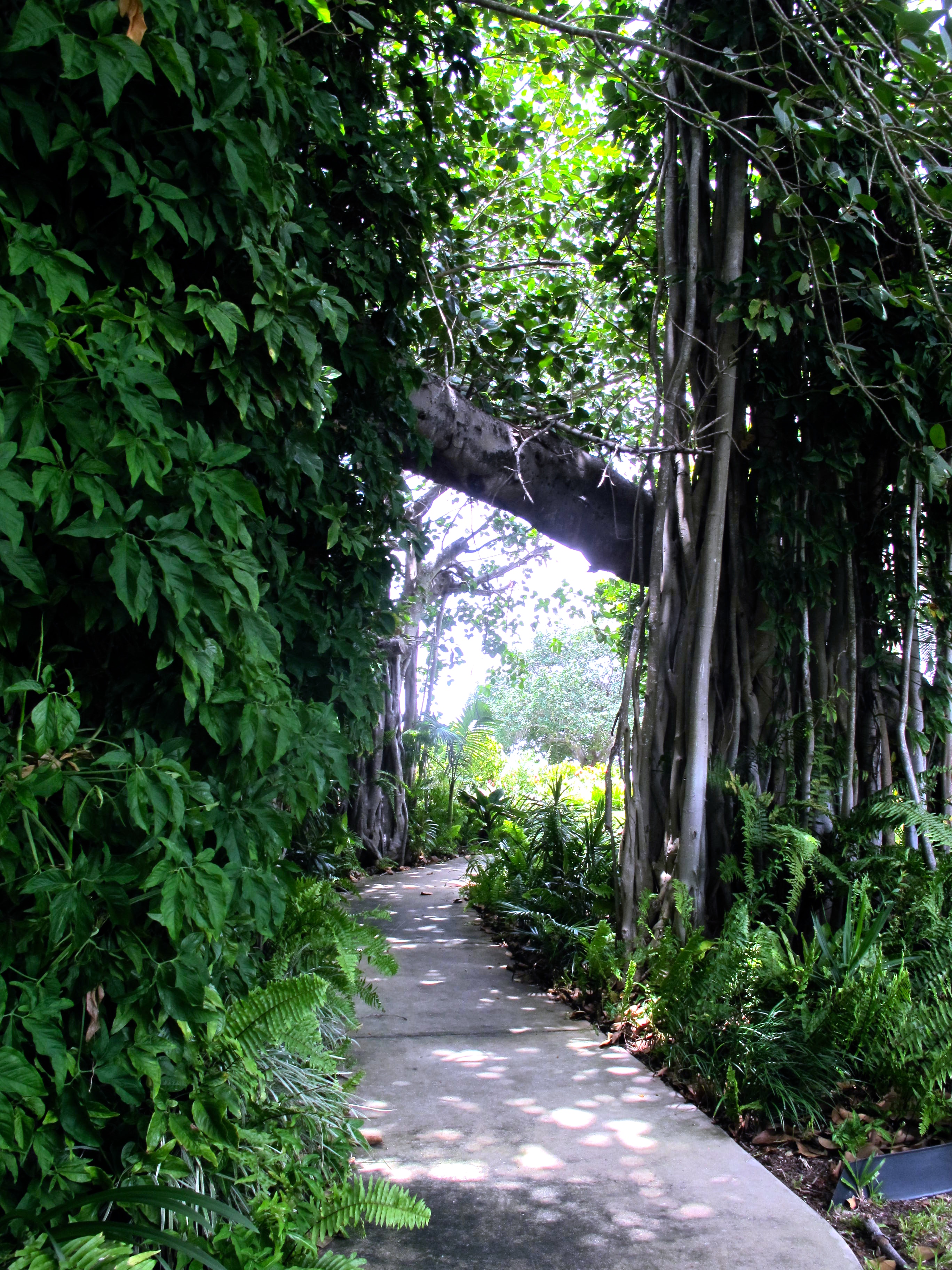
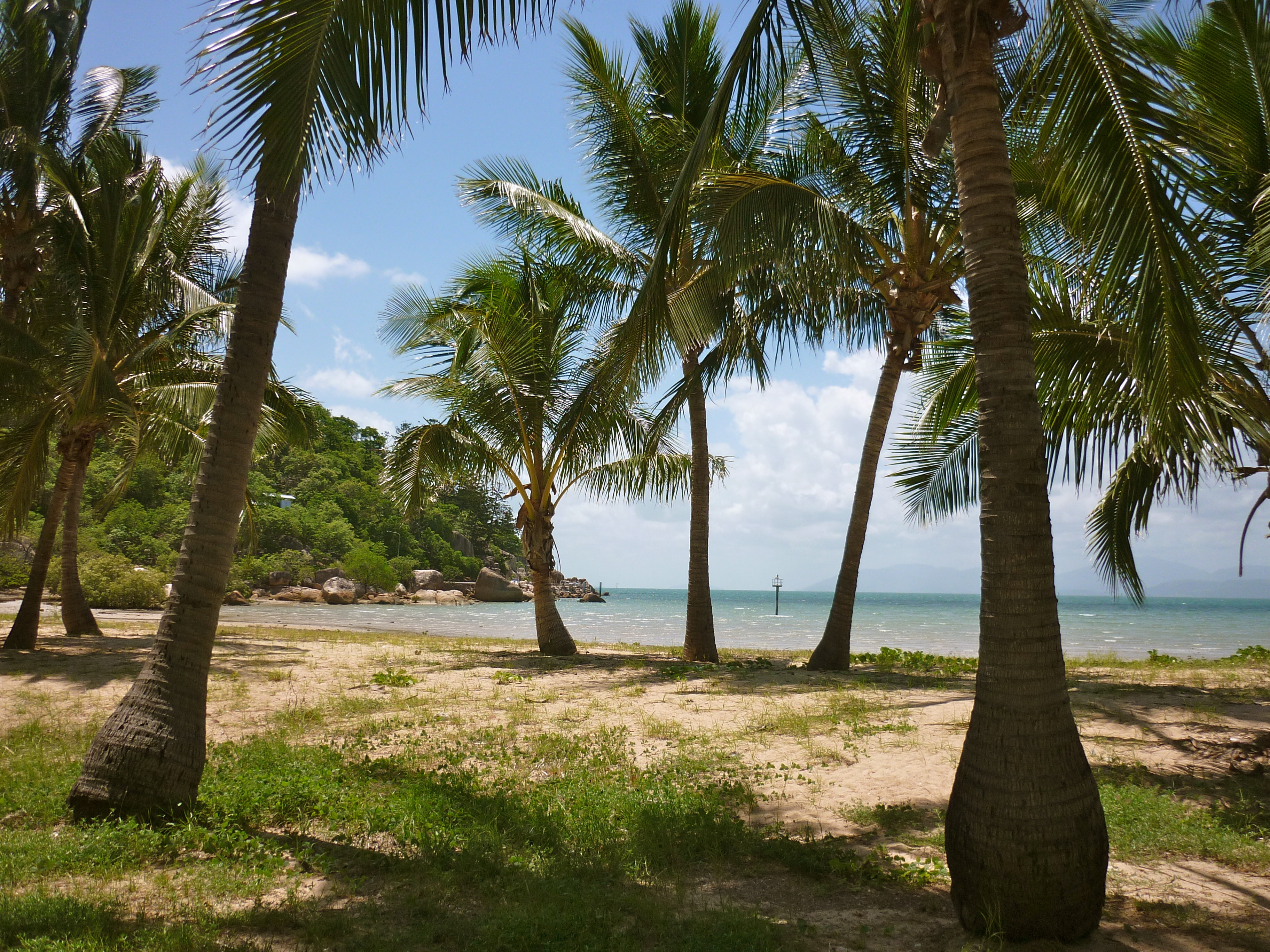
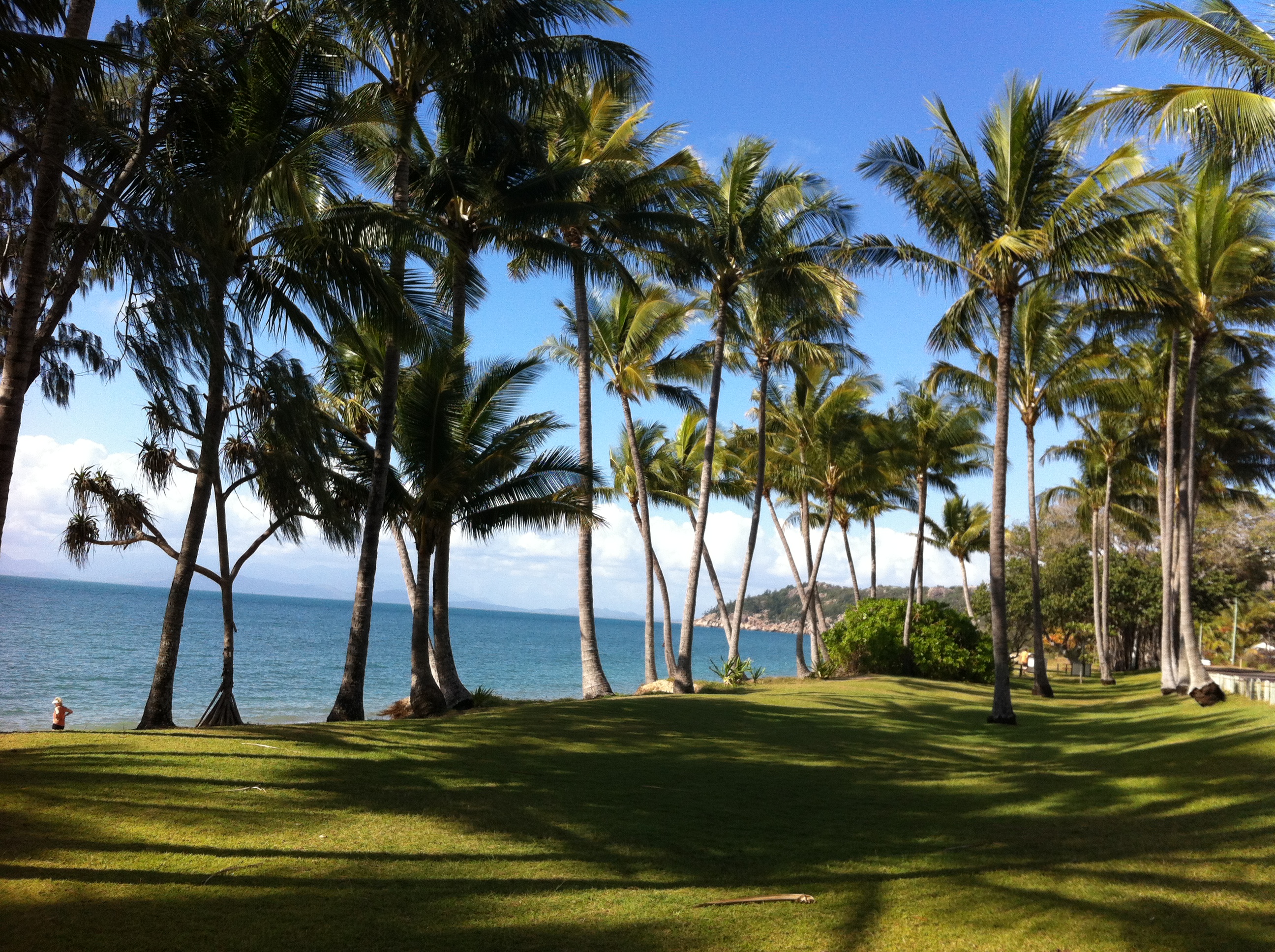
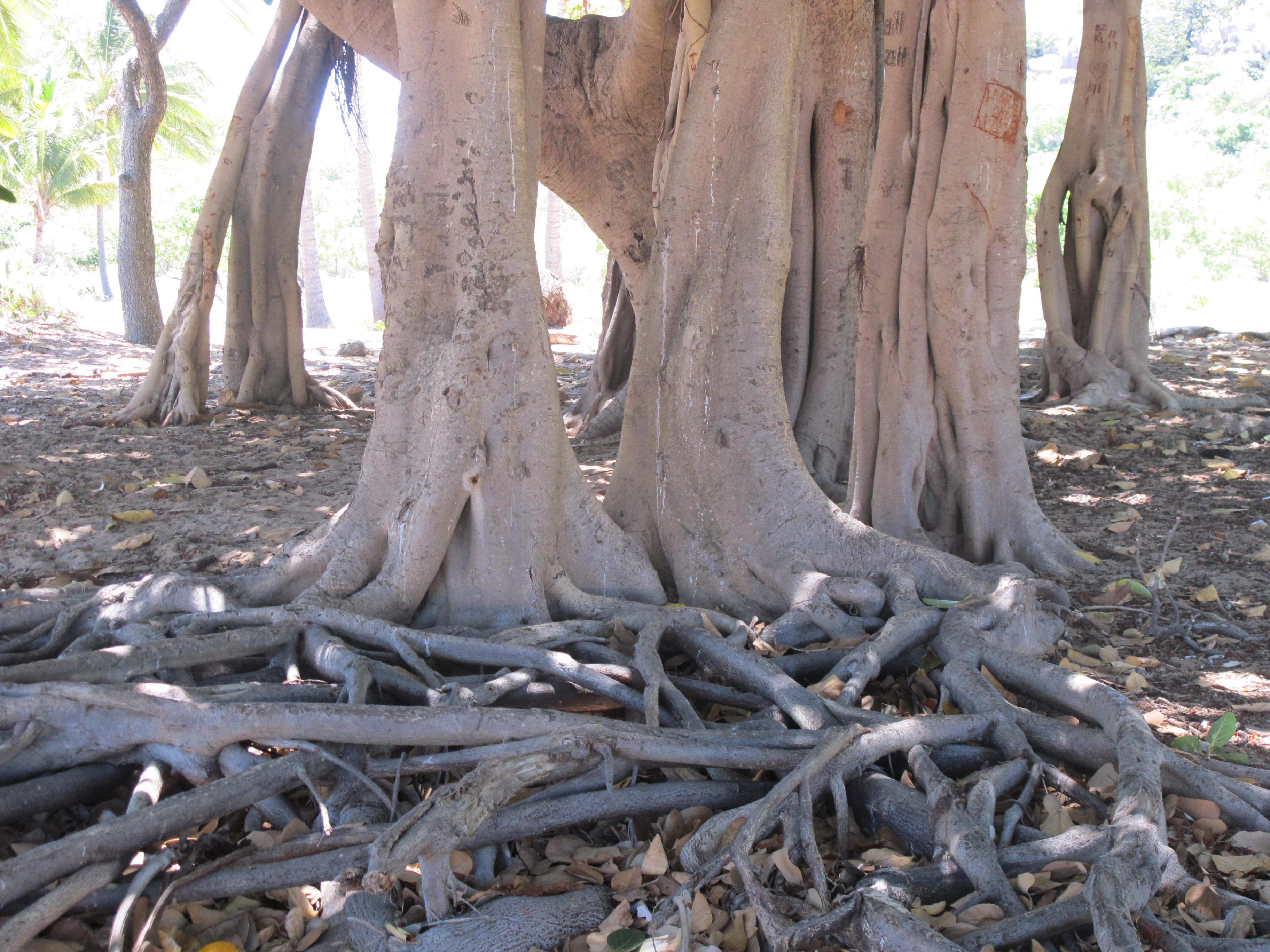
Last weekend I started to think more about the first white settlers who came to the island. We were walking along the shady path by the beach at Picnic Bay, which in itself is worth a visit. The old banyan fig trees that line the shore are fascinating with huge aerial roots and plenty of climbing opportunities for children who can let their imaginations run wild. There have been plenty of stories of goblins and fairies, dragons and monsters lurking deep in the twisted branches and all the while the cockatoos screech and play above looking for seed pods.

IMG_5066

IMG_5064

IMG_5057IMG_5059

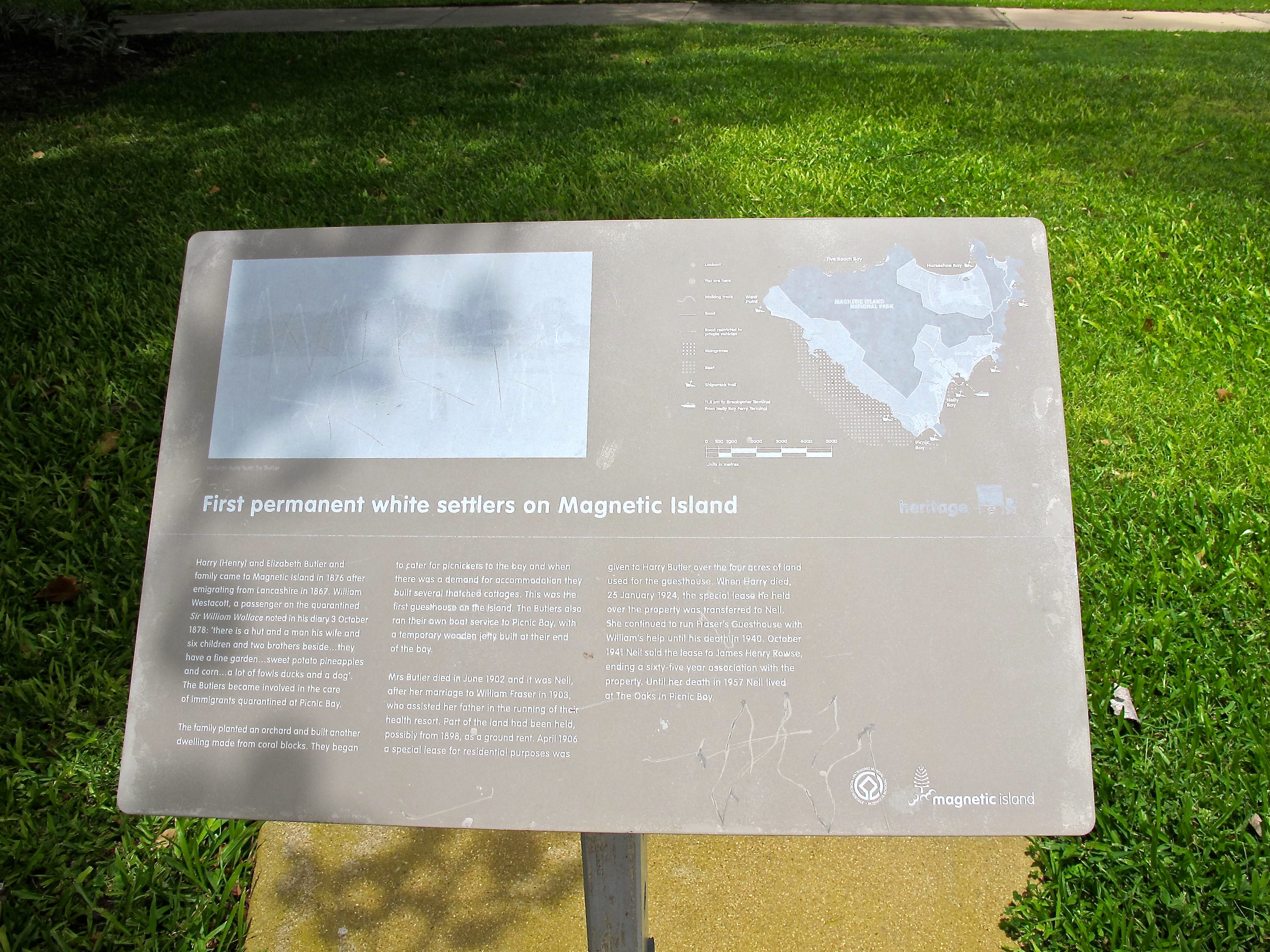
At the end of the walk there is a plaque remembering the life of the first known white settler. Harry Butler came to the island in 1876 after emigrating from Lancashire in northern England in 1867. My own family ancestors were also from Lancashire and at that time the county was important for it’s cotton mills and the industry arising from cotton. The countryside was beautiful and there were small villages and farms where people lived either from farming or spinning and weaving, which was done at home. They would send their bolts of cloth to the mill or factory via canal boat and canals criss-crossed the county with longboats providing much needed transport for coal and produce. The cities were grimy and crowded and living conditions harsh. I wondered about Harry Butler bringing his family across the oceans to the unknown and then choosing to settle on a small island off the mainland where there was nothing except opportunity.

IMG_5053

Life would have been tough. A passenger, William Westacott, on a quarantined vessel Sir William Wallace noted in his diary on 3rd October 1878 : ‘there is a hut and a man, his wife and six children and two brothers beside…..they have a fine garden….sweet potato, pineapples and corn …a lot of fowls, ducks and a dog.’ I tried to imagine Elizabeth Butler working in her garden in long skirts and heavy shoes in the heat and humidity of the tropical summer. Her English roses complexion would have suffered under the harsh sun in spite of large hats which were always worn. How different it must have seemed to them after Lancashire. Perhaps they thought it was their own little paradise.

IMG_5060

The family planted an orchard and built another hut made from coral blocks and began to cater for people who came across from the mainland for picnics. Eventually they built thatched cottages so people could stay overnight and then, recognising the demand, they ran their own boat service to Picnic Bay from the mainland and built a temporary wooden jetty.

Thus began the first tourism venture on the island.

Everything Australian on Australia Day

Last weekend the whole country had a long weekend.  Monday 26th January was Australia Day and that gave the population a signal to “celebrate” .  There were sporting events and barbecues, welcoming and remembrance ceremonies, favourite Aussie icons and moments were recalled and music by Australian bands and singers was played throughout the day.

IMG_0021

I have now come to look forward to this special day.  We were on Magnetic island and invited to a BBQ lunch. Guests were obliged to wear something iconic such as thongs, board shorts, T shirts, Jacky Howe singlets, caps, hats, anything with a flag on it – and one guest even came in a bikini made from flag material!

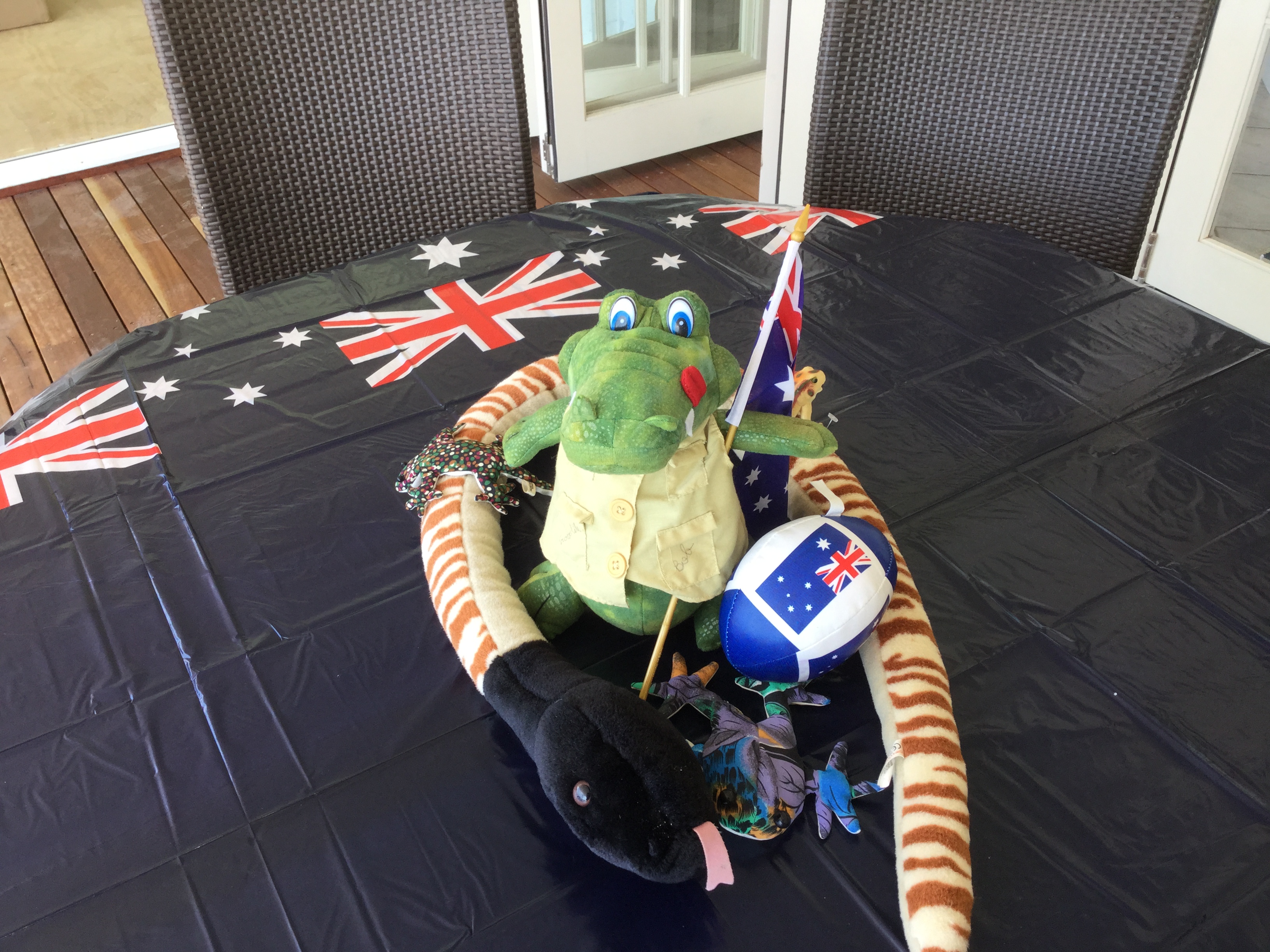
Of course there were decorations everywhere including on the tables, where the good old crocodile provided a centrepiece accompanied by a snake!

IMG_0022

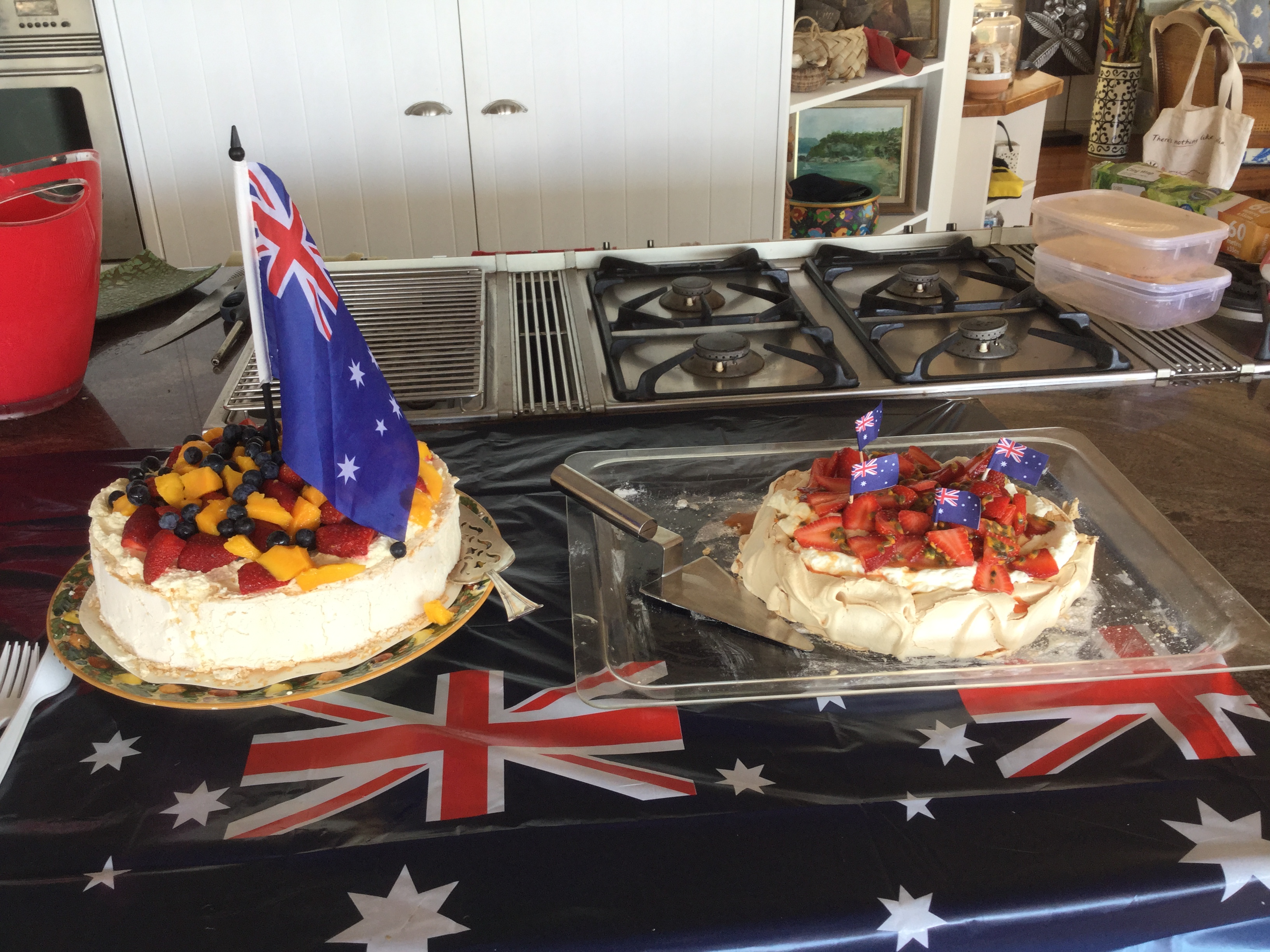
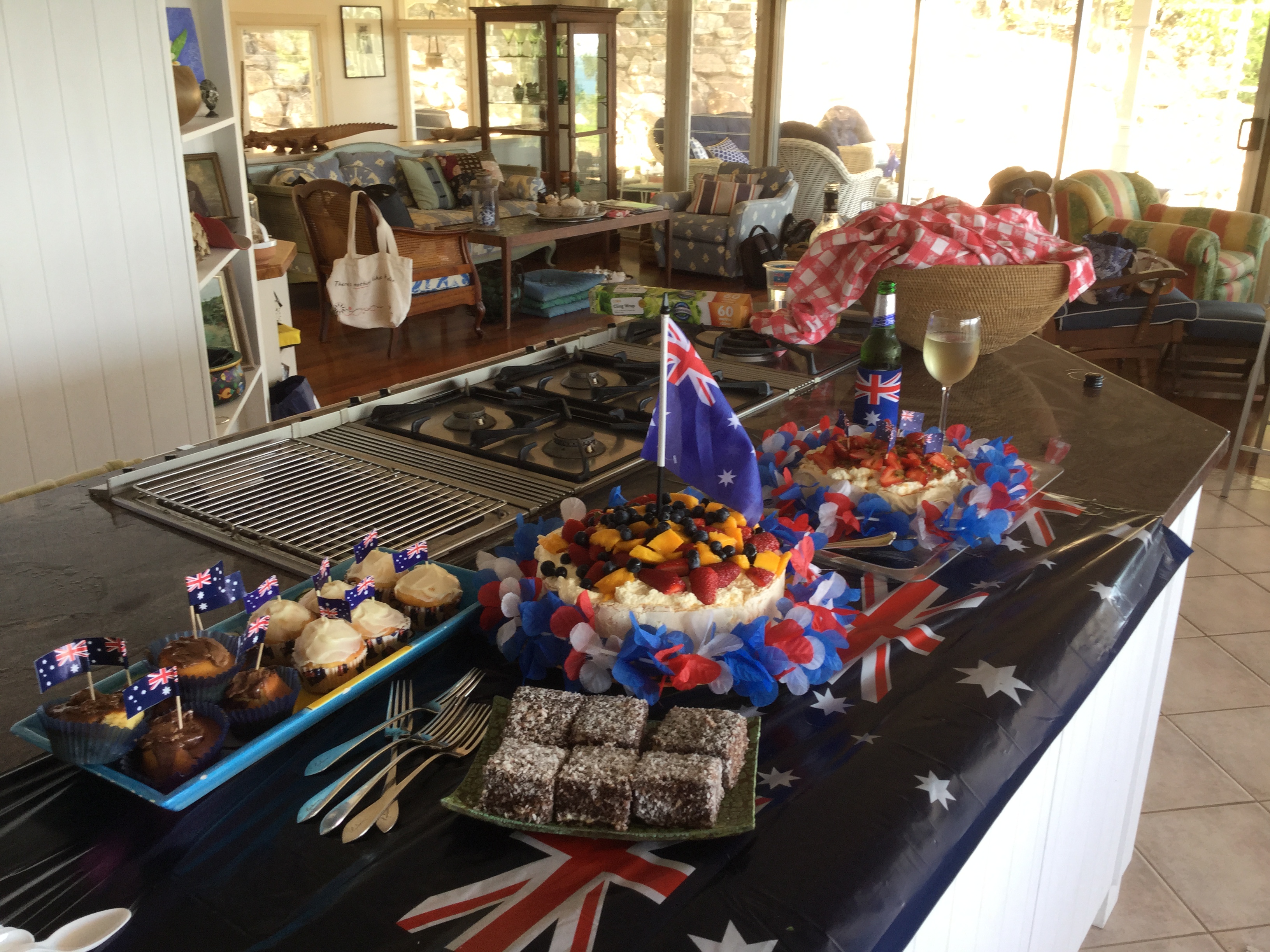
Food plays an important part of the day and typical Aussie fare, such as pies, sausage rolls, cheese and vegemite rolls, prawns and barbecues with lamb, steak and/or sausages are on every menu.  This is usually followed by desserts which include lamingtons, cup cakes, pavlovas and tropical fruit and trifles.

IMG_0042

IMG_0025

Having been well fed, we then launched into a Trivia Quiz game where all the questions were, of course, Australian.  This stretched the mind a little with questions such as “Which former Prime Minister once managed a band called “The Ramrods”?  How on earth was I was expected to know that?  The answer – Paul Keating.  For anyone interested in politics, this would be the most unlikely person to ever be involved in rock music.  So, you live and learn!
Everyone knows Kylie Minogue but apart from her popularity in the music world, it was her Hotpants that brought such an impact to Australian culture.  Favourite icons are Holden cars, Speedo swimsuits, Four XXXX Beer, Vegemite, Elle Macpherson and Miranda Kerr, Waltzing Matilda, Surfing, the Akubra Hat, Qantas, the Koala and the Kangaroo.   The list goes on and on.

However, what puzzled me when I first arrived in this country was the language.  I spent some time in the early years travelling through and living in the Outback.  This would be the most difficult place to start to comprehend the locals.  I remember one day driving along a bush road and stopping to talk to a Drover who was sitting on the biggest horse I had ever seen.  He asked me a question and I had to turn to my companion and ask what language he was speaking.  I did not understand one word. He then told me he was once “so hungry he could eat the arse out of a low flying duck”.  I was totally perplexed. He then said he had to “hit the Frog and Toad” (road) and galloped off.

Gradually I began to learn many Aussie sayings: words such as “Joe Blake” for snake, “noah” for sharks, “lizards” for crocodiles and “Japanese riding boots” for thongs are casually mentioned in conversations on a daily basis. I even find myself calling a chicken “a chook” these days.

Rhyming slang is another Aussie favourite. Phrases such as “Pass me the dead horse” (Pass the sauce) or “I’ll go and have a Captain Cook” (I’ll go and have a look) “Give me the Jack and Jill” (Give me the bill) and “on the Al Capone” (on the phone) are often heard in the bush.

It doesn’t take long, eventually you become absorbed in this totally fascinating country and its culture. Then you can call yourself “An Australian’

Hooroo!
Magnetic Island – My Island Home

Situated just 8km off the coast of Townsville, North Queensland is my “island home”.  The place where we escape on weekends, spend holidays and enjoy the company of friends and family.  Where we indulge in the luxury of reading, hiking, swimming, cooking unusual dishes and where time really means not much.  We can do what we like, when we like.          210711114530magnetic-island

This beautiful island has 23 bays and beaches and much of it is National Park surrounded by Marine Parks with some beautiful fringing coral and sea life.  In winter we watch whales on their migration north from Antarctica and dolphins and turtles abound.

P1010686 P1010684P1000758 IMG_0979

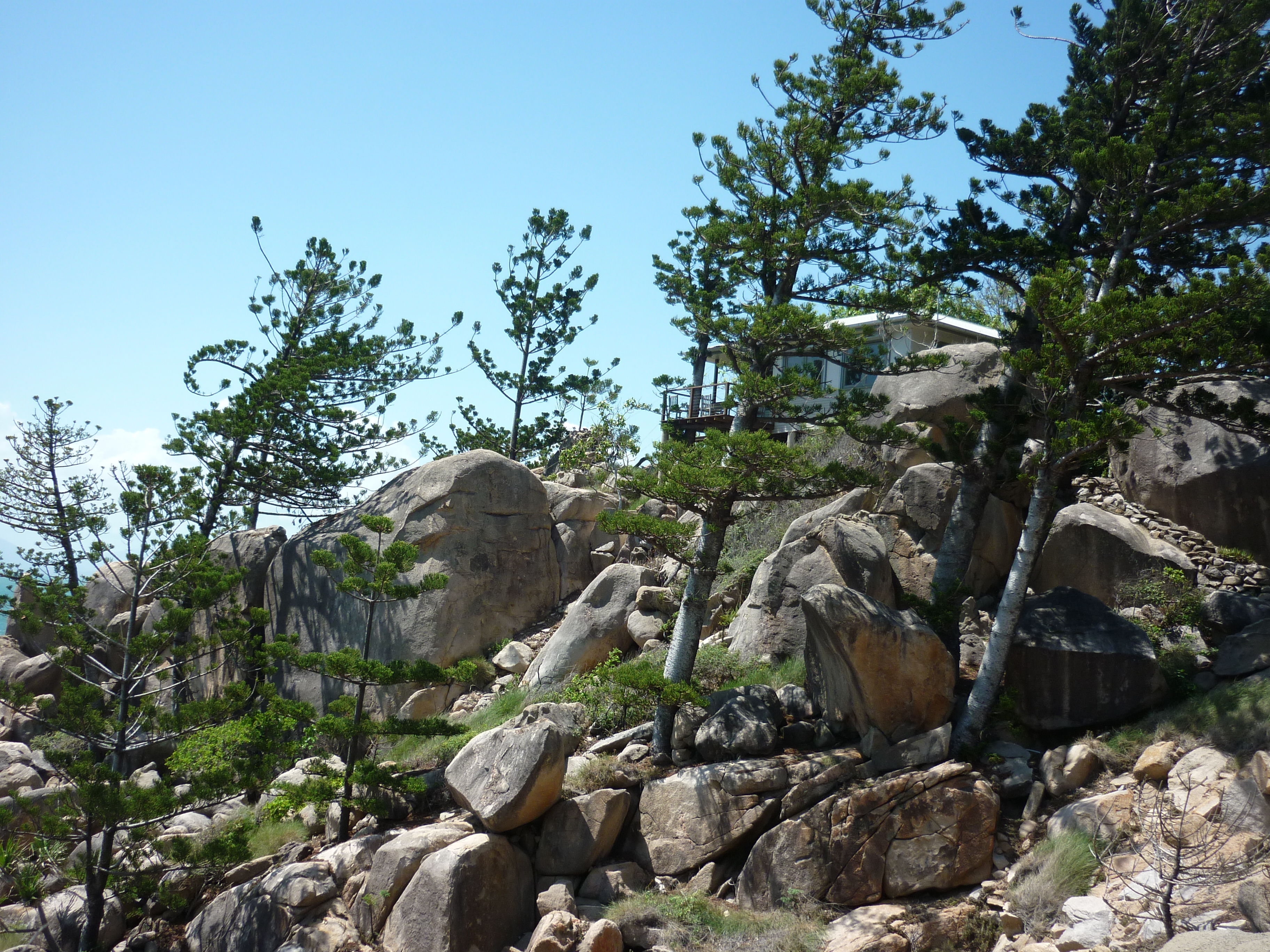
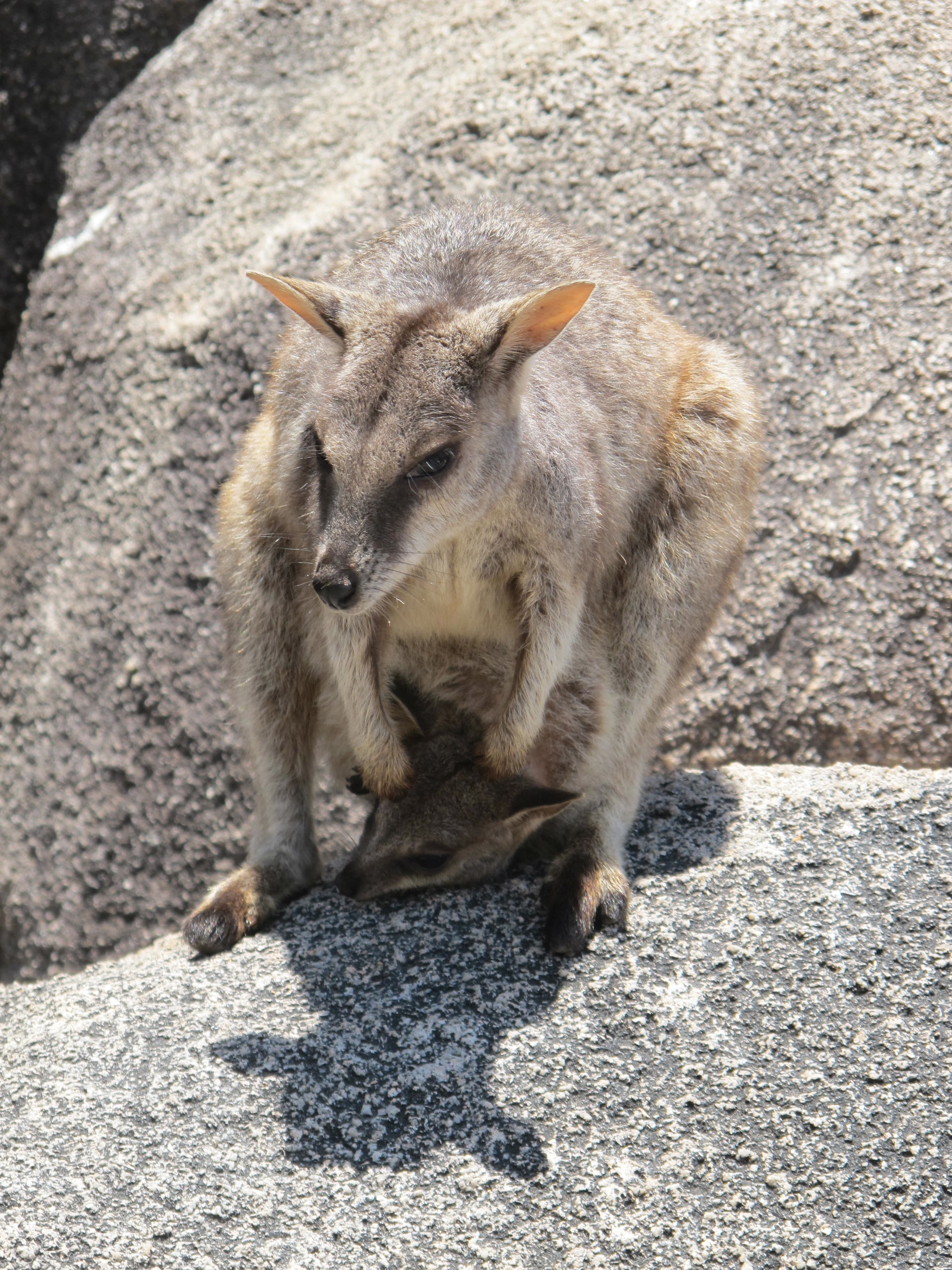
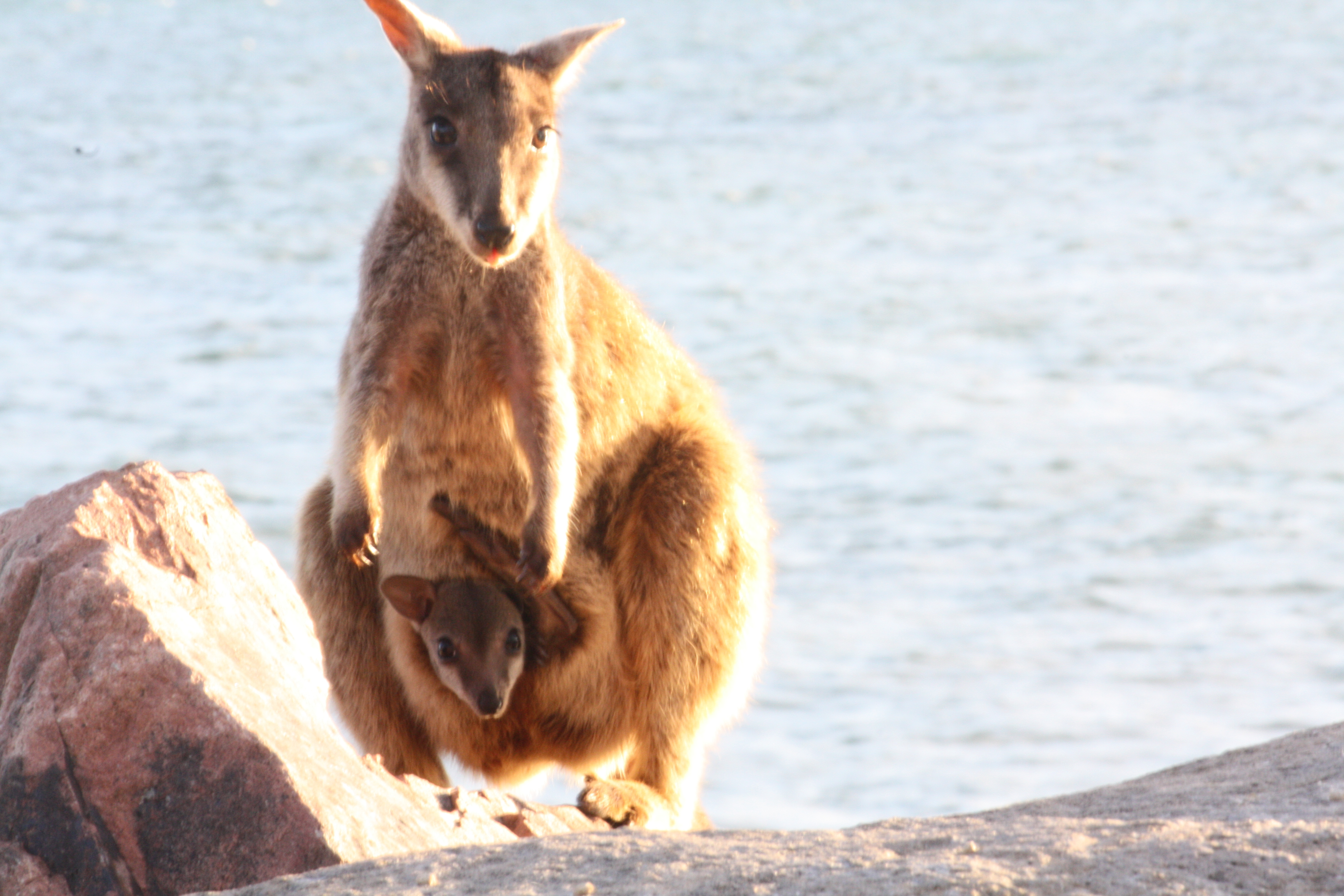
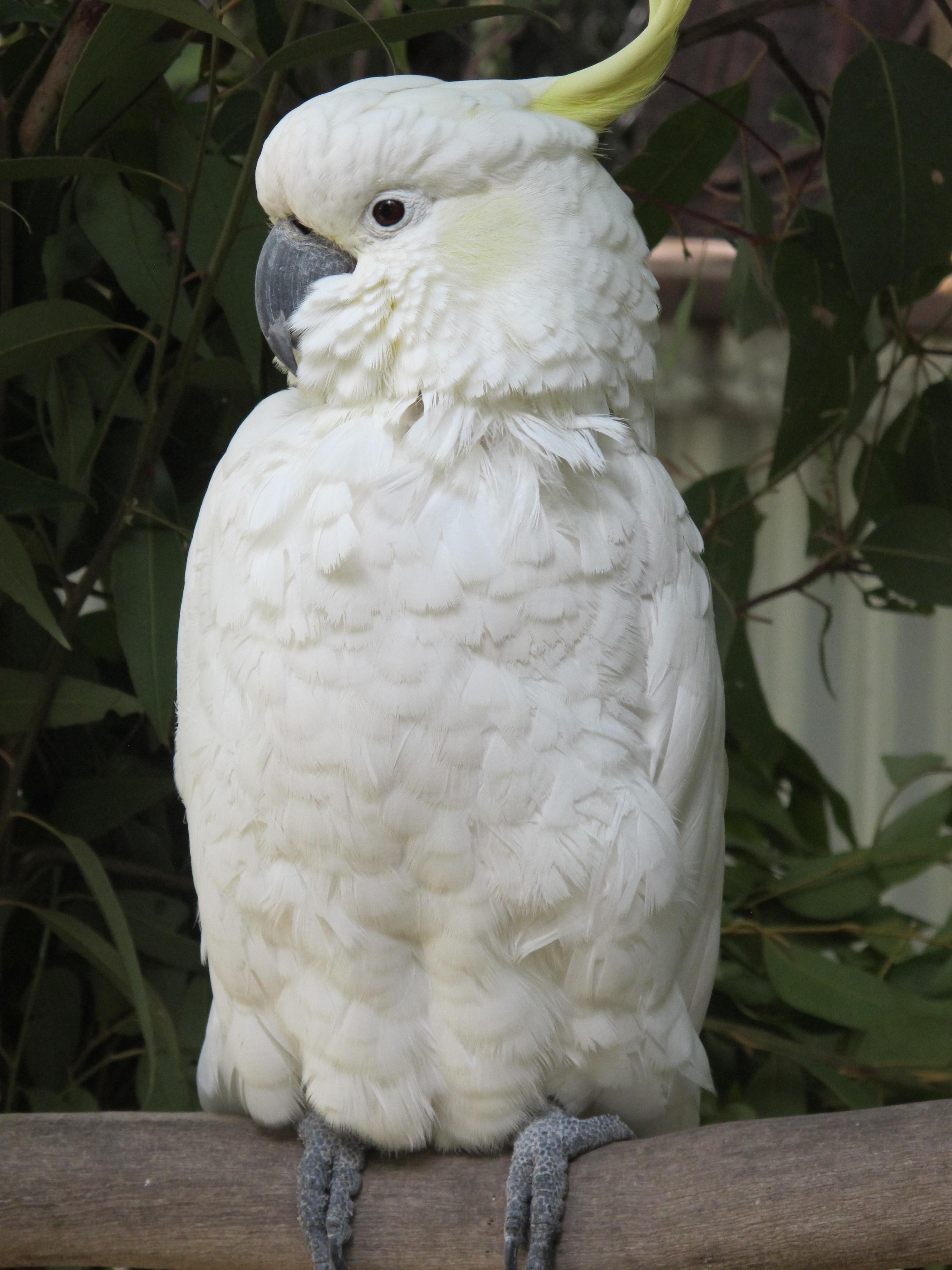
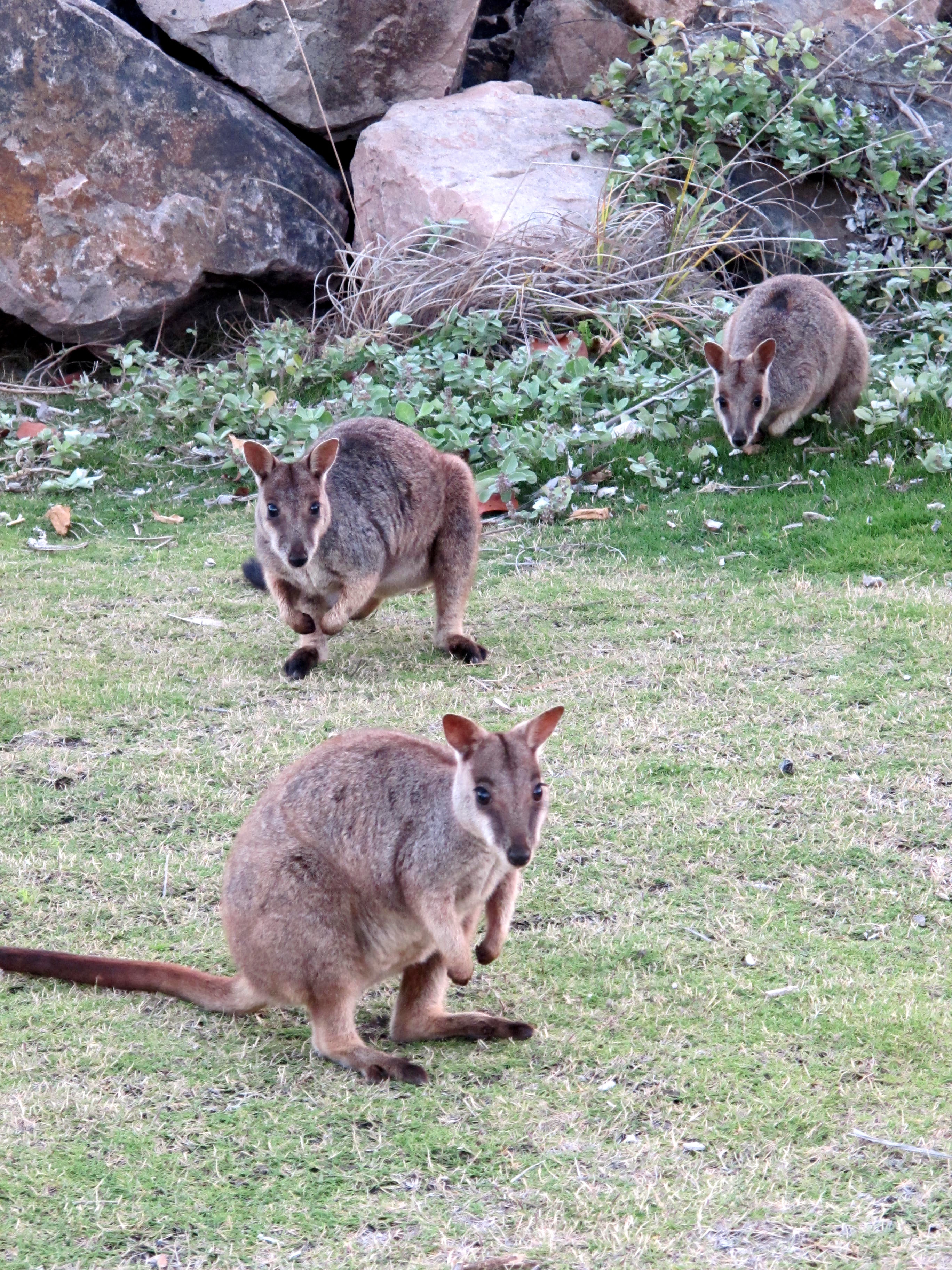
Huge granite boulders, hoop pines, eucalypt forest and patches of rainforest are found and of course, the resident wildlife is always there ……P1010682 IMG_4524 IMG_4458 IMG_4478 IMG_4850 IMG_8354 IMG_4949 IMG_4869 IMG_4859 IMG_4494Rosellas flock at dawn and sunset and greedily gobble up seeds thrown by residents.  The curlew looks on haughtily but doesn’t dare intercede.IMG_4451One morning a young kookaburra hopped onto our verandah and expected his breakfast – which he got – pieces of bacon which he slapped against the railings attempting to “kill it” before devouring.

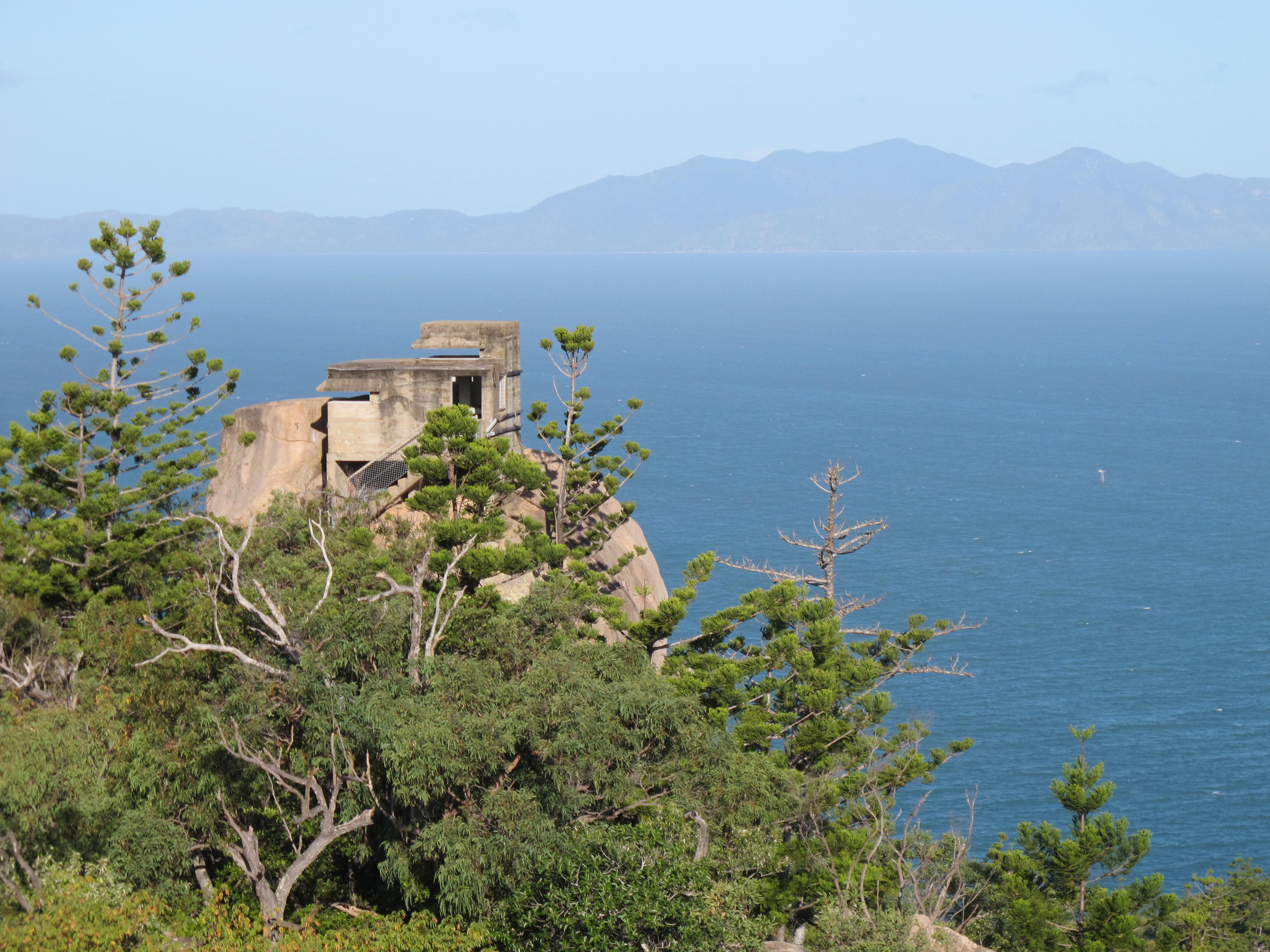
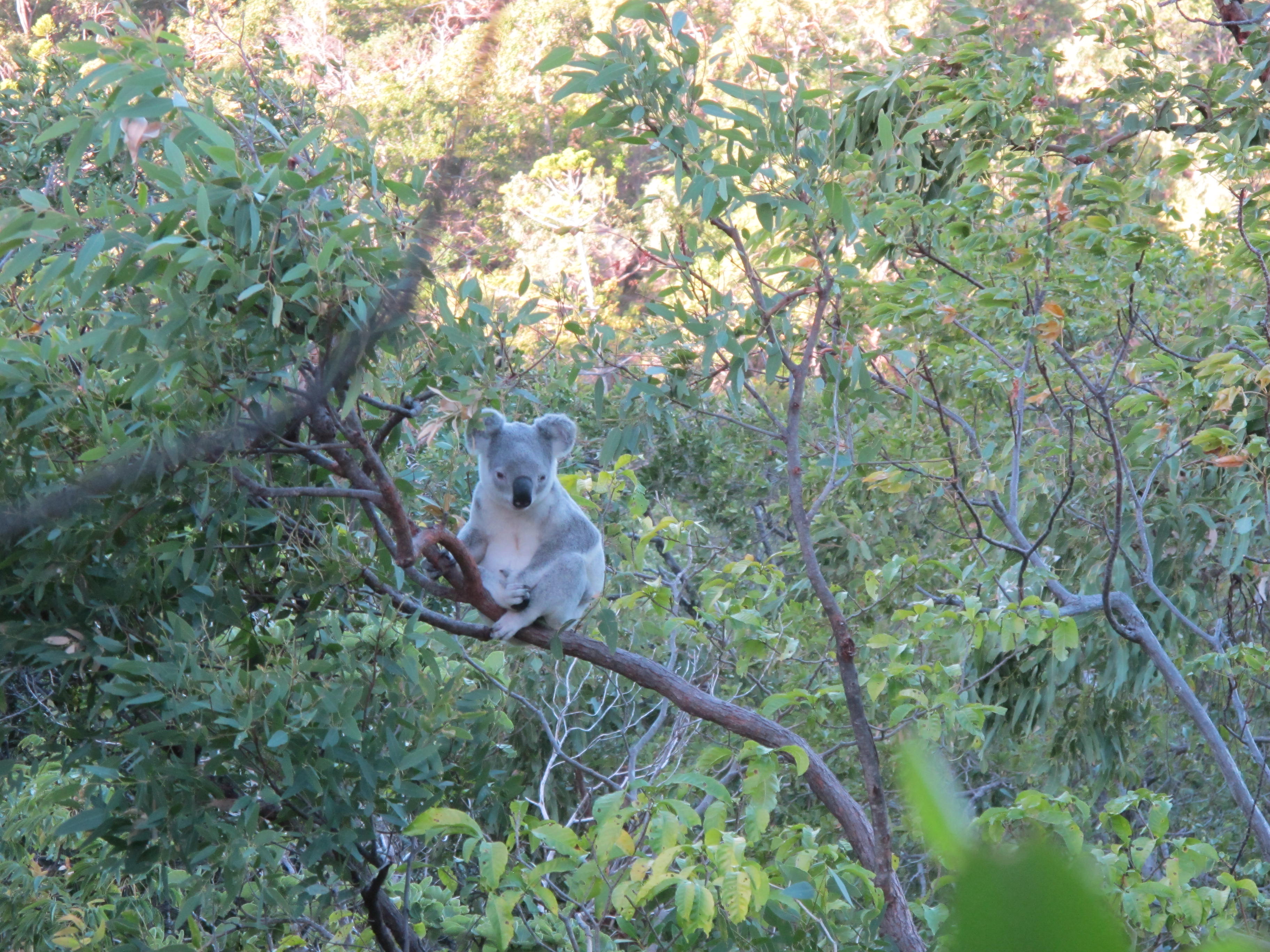
IMG_4520 IMG_4515 IMG_4838 IMG_4845There are some beautiful walks through the National Park, including one to the “Forts” – a series of structures which were lookout forts during the Second World War.  This is where you will often see koalas in the wild.  Textures and colours of trees and leaves never fail to amaze me.P1000759 IMG_4854

And finally the sunsets – always magnificent and there is nothing better than to enjoy a sundowner at the end of the day watching the sun sink into the horizon declaring the day is over and a new start awaits in the morning.

Welcome to my Island Home !

Random Thoughts on a Journey

In response to The Daily Post’s writing prompt: “Journey.”

One of my favourite quotes is by the well known travel writer, Paul Theroux – “Tourists don’t know where they’ve been, travellers don’t know where they are going”  It’s all about the journey whether that be in the travel sense or in life.  There are times when I sit and ponder on where life is taking me and I wonder at the turn of events.  They say that everything happens for a reason but many times we don’t know why.  I have had cause to seriously question fate and the lessons we have to learn.

Let me begin by saying I have been a traveller since a very young age.  Travelling the world has been part of my life since the age of 2 years and travelling through the vagaries of life is always there, in all of us.  Life is a journey.

Not long ago I embarked on another journey with my husband – to Africa.  It is often said that Africa weaves its way into your soul like nowhere else on earth.  It is certainly true for us and we have visited the continent several times in the past decade.  We loved it.  I use the past tense because now I am not sure if we will ever return.

Our wonderful holiday turned into a nightmare which grew worse day by day until fate decided that maybe we had endured enough and it was time to go home.  Today I am sitting at my desk looking at a calm and sparkling sea.  The sky is clear and blue.  Everything is calm and serene and I know I am lucky to be living in this peaceful part of the world far from recent events which have terrorised Europe and the world.  However, I cannot think of Africa in such light again and now know that we were meant to be on that particular journey for a reason – which I have yet to figure out.

Mother and baby

Life, Music, Memories

It’s strange how music can bring alive so many long buried memories. The haunting music “Dream of Olwyn” fills my study as I am remembering just why this piece means so much to me.  I was in my twenties and living in an idyllic village in the depths of the English countryside.  You can picture it with thatched roofed cottages, winding lanes, quaint little shop fronts, a village pond where ducks, well fed by local children, float serenely, and an ancient village church dating from Norman times is the focal point of the community.  In essence this is chocolate box scenery and it actually exists.  The music reminds me of a very close friend who passed away several years later, in the prime of his life.

Likewise tracks from singer Kathleen Ferrier or pianist Charlie Kunz, recordings of popular musicals or jazz from the American Greats bring back vivid memories of my parents when they were young.  Music was always playing on the LP record player, styluses had to be changed and records carefully cleaned to ensure no scratch marks would interfere with the quality of the recording. I grew up loving all genres and to this day music is a constant in my life.

During the Swinging Sixties, when I lived in London and was part of that hedonistic society;  mini skirts were the height of fashion, Twiggy with her huge black eyes, short hair and even shorter skirts defined all that was modern, Mary Quant was a favourite designer, and model Jean Shrimpton was the “face of the sixties.  Popular music came over Pirate radio stations such as Radio Caroline and the pop stars of the time were The Beatles, The Rolling Stones, The Kinks, Freddie and The Dreamers and The Who.  Today I am transported back to those times whenever I hear a track from those artists and it reminds me of the carefree and unrestricted life that we all led.

That brings me to thoughts of my parents and the profound wish that they were alive today so I could tell them how much I loved them and share the joys and tribulations that life has brought me in the years since they have gone.  Fortunately they loved to keep memorabilia and I have well documented photo albums, books, letters, cards, diaries and even cassette tapes which we used to send instead of writing letters at one point.  This keeps many memories alive and I am attempting to document their lives so that my grandchildren will know more about their ancestors and about life before, during and after the Second World War.

I was inspired by the post Life Slips Away which expresses so well the feelings that I have on the subject of Death and Dying.  I have realised that as I have reached different stages in my life, my priorities have changed and what was important then is no longer of any consequence now.  It is a journey we all take and the realisation that life is precious and should be lived to the full without regrets is something we should hopefully all come to terms with in the end.

“It is good to have an end to journey towards, but it is the journey that matters in the end”  Ursula E Guin