HONG KONG REMEMBERED

We were in Hong Kong for a trip down “Memory lane” – unfortunately there is little today to remind one of Colonial days.  Beautiful old buildings have been torn down and replaced with monstrosities and the whole feeling of the city as changed.  It is frenetic, very crowded and quite soulless.  I am so sad and very disappointed – they say it is progress but I totally disagree.

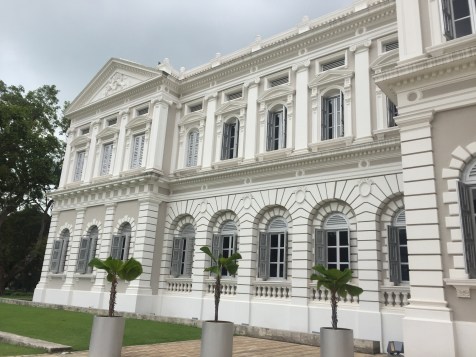
To recap, we spent four days in Singapore first.  I remember this place as a stopping off point en route to and from England during our leave.  We had friends we stayed with and we have visited several times since.  Although the city has been modernised, the beautiful old colonial buildings have been restored and put to good use – for example the old Post Office which is now the Fullerton Hotel.  There is a sense of history and heritage everywhere and I find it charming and a relief.  Everyone is friendly, English is widely spoken and public transport is clean, efficient and very frequent.
IMG_3579
Museum of Singapore – a colonial building which is charming
IMG_3570
Singapore River and many restaurants

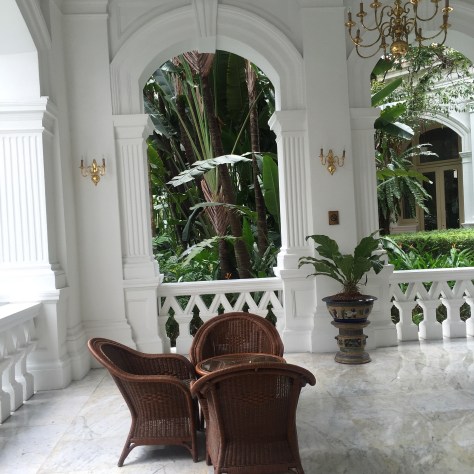
Raffles Hotel is a prime example of heritage and we made our obligatory visit for curry tiffin and a Singapore Sling!
IMG_3636

Then we arrived in Hong Kong.  To say the place has changed since 1997 is an understatement and few places are recognisable now.  For old time’s sake we decided to go up the Peak where we lived for several years.  The Peak Tram was the favourite form of transport then – now it is just a tourist operation and I was appalled to see the queue for the tram was 2 1/2 hours long!  Obviously we weren’t going to wait that long, so we took a taxi to the top and walked around Lugard Road – where one of our homes used to be.  I remember the view was stunning.  A myriad of fairy lights at night, boats criss crossing the harbour, lights twinkling in Kowloon and during the day the hills of Kowloon Peak and the sprawling area of Kowloon and the New Territories shimmered in the sunlight.

The view is still stunning, although much of it is marred by jungle growth these days (a good thing one would think looking at the urban jungle below).

IMG_3662
View today
Vieew from Lugard Road c.1959
View in the late 1950’s

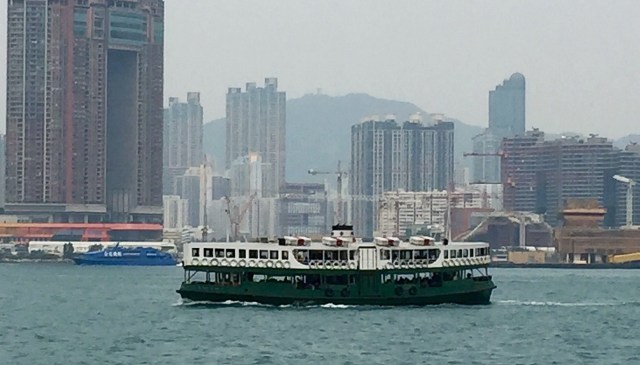
There had been so much reclamation lately that soon the harbour will scarcely exist! Where once we took a vehicular ferry, a sampan or a ‘walla walla’ to cross to the other side, now there are tunnels and the Star Ferry – thankfully it hasn’t changed – takes half the time!
IMG_0462
The Star Ferry

Public transport is excellent.  The MTR rail is clean, efficient, modern and very frequent – just try avoiding the rush hours!  We made that mistake and were literally pushed into the train on one occasion.  The trams and buses are also excellent and the taxis plentiful and cheap.  One problem with taxis – it seems many drivers do not speak English, so if you go take a translation of where you want to go and where you have to return to.

A visit to Stanley Village was on the cards.  This was a favourite weekend destination and it seems it still is.  Now somewhat touristy, the markets are still there and there are heaps of waterfront restaurants now.  Blake’s Pier, which used to be in Central and from where we would catch launches for picnics, has been relocated to Stanley to make way for more construction in Central.  It looks somewhat lonely in the bay but I am glad it has not lost its character.

IMG_5927IMG_5926

Something we never did in the past was go into China for the day.  Now it is possible to go to Shenzhen for a shopping day and it is easy on the MTR.  Visas are issued on arrival and the you are free to explore the Mall and the myriad of shops around the square.  There is so much on offer that I became quite overwhelmed and came away with very little except experience!
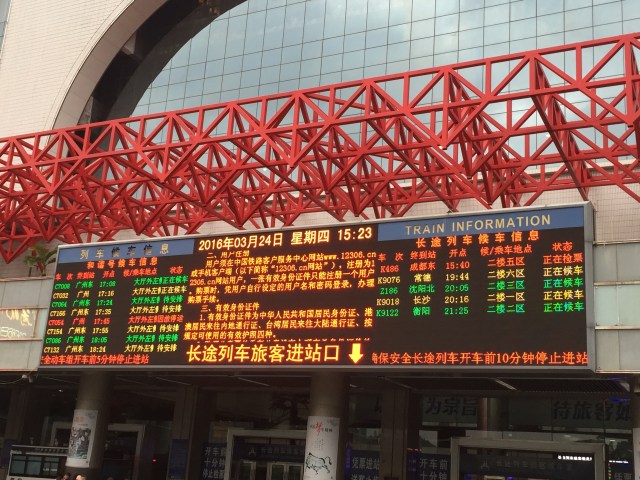
IMG_3642
Shenzhen railway station

We walked around a small part of the town, came across the station and wondered how one found one’s way without knowledge of Chinese characters.

IMG_3646

The shopping mall is clean and bright and the shop keepers all tout for business.  The day we were there was quiet – weekends and holidays are manic apparently.  Nevertheless it was a tiring day both mentally and visually.

Finally the birthday treat – a wonderful high tea at the Peninsula Hotel – again unspoilt and very like the past.  Fantastic service, beautiful presentation and an altogether fabulous afternoon.

IMG_3668

I doubt we will visit Hong Kong again as I want to remember the place as it was – unhurried, fascinating, historical and beautiful.  Happy, smiling people and a blend of all nations.  These last two photos are a reminder of the past which will never be recovered.

21-03-2008 12-35-22 PM_0144
In the New Territories, no longer farms but a concrete jungle
K20D3330
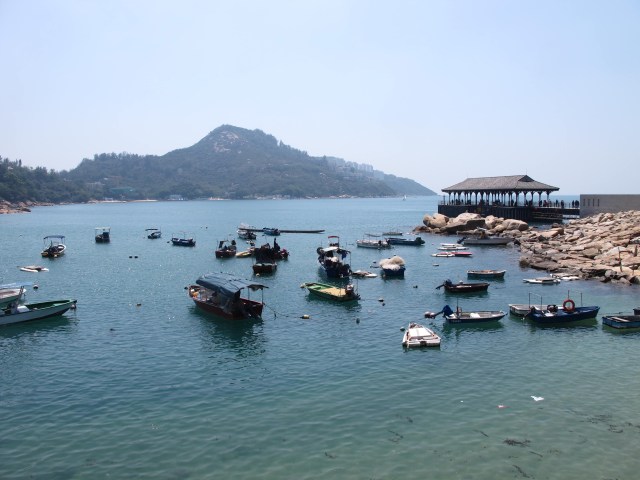
The calm of junks in a bay on one of the many islands around Hong Kong – a favourite weekend retreat for us.

COFFIN BAY, THEAKSTONE’S CREVASSE AND WHALERS WAY – SOUTH AUSTRALIA

No visit to Port Lincoln is complete without a trip to Coffin Bay and a tasting of the famous oysters.  We set off for lunch at a newly opened restaurant but first we took a detour to the beautiful Whaler’s Way and Theakstone’s Crevasse which is some 32 km from Port Lincoln.

Located on private property – owned by the same family since 1860 and old friends of the Ferry family – we obtained the key from Bob Theakstone and navigated the sandy, winding road first to Cape Wiles which was named after the botanist James Wiles who sailed with Flinders in 1802.  This is part of an area known as Whaler’s Way and an old whaling station can still be seen at Fishery Bay.  The Whalers made a living off Southern Right Whale blubber and  today these massive whales once again pass through the waters annually during the winter months.

                  IMG_1678

Cape Wiles is truly spectacular and dozens of fur seals are often seen splashing around the base of the golden sandstone islands just off the point.

IMG_1679

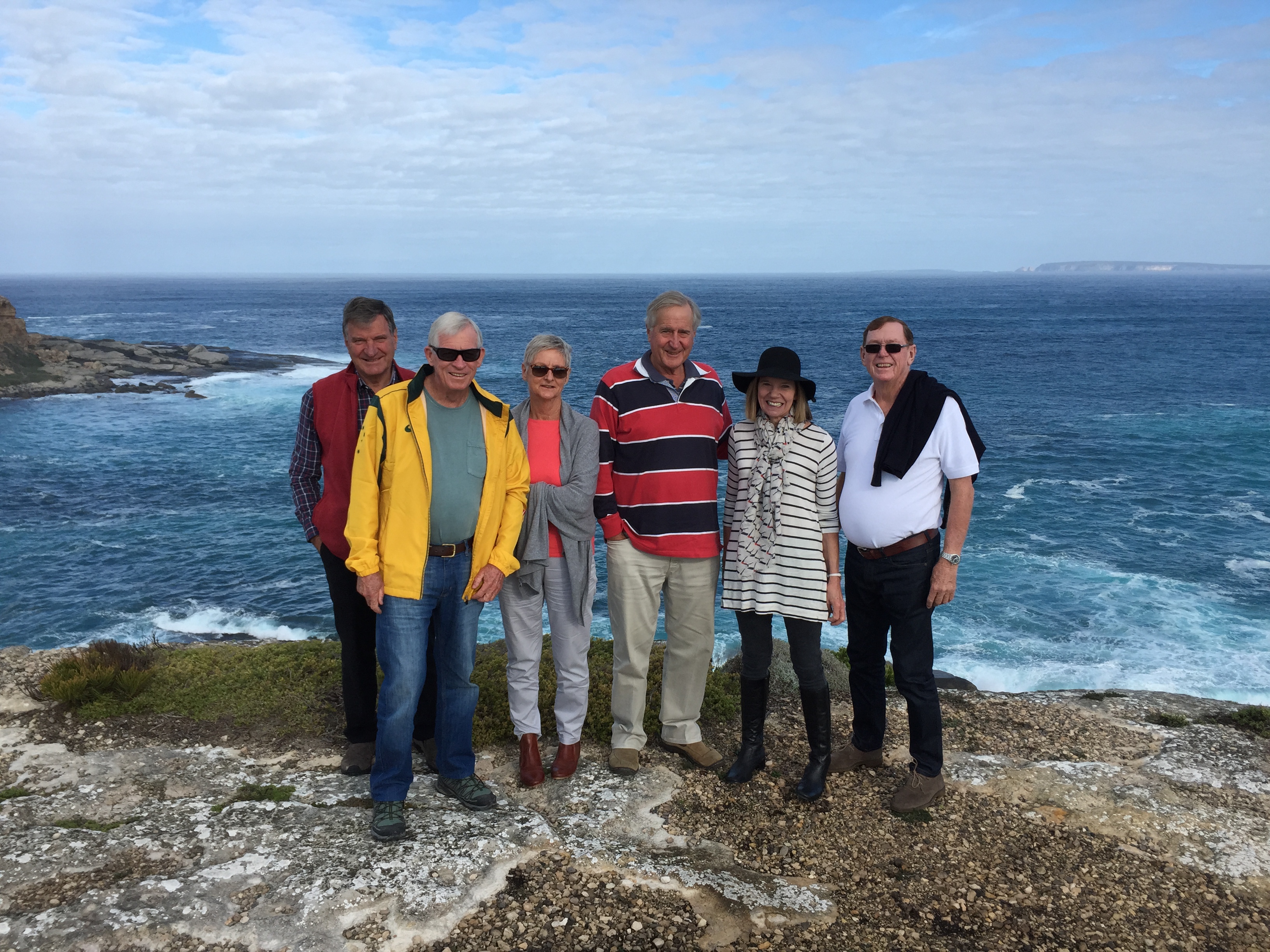
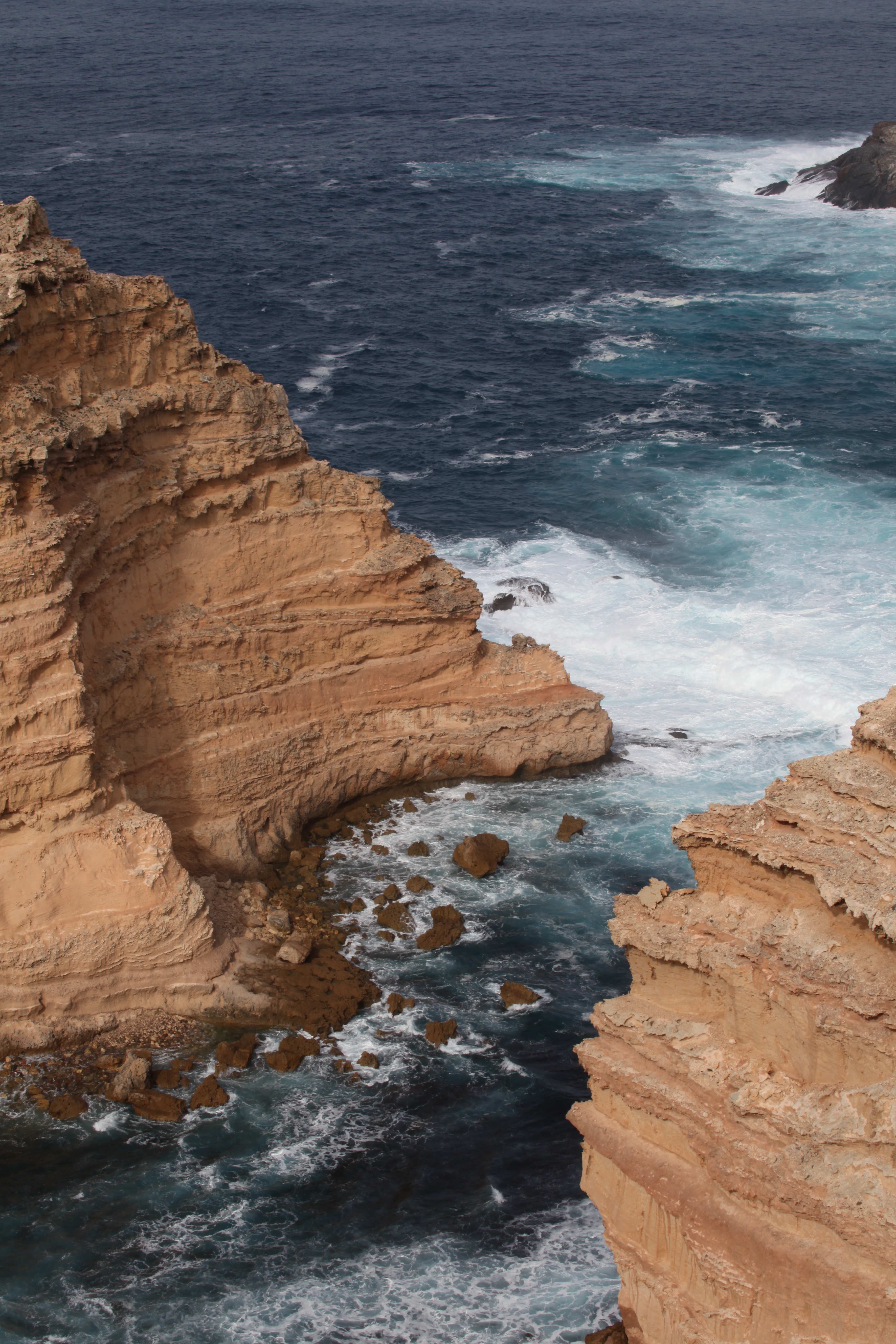
It was blustery but a beautiful day – so the clan gathered for a photo opportunity!  Then we drove on to Cape Carnot which is at the southwesterly tip of the Eyre Peninsula and named by the French explorer Nicolas Baudin in 1802.  The waves are often freakish and have claimed lives.  The full force of the Southern Ocean meets some of the oldest rock formations on the planet and, well known to geologists, these rocks are some 2460 million years old.  We didn’t have time to climb down to them but the view was pretty spectacular.

IMG_0338 IMG_0352 IMG_0342

Finally we came to Theakstone’s Crevasse, which I first visited in 1969 and it hasn’t changed! It is a deep fissure along a fault line formed over millions of years and is 1-2m wide and 13m deep.  The walls are said to be 9m high.  The crevasse has been scoured by the sea and extends some 30m underground.

IMG_5491

Time was beating us so we made our way out of the property and on to Coffin Bay where we had booked lunch at 1802 – a new restaurant on the foreshore of the pretty village.

IMG_0363

Matthew Flinders named the bay in February 1802 in honour of his friend Sir Thomas Coffin who was Naval Commissioner at Sheerness where the “Investigator” was fitted out.  The waters are calm and ideal for oyster farming which has grown over the years.  Surrounded by National and Conservation Parks, this is an ideal family holiday location with lots of fishing, kayaking, walking, water sports and fabulous scenery.  We were there primarily for the oysters and they didn’t disappoint!

IMG_5494 IMG_0357

Oysters-Coffin-Bay

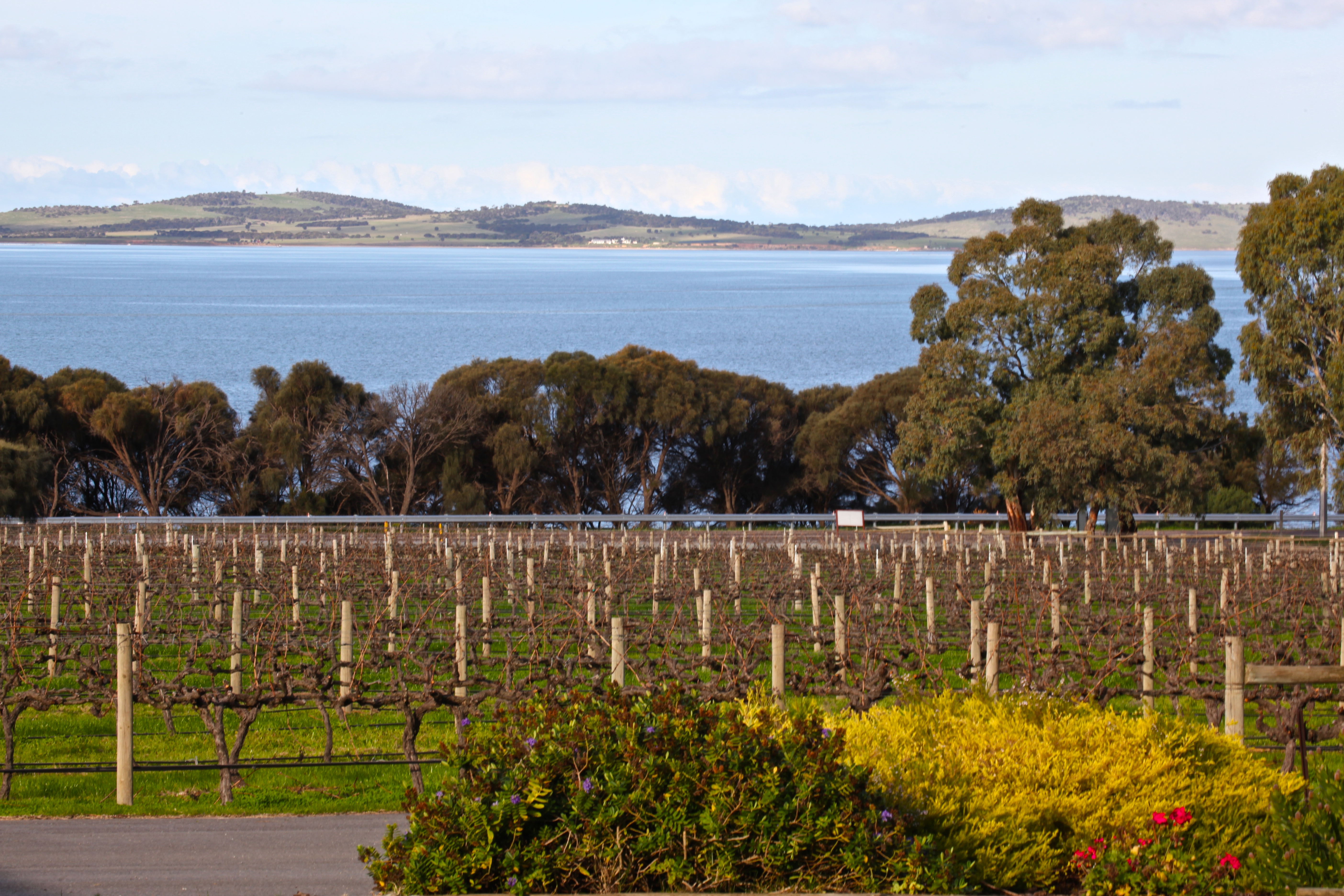
Then it was back to Port Lincoln and a visit to the local winery – Boston Bay Wines which is located on the shores of Boston Bay.

IMG_0328 IMG_1669

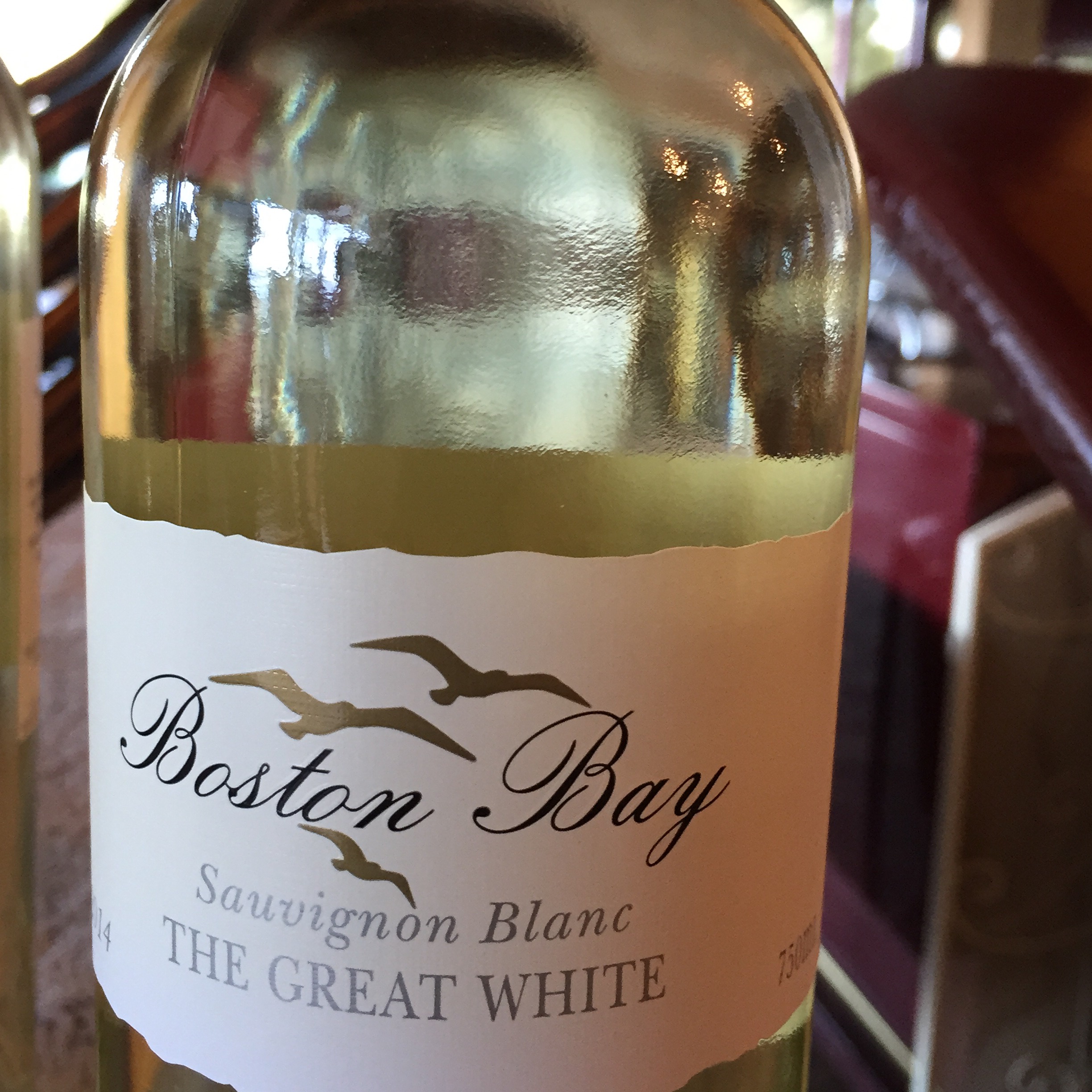
Love the name of the Sav Blanc – this is the home of The Great White after all!  We didn’t have the time nor the inclination to swim with the sharks but hundreds do!

IMG_1675

Makybe Diva – the famous racehorse, winner of the Melbourne Cup and owned by Port Lincoln identities.  The statue is on the foreshore and this was taken early in the morning on our walk to our breakfast spot.

Farewell to Port Lincoln – you have turned on the best weather and showcased the full beauty of the region which we have  managed to explore in just three days but we all vowed we will return.

BRUNY ISLAND – BEACHES, WILDLIFE, SCENERY AND THE SOUTHERN OCEAN

The moment we drove off the vehicular ferry onto Bruny Island, we felt we had stepped back in time.  This is a stunning island and what is more surprising is that it is the size of Singapore in area which has a population of 6 million or so and yet on Bruny there are only 650 permanent residents.

The road to Adventure Bay, where we had booked a house for a couple of days, is well sealed and the drive takes about 40 minutes.  Along the way found boutique produce such as cheese, wine, chocolates, fudge, salmon and a berry farm which was, sadly, closed as it was out of season.  Undeterred we made our first stop at the oyster farm – this is pure heaven for oyster lovers.  Workers were busy shucking as we got there, visitors were guzzling them down with buckets of wine and there were lots of sauces and accompaniments to tempt every palate.

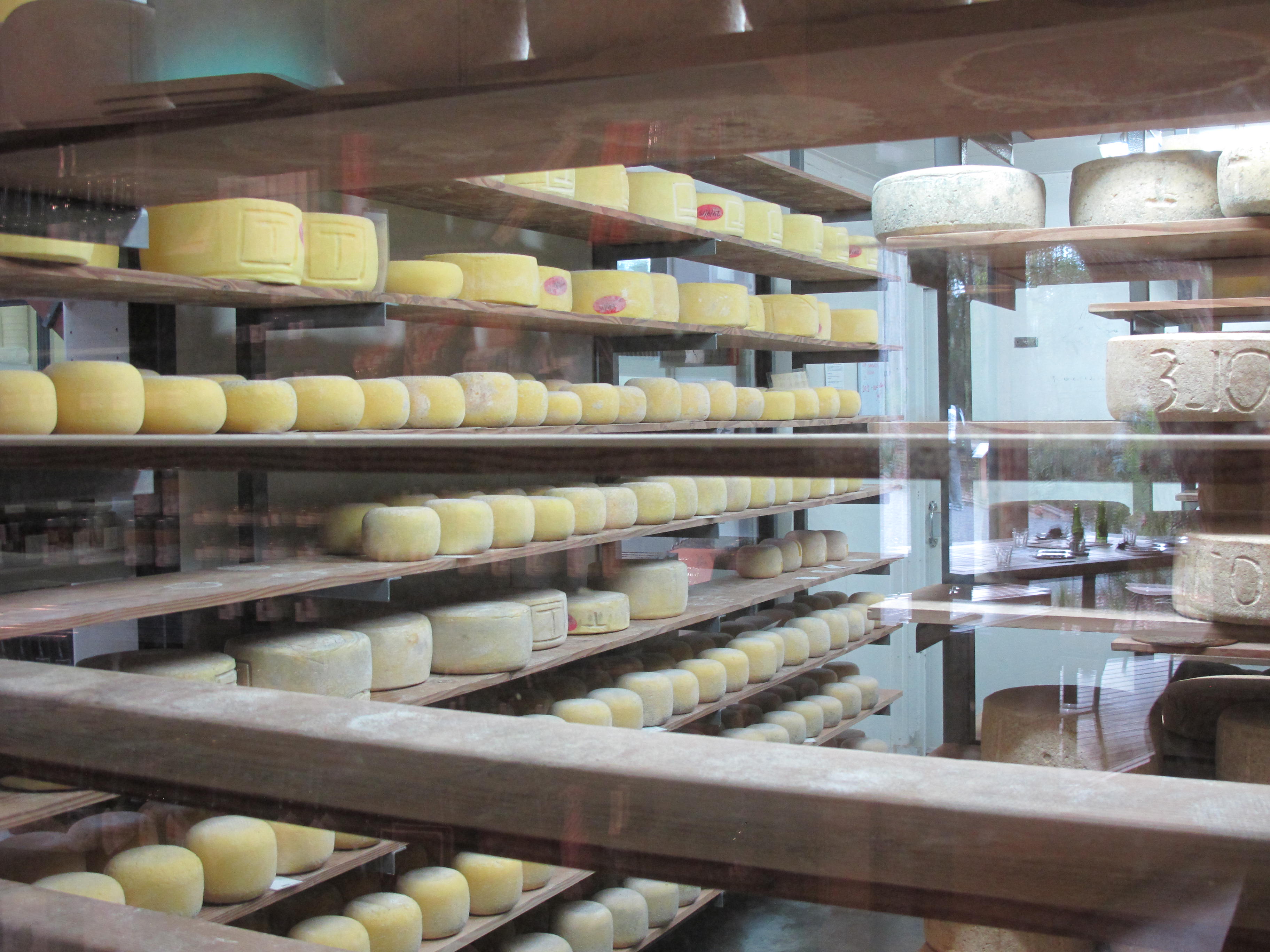
Tasmania 2015 - 5 of 5Next stop was the Cheese Factory – where tastings were offered and the smell of wood fired sourdough bread was inviting.

IMG_5346

IMG_5348

On a little further and we found the chocolate and fudge shop – there the chocolate coated coffee beans won out but the choice was endless.

IMG_1456

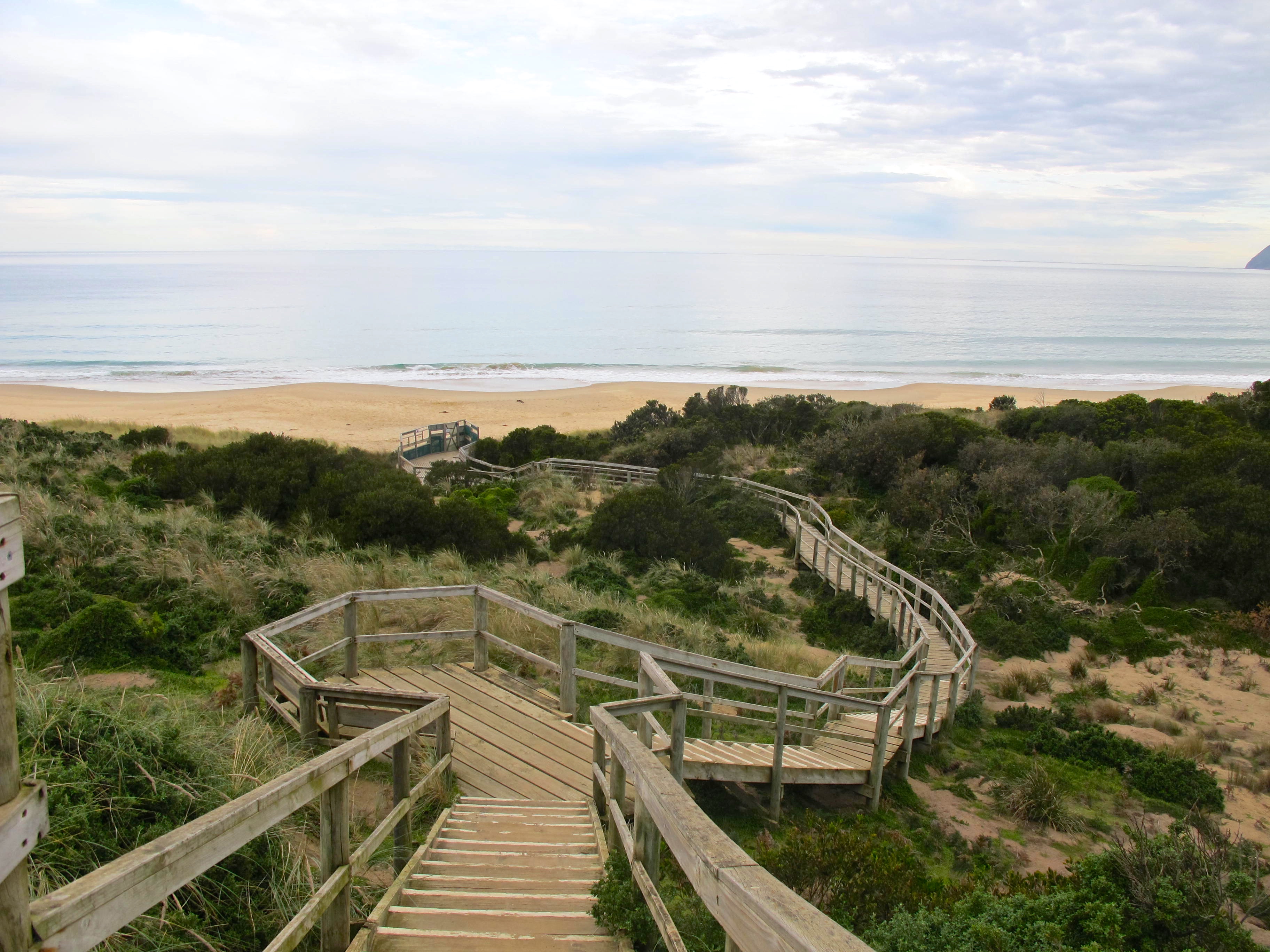
The scenery along the road is breathtaking and it is rare to pass another vehicle.  Adventure Bay is towards the southern end of the island and we had to pass along a narrow isthmus which, apparently in days gone by, the local aboriginal tribes crossed regularly hunting for wallabies, fish and penguins.  Now there is a well constructed walkway to the top of the hill affording magnificent views but also providing safe passage as this is also a penguin rookery.

IMG_5350

IMG_5365

It’s a long climb – but worth it once at the top!

IMG_5363

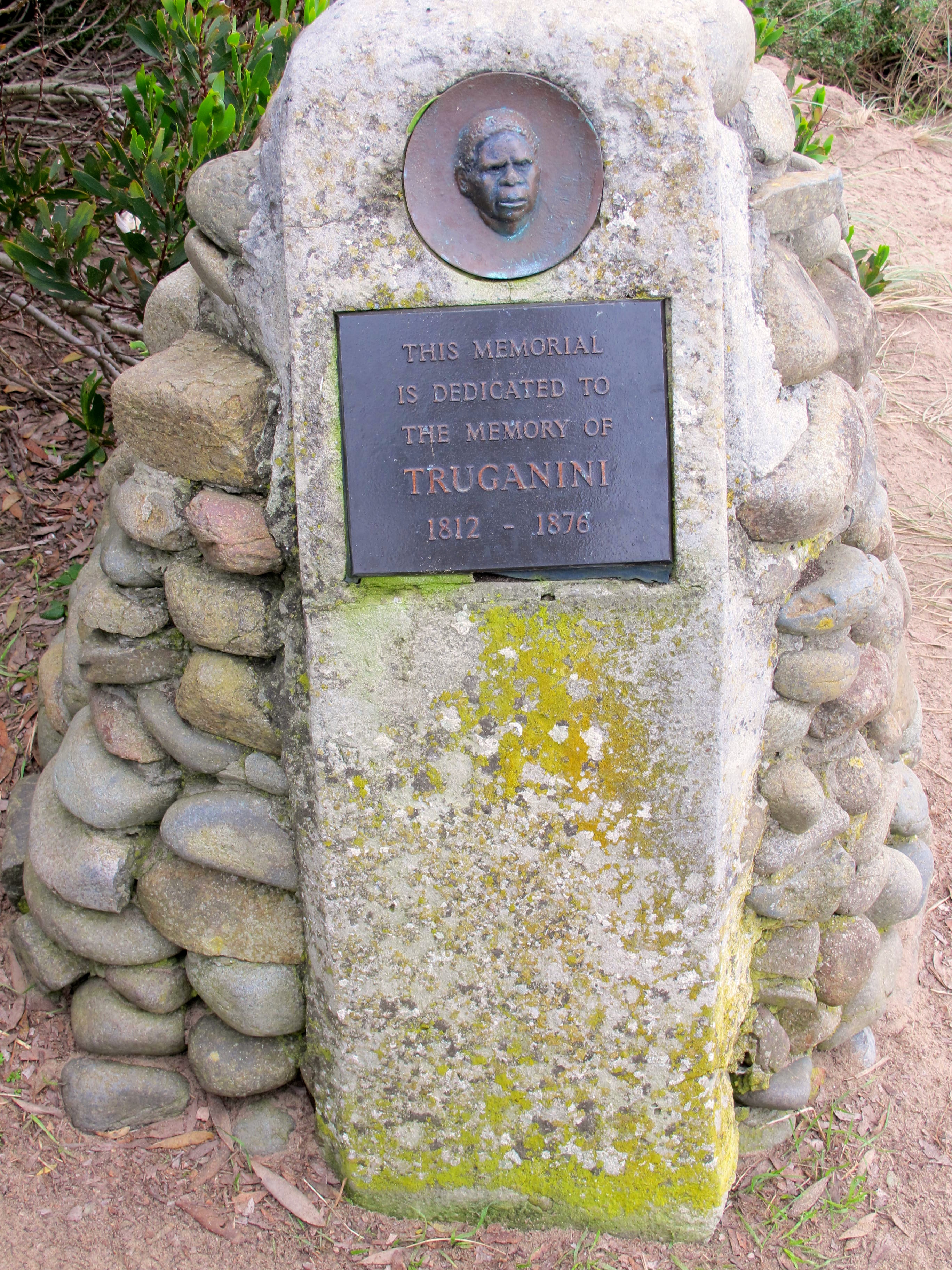
I was very moved by the tale of an Aboriginal woman called Truganini. A plaque at the top of the hill commemorates her life which was forever changed by the white invasion.  Her tribal connection went back 30,000 years and yet the arrival of white man brought violence and brutality.  At the age of 17 Truganini witnessed the stabbing murder of her mother by men from a whaling ship, Sealers captured her two sisters, Timber getters killed the man she was to marry and she was repeatedly raped by the men, her brother was killed and her step-mother kidnapped by escaped convicts.  Not surprisingly her father was devastated and died within months.

Following the loss of her entire family, Truganini worked as a guide and interpreter for George Robinson who had been appointed by the colonial government to persuade the Aborigines to peacefully give up their land.  Promises were broken, people were exiled and many died of disease of despair.  Eventually, Truganini spent many years at a settlement on Flinders Island before dying at the age of 64 in Hobart.

IMG_5354

It is hard to imagine those dreadful days when today there is peace and serenity everywhere.

IMG_5371

We arrived at the tiny settlement of Adventure Bay and found our house not far from the beach, up on the hill in a quiet little community.  Wallabies greeted us at the top of the drive and then scurried into the bush.

IMG_8655

The house is cosy and it wasn’t long before we had a log fire burning and a spread of delicacies picked up from the Deli in Hobart and local stores along the way, all washed down with fine Tasmanian wine.  A perfect start to our little stay on Bruny Island.

IMG_5381

A Few Days in Canberra

Last week we flew to Canberra for a few days before heading off to Tasmania.  It has been several years since we spent time visiting the museums and wandering around the nation’s capital.  Canberra is known as the “Bush Capital” and it is not hard to see why.  There are parks and gardens everywhere, the leaves are all changing colour and falling and there is an absence of traffic jams and crowds that is so common in a city.  Keen to get to see as many museums and galleries as we had time for, we headed first to the National Portrait Gallery and then the National Gallery next door.

The Photograpic Prize exhibition was on and was wonderful – 44 finalists and a presentation of varied styles and subjects. All very motivating and enlightening.  The collection of aboriginal art at the National Gallery is amazing as well as many beautiful ‘Old Masters’ and modern art.  In fact there is something for everyone at any one time.

The War Memorial was the highlight and what an amazing place to visit.  Be warned, it is impossible to see everything in one day but we did our best!

image

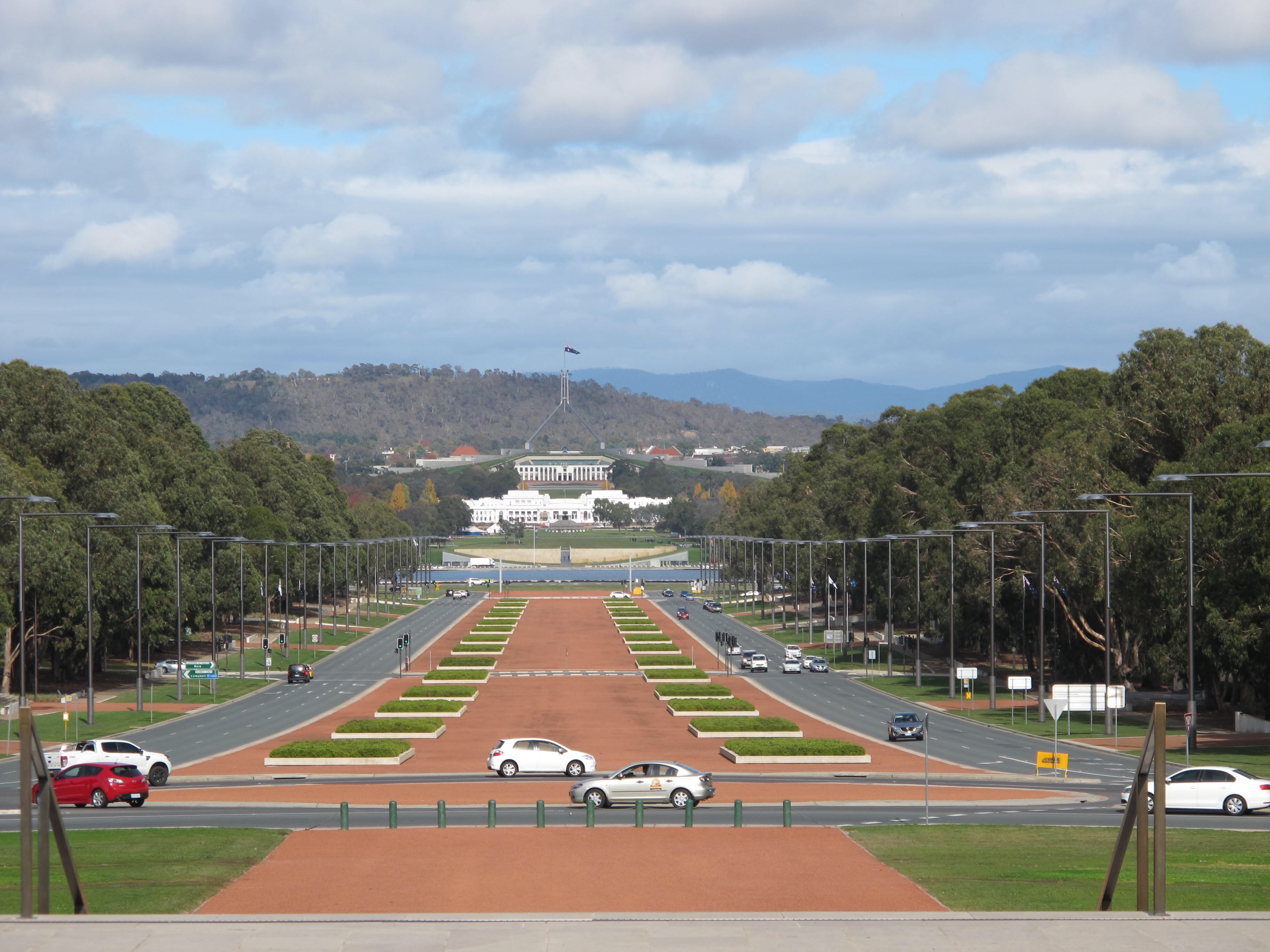
It was a beautiful day and Parliament House was clearly visible from the entrance to the museum.

image

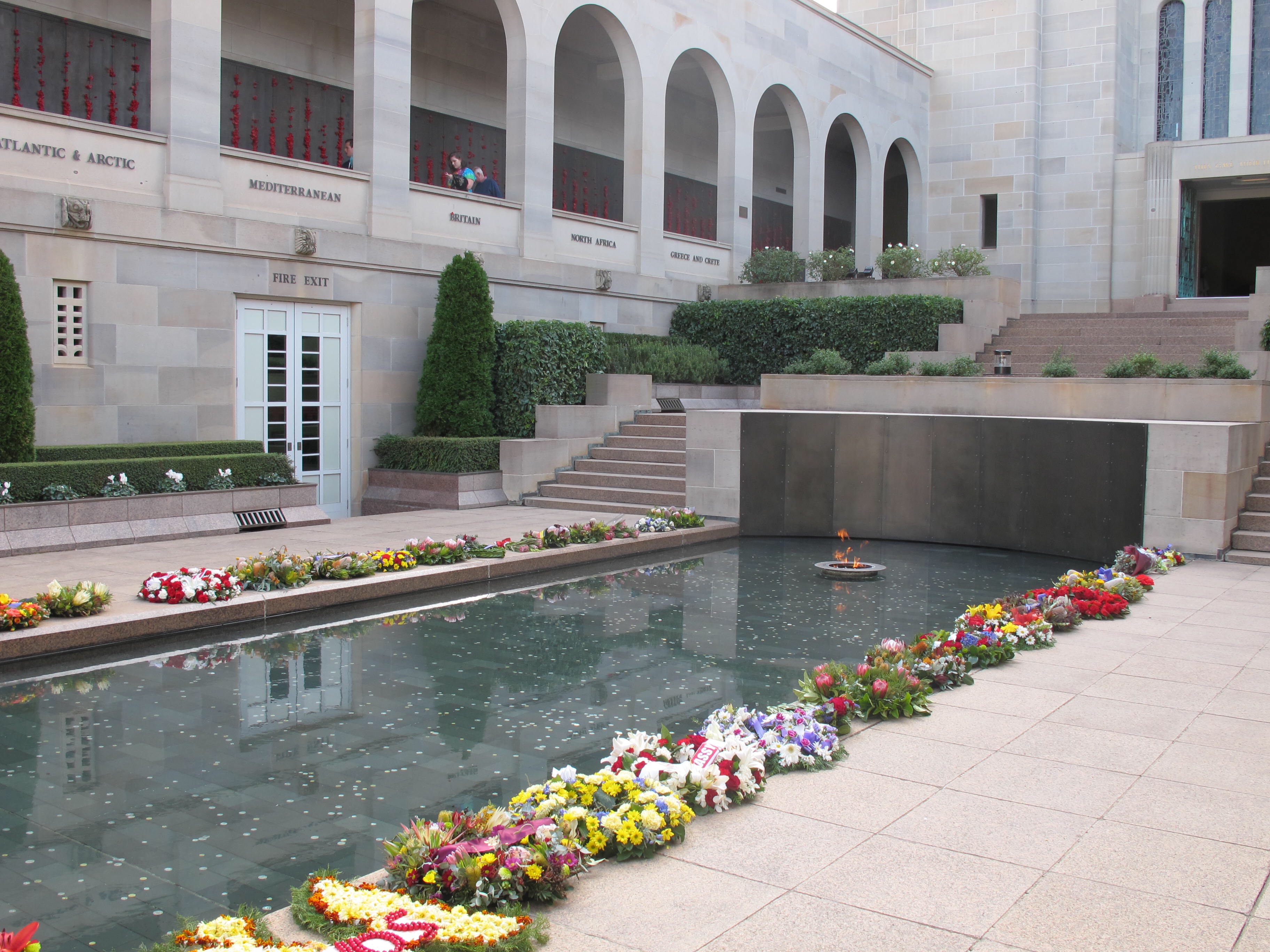
The Pool of Memories with the eternal flame is very moving and a place where one can contemplate quietly.  As Anzac Day was only a week ago, all the wreaths made a colourful backdrop.

image image

Walking through the through the various parts of the Museum from The First World War through to the current wars in the Middle East, one has to wonder at the incredible waste of lives and yet at the same time praise the courage of those who went to war to fight for their country, beliefs and freedom.

image

This is is my favourite sculpture  – out in the gardens and depicts true “mateship” in the Aussie vernacular.

Next day we took a drive through Canberra and out to Cotter Dam and Tidbinbilla where we learned a bit more about research into Space.

image image

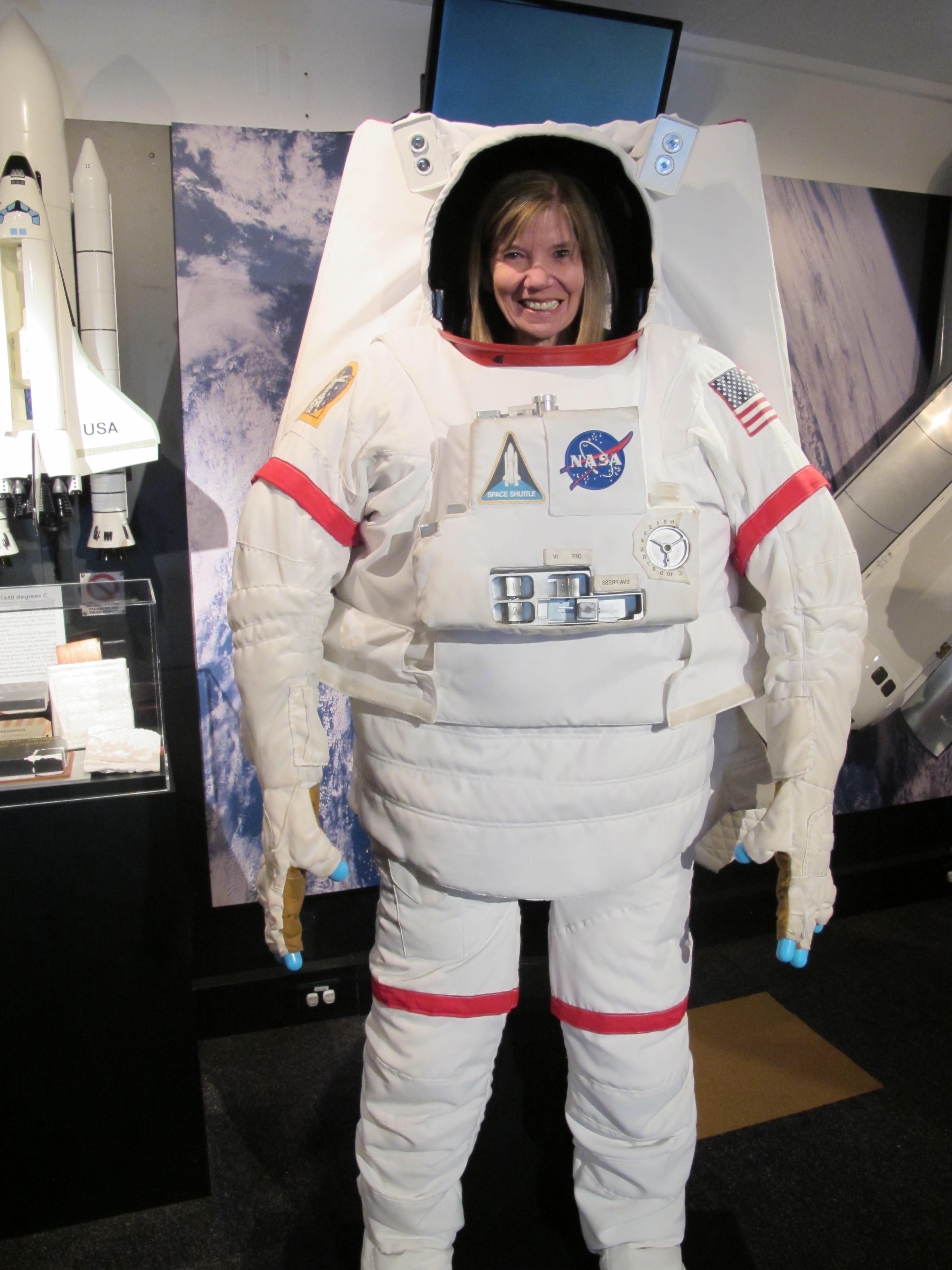
And here is my sister all ready for blast off!  It was quite fascinating to learn about the preparations the astronauts take prior to going into space – from the very basic needs to food and health.  Not something one would undertake lightly!

image

The country side side was ablaze with blossoms and various changing colours of leaves – something we never see in the tropics.

image

Climbing up the Telstra Tower we had a perfect view of Canberra – how the city has grown since we were last here!

image image


And so, next stop Tasmania – via the overnight car ferry “Spirit of Tasmania”.

ANZAC DAY ON MAGNETIC ISLAND

We were on the island last weekend and Saturday happened to Anzac Day – a day where Australians honour all those who gave their lives in various wars.  This year was special as it is 100 years since the landing at Gallipoli, and the first major military action fought by Australian and New Zealand forces during the First World War. In the lead up to the 25th April there were many stories, documentaries and tales of the men who went to Turkey to fight for their country and of those who didn’t return.

Each year a Dawn Service is held in cities and towns around the country.  On Magnetic Island, beautiful Alma Bay was the location for the service.  We decided to walk to the park – some 2 km away –  the trail hugs the coastline and is normally a beautiful walk.  However, it was dark and so we powered along and were amazed at the crowd that had already assembled at the cenotaph by 5 a.m.

anzac day  2012 6

The honour guard stood motionless at the cenotaph and a parade of servicemen and women marched to the park from the nearby RSL.  There was silence everywhere and at 5.30am a gunfire salute hailed from two landing craft anchored in the bay.  The staccato sound of shots, followed by silence and then more shots brought to life what the men must have faced in the dark one hundred years ago.

IMG_1396


The service began and the sun slowly rose over the bay.  The atmosphere was solemn and very moving as dawn arrived and the birds sang a chorus.  Rarely have I seen such a large crowd of all age groups totally rapt in the proceedings.

image

As it became light, the landing craft became more apparent and the bay was bathed in a golden light.

image


Finally, when the service ended and the dignitaries dispersed, we were left to ponder on the significance of the day.  I wandered down to the water and captured a shot which said it all – a lone swimmer in the bay with the landing craft of war in the distance.

image


URBAN WILDLIFE AND MORE

The other day, as I was about to get into my car, I looked up into the tree nearby and found the sweetest little possum with her baby on her back.  I was quite startled as she was very close and was probably as surprised as I was and maybe a little afraid.  It is unusual to find these animals in the daytime and I can only think she was out looking for food and water as it has been so hot and dry of late.

IMG_0084They can be a real pest and we have quite a few around the house.  Scampering along the roof in the middle of the night or every early in the morning they can make an awful noise and many is the time I have (not so) silently cursed them!  However, I love their huge eyes and pink noses so put up with them – not that I can do much as they are protected species now and it is illegal to move them more than 200m. from the property anyway!

That got me to thinking about other wildlife we have around the house.  There are wallabies on the hill around us and they too come looking for water and fresh feed – often they just sit and stare at me, almost willing me to do something to alleviate their problem.

IMG_1613 IMG_5886This guy looks quite short sighted!

Then we have the scrub turkeys – and they are always around but recently one actually came onto the balcony, strutted around my pot plants and then hopped onto the garage roof.  This one has a family and I have seen a few babies around from time to time.

IMG_6841IMG_6843

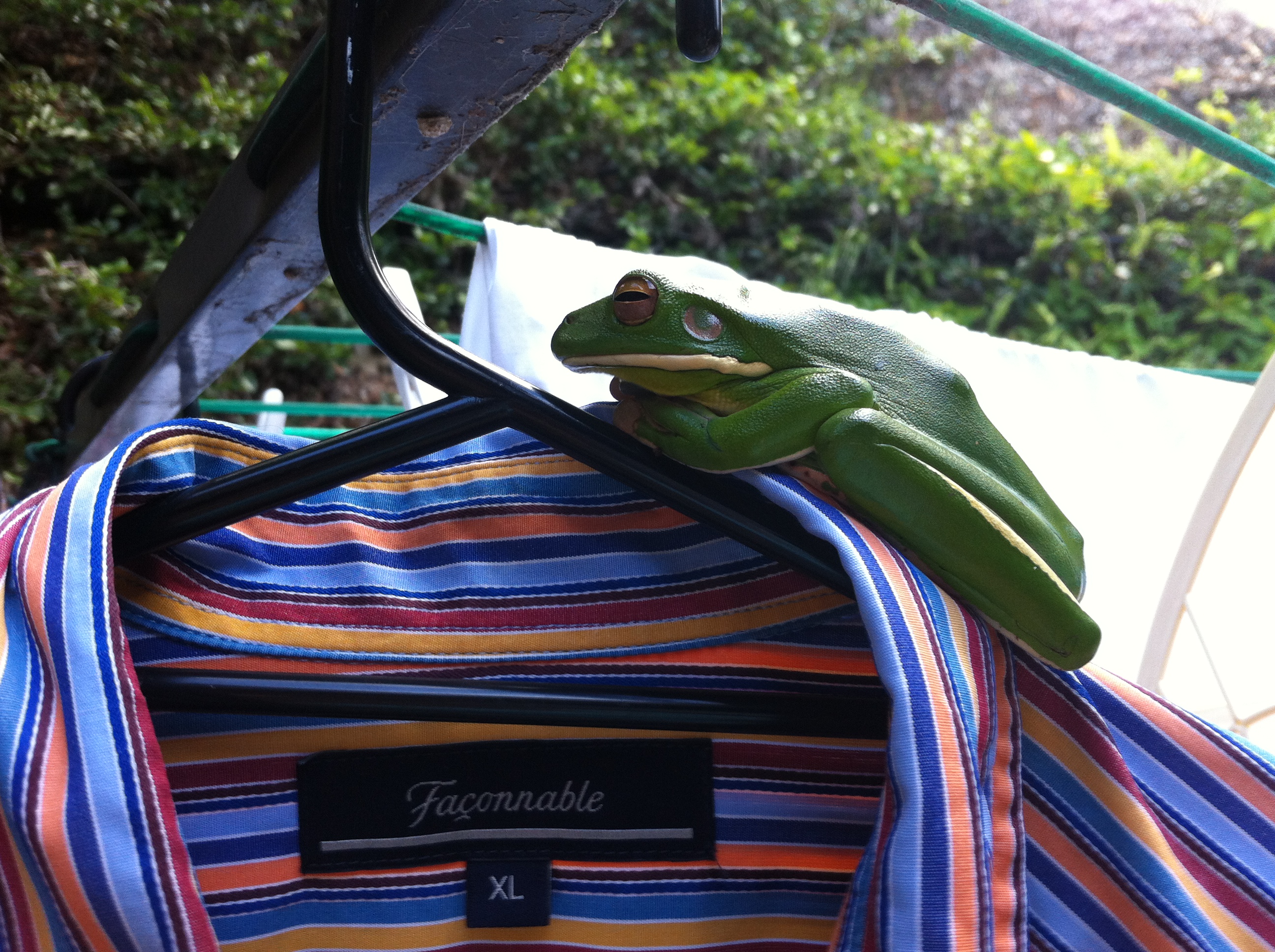
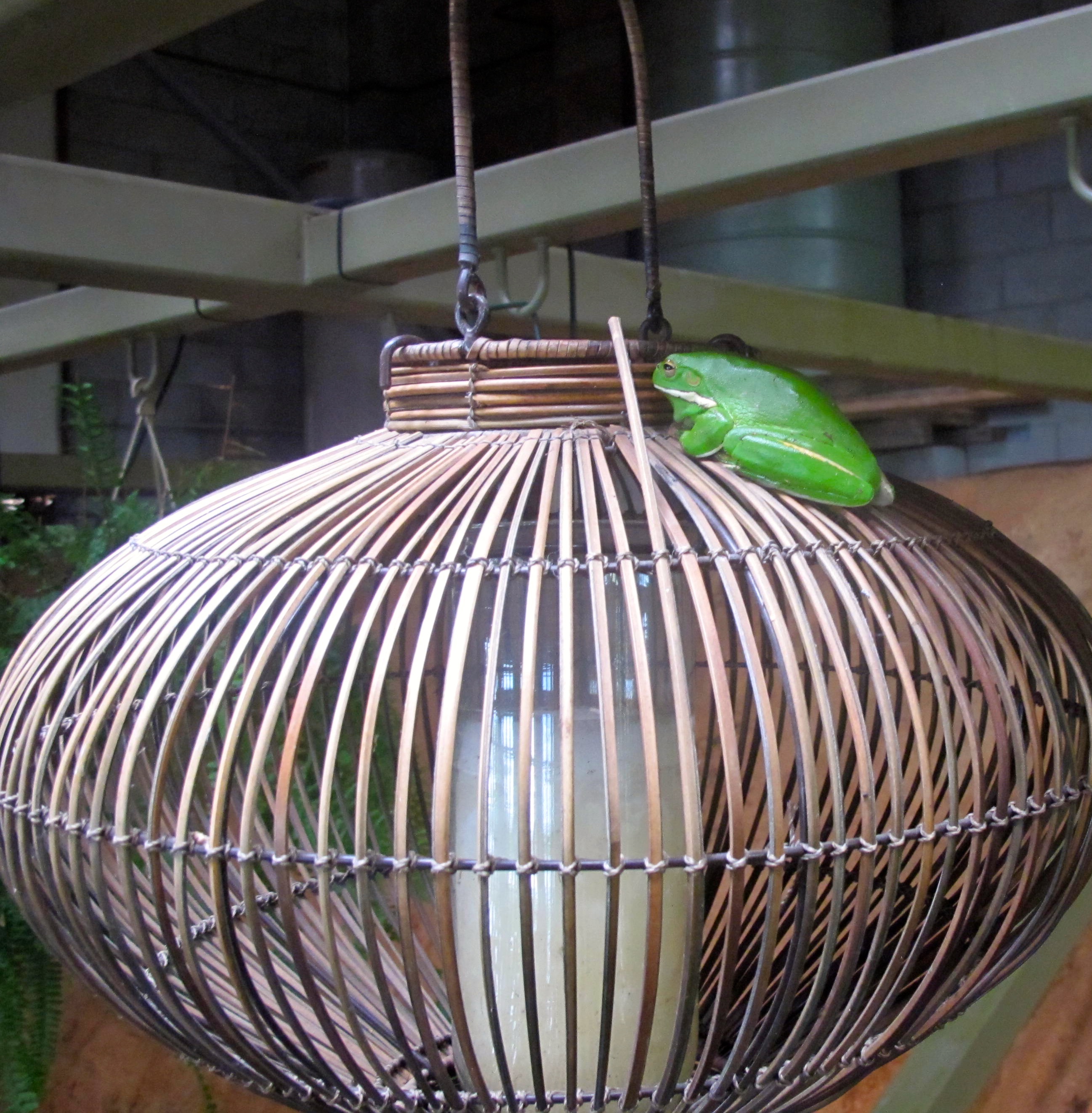
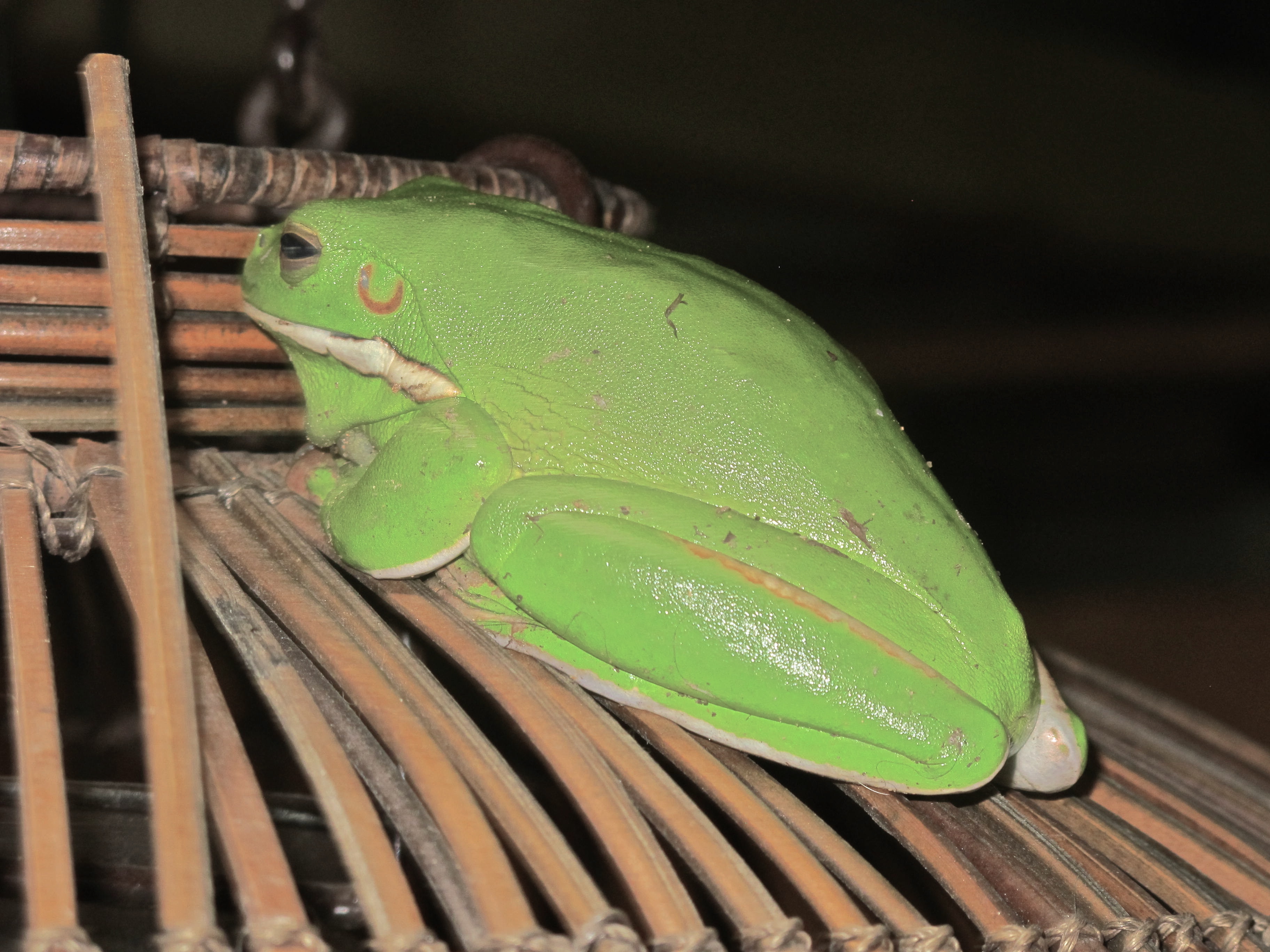
Then, of course, there are the green frogs, which I love and which seem to come back to the same place all the time.  This guy likes the colour of the shirt on the line, obviously and then retires at night to the lamp on the verandah.

IMG_0244

IMG_4419IMG_4417

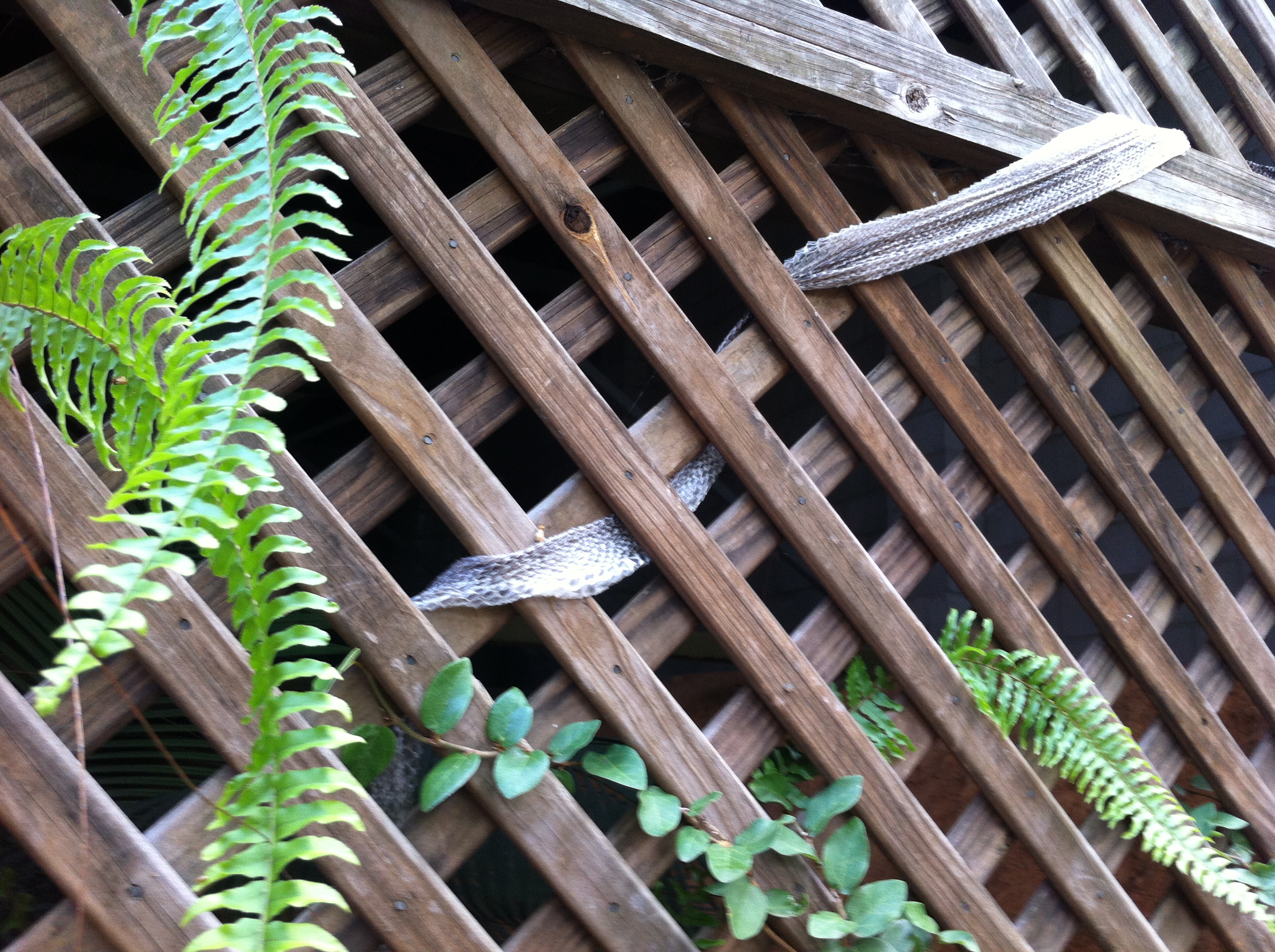
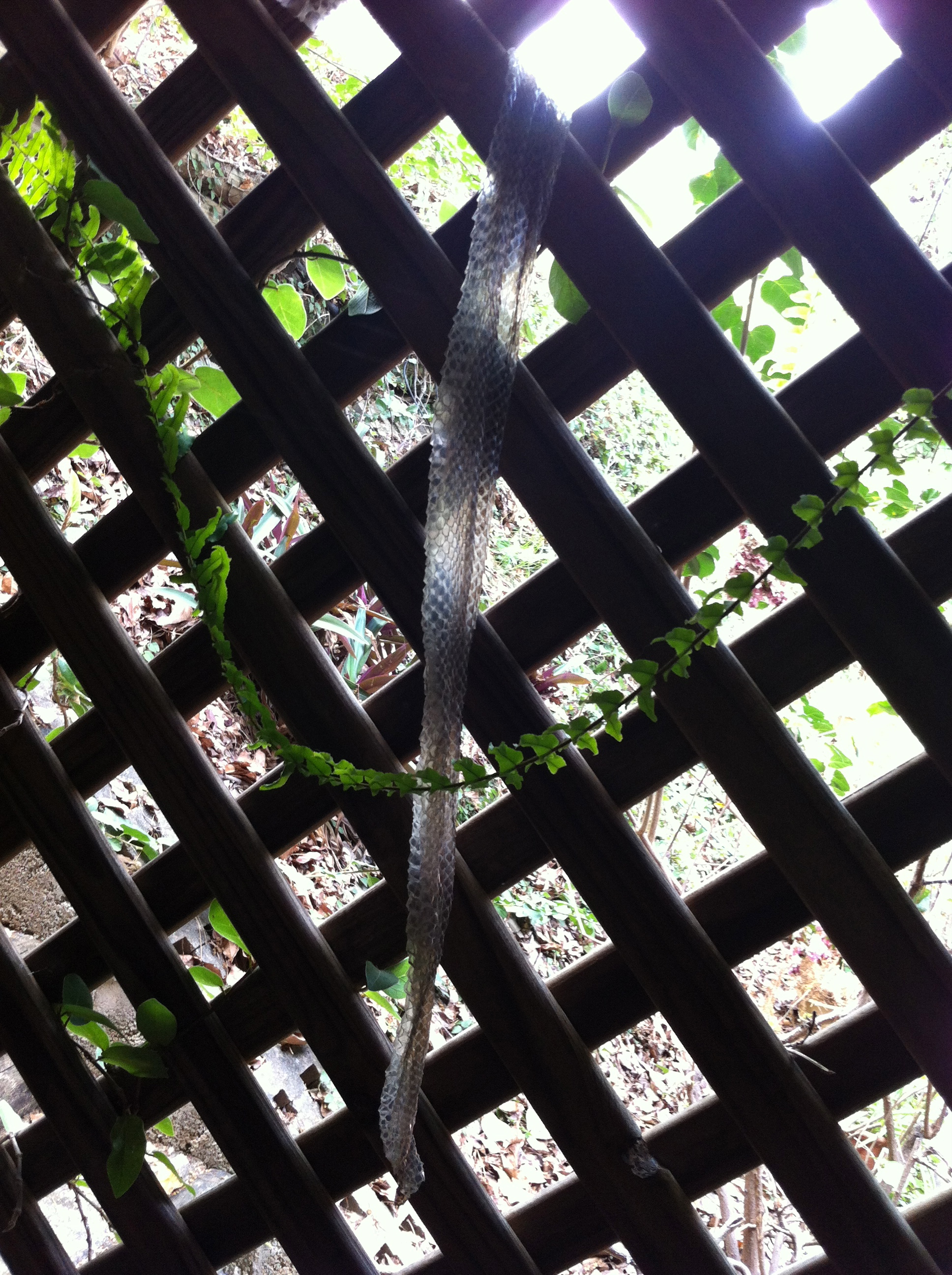
When I don’t see him, I worry that the python has been around.  Yes, we have a large resident python who, I think, lives under a large boulder on the hill behind the house.  One day I found his skin entwined through the trellis of the back verandah…..

IMG_0514 IMG_0515

I have seen him a few times but was annoyed one day when I heard the birds making an awful screech and they sounded very worried.  Looking up at the tree, I found a smaller python attempting to rob a nest.

IMG_5899The birds got together and several of them attacked him – being young I guess he didn’t know what to do in that situation, so he slithered off!

IMG_5902

IMG_5905But – the family has increased as just last night, as I went to lock the gate, I found a baby python curled through the slats.

IMG_1146He was quite beautiful, so we just left him to his own devices and by this morning he had gone.

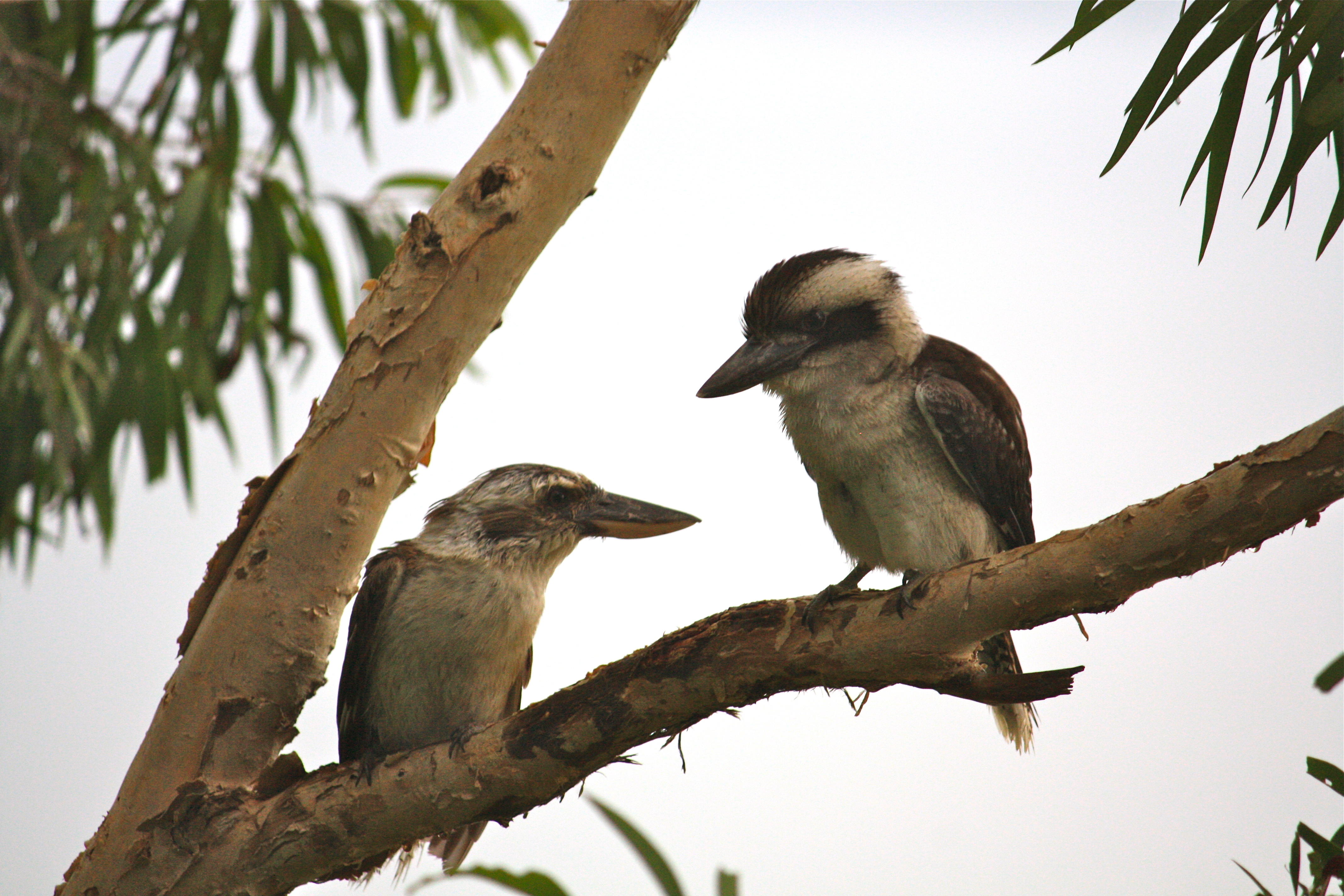
I love the sound of kookaburras and from time to time they are in the trees near the balcony or on the lamppost on the street.  A couple of times we have had them on the balcony on the island and have fed them bacon or mince but here they just sit and sing.

IMG_5895

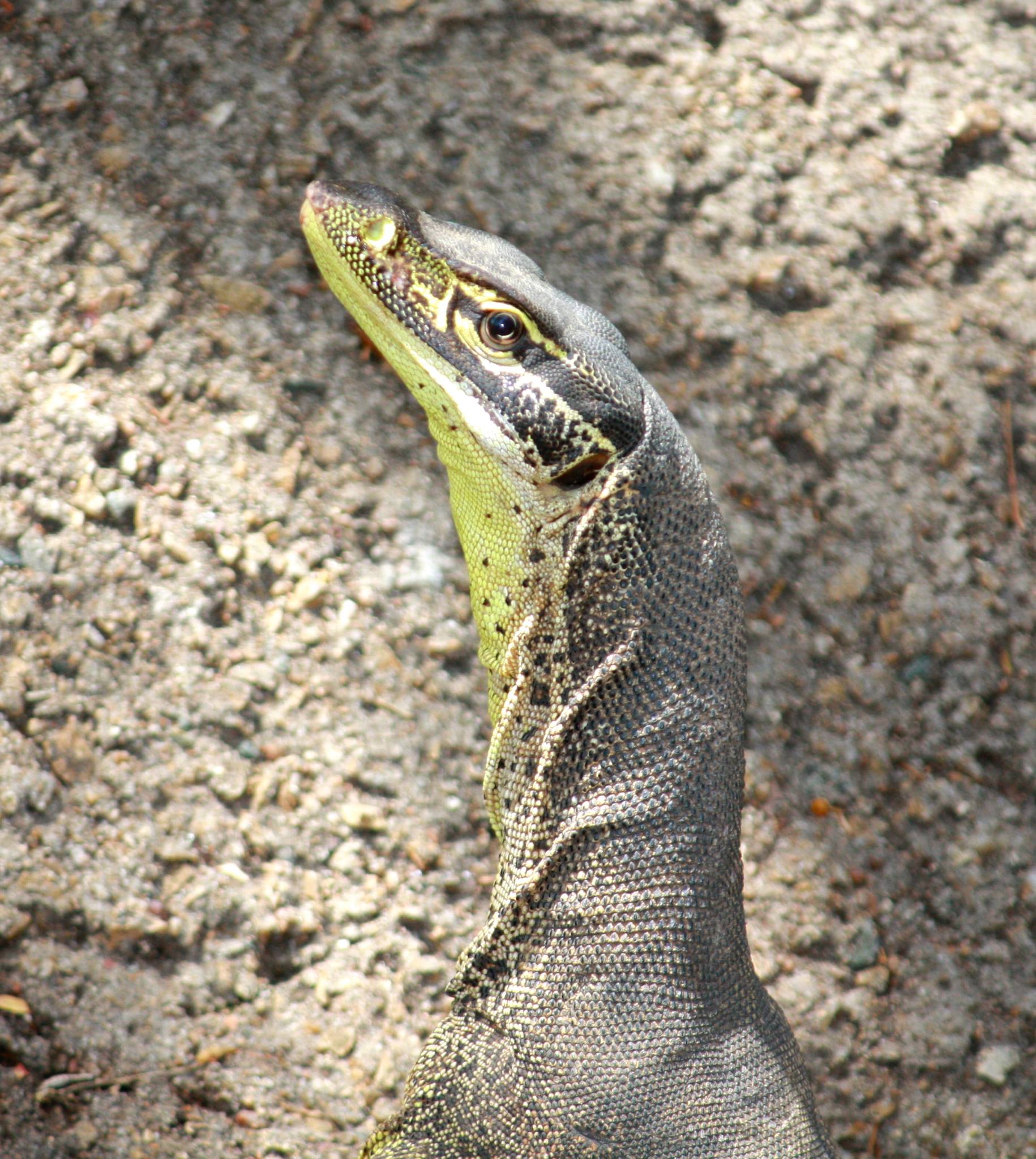
We also have a resident goanna – he is quite beautiful, don’t you think?

1274384_10151971522603185_208461560_o

Add to that a little echidna, lots of birds as well as the domestic dogs and cats and we have quite a little wildlife sanctuary – and they all seem to get on together!  The most amazing thing is that we are only 3 km from the CBD…..this is North Queensland!

WONDERFUL WAITANGI – NEW ZEALAND

I love delving into the history of places we visit and New Zealand has a rich story dating back to the early explorers and even before.  One place which should be on every New Zealand visitors’ “must see” list is the Waitangi Treaty Grounds at Pahia in the Bay of Islands.  Here the Maori chiefs first signed their accord with the British Crown and the Treaty is New Zealand’s founding document.

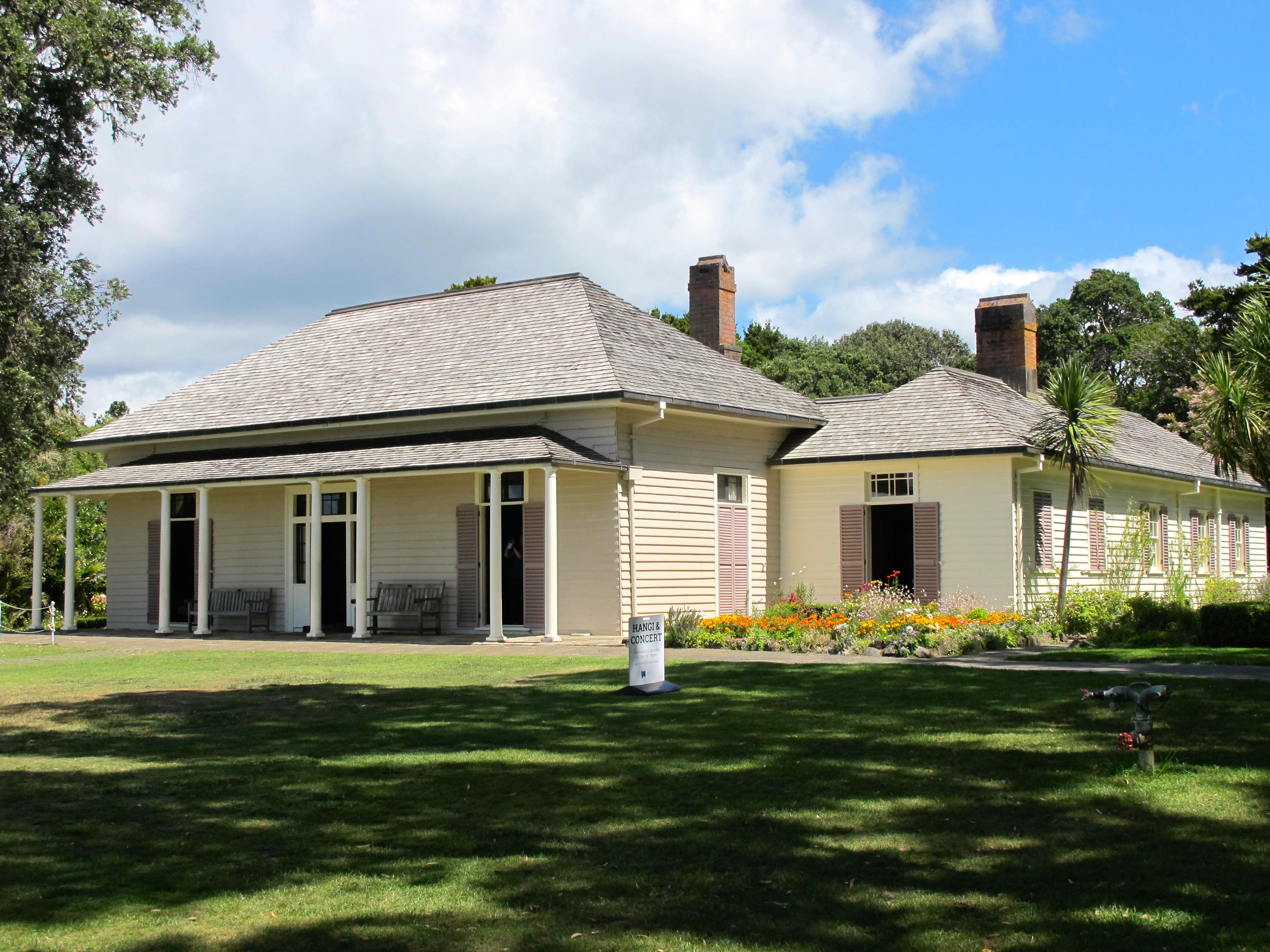
We took the little ferry across the Bay to Pahia and walked along the foreshore to the Grounds.  Here we learnt a little about Maori history and culture and visited the Treaty House.

IMG_5164

From 1833 to 1840 this was the official British Residency and the home of James Busby and his wife and six children.  It is now a fascinating museum which brought to life the times in which the family lived.

Next we saw the world’s longest ceremonial war canoe which is 35 metres long and needs a minimum of 76 paddlers to handle it safely.

IMG_5157

The canoes are launched every year on 6 February as part of the Waitangi Day celebrations.  A special covered hut has been built so the canoe can be launched directly into the water.

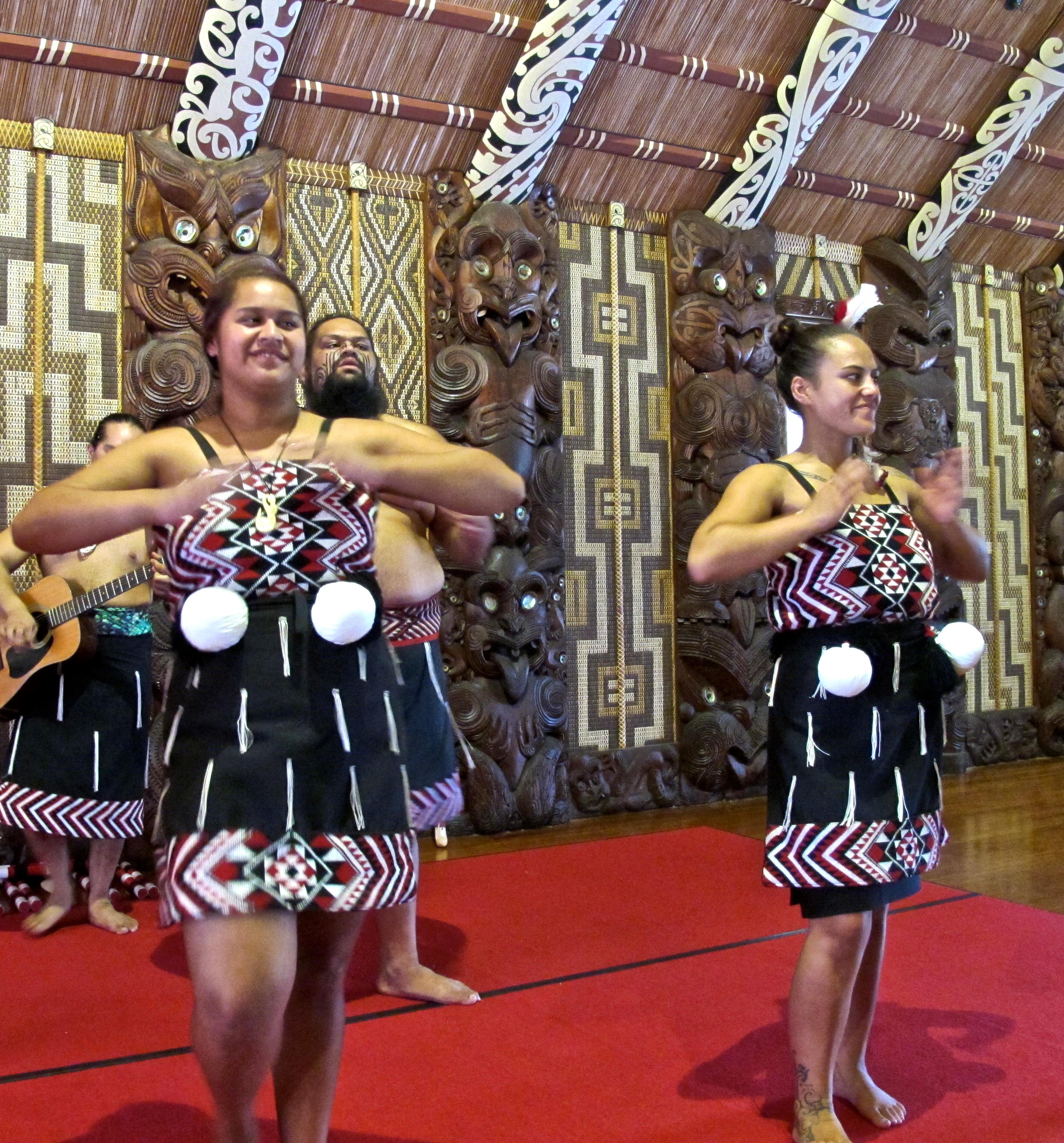
The carved Meeting House is a beautiful building intricately carved and faces the Treaty House which symbolises the partnership between Maori and the British Crown.

IMG_5166

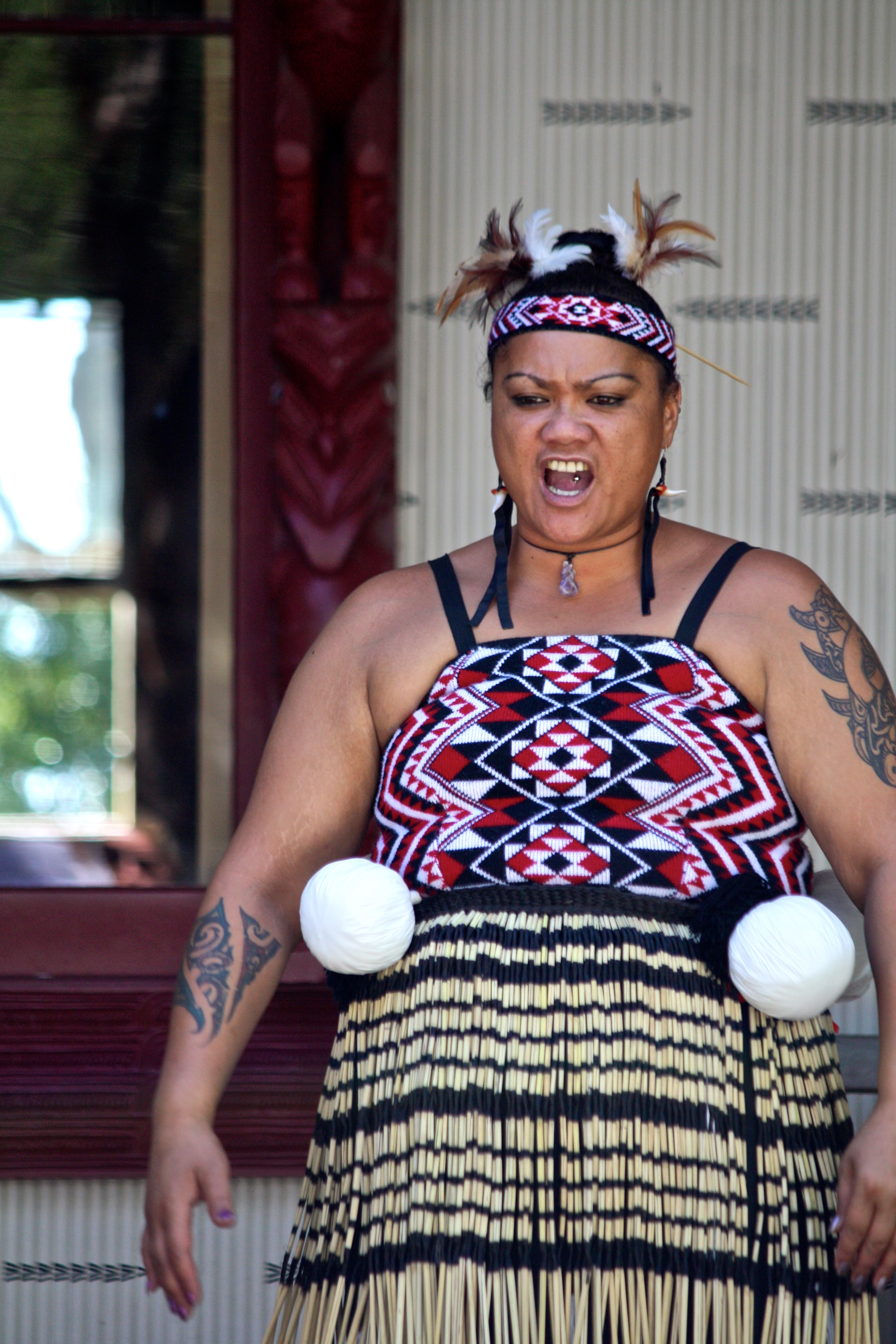
We saw a short cultural performance here and a haka was performed before we entered – the idea to frighten alien people years ago and I have to admit, had I been there in those times, I would have taken to my heels very quickly!

IMG_8430

IMG_8437 IMG_8439 IMG_5171

Afterwards we made friends but I was reluctant to get too close to the big guy!

IMG_5190

The Flagstaff marks the spot where the Treaty was signed on 6 February 1840 and today flies the flags of the United Tribes of New Zealand, The Union Flag from 1840 and the New Zealand Flag.

IMG_5162

Busting with historical data and real stories, we made our way back along the coast road to catch the ferry back to Russell and a quiet dinner on the beach.

IMG_8429

RUSSELL in the BAY OF ISLANDS, NEW ZEALAND

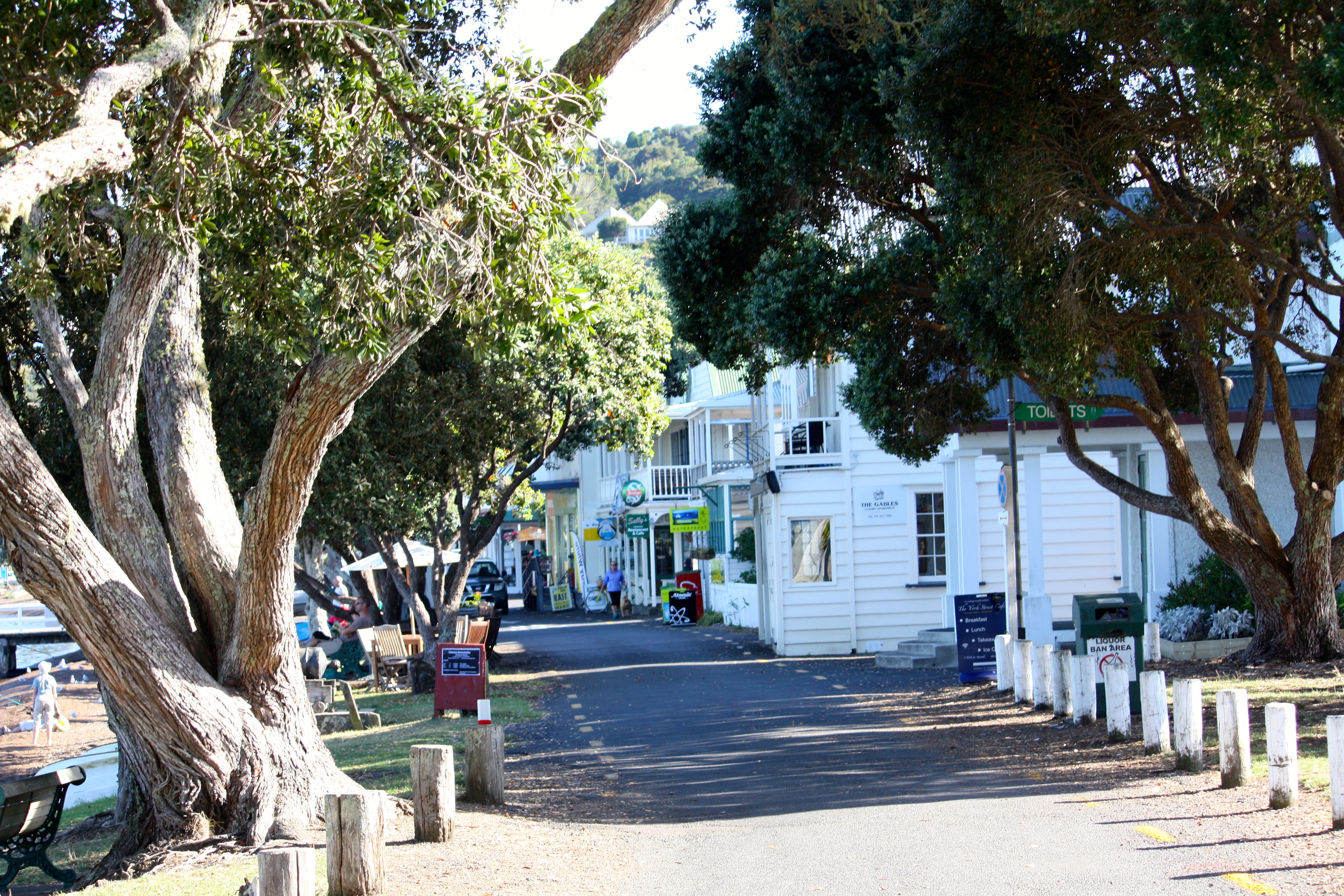
Russell, also known as Kororareka, is a charming little seaside town which has an interesting history.  It was the country’s first seaport and also the first European settlement.  There are many historic buildings and we spent several happy hours wandering through the Museums and learning about the former “hellhole of the Pacific” named because it was a shoreline destination for whalers, traders and seamen during the 19th century.

IMG_8399 IMG_5142 IMG_5143 IMG_5152

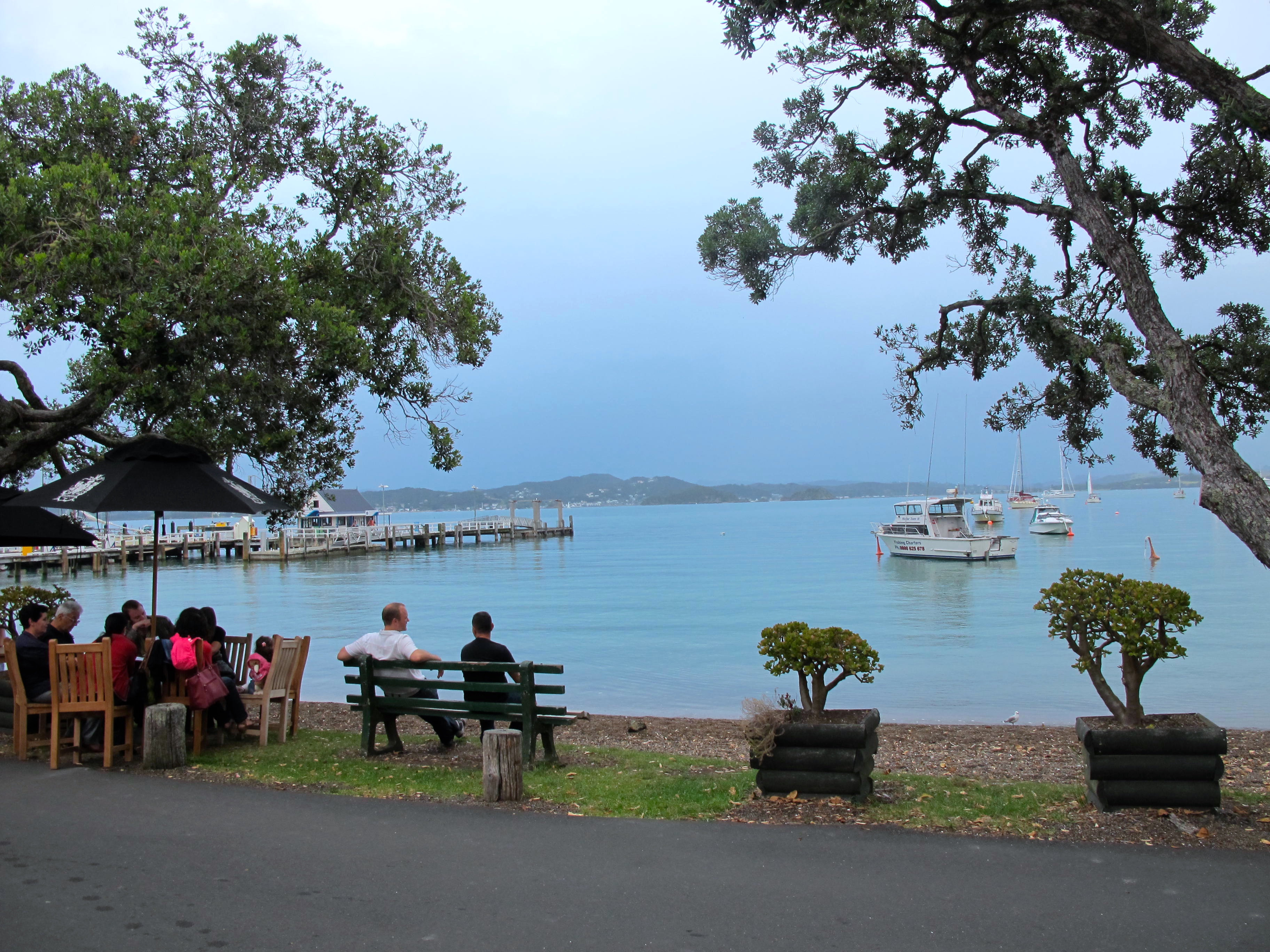
The Duke of Marlborough Hotel, the oldest hotel in the town has been restored and is in a perfect position for dining on the waterfront.  Tables have also been set under the trees by the beach and we watched a couple of beautiful sunsets from there.

IMG_5154

The little passenger ferry runs continually across the bay to Pahia.

IMG_8403


Legend says that a chief wounded in battle asked for penguin and after drinking some of the broth, murmured “Ka reka te korora” (how sweet is the penguin). The town was named Russell in 1884.  Many of the original buildings remain and a fine example is the Catholic Mission “Pompallier” which was built in 1841 and used as a printery, tannery and storehouse for the Marist Brothers.  The building is made of rammed earth and has been restored as a working museum where every aspect of tanning, printing and binding is described and in some cases visitors can participate with hands on.  The garden is magnificent and was created first of all to grow vegetables to feed the residents and then as a peaceful place to contemplate.

IMG_5148

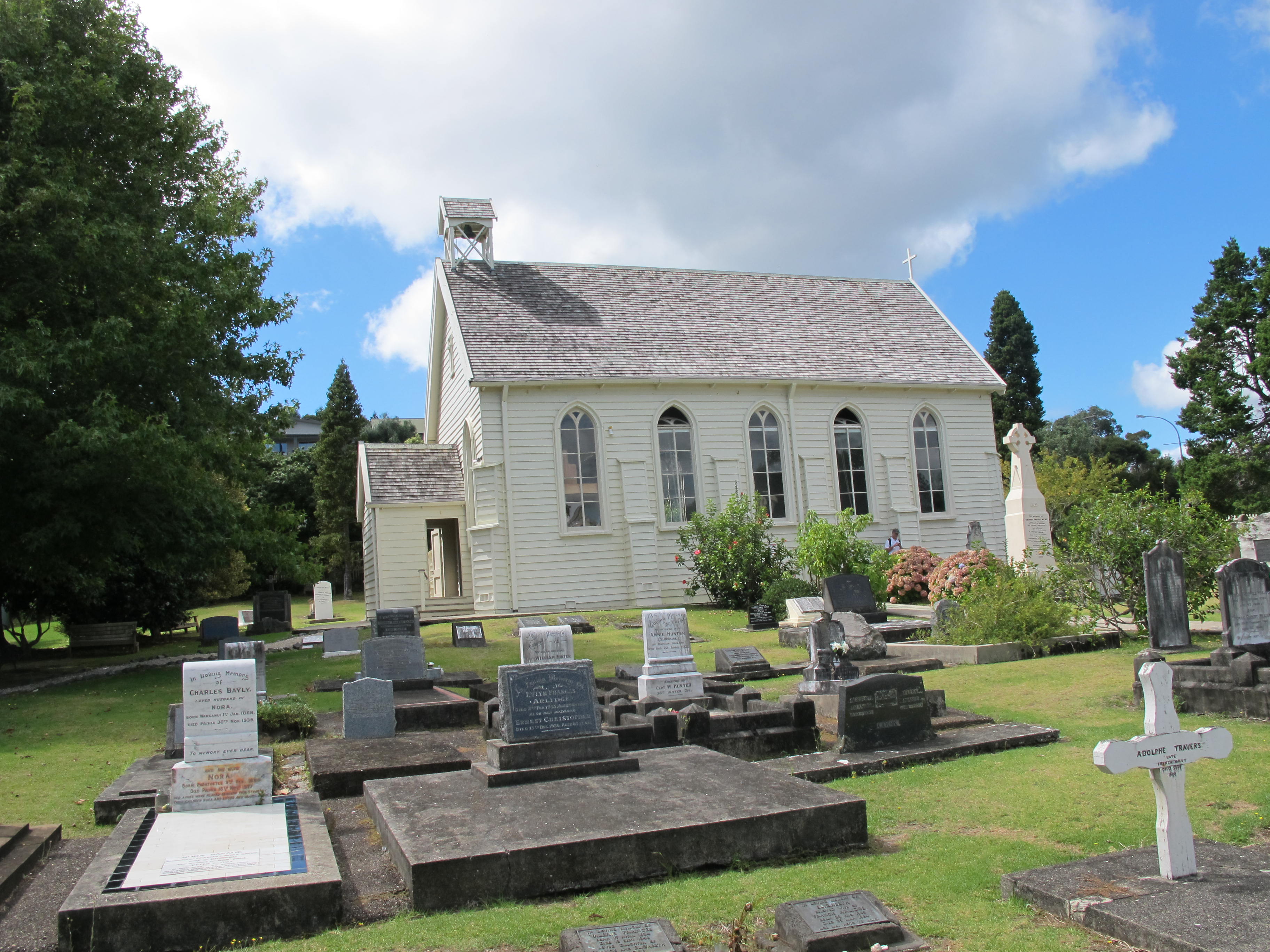
The oldest existing Church in New Zealand is in Russell and is worth a visit if only to see the musket ball holes from the New Zealand land wars!

IMG_5151


We spent three nights here and could have stayed longer.  More history is to be had at Waitangi, across the bay, and we spent another fascinating day there, but that’s another story…..

Reflections on Magnetic Island and Times Past

Magnetic Island is a jewel in North Queensland’s crown and I look forward to each weekend when we can take the ferry across the bay and completely relax in our little paradise.

 P1000159

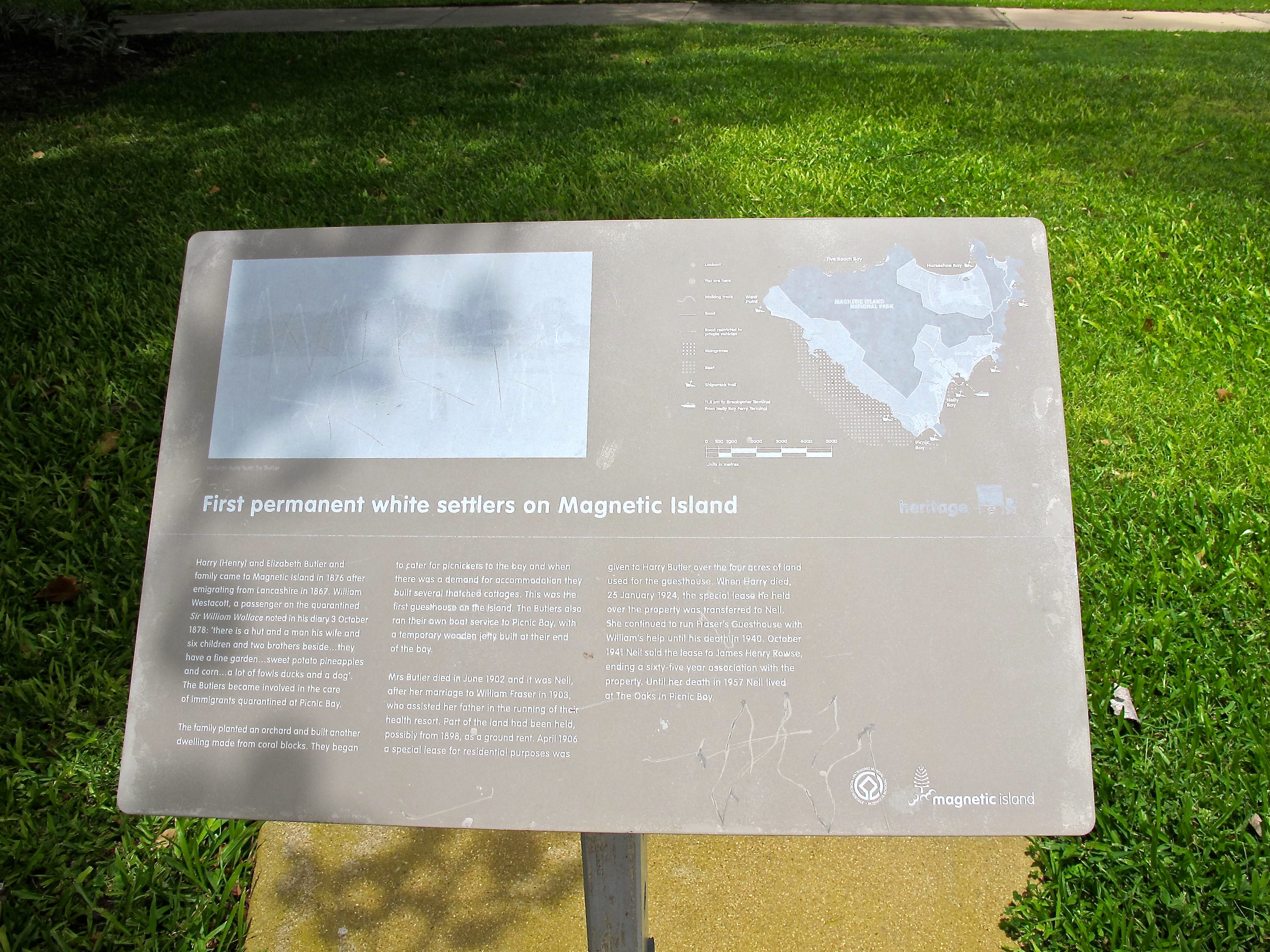
Last weekend I started to think more about the first white settlers who came to the island. We were walking along the shady path by the beach at Picnic Bay, which in itself is worth a visit. The old banyan fig trees that line the shore are fascinating with huge aerial roots and plenty of climbing opportunities for children who can let their imaginations run wild. There have been plenty of stories of goblins and fairies, dragons and monsters lurking deep in the twisted branches and all the while the cockatoos screech and play above looking for seed pods.

IMG_5066

IMG_5064

IMG_5057IMG_5059

At the end of the walk there is a plaque remembering the life of the first known white settler. Harry Butler came to the island in 1876 after emigrating from Lancashire in northern England in 1867. My own family ancestors were also from Lancashire and at that time the county was important for it’s cotton mills and the industry arising from cotton. The countryside was beautiful and there were small villages and farms where people lived either from farming or spinning and weaving, which was done at home. They would send their bolts of cloth to the mill or factory via canal boat and canals criss-crossed the county with longboats providing much needed transport for coal and produce. The cities were grimy and crowded and living conditions harsh. I wondered about Harry Butler bringing his family across the oceans to the unknown and then choosing to settle on a small island off the mainland where there was nothing except opportunity.

IMG_5053

Life would have been tough. A passenger, William Westacott, on a quarantined vessel Sir William Wallace noted in his diary on 3rd October 1878 : ‘there is a hut and a man, his wife and six children and two brothers beside…..they have a fine garden….sweet potato, pineapples and corn …a lot of fowls, ducks and a dog.’ I tried to imagine Elizabeth Butler working in her garden in long skirts and heavy shoes in the heat and humidity of the tropical summer. Her English roses complexion would have suffered under the harsh sun in spite of large hats which were always worn. How different it must have seemed to them after Lancashire. Perhaps they thought it was their own little paradise.

IMG_5060

The family planted an orchard and built another hut made from coral blocks and began to cater for people who came across from the mainland for picnics. Eventually they built thatched cottages so people could stay overnight and then, recognising the demand, they ran their own boat service to Picnic Bay from the mainland and built a temporary wooden jetty.

Thus began the first tourism venture on the island.

Elephants Never Forget

A regular feature for a blog?   What a good idea.  Not only does it keep your mind on track but it should develop a routine – and I am a creature of routine!

My “Regular” will be photographic and I have a huge store of images I can draw on.  Several safaris in Africa have furnished me with hundreds of wildlife photos and I have lots of favourites.  This is the first one which I thought appropriate as “Elephants Never Forget” and hopefully I won’t forget to post on a weekly basis!

Dunia ele 01

This beautiful mother and her baby were cooling off in a waterhole in the Serengeti.  The herd had several young and they behaved like children, wallowing in the water, rolling in the dust and pulling at each other’s  tails.  This little one just wanted to stay close to Mum.