PRE-HISTORIC LIFE IN WESTERN QUEENSLAND

Dinosaurs and more dinosaurs!

The Australian Age of Dinosaurs Museum of Natural History is located 24 km south of Winton on the “Jump Up”. Locals know this term but I discovered that The Jump-Up is a large mesa plateau that is approximately 270m above sea level and stands 75m above the surrounding land and forms part of a mesa formation called the Vindex Range. Like much of the Winton Shire, the Jump-Up is part of the Winton Formation, which is dated around 95-98 million years old.

We decided to go early so we could maximise our time taking in the various displays, movies and self guided walks as well as enjoying the stunning scenery and native flora and fauna. This museum holds the largest collection of Australian dinosaur fossils in the world.

From the start we were amazed at the location – the museum complex sits on 1800 hectares of spectacular mesa plateau and the scenery is vast with lots of walking trails and wildlife.

This is also a working dinosaur museum with the most productive Fossil Preparation Laboratory in the Southern Hemisphere, so we headed to the lab first to gain a little insight into the life of these pre historic creatures and the area they lived in 1000 million years ago.

A short stroll later took us back to the award winning Reception area which opened in 2012 and contains a shop, cafe, staff facilities and a Holotype room, also known as the Collection Room. Designed to blend into the surrounding Jump-Up rock, the building takes on the earthy hues and textures of the surrounding landscape. The concrete walls of the building were coloured and stamped with latex mats that were moulded from the rock surface of the Jump-Up rock.  A life sized, 5m long bronze statue of Australovenator (“Banjo”) stands at the entrance to the Reception Centre. 

The Collection Room is fitted with audio visual equipment which complements the guided tours by showing animation footage of western Queensland’s dinosaurs. This was fascinating and the children were captivated especially as the footage consists of excerpts from the documentary Monsters in the Outback – the video of which the kids watched in the car prior to our visit.

Then we hopped on the Noble Express shuttle – a little bus which took us to the Dinosaur Canyon Outpost and the March of the Titanosaurs exhibition.

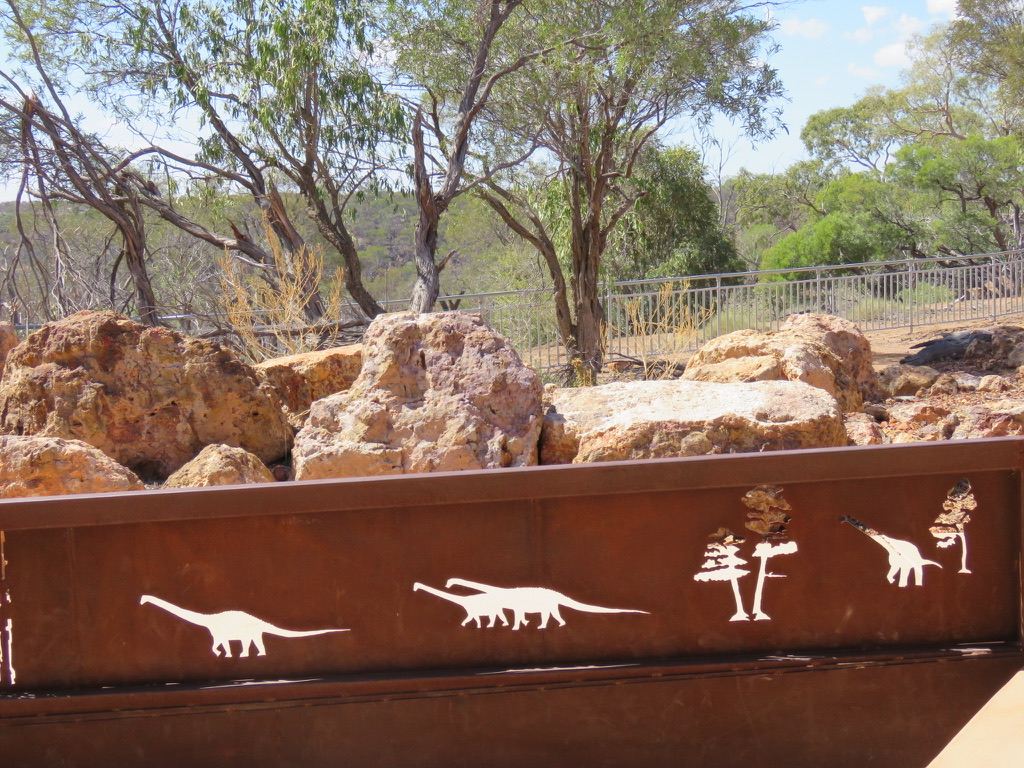
The Outpost is perched on the cliff overlooking Dinosaur Canyon and includes 300 metres of elevated concrete pathway throughout the gorge below. Five outdoor galleries are positioned along the pathway, which resembles a treetop walk as it winds throughout massive boulders and thick vegetation below the rim of a gorge. The Dinosaur Canyon exhibits recreate life as it would have appeared during the Cretaceous Period including: Dinosaur Stampede, Pterodactylus Family, Kunbarrasaurus ieversi, Death in the Billabong and Valley of the Cycads. Australia’s first International Dark-sky sanctuary is here and the building is currently under construction. When finished it will be called the Gondwana Stars Observatory and will enable visitors to see the quality of the dark night skies without any threats due to its remote location.

The March of the Titanosaurs exhibition is in a purpose built room which is temperature controlled and displays a 54 metre long Snake Creek tracksite which was discovered on a property near Winton.
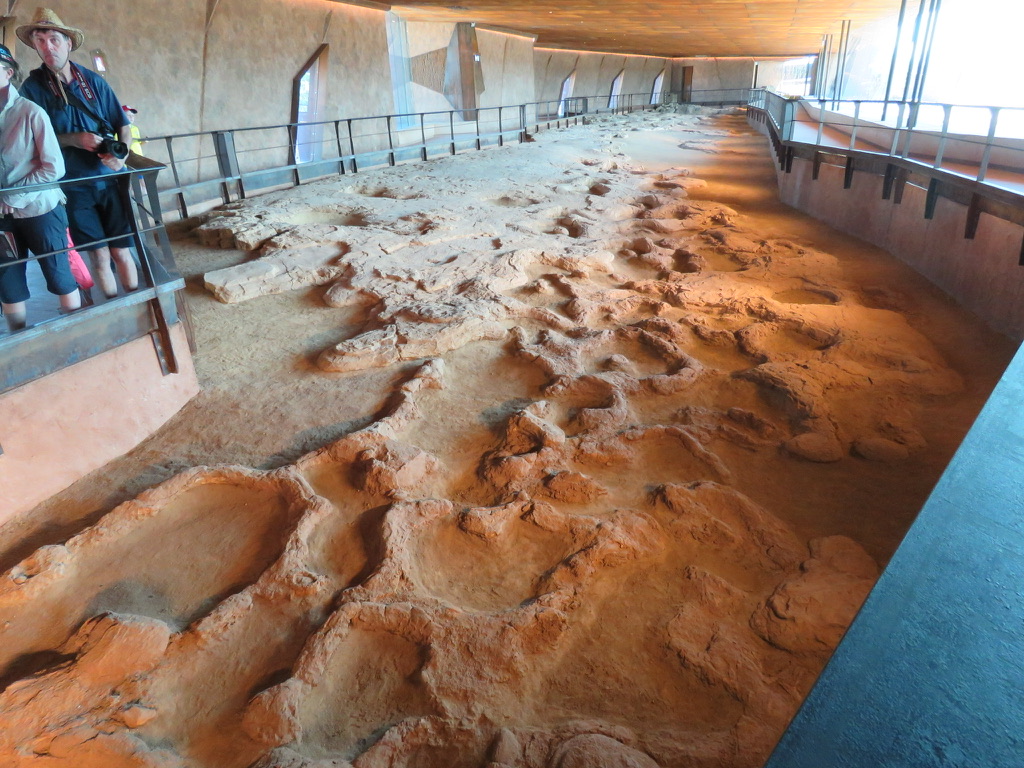
The tracksite was made when herds of sauropods roamed western Queensland, when the landscape was covered in temperate rainforests and muddy billabongs. The tour guide showed examples of footprints and other animal prints of a diverse ecosystem that included lungfish, small mammals, turtles, crocodiles, ornithopods and tiny therapods.

Outside was a life sized dinosaur with its young – something else to impress young and old alike!

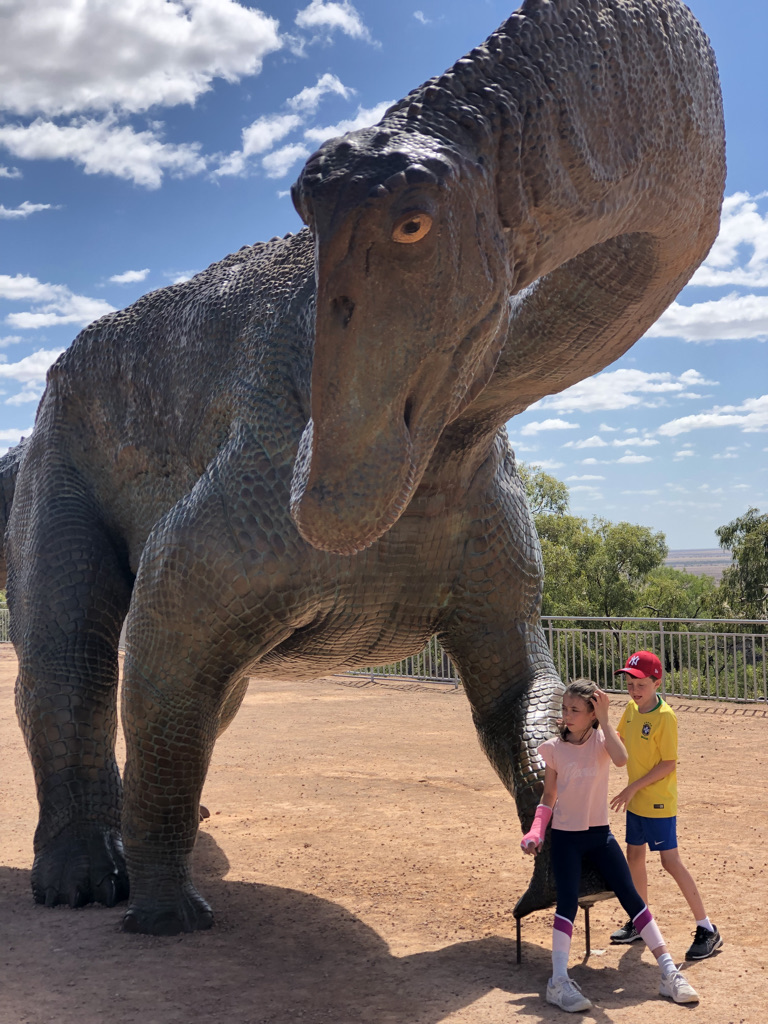
There is much to see and do hee so my advice is spend the day, take a picnic and try not to cram everything in at once. We were lucky to be there in August when the weather is beautiful – and loved this sign ….
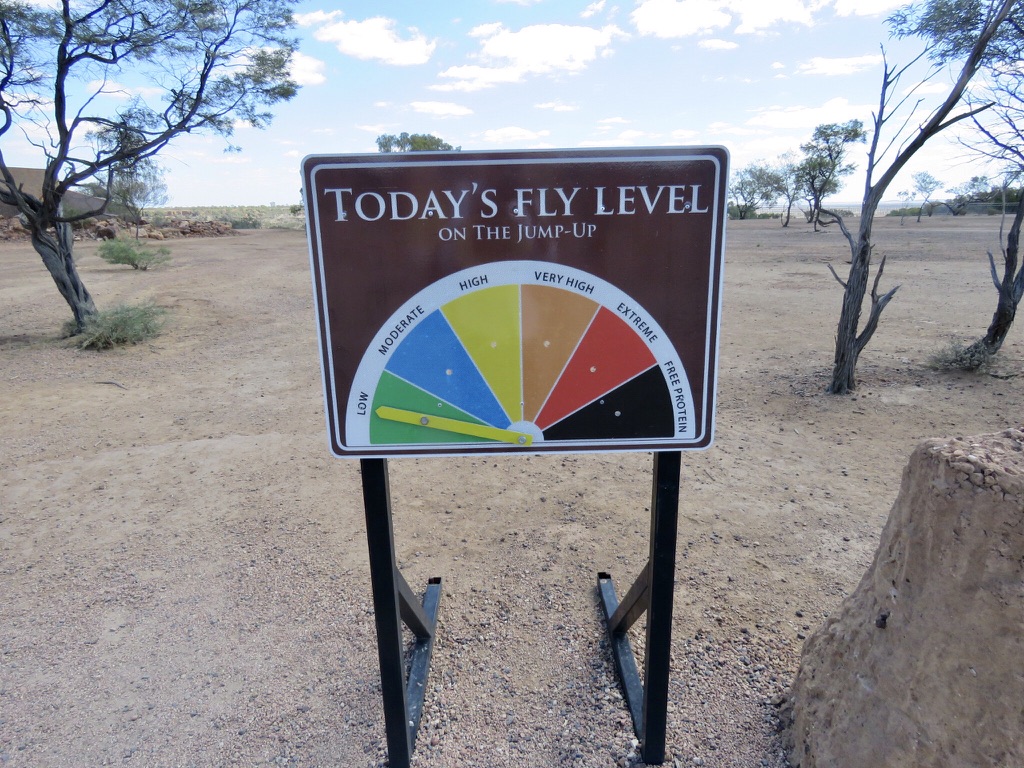
I have no doubt that we will return to this fascinating part of Outback Queensland, after all it is right on our doorstep!
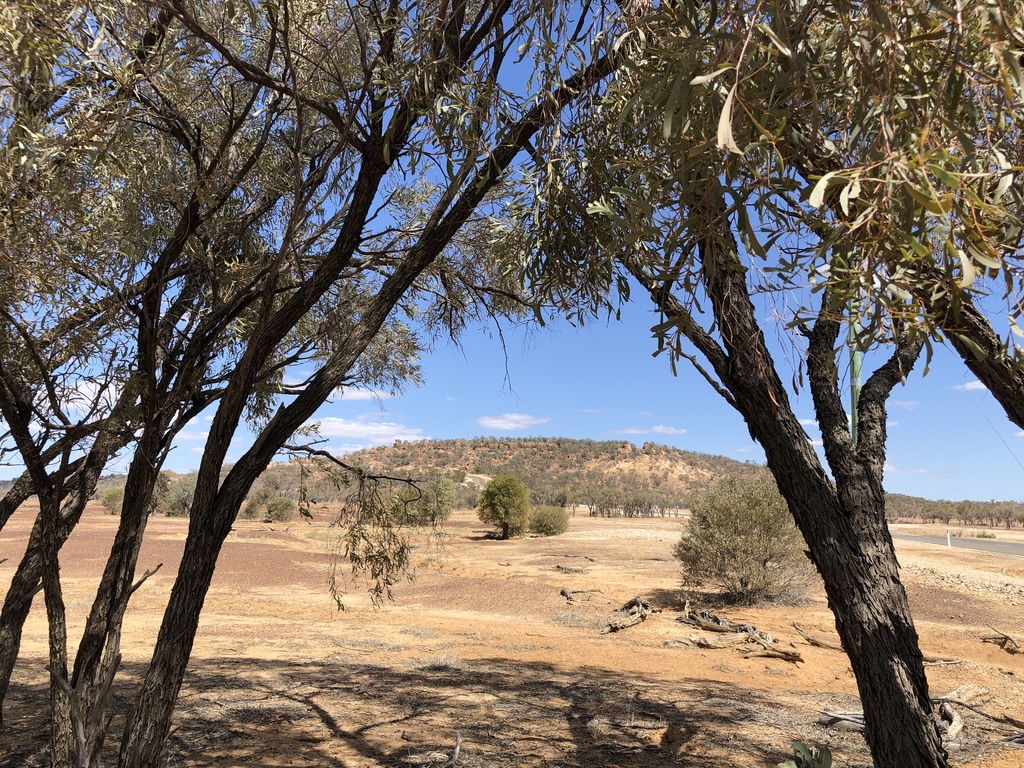
View of the Jump Up from the road into Winton.

THE DINOSAUR TRAIL

DISCOVERIES IN NORTH WEST QUEENSLAND – Richmond and Winton

Children the world over have all loved or been fascinated by Dinosaurs at some point in their childhood. With current Covid restrictions, we are limited as to where we can go but fortunately we live in Queensland, Australia and so it was a no brainer to have a little road trip and discover some of Australia’s dinosaur history.

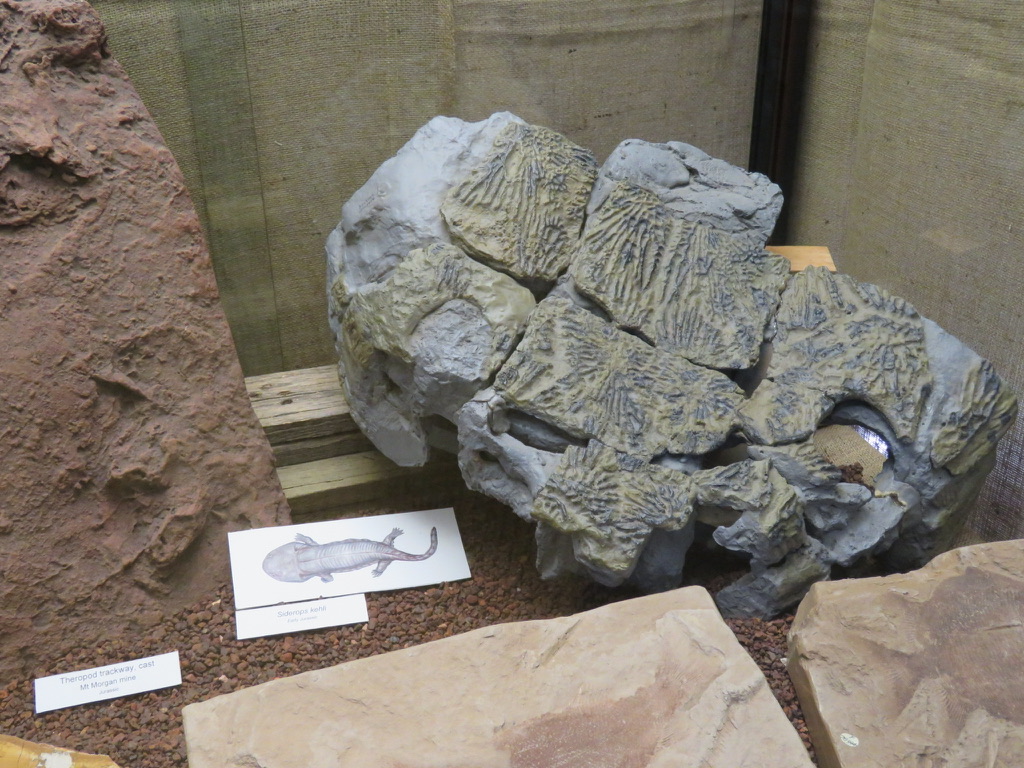
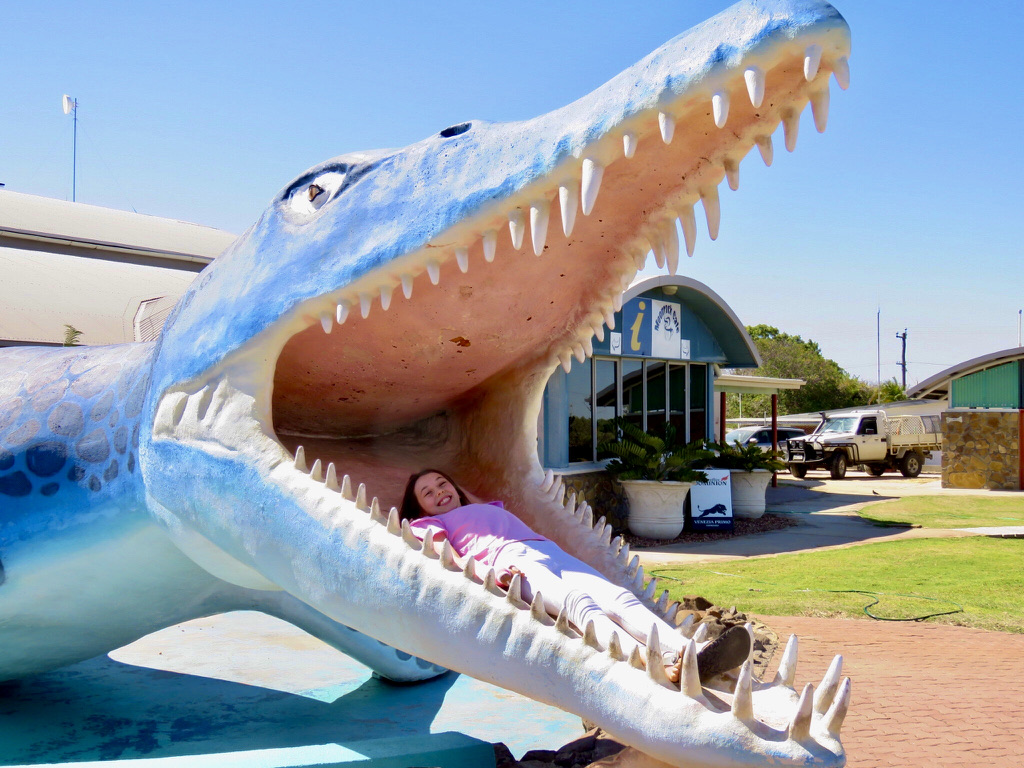
Our first stop was in Richmond, a small outback town some 490 km from Townsville and with a population of around 648 people. Once part of the vast inland sea in pre-historic times it is best known for its marine fossil discoveries and is a service centre for the surrounding pastoral industries. A small, privately owned museum named Kronosaurus Korner was our main focus and is well worth a visit. Here you can step back in time and watch prehistoric creatures come to life. Most of the collection in the museum were donated by local graziers, often discovered whilst mustering cattle and working the land. These marine fossils from the Early Cretaceous period include the 100-115 million year old (Aptian–Albian) remains of marine reptiles, dinosaurs, pterosaurs, birds, fishes, crustaceans, cephalopods, gastropods, bivalves, echinoderms, plants and trace fossils.

It is worth watching the short movie before self guiding through the museum as everything is well explained and the visit is really enjoyable – our little folk loved it all and took great delight in telling us all about what happened millions of years ago!

Life sized models are outside the museum and are a real drawcard.

Richmond takes pride in it’s “tidy town” title and it is certainly that. We loved the wide streets and colourful bougainvillea down the centre as well as the public rubbish bins cleverly disguised as dinosaurs!

After a comfortable night at the Ammonite Motel and breakfast in a small ‘at home’ restaurant located in an old Queenslander, we hit the road to Winton.

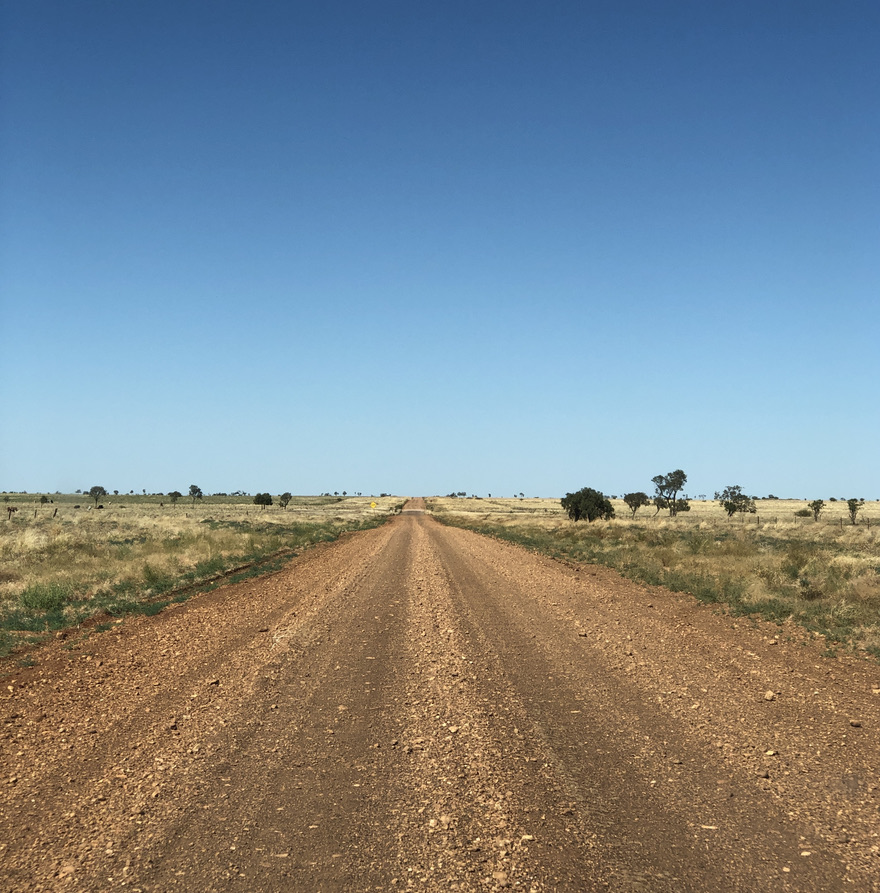
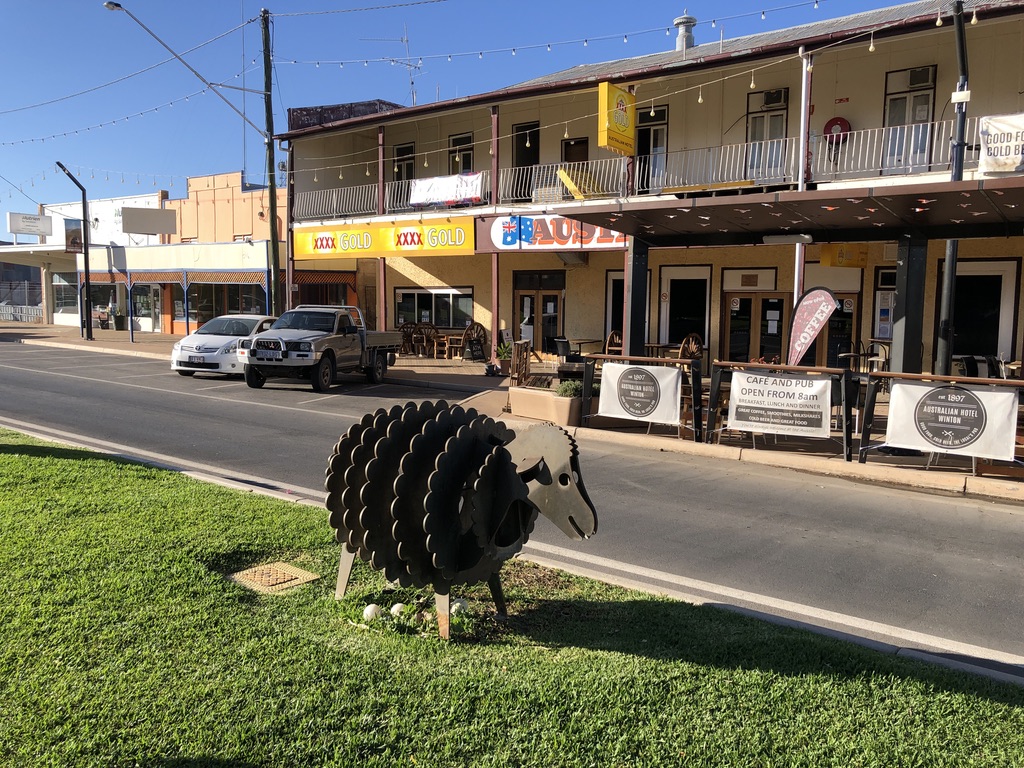
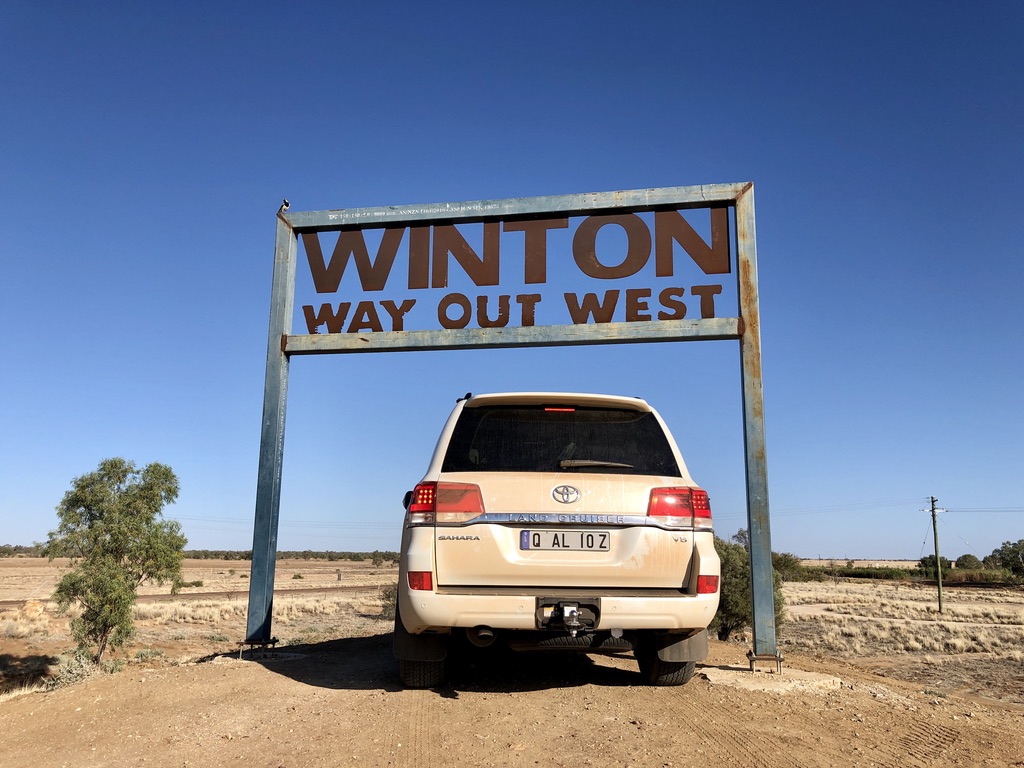
As part of the great inland sea millions of years ago, it is awe inspiring to drive along the endless straight road framed with colours of the outback. The blue sky, red gravel road, various hues of green and gold of the grasses make a beautiful picture and sometimes it is possible to see stock casually roaming the vast land. Winton is 278 kms from Richmond which made for an easy drive. A small outback town, it is known as the birthplace of “Waltzing Matilda” as well as the Dinosaur capital of Australia and the birthplace of Qantas. The main street of the town is wide and well kept with an attractive garden down the centre strip and iconic images throughout.

To give us a sense of history in this town, we decided to stay at the North Gregory Hotel which has been hosting visitors since 1899. However over the years the hotel was destroyed by two fires and was finally rebuilt in 1955. This hotel is a true Aussie battler, surviving fires, drought, and hardship, and was affectionately named Queen of the Outback. It was here at the Gregory on April 6, 1895, that Australia’s unofficial national anthem, Waltzing Matilda, was played in public for the first time. During the 1920s, secret meetings took place at the hotel, as Winton locals met to form a small airline called QANTAS. The 36th president of the United States, Lyndon B. Johnson, stayed here when his plane was forced to land in the Outback during World War 2.

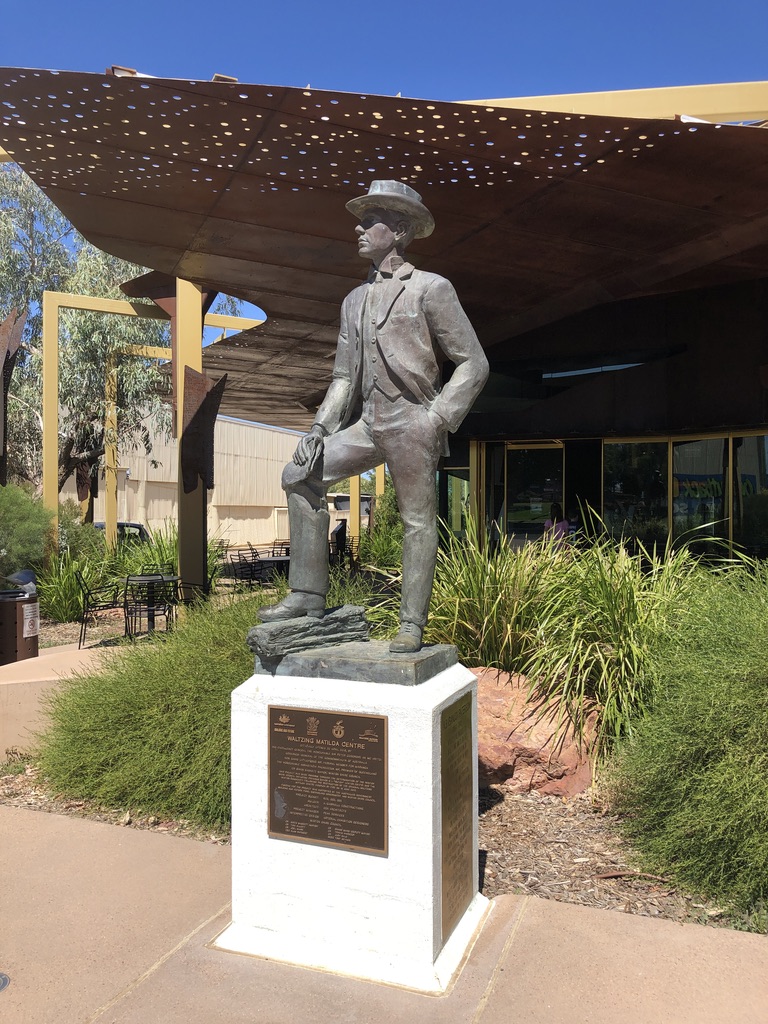
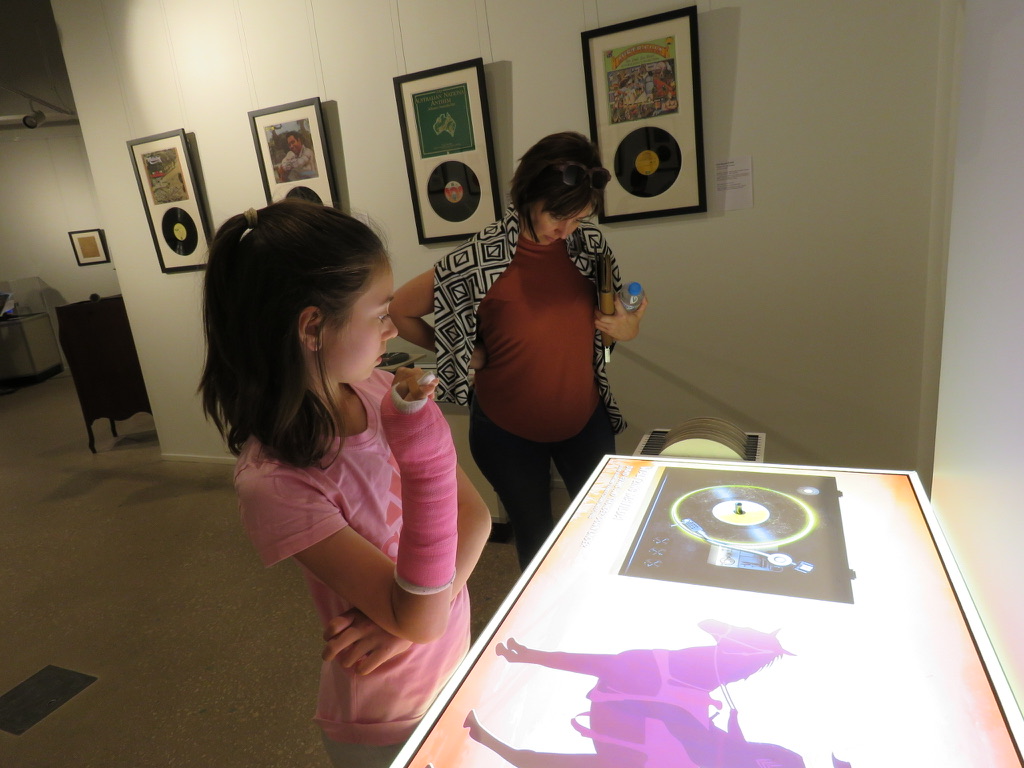
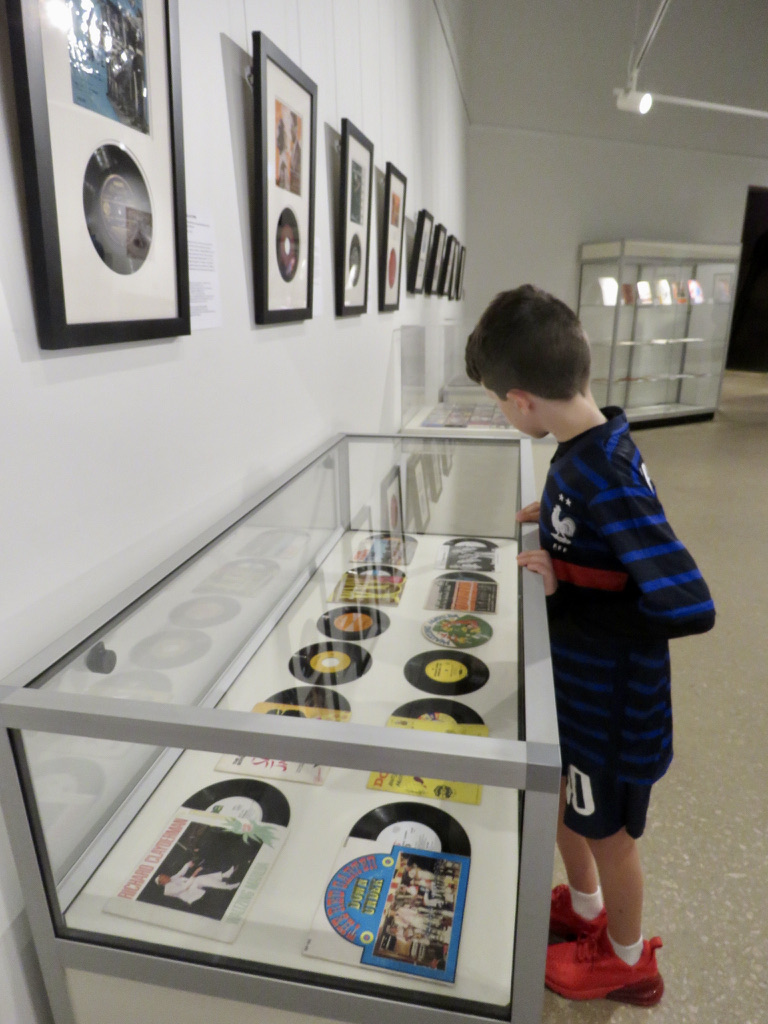
It was an easy walk to the Waltzing Matilda Centre which is the world’s first museum dedicated to a single song! Banjo Patterson wrote the words to the song and here we learned about his life as well as much, much more about the music. The children were fascinated to see Long Playing records as well as various types of players.

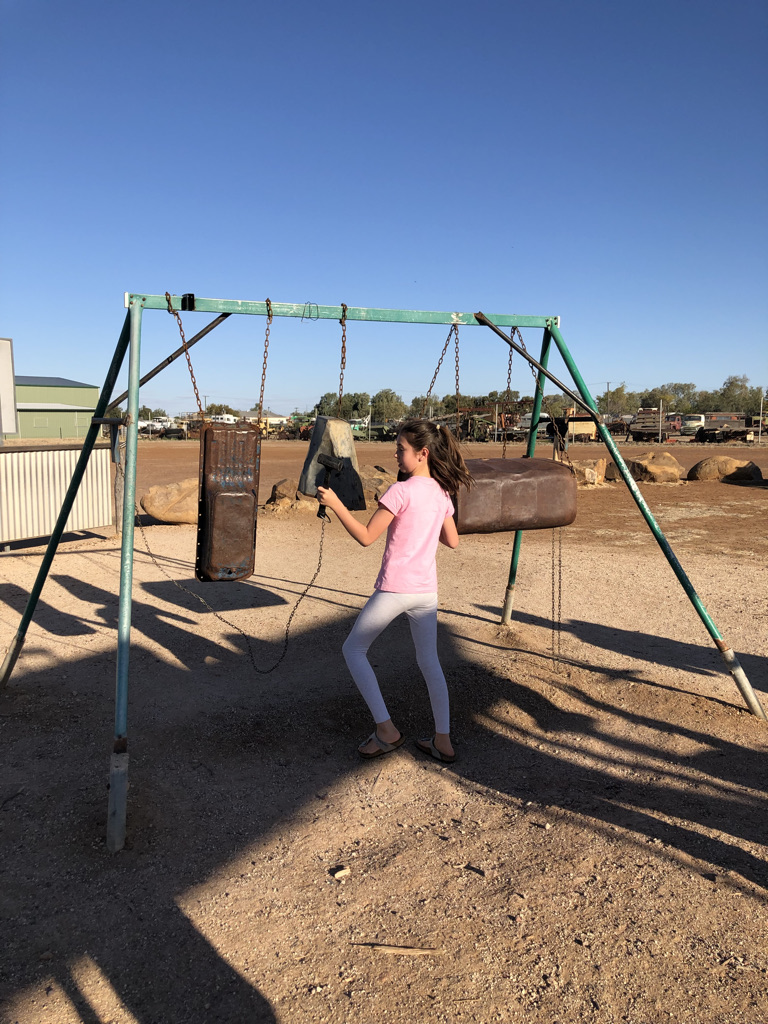
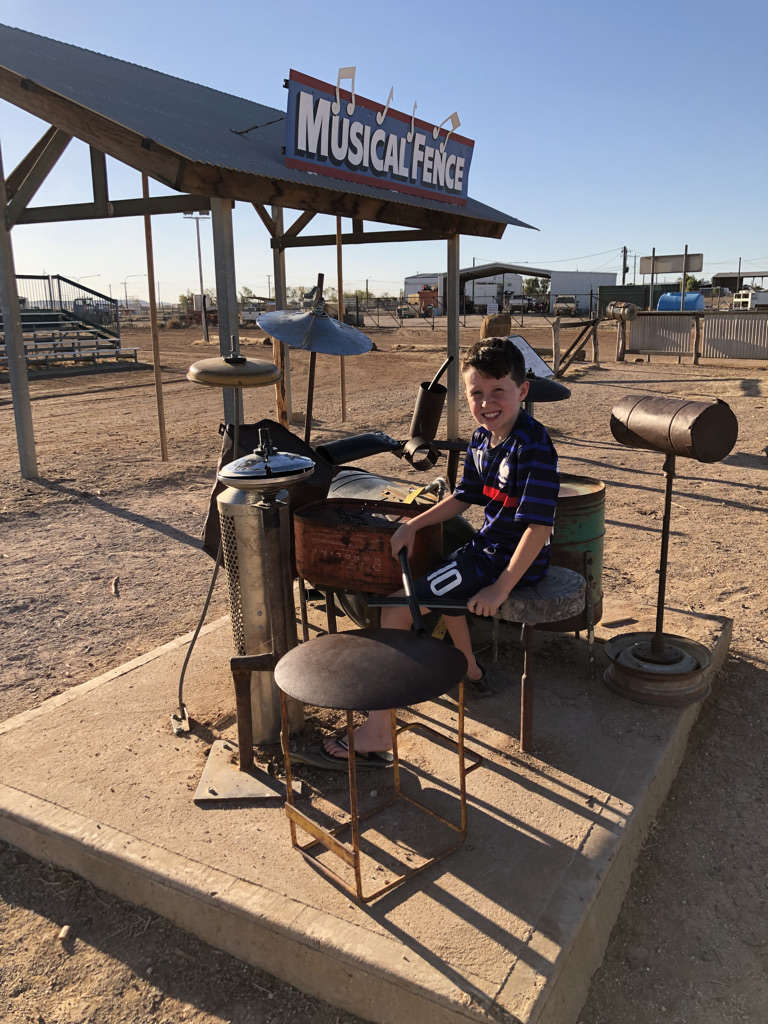
In keeping with the musical theme, we next visited the Musical Fence. This is the first permanent musical fence in the world and was designed by percussionist and composer Graeme Leak. It is a wire fence installation that can be played as a musical instrument and visitors of all ages are welcome to “have a bash” and create some music – and fun!

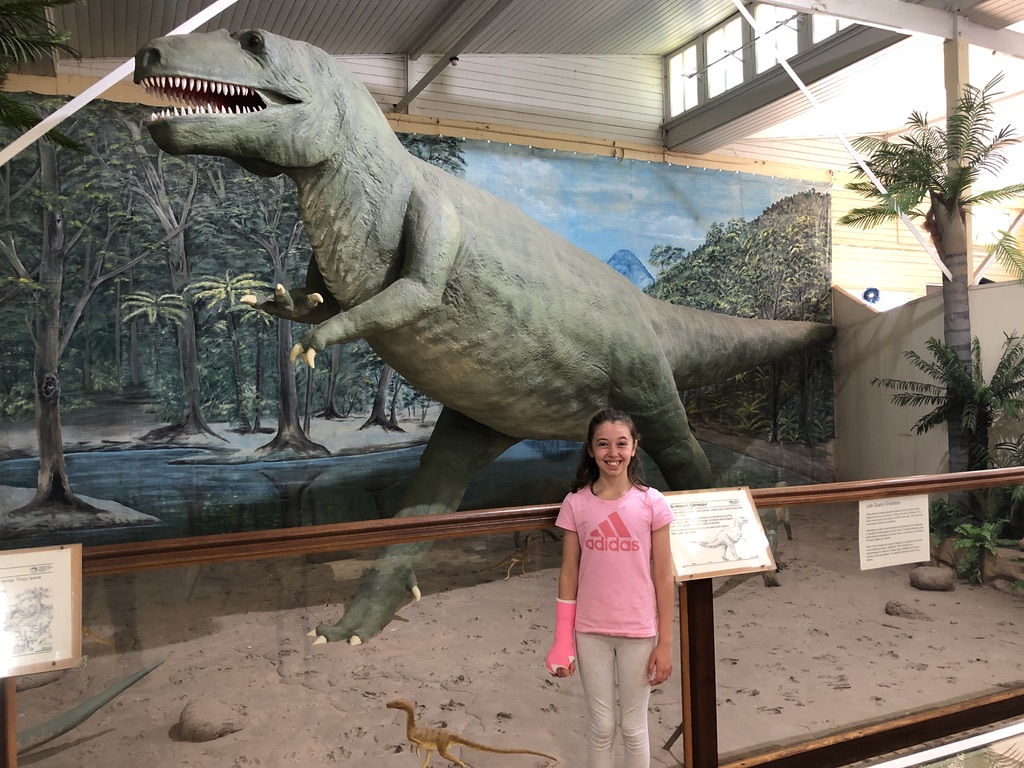
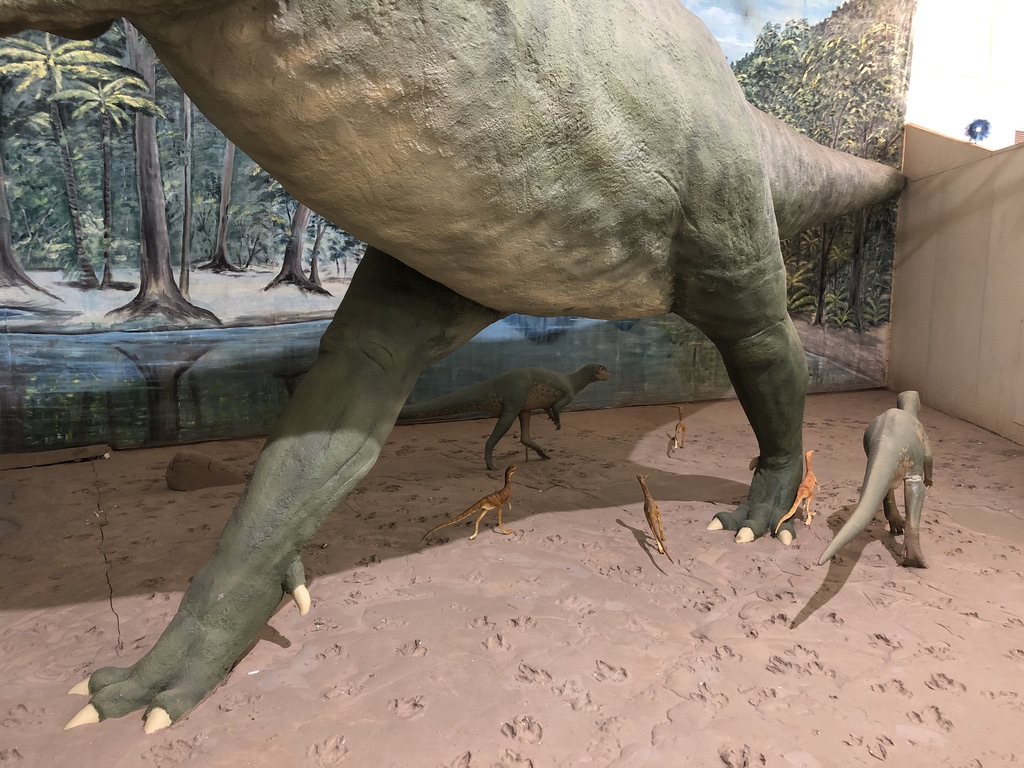
A small museum dedicated to dinosaurs is also on the main street and is worth a visit especially if you don’t get time to visit the new Australian Age of the Dinosaurs museum located just out of town. Here at the small museum life sized models of these pre historic creatures gives you a sense of the enormity of the living beings of the era.

Next it was time to visit the wonderful new museum “The Australian Age of the Dinosaurs” which is the subject of the next post.