FROM OYSTERS TO VINEYARDS

UNADJUSTEDNONRAW_thumb_8d9.jpg

Another long, straight road awaited us for the next leg of the road trip – this time to finish with the Oyster Trail and get on to the vineyards.  A nice combination – oysters and wine!

Last stop on the Oyster road is Cowell – a pretty little town on the eastern side of the Eyre Peninsula and situated on Franklin Harbour. The waters are sheltered and are very popular for fishing – and oysters.  We found a shack close to the jetty which supplies oysters to various outlets in the town.  On entering we found the proprietor busy shucking the oysters which had just come in from the bay – so without further ado we purchased a couple of dozen and together with fresh lemons and in a cardboard box, we found a table in the park and indulged for lunch!  The verdict?  Excellent!

ZVruG8a7Ro6hdHDQW+sjMA_thumb_8c3.jpg

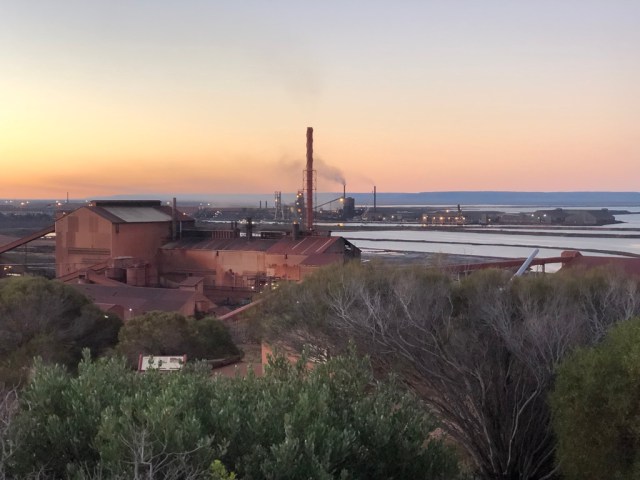
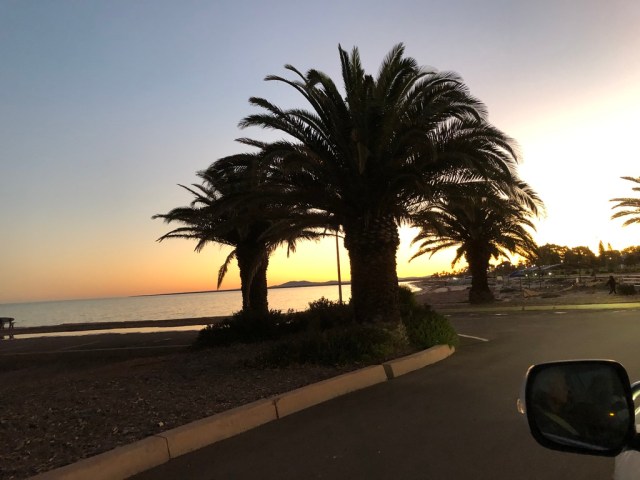
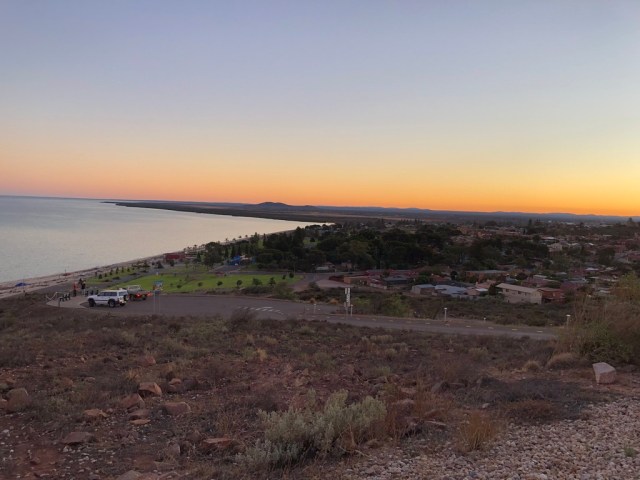
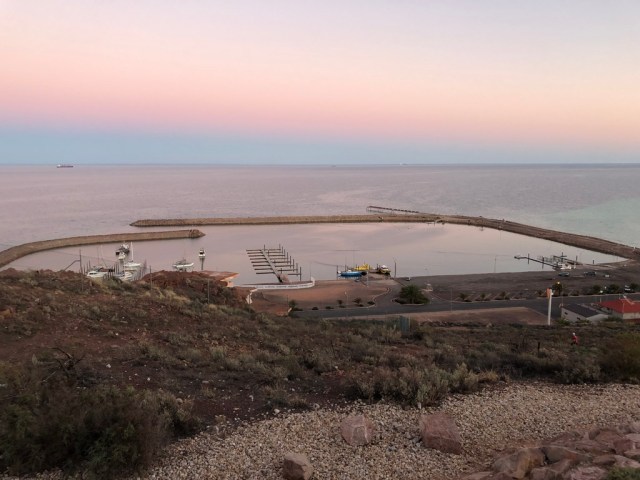
Our overnight stop on the way to the Clare Vallety Vineyards was the port town of Whyalla.  Named Hummock Hill in 1802 by Matthew Flinders, the town’s name officially changed to Whyalla in 1902 which is an Aboriginal name possibly meaning “water place”.  The steel industry here is over 100 years old but fishing is also of primary appeal. We were there just before sunset and went up to Hummocks Hill – a local lookout – to witness the change of colours.
UNADJUSTEDNONRAW_thumb_8da.jpg

UNADJUSTEDNONRAW_thumb_8db.jpg

UNADJUSTEDNONRAW_thumb_8dc.jpg

UNADJUSTEDNONRAW_thumb_8dd.jpg

The next day the road was clear and, for a lot of the way, was backed by the beautiful Flinders Ranges.

UNADJUSTEDNONRAW_thumb_8de.jpg

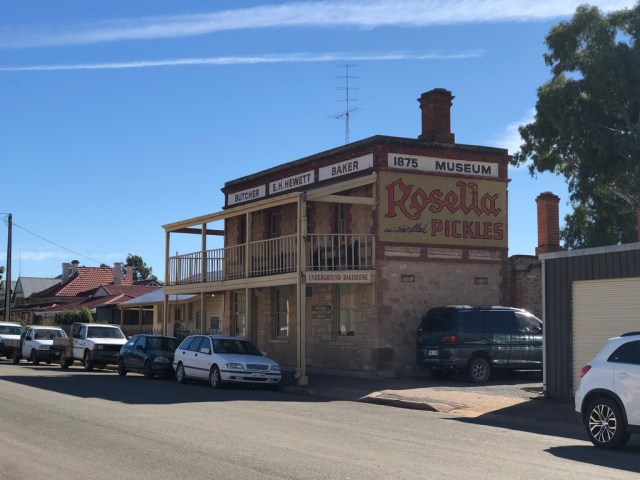
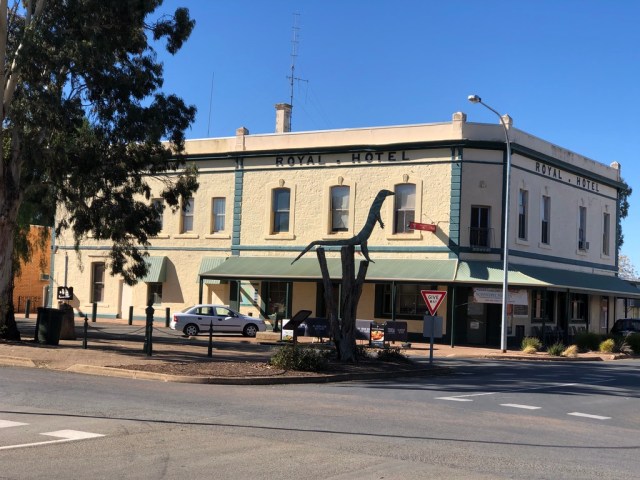
We drove through many little towns and villages but the one which captured us was Crystal Brook.  This quiet rural service centre is in the heart of South Australia’s most productive sheep and wheat country and has retained its charming historical links.
UNADJUSTEDNONRAW_thumb_8df.jpg

UNADJUSTEDNONRAW_thumb_8e0.jpg

UNADJUSTEDNONRAW_thumb_8e1.jpg

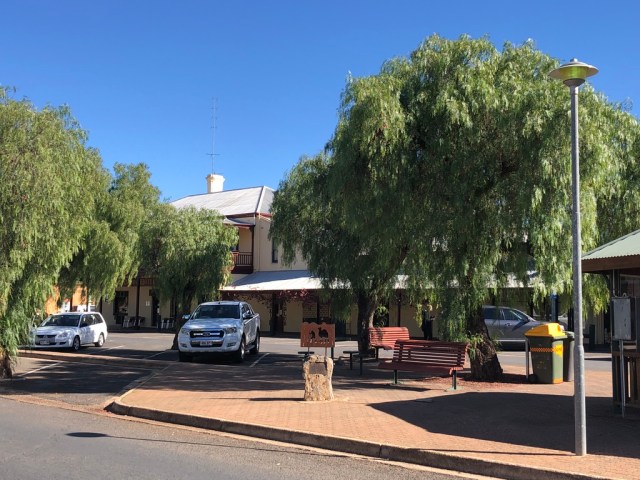
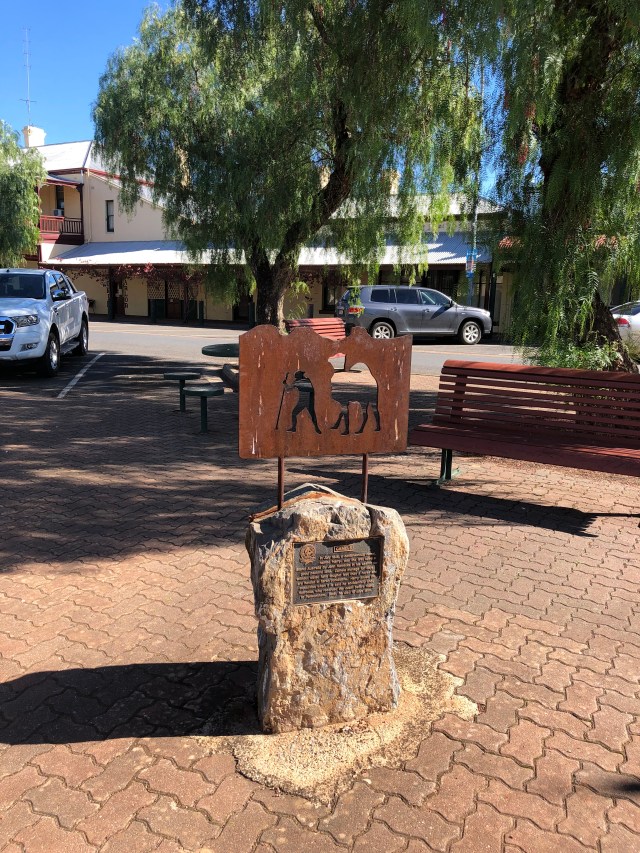
Beautiful shady peppercorn trees line the main street and there are several art pieces in iron, reminders of the part the camels played in this part of the country in the early years.
UNADJUSTEDNONRAW_thumb_8e2.jpg

IMG_4488

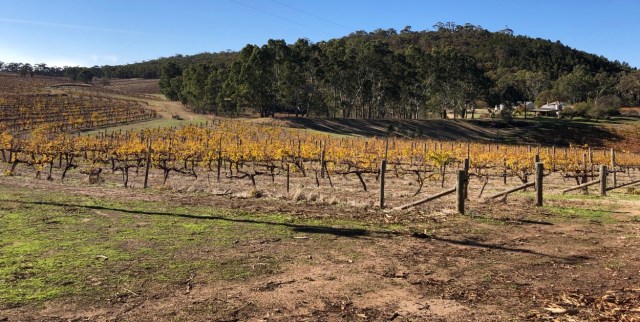
The Clare Valley is one of Australia’s oldest wine regions where there are heritage towns, boutique wineries, galleries and beautiful scenery.  We had booked lunch at the Skillogallee Winery where we had been before.  The vineyards here are resting – grapes picked and wine made but the vineyards still looked beautiful.
%gAxGg+fTt6jpa%M20OSLw_thumb_8ea.jpg

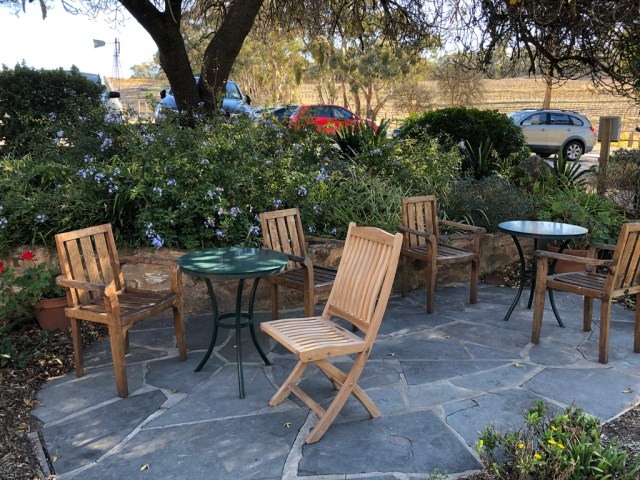
The road to the boutique winery is shady and winding at the end of which is the restaurant which seats both indoors as well as in the garden.

IMG_4495

UNADJUSTEDNONRAW_thumb_8e5.jpg

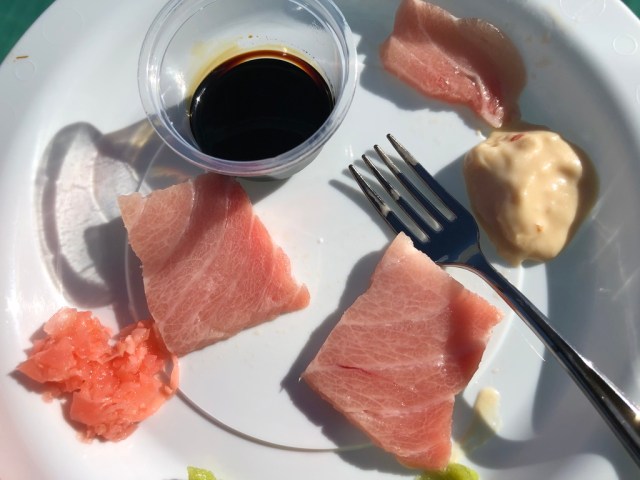
The menu features local produce with wine suggestions matched with each dish. Unable to resist the sashimi, I had, yet again, fabulous South Australian Kingfish and tuna served in a very artistic way.

UNADJUSTEDNONRAW_thumb_8e4.jpg

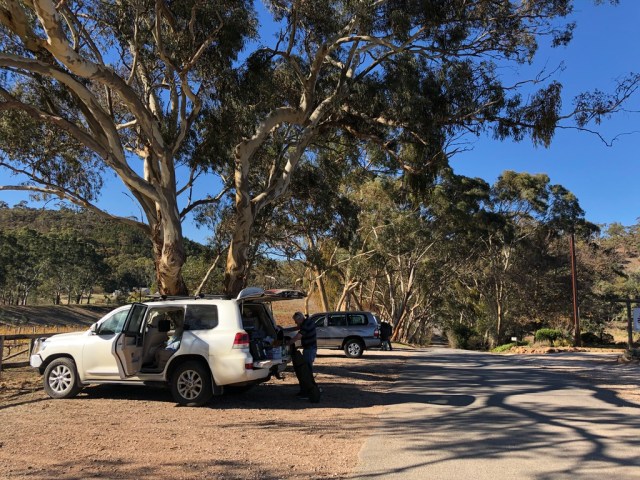
Then came the wine tasting and purchasing – thank goodness we had a large car !
UNADJUSTEDNONRAW_thumb_8e9.jpg

Staying in a little apartment in the centre of the town, we were perfectly placed for a choice of restaurants in the evening.  And that is what you do in these regions – eat great food and drink fabulous wine!

UNADJUSTEDNONRAW_thumb_8e7.jpg


THE OYSTER TRAIL AND PORT LINCOLN

Ceduna is the first major town at the end of the Nullarbor and its pristine waters produce excellent oysters and other quality seafood. It is also the start of the Oyster Drive which goes south to Port Lincoln and up the coast to Cowell.  We endeavoured to taste the oysters – which all taste very different – at each place!
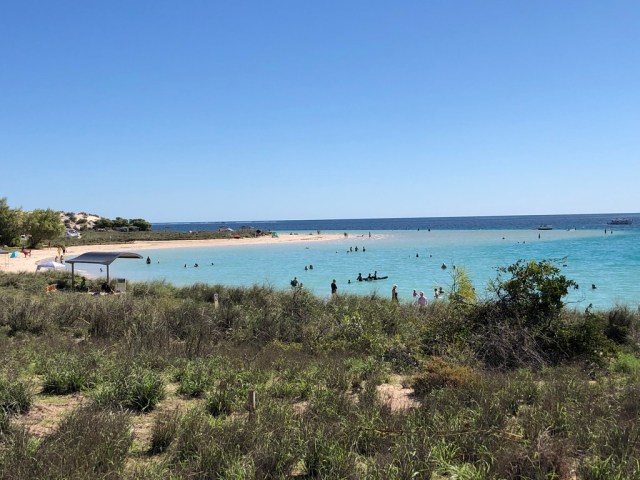
First stop was Thevenard -four kilometres from Ceduna – where we found a little shack shucking fresh oysters for $12 dozen – so with a couple of dozen in the car we headed for a spot by the ocean to indulge.  They were good – very good!

IMG_4367

Next it was off to Smoky Bay, a small settlement where the oysters are also excellent but of a different taste altogether.

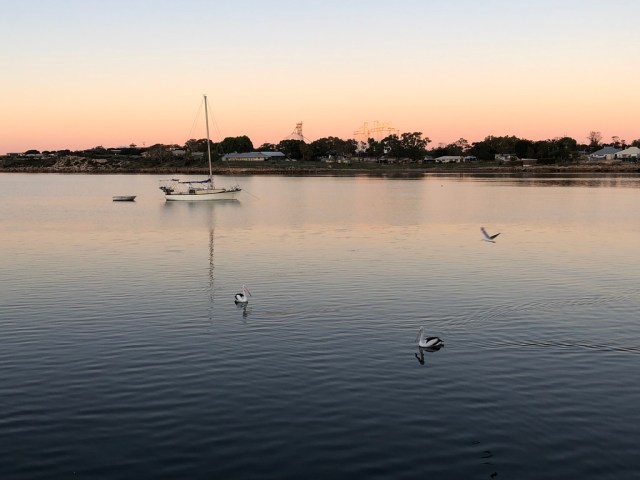
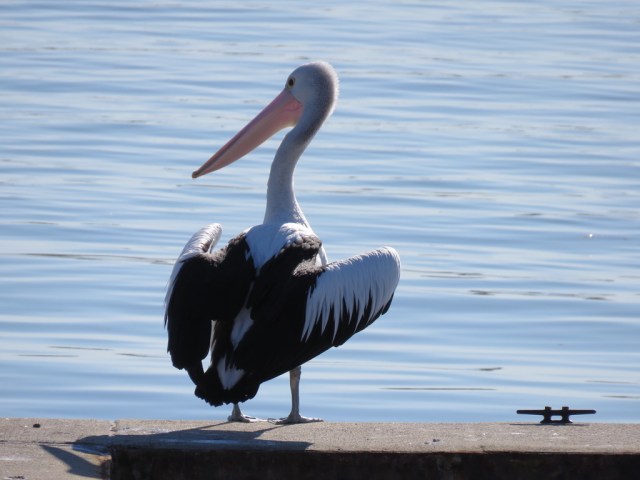
Streaky Bay was our overnight stop and here we witnessed one of the most beautiful, calm sunsets we have seen yet.  We walked along the jetty whee the locals were trying their luck fishing and the pelicans were ever hopeful!

UNADJUSTEDNONRAW_thumb_8c6.jpg

UNADJUSTEDNONRAW_thumb_8c7.jpg

UNADJUSTEDNONRAW_thumb_8c8.jpg

UNADJUSTEDNONRAW_thumb_8ca.jpg

As the sun set and the shadows deepened the reflections became more dramatic.

UNADJUSTEDNONRAW_thumb_8cb.jpg

Of course, more oysters were on the menu along with King George Whiting and Blue Swimmer Crab.

Next morning more beautiful coastal scenery awaited us at Sceale Bay which is a tiny community and is known for fishing and holiday recreations. The permanent population is 40 and that can triple in holiday periods;

UNADJUSTEDNONRAW_thumb_8cf.jpg

UNADJUSTEDNONRAW_thumb_8cd.jpg

Coffin Bay is renowned for oysters and on the drive to our favourite restaurant there – 1802 Restaurant – we came across Murphy’s Haystacks which just appears out of nowhere on the landscape.  This 1500 million year old geological wonder is one of the most visited locations on the Eyre Peninsula and is actually on private property.  The unique form of pillars and boulders dates back 100,000 years and are ancient wind worn inselbergs.

UNADJUSTEDNONRAW_thumb_858.jpg

UNADJUSTEDNONRAW_thumb_8d7.jpg

They were buried by calcareous dunes about 30,000 years ago and subsequent erosion has revealed the pink granite forms standing on the hilltop today.

UNADJUSTEDNONRAW_thumb_8d1.jpg

UNADJUSTEDNONRAW_thumb_861.jpg

The local legend is that coach driver Charlie Mudge named Murphy’s Haystacks following a remark by a Scottish agricultural advisor who saw the landmark in the distance whilst travelling on the mail coach.  Shimmering like haystacks in the hot afternoon sun, he was very impressed with the sight and remarked “that man must harrow, look at all the hay he has saved!”

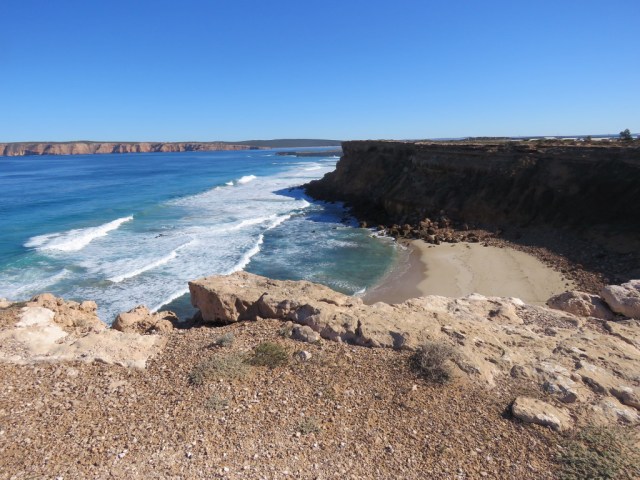
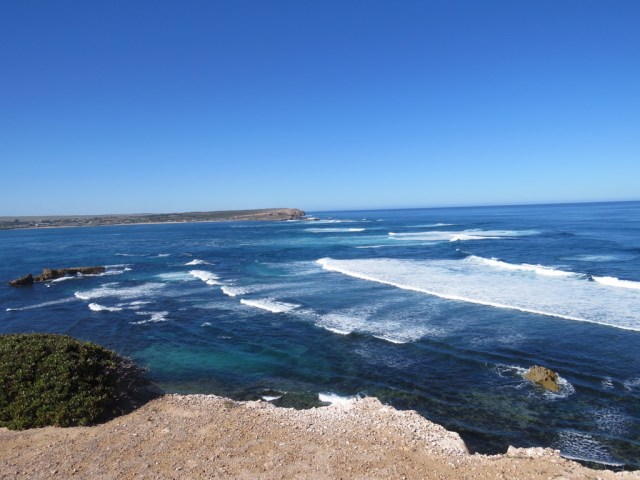
At Venus Bay we went to the Needle Eye Lookout for amazing views of towering rugged cliffs and beautiful beaches as well as pounding, rolling surf.

UNADJUSTEDNONRAW_thumb_869.jpg

UNADJUSTEDNONRAW_thumb_863.jpg

UNADJUSTEDNONRAW_thumb_86e.jpg

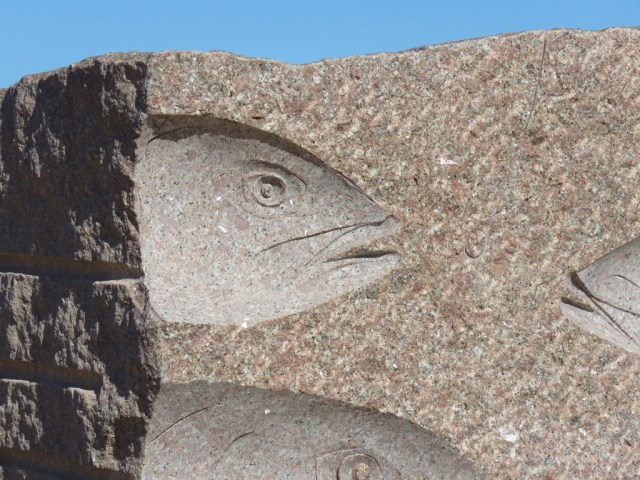
Here we spotted a pod of dolphins frolicking and playing in the surf.  An artist has carved his work on the granite rocks at the top of the cliff reminding everyone that this is tuna fishing territory.

UNADJUSTEDNONRAW_thumb_873.jpg

UNADJUSTEDNONRAW_thumb_872.jpg

More oysters awaited at Coffin Bay – and I have to admit that these are my favourite.  Not too large and salty, they are delicious and can be prepared in a variety of ways.

UNADJUSTEDNONRAW_thumb_8d5.jpg

Followed by raw tuna Asian style

UNADJUSTEDNONRAW_thumb_8d6.jpg

This place is an absolute must for anyone travelling along the Eyre Peninsula.  The town is sleepy but swells in holiday periods.  Lots of pelicans keep you company!

UNADJUSTEDNONRAW_thumb_87f.jpg

UNADJUSTEDNONRAW_thumb_882.jpg

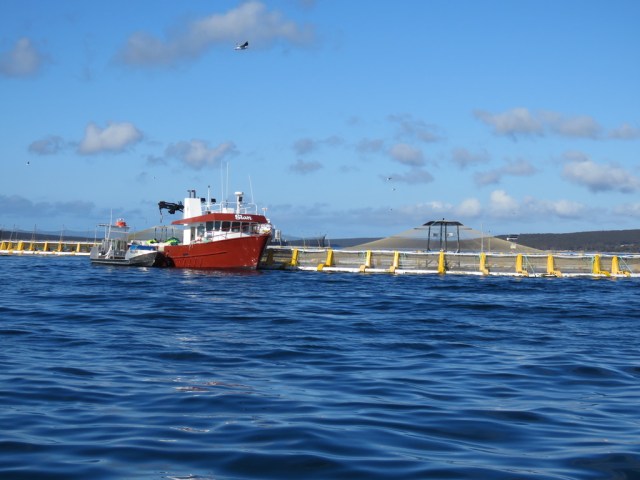
Port Lincoln was our final stop for the day.  This is a seafood lovers paradise with, it is said, the cleanest, freshest and most sought after seafood in the world.  Prized for its superb quality in sushi and sashimi, the majority of the southern bluefin tuna is exported to Japan with some available locally.  We decided to take a boat trip in Boston Bay to view the tuna and kingfish farms – now a multi million dollar business for the town.  The Marina is busy with fishing boats coming and going, some to catch sardines to feed the tuna in the farms, others to catch prawns and other fish.

UNADJUSTEDNONRAW_thumb_889.jpg

UNADJUSTEDNONRAW_thumb_886.jpg

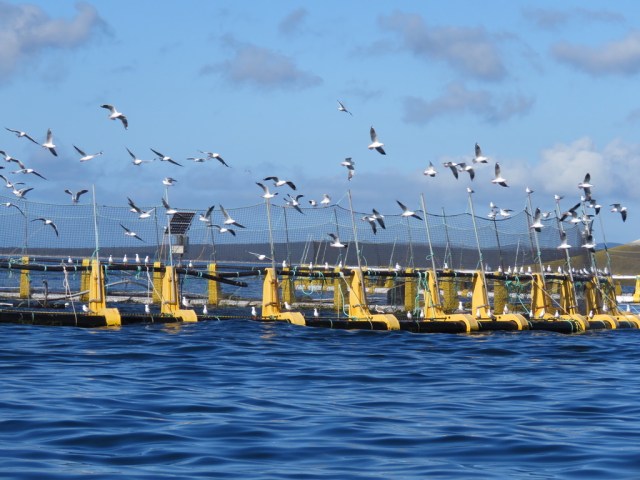
The farms are situated in the bay and the tuna are grown there before being caught and exported once they reach the required size.

UNADJUSTEDNONRAW_thumb_8bd.jpg

UNADJUSTEDNONRAW_thumb_894.jpg

Seabirds know when it is feeding time!

UNADJUSTEDNONRAW_thumb_891

Mussels are also grown out here and are serviced daily by the fishermen.

UNADJUSTEDNONRAW_thumb_88f

UNADJUSTEDNONRAW_thumb_890

We took a little detour to an island where there is an enormous number of seabirds living alongside seals lots of seals many of which were having a roll about in the water.

UNADJUSTEDNONRAW_thumb_89a.jpg

3q38GEZSQ3+HKcYAeEWMYg_thumb_8a3.jpg

UNADJUSTEDNONRAW_thumb_8a6.jpgUNADJUSTEDNONRAW_thumb_8a9.jpg

Finally we got to taste different sashimi – and shown the correct way to eat it!

UNADJUSTEDNONRAW_thumb_8c0.jpg

IMG_4242

Lunch consisted of…..you guessed it – Sashimi!

lFKu5y0dTX+ycMXiBdqVWw_thumb_8c1.jpg

Our oyster experience was not yet finished – more was to come tomorrow!


THE ENDLESS ROAD TO THE COAST – CORAL BAY AND SHARK BAY

aBpuA+1VSoCAzdkvwULlPg_thumb_4b1.jpg

The distances here in Western Australia are so vast that it is almost beyond comprehension – even though we have driven over much of Australia over the years.  Here in the North West the road is endless and there is nothing to break it.  It was with great relief that we arrived at the tiny village of Coral Bay – and here we wanted to stay!

UNADJUSTEDNONRAW_thumb_45c

This tiny settlement is perfect for families and for people seeking relaxation or something more adventurous such as diving, fishing or snorkelling.  The beautiful coral reef is just metres from the shore and the beach has pristine white sand and is safe for even the tiniest tot.  We found ourselves in a cabin right on the foreshore

UNADJUSTEDNONRAW_thumb_462

And all we had to do was cross the road and we were on the beach and in the beautiful clear water.

UNADJUSTEDNONRAW_thumb_44c

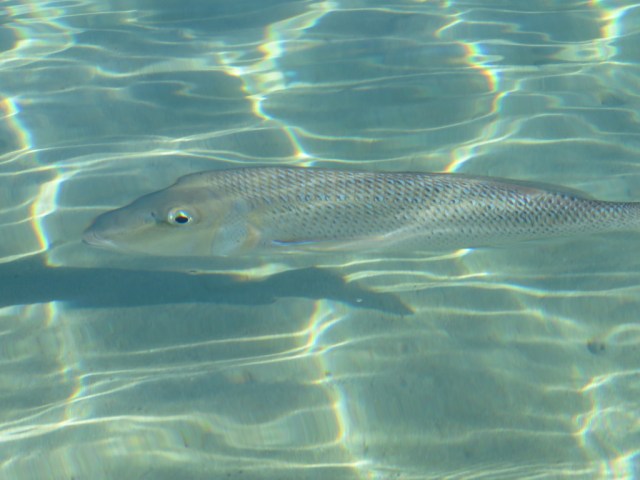
There is a platform for coral viewing or snorkelling and even early in the morning the fish were friendly and just weaving around our legs – probably looking for food!

UNADJUSTEDNONRAW_thumb_44f

UNADJUSTEDNONRAW_thumb_455

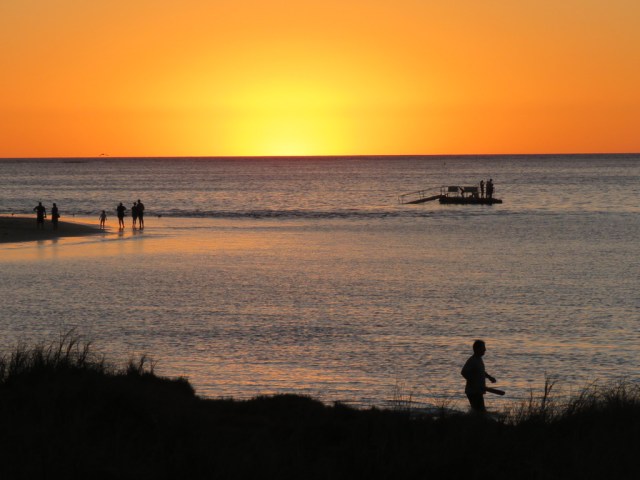
The sunsets here are glorious and with an aperitif in hand, gorgeous view and the total serenity of the place, that long, endless road was forgotten.

UNADJUSTEDNONRAW_thumb_464

UNADJUSTEDNONRAW_thumb_445

The next day we had a 420km drive to Shark Bay – or the little town of Denham. This is the most westerly point of the Australian continent and is on the UNESCO World Heritage list.  It has vast sea beds which are the largest in the world and which support the dugong population – which is also one of the largest in the world.  The Stromatolites are among the oldest forms of life on earth and it is possible to view them at low tide from a specially erected platform.  Apart from these features, we wanted to come here because of its proximity to Monkey Mia which is famous for its dolphin experience.

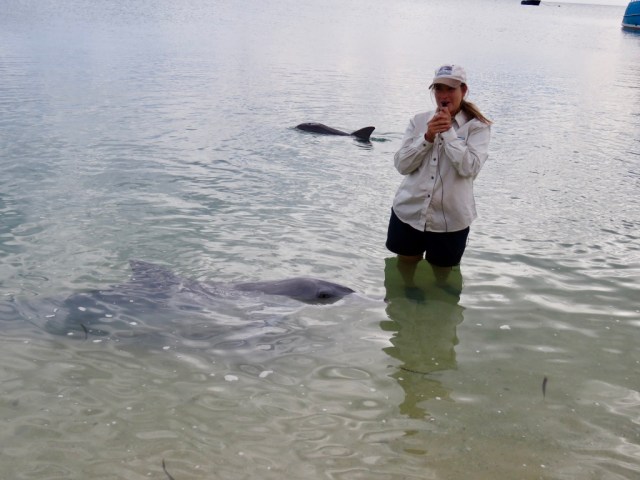
In the past visitors were able to swim and interact with the dolphins which came close to shore to be fed.  Today it is regulated by the Department of Wildlife because the lives of the dolphins were endangered by too much human interaction.  It is still a wonderful experience and the Wildlife Officer also gives a short talk about dolphin behaviour.

Ly5Q+3wSQPKqKSjWYjC0oA_thumb_49c

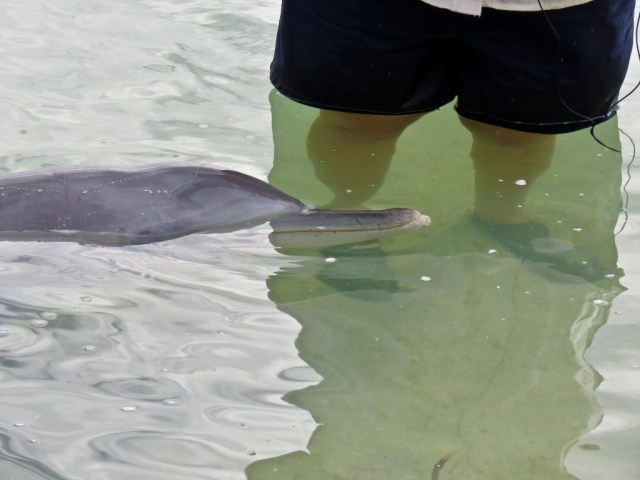
Feeding occurs in the morning and the amount of fish each dolphin gets is strictly monitored so they still have to go out into the wild to hunt.

usO51YLHTZquycV492Ylrw_thumb_49e

Bq6Zcw%tQma%XjSxcczPBw_thumb_497

XapEpX5kTA6Ftvyamrr35A_thumb_494

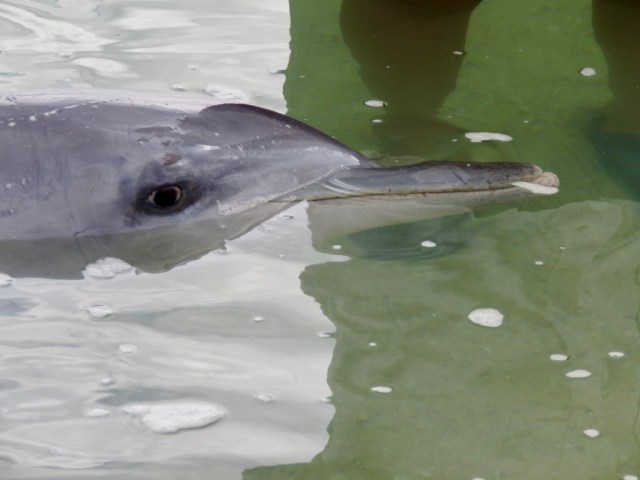
These are such beautiful creatures and I almost had the feeling that Piccolo was human when looking at her eye.

UNADJUSTEDNONRAW_thumb_496

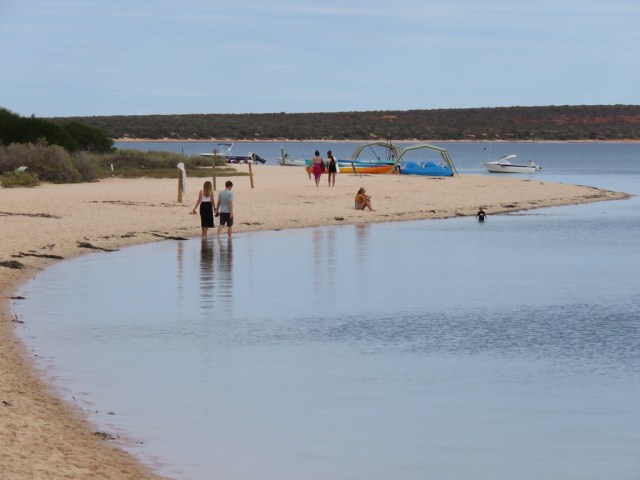
Monkey Mia is a tiny place with just one caravan park/hotel and is where tourists come especially for the dolphins and perhaps a little fishing. There are boat trips on offer as well.

UNADJUSTEDNONRAW_thumb_4a2

OeQes6B6SLCNNVATzjCybg_thumb_4a1Denham is a great little town and was settled by Europeans first in the 1850’s who began pearling, pastoralism and guano mining.  The original inhabitants were the Aboriginal people – the Mulgana – who were here for thousands of years and evidence of their presence can be seen in cave shelters and shell middens around the peninsula.  It is said that they were probably the first Australian Aboriginals who had contact with European explorers who came in the 1600’s.
We walked along the foreshore and found a sweet little building which is a restaurant called The Old Pearler.  Deciding to have dinner there, we then discovered its interesting history.

rX1uT5oxQWitRwK2mt1lkQ_thumb_4a6

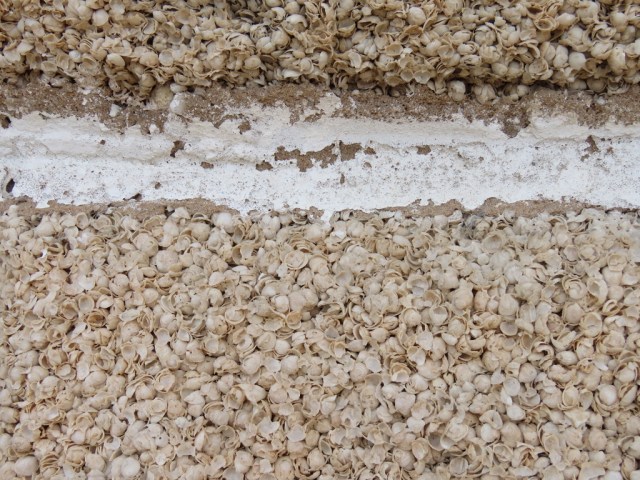
This is the only restaurant in the world to be built predominately of sea shells. The shells are essentially of the small molusc family being bonded together by pressure and calcium.  The shell stocks came from the Hamelin Pool area and blocks were cut by saw from the ground.  An Englishman, Tim Hargreaves, took three or four years in 1974 cutting and laying the shell blocks.

UNADJUSTEDNONRAW_thumb_4a7

Railway sleepers were used for doors and window frames and the tables were made of timber salvaged from the original Peron Station shearers quarters.  Various artefacts are on the walls inside and the acoustics are exceptional which is due to the myriad of air pockets in the shell blocks.  These also ensure there is coolness in the hot summers without resorting to fans or air conditioners.

IMG_3974

This is also the most westerly restaurant on the continent.  We had seafood both nights we visited and the crayfish was sensational.

Several years ago we visited the area on board “True North” and also went to Dirk Hartog island which is close to Denham as well as Steep Point.  This is a rugged area which is the westernmost point of mainland Australia.  Access is by 4 wheel drive only as the track is through sand dunes.  We were fortunate to land by boat and this time is it good to see from the land perspective. Steep Point is also a renowned land based game fishing place with over 320 species of fish caught off the point.  We saw fishers harness themselves to the cliff and then float their baits off the cliff using helium balloons.  They then hauled their catch up the cliffs – no easy task as a shark very often gets it first!

Anyone visiting this part of Western Australia simply has to disregard that long, long road and come to Denham.  I promise you will not be disappointed!


MORE ROAD TRAINS ON THE ROAD TO KARIJINI


oGZOvvN0QoyIPiGekLyKag_thumb_3e1.jpg

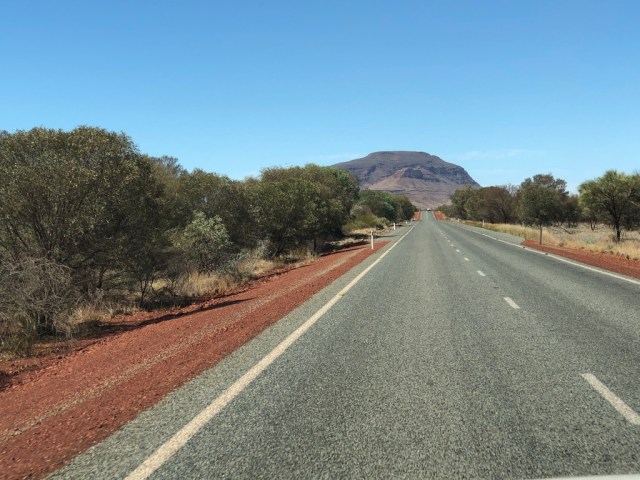
Our next destination was Karijini National Park in the Pilbara.  It is a long way from the coast and so we had to drive via Port Hedland for an overnight stop.  To be honest, the road from Broome to Port Hedland is the most boring we have yet had to tackle.  It is very long and very straight and there is nothing to see even though it runs parallel to 80 Mile Beach. Access to the beach is denied except through the caravan park.

IMG_0956.JPG

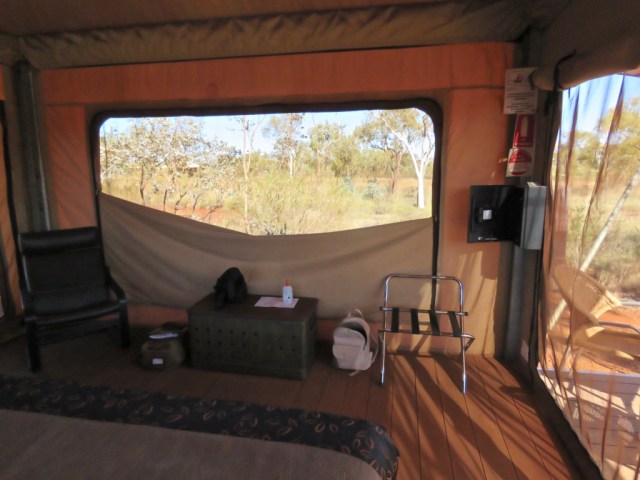
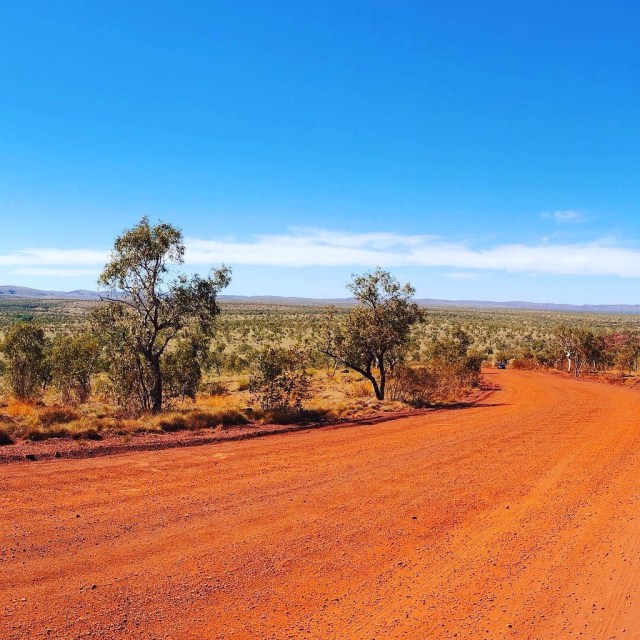
Setting off for Karijini we were again to find the road long and mostly straight but this time we had dozens of huge road trains travelling to Port Hedland with their loads of iron ore.  This is the Pilbara and the area is rich with culture and a huge array of natural rock formations, deep red in colour. The soil is a fine red sand which gets into everything and is hard to remove! There are gorges, rock pools and canyons in the two National Parks of the area and we were heading for Karijini which has beautiful scenery and much of it is accessible by car. We booked into an “Eco Tent” which was said to be “luxury” but having been on several African safaris, this was not at all up to the standard they were trying to attain. This being an Eco Resort comfort was minimal in the so called “glamping” tents.  We used torch light at night as electricity was solar and we were conscious of waste. The tents were cooled by natural breezes – if there were any – with the result that the afternoons were very, very hot and early mornings freezing cold!  We did have a small ensuite bathroom though which was roofless and it was fabulous to shower late at night and look up at the billions of stars.  Being in such a remote location, the stars were simply amazing with no light to detract.

UNADJUSTEDNONRAW_thumb_3ed.jpg

UNADJUSTEDNONRAW_thumb_40c.jpg

UNADJUSTEDNONRAW_thumb_3f6.jpg

yPmQnCOnT6CLCy7JJxO8Tw_thumb_3ef.jpg

IMG_3625

We were told of several walks which culminated in rock pools for a refreshing swim.  Unfortunately it has been a very dry season and several waterfalls have dried up and the pools in which you are able to swim are hard to get to unless you are very fit.It was also very hot but the worst problem was the bush flies.  There were millions of them and they were relentless. 

On arrival at the Eco Resort,  we noticed people walking around with fly nets covering their heads.  It was comical really as they resembled aliens from another planet – dark nets covering faces and over hats of all shapes giving their heads an oddly conical or flat shape.

O67uHv4sSEas2G07sTgbsw_thumb_3fc.jpgUnfortunately everywhere had sold out of the nets so we were not able to “join the party” and instead had to either stay in our flyproof tent or explore in the airconditioned car!

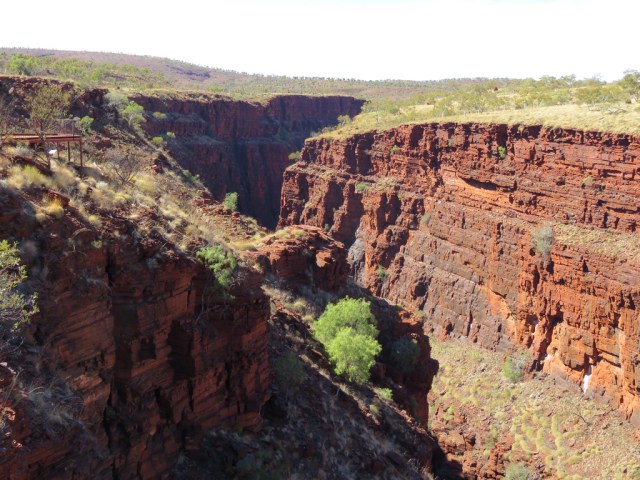
Weano Gorge is probably the best introduction to Karijini as there are easy walks around the top of the gorge as the more adventurous can venture down the rocks into the canyon. The lookout we went to gave unsurpassed views out over the Weano, Red, Hancock and Joffre Gorges.  The sheer enormity and grandeur is awesome and must be really spectacular when the waterfalls are running.

UNADJUSTEDNONRAW_thumb_400.jpg

The path in is sandy – the deep red of the Pilbara – and fortunately there was a breeze so the flies were not so aggressive!

GpiHKKzAQk2aO%wELyX0Qg_thumb_404.jpgUNADJUSTEDNONRAW_thumb_401.jpg

3l7OAdX+S3iHe6Np1FZP5w_thumb_413.jpg

IMG_3881

The colours of this part of the Pilbara are amazing at any time of day.  This I remember from the road trip so long ago – but then this was not a National Park and we ventured in on our way to Wittenoom township which is now closed because of asbestos.

UNADJUSTEDNONRAW_thumb_41c.jpg

UNADJUSTEDNONRAW_thumb_42b.jpg

The roads are red dirt and the silver and green of the leaves plus the groundcover colours give a special sense to this place which is sacred to the indigenous people.

UNADJUSTEDNONRAW_thumb_42a.jpg

fQizd4qeQ1yVLreb+XZHMw_thumb_421.jpg

We drove to Tom Price which is a mining town and a really impressive little community.

IMG_3904 (1)

With huge mining machines on display!

Sadly the flies and the heat drove us out of the beautiful Karijini Park but the drive was spectacular after a beautiful dawn rising viewed from our tent.

5ohPZ4vnTfisF0Zi7CZO%g_thumb_428.jpg

UNADJUSTEDNONRAW_thumb_432.jpg

Next stop – Exmouth on the Coral Coast – maybe the flies will be gone by then?


THE ROAD TO BEAUTIFUL BROOME

It was a short drive from Derby to Broome along a bitumen road which was easy.  Broome is a cosmopolitan town on the coast which began during the pearling days in 1880’s.  The population is a melting pot of  traditional indigenous, Japanese, Chinese, Malays, Europeans, and Islanders.

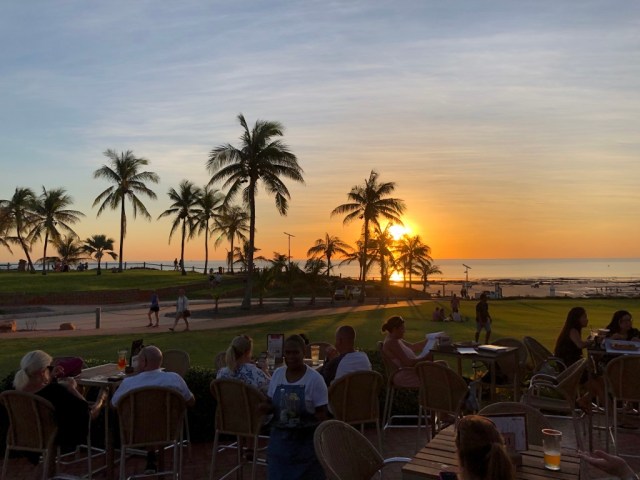
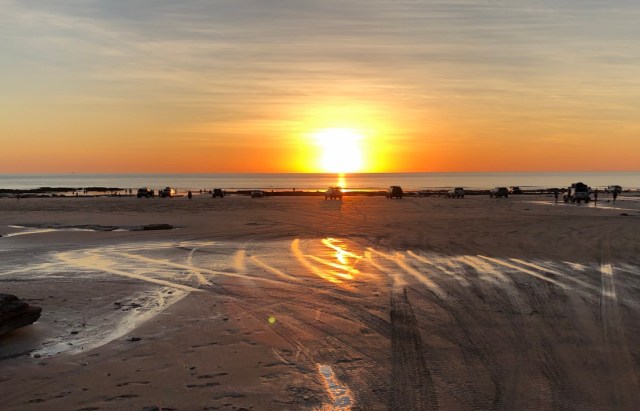
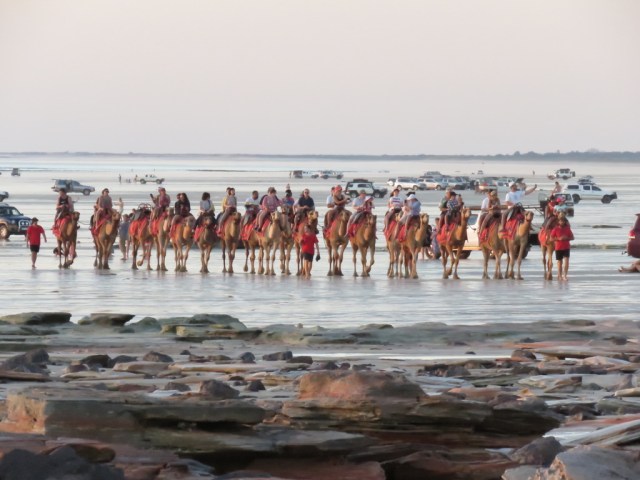
It has an easy, laid back feel to it and, in what has become a tradition, viewing the magnificent sunset from Cable Beach is a must do on arrival in Broome! Many flock to the beach in their 4 wheel drives, others wander down slowly and sit on the rocks and yet others choose to watch the spectacle from the comfort of the Sunset Bar at the Beach Club or Zanders – both of which are located right opposite the beach.  Two camel trains wend their way slowly along the beach carrying eager tourists and children and as the sun goes down and the sky turns gold and then pink.

TaPfrb1pSMyf7Tb10gnMGQ_thumb_439.jpg

h8Z1g8shRROMccdCAI6aoA_thumb_43c.jpgUNADJUSTEDNONRAW_thumb_43b.jpg

The camels are a reminder of the Afghans who came to Australia in the 1840’s bringing their camels with them to assist in the exploration of inland Australia. Camels were also imported from British India at that time.  Today they are mostly feral with some being used for tourism purposes.

UNADJUSTEDNONRAW_thumb_3b1.jpg

UNADJUSTEDNONRAW_thumb_3b9.jpg

UNADJUSTEDNONRAW_thumb_3ba.jpg

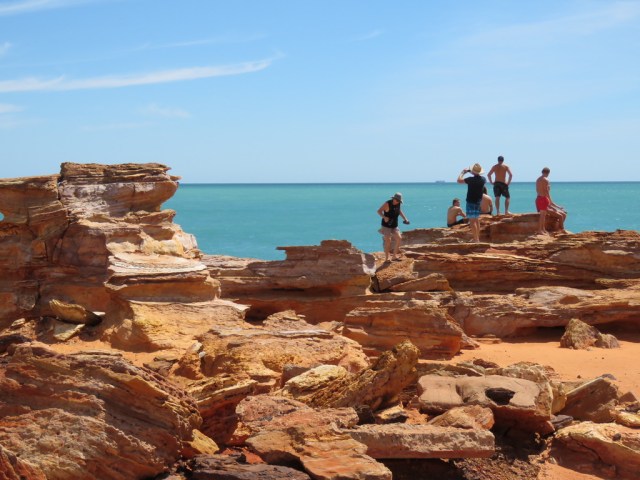
Another tradition is to drive to Gantheaume Point which is at the end of a red gravel road and is a rocky outcrop which is stunning because of its intense red colour which contrasts with the very white sand of the beach and the shimmering aqua colour of the sea.  Dinosaur tracks can be seen in the red rocks at low tide. There is an old lighthouse here and the Keeper’s house is still occupied.  Legend has it that the Lighthouse Keeper had a wife, Anastasia, who was very beautiful but who was crippled from polio.  She loved to bathe at high tide and so her husband found a little rock pool which had formed naturally near the house and which would fill up at each high tide and then empty again on the low tide.  He would carry his wife down each day and thus the pool is now known as “Anastasia’s Pool”.

UNADJUSTEDNONRAW_thumb_3bc.jpg

UNADJUSTEDNONRAW_thumb_3be.jpgUNADJUSTEDNONRAW_thumb_3bd.jpg

UNADJUSTEDNONRAW_thumb_3bf.jpg

We have been to Broome several times and this time decided to stay at the Cable Beach Club which, although a little way out of town, is in an excellent location on the beach itself.  Built in the style of the old bungalows of days gone by in the tropics, it has lovely gardens and an amazing Asian art collection donated by Lord McAlpine who developed the resort in the 1980’s.  This is one of my favourite places on the west coast and we will definitely return.

UNADJUSTEDNONRAW_thumb_438.jpg

UNADJUSTEDNONRAW_thumb_437.jpg


Dusty Road to Derby

NUC5UPERRby5aWs+MlRXHA_thumb_3a1

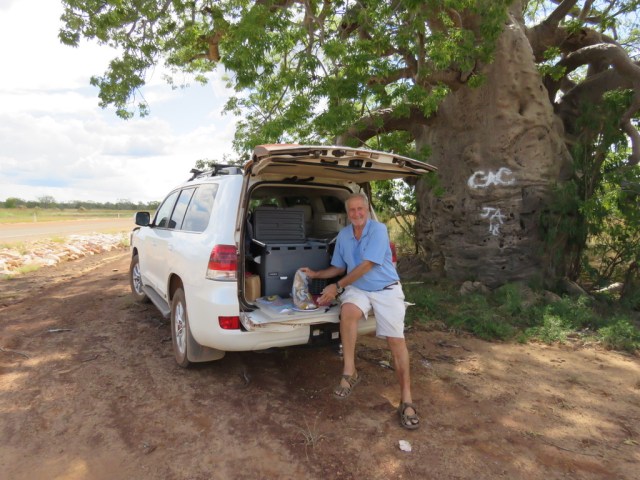
Driving on these dusty roads is not without some danger – especially when you meet one of the huge road trains – the most sensible thing to do is stop and wait for both the road train and the dust to pass!  Fortunately the trip to Derby was enjoyable with very little traffic and lots of contrasting colours on the way.  We even had time to stop and have a picnic lunch on the back of the vehicle.

UNADJUSTEDNONRAW_thumb_3a4

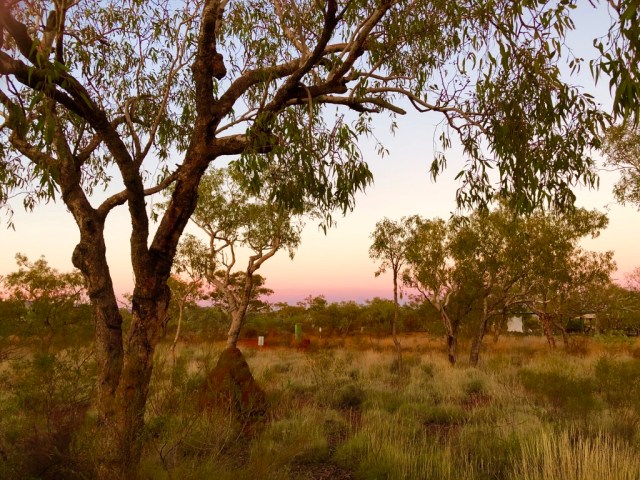
Right alongside was another huge termite mound and having learned of the aboriginal significance of these mounds, I was wondering if this one contained the remains of a loved one.  It was again an unusual shape compared to others we have seen on this road trip.

2RbHuyZLSTioXrJxhiG%nQ_thumb_3a2

Finally we arrived in Derby which is a small outback town on the edge of the King Sound.  Its claim to fame is having the highest tides of any Australian port 11m (or 36 feet) which leaves the town surrounded by vast mud flats and mangroves.  We were advised to go down to the town jetty – the Derby Wharf – to watch the sunset.  Each evening a stream of people arrive with their chairs and eskies and settle down to watch the display and/or to fish.  We were not disappointed, in spite of cloud cover the colours were magnificent.

UNADJUSTEDNONRAW_thumb_3cb

IMG_3811

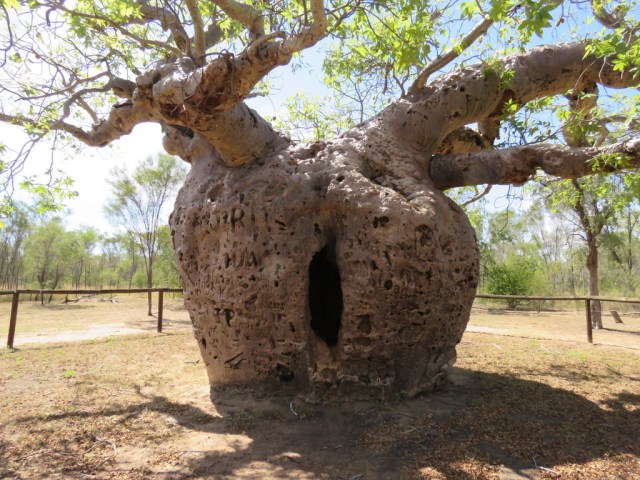
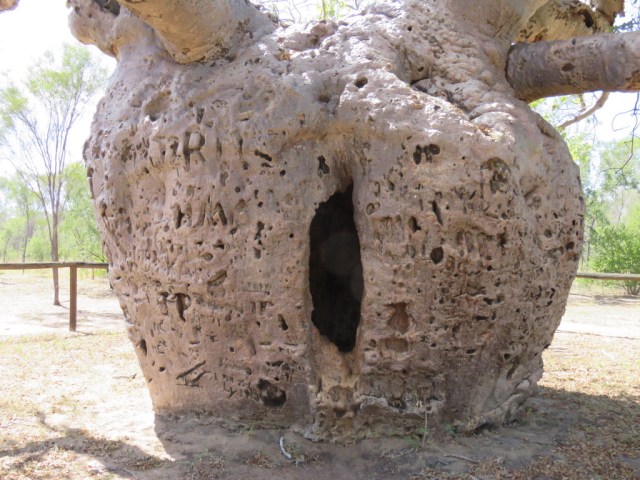
There is quite a lot of history with this town and we found the Boab Prison Tree seven kilometres out of town.  This is a 1500 year old boab tree that was used as an overnight lockup for prisoners.  Before Derby was established in 1883 Aboriginal people were kidnapped from the West Kimberley by settlers who wanted divers and workers for the pearling boats in Broome.  They rounded people up, put them in chains and marched them up the coast. Some held their captives at the boab tree whilst waiting for a boat.  This seems incomprehensible to us today and doesn’t bear thinking about.  However it is now a “Site of Significance” to the local Aboriginal people and the tree is protected under the Heritage Act.

UNADJUSTEDNONRAW_thumb_3a9

UNADJUSTEDNONRAW_thumb_3a8

There is a sign declaring that snakes are known to inhabit the tree and not to go near it – it is protected by a fence these days.

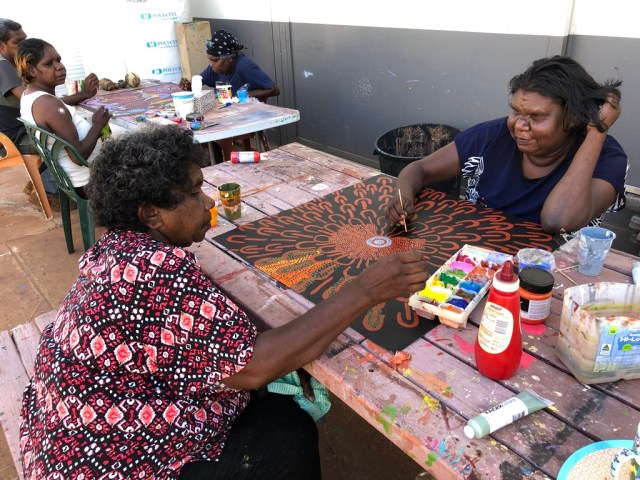
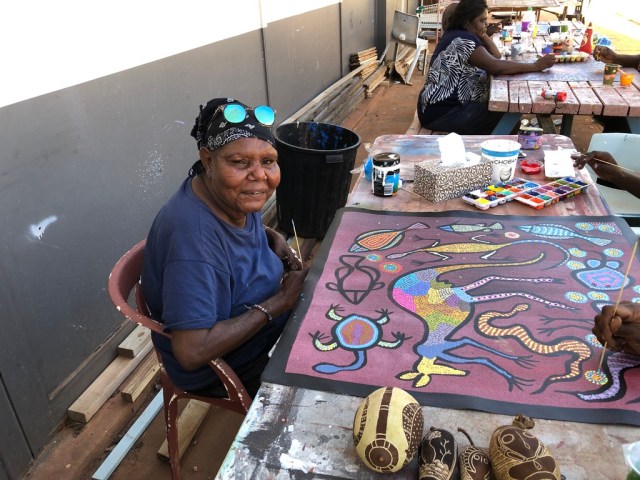
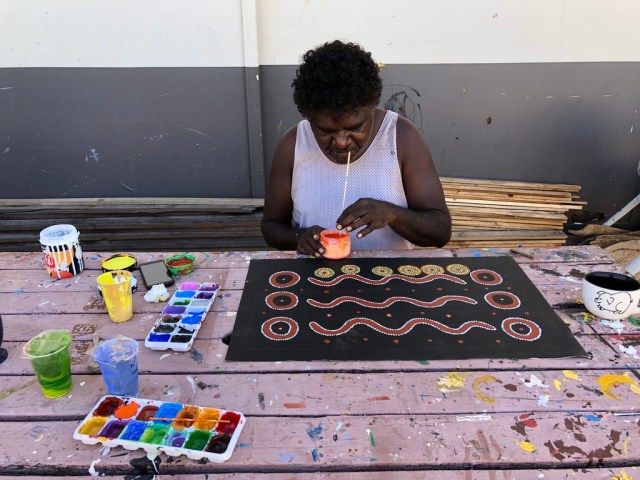
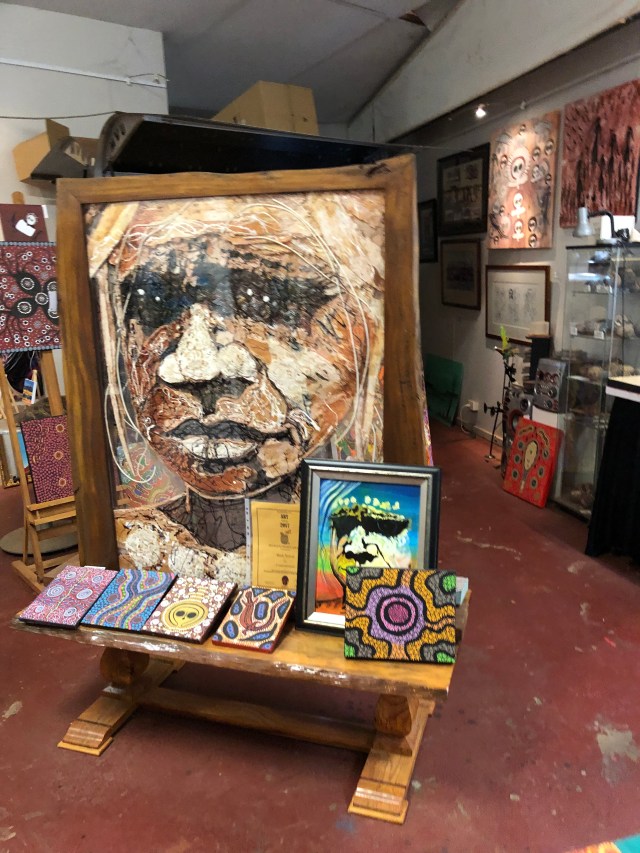
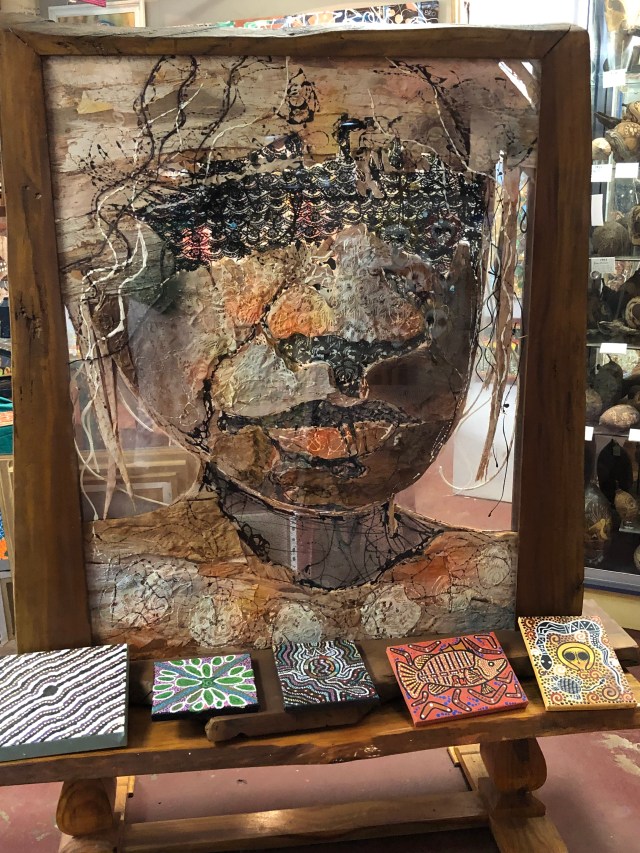
With a population of more than half being Aboriginal and with several communities nearby, there are a couple of art galleries to visit.  One was closed but the other was definitely worth a visit and I would recommend to anyone in the area to stop by.  It is fascinating and the owner, Mark Norval, is an artist himself who has spent more than 40 years in the area and has helped and encouraged many local artists.

UNADJUSTEDNONRAW_thumb_3d7

Several local people had come to the gallery that day and were sitting outside painting which was fascinating to watch.  They are extremely shy and I asked if I could take their photos and was pleased to be able to converse for a short time with them.

UNADJUSTEDNONRAW_thumb_3d6UNADJUSTEDNONRAW_thumb_3d4UNADJUSTEDNONRAW_thumb_3d5

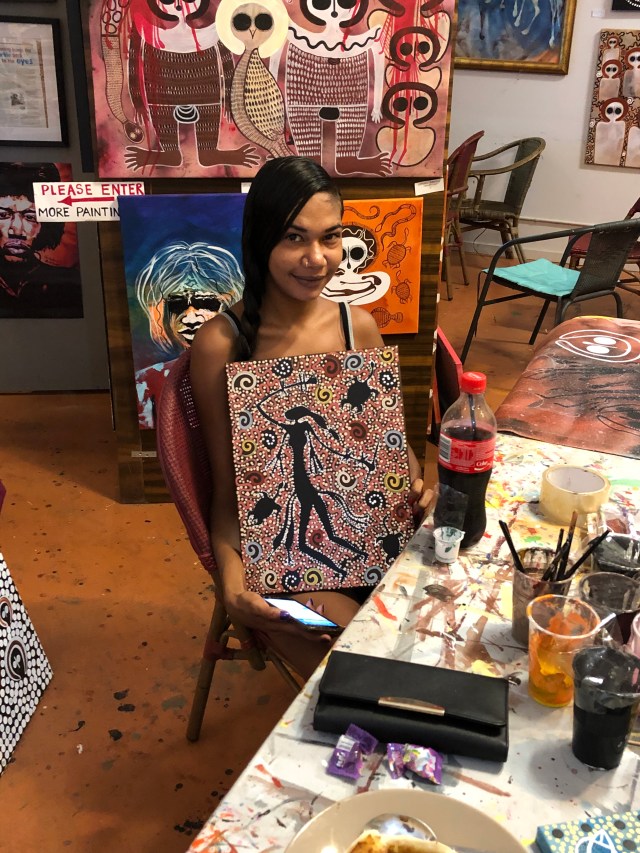
Inside was an incredible array of art and artefacts and I was very taken with a couple of pieces so purchased them and was delighted to find the young artist had just arrived, so she agreed to meet me and have a photo taken with the painting I had chosen.

IMG_3823

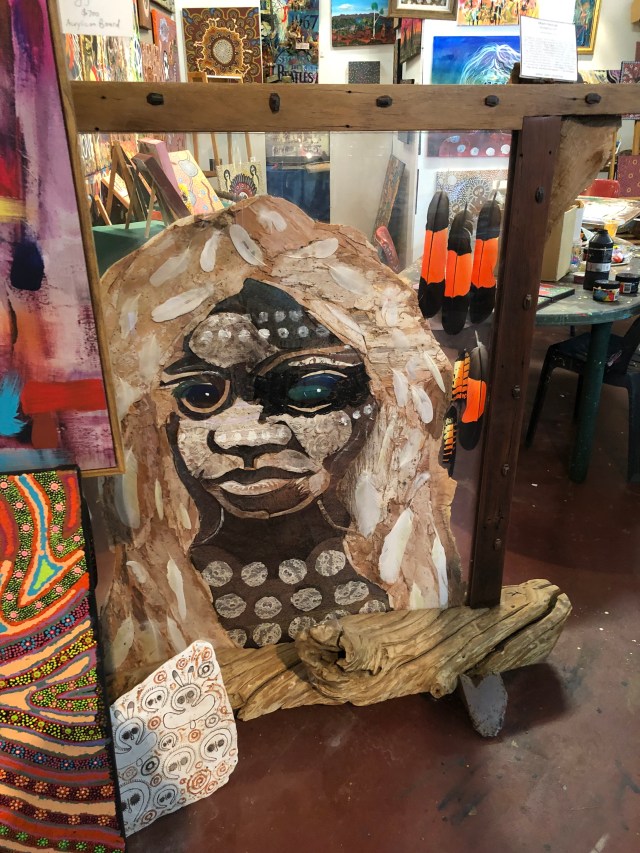
Mark himself has some incredible work there and two pieces, which were not for sale, left me quite gobsmacked.  They were portraits done on perspex so each side had a different face but was constructed with the same medium – paint, lace, bark, leaves and shells.

IMG_3820

and the other side

IMG_3821

IMG_3825

IMG_3824

I could have spent hours here at the gallery and spent hundreds of dollars but was pulled away and on we drove, to another straight road towards Broome.

UNADJUSTEDNONRAW_thumb_3d8


The Road ahead to El Questro

The road is getting more picturesque as we journey on but  I have to admit that the tiny bush flies and the intense heat is quite trying at times. However all that is forgotten as we drive deeper into the Kimberley area.

UNADJUSTEDNONRAW_thumb_2f3

Our home for the next two days was a safari tent at Emma Gorge, part of the El Questro station.  We decided to go “glamping” after our wonderful adventures in Africa in similar accommodation.  We didn’t think about the heat this time!

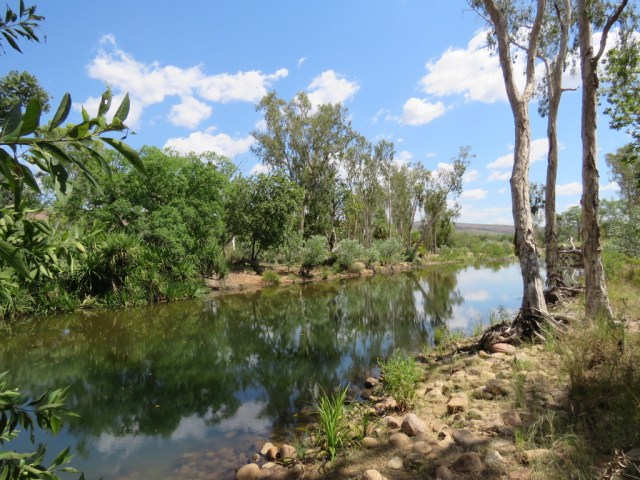
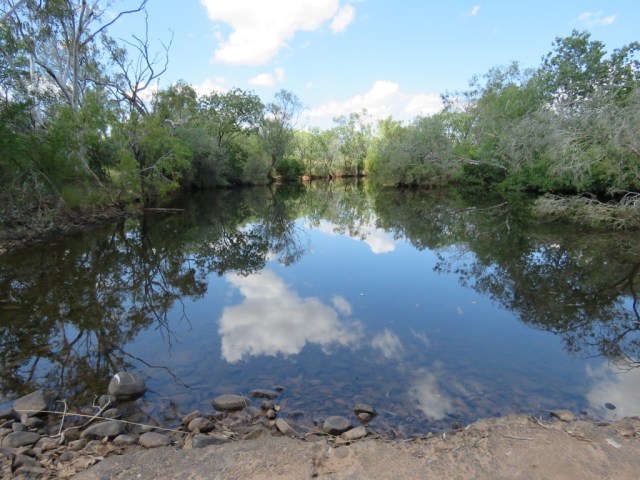
We organised a trip to Explosion Gorge and Branko’s lookout for sunset drinks but first we had to find a picnic spot to satisfy our hunger – it was lunchtime and the drive to El Questro station passes a beautiful waterhole called “Jackeroo Waterhole” and this was the ideal place to relax for half an hour before a bone shaking 4 wheel drive tour.

UNADJUSTEDNONRAW_thumb_2b2

The trip we booked is closed to public vehicles as the terrain is so rough.  We boarded an open safari type vehicle with six other guests and set off along the roughest track I have yet experienced!

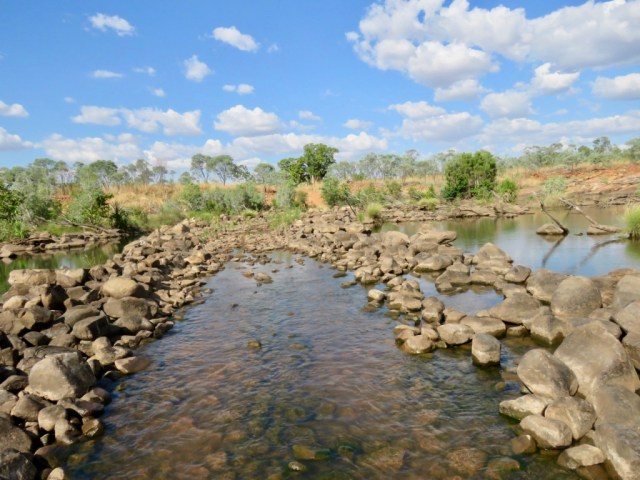
w1YIbcksTwKWzDMZIJVZog_thumb_2c0This also involved crossing a watercourse which appeared to me to be a river!

UNADJUSTEDNONRAW_thumb_2af

and then over some more stones

ucxD86GzSH2Oqqe0543WeQ_thumb_2bc

Then, whilst the vehicle was almost amphibious, we had a stunning view of the Homestead which is available for rent at over $3000 a night.  We were told it is pretty special and every comfort is provided with gourmet meals and staff included.

UNADJUSTEDNONRAW_thumb_2fc

The history of the station is interesting as it was a pastoral lease for many years and in 1991 a tall, handsome English aristocrat, named Will Burrell, arrived by helicopter and was interested in investing part of the fortune he inherited from his grandmother – the doyenne of the Penguin publishing empire.  He liked what he saw and bought the million acres as a working cattle ranch.  He intended to build a home for himself and envisioned a stylish getaway for adventurous travellers and ultimately a tourism venture with a range of accommodation from caravan park and camping to bungalows and tented cabins.  After a lot of hard work and millions of dollars his dream was realised and today it is a luxury wilderness park with a variety of tour options, guided walks and self drive itineraries.  It is now owned by an American company and open only from April to October because of weather conditions.

Our guide, Tommy, took us first to the great Boab tree where the Durack family camped in 1863 whilst droving their cattle from New South Wales to the Kimberley.  The tree has the Durack carved initials and has increased in size over the years.

UNADJUSTEDNONRAW_thumb_2b4

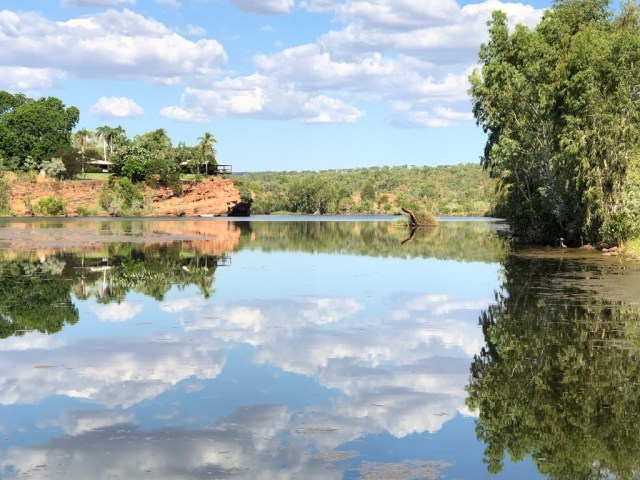
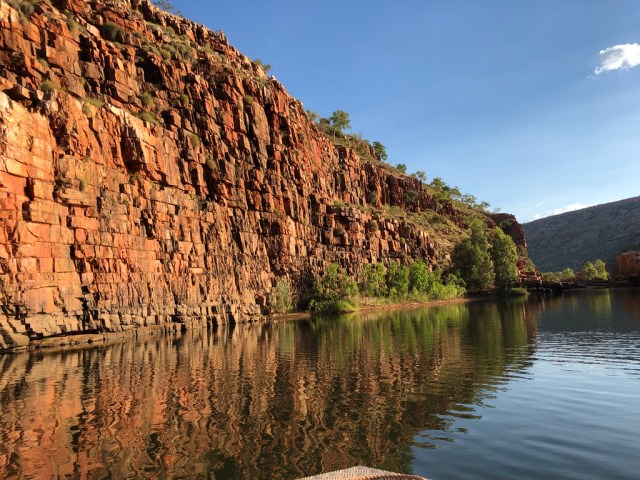
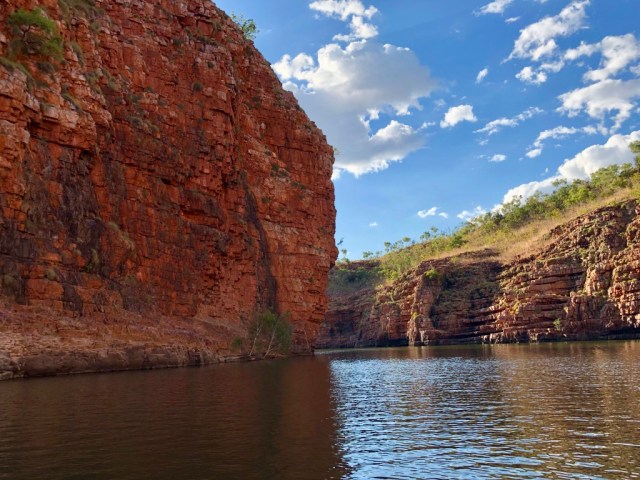
A very rough drive some time later brought us to Explosion Gorge where we left the vehicle and boarded a small punt for an hour on the water

UNADJUSTEDNONRAW_thumb_308

The colours are truly amazing and the red of the rock contrasted with the blue water and the varying hues of green of the bush.

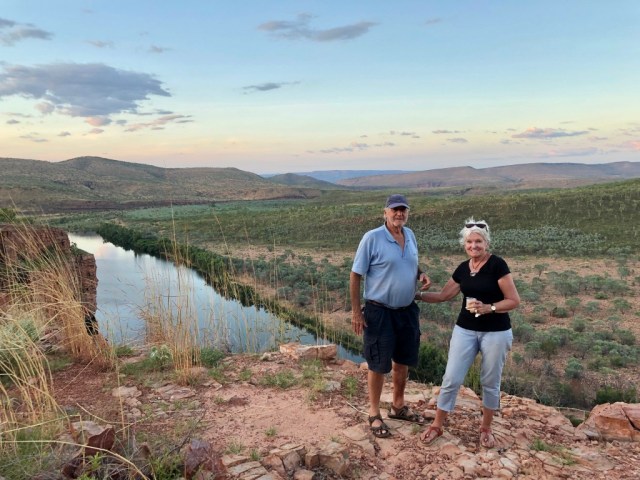
Zc0pqxVvTpO5Q71X21nTcg_thumb_304UNADJUSTEDNONRAW_thumb_2ccIMG_3398

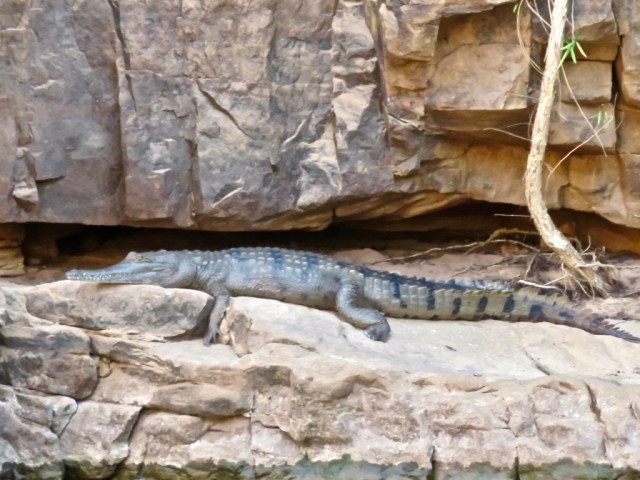
Then we spied a young freshwater crocodile just basking in the sun on the ledge.  He remained motionless for some time and then suddenly slid into the water with a huge splash.

pOS0wdGVQAGTXu9Cba3Ziw_thumb_2da

The name “Explosion Gorge” came about because Will Burrell apparently found a cache of dynamite one day and decided to go fishing.  What better to attract the fish than an explosive such as dynamite so he lit it and the rest is history!
On the rough ride to our sunset lookout we came across a beautiful nest made by a bower bird and in such a safe location that it can never be attacked by prey or fire.

VGnRZC09TXymNKOxyOt+cQ_thumb_2c4

A winding road led to the top of an escarpment where a plateau gave us an amazing view of the river and the whole landscape of the area.

Ytj5%7TKQ4WrUoVu9labVw_thumb_30c

The colours began to change as the sun sank lower and out came the champagne and beers – very welcome after the dusty drive!

N8MTZ5AKTbuqk3MaCJhrew_thumb_312

The moon reflected on the water before night fell making this a very special place.