EXPLORING BAYS AND FIORDS OF SOUTH GEORGIA

MORE SEALS, PENGUINS, ALBATROSS AMID GLACIERS AND FIORDS
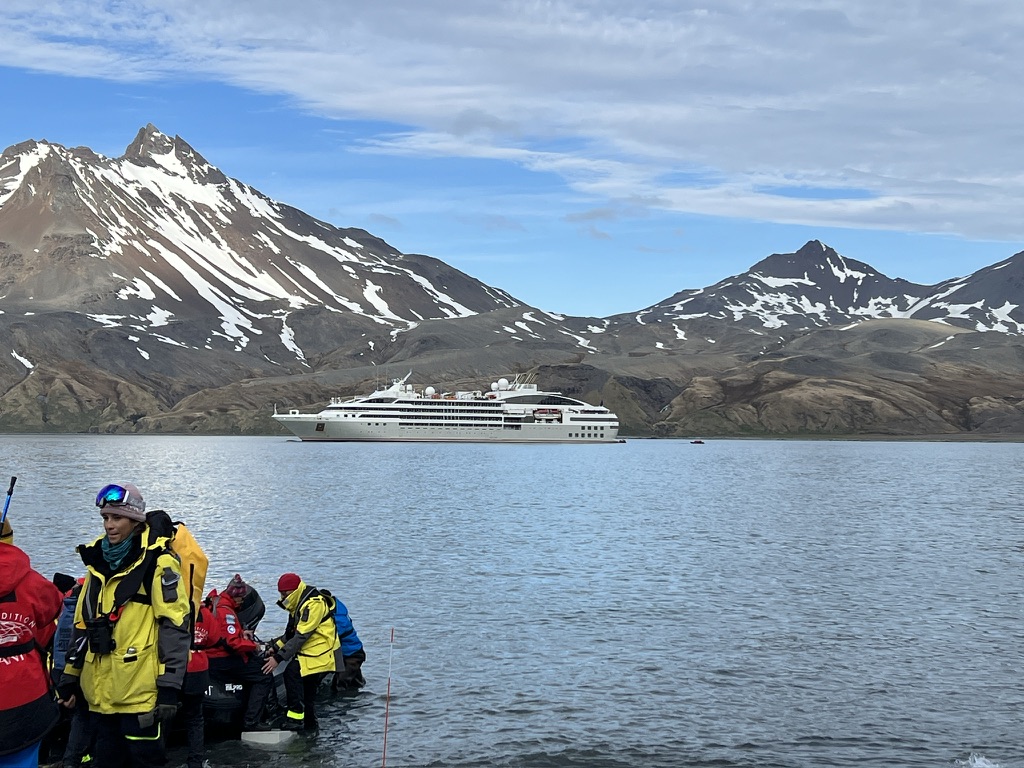
One of the exciting activities on an Antarctic expedition is exploring in the zodiacs. To the south of the island of South Georgia there are a few bays with spectacular backdrops. Amongst these are Golden Harbour which is a small bay that leads to the Bertrab Glacier. The bay is called as such because the cliffs around the bay shine yellow in the hour after sunrise and again before sunset. We were lucky to witness this and found the beach ringing with the cries of king penguins, gentoo penguins and elephant seals all of whom like to breed in the sheltered bay. Add to this the cries of the sooty albatross who come here every year to mate and raise their chicks.

At nearby Larsen Harbour we found our first Weddell seal – these seals are amongst the largest of the species and are commonly found on ice fastened to land. They gather in small groups around cracks and holes within the ice and in the winter they stay in the water to avoid blizzards with only their heads poking through breathing holes in the ice. When on land they are often found lying on their sides. Some populations breed on land, which is why we found a couple in South Georgia. Normally they live on the ice and around ice holes and cracks underwater. They forage and feed on fish, squid, octopus and prawns and can stay underwater for up to 45 minutes to an hour. They are placid and the more we heard about their habits and lives, the more fascinating they became especially as it is rare to see them on land.

Having a snooze in the sunlight

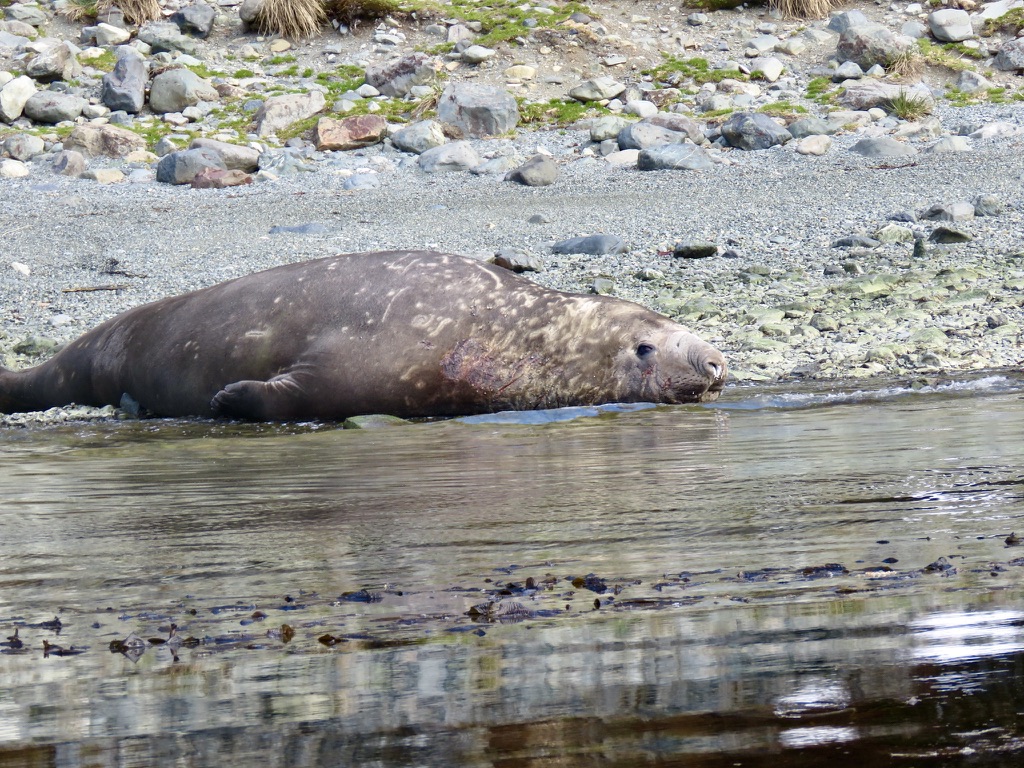
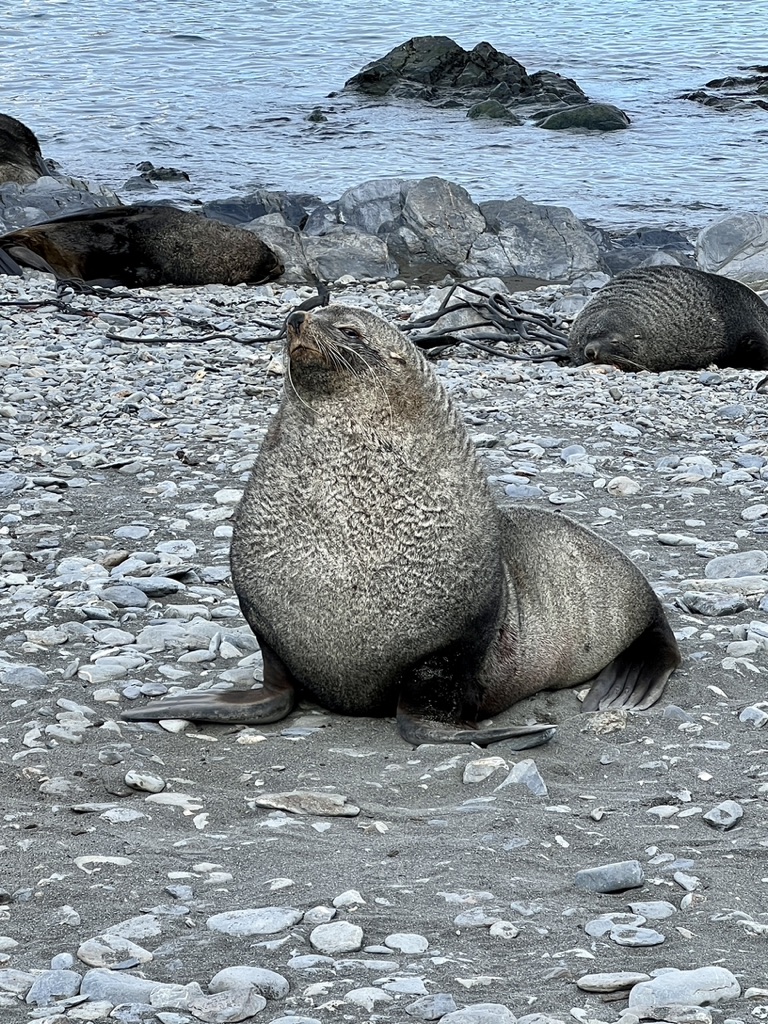
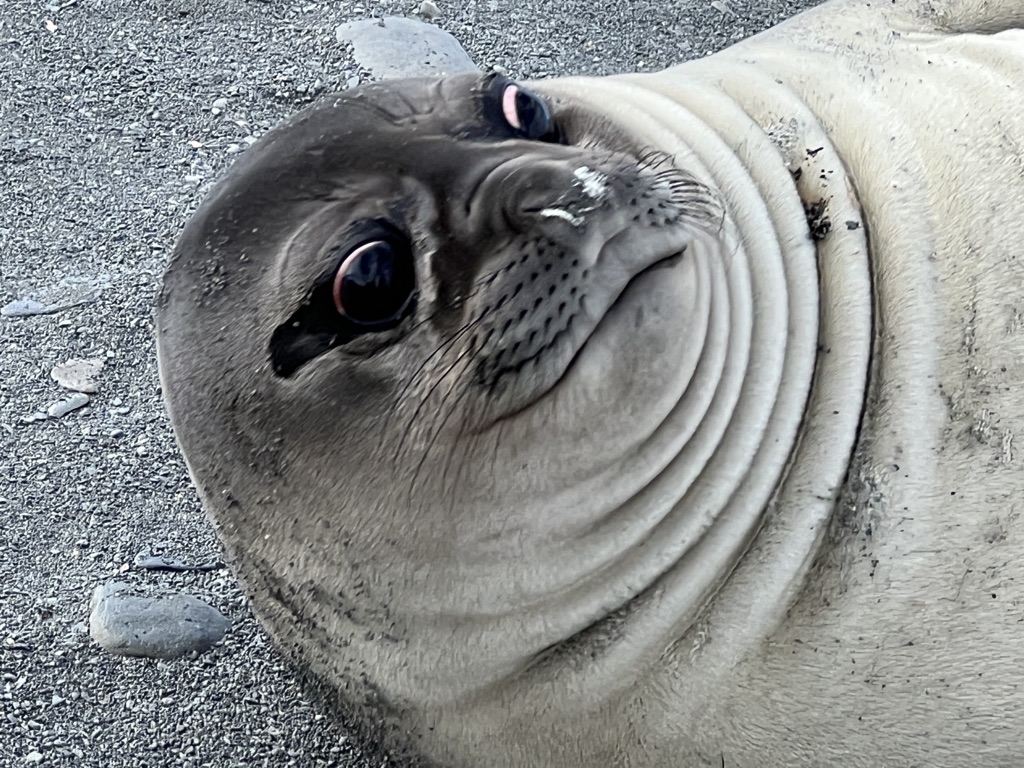
Living in harmony with the Weddell seals are the elephant seals – and these are also huge creatures and were just lying in the shallows and were not bothered by our zodiac or the little penguins close by.

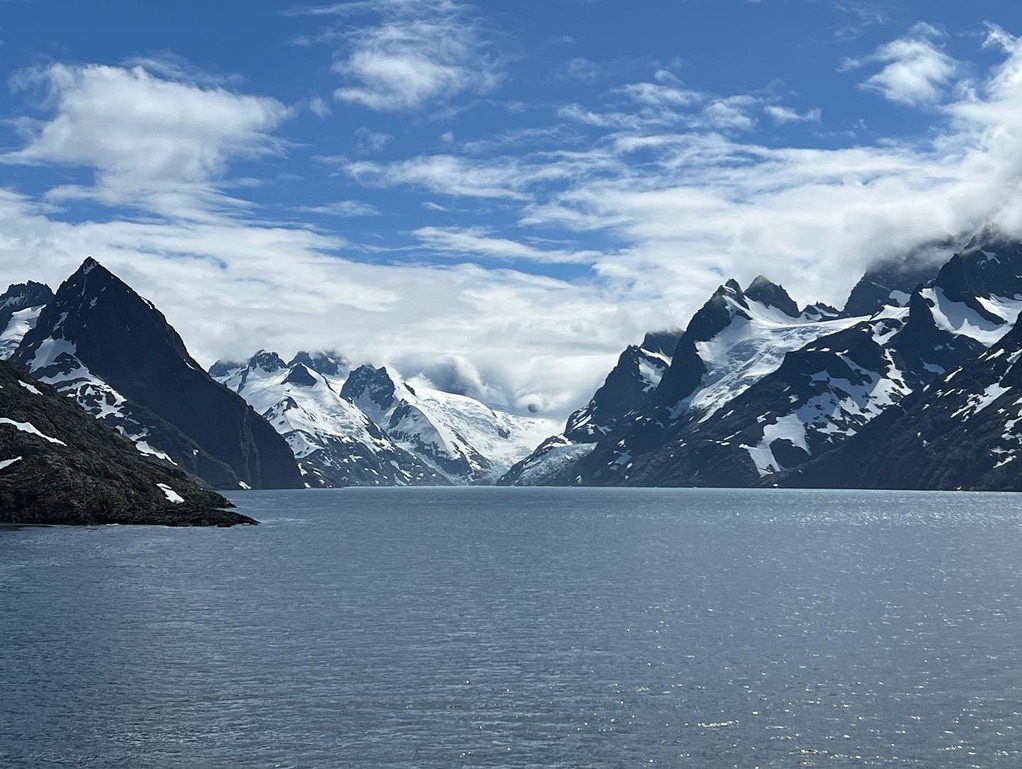
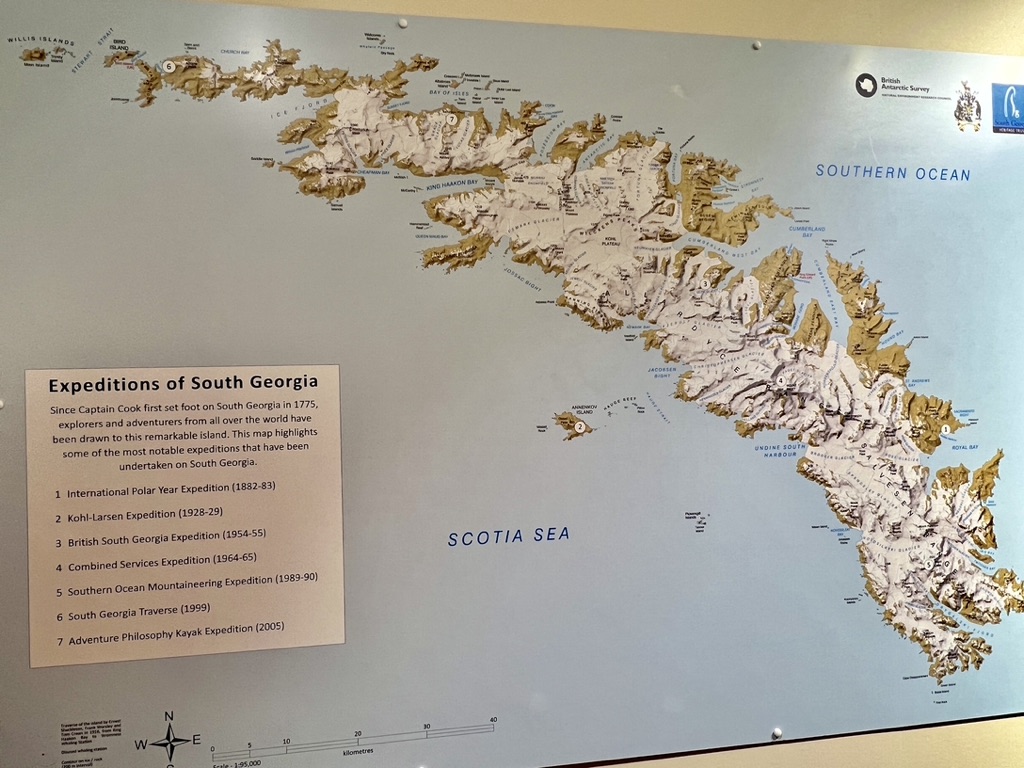
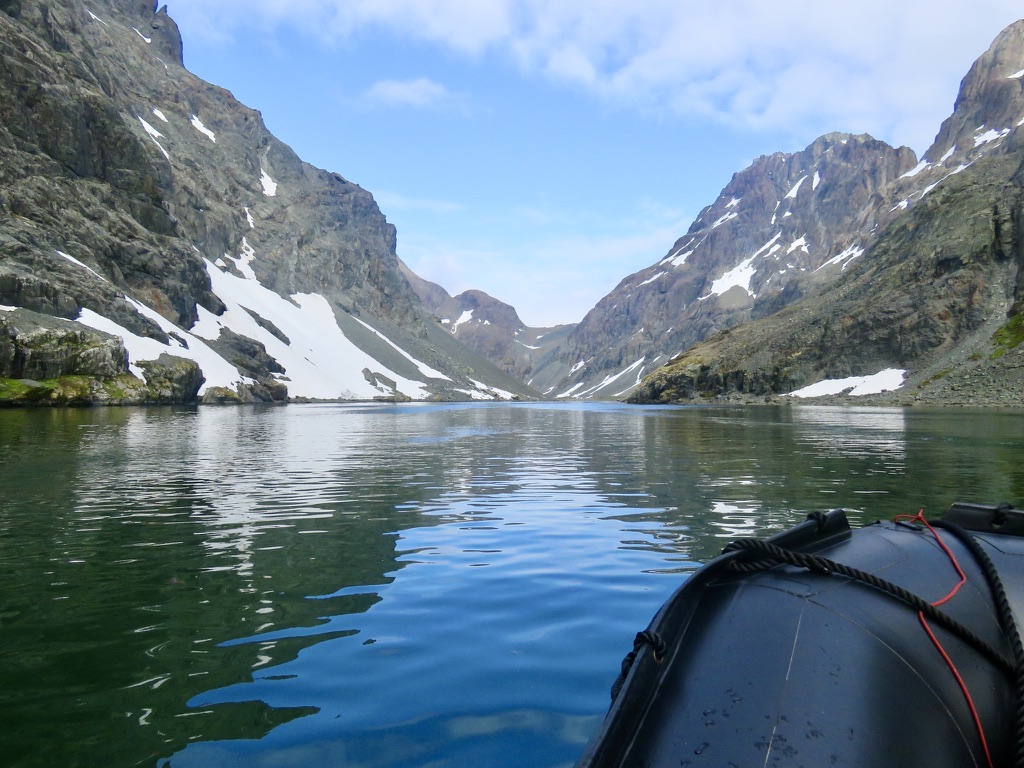
Approaching the Drygalski Fjord, the ship found safe anchorage and we set off for a trip in the zodiac getting close to the glacier and the waterfalls as well as the wildlife. The Fjord lies just a short distance from Cape Disappointment which was named by Captain James Cook when he rounded it in 1775 to learn he was circumnavigating an island and had not, after all, discovered the fabled southern continent. The fjord is 14 km long and sits above an important geological faultline. The mountains on the southern side are covered with the Risting and Jenkins glaciers which slowly pour into the head of the fjord.
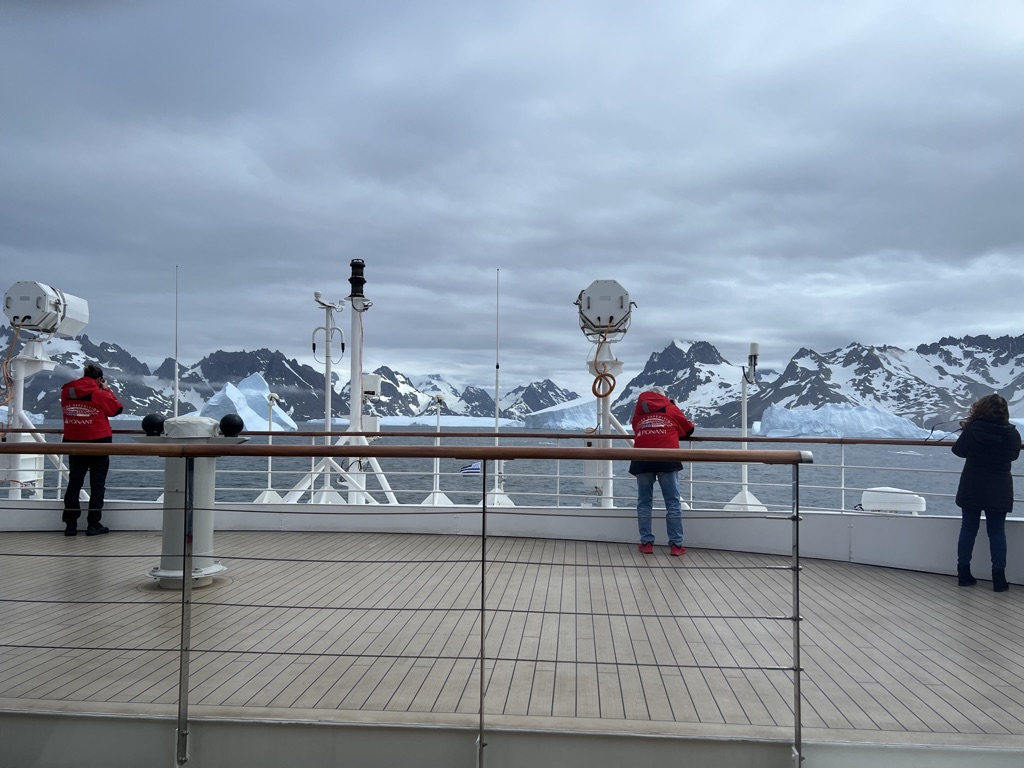
There is a feeling of amazement when riding in the zodiac among huge mountains, hearing the birds’ cries above and seeing the waterfalls fall into the fjord while on the other side, the glacier sits majestically. Our guide asked us to sit silently for several minutes to absorb the quietness and beauty all around. A roar of what sounded like thunder pierced the silence and then a small avalanche up in the mountains occurred with tons of snow tumbling down. This apparently happens regularly at this time of year, the start of summer and warmer temperatures after a long, cold winter.

At the mouth of the fjord was a large iceberg – one of many we encountered later in the trip but first we had to cross the infamous Drake Passage to reach the Antarctic Peninsula.

GRYTVIKEN STATION, SOUTH GEORGIA

THE FIRST WHALING STATION IN ANTARCTIC WATERS

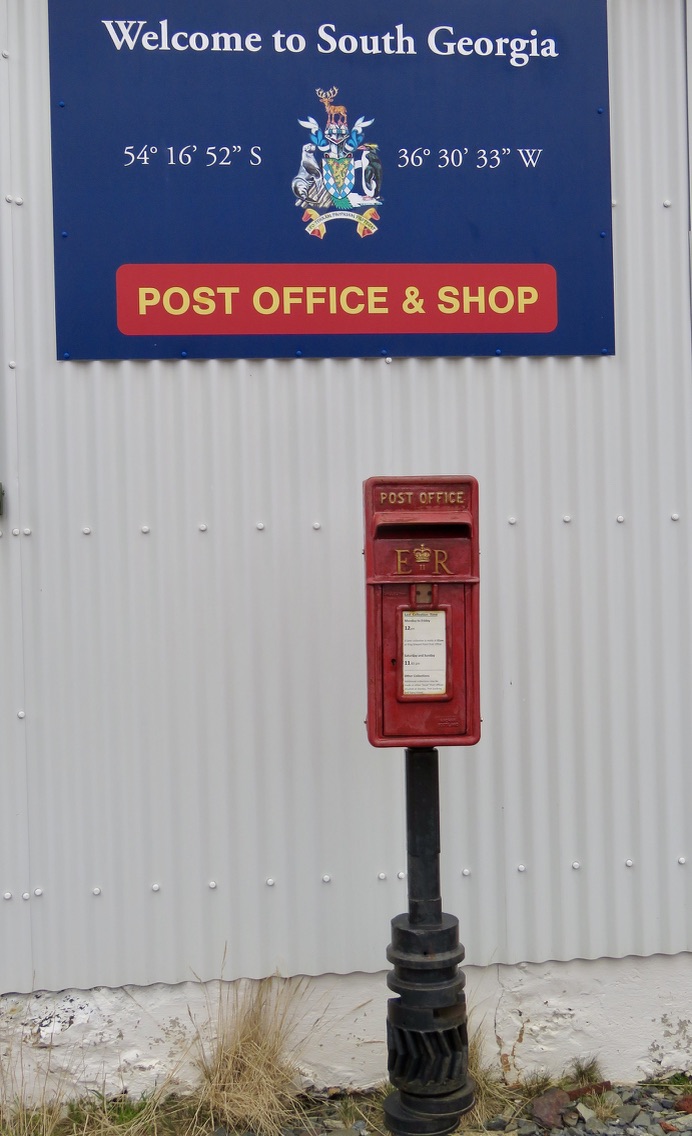
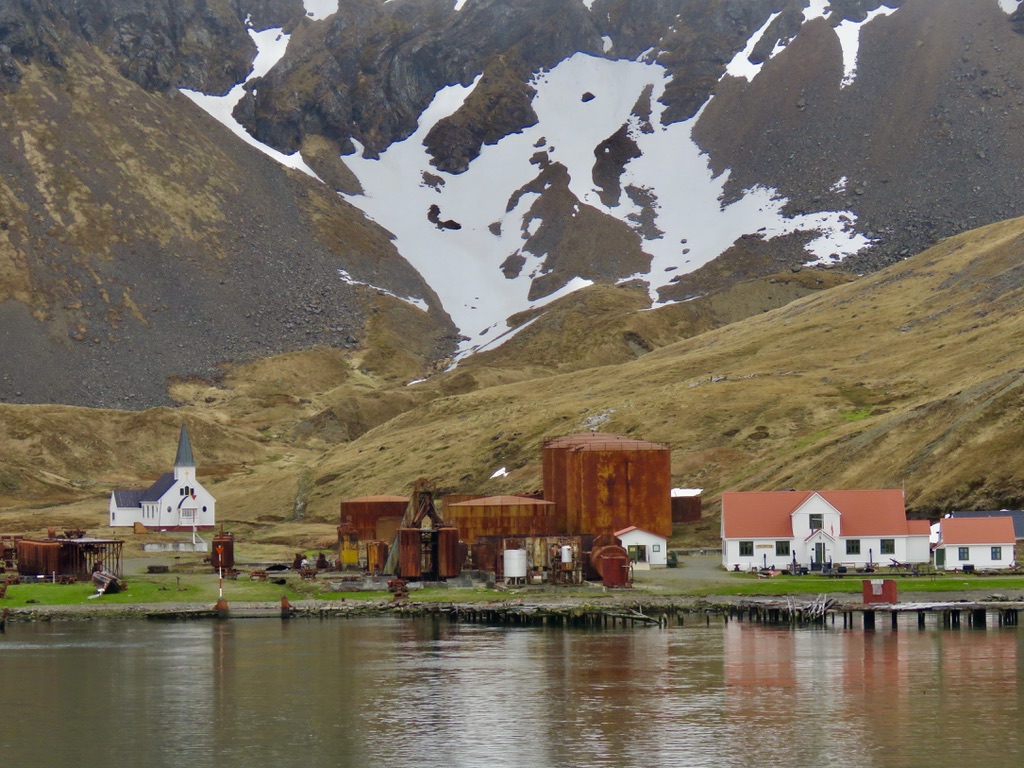
We landed at Grytviken on a cold but bright morning. It is the largest settlement on the island and was formerly a whaling station and is now declared an ‘Area of Special Tourist Interest’ (ASTI). Located at the head of King Edward Cove within the larger Cumberland East Bay it is considered the best harbour on the island. Today there is a small group of people who live there, mostly scientists and Museum conservators, and they tend to stay on six month secondments. The British Antarctic Survey applied fisheries research station is here as well as the Marine Officer, the Government’s sole representative. The Marine Officer’s duties include those of Harbor Master, Customs and Immigration, Fisheries Officer and sub-Postmaster. Quite a busy role for the incumbent especially at the height of the tourism season. Previously, however, it was the hub of whaling in Antarctic waters and was founded by Norwegian Carl Anton Larsen in 1904. Conditions were harsh and there are countless tales and fascinating insights into life at that time now displayed in the Museum.

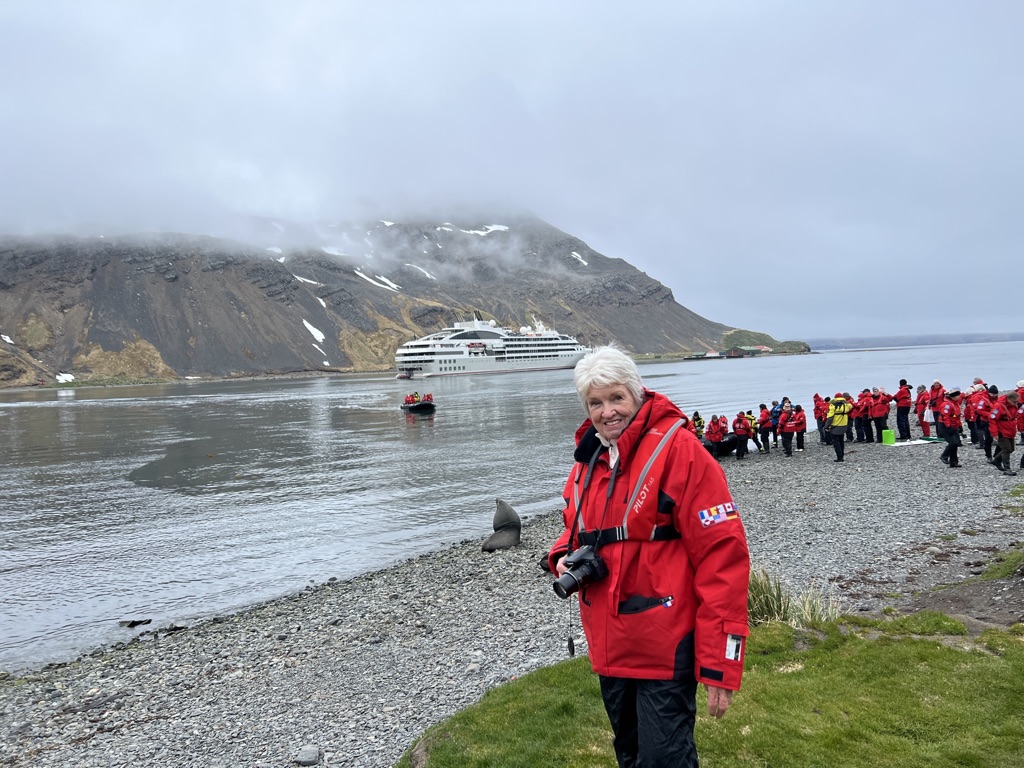
We reached the shore by zodiac – again after the mandatory decontamination session as per the IAATO regulations. The beach was rocky and we were greeted by huge seals basking on the rough stones and who appeared to be unconcerned by the arrival of aliens on their shore!

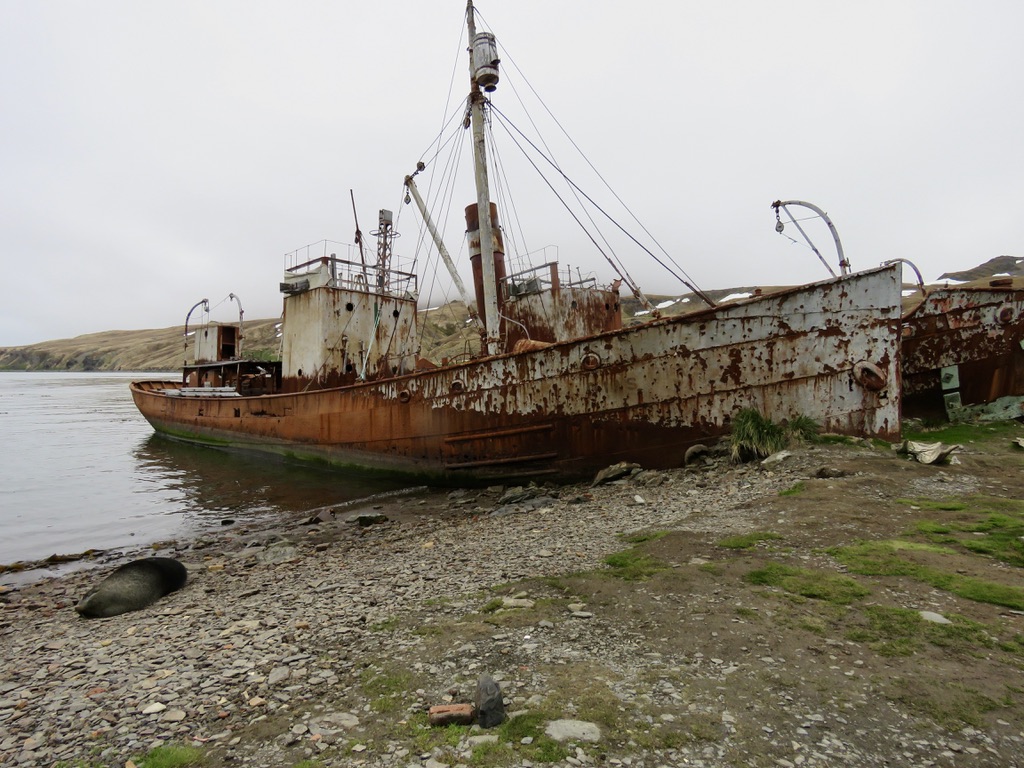
A couple of rusty old whaling ships lying at the edge of the shore reminded us of what this place was once.

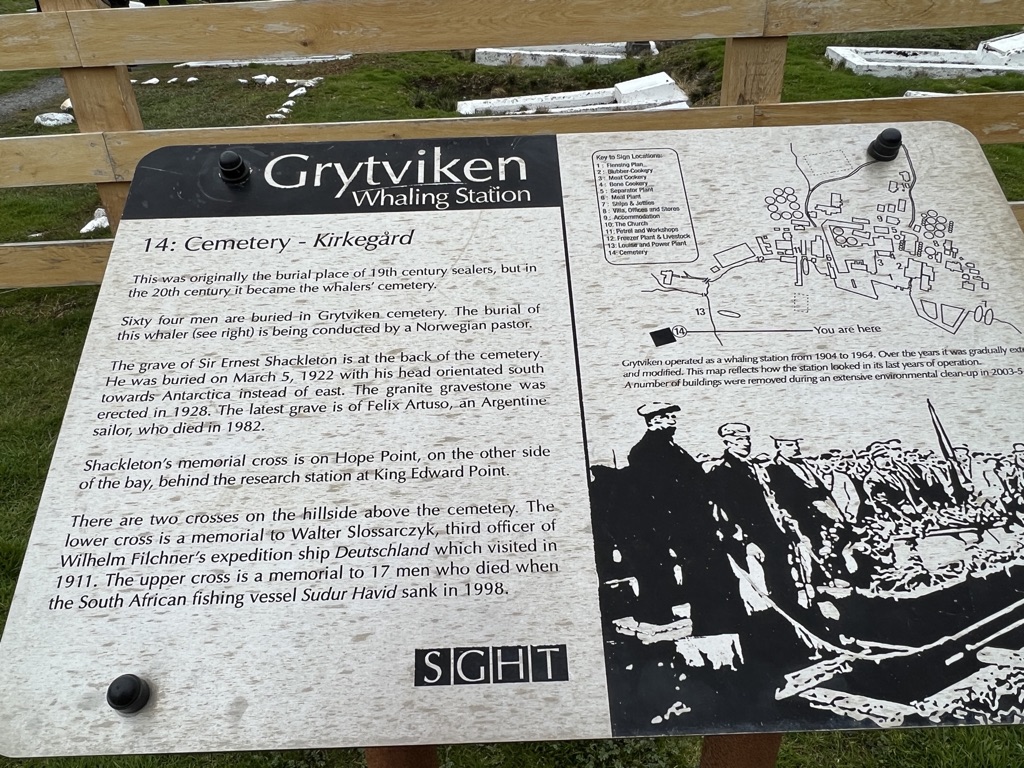
Then it was a short hike up to the cemetery which tells the story of the brave men who lived and died here. Most famous was, of course, Ernest Shackleton who died at Grytviken on January 5th 1922 and is buried here facing the bay. We had had lectures and a film about Shackleton’s life and being here brought it all to life.

Shackleton planned to cross Antarctica from a base on the Weddell Sea to McMurdo Sound via the South Pole, but the expedition ship – the Endurance – was trapped in the ice off the Caird coast and drifted for 10 months before being crushed in pack ice. The members of the expedition then drifted on the ice floes for another 5 months and finally escaped in boats to Elephant Island in the South Shetland Islands, where they survived on seal meat, penguins, and their dogs. Shackleton and five others sailed 1,300 km (800 miles) to South Georgia in a whale boat, which took 16 days before landing on the southern side of the island. The crew then made the first crossing of the island to seek help and after four months, Shackleton succeeded in rescuing his crew from Elephant Island – and not one of the crew of Endurance died. A remarkable feat in unbelievable circumstances. In 1921, Shackleton attempted a fourth expedition with the goal of circumnavigating the continent. He died here in Grytviken at the outset of the journey, and it is believed the strain of the expeditions themselves and the exertion in raising funds wore out his strength, and he died of a heart attack.

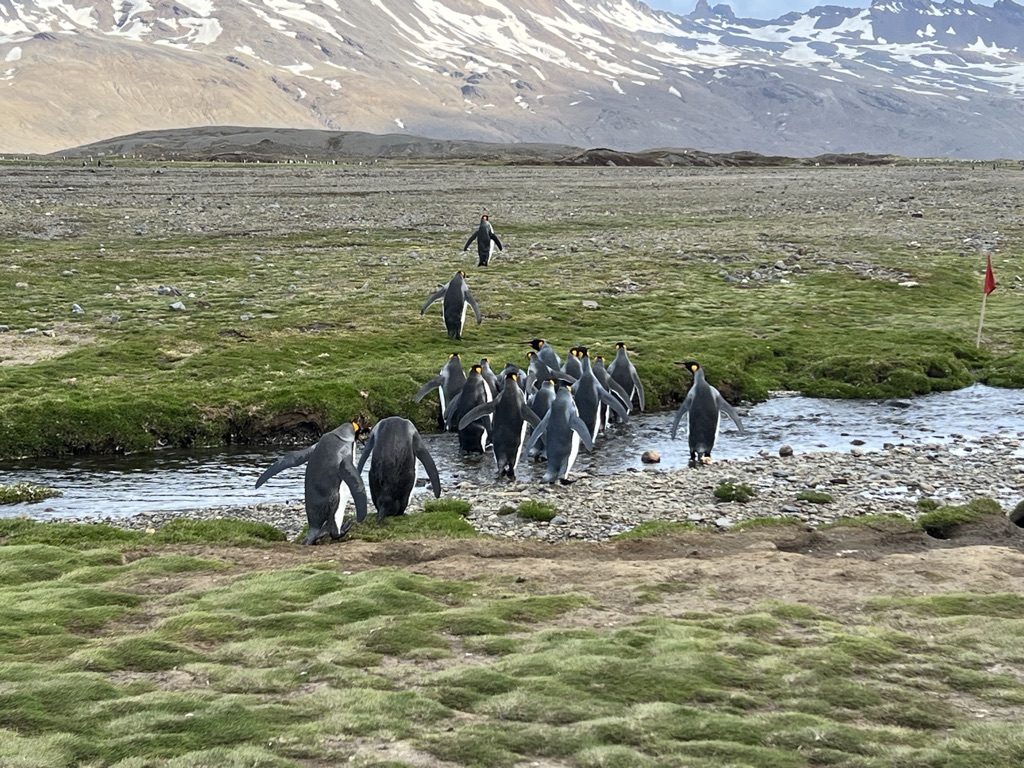
Along the side of the cemetery was a large sheet of snow and ice and here a few King Penguins were having a leisurely wallow dipping their feet into the stream alongside.

Then we walked a short distance to the Museum to learn more about this fascinating little settlement. I talked with one of the conservators who was a young girl from Shetland, in Scotland. This was her fourth stay on the island and she was delighted because it was summer (November) here but winter in Scotland and she had timed her secondments to be such and thereby had missed two winters in a row! All the same, it can’t be easy to stay in a such a remote place for six months at a stretch with a bunch of strangers for company. Ultimately some would become lifelong friends, I am sure.

There is a shop and a Post Office and we were able to buy postcards and mail them from here thus having a unique postmark! The shop sold souvenirs as well as woollen clothing and books. We were told they would accept cash or credit cards and so went with cash but were unlucky – that day they only took credit cards! So no souvenirs for me just a lot of memories and heaps of photos of a rather large baby seal blocking the doorway of the shop – so we had to walk around the back!

What a magical day! We immersed ourselves in history, mingled with the wildlife, met some locals and drank in the scenery. More adventures awaited us and we have learnt that no two days are the same!

SOUTH GEORGIA AND PENGUINS

WILDLIFE AND HISTORY COMBINED

Our first glimpse of penguins in their rookery was three days after we left South America. What a sight it was along with the noise of their chatter and an odour which I didn’t find offensive at all! We had reached South Georgia, a region formed by an underwater mountain chain that extends from the Andes to the Antarctic Peninsula.

Our three days at sea were productive. We settled in and found our way around the ship which was Ponant’s ‘Le Lyrial’ – and had a total of 120 passengers on this voyage. It was small enough to easily find our way to either of the restaurants, the library, observation lounge, spa, gym and photography studio. Our suite was very comfortable with a lounge and bedroom plus bathroom and balcony area. We were on Deck 6 and close to both the lounge/bar and the casual restaurant.
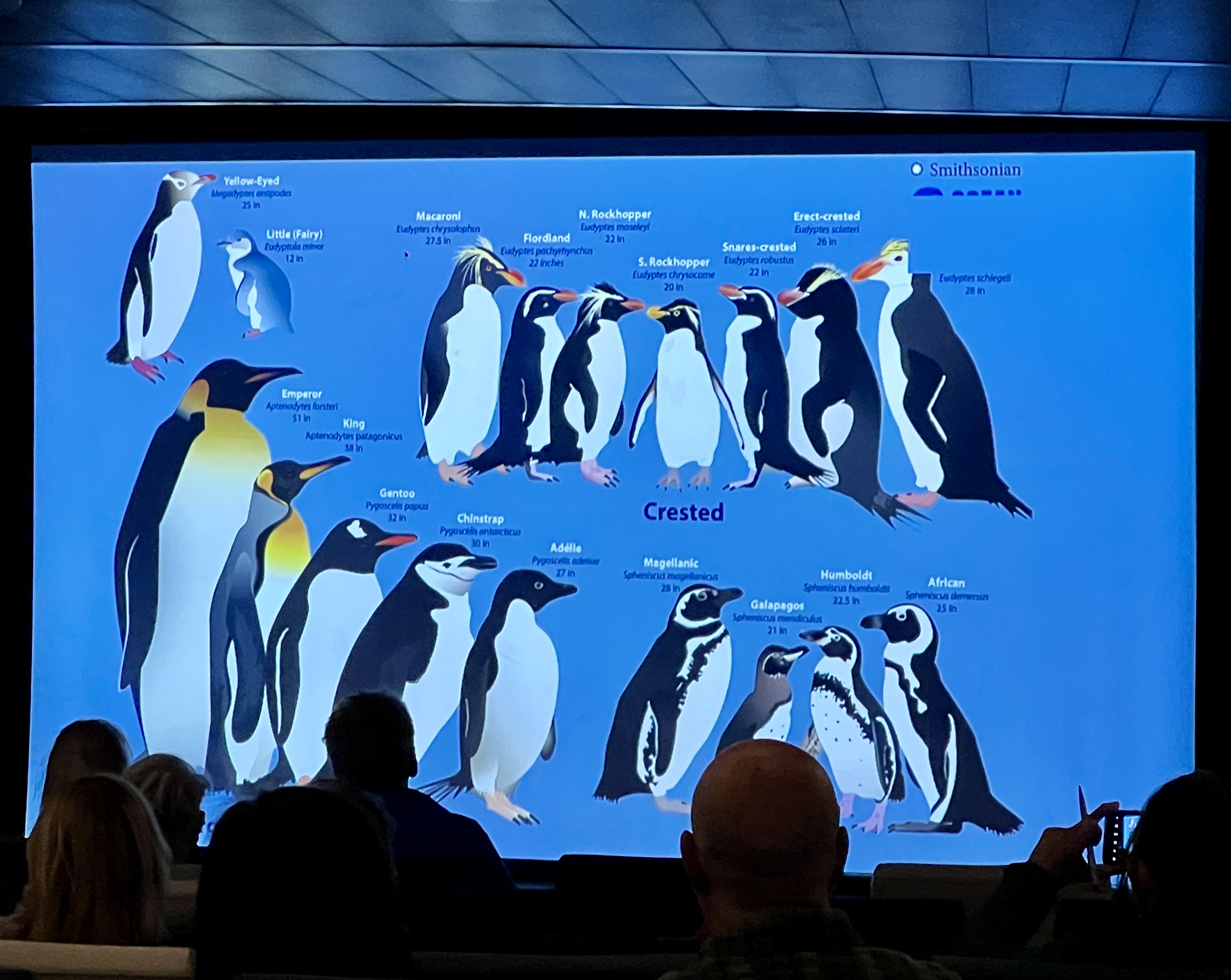
Each day there were a couple of lectures – both in French and English – and these varied from wildlife talks, history and general information regarding the area to geology and iceberg formation and so on. Our Expedition leader was John Frick, an American who has spent decades in and around the Antarctic region and his knowledge knows no bounds. His expedition team presented lectures according to their own speciality and one of the first talks was on Penguins and the different types varying from the tiny Fairy up to the Emperor. We would be encountering Gentoo, Chinstrip, Adelie and King penguins on this trip if we were lucky!

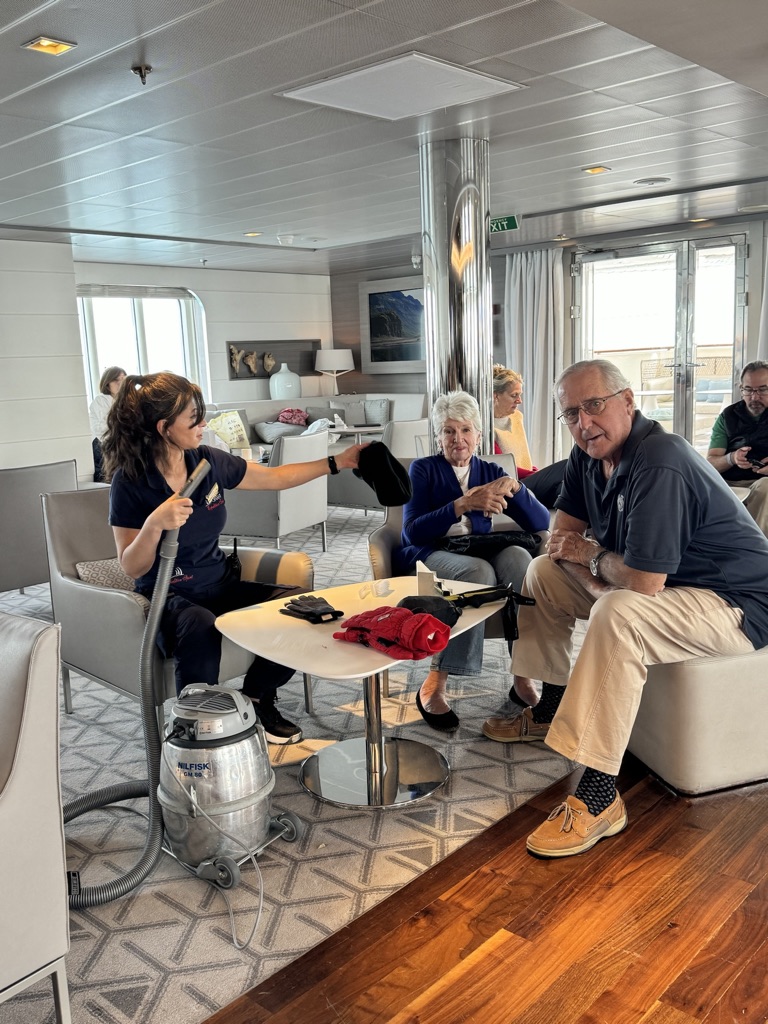
It was also an opportunity, whilst at sea, to introduce the passengers to the rules and regulations applicable to all visitors to Antarctica according to the Antarctic Treaty and the International Association of Antarctic Travellers (IAATO). Attendance was mandatory and we discovered the strict Biosecurity measures which take place at every stop in Antarctica. This involves vacuuming all outerwear, including gloves, parkas and hats, inspection of boots and the scrubbing of boots in soapy disinfectant each time we reboard. It seemed a lengthy process at first but soon became second nature. Inspection officers came aboard in South Georgia and randomly selected a few passengers to double check! Fortunately we were not ever in that group – to be selected and found to have a speck of fibre or a hair or piece of grass on your clothing or boots would be embarrassing to say the least!

Our first landing was Fortuna Bay in South Georgia, but just before entering the bay we spotted our first iceberg of the trip!

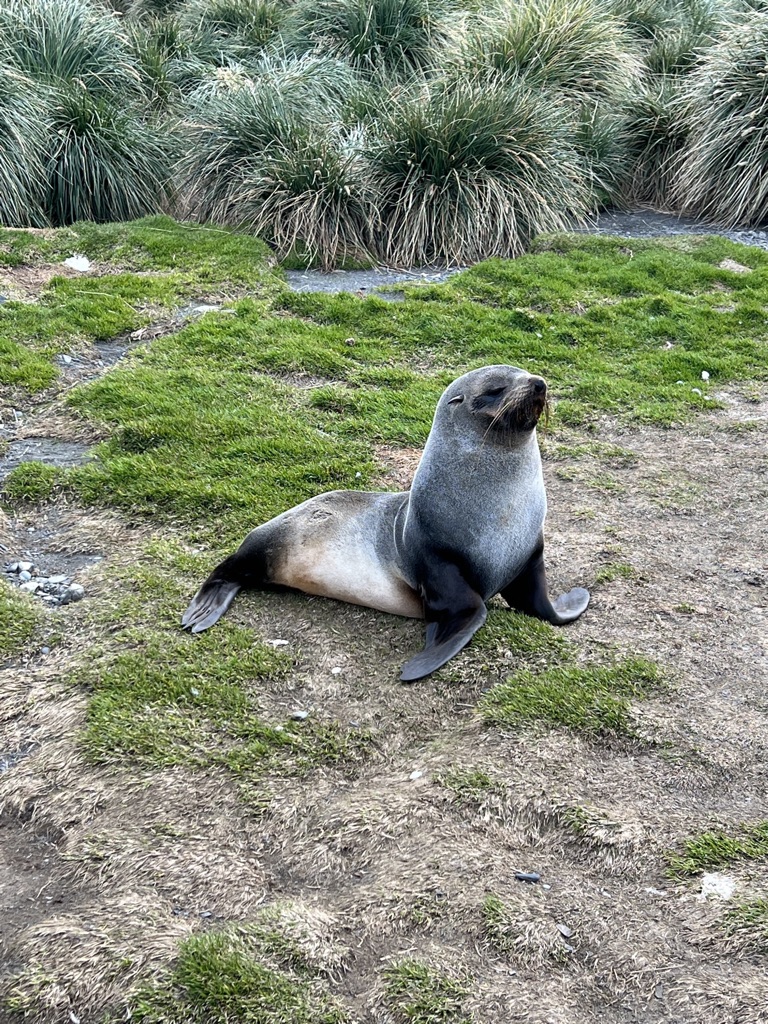
Then we sailed into the bay and landed on the plain to be greeted by fur seals, penguins and hundreds of birds. This was quite unlike anything I had ever seen and once ashore, walking amongst the wildlife who showed no fear of us humans was an unbelievable experience. This is a pristine land and it was fantastic to be wandering amongst these creatures in the bright sunshine and sharing, for just a moment, their lives in this place.

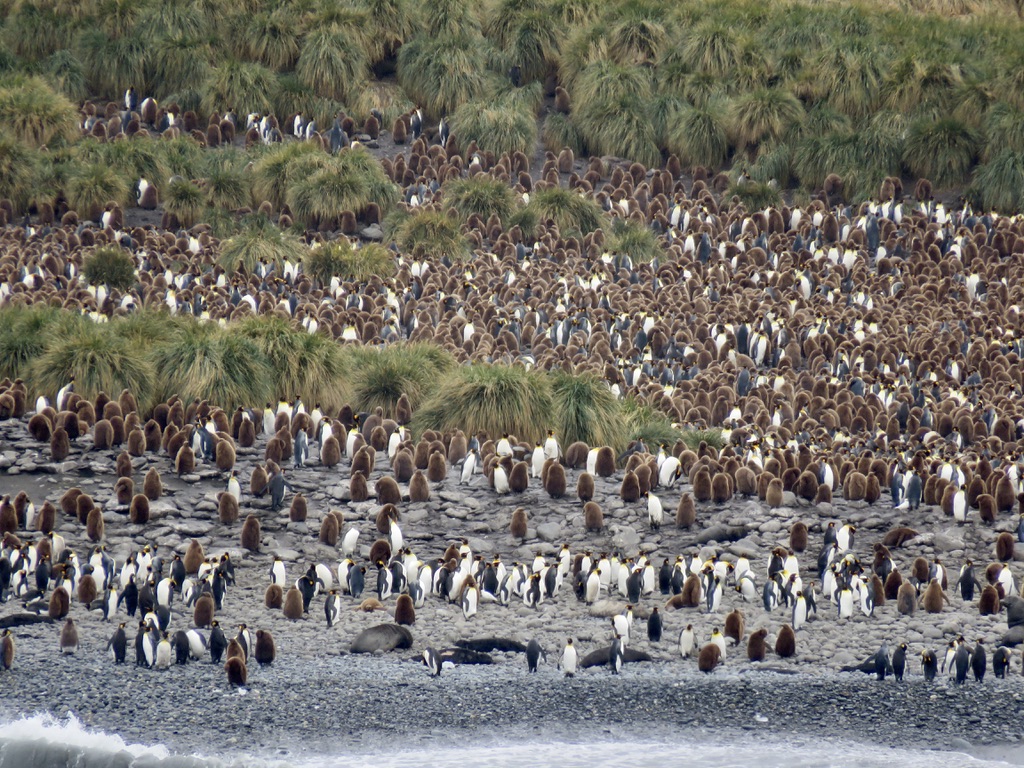
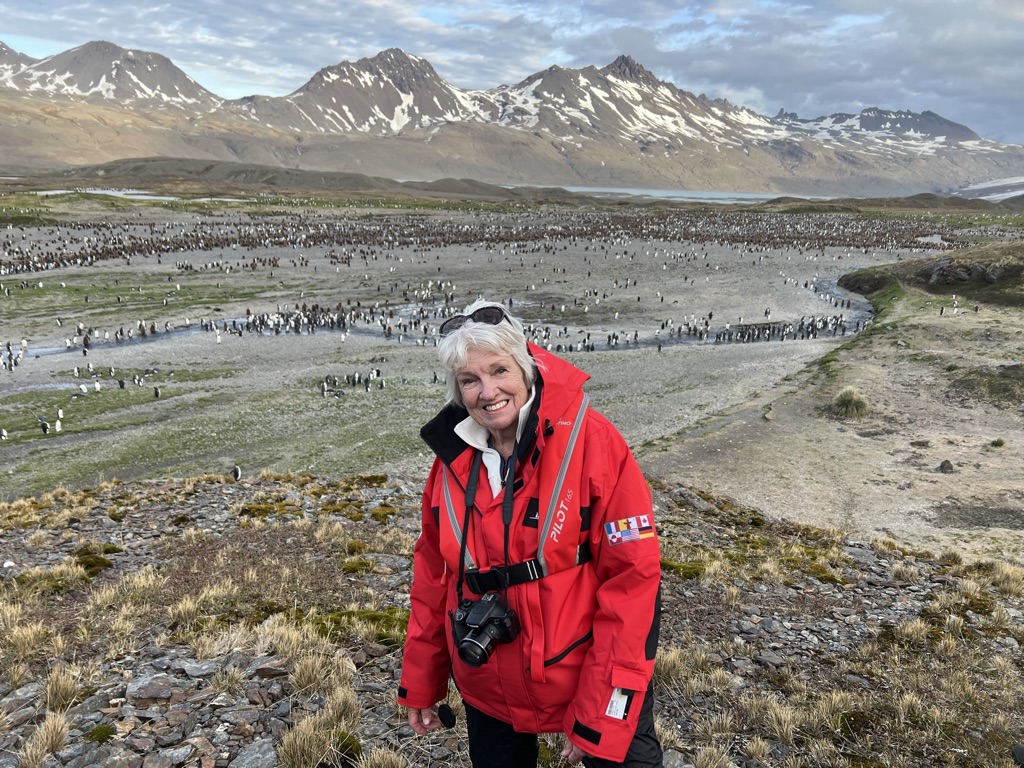
There was a hike to the top of a hill where the views were amazing – thousands of penguins all grouped together in the rookery – some sleeping, some playing, some wading across tiny streams and nearly falling in! They are hilarious to watch. The babies are covered in a brown fur like down which falls out once they reach a certain stage in maturity. I could see hundreds of young ones – some quite large and obviously about to change from baby to adult (or teen?).

What an exhilarating day! I had never imagined a trip to Antarctica would be like this. Like everyone else, I had seen pictures and films of the wildlife of this area but it was all snow and ice. To be here, on an island, with nothing but penguins and seals, tussock grasses and wildflowers, pebbles and rocks and bright sunshine was truly out of this world. And, did I mention, I have fallen in love with penguins!