PUNAKHA VALLEY , BHUTAN

DAY FOUR: KHAMSUM YULLEY NAMGYAL CHORTEN AND PUNAKHA DZONG

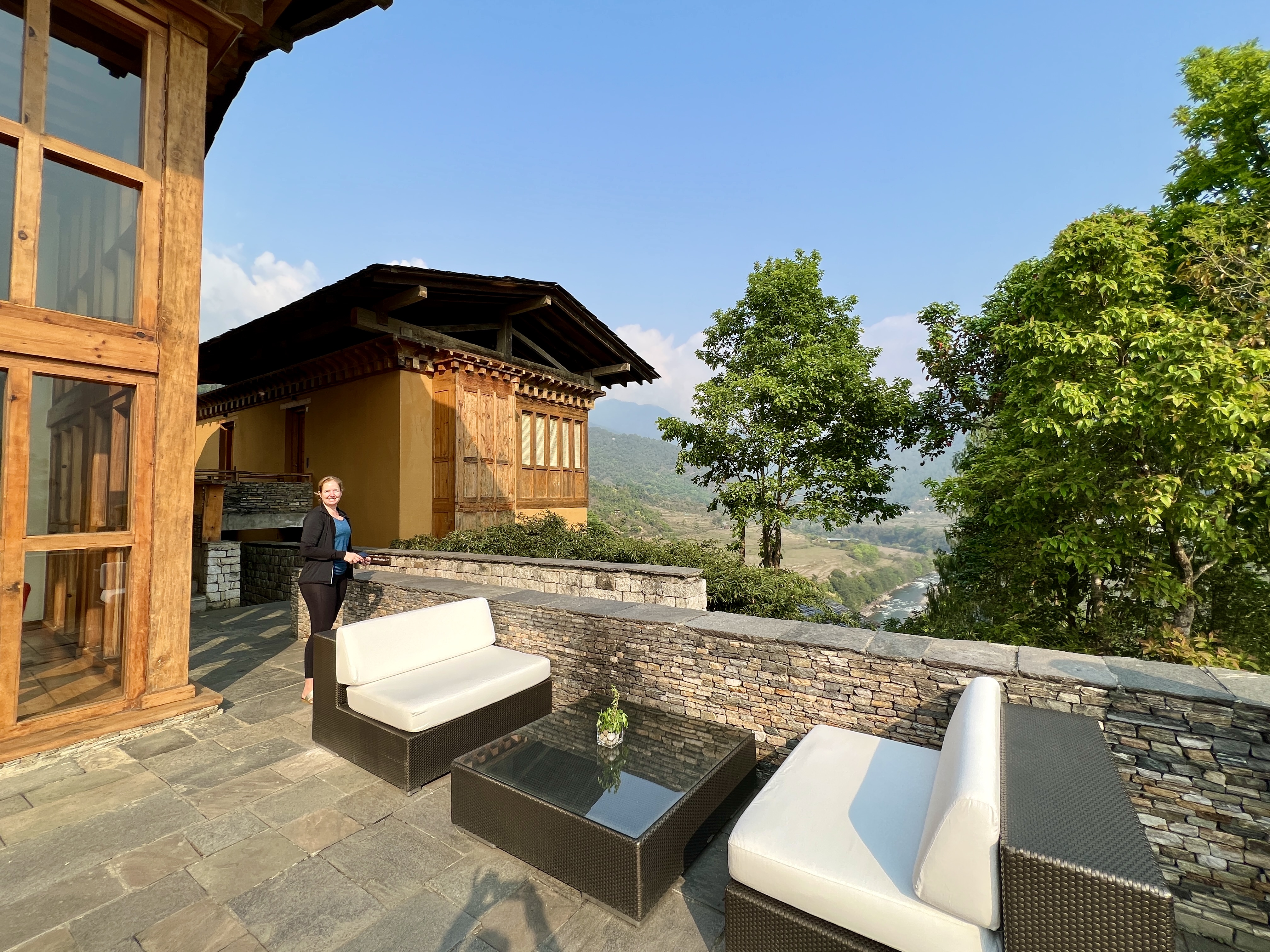
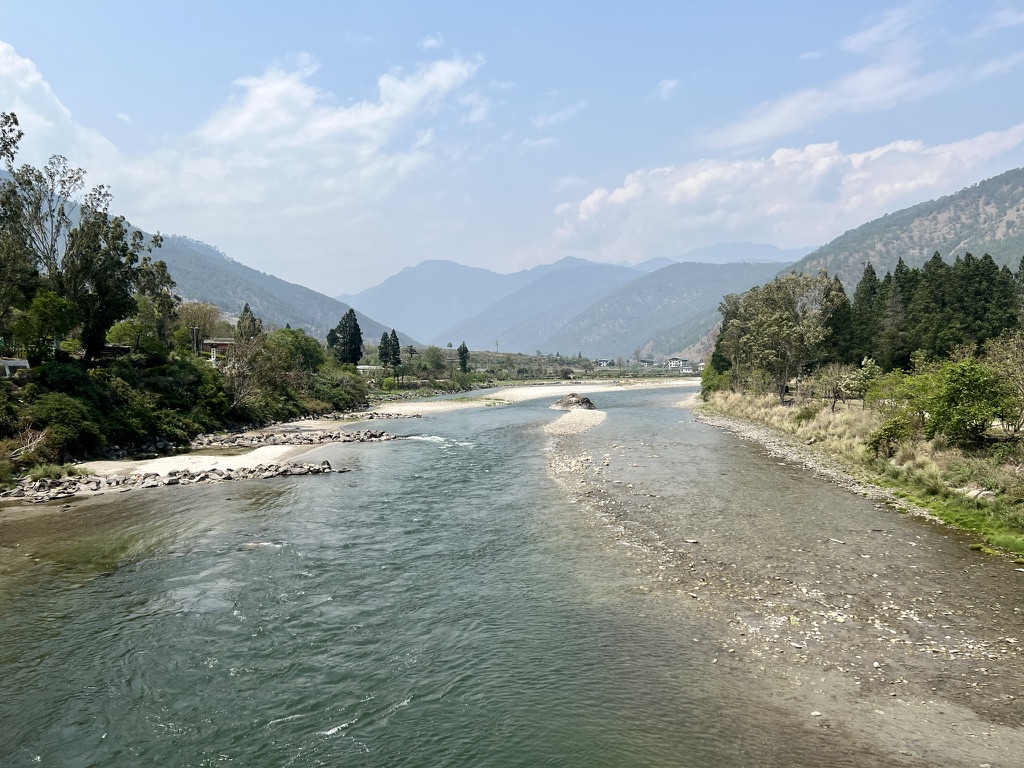
We awoke to stunning views of the valley from our hotel room. This location is absolutely divine. Quiet, serene and surrounded by tall mountains of green. The town of Punakha is at the junction of two beautiful rivers, Po and Mo Chuu which translate as Mother and Father rivers. The valley is known for rice farming – both red and white rice.

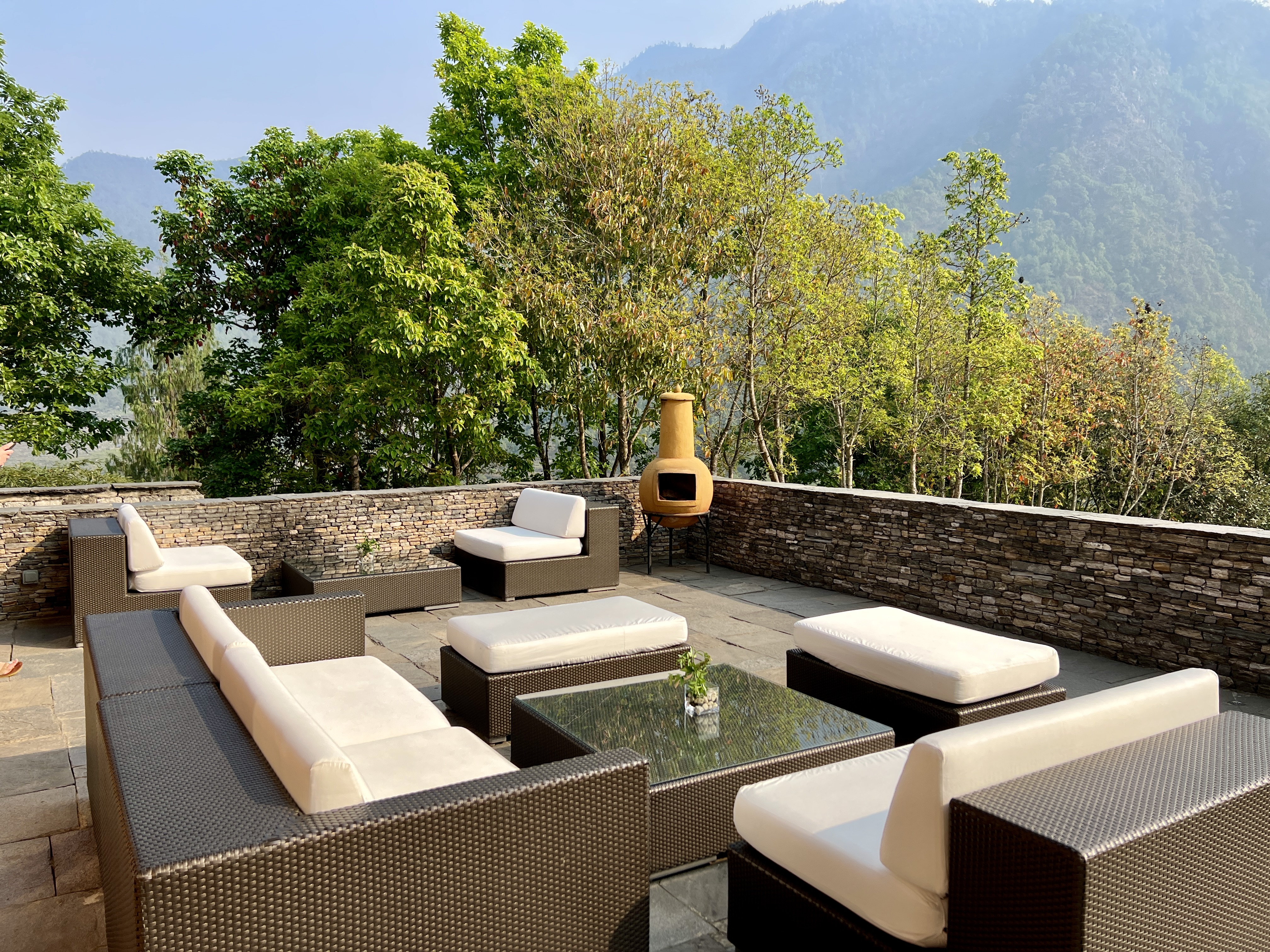
Como Uma Punakha hotel is built in the Bhutanese style but with modern comforts. A small hotel, the terrace is the focal point for visitors to enjoy the view, have drinks and or meals and to relax. It was wonderful to sit out on the terrace in the early morning, drink coffee and have breakfast whilst gazing at the mist covered mountains. As usual we were accompanied by dogs and a resident cat as well as birds of all colours.

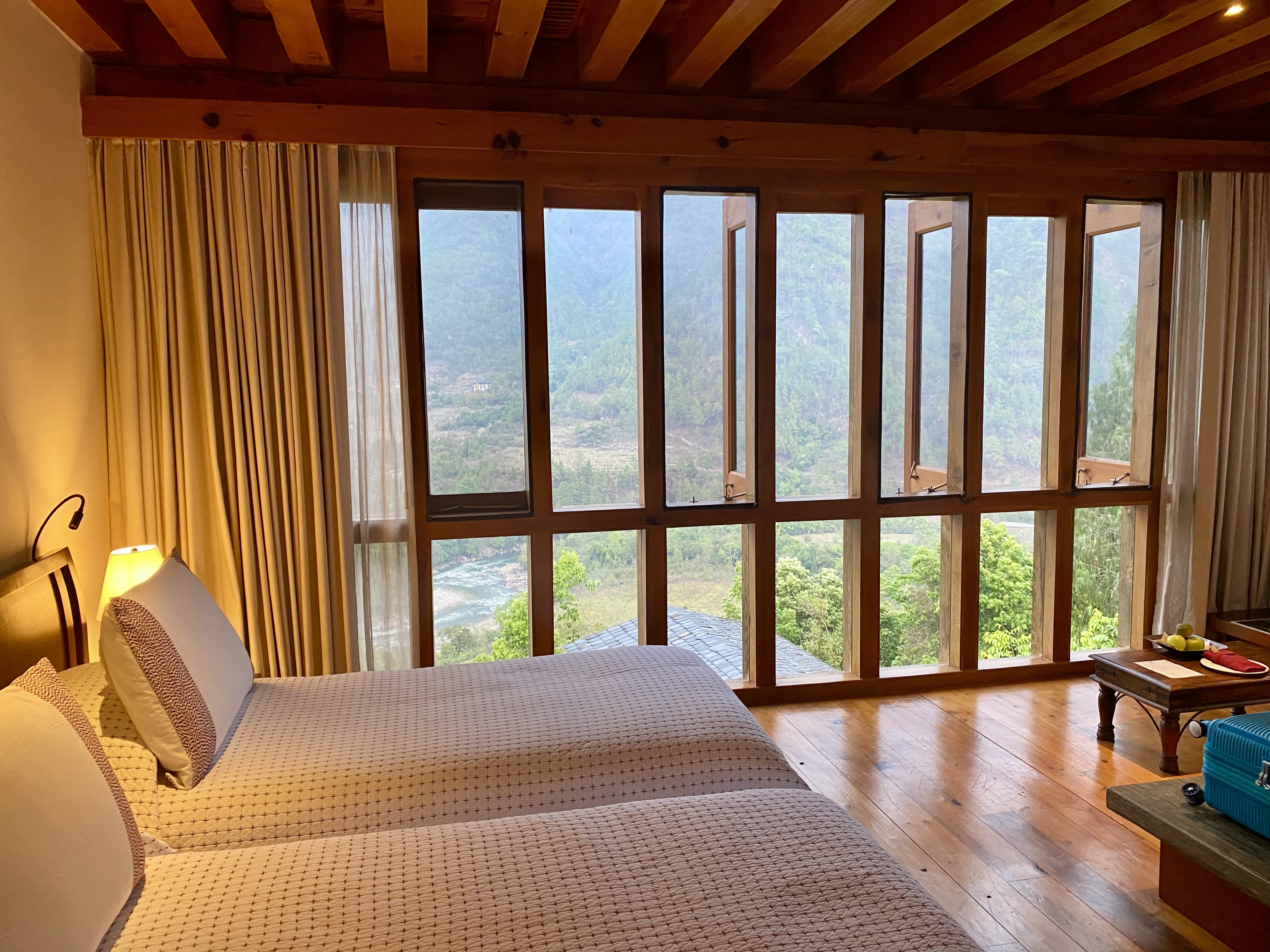
View from our room
Our room

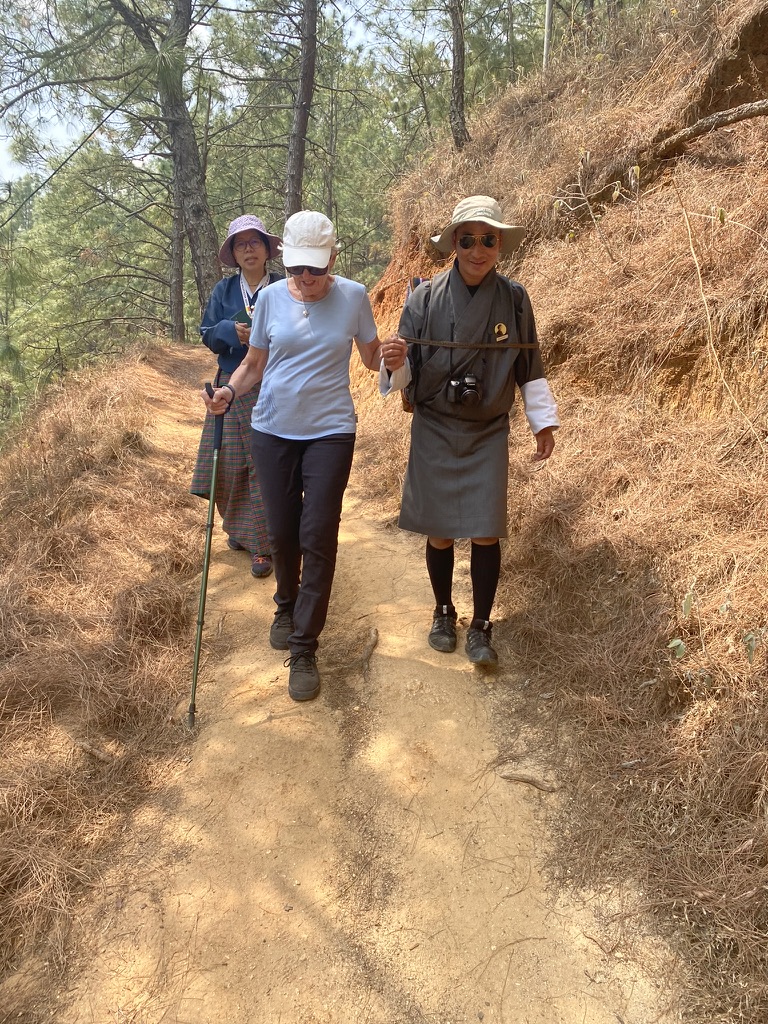
“Today we are going for another hike” said Sonam. It was to a beautiful temple built by the Queen Mother in 2004 to ward off evil spirits in Bhutan and around the world and to bring peace to all living things. “It will take about an hour going up” she said. Thank goodness for the walking poles! There is no road to the stupa and everyone – even the Queen Mother – has to walk up a narrow path through farmlands.

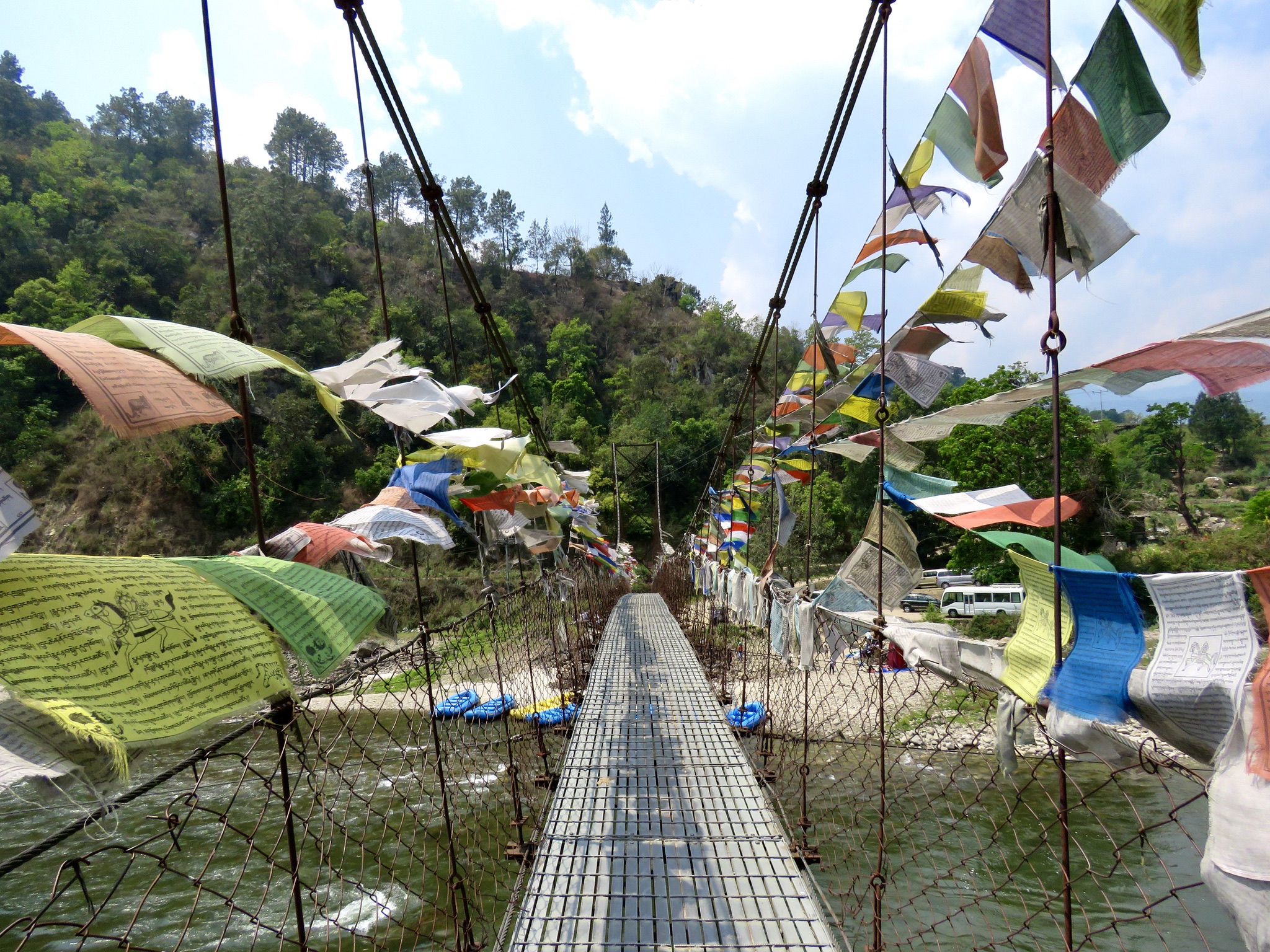
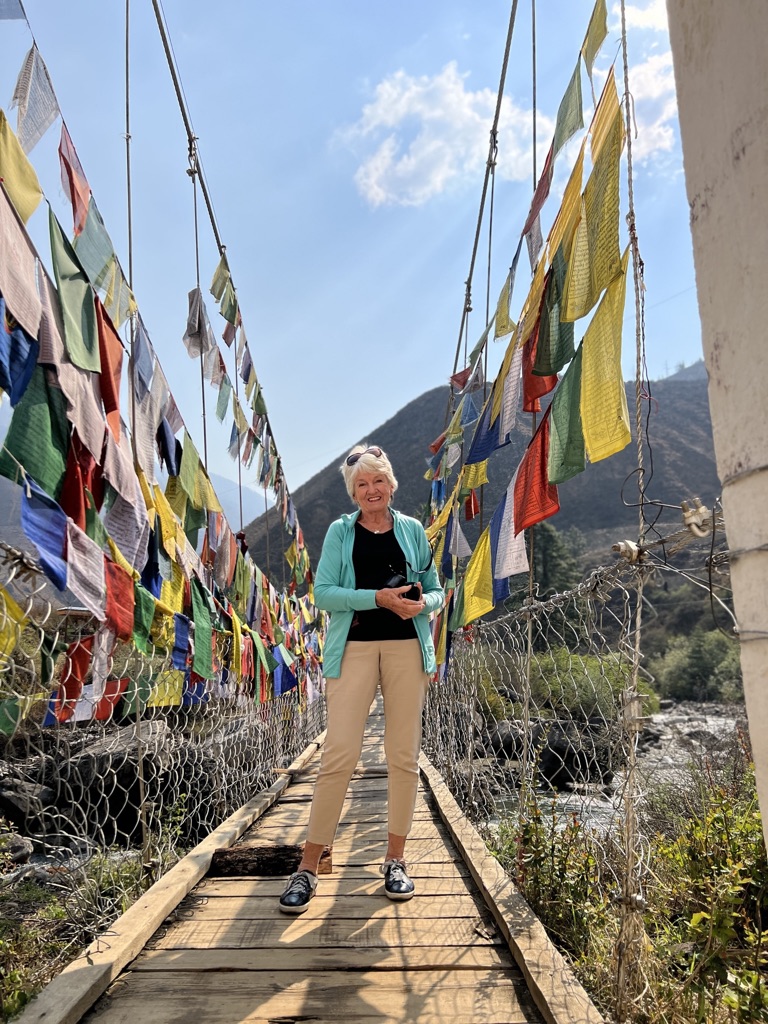
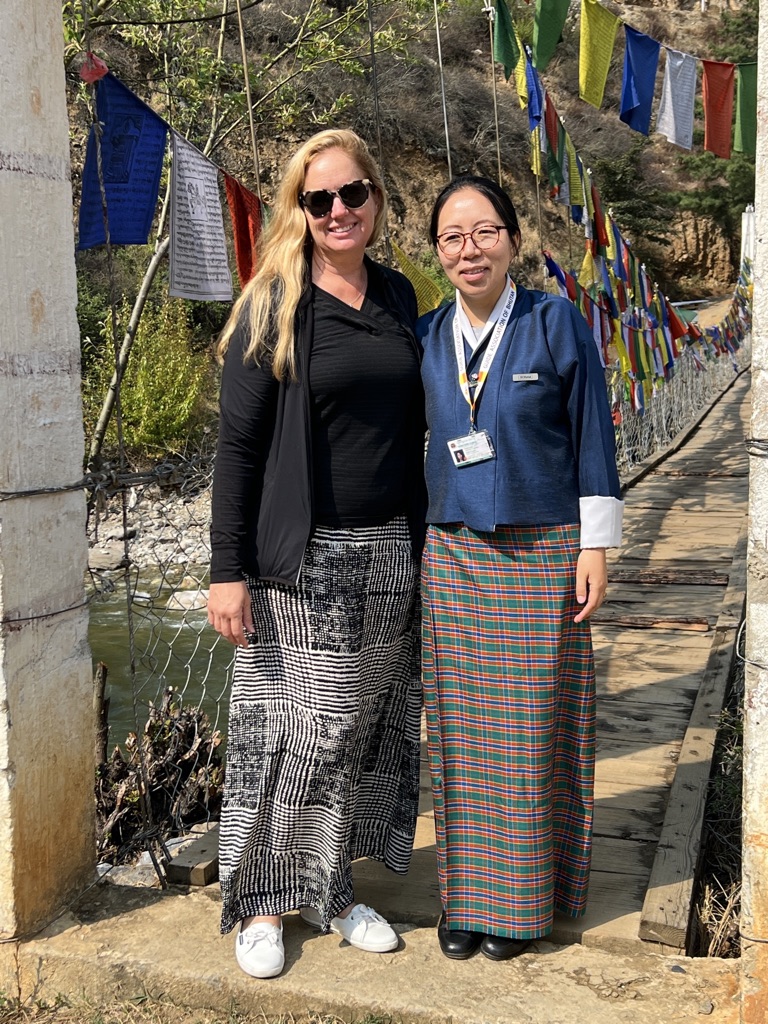
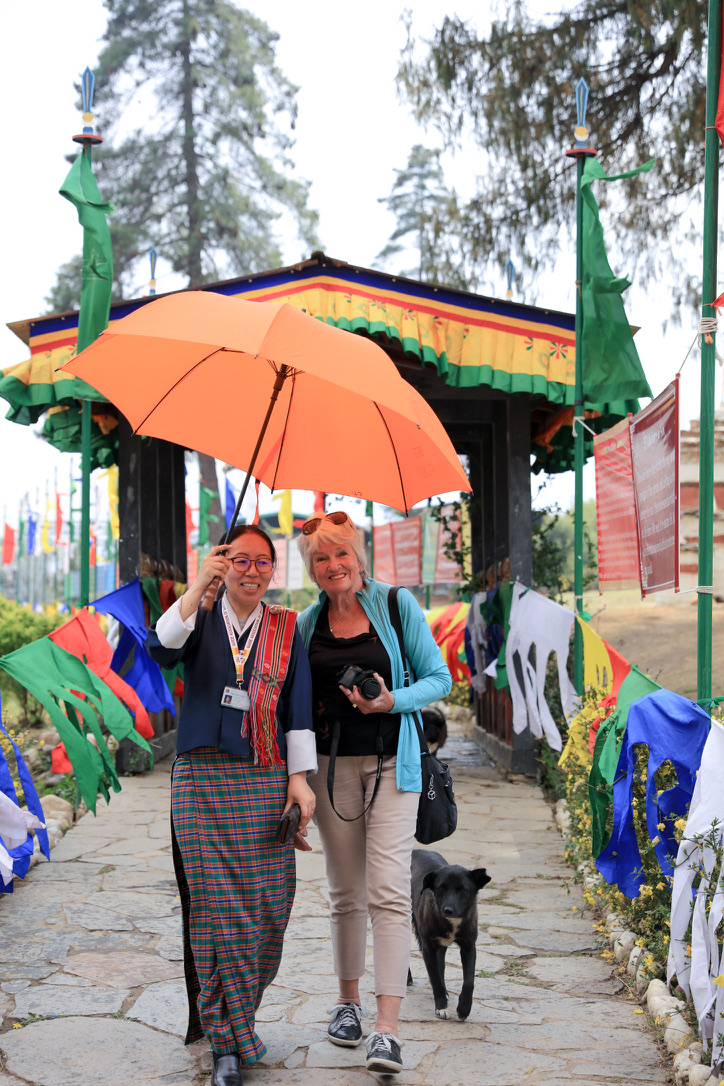
Chencho arrived with the car to take us to the river crossing where we had to walk across a suspension bridge, again adorned with hundreds of prayer flags. The bridge sways as you walk on it so it is best to look ahead and not down to the rapidly moving river below!
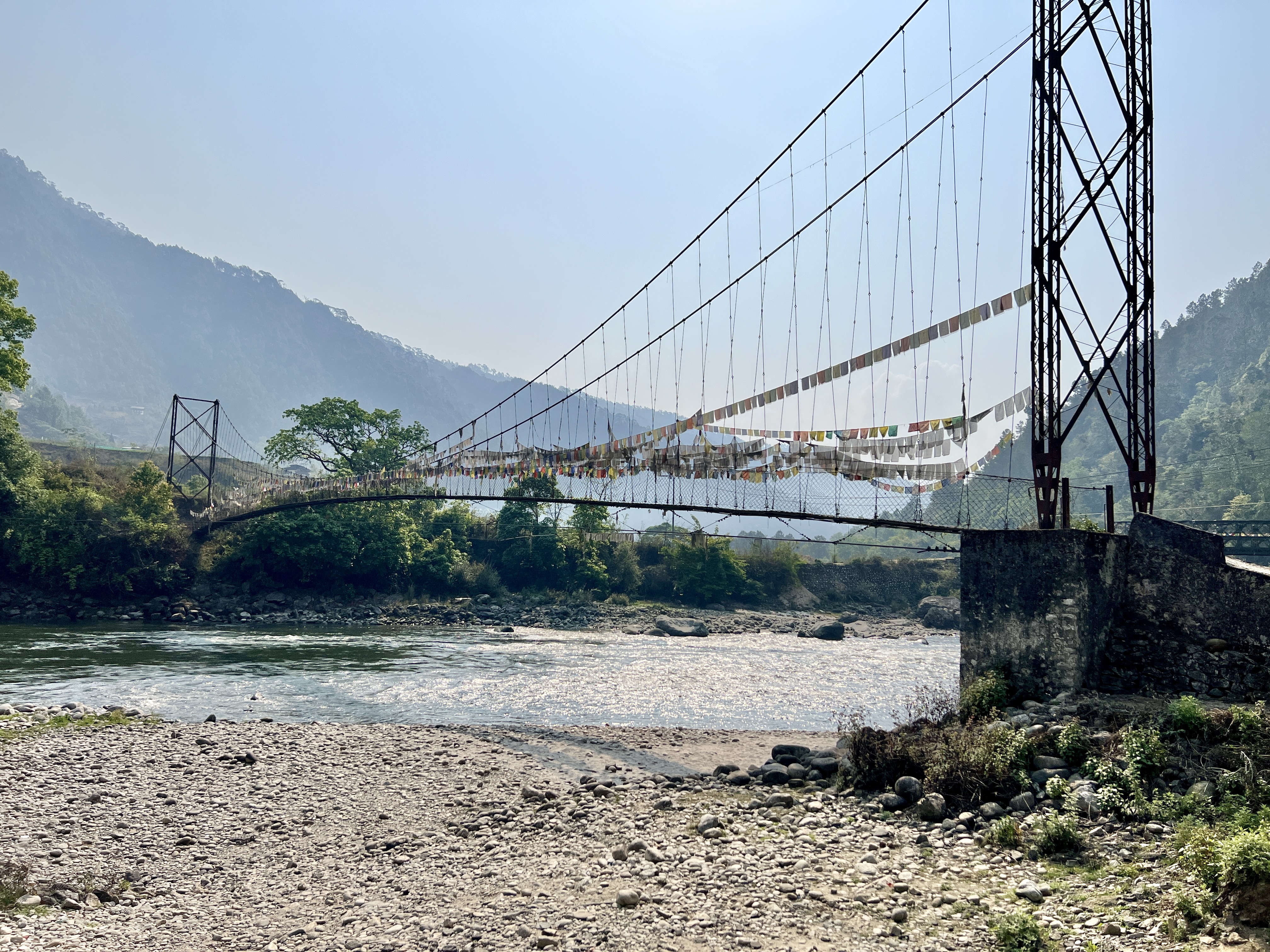
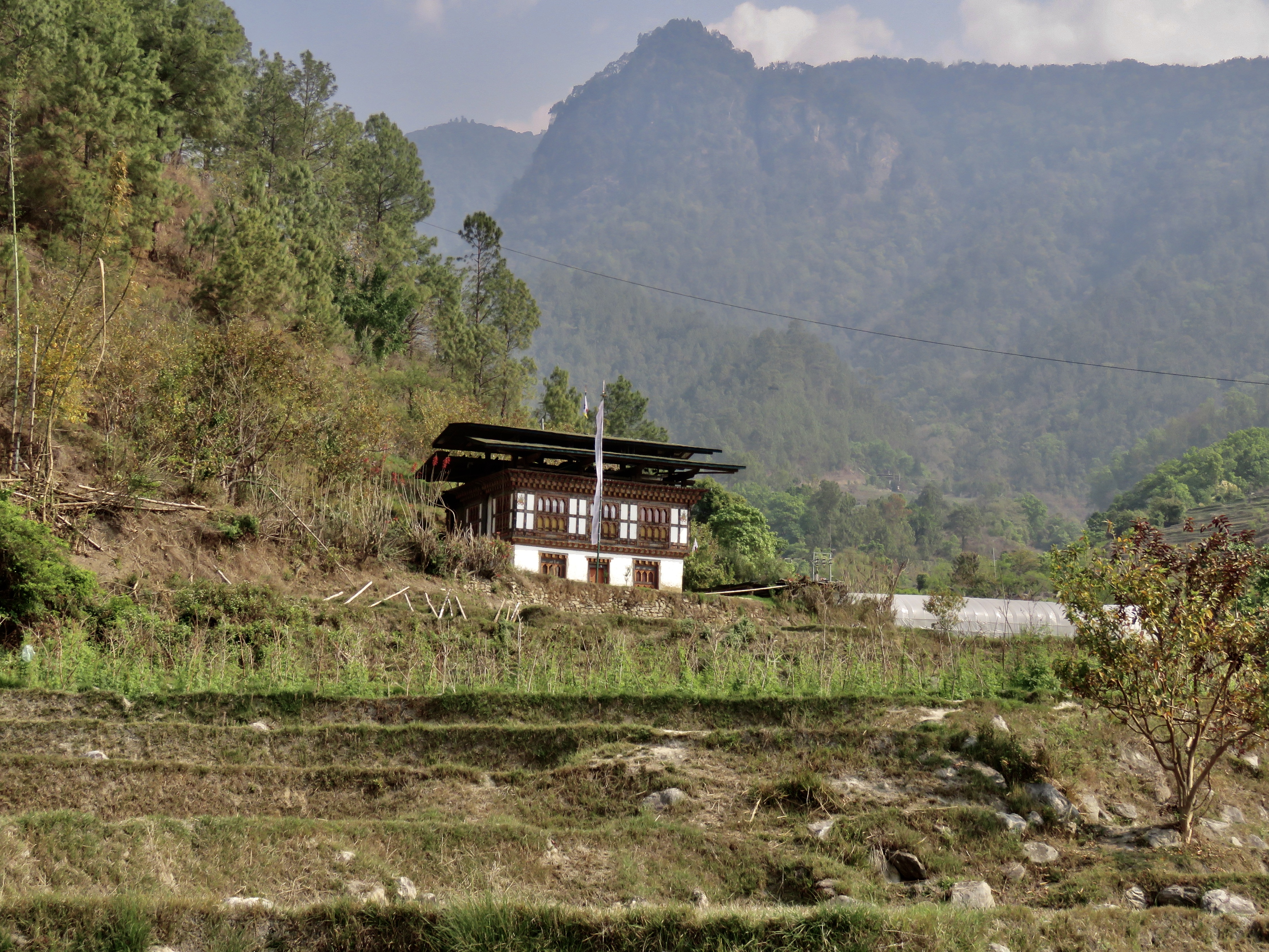
Once on the other side we set off along a small path and the scenery was so exquisite that several photo stops were required. We walked through acres of rice fields and other vegetables and eventually came to a rest stop with a large prayer wheel. Here Chencho produced delicious watermelon juice and ginger tea with snacks whilst we paused to take everything in.
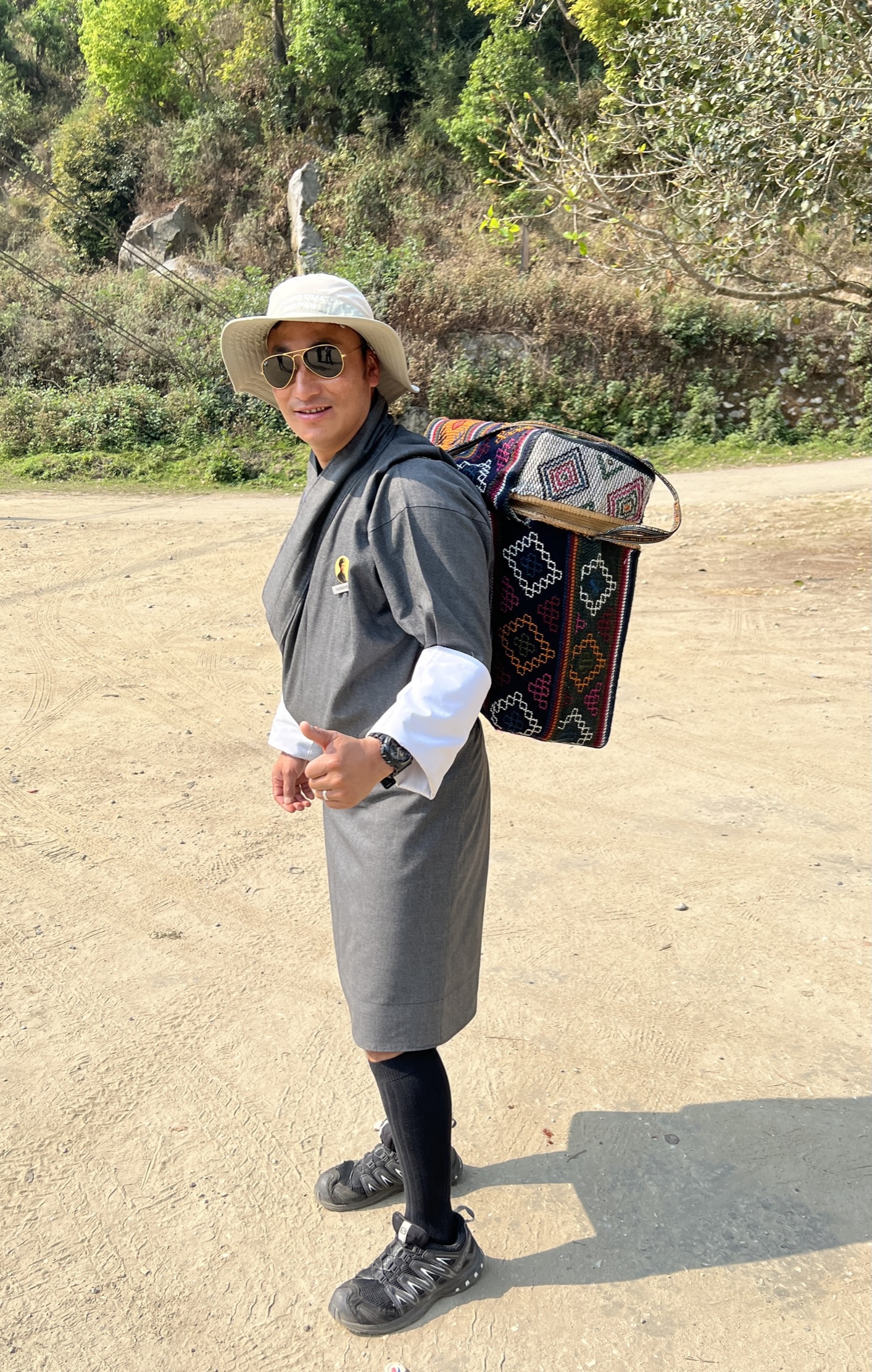
Finally we could see the beautiful stupa high on the mountainside, it’s golden roof glowing in the sunlight.

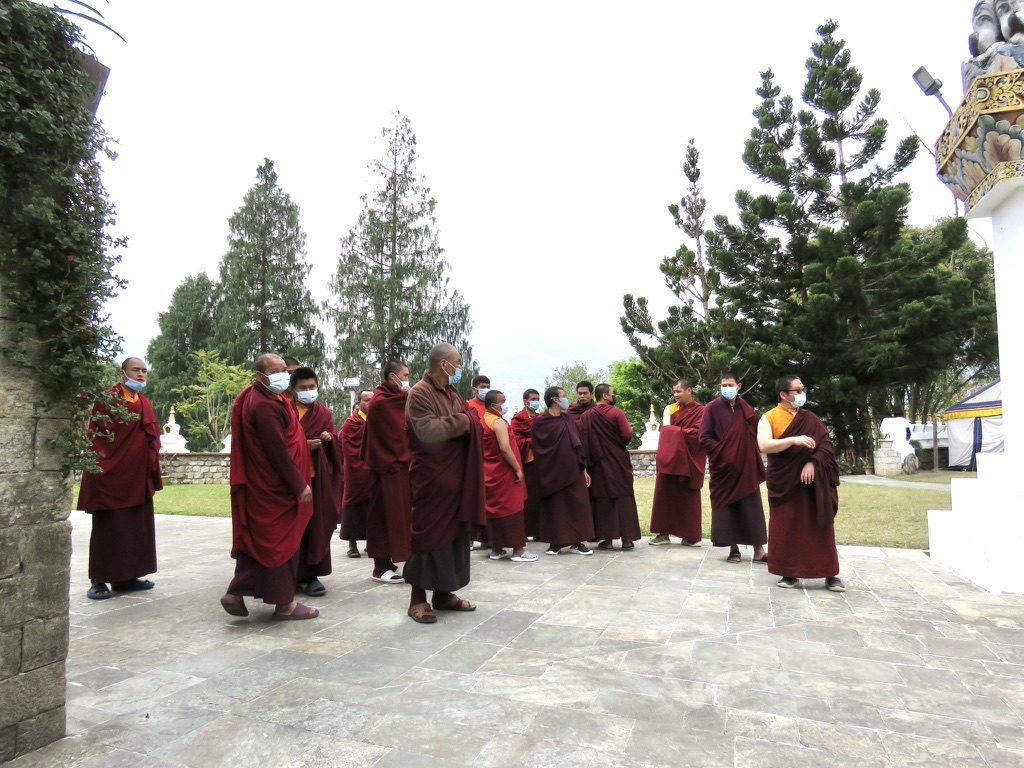
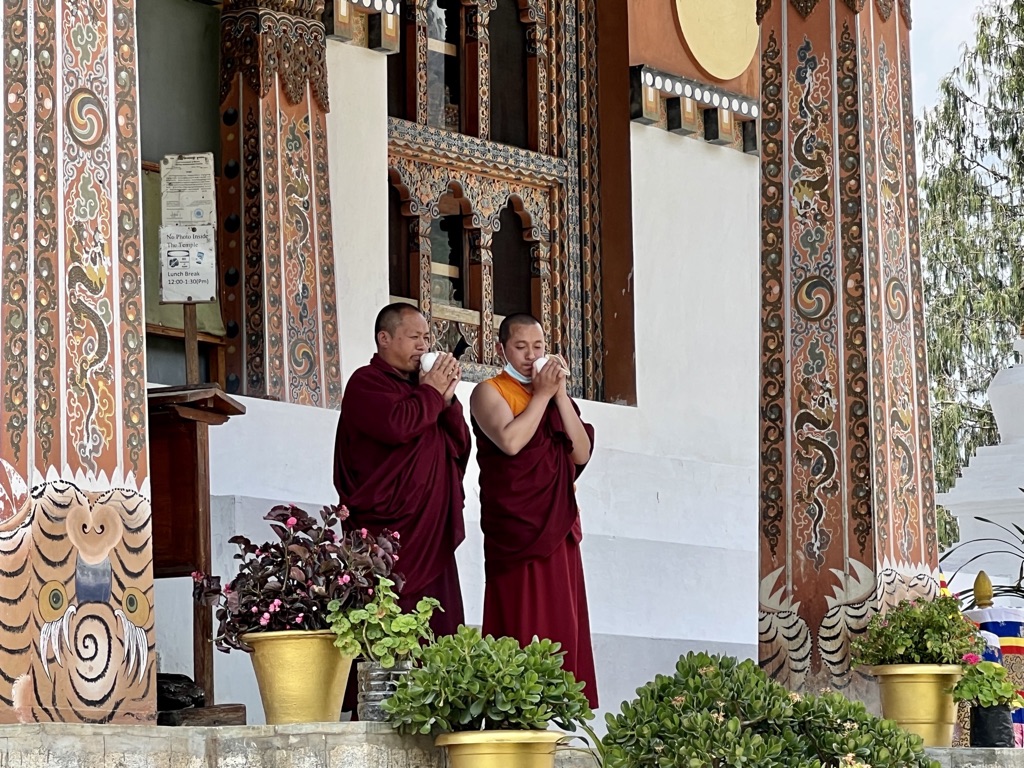
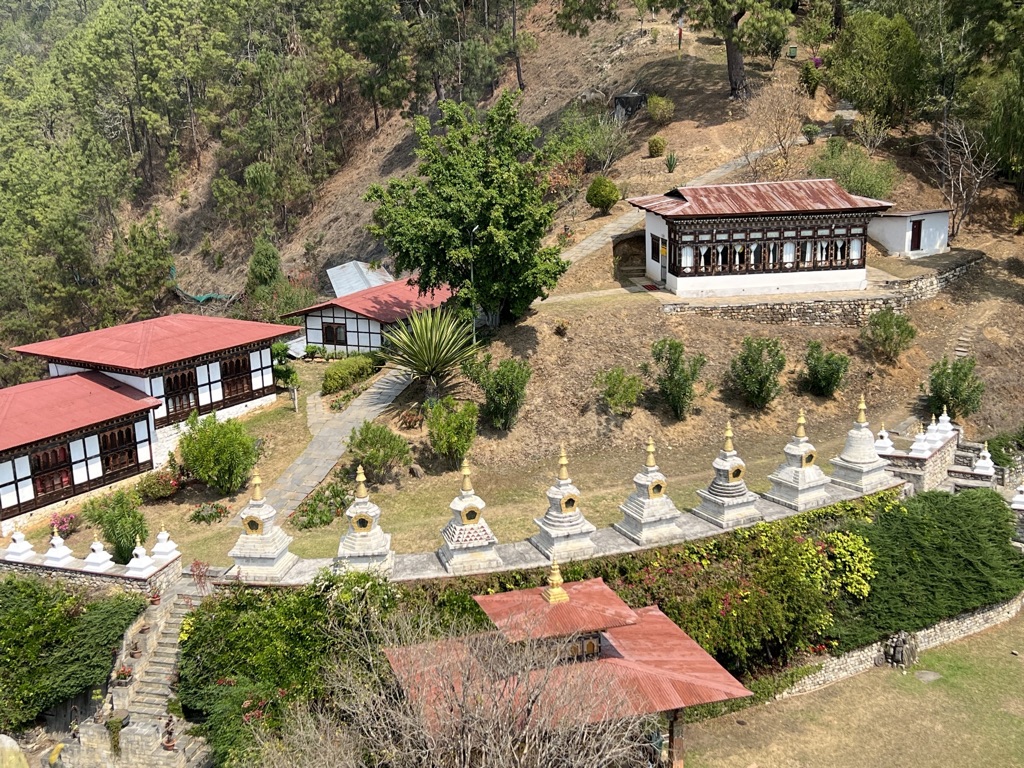
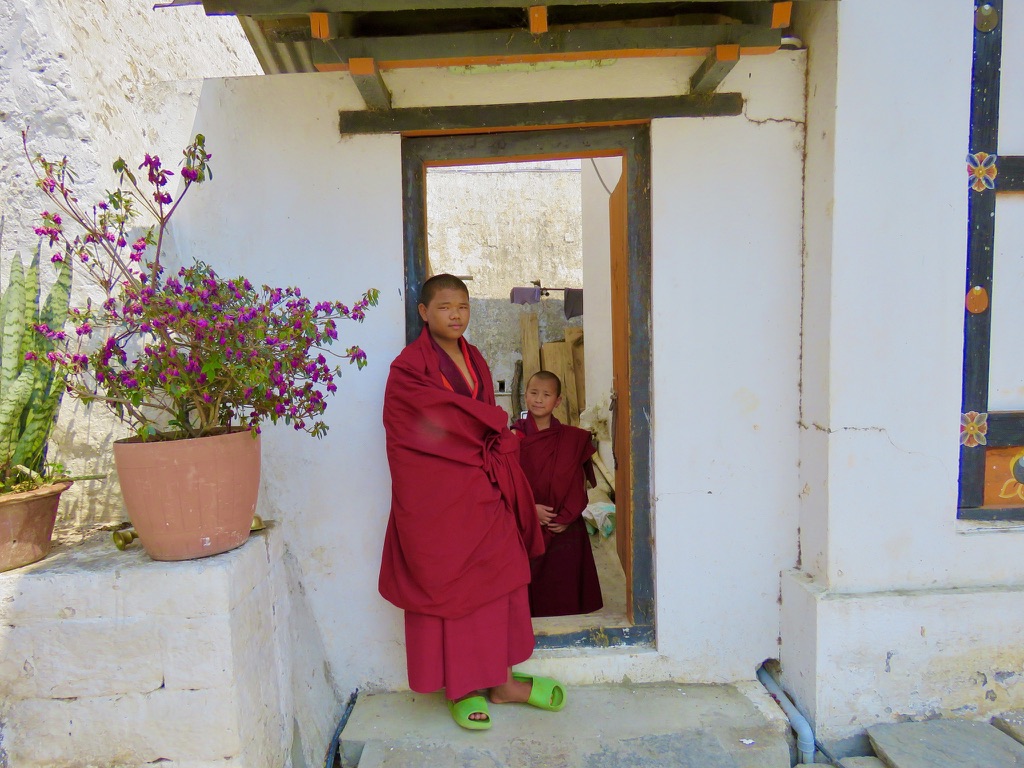
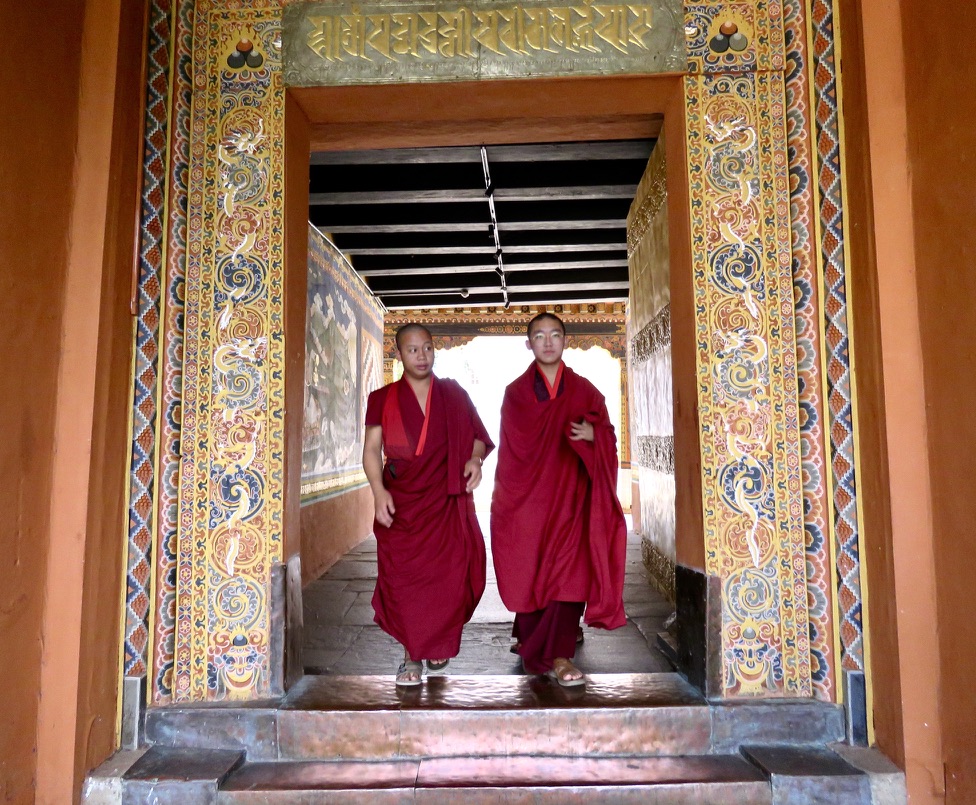
The four storey pagoda style building has a powerful presence and one can feel the peace and harmony that was the intention. Several smaller stupas surround it and from the rooftop there are spectacular views. Monks dressed in red were gathering for prayers and as we entered we heard the wonderful chanting which is very meditative and for which Tibetan monks are famous.

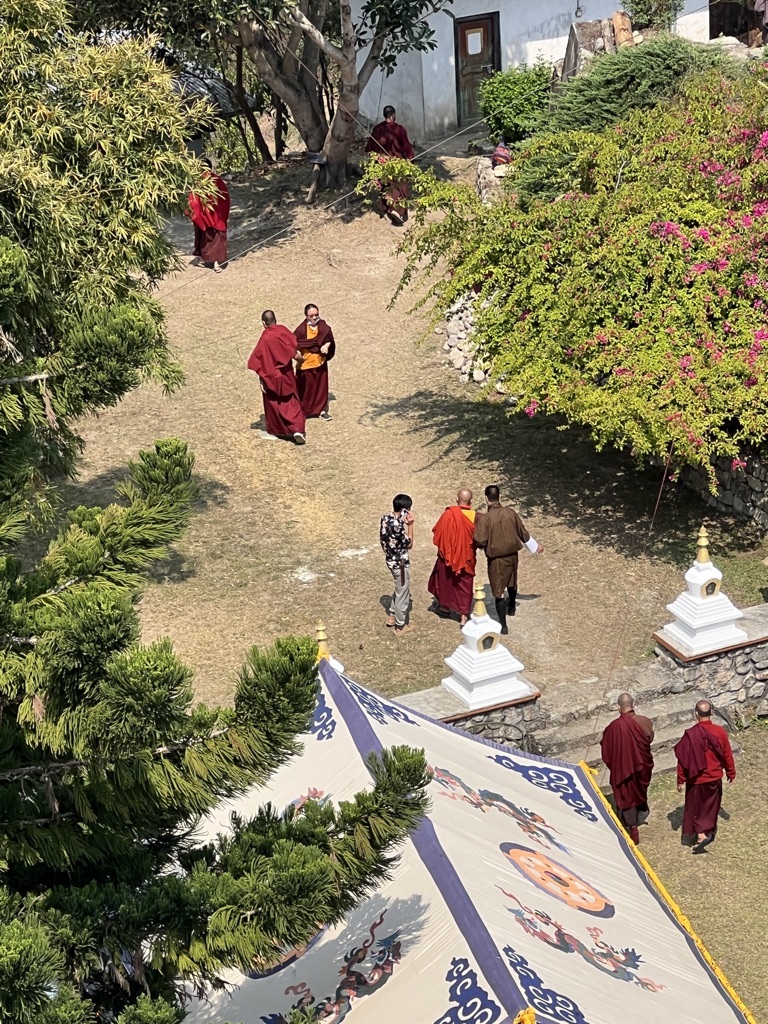
View from the rooftop

Going down was easier than the ascent and again we crossed the bridge with the flags promising us a safe journey.

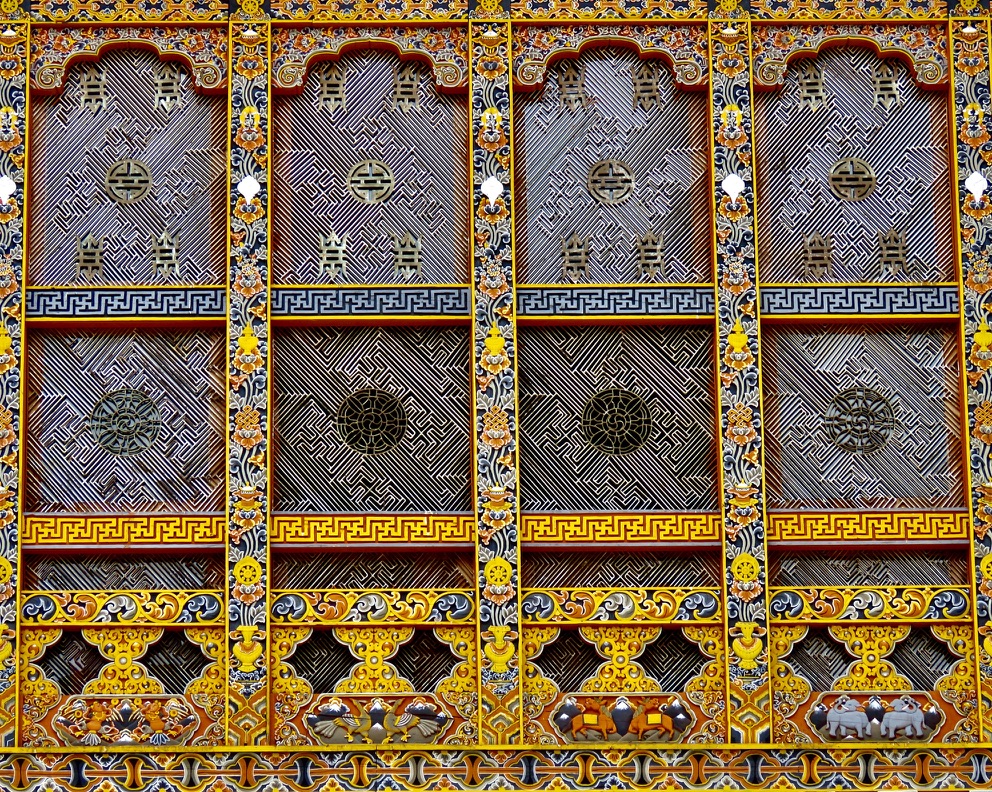
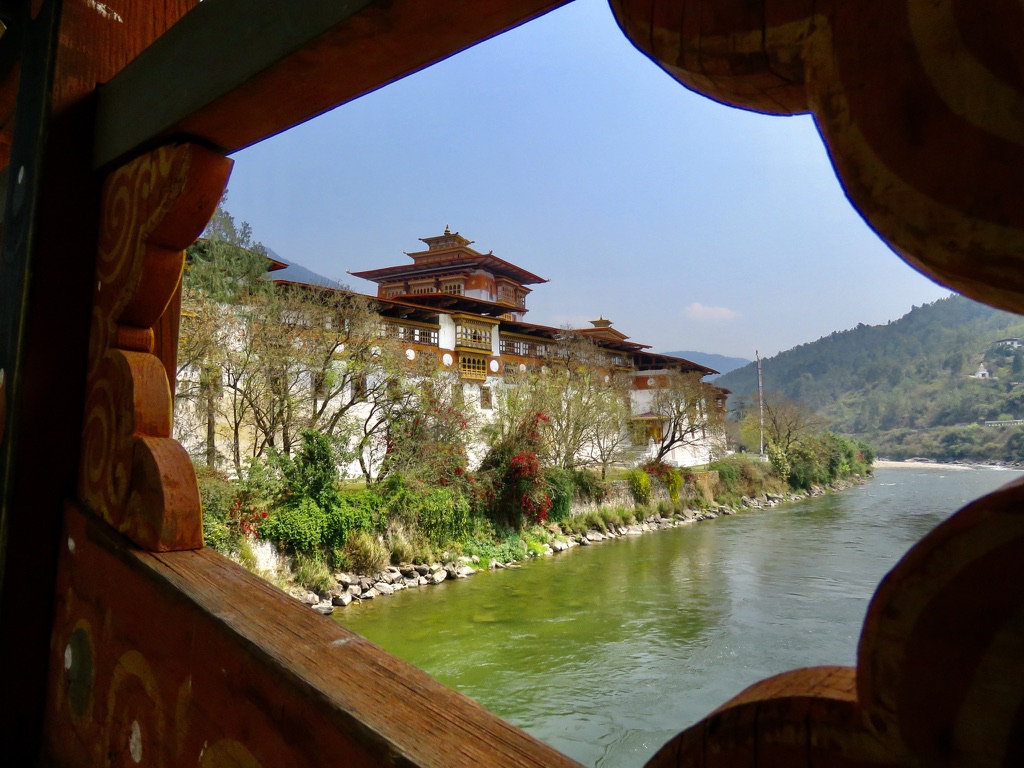
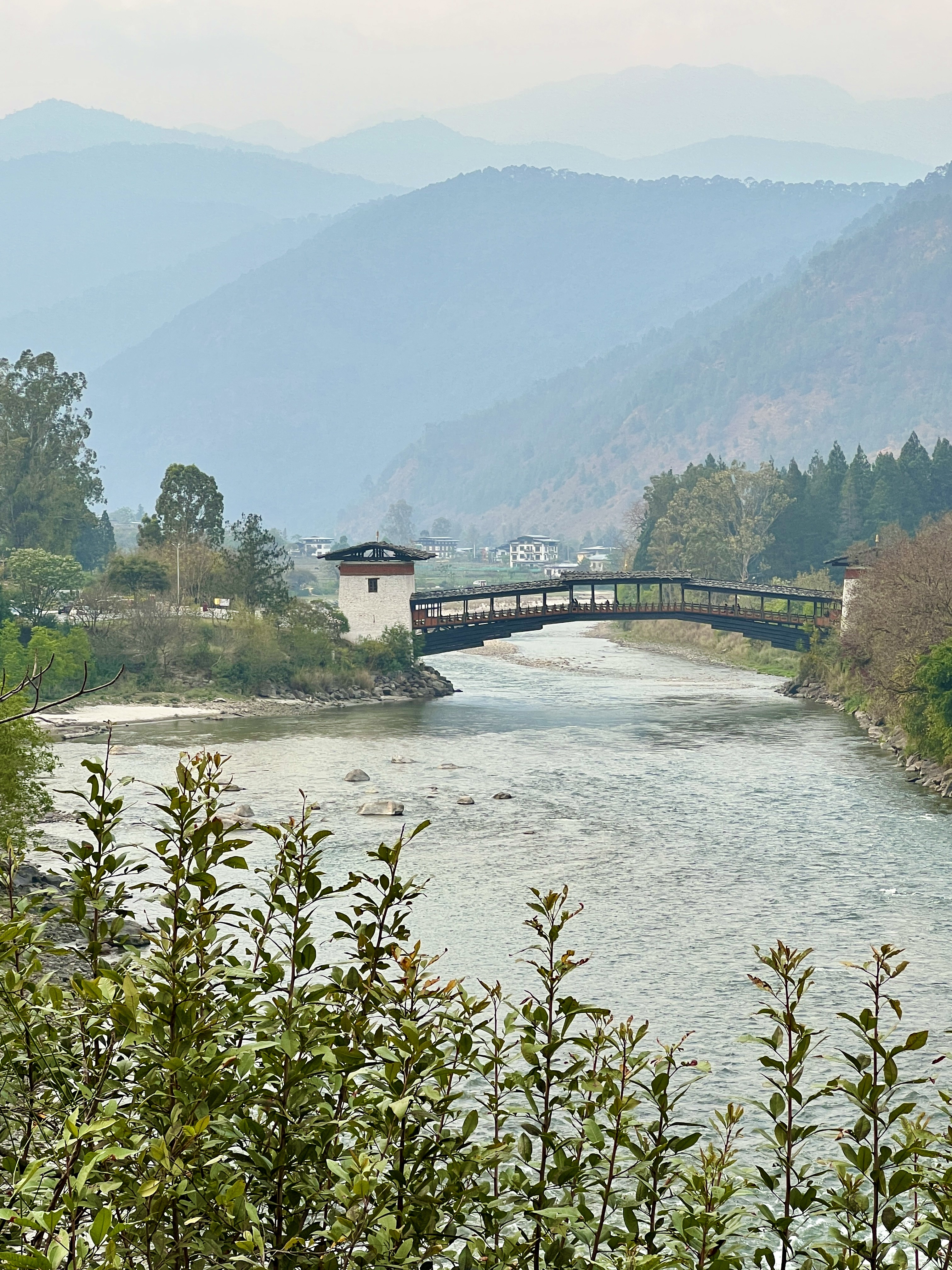
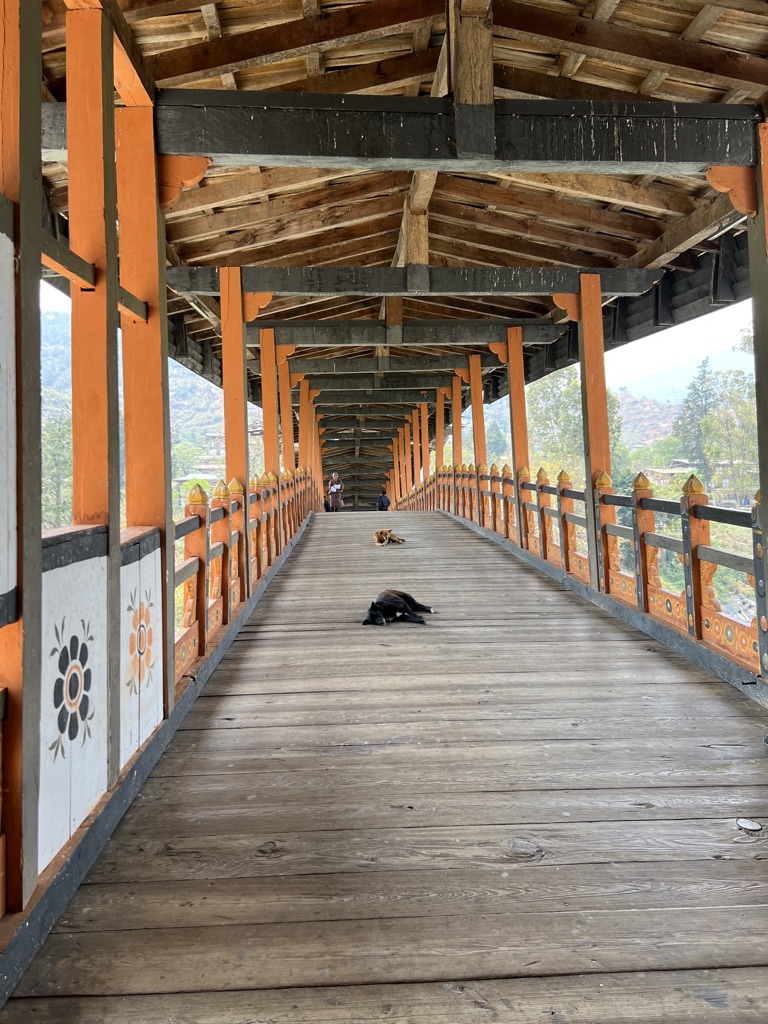
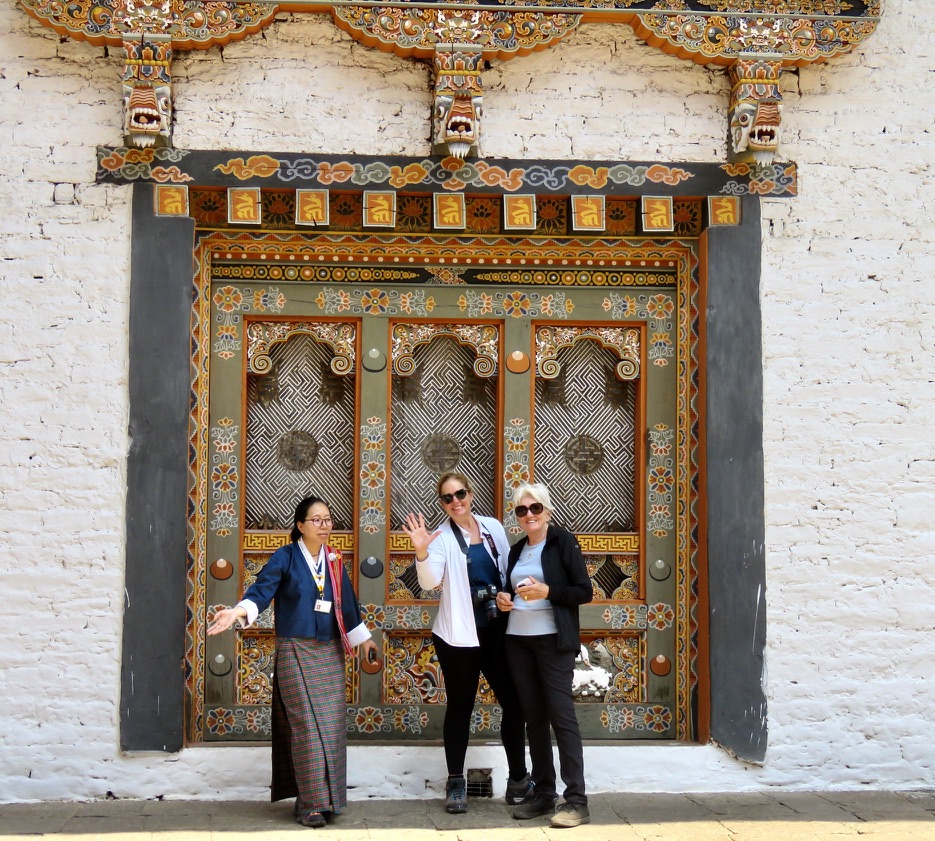
After lunch we drove to the majestic Punakha Dzong which is said to be the most beautiful in Bhutan. It is built where the two rivers meet and is the winter residence of the Head Abbot and the central monastic body. It is also where the King was crowned and it houses several very important and ancient relics. To enter the building we had to cross the wooden covered bridge. Inside we found the most beautiful buildings built in traditional style and colourful doors and windows. Monks were mingling, their red and saffron robes swirling in the breeze.

We were lucky to meet one of the chief Abbots who asked if we would like to light candles in memory of a loved one – this we did and felt very privileged and honoured. I felt this Dzong has a special significance and will always remember this place.
THIMPHU / PUNAKHA BHUTAN

DAY THREE – THE CAPITAL AND A BEAUTIFUL VALLEY

We set off early for our next stay in Punakha which is 125.6 km from Paro – approximately four hours drive away. This seems slow to us but this is due mainly to the winding roads and mountain passes. Very different road conditions to what we are used to!

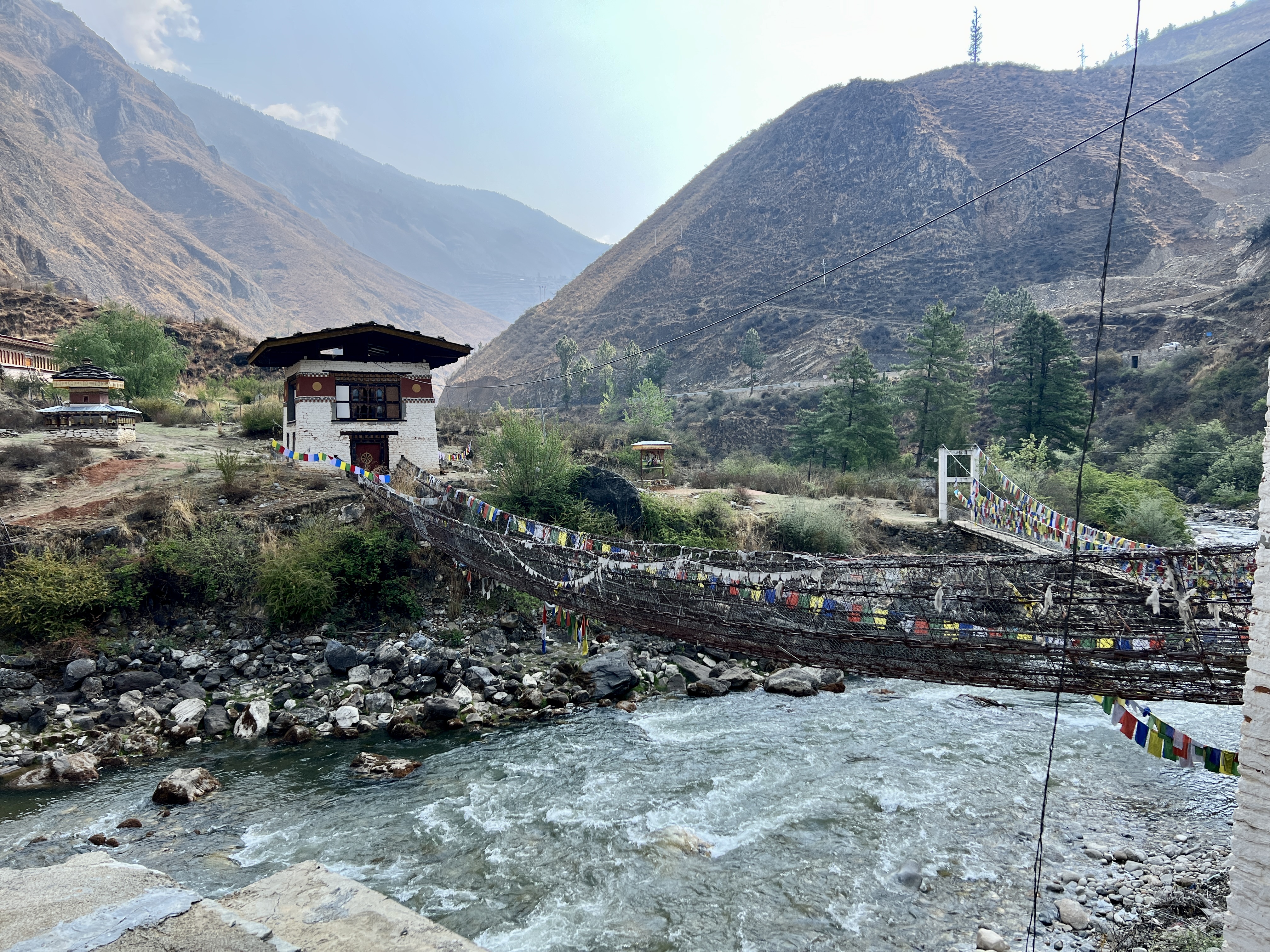
Our first stop was at Tachog Lhakang – or the Iron Chain Bridge. This remarkable structure is 600 years old and made of wood and metal and crosses the Paro Chuu river. It was built by Thangtong Gyalpo in the late 1300s, who is said to have built 108 bridges all over Tibet and Bhutan. His intent was to help pilgrims get to holy places. This is the first bridge to have ever been built in Bhutan. It is fragile now so a new wooden swinging bridge, decorated with masses of prayer flags, has been built close by for those who wish to cross the river to the temple opposite.

Next to the bridge on a hill is a private temple with a chorten housing more of the Tsa Tsa memory cones. As you cross the bridge there is a beautiful shrine depicting the Bhutanese Royal Family who are very revered in the country.

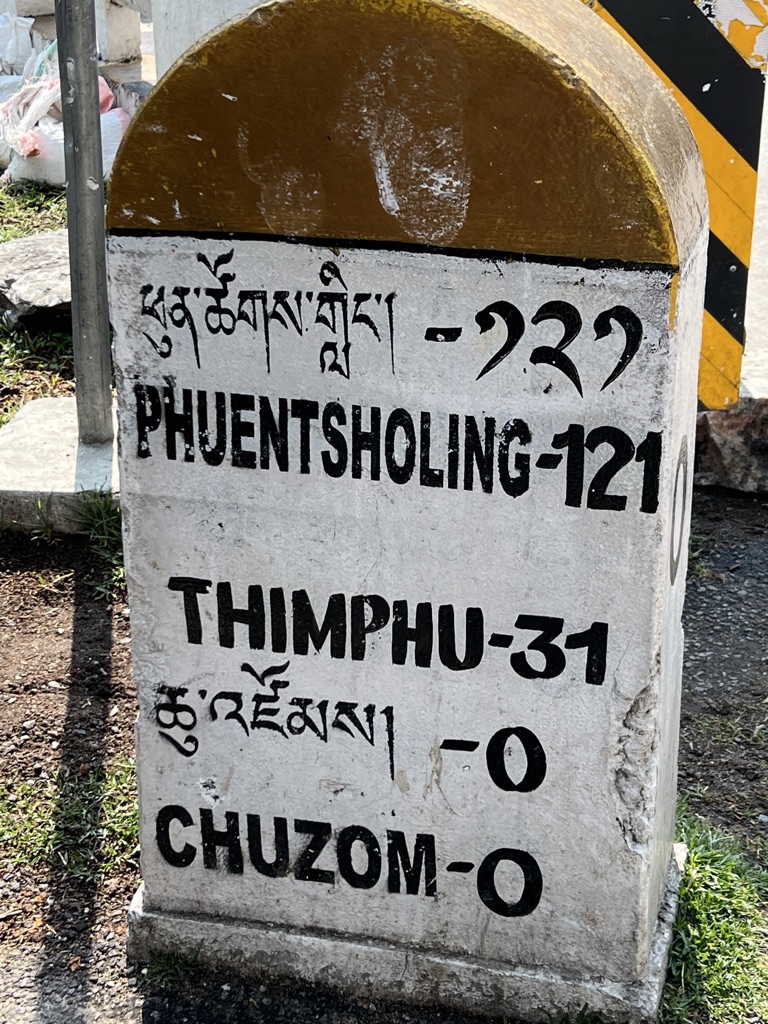
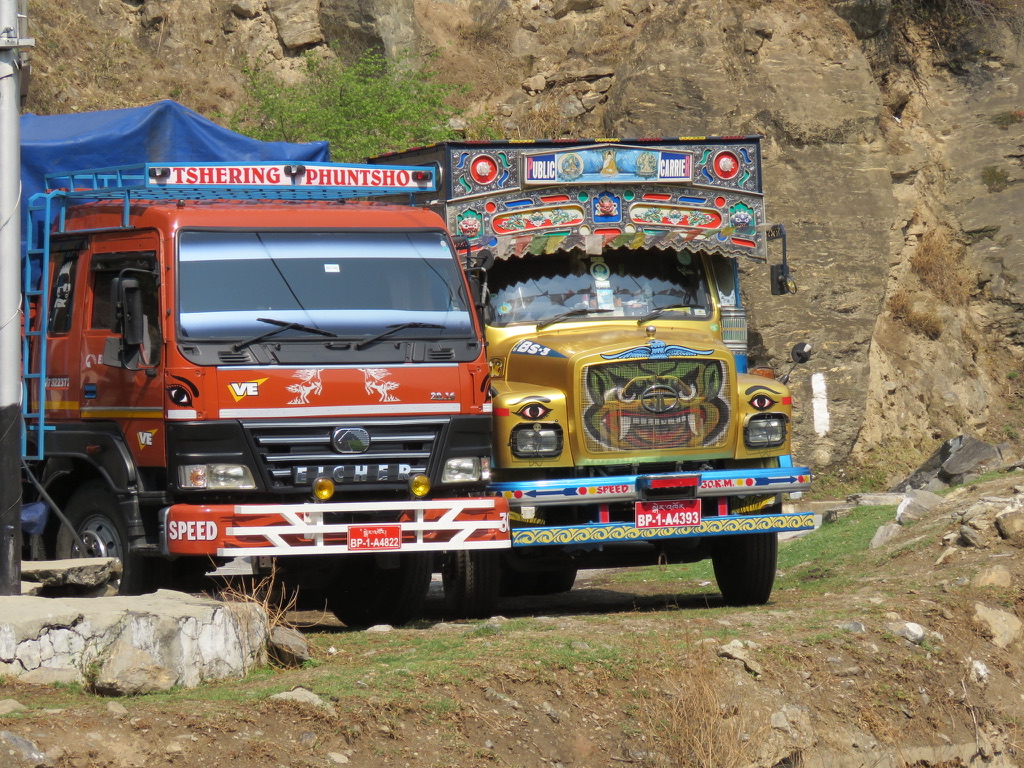
A little further on we stopped at the road junction – signposts to the border to India close by and colourful trucks about to make the journey were lined up. There were coffee shops and a little general store were open for travellers but the nearby market stall was what captivated me. The stacks of fresh fruit and vegetables, not to mention baskets of red hot chillies, had been brought in earlier that morning and according to our guide, would be gone by evening.

Here also just below the road bridge was a trio of chortens at the place where the two rivers meet – the chortens represent the three primary styles – Tibetan, Nepali and Bhutanese.

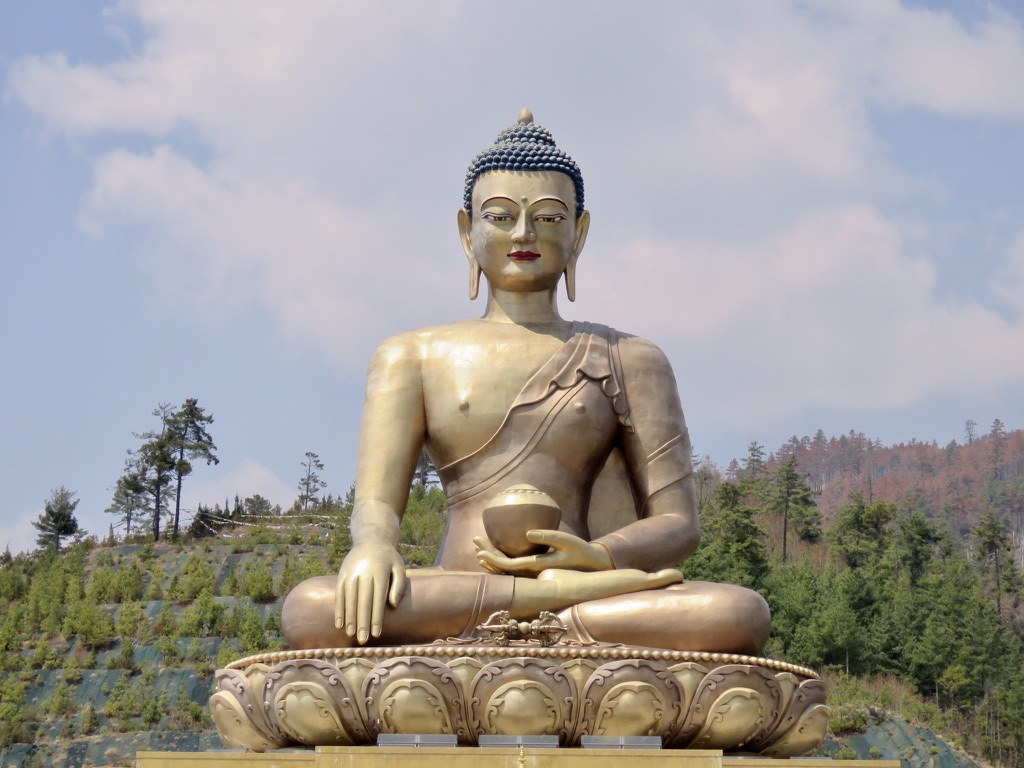
Thimphu, the capital city, is 52 kilometres from Paro and is the fifth highest capital in the world by altitude – a fact mentioned to us by Sonam as the city ranges in altitude from 2246 m to 2648m and it is not unusual to feel breathless. That fact was proved as we drove up the mountain to visit the giant Buddha Dordenma statue. This massive Buddha sits at the top of the mountain overlooking the city of Thimpu and surrounded by valleys. Said to be the largest sitting Buddha in the world it is 52 metres tall and is made of bronze and gold plated. To reach the statue and temple we had to climb what seemed to be about a thousand steps!

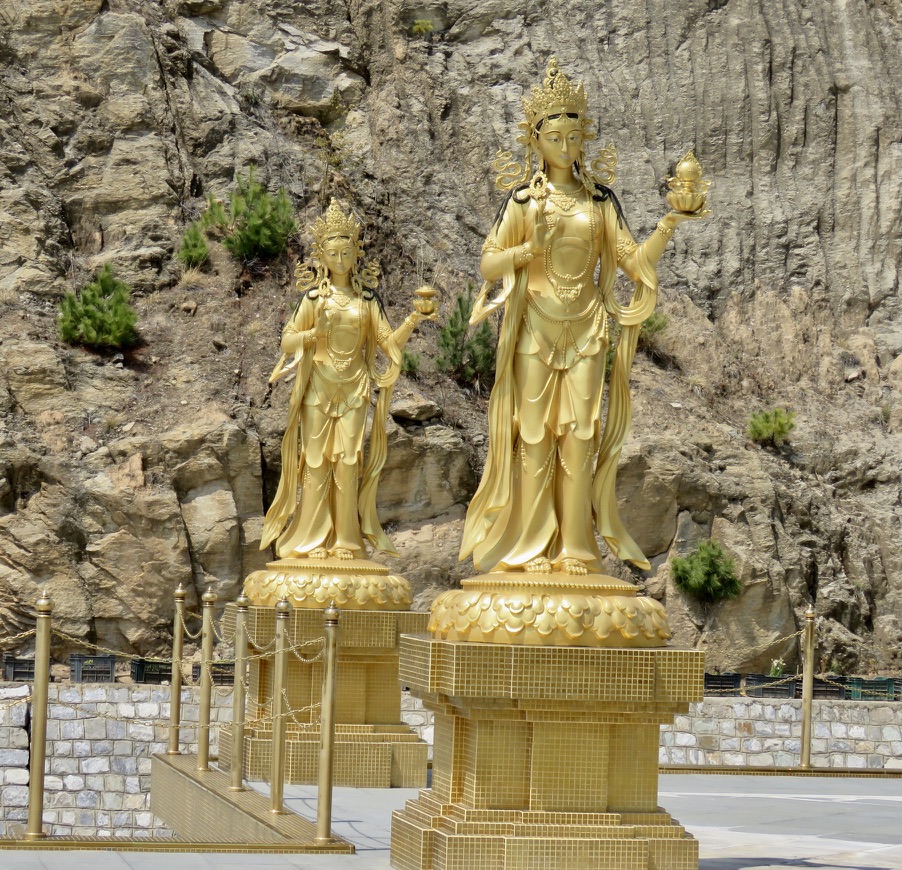
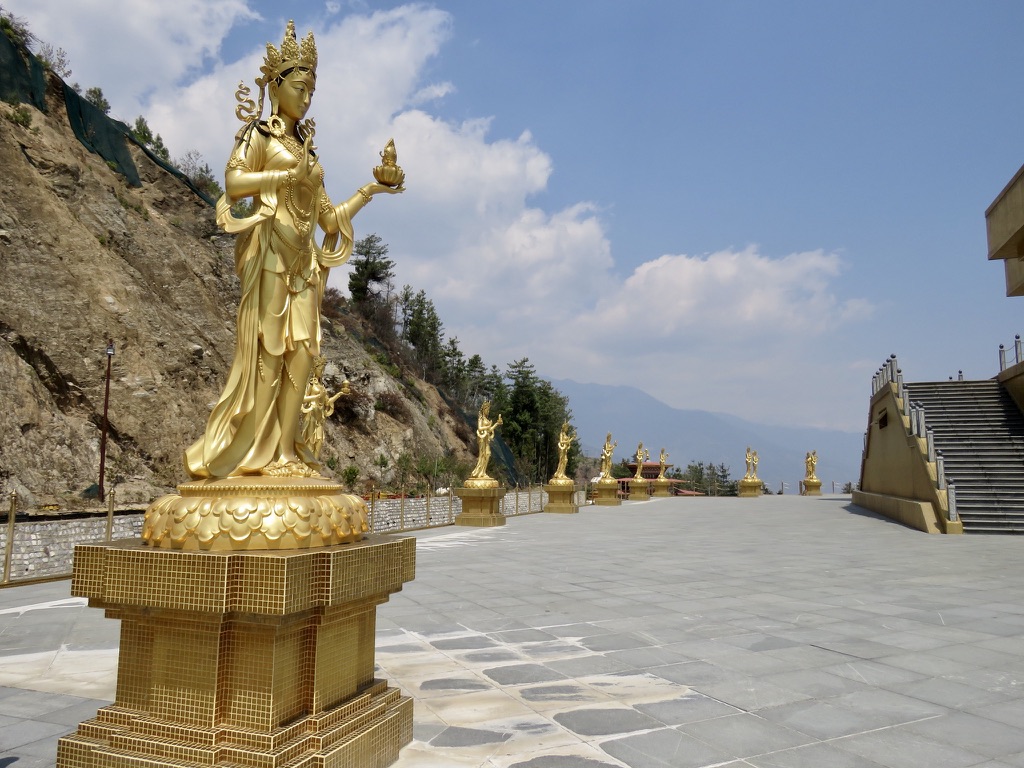
Inside the temple itself there are 100,000 smaller gold buddhas embedded along the interior walls and we were told we could buy one to put in the wall and that would guarantee many blessings. It was all overwhelming but there was a sense of peace and a strong energy all around. On the perimeter were golden goddesses and other icons pertaining to the creator.

The view of the city of Thimphu from the statue

Being very interested in the traditional way of life in Bhutan, Sonam suggested we go to Simply Bhutan which is an interactive ‘living’ museum and probably the next best thing to learn about life there without having to spend months in the country. Visitors are greeted with a shot of local arra (rice spirit), before being guided through mocked-up village scenes. Along the way, you can dress up in traditional clothes, try out archery and hear songs sung by Bhutanese women as they build houses out of rammed earth.

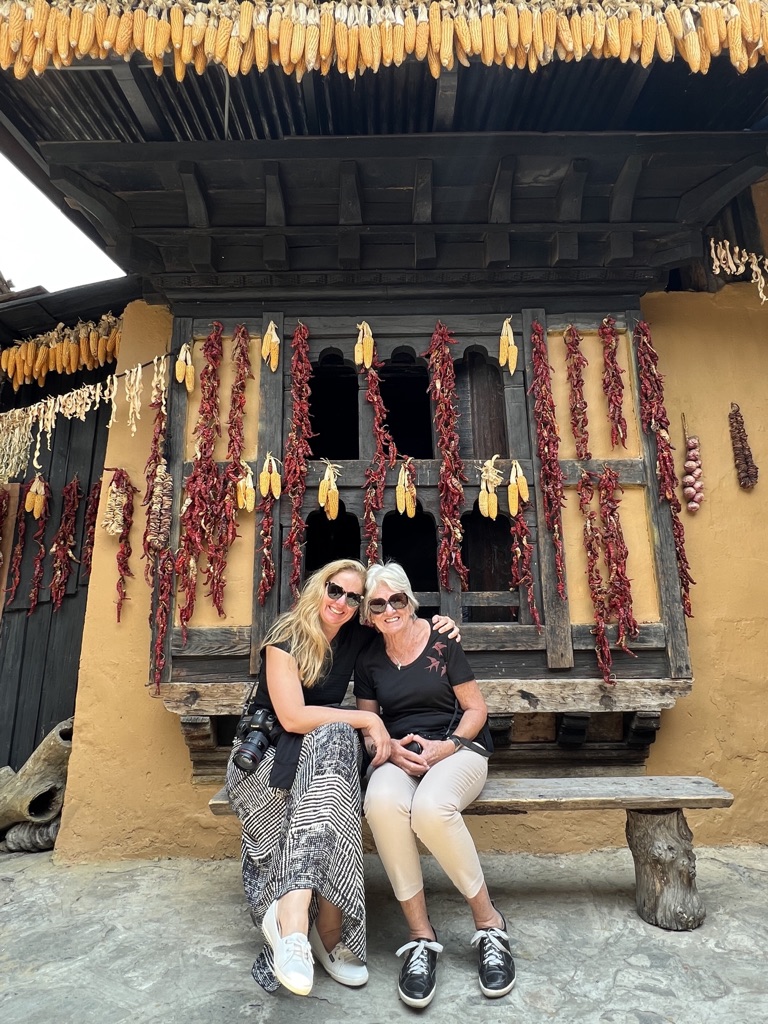
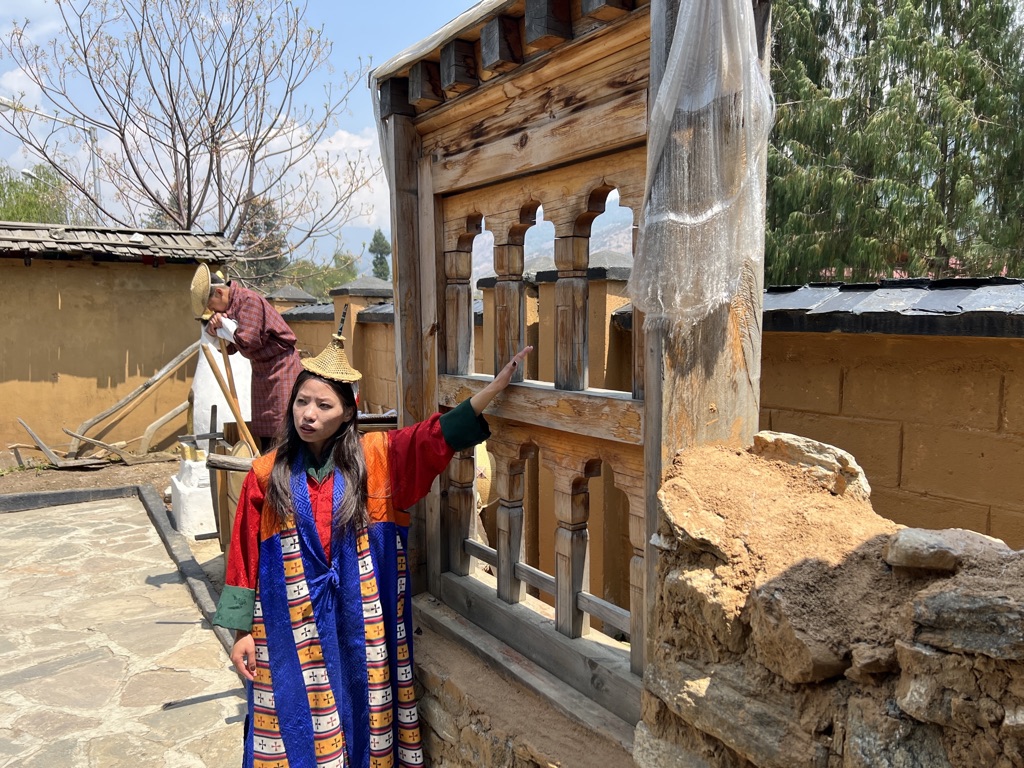
Here we are at a traditional farmhouse where corn and chillies are dried on the roof.

Thimphu is a rapidly growing city and to date has no traffic lights however, there is one traffic policeman at the busiest intersection who guides the traffic in an almost theatrical manner on his little “stage”.

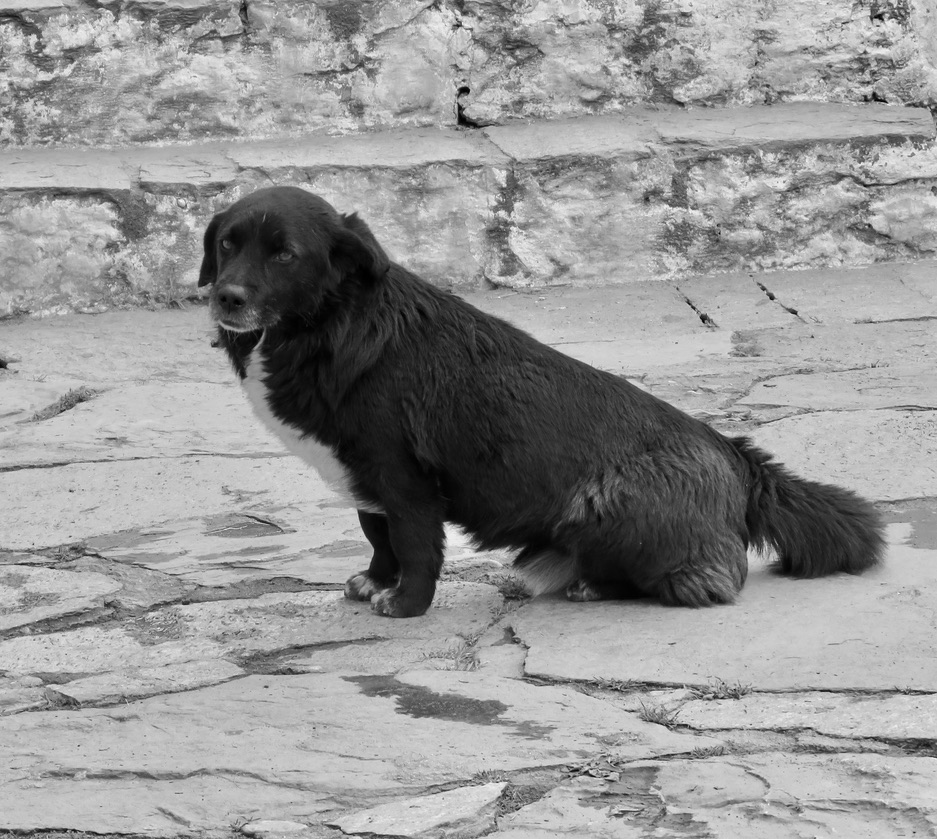
Astrology is an important part of Bhutanese life and locals rely on astrologers for advice on their health, money, luck and careers. Farmers will plant crops when the astrologers predict is the right time. The only college of astrology in the Himalayan Kingdom is Pangri Zampa and we visited there just as an important nine day festival was about to begin. Monks were busy setting up stalls and decorating the temple ready for the throngs of people who visit to pray for the wellbeing of all and peace and prosperity for the country. I also had a reading from a senior monk who spoke no English, so a lot of interpretation was required and I am still processing it all! As usual there were a few dogs around and one in particular seemed to take a liking to me and followed me everywhere. I wished I could take him home but apparently he had spiritual connections to the location of the monastery.

It was time to set off for Punakha and we drove out of town and up to the incredible Dochula Pass. One of the highest in Bhutan at 3,140 m and has amazing 360 views across the Himalayan mountains which apparently are very clearly visible in the winter months. For us, there was haze due to the many “forest fires” the farmers had started but we enjoyed the whole experience and the scenic views. It was cold but Chencho had brought flasks of home made ginger tea and delicious apple cakes which gave us some sustenance! There was a restaurant at the top and 108 chortens which are visited by locals as well as tourists. The Pass is in commemoration of Bhutanese soldiers who lost their lives for their country.

The drive down to Punakha was through forests of cypress pine, spruce and oak trees, Prayer flags were fluttering at almost every corner and small chortens by little waterfalls on the hillside had prayer wheels spinning. It was amazingly peaceful even through the road was winding and steep and probably a little scary, we felt quite calm.

The road to our hotel – Como Uma Punakha – passed by the really beautiful Punakha Dzong which we were to discover more about in the coming days.

And a warm welcome awaited us…….