PUNAKHA VALLEY, BHUTAN

DAY FIVE : A PATH TO ENLIGHTENMENT

CHIMMI LHANKHANG, SANGCHEN DORJI NUNNERY, NALANDA TEACHING MONASTERY

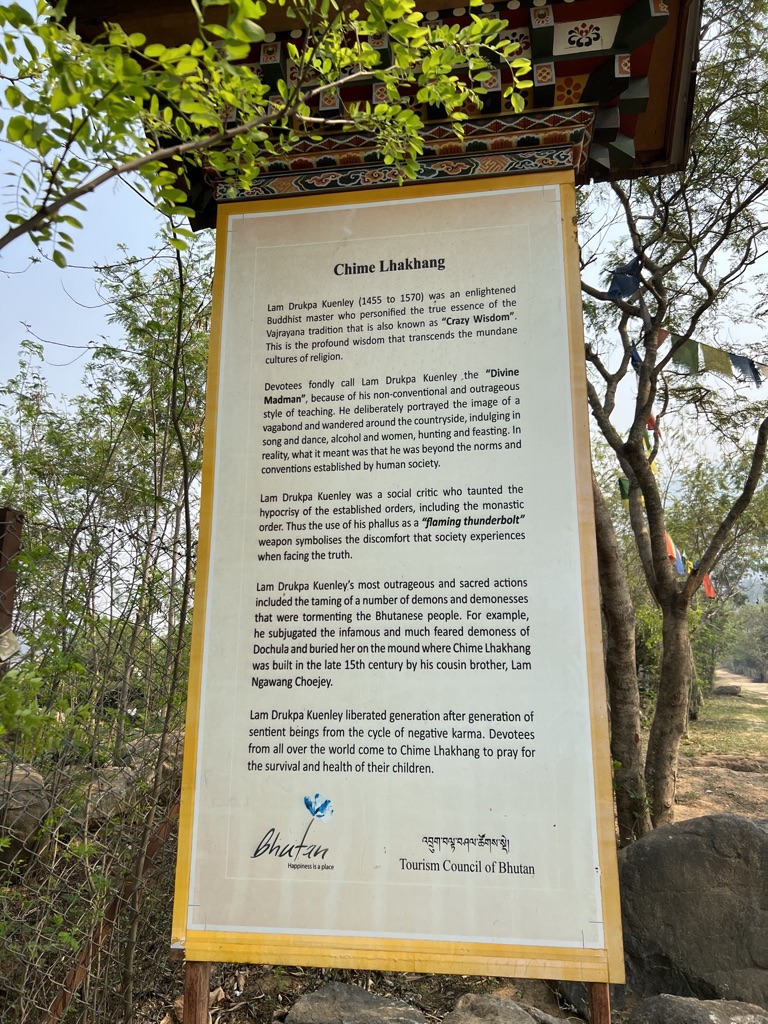
One of the reasons we wanted to spend time in Bhutan was in order to visit teaching institutions and some of the well known temples with fables attached. Today we were not disappointed. Our drive to the first temple was through lush fields, rice paddies, orchards and forests. Chimmi Lhankhang is a 15th century fertility temple dedicated to Drukpa Kuenley, a Tibetan Buddhist saint who is probably better known as the “Divine Madman”. We had already heard the story of this saint who went about the country dressed as a vagabond, indulged in alcohol and women, feasted and danced and generally behaved inappropriately. He was totally unconventional and disliked the hypocrisy of order – particularly monastic orders – and so used his phallus as a “flaming thunderbolt” weapon to challenge society and its discomfort in facing the truth. There are countless stories about his travels and deeds – all of them quite fantastic – but he liberated generations from negative energy and to this day many couples come to the temple to be blessed and to pray for their children. His bizarre and unorthodox teaching ways endeared him to the people and he is now the patron saint of Bhutan and considered one of the greatest spiritual teachers.

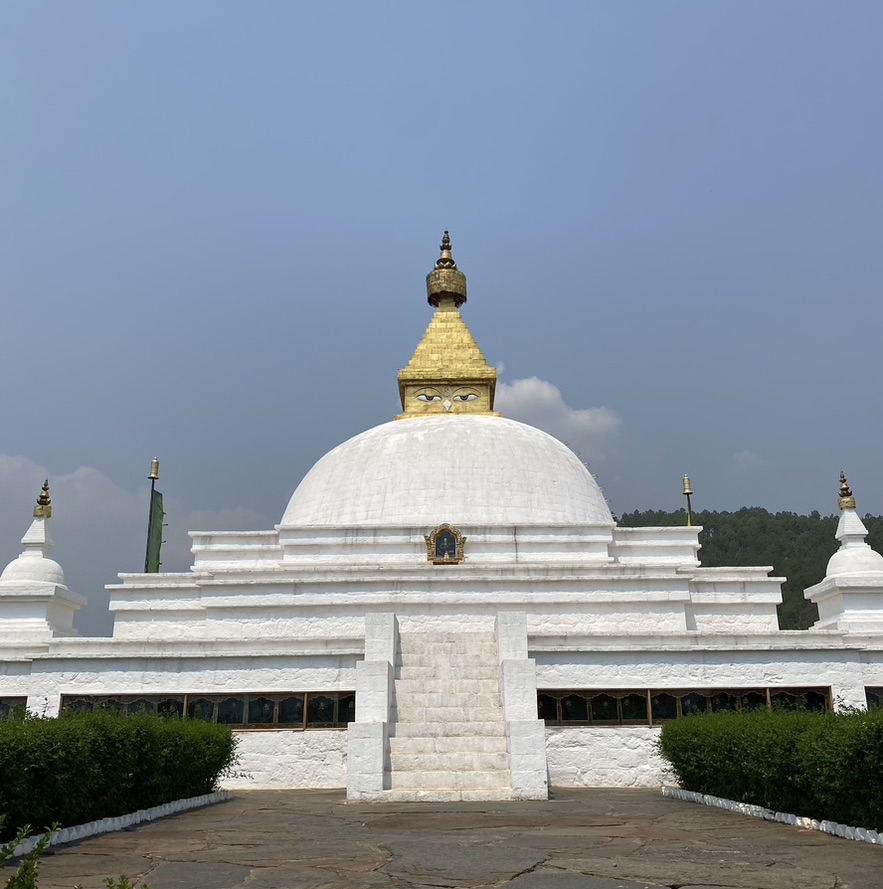
When we arrived at the temple we were greeted with the hollow sounds of trumpets – these long instruments are used by monks and nuns as a call to prayer. We walked the long path to the temple gates and found student monks practising on their instruments. Dressed in crimson and saffron robes they made an arresting sight in the temple garden – the stupas glistening in the early morning sunlight.

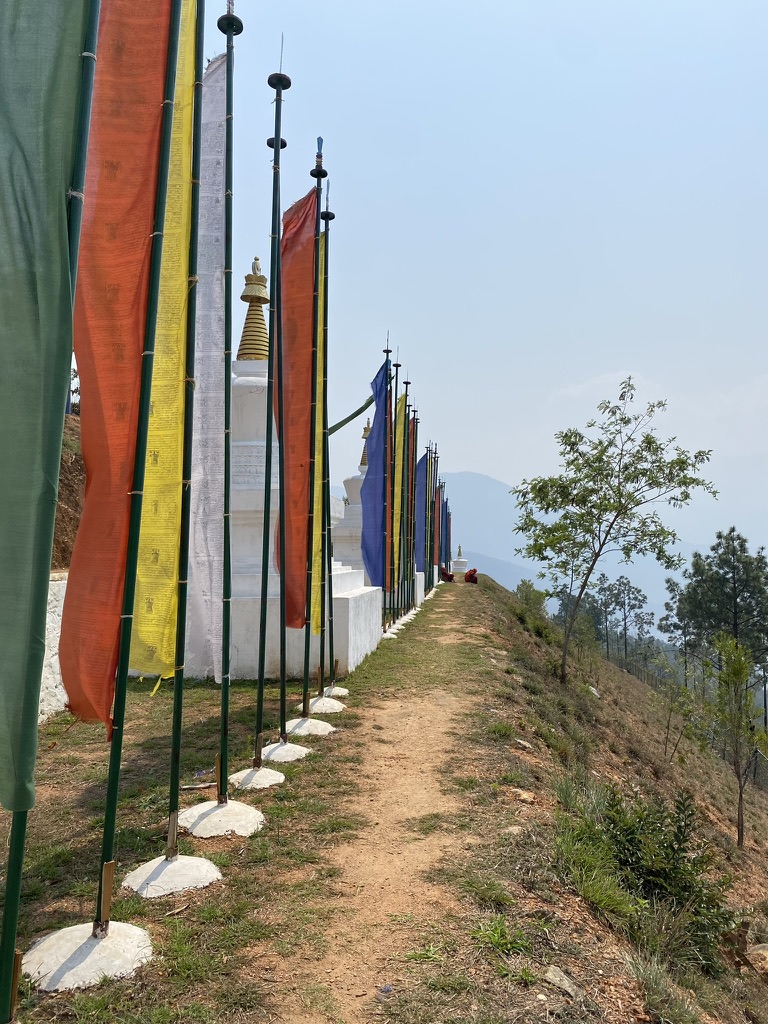
Across the valley we went to another place of peace and contemplation. This time it was the Sangchen Dorji Lhuendrup Nunnery. Situated on the edge of the mountain, the complex overlooks the Punakha valley and has stunning views. A large prayer wheel overlooks the hills and coloured prayer flags were fluttering in the breeze.
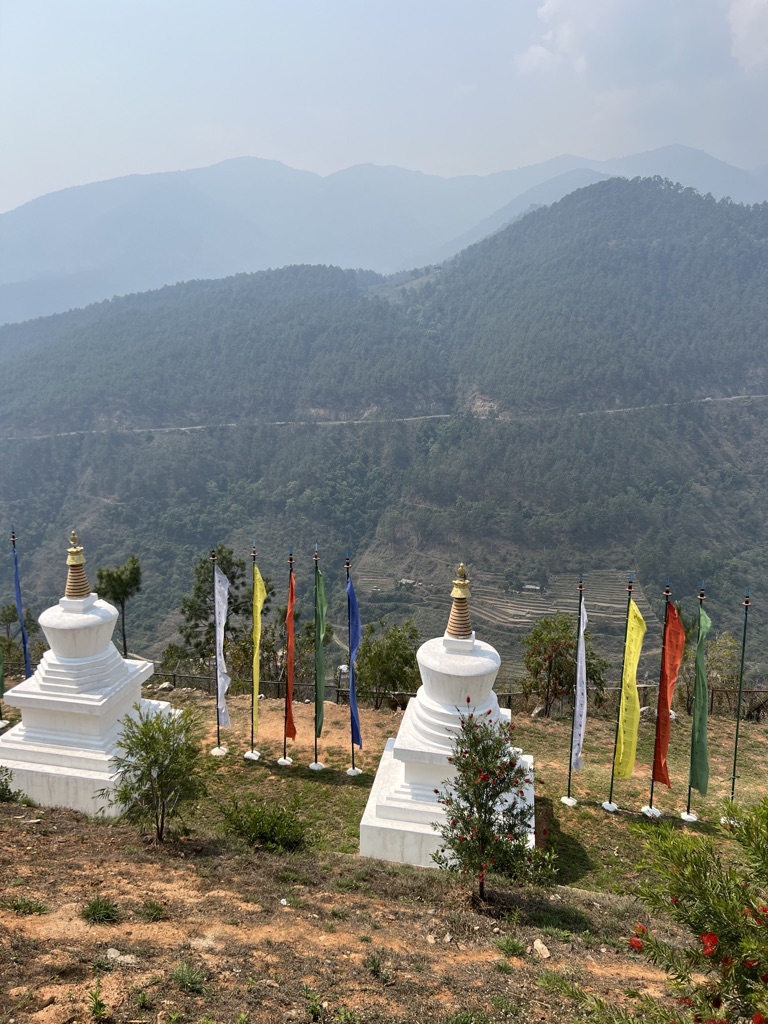
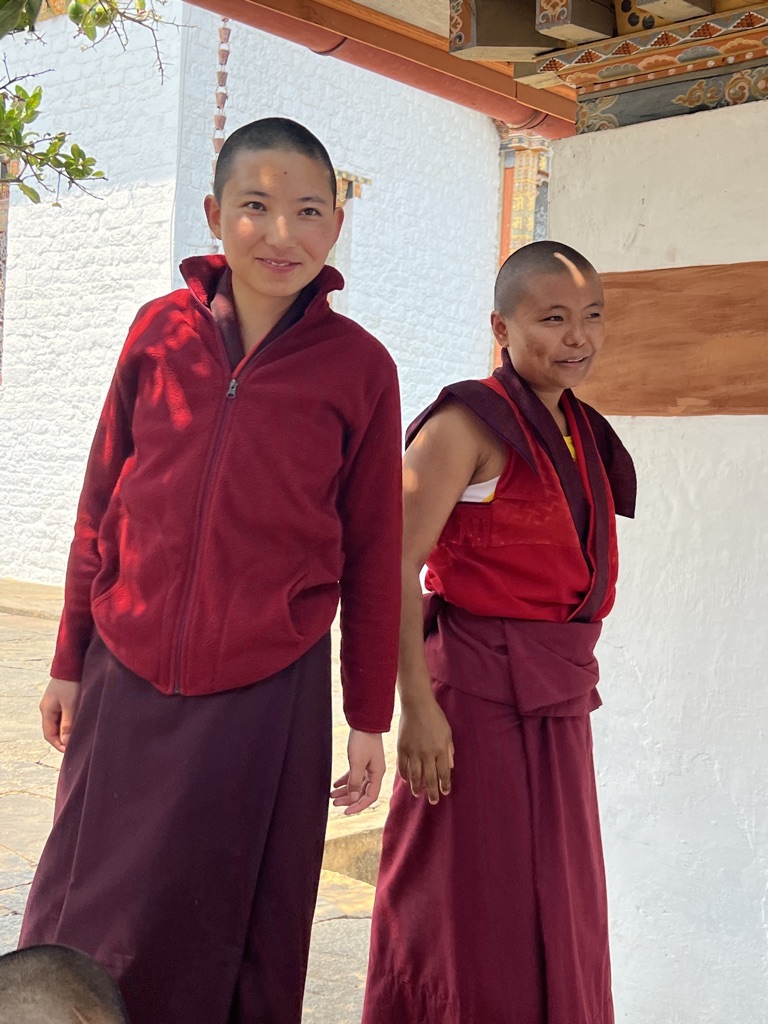
Along with teaching a spiritual life, the nuns are also taught many life skills such as tailoring, embroidery, thangka painting and statue making. Many of the women go onto normal lives with families or teaching others. It seemed to me that they were happy to devote several years of their lives in the nunnery and later make a decision about how to spend their time. When we arrived a group of nuns were having a mid morning break and making a very spicy chilli lime drink with fresh limes, chilli paste and betel leaves. It was overpowering and quite disgusting but they laughed at our distaste and added more chilli paste to the concoction!

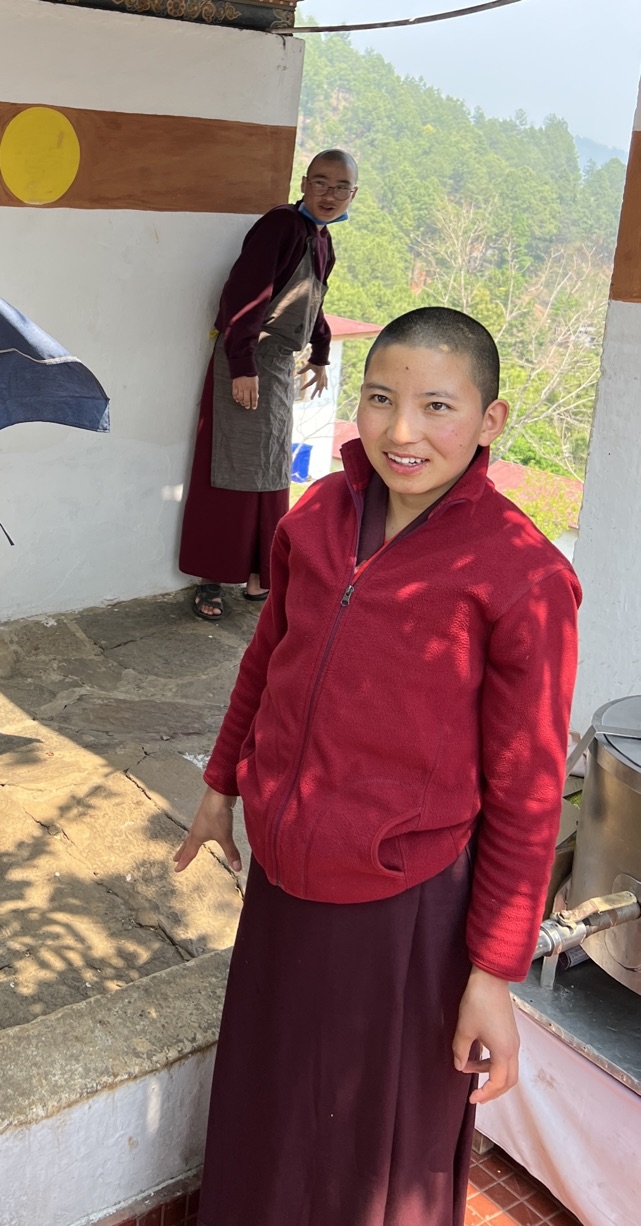
As at Chimmi Lhankhang, we found a couple of nuns practising their call to prayer on the trumpet like instruments. The courtyard was vast and the sound echoed throughout.

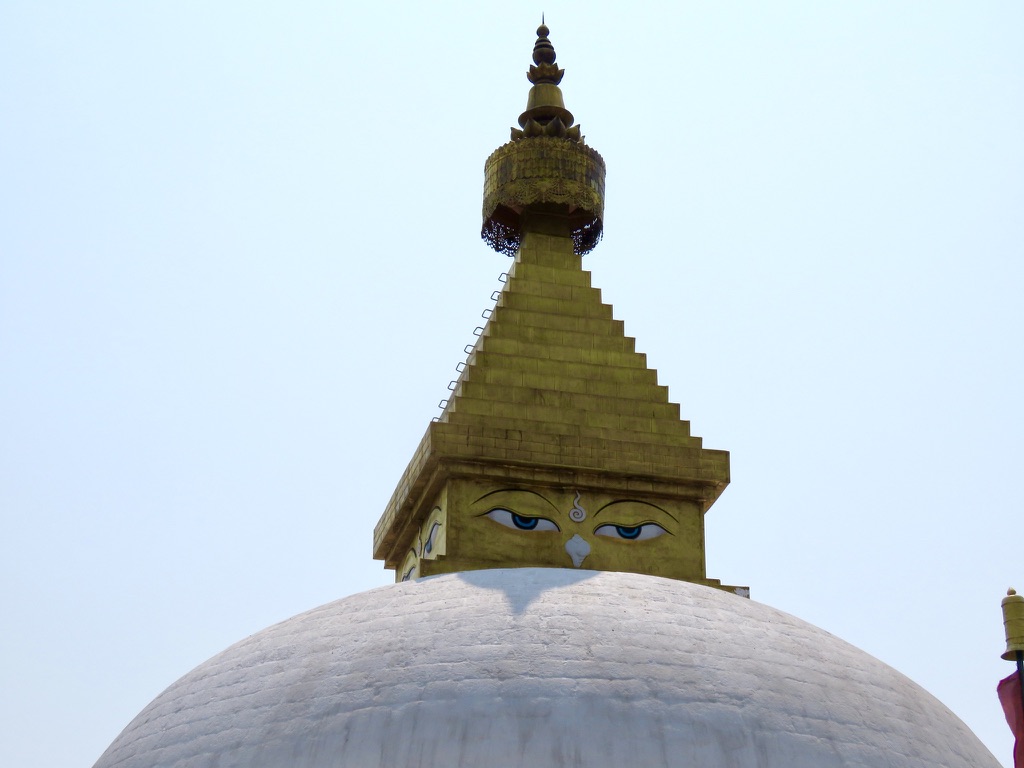
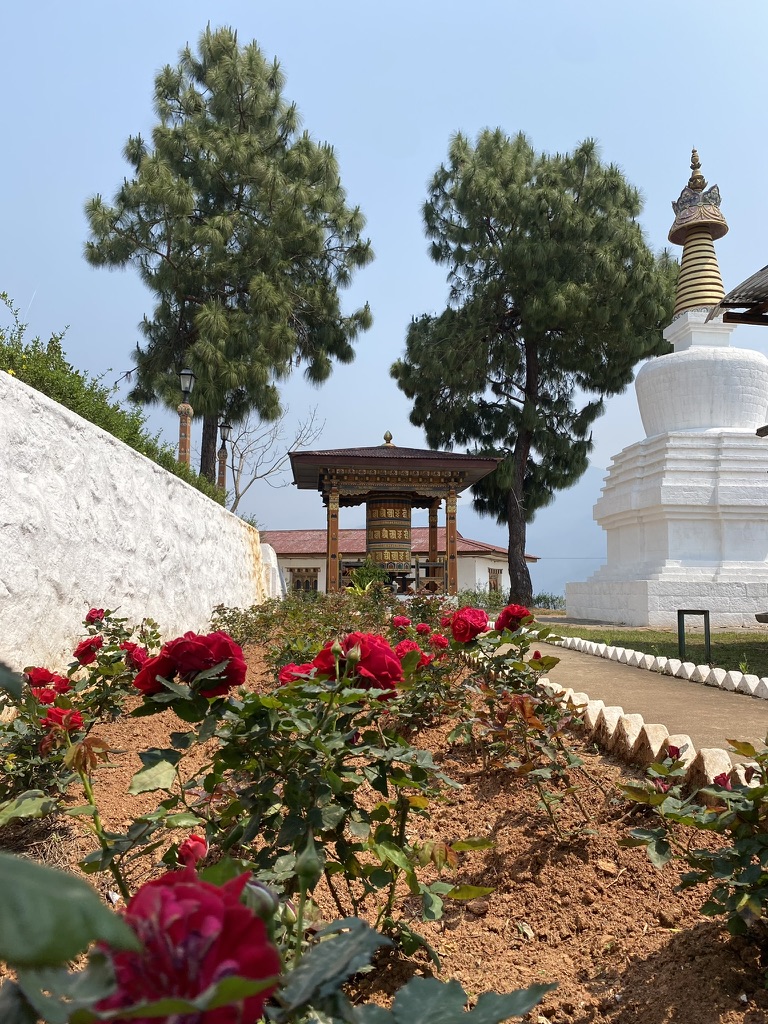
We were unable to access the library and teaching rooms as they were being used but we chatted to the nuns outside and wandered through the beautiful gardens full of rose bushes and other flowers. It was so neat and orderly.
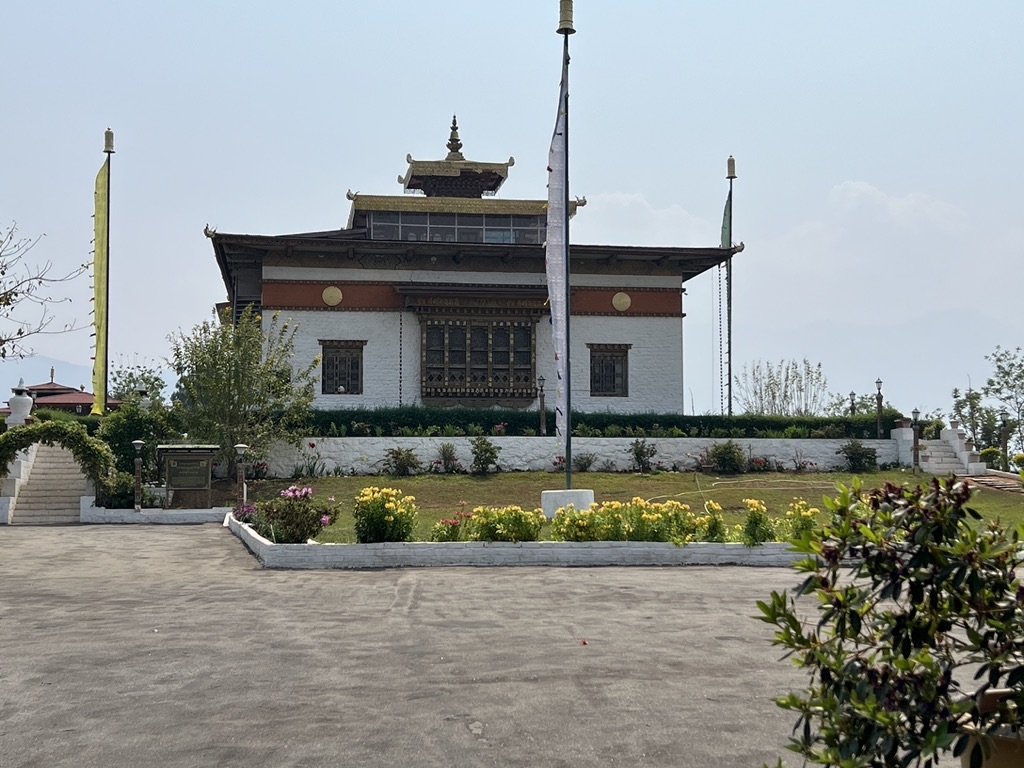
After a picnic lunch we drove to the Nalanda Buddhist Institute which has an interesting history and is now a “shedra” which means teaching monastery. It was founded in 1757 by Gyalwang Shakya Rinchen Rinpoche who is considered the reincarnation of Rechung Dorje Drakpa, a student of 11th century Tibetan Buddhism. Today the student monks range in age from 8 – 28 years and upon entering the school, some had reached a certain education level whilst others had had no education at all. Here they learn Buddhist philosophy, how to play ritual instruments and the making of ritual cakes called tormas.

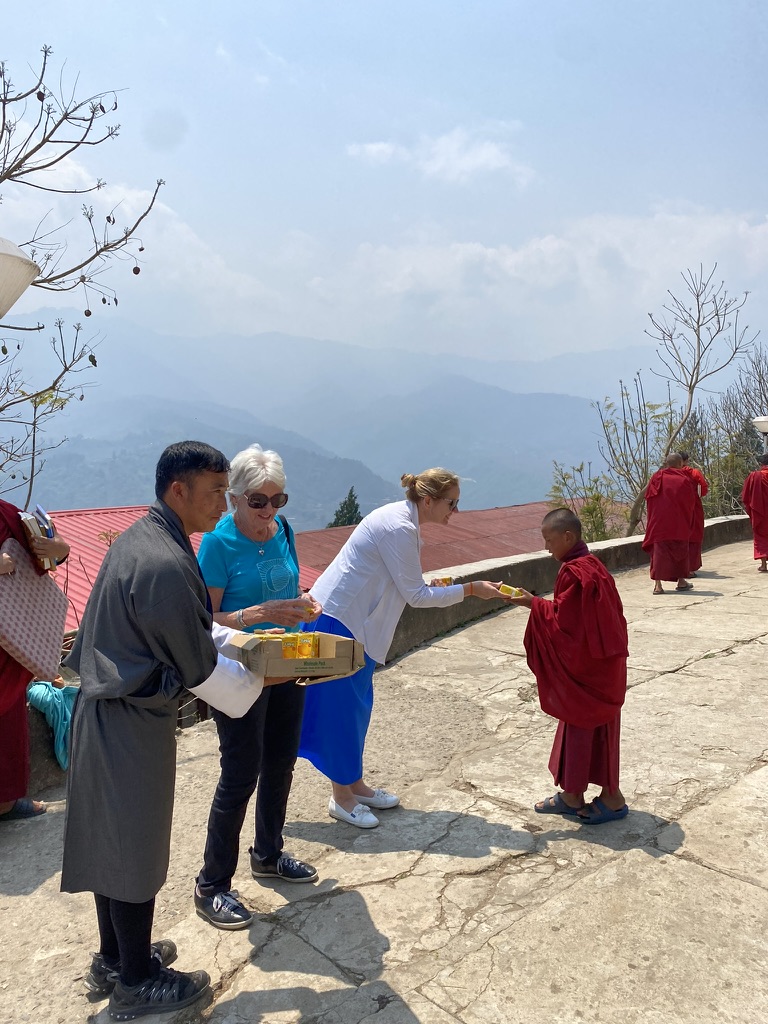
We met many of the students and offered them a traditional offering – in this case a small popper juice which the little ones loved – and then went into the temple climbing to the upper floor. The room overlooked the valley and was filled with statues and images of various gods. The altar was literally overflowing with offerings including some very elaborate cakes. These, we were told, are the ritual cakes and the young monk we spoke to was very proud to claim that he had made that particular cake. I was surprised that he spoke English so well and he told me that he loved to practise speaking and that they have English lessons every day from 7 – 8 pm. Subjects such as Buddhism, health and disease and basic science are taught in English. The next surprise we had was that there is a computer laboratory there and students are taught the basics of computer science and software although there is no internet connection there – yet!

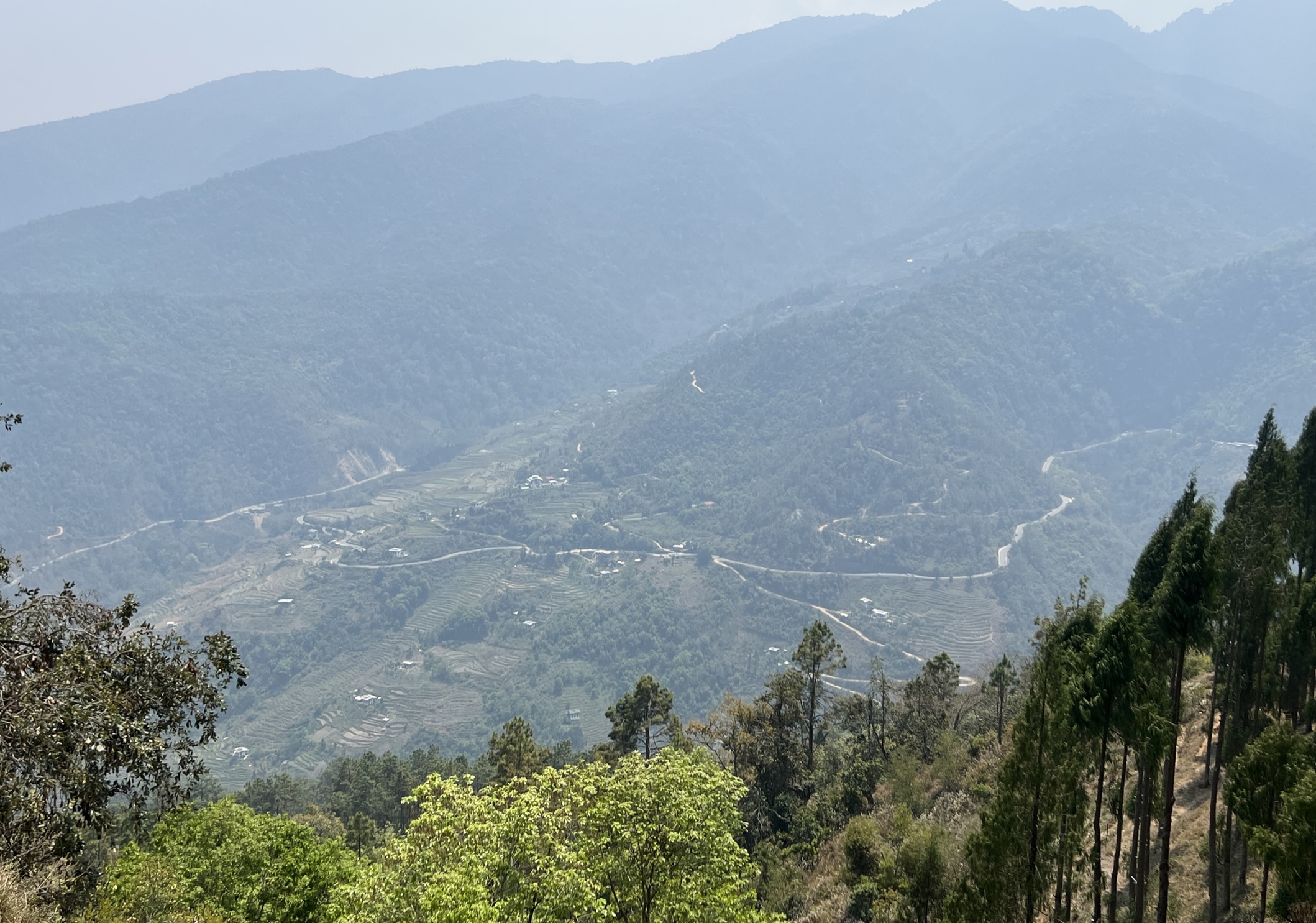
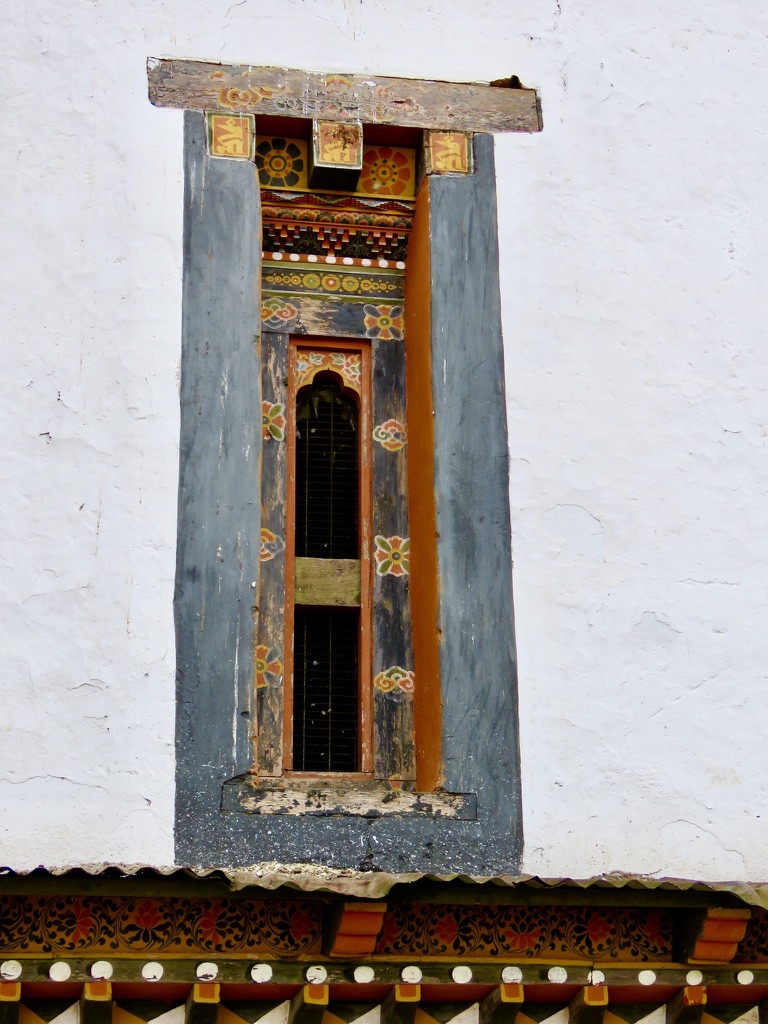
Our final stop on this interesting day was via a village nearby called Talo Village. We walked through the woods to a very old temple that sat in the midst of beautiful gardens. There were a lot of temple dogs playing on the grass and a few local people entering the temple. This temple does not allow visitors and is apparently very old which was evidenced by the painted windows and the old door. Chencho and Sonam entered to offer prayers whilst we stayed outside and played with the dogs!
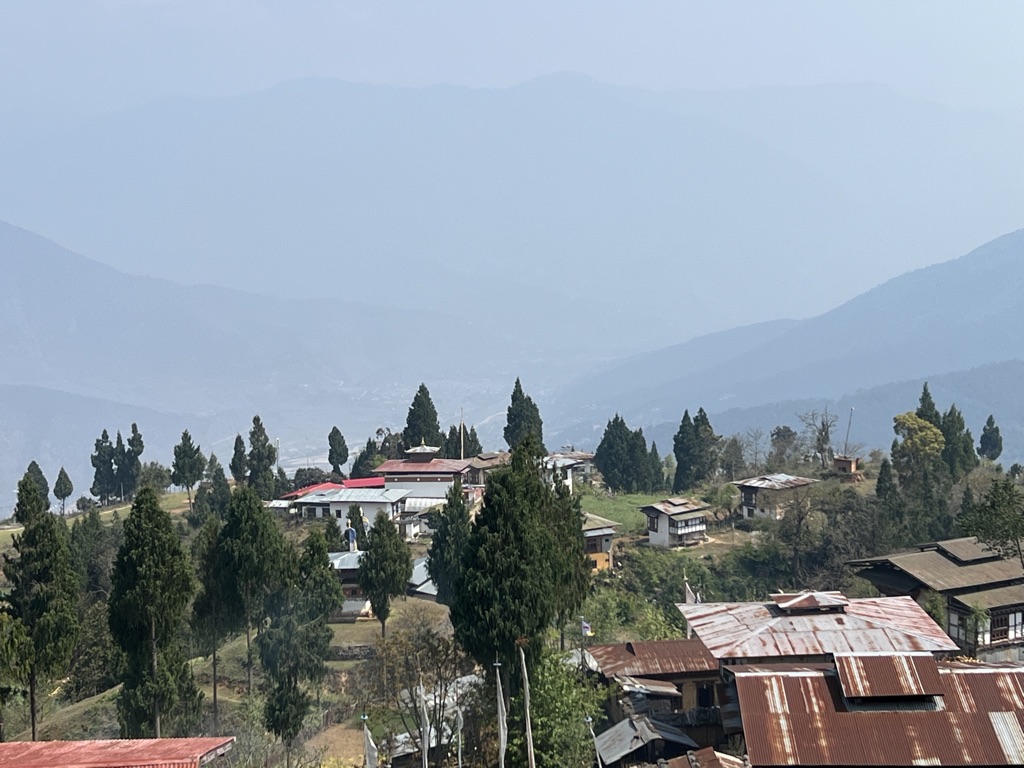
A fabulous day with so much information that we needed time to absorb it all so it was back to Punakha and the comfort of our room, ginger tea and a relax. Tomorrow is another day.
BHUTAN

The Real Shangri-La

DAY ONE: PARO

It has always been my dream to visit Bhutan, a tiny landlocked country about 300km long and 150km wide encompassing 46,500sq km. It’s northern boundary is Tibet and the rest is surrounded by India and the Himalayas. Tourism is relatively new and it was only in 1974 that the first foreign tourists were permitted to enter the country.

The story that started me on this journey was that of an American girl, Hope Cook, who married into the Royal Family in Sikkim, a tiny state in north eastern India. That was in 1963 and I thought it was the most romantic thing I had ever heard! Stories of life in the tiny Himalayan kingdom and how a westerner adapted to a strict Buddhist community fascinated me. From there I learned about Bhutan and later met several Sikkimese people through my work in tourism who spoke warmly of their little known neighbour.

Fast forward many years and as tourism opened up I had a yearning to experience for myself this beautiful country but it was expensive and difficult to get to. Life intervened and the dream was pushed from my mind until one day last year I read that Bhutan was opening to the world again after strict lockdown during Covid. Now was my chance!

My daughter and I finally landed in Paro in April this year. We did a lot of research and decided on an eight day trip covering the western part of the country. Travelling from Australia we flew first to Singapore, then Bangkok where we overnighted at the airport and finally an early morning flight to Paro with a short stop in Bagdogra in India.

Fellow passengers were a few other tourists from the US, Asia and Europe but mostly residents of Bhutan both expat and local as well as several Monks in their orange robes and carrying shopping bags of all sizes. I was surprised to find good old fashioned service on Drukair where the passenger mattered and was not just a number in a seat. The crew were friendly and willing to help in any way and our seats were spacious. I immediately fell in love with the language – Dzongkha – its soft, flowing melodious tones sounded just right in the PA announcements which were, naturally, followed in English. Dzongkha is one of 53 languages in the Tibetan language family and is the national language of Bhutan whilst the medium of instruction is English.

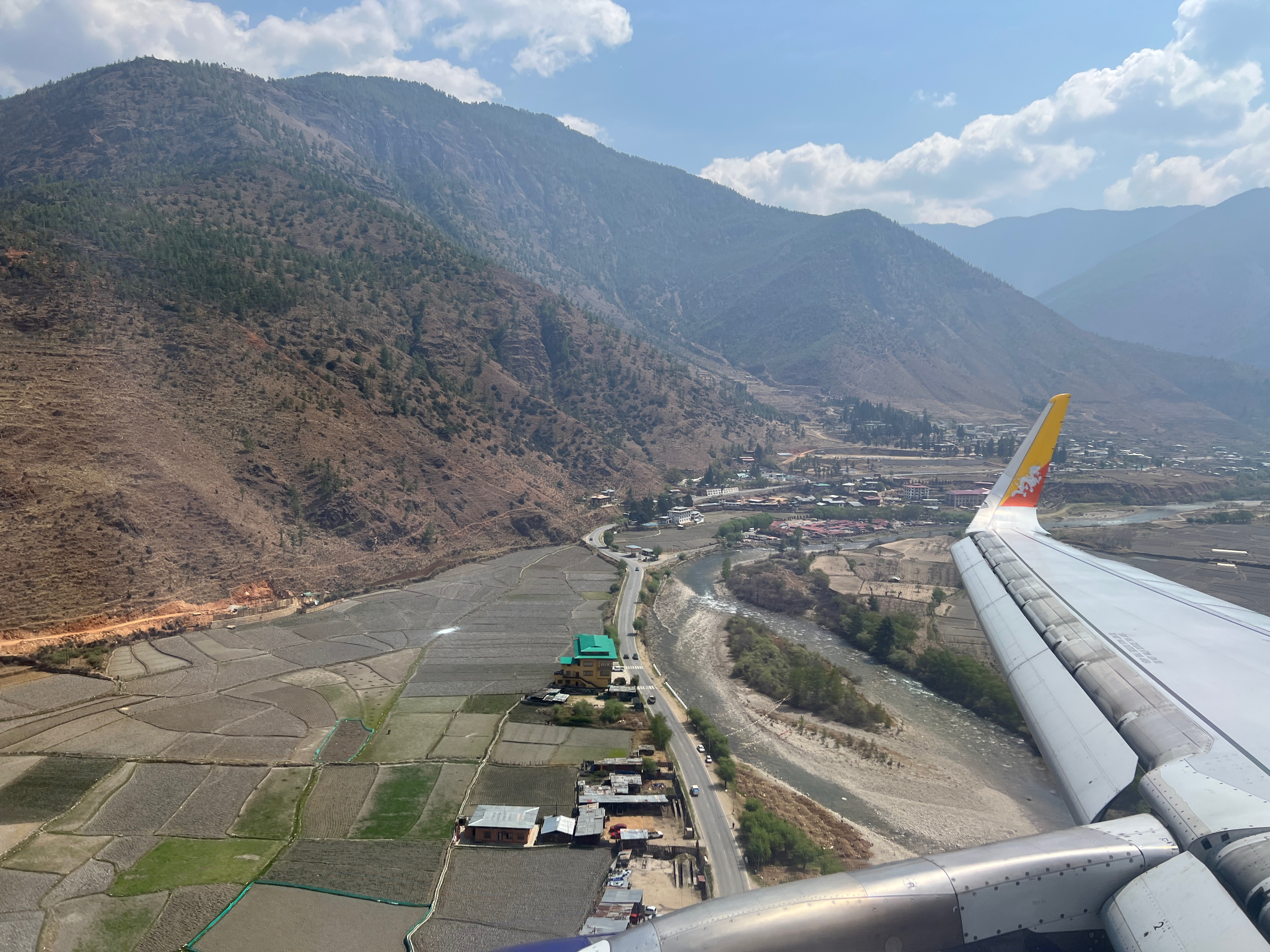
Paro International Airport is one of the world’s most dangerous airports and just a small handful of pilots are certified to make the manual by-daylight-only approach between 18,000 feet peaks, through a long, winding valley, and onto a runway that is only 7,431 feet long and visible for only moments before landing.  We had heard countless stories about the approach to Paro and as we flew between snow capped mountain peaks we began to feel some trepidation. Then, over the PA, came the Captain’s reassuring voice. “Please do not be alarmed” he said. “This looks hair raising but believe me, we have done it many times before!” With a collected sigh of relief, we settled down to admire the view and concentrate on the moment!

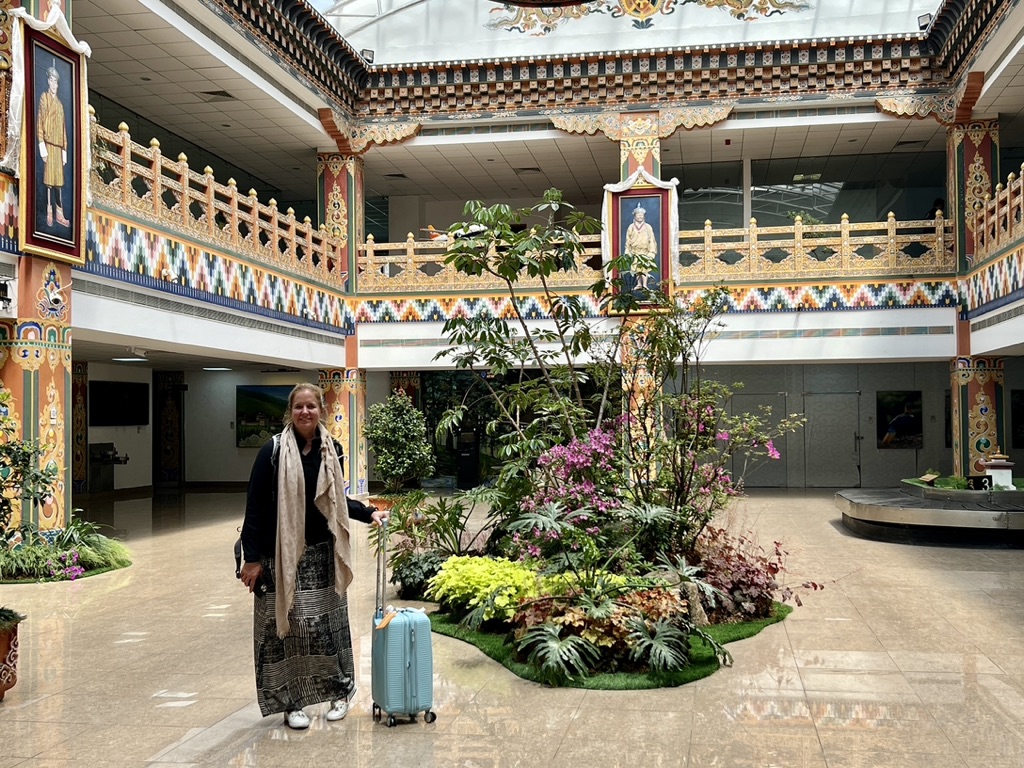
The first surprise came on disembarking the aircraft. There were no jet bridges, no airport traffic, no other aircraft. It was peaceful and serene. We disembarked via the stairs and walked across the tarmac to the beautiful little terminal full of plants and images of Bhutan’s Royal Family. Only one carousel carried checked luggage and there was only a small line at immigration. It was all so organised and there was absolutely no stress. Our guides met us at the entrance to the terminal and presented us with white silk welcome scarves. I felt totally at home!

Our guides were Chencho, the driver and Sonam, the guide and we had the luxury of a large four wheel drive vehicle for the whole of our stay. Inevitably our guides became our friends and we learned so much about Bhutanese customs and way of life. We were to stay at Como Uma Paro, a small hotel about fifteen minutes from the airport in the foothills.

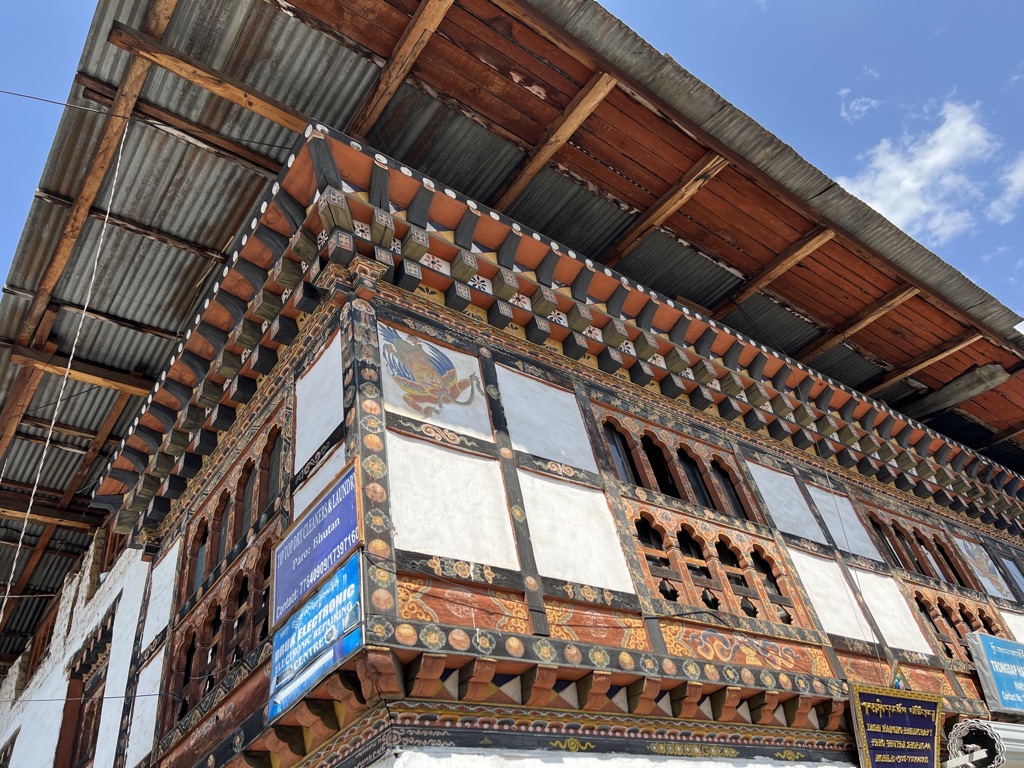
The lodge sits in the middle of a pine forest and is built in the traditional Bhutanese style of wood, stone and tiles. Windows are elaborate and painted with buddhist motifs and in traditional colours. The rooms are contemporary and ours had a stunning view of the valley and mountains beyond.

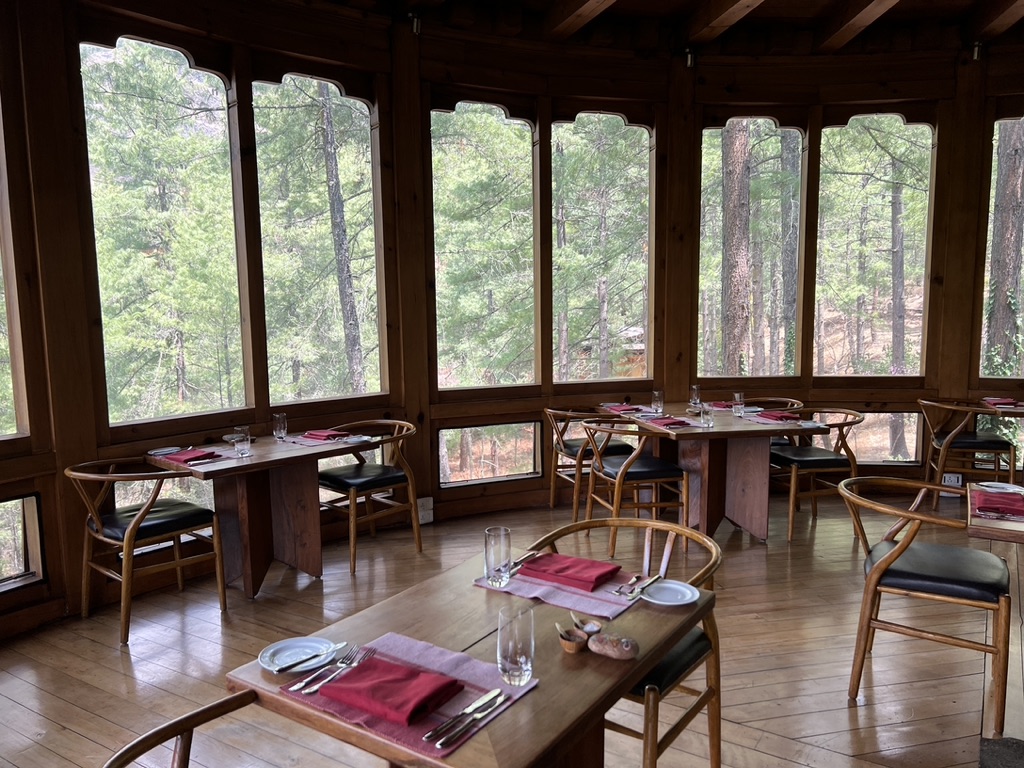
We had heard about the restaurant where we could have Bhutanese food or western style meals. We were not disappointed. It was sensational and sitting in the light filled room perched above the trees, we felt as though we were at one with nature. Apparently the King often calls in for lunch, quite unobtrusively, and sits amongst the guests many of whom would have no idea who he is. Unfortunately it didn’t happen during our visit but I was willing the gods who obviously took no notice!

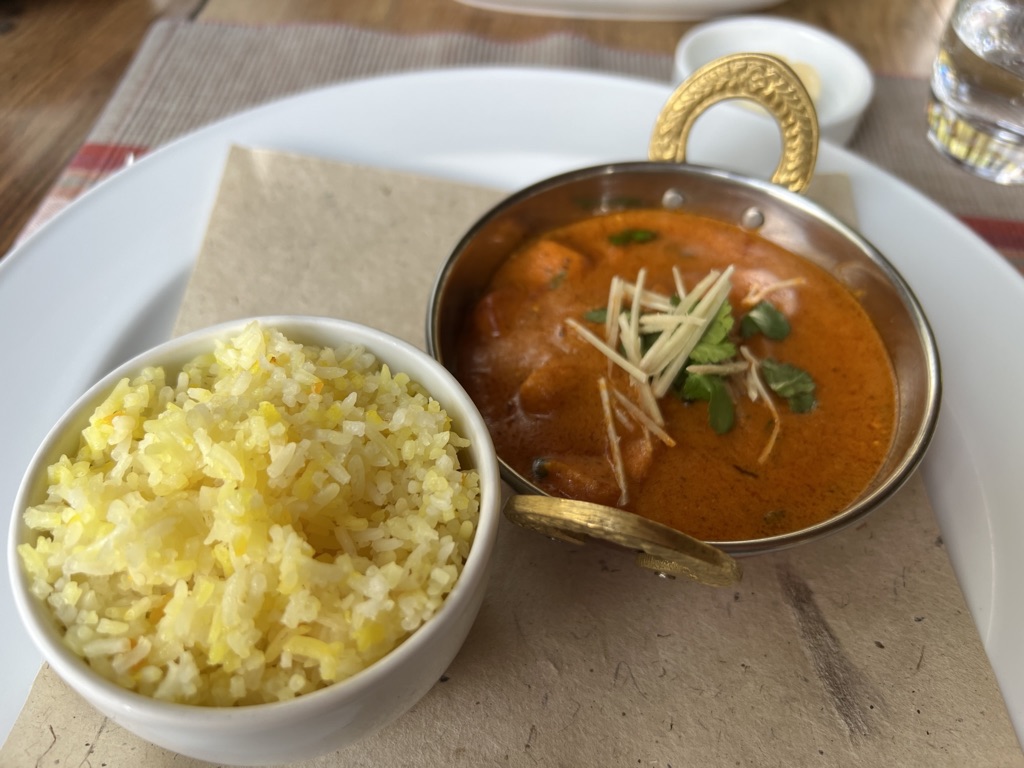
My favourite lunch was Paneer cheese in a delicious home made tomato herb sauce with local rice.

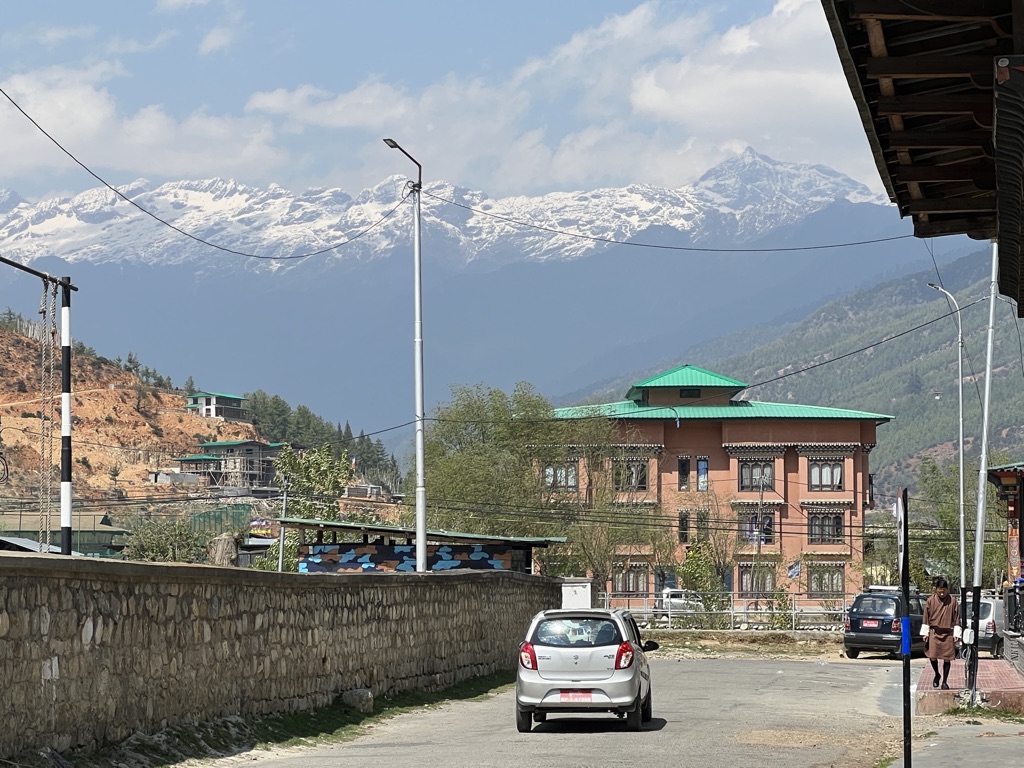
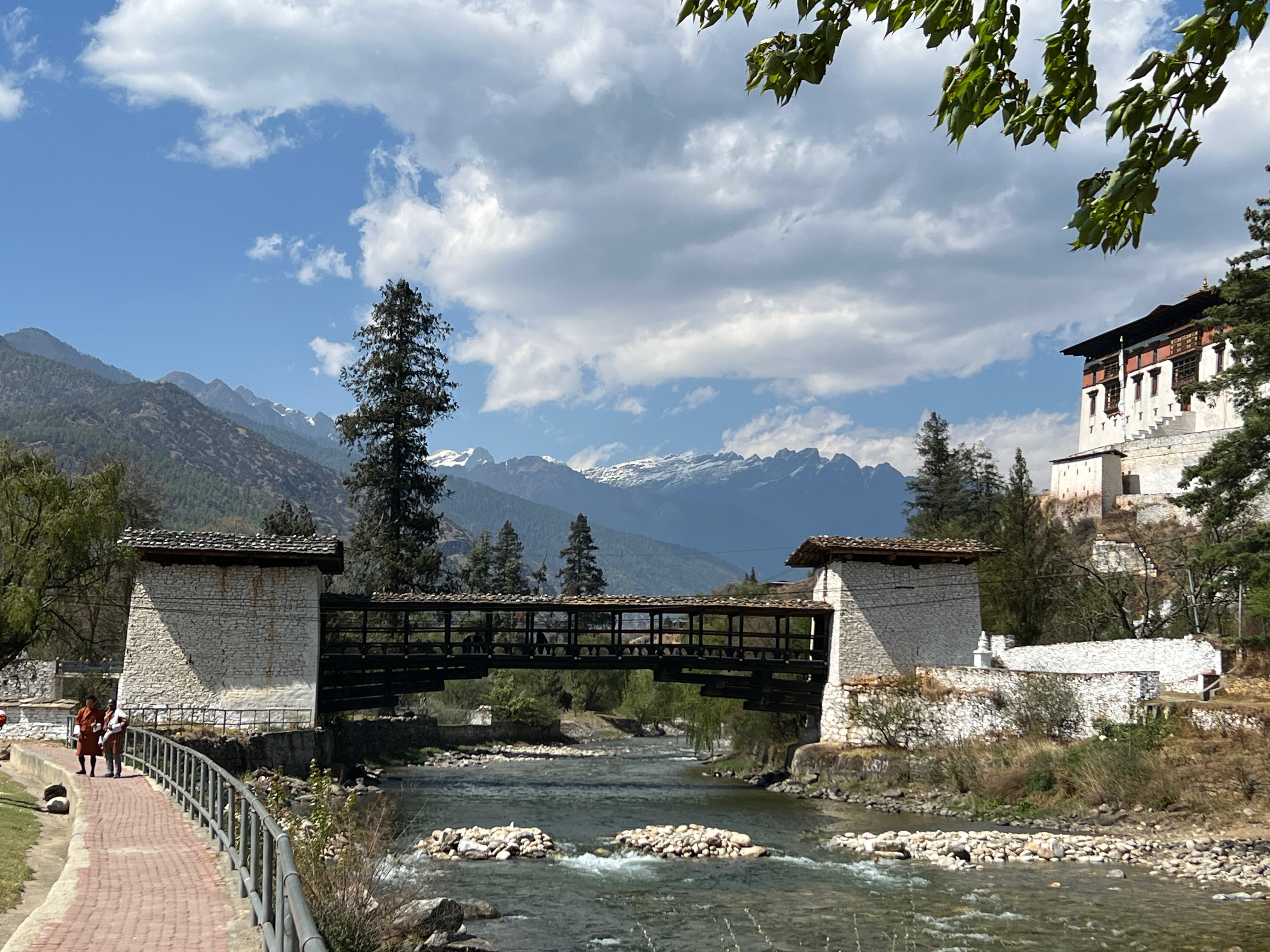
Adjusting to the altitude could be a problem for some. We were at 2,200 metres and at times I felt a shortness of breath. With this in mind Sonam and Chencho suggested we do a short walking tour of Paro town to familiarise ourselves. Here we found that buildings can be built no higher than 6 storeys and must be in the traditional style including wood carvings and paintings. This means the town has a very charming feel. There is little traffic and it seems as if life is in the slow lane. The streets are uneven and potholed, there are no crowds and the footpaths were broken in places. This does not deter from the overall impression one gets. Dogs are everywhere and are revered. They are well fed and mostly strays but everyone respects them and we found that even if one was lying in the middle of the road, the cars would go around rather than move it!

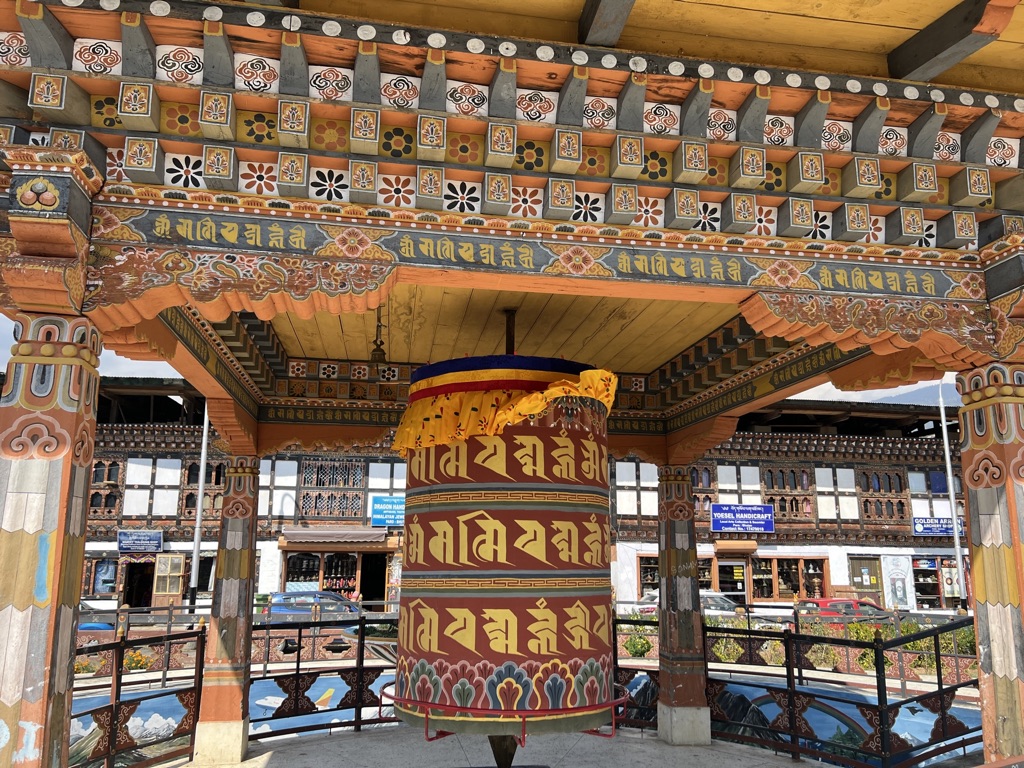
A huge prayer wheel sits in a shrine in the middle of Paro. This was the first of many we encountered during our stay in the country. Prayer wheels are a cylindrical wheel on a spindle made from metal, wood, stone or leather. These are beautifully embossed and contain a written prayer or mantra. Tibetan Buddhists use the prayer wheels to evoke good fortune and spirituality and may spin them several times a day or whenever they find one either in a temple, on the mountain side or in a small shrine in a village. The mantra is often “Om mani padme hung ” which one recites as the wheel is spun. It doesn’t take long to copy the locals and I quickly felt a sense of calm after spinning the wheel and murmuring the mantra.

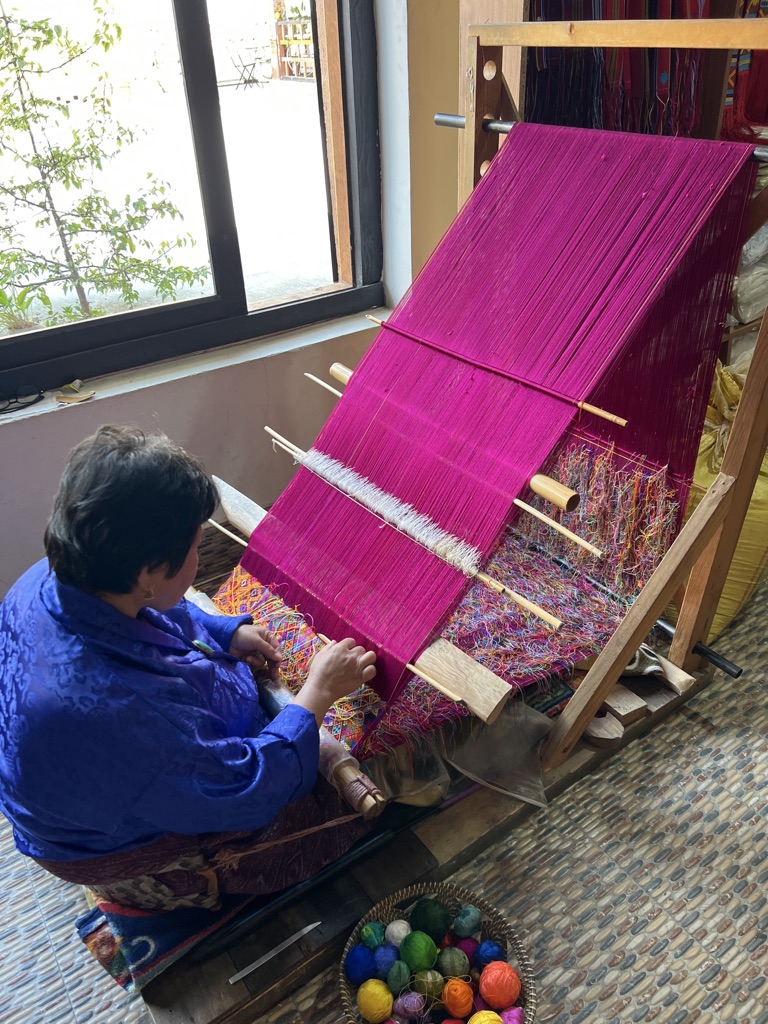
We strolled through the town, in and out of various shops selling all manner of things including art and souvenirs. Weaving is a traditional art in Bhutan so Sonam took us to a small shop where a weaver was at work creating an incredibly intricate design. Watching her handling a myriad of threads in various colours was fascinating – how she managed to keep a pattern going was obviously after a lifetime of working at the loom, probably from childhood.

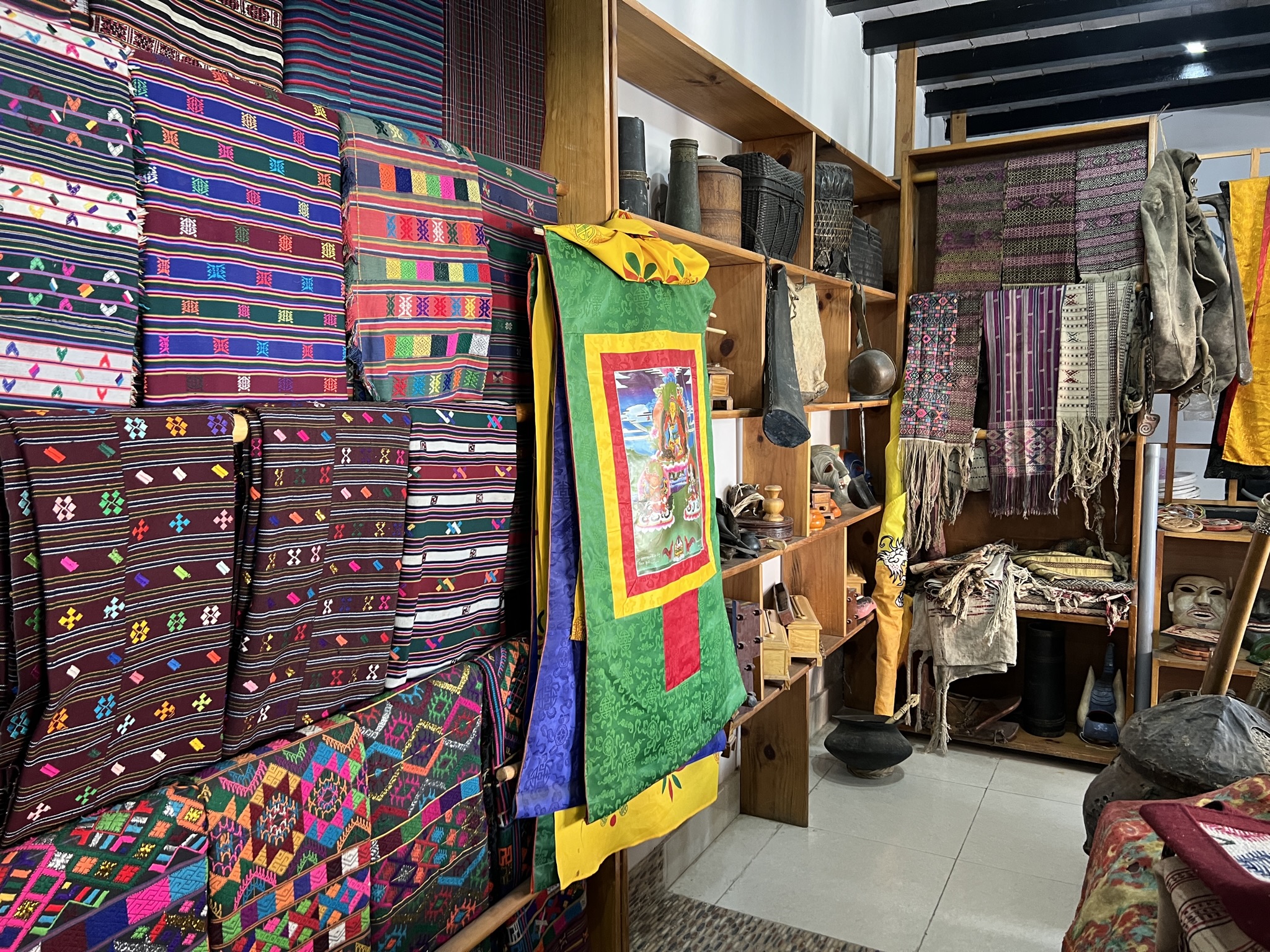
The shop was filled with the finished garments, jackets, scarves, lengths of fabric to make the kira (the female dress).

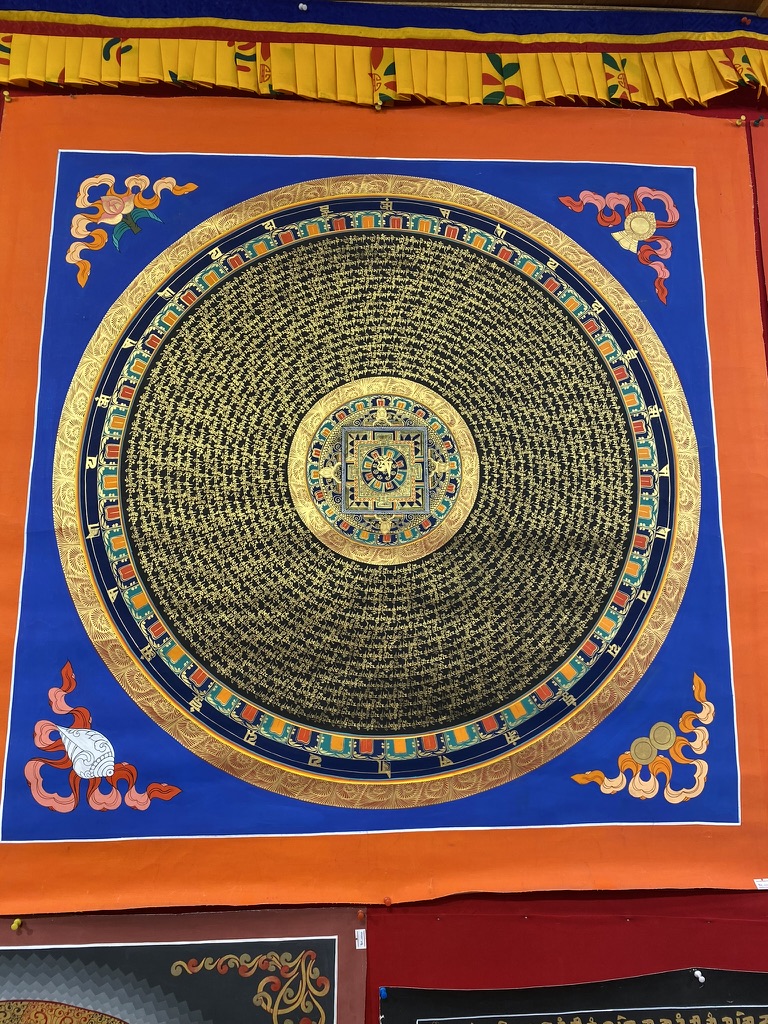
Then we went into a gallery where I was blown away by the beautiful and very intricate paintings depicting various gods and mantras.