PARO, BHUTAN

DAY TWO – DISCOVERING MORE

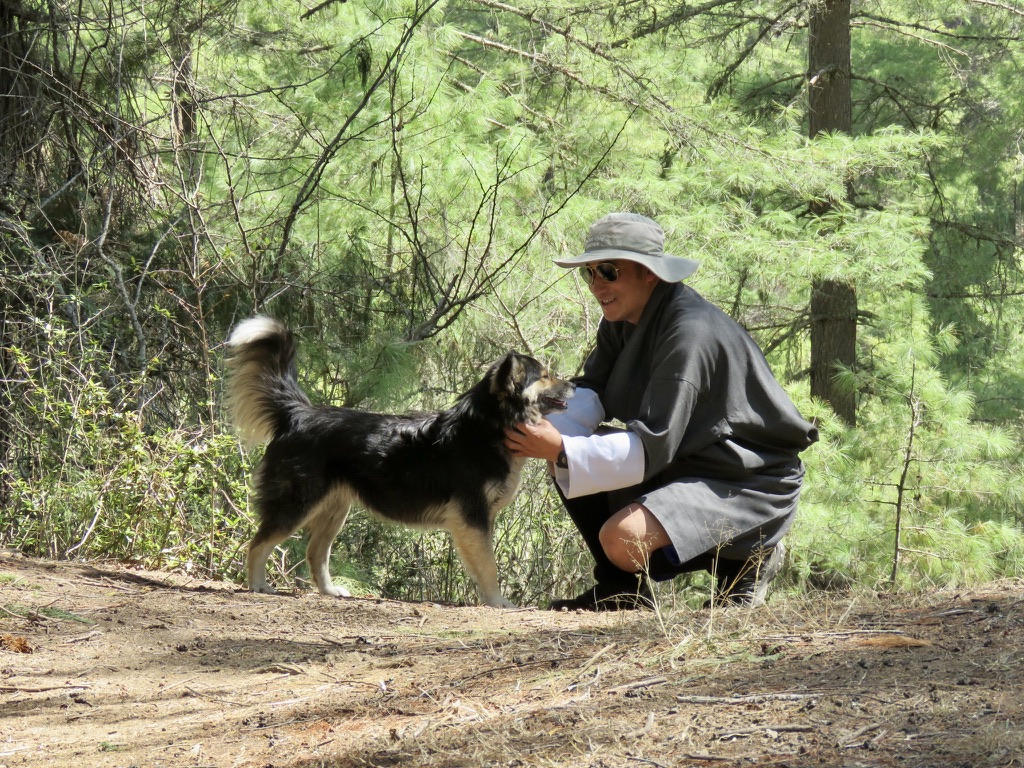
“We are going on a little hike today” announced Sonam, our guide. To say I was slightly apprehensive would be an understatement. I had heard about “hikes” in Bhutan and slogging up and down forest hills was not exactly my idea of fun. However, there was to be no discussion so off we set from the Hotel winding through the pine forests to the pretty grounds of the fortress like monastery of Zung Dzong. A little dog befriended us and showed us the way, darting off periodically to find the odd critter in the grass. The views were spectacular and as we climbed higher the whole of the town of Paro spread out before us and the snow capped Himalayas sparkled beyond.

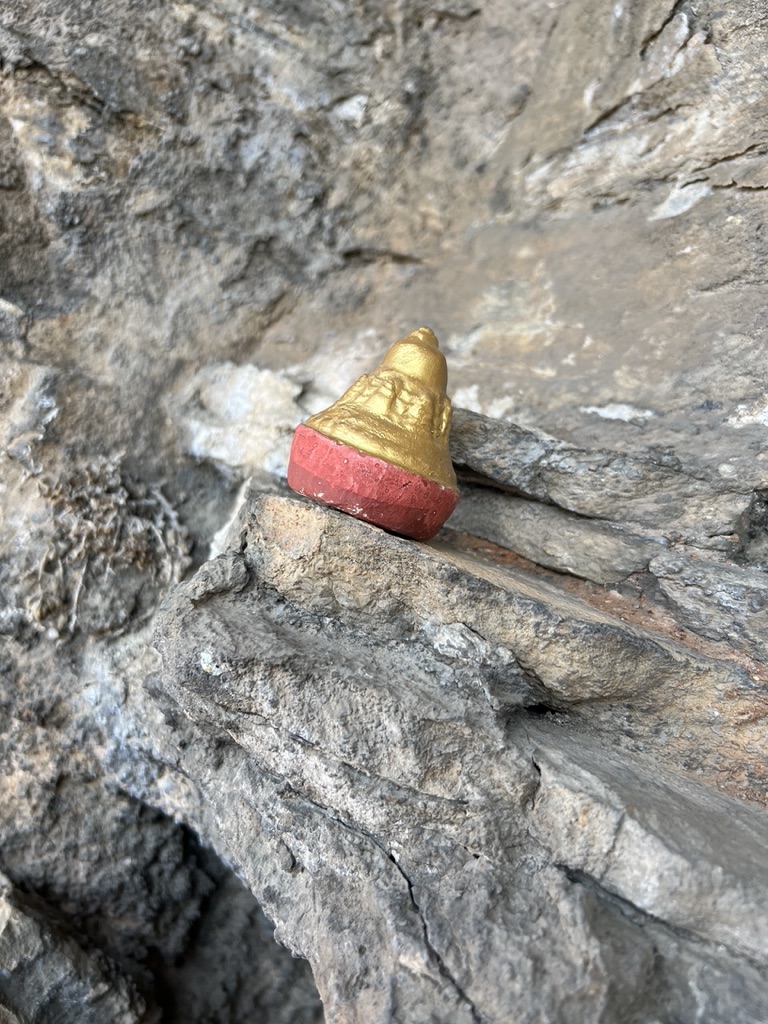
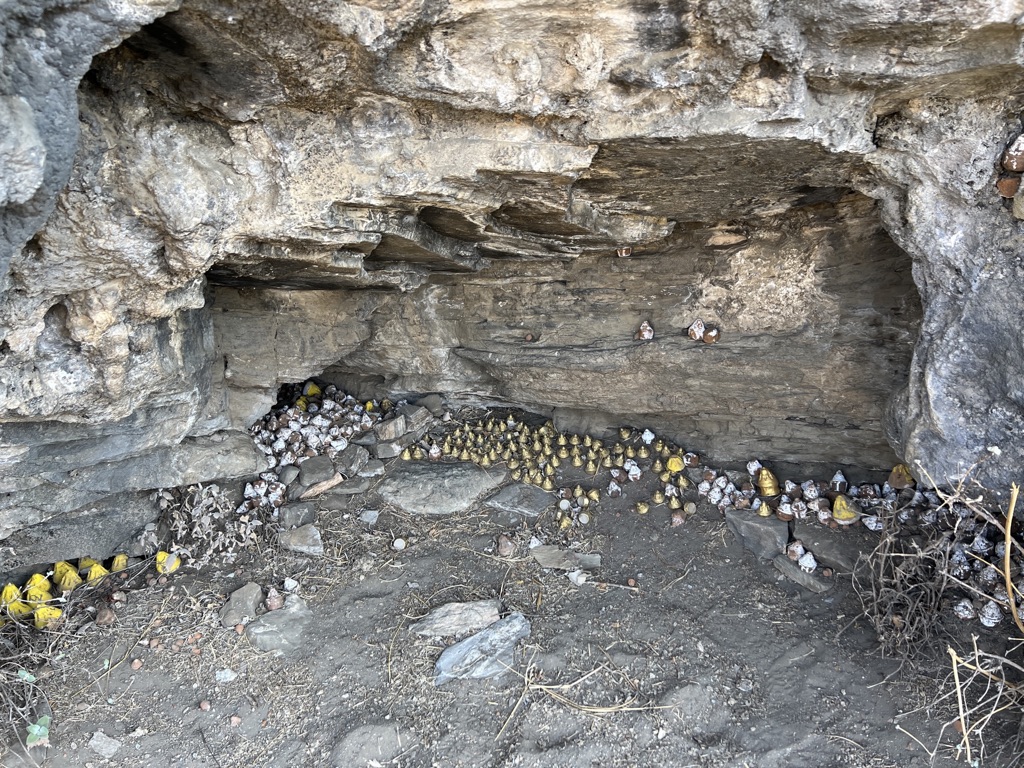
Sonam told us stories of various spiritual beliefs and traditions particularly in the mountains and we came across a little cave with a lot of cone like objects casually placed inside. These are Tsa Tsas and are commonly found in the hillsides in places sheltered from the elements. They are made by monks commissioned by bereaved families and are an expression of farewell – a memorial if you like. Inside there are often printed mantras. The cones are around 3 inches tall and are made of ash collected from the funeral pyre. Sometimes they are painted gold or red but often are just left white. I found this quite a moving tribute.
At the top of the hill we came across the monastery which was closed and is not used at the moment, however there is a monk who looks after the property. Feeling somewhat out of breath and tired from the hike, I was thrilled to find Chencho, our driver, appear with a couple of bottles of ice cold home made watermelon juice. That was so welcome! He had driven to another point at the bottom of the hill, ran up to meet us and give us refreshments and then joined us in walking down again. The little dog was still with us and gave him a welcome almost as good as we did!
Along the way colourful prayer flags fluttered in the breeze. These are hoisted for happiness, long life, prosperity, luck and merit and to offer karmic merit to all beings. Sonam told us that the benefit of prayer flags is to guide the souls of the dead from the netherworld. I rather like that belief. We saw them everywhere we went in Bhutan, in the towns, villages and on the hills. When we were leaving Sonam presented me with a roll which is a wonderful memory of our visit.

The hike had not finished – we walked across the hills to Ta Dzong which is the home of Bhutan’s National Museum. This conch shaped fortress was built in 1649 and the aim was to protect the population against assaults from Tibet and India. Sonam told us it was built entirely of stone and wood and no nails were used in the construction. It survived an earthquake in 1714 which apparently rumbled for 15 days and was converted into a museum in the 17th century.

We climbed down to the bottom of the building via a staircase which encircled the building. It was easy to see how it was a prison in those days with small cells and dungeons at the base – now filled with artifacts and so much history.

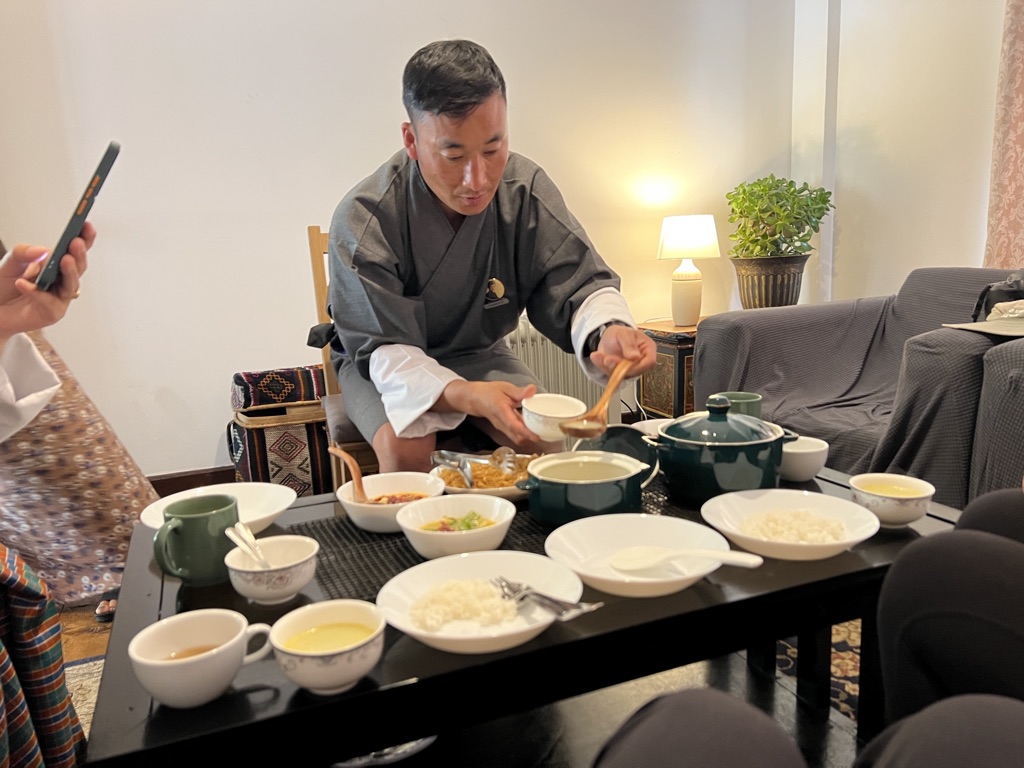
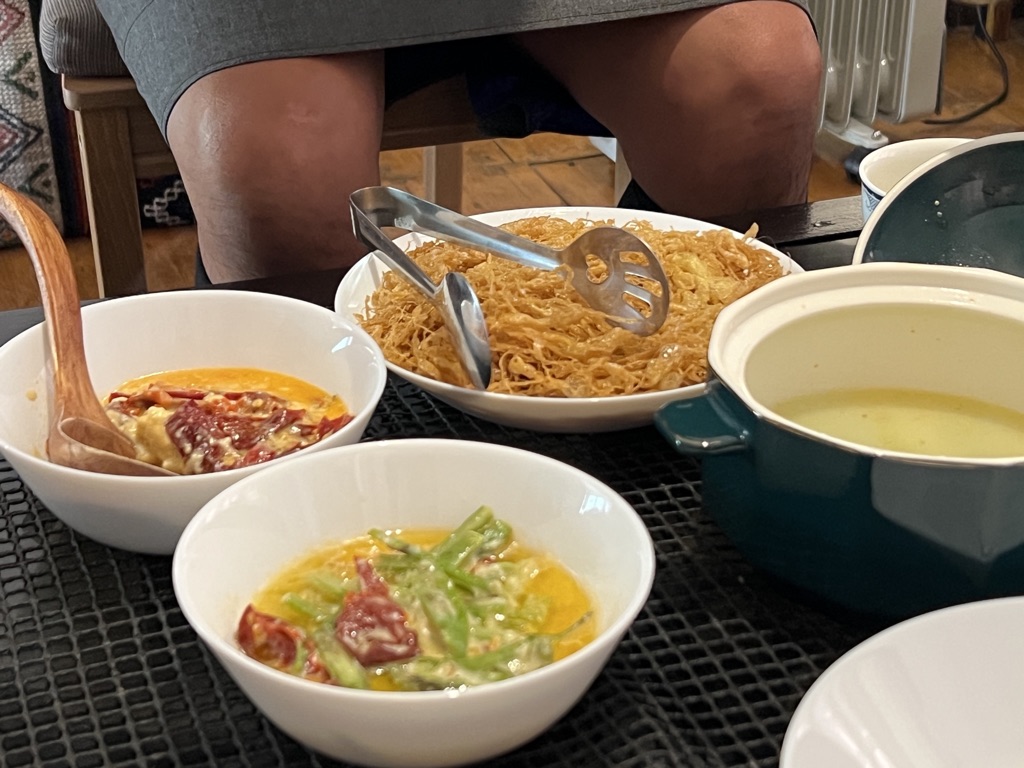
It was time for a break so we drove into Paro town for a traditional Bhutanese lunch. This was in a small restaurant in a group of shops and was owned by friends of Chencho. We were ushered into a private room at the back and sat around a rectangular table. The food was then brought in steaming hot and in bowls of various sizes. Curries, potatoes, vegetables and rice plus a delicious soup full of ginger were on offer. The most popular dish is chilli cheese made from locally produced cheese – usually from yaks – and fiery locally grown chillies. I had to pass up on that one!
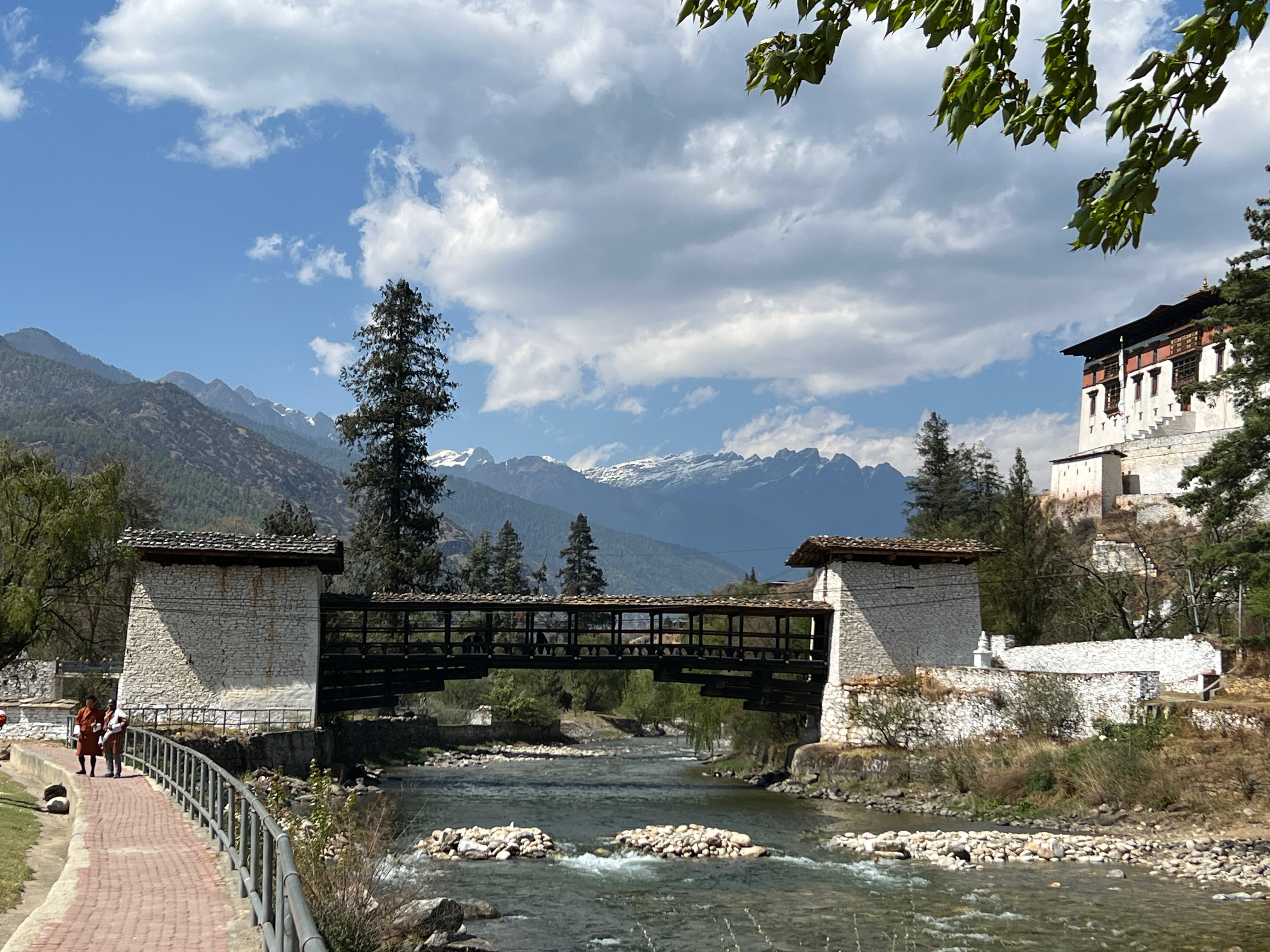
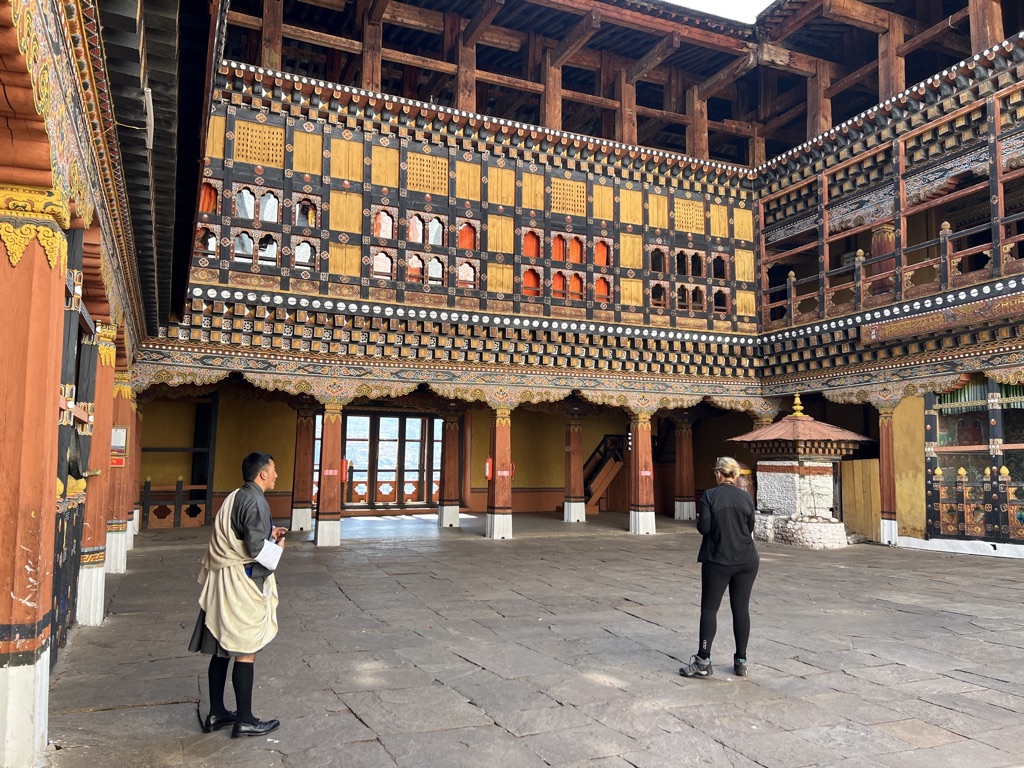
Our next visit was to Rinpung Dzong – or Paro Dzong. During the 17th and 18th century, Paro Dzong was an important bastion for the Kingdom of Bhutan against invasion from the north. At present, it houses the monastic body and government offices, and serves as the religious, military, administrative, and social centers of their district. Located on the Paro Chuu river we had to cross a covered bridge and then walked up a steep path passing monks and houses along the way.
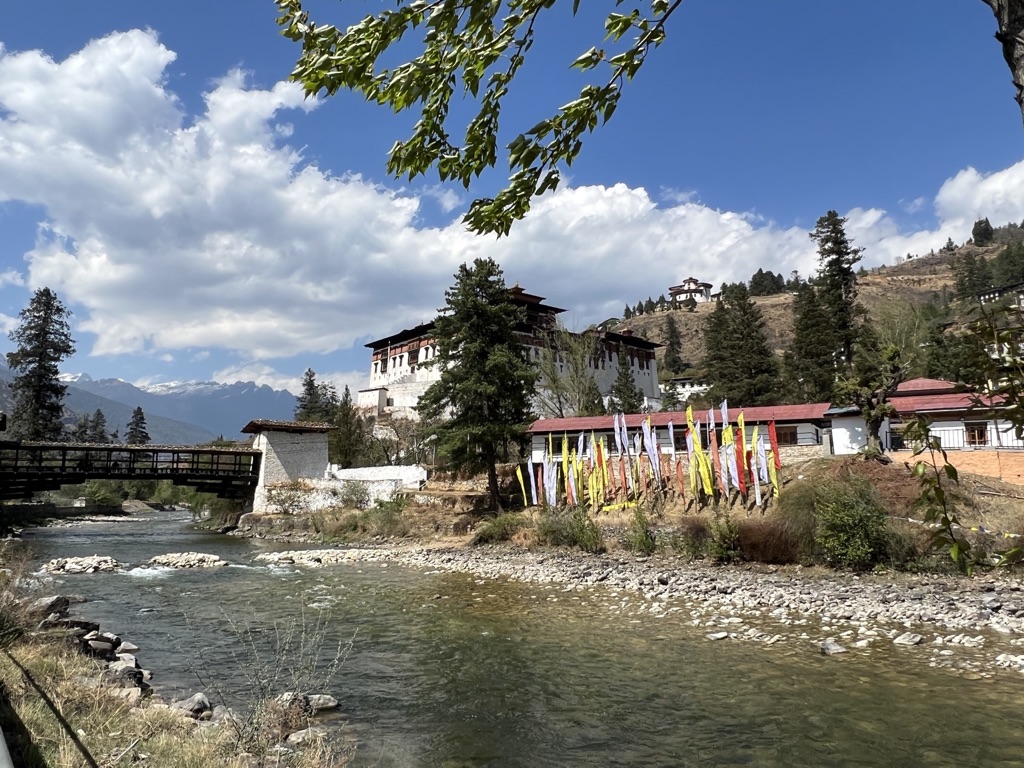
We walked around the intricate buildings and gazed at the view of the town from up on high. There was a sense of calm everywhere and there was no noise at all except the faint murmur of monks chanting within the walls. This Dzong was the location for the filming of the movie “Little Buddha” in 1993 by Bernard Bertolucci and is the scene of many festivals and masked dances.
Our final visit was to the beautiful Kyichu Lhakhang temple which is a short drive a few kilometres north of Paro. This is said to be the oldest temple in Bhutan built in the 7th century. It is charming and is known for its orange tree which bears fruit all year round. We stepped inside and found the usual offerings around the Buddha images but what amused us was a little girl who was visiting with her family and was intent on taking the chocolate biscuits off the altar. When told she couldn’t she had a meltdown and the monk finally caved in! It turned out the family was well known and the father was a famous film celebrity. What surprised me was that they were all speaking in perfect English!
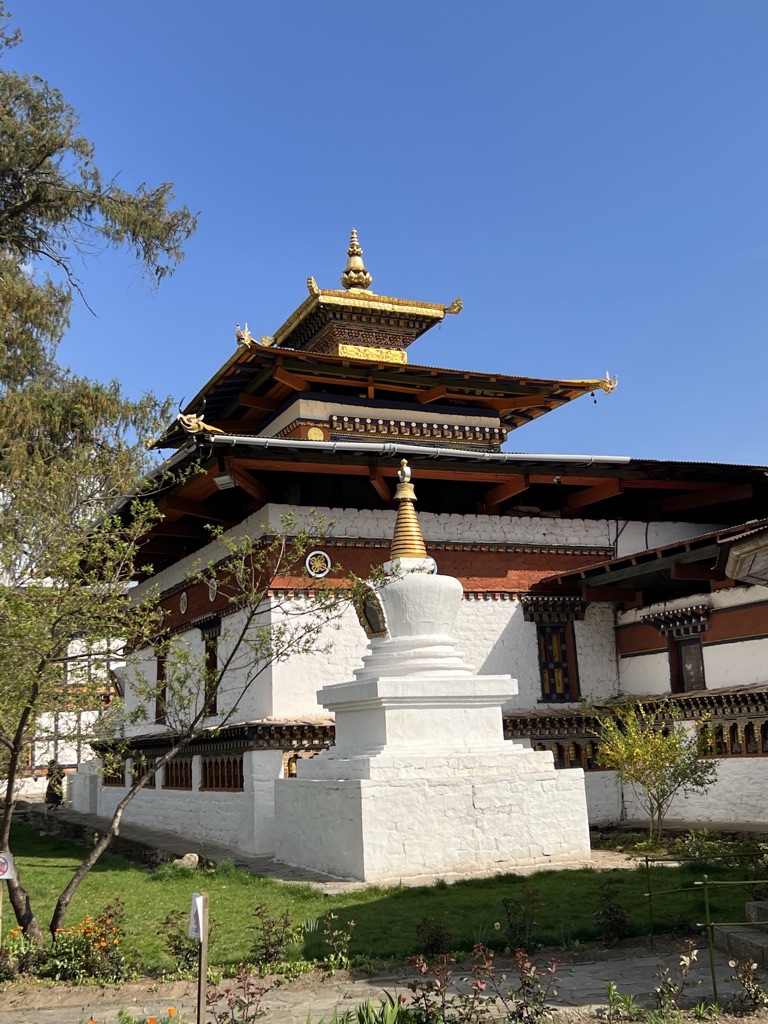
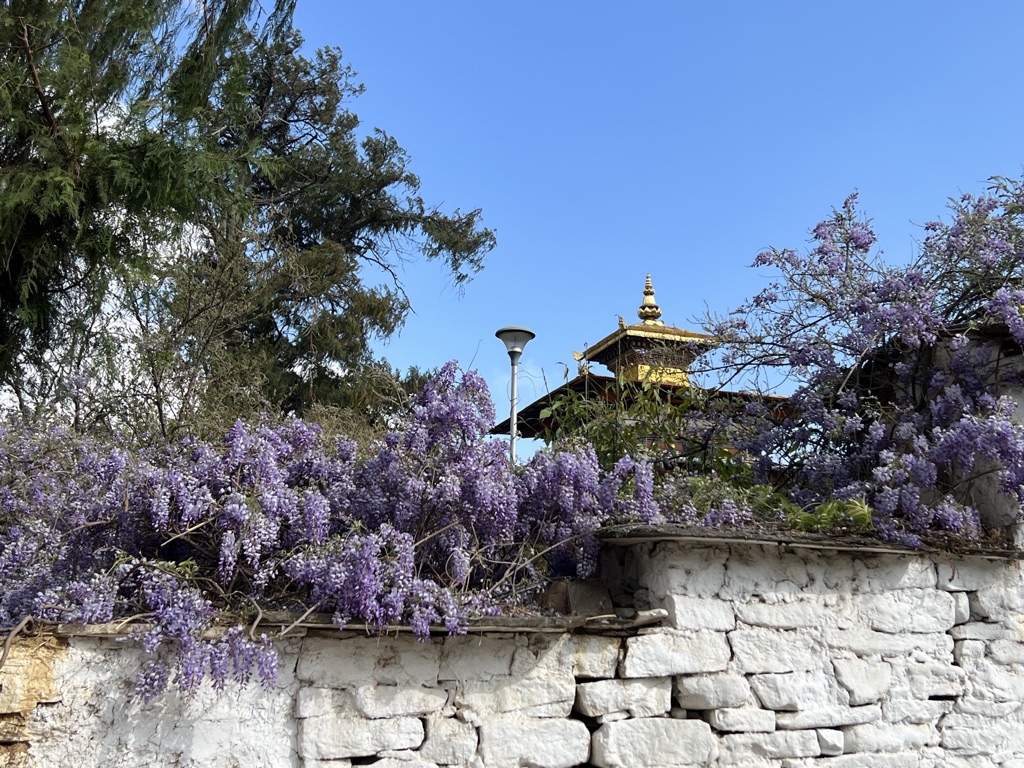
Here the cloisters are a contemplative place with prayer wheels and fruit trees. There are also butter lamps flickering in the dimness of the temple. We were invited to make a butter lamp offering which we did in memory of a loved one. This light offering is closely linked to transitional phases in life and is a strong belief in Tibetan Buddhism. For us it was a lovely way to end a very inspirational day.

BHUTAN

The Real Shangri-La

DAY ONE: PARO

It has always been my dream to visit Bhutan, a tiny landlocked country about 300km long and 150km wide encompassing 46,500sq km. It’s northern boundary is Tibet and the rest is surrounded by India and the Himalayas. Tourism is relatively new and it was only in 1974 that the first foreign tourists were permitted to enter the country.

The story that started me on this journey was that of an American girl, Hope Cook, who married into the Royal Family in Sikkim, a tiny state in north eastern India. That was in 1963 and I thought it was the most romantic thing I had ever heard! Stories of life in the tiny Himalayan kingdom and how a westerner adapted to a strict Buddhist community fascinated me. From there I learned about Bhutan and later met several Sikkimese people through my work in tourism who spoke warmly of their little known neighbour.

Fast forward many years and as tourism opened up I had a yearning to experience for myself this beautiful country but it was expensive and difficult to get to. Life intervened and the dream was pushed from my mind until one day last year I read that Bhutan was opening to the world again after strict lockdown during Covid. Now was my chance!

My daughter and I finally landed in Paro in April this year. We did a lot of research and decided on an eight day trip covering the western part of the country. Travelling from Australia we flew first to Singapore, then Bangkok where we overnighted at the airport and finally an early morning flight to Paro with a short stop in Bagdogra in India.

Fellow passengers were a few other tourists from the US, Asia and Europe but mostly residents of Bhutan both expat and local as well as several Monks in their orange robes and carrying shopping bags of all sizes. I was surprised to find good old fashioned service on Drukair where the passenger mattered and was not just a number in a seat. The crew were friendly and willing to help in any way and our seats were spacious. I immediately fell in love with the language – Dzongkha – its soft, flowing melodious tones sounded just right in the PA announcements which were, naturally, followed in English. Dzongkha is one of 53 languages in the Tibetan language family and is the national language of Bhutan whilst the medium of instruction is English.

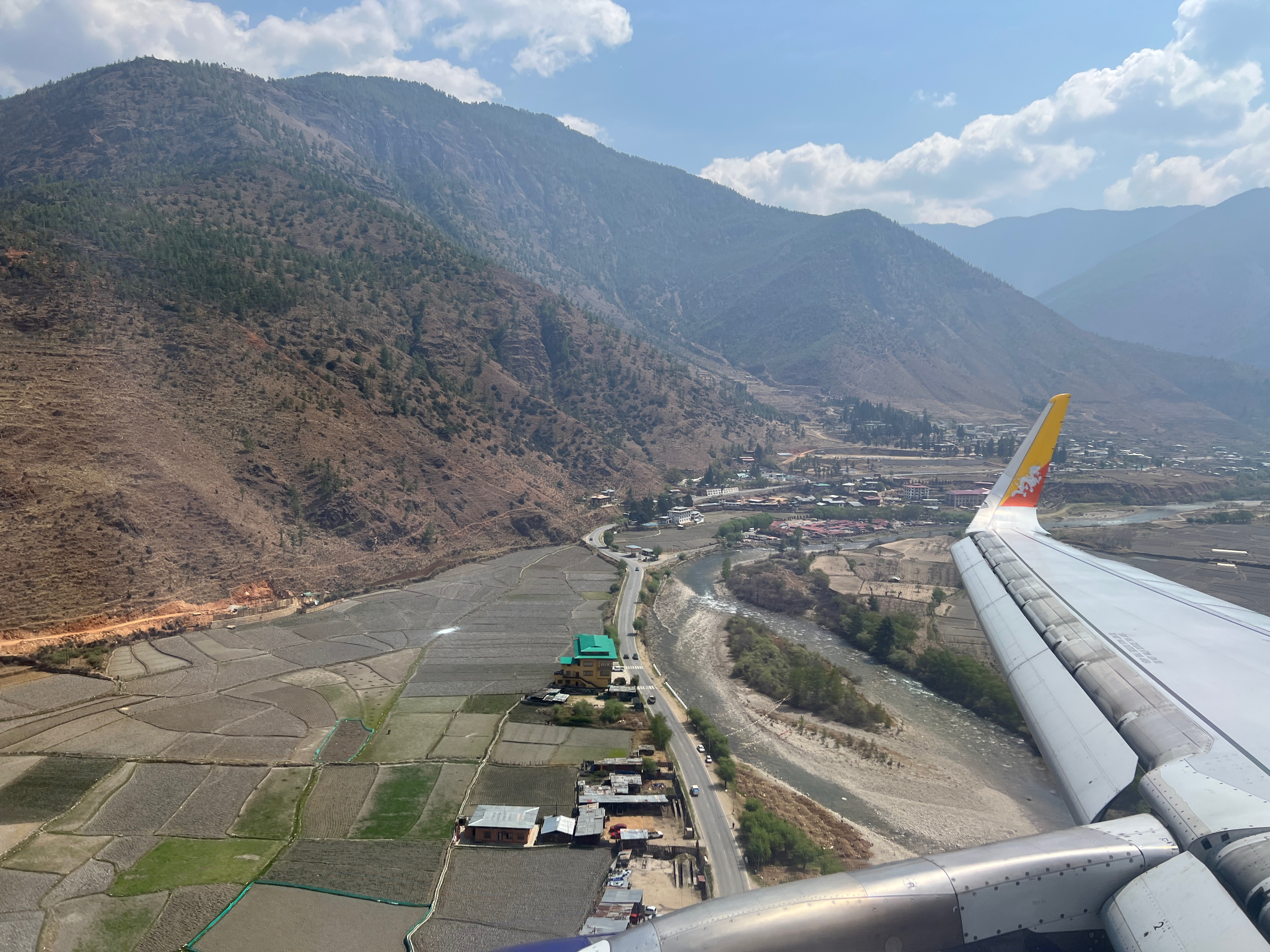
Paro International Airport is one of the world’s most dangerous airports and just a small handful of pilots are certified to make the manual by-daylight-only approach between 18,000 feet peaks, through a long, winding valley, and onto a runway that is only 7,431 feet long and visible for only moments before landing.  We had heard countless stories about the approach to Paro and as we flew between snow capped mountain peaks we began to feel some trepidation. Then, over the PA, came the Captain’s reassuring voice. “Please do not be alarmed” he said. “This looks hair raising but believe me, we have done it many times before!” With a collected sigh of relief, we settled down to admire the view and concentrate on the moment!

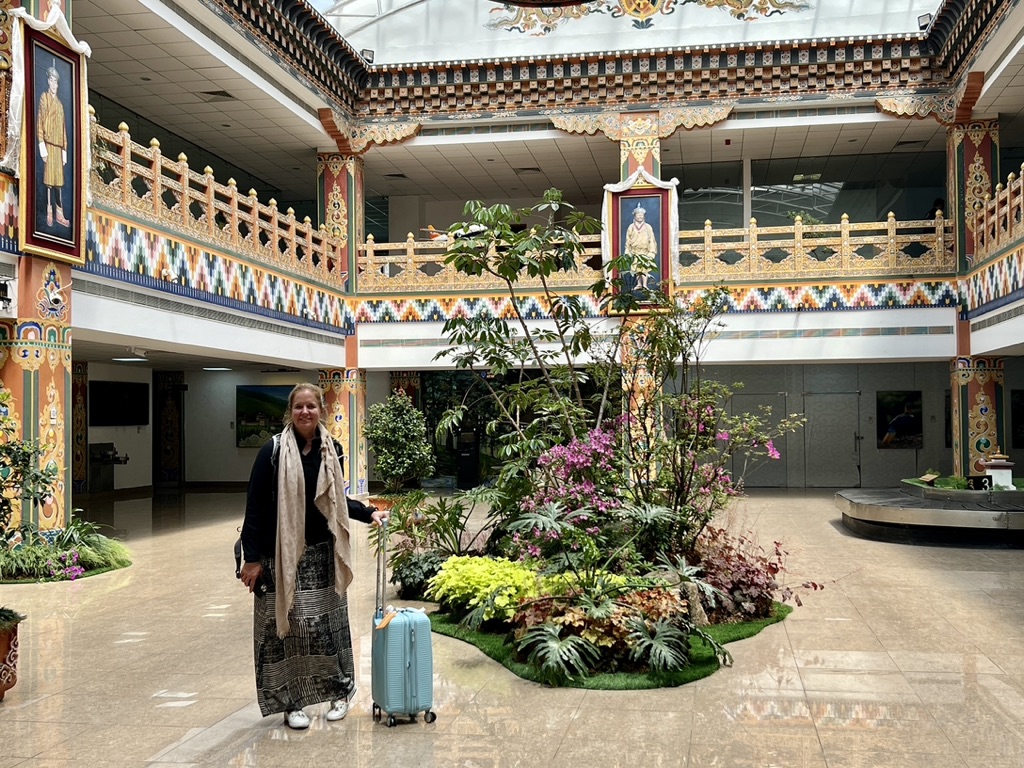
The first surprise came on disembarking the aircraft. There were no jet bridges, no airport traffic, no other aircraft. It was peaceful and serene. We disembarked via the stairs and walked across the tarmac to the beautiful little terminal full of plants and images of Bhutan’s Royal Family. Only one carousel carried checked luggage and there was only a small line at immigration. It was all so organised and there was absolutely no stress. Our guides met us at the entrance to the terminal and presented us with white silk welcome scarves. I felt totally at home!

Our guides were Chencho, the driver and Sonam, the guide and we had the luxury of a large four wheel drive vehicle for the whole of our stay. Inevitably our guides became our friends and we learned so much about Bhutanese customs and way of life. We were to stay at Como Uma Paro, a small hotel about fifteen minutes from the airport in the foothills.

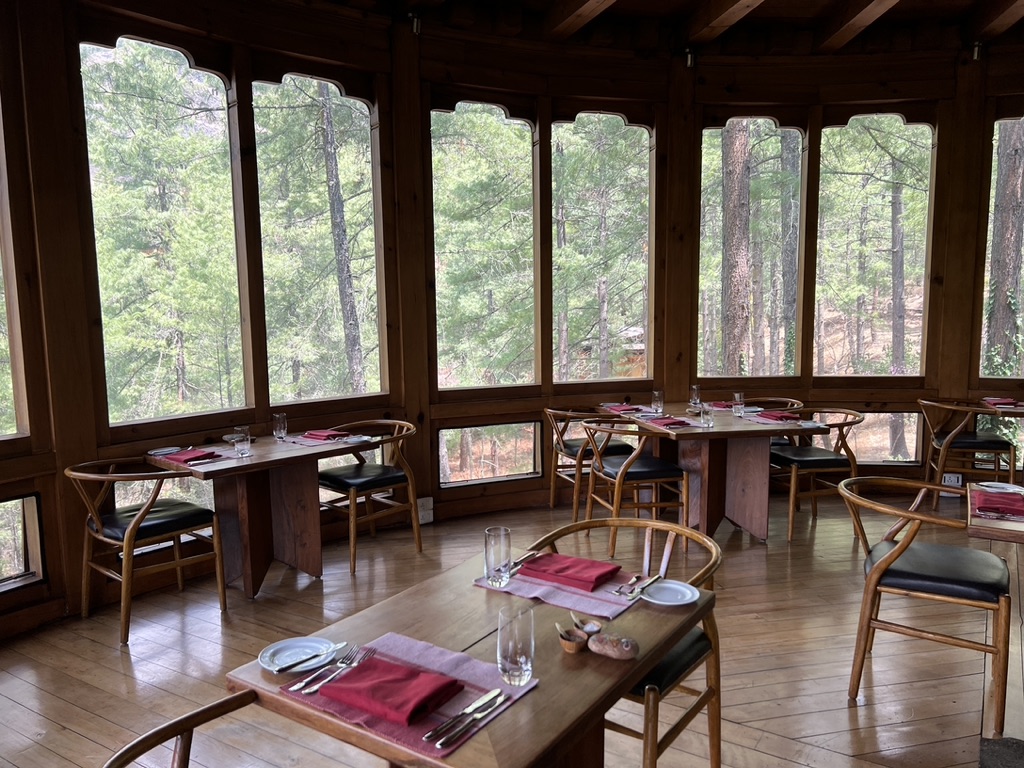
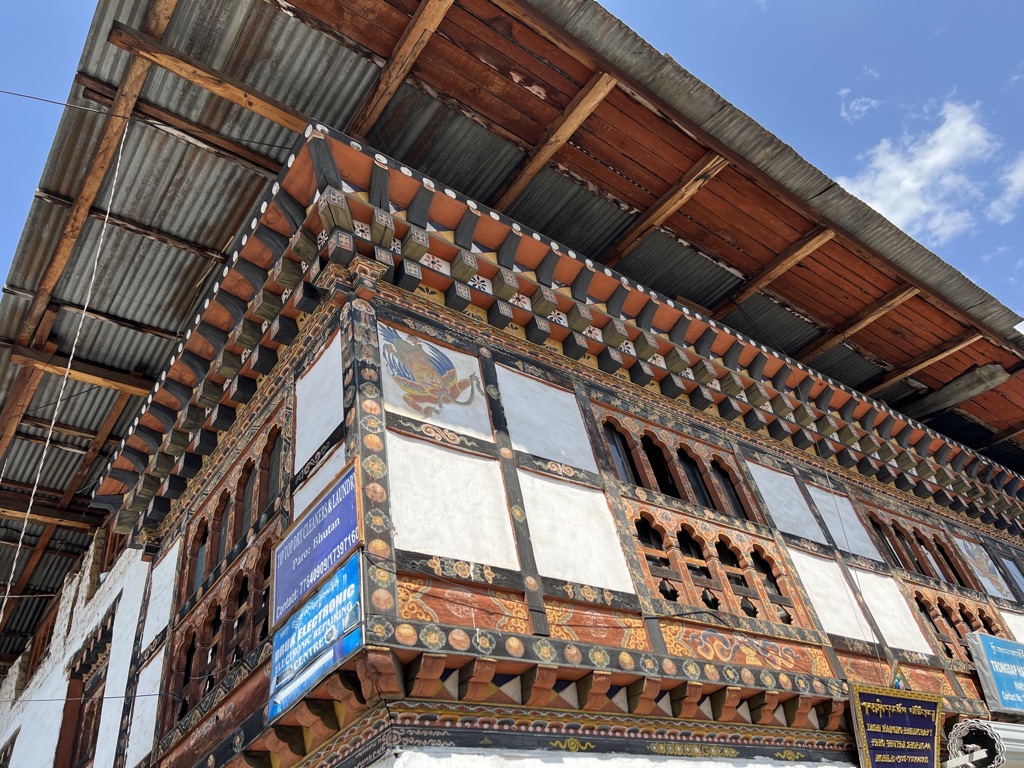
The lodge sits in the middle of a pine forest and is built in the traditional Bhutanese style of wood, stone and tiles. Windows are elaborate and painted with buddhist motifs and in traditional colours. The rooms are contemporary and ours had a stunning view of the valley and mountains beyond.

We had heard about the restaurant where we could have Bhutanese food or western style meals. We were not disappointed. It was sensational and sitting in the light filled room perched above the trees, we felt as though we were at one with nature. Apparently the King often calls in for lunch, quite unobtrusively, and sits amongst the guests many of whom would have no idea who he is. Unfortunately it didn’t happen during our visit but I was willing the gods who obviously took no notice!

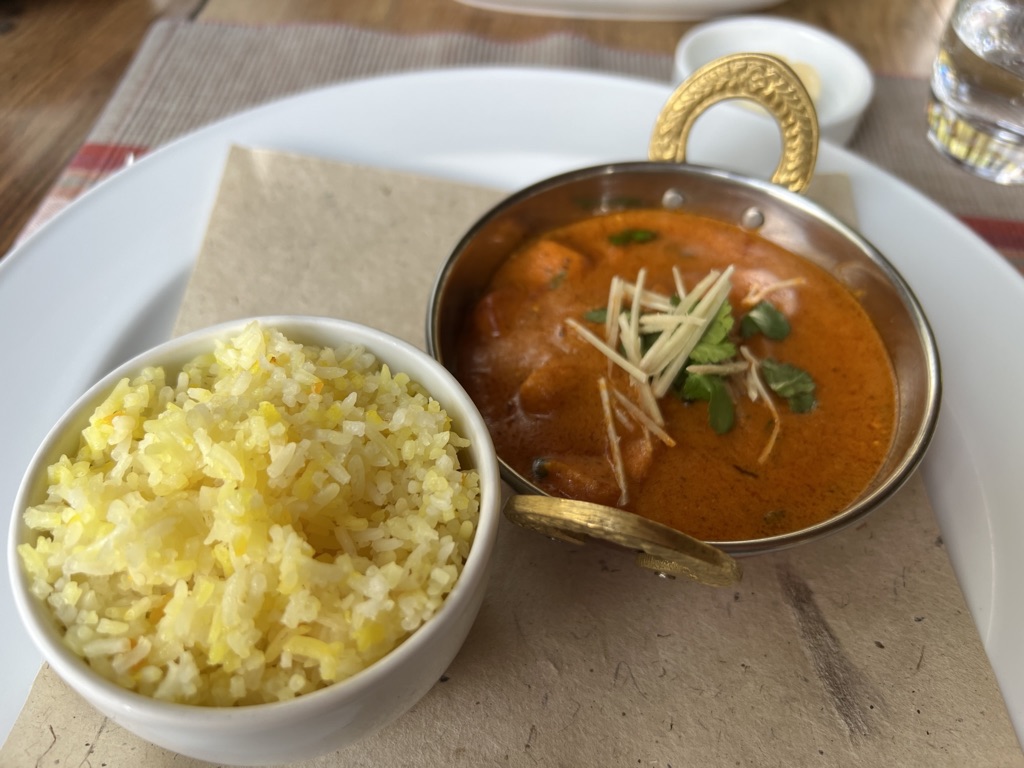
My favourite lunch was Paneer cheese in a delicious home made tomato herb sauce with local rice.

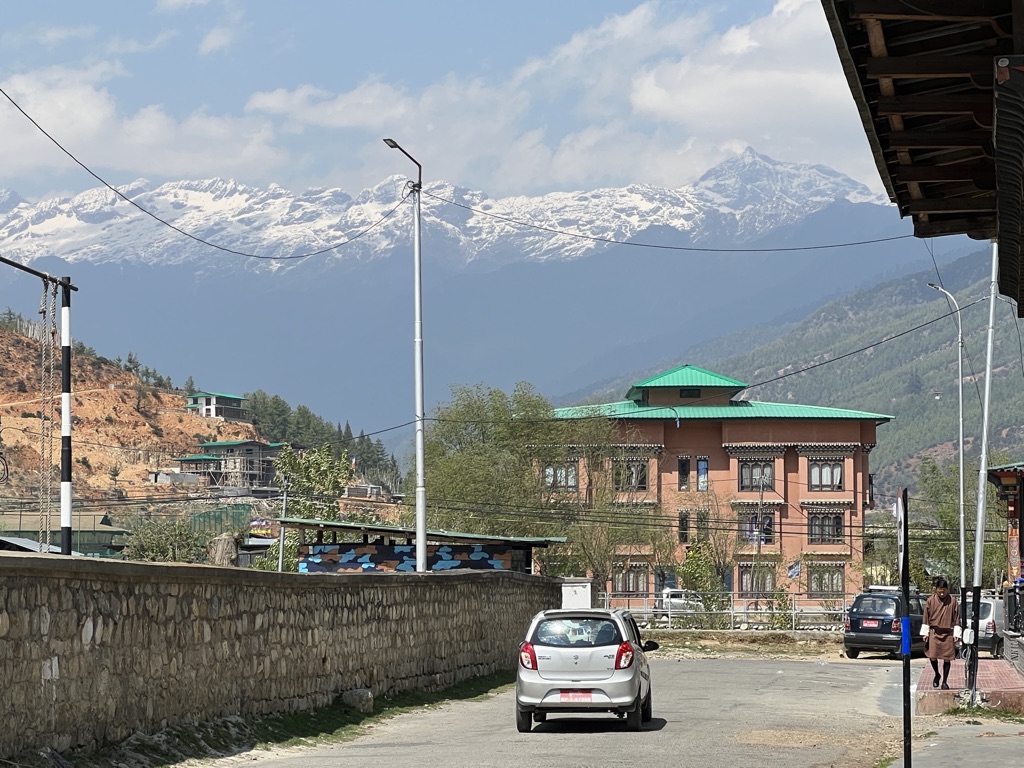
Adjusting to the altitude could be a problem for some. We were at 2,200 metres and at times I felt a shortness of breath. With this in mind Sonam and Chencho suggested we do a short walking tour of Paro town to familiarise ourselves. Here we found that buildings can be built no higher than 6 storeys and must be in the traditional style including wood carvings and paintings. This means the town has a very charming feel. There is little traffic and it seems as if life is in the slow lane. The streets are uneven and potholed, there are no crowds and the footpaths were broken in places. This does not deter from the overall impression one gets. Dogs are everywhere and are revered. They are well fed and mostly strays but everyone respects them and we found that even if one was lying in the middle of the road, the cars would go around rather than move it!

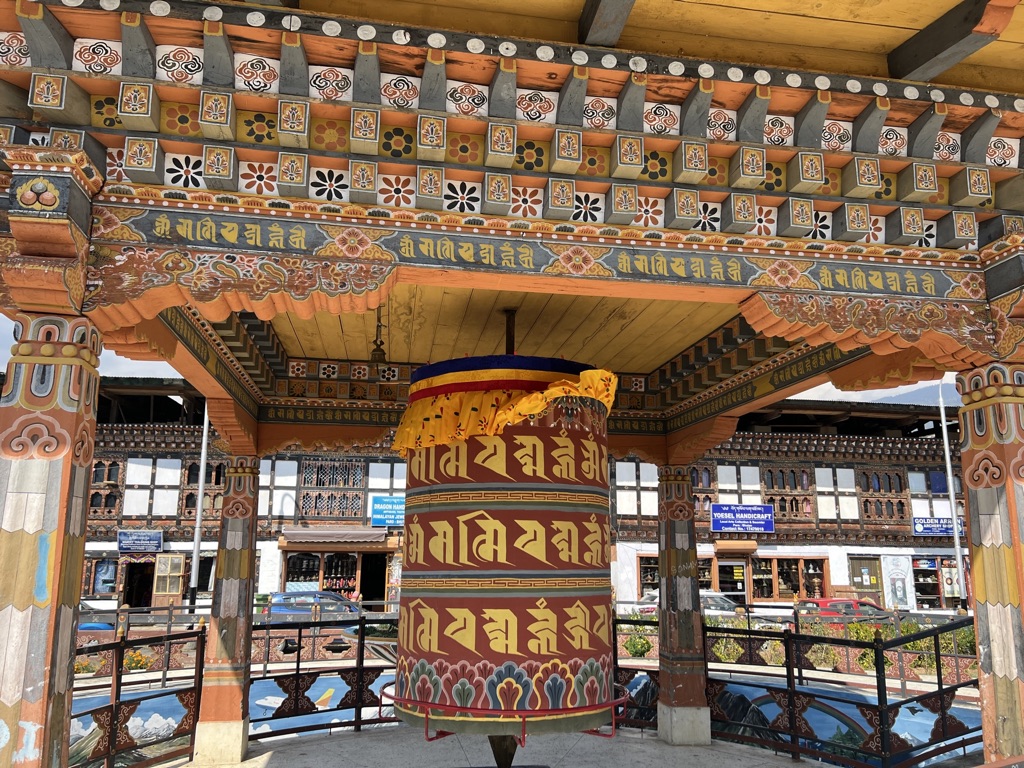
A huge prayer wheel sits in a shrine in the middle of Paro. This was the first of many we encountered during our stay in the country. Prayer wheels are a cylindrical wheel on a spindle made from metal, wood, stone or leather. These are beautifully embossed and contain a written prayer or mantra. Tibetan Buddhists use the prayer wheels to evoke good fortune and spirituality and may spin them several times a day or whenever they find one either in a temple, on the mountain side or in a small shrine in a village. The mantra is often “Om mani padme hung ” which one recites as the wheel is spun. It doesn’t take long to copy the locals and I quickly felt a sense of calm after spinning the wheel and murmuring the mantra.

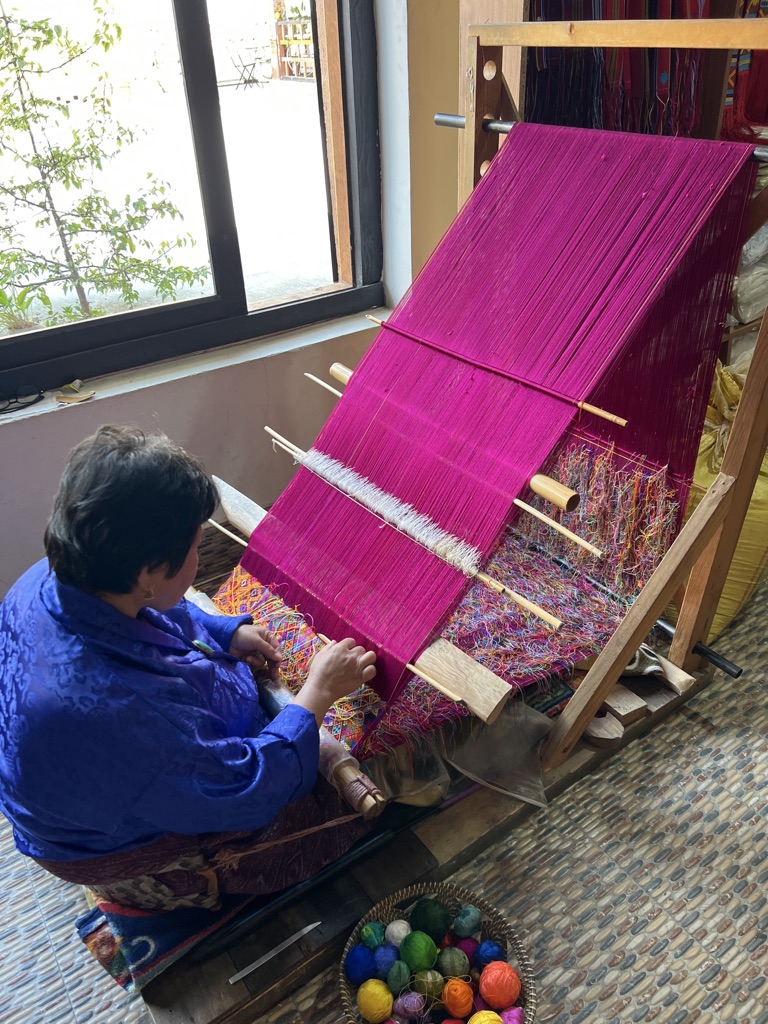
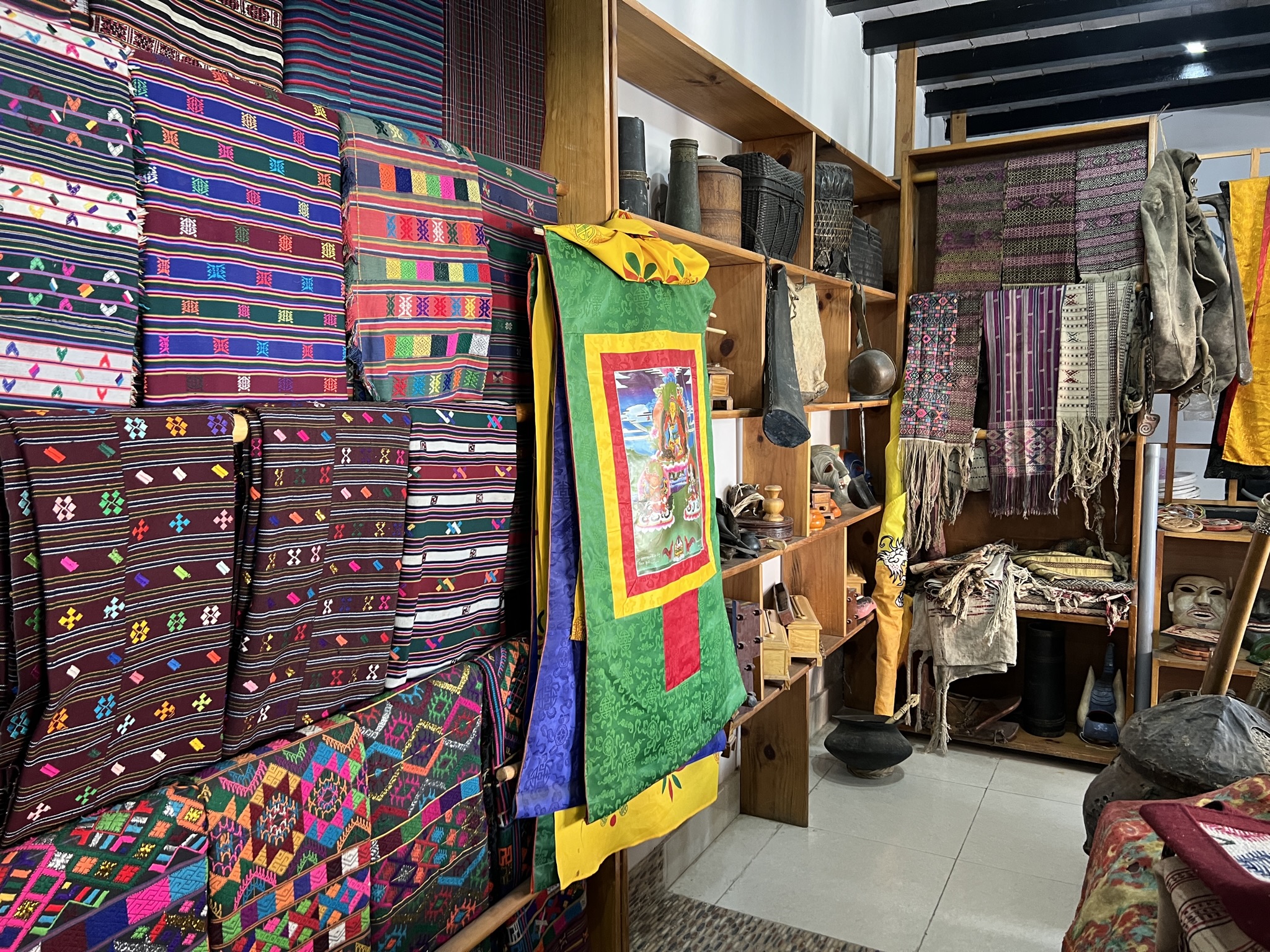
We strolled through the town, in and out of various shops selling all manner of things including art and souvenirs. Weaving is a traditional art in Bhutan so Sonam took us to a small shop where a weaver was at work creating an incredibly intricate design. Watching her handling a myriad of threads in various colours was fascinating – how she managed to keep a pattern going was obviously after a lifetime of working at the loom, probably from childhood.

The shop was filled with the finished garments, jackets, scarves, lengths of fabric to make the kira (the female dress).

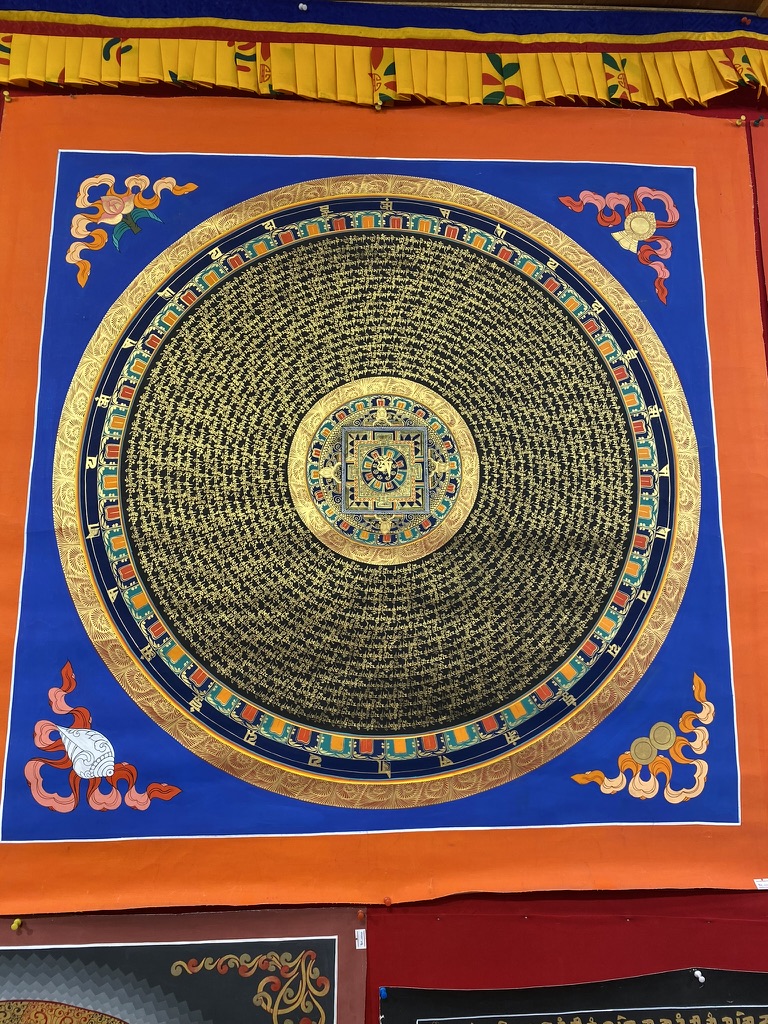
Then we went into a gallery where I was blown away by the beautiful and very intricate paintings depicting various gods and mantras.