Straight Road to Timber Creek

UNADJUSTEDNONRAW_thumb_218.jpg

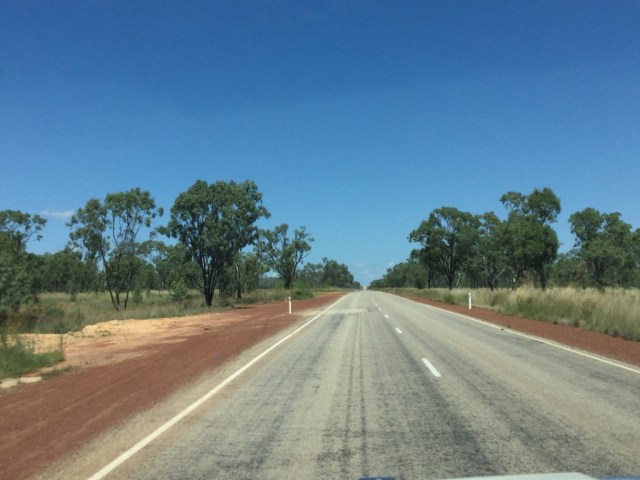
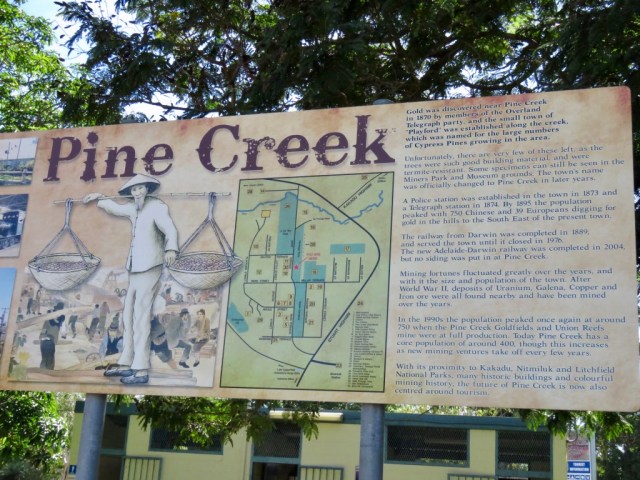
The endless blue skies and long straight road led us out of Darwin south towards Katherine.  First we stopped at Pine Creek, a small town with a historical past.  I was interested to see that at one time the Chinese well outnumbered the Europeans who were all there for the Gold Rush.
35+53liATrK7HJ2UPkqSig_thumb_1c3.jpg

Today it is a quiet town which services the tourist industry mainly. However, it is a good stopping point to take a small rest before conquering many more kilometres.
IMG_3203.JPG

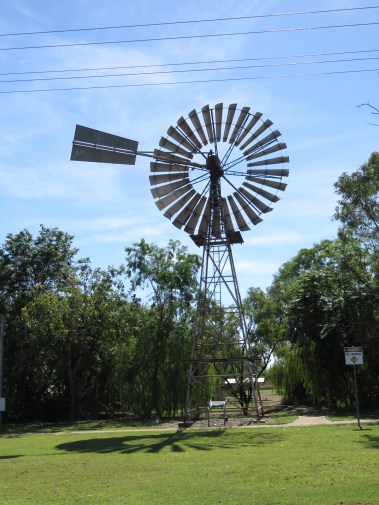
The iconic windmill which was so common in the past and now is seen less often in favour of solar power.

The next stop was Victoria River Roadhouse which also has accommodation and where many keen fishermen make their base before setting off on the Victoria River for barramundi.  It was very hot, very dry and there were lots of flies, so I was keen to keep moving but not before we called in for a chat with the owners.  Someone has a great sense of humour – see below:

gqhi728WTtSqZWLnqL7qHg_thumb_1c5.jpg

UNADJUSTEDNONRAW_thumb_1ca.jpg

Crocodiles live here so no swimming and great care is taken to put boats in and out of the water.

D8%oZ8MRSLigOnVfnCivJQ_thumb_1c8.jpg

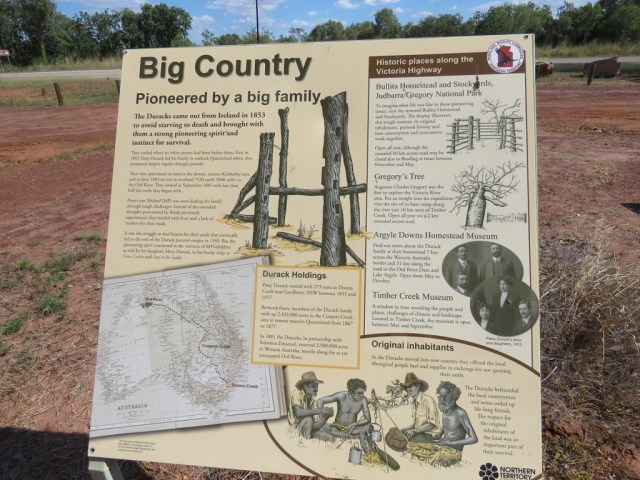
The road began to curve after this and the scenery started to change to hills and escarpments. A nice change from the flat terrain we had become accustomed to. Now we are in The Big Country and this is where the Durack Family made their mark by settling on leases in the Northern Territory and walking hundreds of cattle up here from Queensland.  Several books have been written about the family at this time – the most well known being “Kings in Grass Castles” by Mary Durack.
UNADJUSTEDNONRAW_thumb_1cd.jpg

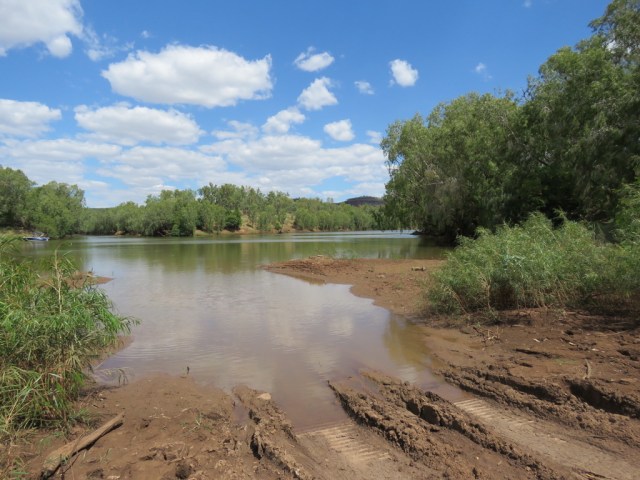
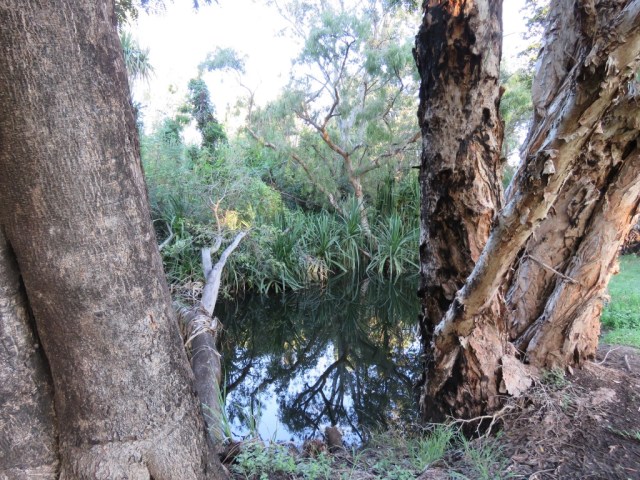
Finally we arrived at Timber Creek after some 610km from Darwin. It was a relief to find the Hotel/Motel/Caravan Park and the big surprise was the amazing location.  In a dry, dusty landscape, this was a little oasis.

xwCKR4lIRaOtoZDYYaYcAw_thumb_1d5.jpg

UNADJUSTEDNONRAW_thumb_1d4.jpg

Lovely grassy areas where children could play and shady barbecue and picnic areas were dotted around all with the creek in the background.  8MECkBhQRf6lNkFEZH4Y6g_thumb_1f4.jpgOHnUrFO0SL2qqMlSA%2fdg_thumb_1f2.jpg

UNADJUSTEDNONRAW_thumb_1fb.jpg

Huge timber trees along the creek edge obviously gave the place its name and the creek now has several resident freshwater crocodiles.  Wandering down to the water’s edge I was amazed to see quite a large croc just slowly surface from what seemed the calmest millpond.  There was absolutely no indication that the reptile was there!

UNADJUSTEDNONRAW_thumb_1d3.jpgDkiEgurOQwSHOmsHiNcj5g_thumb_201.jpg

Other residents of this gorgeous place are the fruit bats – of which we have lots in North Queensland and consider them a pest – however there are some people who think they are “cute”.

COQNBDOTTM+Rj4E0gMJgGg_thumb_1f8.jpg

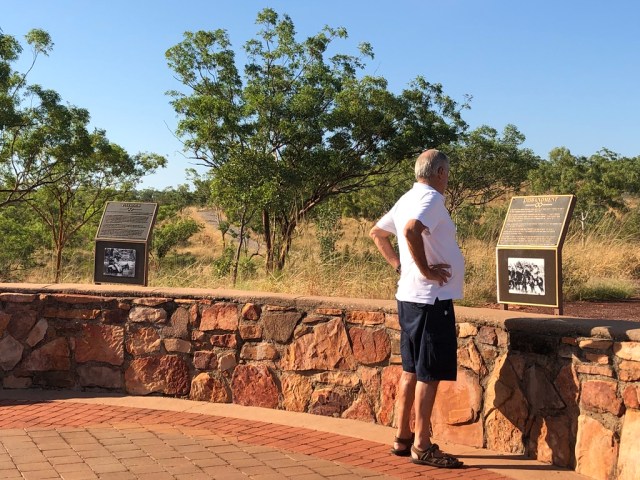
This morning we drove up to a lookout and learned the story of the “Nackeroos” – The North Australian Observation Unit (NAOU)  or “Curtin’s Cowboys” which was formed in March 1942 after  the bombing of Darwin and was made up of a group of soldiers and Aboriginal guides who patrolled Northern Australia looking for signs of enemy activity.  They operated in small groups and most of the patrols were on horseback. They lived in the harsh bush conditions and were aided by Aboriginal locals who had knowledge of the area. Their story is inspiring and a monument has been built to honour them.
UNADJUSTEDNONRAW_thumb_1d9.jpg

IMG_3670.jpg

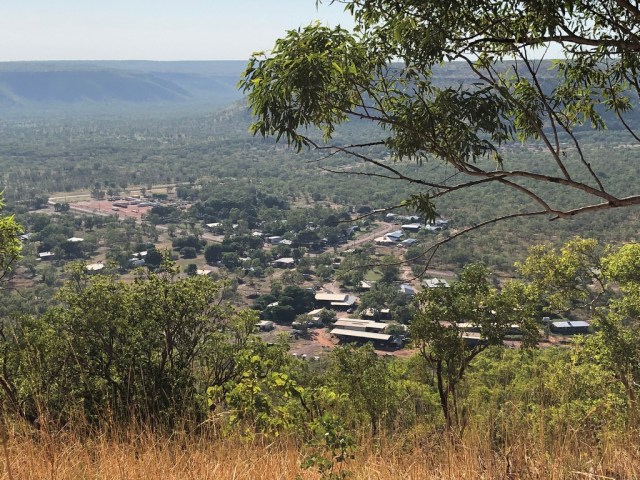
From this location is a great view of the town of Timber Creek and the Victoria River in the distance.
UNADJUSTEDNONRAW_thumb_1de.jpg

UNADJUSTEDNONRAW_thumb_1d8.jpg

Now it is on to Western Australia and Lake Argyle in the Kimberley – the road changes from here on!



The Road Leads to Darwin

Darwin, known as The Gateway to Northern Australia, is a lovely tropical city.  With so much history to devour, you really need several days here.  Then there are  the world famous markets, festivals, cafes and a thriving arts scene and yet things move at a slower pace than down south and I can’t help feeling this would be a great place to settle for a while.

QG2KVwDMTMiDRqtTot2Jwg_thumb_1a4.jpg

For a start there are fabulous sunsets and this one is from the balcony of a friend’s apartment very close to the city.  There don’t seem to be traffic problems and on a drive to the museum yesterday this is what we came across :

+9CcVvcXQby+BokdNCADMQ_thumb_185.jpg


FAe4PuxpQMuoSa0T%EUrSQ_thumb_186.jpg

Hardly what you expect to see in the middle of a city!

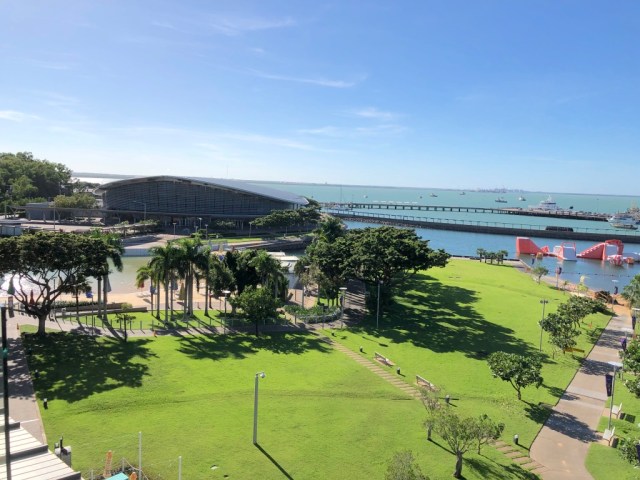
We walked along the Esplanade and came to The Waterfront area which is both residential and recreational with a big wave pool and swimming lagoon and a park for the kids.

UNADJUSTEDNONRAW_thumb_1a9.jpg

5pApV90HTUaOQTinrD%0%w_thumb_1aa.jpg

There are restaurants galore and we settled for a coffee before walking back – with the bonus of a lift to take us back up to the Esplanade thus avoiding the slog of walking up the hill in the heat!

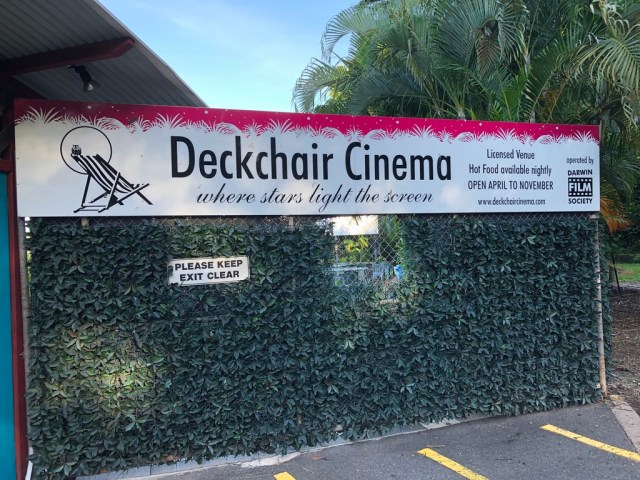
One activity the Darwinites love apparently is the Deckchair Cinema.  This is down by the water and screens films nightly with a bar and restaurant food available if you don’t want to bring a picnic. How tropical is that?!

UNADJUSTEDNONRAW_thumb_1a8.jpg

F0WgnzexRzGE8niBvbO7wA_thumb_1a3.jpg

Keen to see the MAGNT (Museum and Art Gallery Northern Territory) we drove through the attractive seaside suburb of Fannie Bay and past the Botanical Gardens to find the Northern Territory’s premier cultural organisation set in a scenic coastal location at Bullocky Point with a restaurant/cafe alongside with views over the bay. The museum features collections of art from the region as well as natural science, history and culture. There is a lot of local history and there is a huge exhibit featuring Cyclone Tracey which devastated the city on Christmas Eve in 1974.

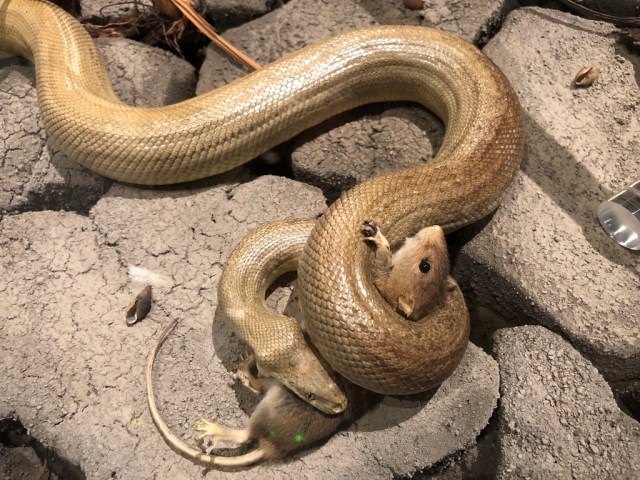
The collection of animals, insects, reptiles, shells and sea life is huge and it is all presented so well and the exhibits are so real that it is easy to imagine all this outside in the environment.

UNADJUSTEDNONRAW_thumb_1af.jpg

UNADJUSTEDNONRAW_thumb_1b0.jpg

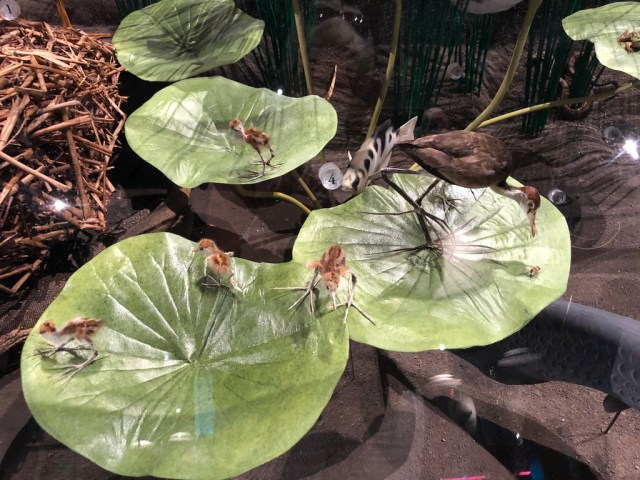
This is the little Jacana and babies – we saw several in Kakadu but they are shy and elusive so to be able to gaze upon these without missing anything is a real bonus.

IMG_3599


UNADJUSTEDNONRAW_thumb_1a5.jpg

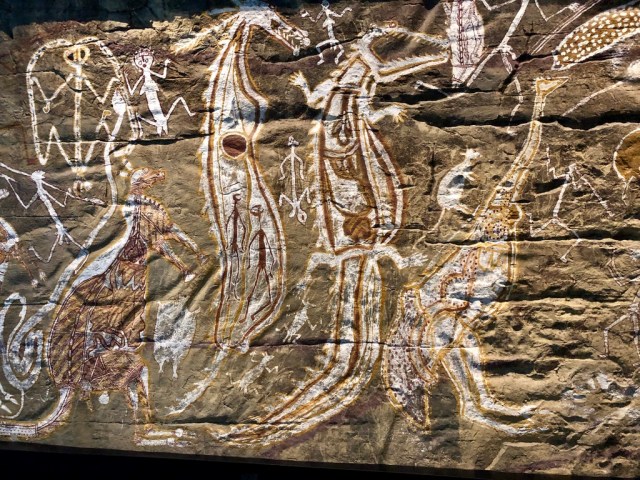
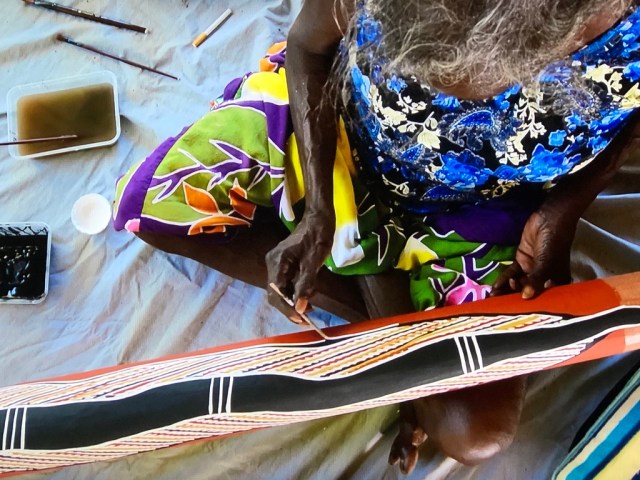
Some fascinating aboriginal art is presented along with comprehensive explanations and even a desert artist shows her skill with a paintbrush fashioned from the tail hair of a dog – her intricate and steady lines were quite amazing.  Her hand never faltered.

UNADJUSTEDNONRAW_thumb_1b3.jpg

One immersive exhibition tells the story of the didgeridoo – or yidaki as it is known here. It illustrates the importance of the instrument in Aboriginal life and culture and begins with exploring a stringybark forest to find the right tree and then carving the yidaki and finally experiencing the mesmerising power of the sounds.  The painting on the wood – as shown above – all has significance to the owner, the artist and the tribe.  I actually felt goosebumps at the end of the performance.

And for those who are fascinated by dinosaurs this prehistoric skeleton is that of a giant goose – something I am sure 6 year old Hamish would love to see!

UNADJUSTEDNONRAW_thumb_1ae.jpg

Tomorrow we will immerse ourselves in the era of World War 2 in Darwin and there is much to see and experience.

The Road leads to Kakadu

When you think of Kakadu the image conjured immediately is one of huge open spaces, billabongs, birds, buffaloes and crocodiles.  Kakadu is all of that – and more.  It covers 20,000 square kilometres and is on the U.N.E.S.C.O World Heritage List in recognition of both its outstanding natural values and as a living cultural landscape.  Certainly one gets the feeling on entering the Park that this is a special place.  Aboriginal people have inhabited Kakadu continuously for more than 65,000 years and ancient rock art shows long extinct animals, abundant wildlife, landscapes and stories which deliver a profound experience for visitors.  We found all this explained very thoroughly at the Visitor Centre and again at the Warradjan Cultural Centre nearby which is totally fascinating and not to be missed.

We stayed in Jabiru at the uniquely shaped Crocodile Hotel – now indigenous owned and very distinctive in the landscape.

Croc Hotel04.jpg

The restaurant served bush tucker as well as international food and the barramundi rolled in lemon myrtle was mouthwateringly delicious!  There is also an excellent Aboriginal Art gallery there with numerous paintings I really wanted!

We found that we were somewhat limited in the places we wanted to go to because of the recent ‘Big Wet’ and there was an awful lot of water about with lots of roads and turn offs closed.  One activity that runs all year round – with different departure points according to the amount of water on the road or in the river – is Yellow Water Billabong Cruises.  We decided to do the morning cruise which was led by an Aboriginal guide with very strong connections to the Park.  He knew everything about it and even where to spot the elusive crocodiles and the hundreds of different species of birdlife.

UNADJUSTEDNONRAW_thumb_15d.jpg

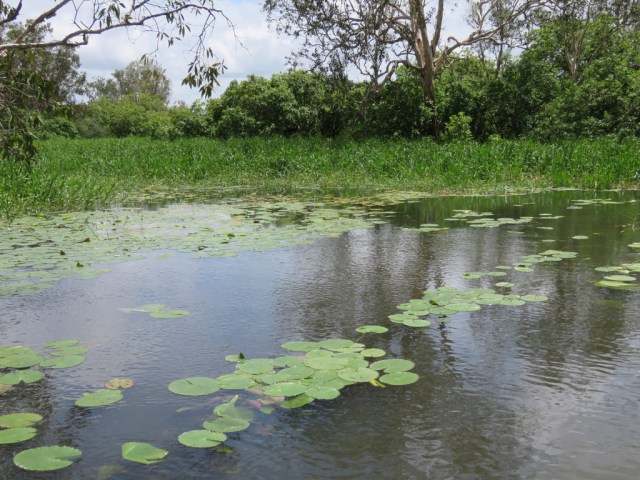
The cruise lasted an hour and a half and we were not disappointed.  It was breathtakingly beautiful as we cruised along the river, through the billabong and across wetlands thick with water lilies, grasses and lotus plants.

X9j0Q2+fQmCZfNA%it8heA_thumb_147.jpg

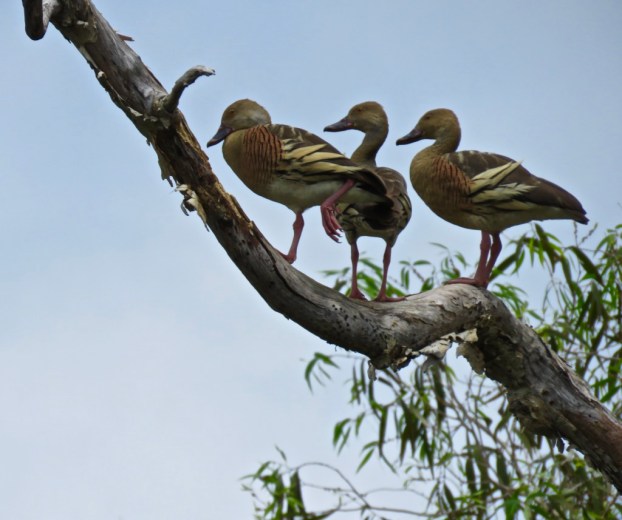
Then we found birds of all types including the whistling duck – the flock resting high in the trees and some on the lowlands.

eWR4N4zaT5qNMVDWipRTCw_thumb_12c.jpg

FZQu0xp3SGCBVLRIPZy4lQ_thumb_136.jpg

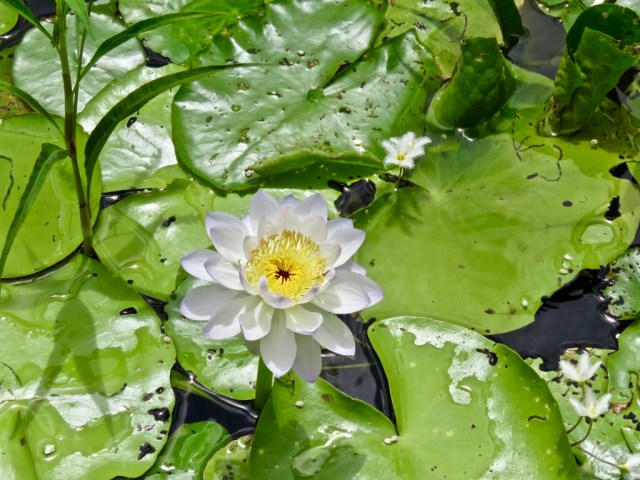
Beautiful lotus flowers and water lilies were everywhere and our Guide explained how the local people pick them and use every part either for food or for craft – as, for example, the inner silk fibres used to make fabric.

jxQr0NGHRYmNCu%635TR6Q_thumb_127.jpg

UNADJUSTEDNONRAW_thumb_11f.jpg

Several water birds were waiting in the reeds to catch bugs or fish and they in turn were in danger of becoming a meal themselves for the resident crocs!

UNADJUSTEDNONRAW_thumb_14f.jpg


UNADJUSTEDNONRAW_thumb_152.jpgBwV9O4llQqaBNXqXlqMfzg_thumb_140.jpgUNADJUSTEDNONRAW_thumb_144.jpg

Then, to the delight of passengers, the Guide found a young male croc cruising quietly down the waterway, at times he submerged himself and it was impossible to tell where he would surface.  For a reptile that is so huge, it is amazing how they can make themselves almost invisible and disappear without a trace.

UNADJUSTEDNONRAW_thumb_15c.jpgi8vSRLd1RmqdyZCvx3ElxA_thumb_15a.jpg

We learned more about Bush tucker and the different plants that grow around or in the water – essential for survival in the Bush.  I actually have a new respect for the bushmen and their ancient way of life.


UNADJUSTEDNONRAW_thumb_160.jpg

This is actually a road in the dry season.  We were really feeling that we wanted to get more out of the Kakadu experience so we opted for an early morning Scenic Flight with Kakadu Air.  At least we would see the waterfalls and the ‘stone country’ as well as get an idea of the vastness of the area.

jGeCB1Z6SeG82D0R1xVpgg_thumb_177.jpg

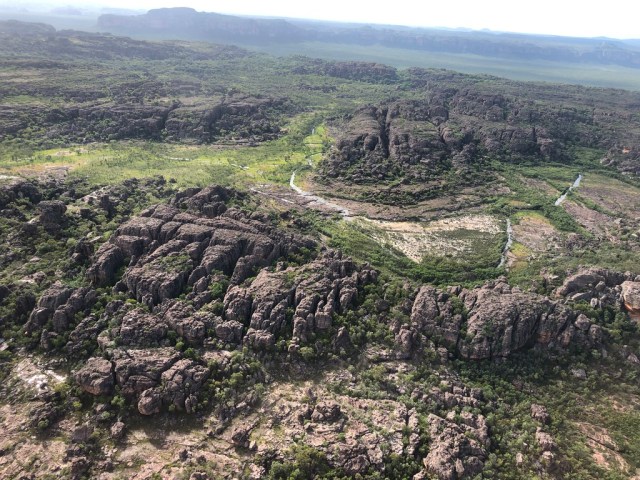
Our pilot was Henry – a young Kiwi who has fallen under the spell of flying in Kakadu.  He took us to the edge of the Park and into Arnhem Land as well as over Jim Jim Falls and Twin Falls, the spectacular escarpments and the vast wetlands west of Jabiru.

mE17QZ1HSyO5B2ANC4bUFA_thumb_163.jpg

VOFzOhBiRjSCowqGijixNg_thumb_16d.jpg

UNADJUSTEDNONRAW_thumb_172.jpg74XxqeLpR6a94HBL52O8ig_thumb_165.jpg

yom11VsjRxKrfcJaAoYOTA_thumb_181.jpg

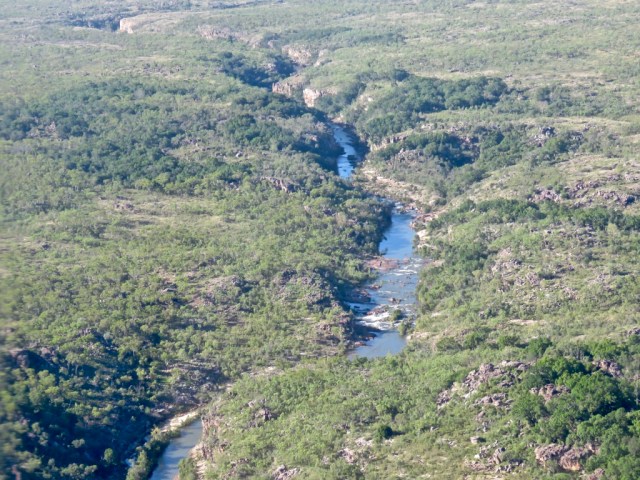
From the air we could see all six of the Top End’s ecosystems – wetlands, savanna woodlands, tidal flats, hills, floodplains as well as the amazing escarpments.  The wet season up here is truly amazing.  I was thinking of the early inhabitants of this area, their stories and how they respect the earth, the country and its spirit. Somehow it gets into your own psyche.

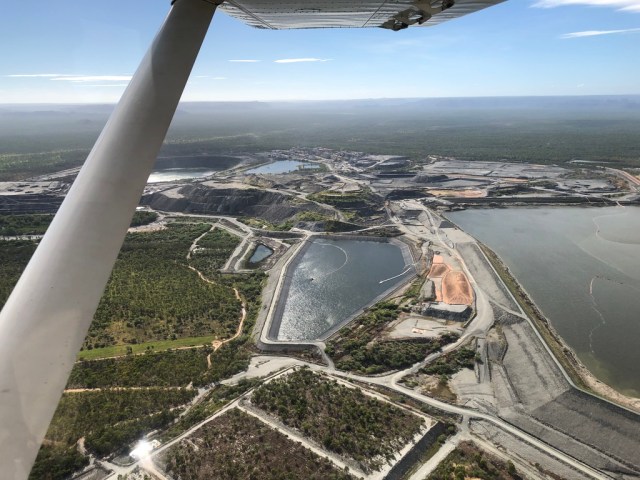
Finally, on the way back to Jabiru we flew over the Ranger Uranium mine which is in the process of closing down.  It was thanks to the mining company ERA that the township of Jabiru was built some years ago and our Guide mentioned that it has benefited the area and the people and for that they are grateful.UNADJUSTEDNONRAW_thumb_175.jpgUNADJUSTEDNONRAW_thumb_174.jpg

However, the mine has done its job and now it is time to listen to the country, see the birds and wildlife and watch quietly in this special place called Kakadu.

UNADJUSTEDNONRAW_thumb_176.jpg


The Road continues – Katherine to Jabiru

Katherine was a bit of a surprise. It holds great historical significance to local Aborigines (who make up 60% of the population) as it is where the lands of three tribes – the Dagoman, Jawoyn and Wardaman people – meet and has been an important meeting place for thousands of years.  Sadly the Cultural Centre was closed as it was the weekend but we learned a lot from the guide on the Gorge Tour.

Katherine Gorge – now known as Nitmiluk Gorge is absolutely beautiful.  Apparently “Luk” means “Place” and “nit” means “Cicada” thus the whole area is the place of cicadas.  I have to admit I didn’t hear any but legends abound.

UNADJUSTEDNONRAW_thumb_e7.jpg

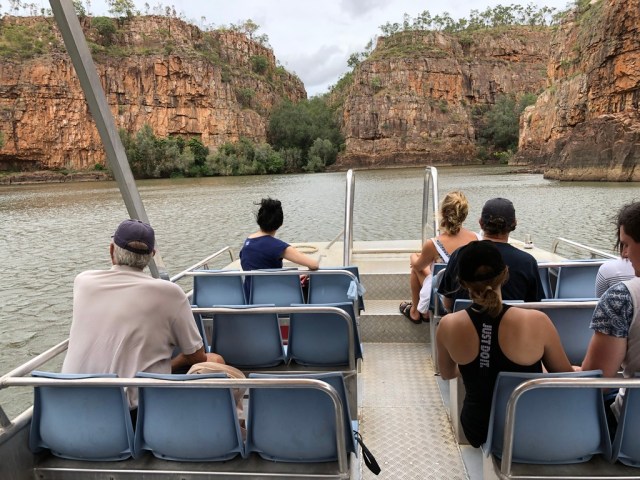
We had a very informative tour for two hours through two of the thirteen gorges which are of immense significance to the traditional owners, the Jawoyn people as home to the spirits of creation.  Quietly motoring through the first gorge leaves one with a sense of peace and belonging.

UNADJUSTEDNONRAW_thumb_113.jpg

Then we reached a crossing point where we had to change boats as the water level was low.  Here more surprises awaited – ancient rock art.

EIz4zDEbRiaII+wSjfyYIQ_thumb_f2.jpg

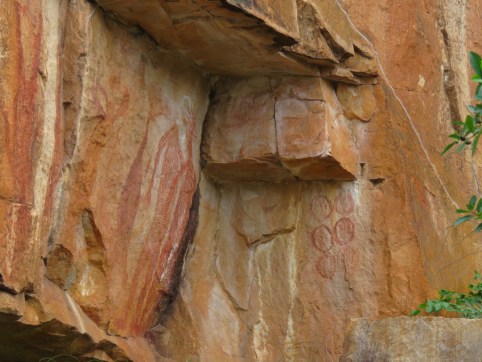
Some of the paintings were hard to find until they were pointed out and unlike many sites, these were not in caves but under overhanging rocks so they were sheltered over the years.  The estimate is that they are more than 10,000 years old but that may well change to be older.

7odrPYBRQQe3QR3TARXGAg_thumb_f7.jpg

One painting depicted circles which told the people that bush potatoes were growing in the area.  Another showed a figure upside down – apparently he was a sinner who had done very bad things in his life and would be forever remembered this way!

UNADJUSTEDNONRAW_thumb_f5.jpg

Huge sandstone cliffs line the river and in places there are sandy beaches and a lot of vegetation.  Mostly freshwater crocodiles live here but in the wet season huge salties come in and have to be removed by the Park Rangers under a special program which relocates them mostly to Darwin to farms.


UNADJUSTEDNONRAW_thumb_103.jpg

This is Jedda’s Rock – made famous by the 1950’s film and is about 62 metres in height.

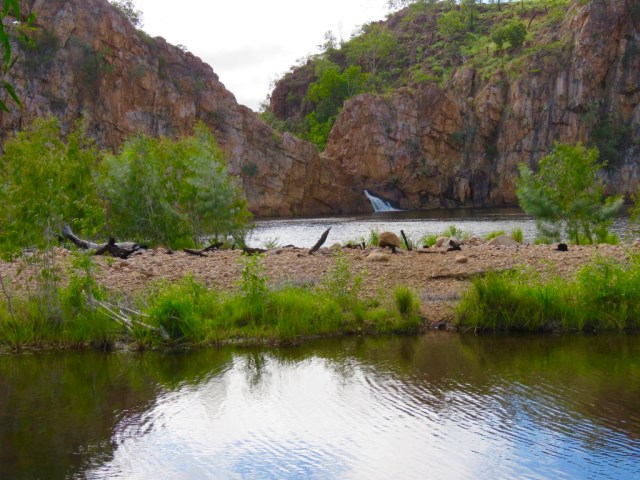
Close to Katherine on the road to Pine Creek is the beautiful Edith Falls – we called in and found the most delightful little park with a large waterhole and a special swimming area – away from the crocodiles!

tuPBQG50RFmE6Ef6nyT6Bg_thumb_109.jpg

Notices are everywhere up here but one thing I have learned over the years is that Freshwater crocodiles are more afraid of us than we are of them and I have swam in waterholes with them – albeit keeping well out of their way!

UNADJUSTEDNONRAW_thumb_108.jpg

UNADJUSTEDNONRAW_thumb_10b.jpg

There are lots of walks around Edith Falls and they are well marked and very well maintained.  In fact the Park is a credit to the caretakers.

The road to Jabiru is excellent with lush country all around – there has been a massive amount of rain in recent days and so the creeks and billabongs are full.  The road was devoid of traffic and at times we felt we were the only beings on the planet – wide open spaces, beautiful waterholes, no wildlife except the odd young dingo and a huge silence.

UNADJUSTEDNONRAW_thumb_105.jpg

Then we came across “Termite Country” – these have to be seen to be believed.  As they say – everything is larger than life and twice as vivid in the Territory!

UNADJUSTEDNONRAW_thumb_10e.jpg

Now we are about to explore Kakadu – or what we can due to the amount of water everywhere.  I think perhaps a flight would be the best way ……..


The Road is Straight – Mt. Isa to Katherine

UNADJUSTEDNONRAW_thumb_d9.jpg

Two days of roads like this – we are now in Katherine in the Northern Territory and I am more in awe than ever of the Road Train drivers.  The distances are immense and the landscape from Mt. Isa to Katherine rarely changes.  Just flat nothing and occasionally a few trees or scrub.  Some of the roads are unfenced which means cattle wander across at night and often get hit by a vehicle so dead animals line the side of the road, particularly from Tennant Creek to Katherine.

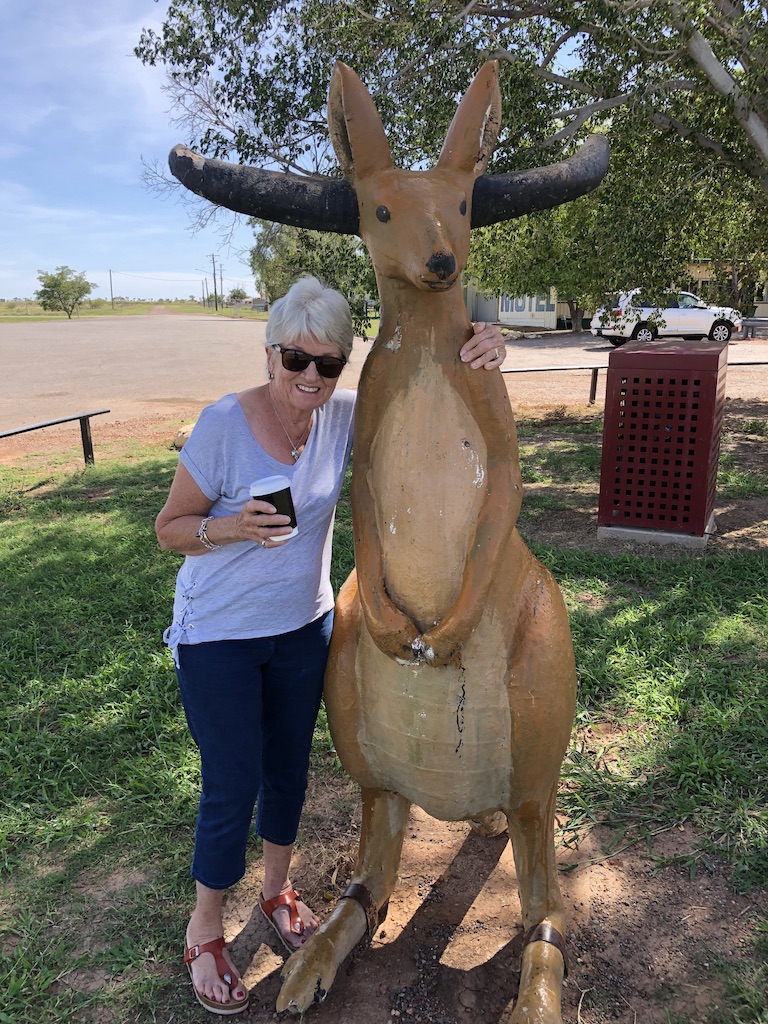
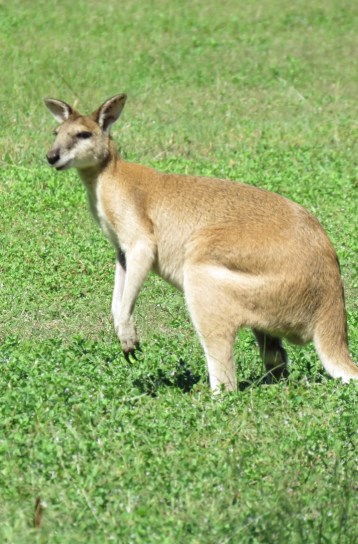
The border is just after Camooweal where we stopped for a quick coffee at the roadhouse and I met Skippy…….


UNADJUSTEDNONRAW_thumb_d3.jpg

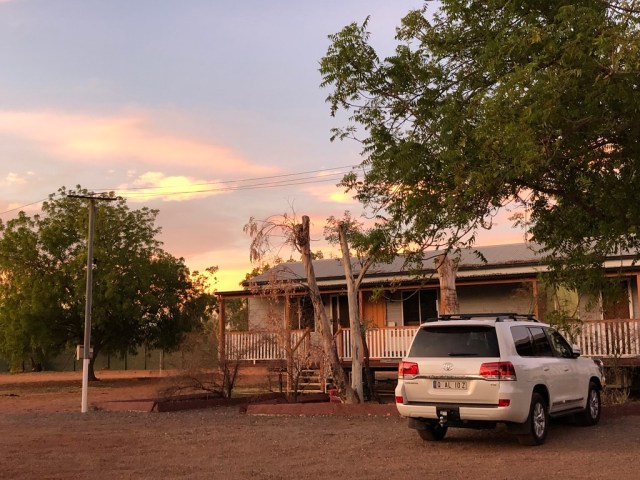
We decided to stay the night at Three Ways Roadhouse which meant we covered over 700km that day and this was a good choice.  We had a comfortable motel style room with air conditioning – essential as it was stinking hot and the flies were unbearable! One plus was the sunset – it was simply amazing and became more vivid as the minutes ticked by.

UNADJUSTEDNONRAW_thumb_d4.jpg

UNADJUSTEDNONRAW_thumb_d5.jpg

Dinner at the Roadhouse Bar was interesting meeting locals and a couple of truck drivers.  We were convinced we had made the right decision to stay here after numerous stories about Tennant Creek and the problems with crime which is rampant at the moment.

We set off bright and early and came across quite a few cattle grazing quietly.  I just had to stop at a waterhole and capture a young calf having a drink.

QVUJCR%JTS+HiNEAKDaRpQ_thumb_b8.jpg

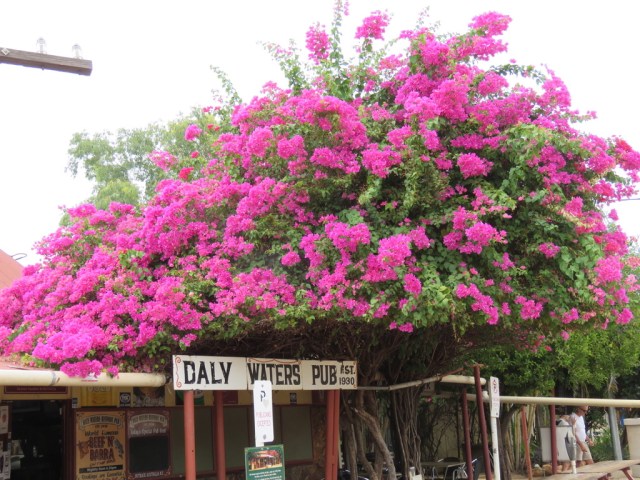
Then it was on to Katherine but not without a stop at the iconic Daly Waters Pub.

UNADJUSTEDNONRAW_thumb_bc.jpg

This has to be seen to be believed. The bar is draped with hundreds of bras in every size and colour.  The legend is that a coach driver had a bet with his female passengers and they decided to leave their mark – and the tradition has apparently continued!  The walls are lined with mementoes and outside the bark shed hang thousands of thongs!

HxDLV45FT0SzqV5HUrQKNw_thumb_bd.jpg

zdWFpbgeRcaBS5OtsOGvHA_thumb_be.jpg

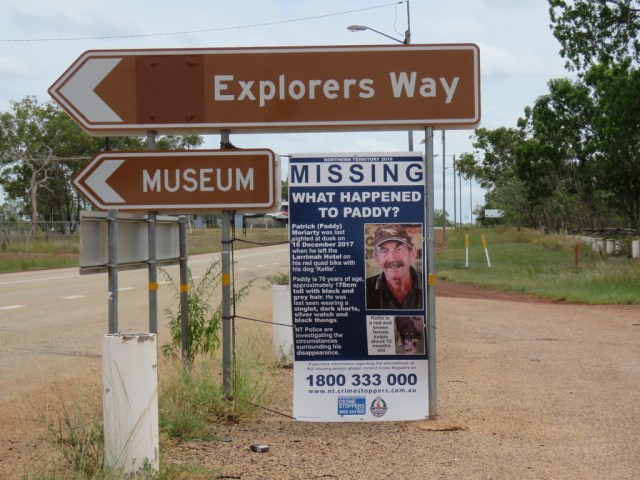
This area is famous for locals with attitude and many stories to tell.  Recently the country has been fascinated about the disappearance of a well liked local in Larrimah, just up the road from Daly Waters.  No body has been found, neither has his dog and lots of theories abound but so far no one has been charged with anything.  It seems this mystery will go on.  A popular Podcast throws light on the story and it seems people are still talking about Paddy and are still looking for him.  Of course, we had to stop and investigate for ourselves!

UNADJUSTEDNONRAW_thumb_c0.jpg

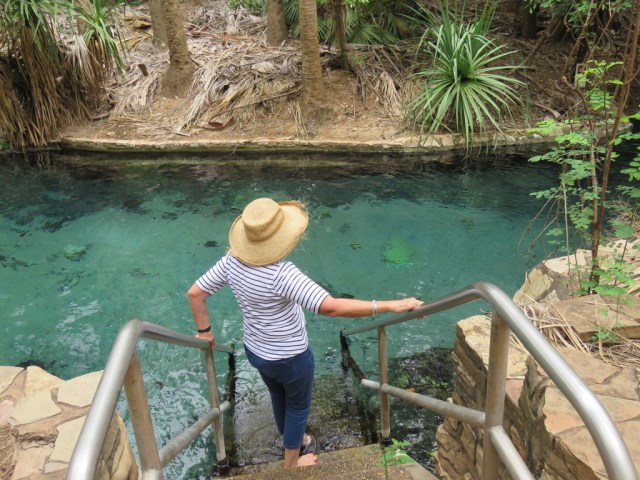
With that story firmly in our minds we drove on to Mataranka where the thermal Pool in the National Park is a constant 34C and flows from Rainbow Springs at an amazing 30.5million litres a day.

UNADJUSTEDNONRAW_thumb_c8.jpg

UNADJUSTEDNONRAW_thumb_ca.jpg

Mataranka is known as the “Capital of the Never Never” and was home to Aeneas and Jeannie Gunn at the turn of the century.  Jeannie wrote the book “We of the Never Never” which has become a classic and a film was made in 1981.  A replica of the homestead was made for the film and stands in the park today as a little museum.  I was fascinated by the history and constantly wonder how women coped with the hardships of the day dressed in all the flowing skirts and long sleeves which were expected of “ladies” .  I complained about the heat and flies today and I was wearing much lighter clothing.  It kind of puts things into perspective somewhat!

oMiRkSyRThO98odrNdvldg_thumb_c2.jpg


UNADJUSTEDNONRAW_thumb_c3.jpg

So now we are here in Katherine and tomorrow will visit the famous Nitmiluk Gorge.  There is a rich indigenous and pioneer history here so a visit to the cultural centre is planned as well as the art gallery.  First of all tonight we will see what dinner awaits – crocodile steaks perhaps?