RAVENSWOOD – A GHOST TOWN

It has been a few months since the last blog thanks to Covid 19 and all the restrictions placed on us.  At the start of the year I imagined the travel side of this blog would be all about Iceland.  Our trip was booked, the wedding planned and all was in place – until the Pandemic struck!  So, we are biding our time and hopefully will be able to get to Iceland in the future.

Meantime we are exploring our own backyard and last weekend we did a little road trip to Ravenswood.  This charming heritage listed township is 89 kilometres west of Charters Towers and was once a thriving gold mining town.  There are lots of stories and history is at every turn you make.  Apparently in 1868 whilst mustering cattle, a local pastoralist by the name of Marmaduke Curr stopped to have a drink of water from Elphinstone Creek and saw specks of gold at the bottom of his pannikin. The area quickly became part of the gold rush.  IN the boom era there were over 50 pubs and a population of over 5000.  Today it is a virtual ghost town with a population of around 255.

We set off on the 130 km drive from Townsville on an all bitumen road.  Recent rains had turned the country into a palette of greens and small farms with Brahmin cattle are interspersed along the route.  An hour and a half later we drove into the historic town.

Ravenswood
The main road into town

It was quiet and the first stop we made was at the Miner’s cottage – on the right in the above picture.  This was a brief history lesson for Bea – age 9 – who has not spent a lot of time in the bush and who was fascinated in the lives of the children at that time.

The last time I was here was years ago with my daughter’s school class and we visited the school at the time.  Bea was intrigued to know it was a one teacher school, with all students from years 1 – 7 in the same room and taught by the same teacher!  Then there were about 17 students in total.

The old cottage is original and displays how the miner and his family would have lived in the late 1800’s.IMG_7253IMG_7254IMG_7257
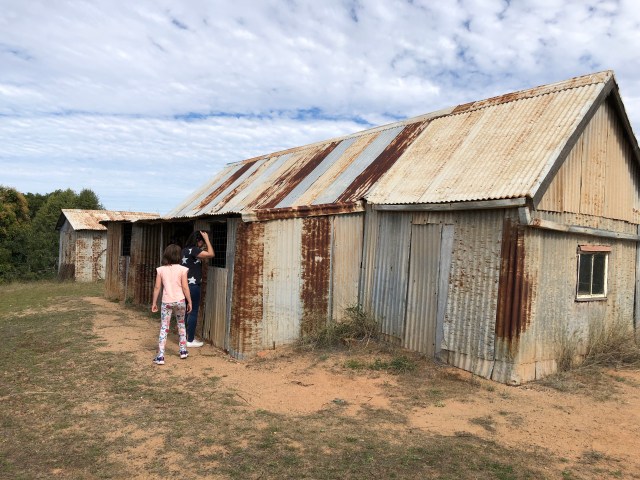
The kitchen was an eye opener, as was the bedroom.  Seeing this made young Bea thankful for what she has at home!IMG_7255

Outside was the laundry and the outhouse – I had to marvel at the fortitude of the pioneers, both male and female, who sacrificed so much to live the dream of finding that large gold nugget. For many it was hardship and disappointment and for others there was success in measured amounts. This is related as well at the local cemetery where gravestones tell of mining and horse accidents, illness and child influenza.  Pioneers came from all over the world in search of a new life and many descendants are still in the area.

IMG_7267

The old London Mine built between 1903 and 1915 consists of a headframe with mullock heaps to the north and south.  Today we can walk to the entrance and stare down and imagine the miners toiling in impossible circumstances years ago. There are old chimneys, rusting machinery and old shafts throughout the town making the journey an informative one, especially for eager young minds.
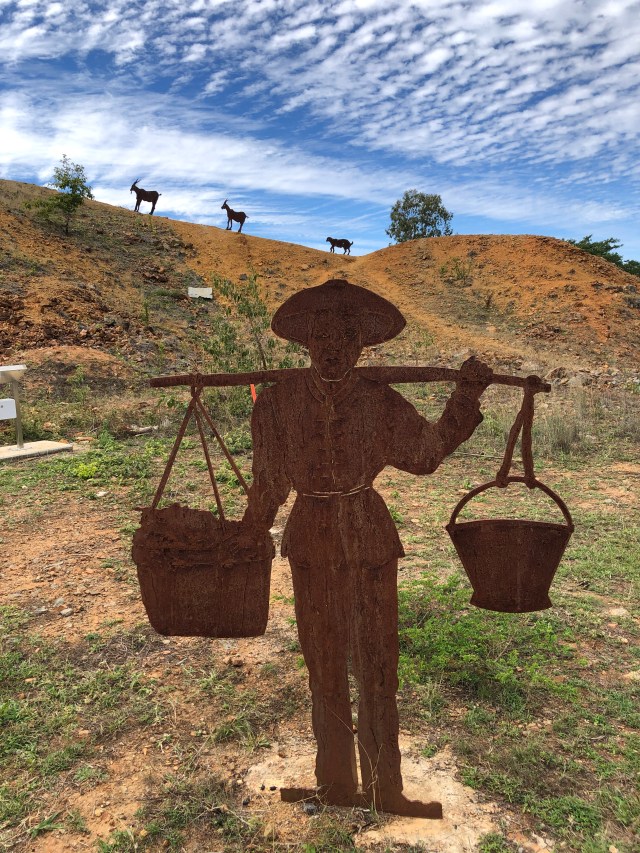
IMG_7264

IMG_7250

The quaint shops – no longer trading – show some of the merchandise that would have been available at the time.  A fun thing to do is to pose for a photograph outside and imagine you are out for a Sunday stroll in the early part of the century, dressed in your Sunday best and carrying a parasol for the sun.  Note the bag of money held by the male!

We had lunch at the historic Railway hotel where little has changed.  There are some original fittings and furniture, the ceilings are pressed metal and there are large french doors opening onto the verandas at the side.  It is possible to stay here and during the winter season it becomes quite busy with passing travellers keen to experience a night in the old town – along with ghosts and wildlife!
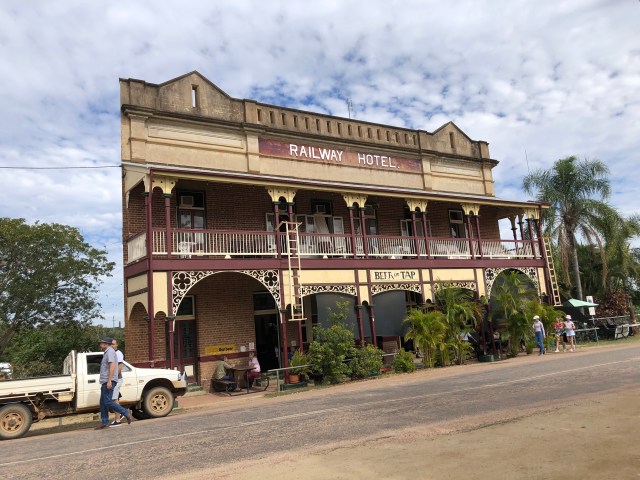
IMG_7268

We had a delicious home cooked lunch here and wallowed in the feeling of yesteryear.

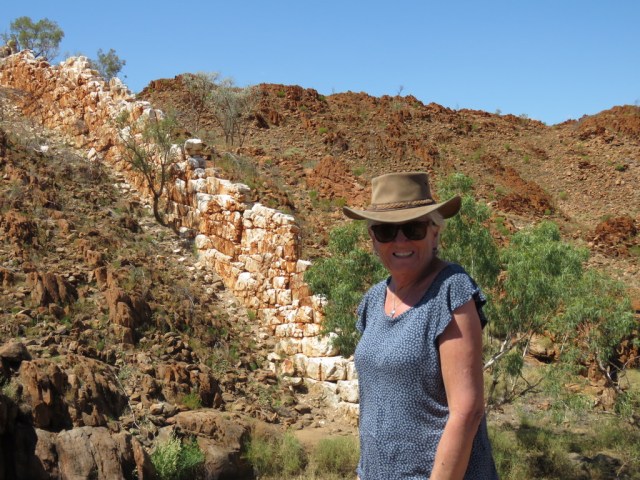
On the way home we stopped at the White Blow Environmental park which is about 4km from town along the road to Ayr. The large quartz outcrop is a prominent feature of the park and is about 15 metres in height with a diameter of 45 meters and is the largest of several masses of quartz in the area. The quartz is estimated to be about 300 million years old.

We took the road to Ayr which gave us spectacular views of the Leichhardt ranges and was devoid of any traffic.  We did see wildlife, including this curious little fellow out for a munch of newly grown grass.

Ravenswood Roo

An easy day trip and a little bit different.  Now to explore some more although the island calls this weekend!
HONG KONG – a welcome stopover

14th OCTOBER 2019  

Our Rugby World Cup trip to Japan ended – not quite the way we expected with travel plans disrupted because of typhoon and floods – but we were still able to get to Hong Kong and connect with our final flight back to Australia.  This meant an unexpected night in a city I love and one in which I grew up and consider more as my “childhood home” than the UK.

The unrest from earlier in the year continued and although we witnessed a riot in September, this time all was quiet. It is interesting to get the perspective from local Chinese residents as well as expats.  Everyone has a different opinion but suffice to say, I am saddened by what has happened and am thankful for the many memories I have.

We had a day to wander around and this we did in Kowloon as we were staying at the Prince Hotel near the harbour.  There is a lovely walk along the harbour called Tsim Sha Tsui Promenade and even on the hottest day there is a breeze.  Shizuoka-08

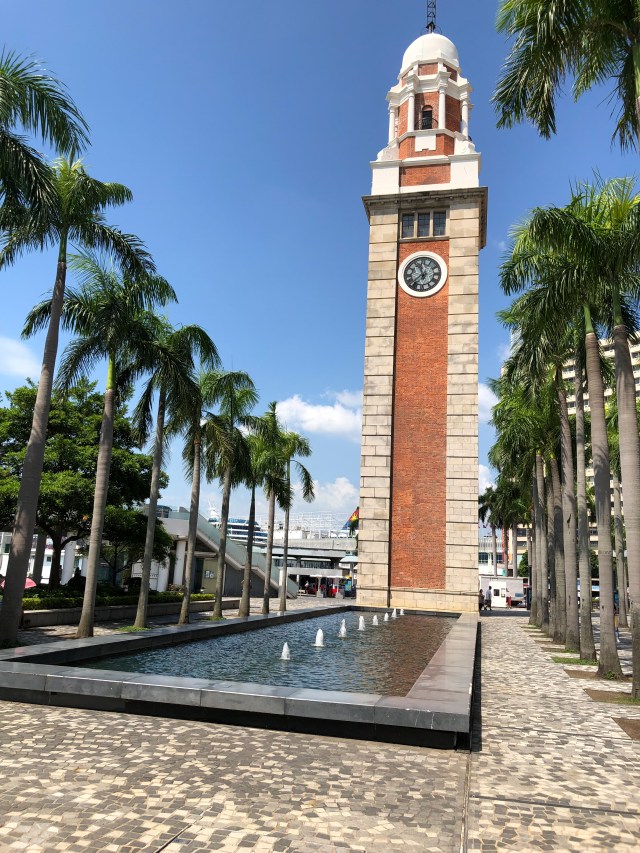
This is the old clock tower which was at the old Kowloon/Canton railway station – now long gone.  I am glad the clock tower was saved as it is an icon from the early colonial days and I have many memories of getting off the Star Ferry and walking to the station amidst crowds of people and lots of rickshaws!  Now there is a memorial pool and fountain and it is quiet place to contemplate.

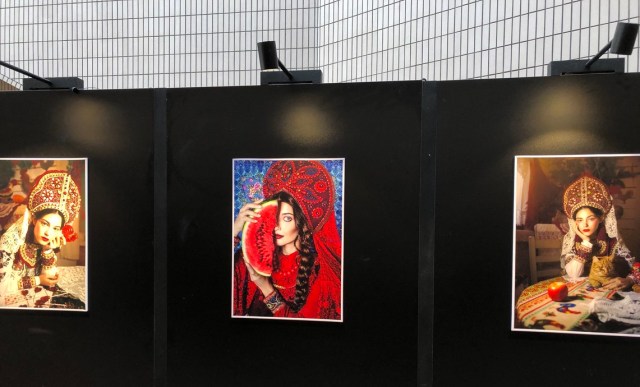
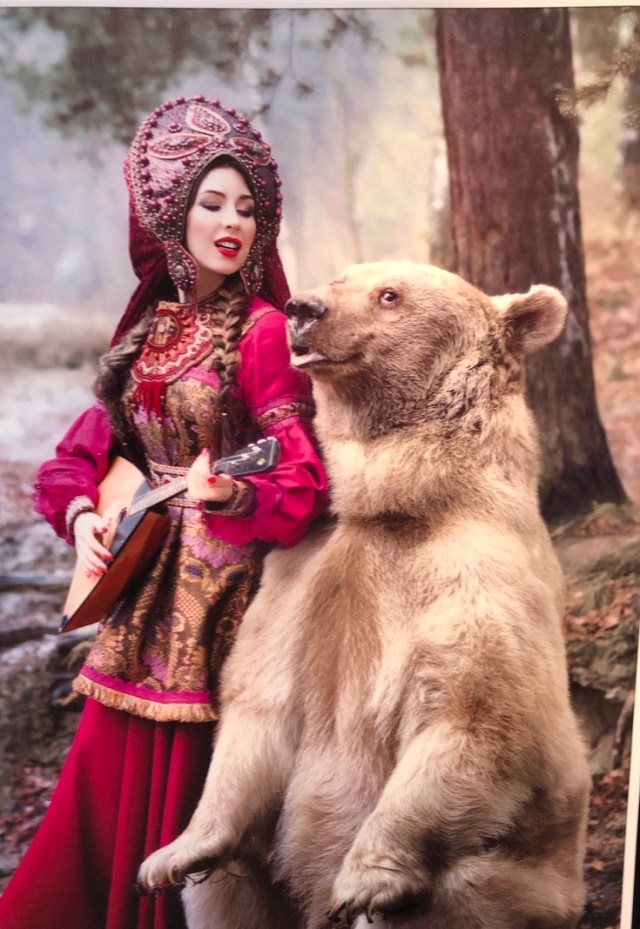
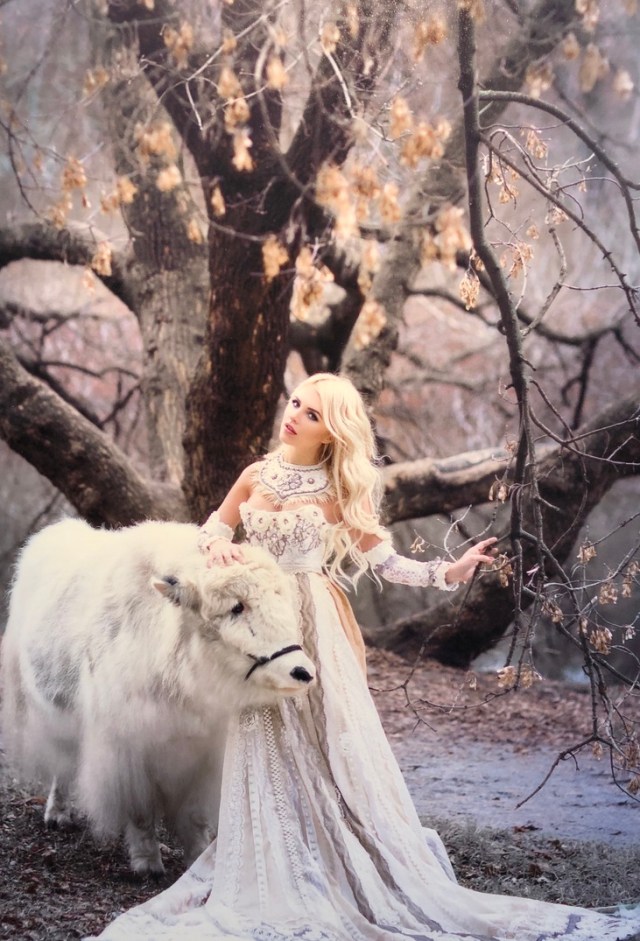
This area is also close to the Art Gallery and Theatre – the gallery was closed for renovations but we did see a lovely exhibition of Russian folk art in the foyer.

BBC525BB-BA72-4248-BD1B-6E4A1E1B9E18_1_105_c.jpeg

4686BF10-62EB-4D36-BDF9-EB330B28CCBD_1_105_c.jpegCEFF0AF1-2ED6-4A10-A04A-FBCD105DCD3E_1_105_c.jpeg

The harbour is not as busy as in the past – cargo ships unload at the docks, cruise ships go to the terminal, the ferry still goes back and forth but the vehicular ferry has gone, replaced by tunnels under the harbour.  However, lovely old junks still cruise up the channel

Shizuoka-06

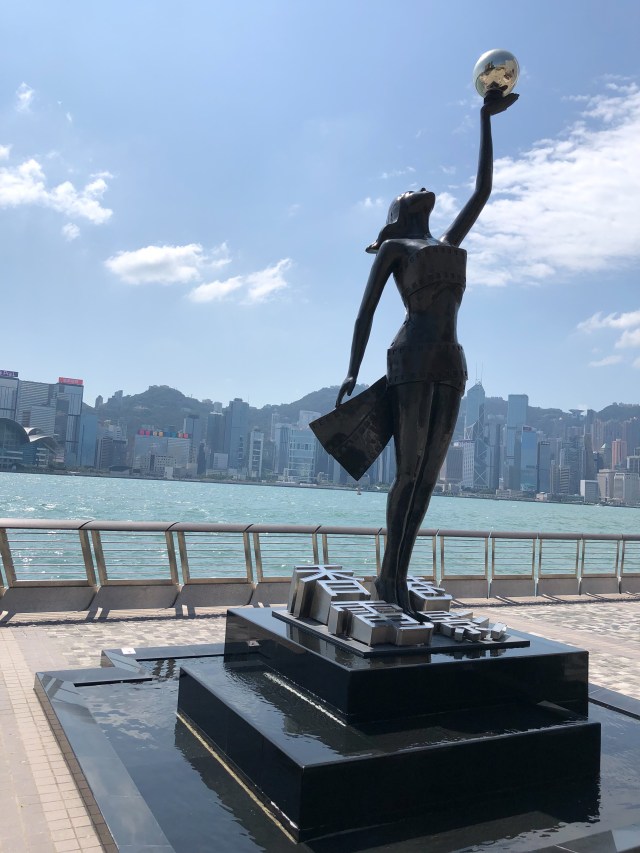
There are statues and even an Avenue of Stars path commemorating film stars past and present. New buildings, shops and restaurants along the Promenade make the walk interesting – each time we come here, there is something new.Shizuoka-07

Shizuoka-05

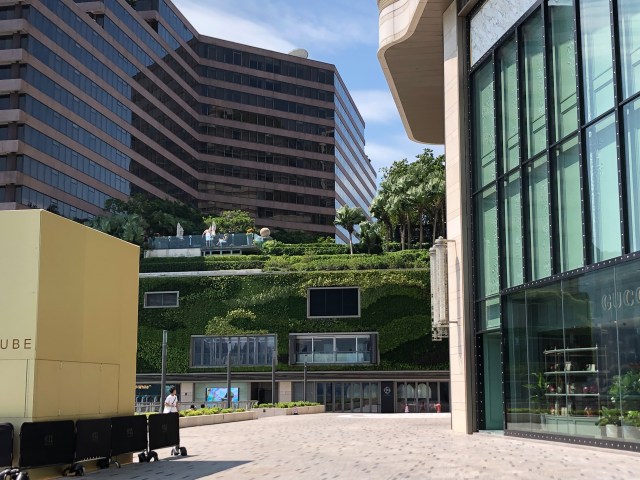
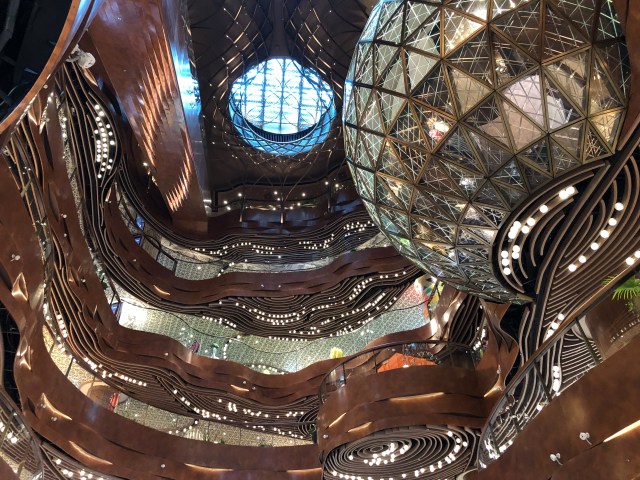
We came to the incredible new K11 Musea – Hong Kong’s new Art Gallery inspired Mall with luxury shops alongside a public art space. The architecture is amazing and the concept is to merge art and culture with commerce.

Shizuoka-04Shizuoka-03Shizuoka-02Shizuoka-01

This was opened in August 2019 and promises to be a “must” on every visitor’s list.

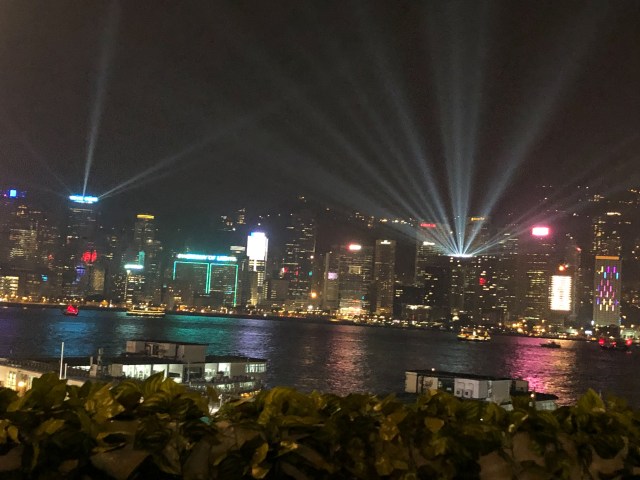
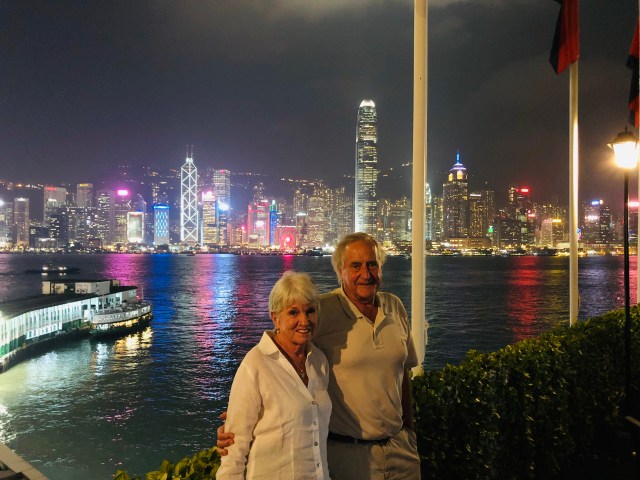
The Harbour Light Show is world famous and just keeps getting better.  We found a little outdoor bar at the Ocean Terminal with a fabulous view so we sat with a glass of wine and watched this incredible show synchronised to music downloaded on our phones.

Shizuoka-11IMG_5814

Our final lunch was with local friends at a Dim Sum restaurant – renewing old friendships and savouring the taste of Hong Kong.

6b991457-909c-457d-9a54-bbbde73c2034

Until the next visit…….


HONG KONG – AND A TRIP DOWN MEMORY LANE

Hong Kong isn’t just all about shopping and crowds.  It is easy to get away from all of that and find some relatively quiet places whether by the beach or in the hills. This trip I wanted to do just that and revisit places I knew well as a child.  Things have changed, of course, but some things remain the same and then the memories come flooding back.

F2D49E2D-8366-4C87-80B0-04C90E7FEC8D

Far from the madding crowd and mayhem in the city below is a beautiful walk around the top of the Peak.  This is where we lived and today it is exactly as it was – quiet, peaceful and leafy.  It is much cooler than in the city and the views are stunning – but different to our day as the construction of multi storey buildings has filled the landscape below and the vista to the islands beyond is now hazy due to pollution.


9F2B496F-4223-482C-A682-8389FE87EBBA
A view from above

The Star Ferry has been crossing the harbour for decades and is, to my mind, the best way to go from one side to the other.  The trip takes no more than ten minutes and is a pleasant way to travel.  We did this so often as children – there were no cross harbour tunnels or MTR trains in those days.  A vehicular ferry was available to take cars and passengers and on weekends we would often “drive” to Castle Peak or the New Territories and part of the excitement of the day was taking the car ferry!

7BCCD05B-9432-48B7-BB45-C9C8CD321D2F

Kowloon today is so different from the island – it is a mixture of crowds, smells, hustle and bustle, jewellers, hawkers selling copy watches or handbags, tourists galore and shop after shop.  In spite of all this it was lovely to see a couple of colonial buildings preserved and now used as hotels or for retail.

19A3D7E1-1DC2-4FC8-BA1C-5E12E9D2566C

The Peninsula Hotel was another favourite and although the decor has changed, the lobby is still magnificent and the staircase – which featured in every Ball or formal event – is the same.

Towering skyscrapers dominate the waterfront and reclaimed land is making the harbour even smaller – however, I could still find the old Royal Hong Kong Yacht Club which seems to be dwarfed these days.

A bus ride to Stanley is always a great outing.   This little village was a quiet residential area with a small beach and good swimming.  There was also a market where we bought Christmas gifts and local wares. Today it is a really pleasant place to stroll along the waterfront, visit one of a number of cafes or restaurants and, of course, wander through the market.  There is a lot of history here as a Prisoner of War Camp was located in the village during the Japanese invasion of Hong Kong during the Second World War.

2D119B47-53AF-4B17-9EC3-FC8288AEC10D

Blake’s Pier, which used to be in the city and where we met to go out on launch picnics, has been relocated here and is used by many pleasure boats each weekend.

98A50832-2AA0-4B77-89F1-1B1CB862569A

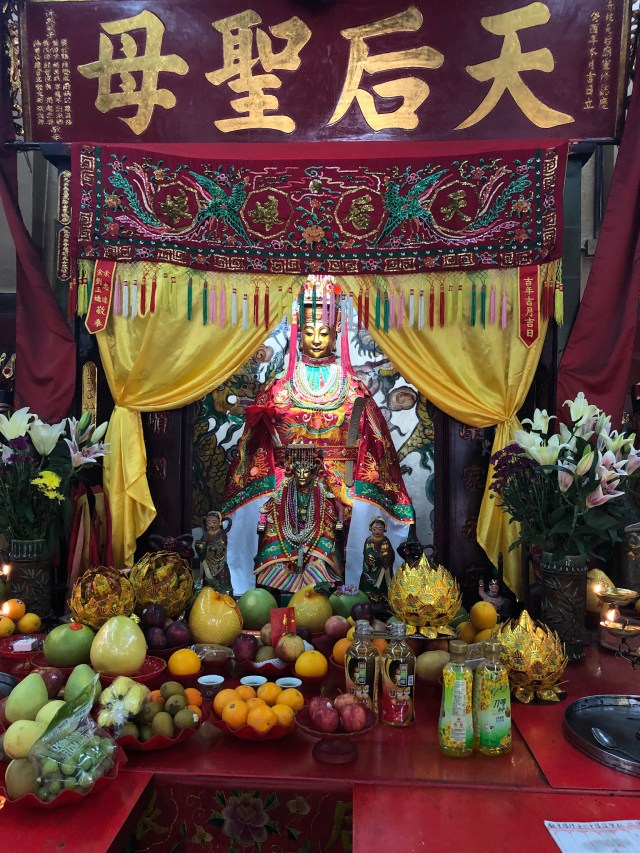
The beautiful little temple of Tin Hau, the Goddess of the Sea, features very much in the lives of local residents here.  On entering the temple the smell of joss sticks and the smoke wallowing all around is almost overwhelming.  There is a row of gods and goddesses on each side of Tin Hau and they seem to be watching you. To see the locals pay their respects and bow and pray is humbling and it is obvious that their beliefs are very strong.

96C5ACBE-BA2A-4B28-A79D-DC1A71A22BF7

3311DFD6-484D-4DD7-B5C5-5014E739D0AF

And finally there is the food – a plethora of choices, any number of cuisines but always present are noodles – oodles of noodles and it is fascinating to watch them being made!

A5744154-51F5-4065-BDF1-EEB22BA50DCE

FROM OYSTERS TO VINEYARDS

UNADJUSTEDNONRAW_thumb_8d9.jpg

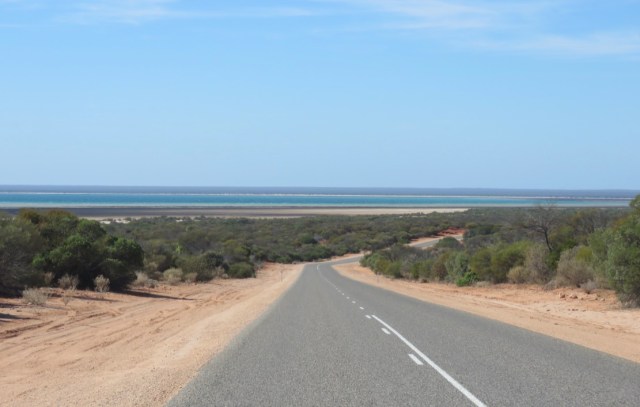
Another long, straight road awaited us for the next leg of the road trip – this time to finish with the Oyster Trail and get on to the vineyards.  A nice combination – oysters and wine!

Last stop on the Oyster road is Cowell – a pretty little town on the eastern side of the Eyre Peninsula and situated on Franklin Harbour. The waters are sheltered and are very popular for fishing – and oysters.  We found a shack close to the jetty which supplies oysters to various outlets in the town.  On entering we found the proprietor busy shucking the oysters which had just come in from the bay – so without further ado we purchased a couple of dozen and together with fresh lemons and in a cardboard box, we found a table in the park and indulged for lunch!  The verdict?  Excellent!

ZVruG8a7Ro6hdHDQW+sjMA_thumb_8c3.jpg

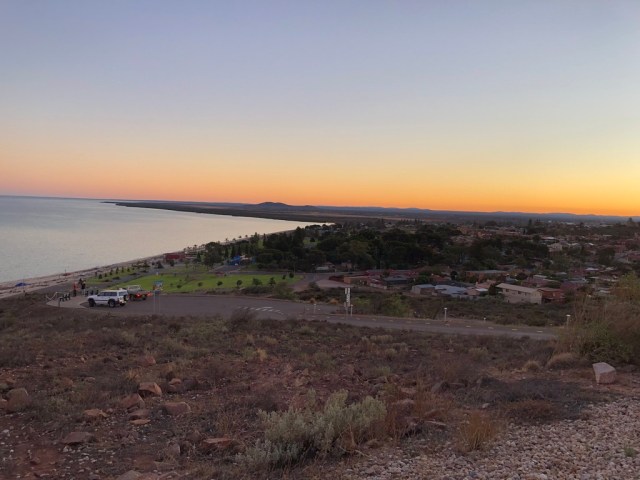
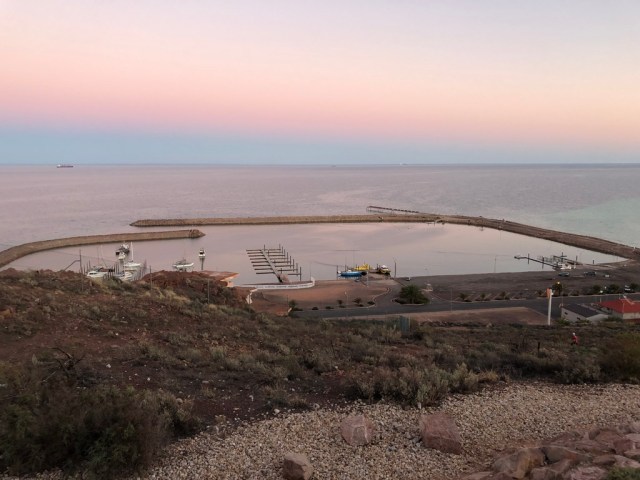
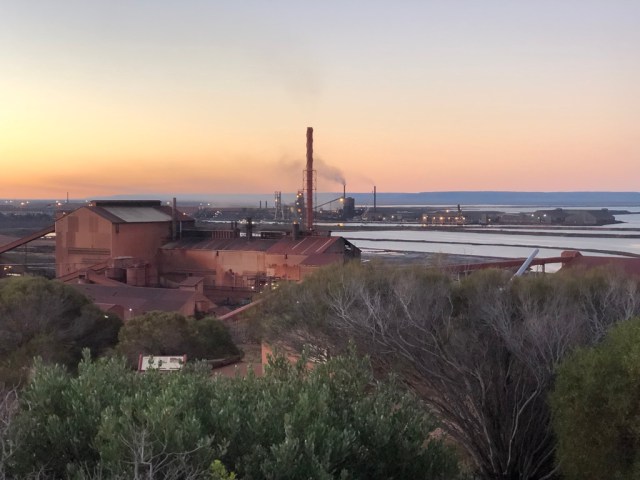
Our overnight stop on the way to the Clare Vallety Vineyards was the port town of Whyalla.  Named Hummock Hill in 1802 by Matthew Flinders, the town’s name officially changed to Whyalla in 1902 which is an Aboriginal name possibly meaning “water place”.  The steel industry here is over 100 years old but fishing is also of primary appeal. We were there just before sunset and went up to Hummocks Hill – a local lookout – to witness the change of colours.

UNADJUSTEDNONRAW_thumb_8da.jpg

UNADJUSTEDNONRAW_thumb_8db.jpg

UNADJUSTEDNONRAW_thumb_8dc.jpg

UNADJUSTEDNONRAW_thumb_8dd.jpg

The next day the road was clear and, for a lot of the way, was backed by the beautiful Flinders Ranges.

UNADJUSTEDNONRAW_thumb_8de.jpg

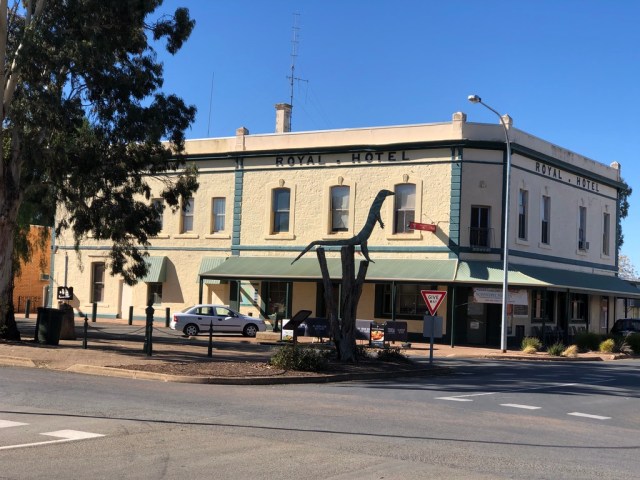
We drove through many little towns and villages but the one which captured us was Crystal Brook.  This quiet rural service centre is in the heart of South Australia’s most productive sheep and wheat country and has retained its charming historical links.

UNADJUSTEDNONRAW_thumb_8df.jpg

UNADJUSTEDNONRAW_thumb_8e0.jpg

UNADJUSTEDNONRAW_thumb_8e1.jpg

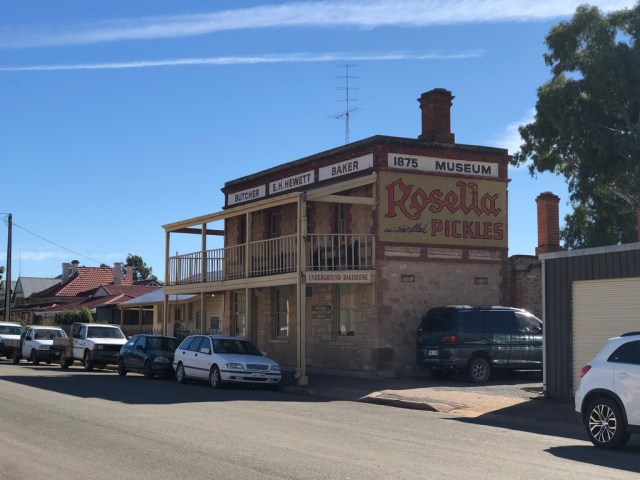
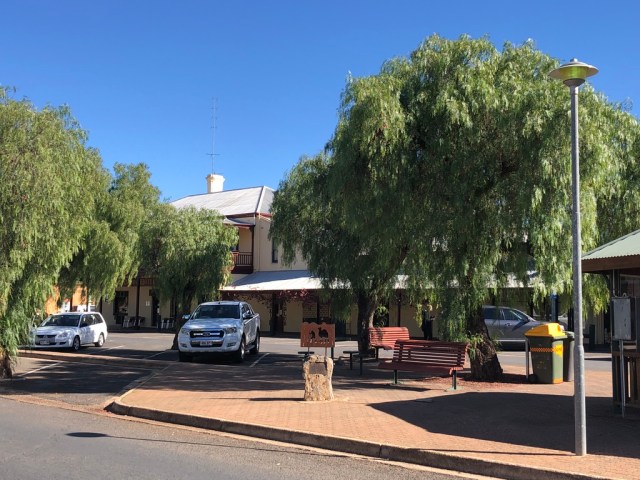
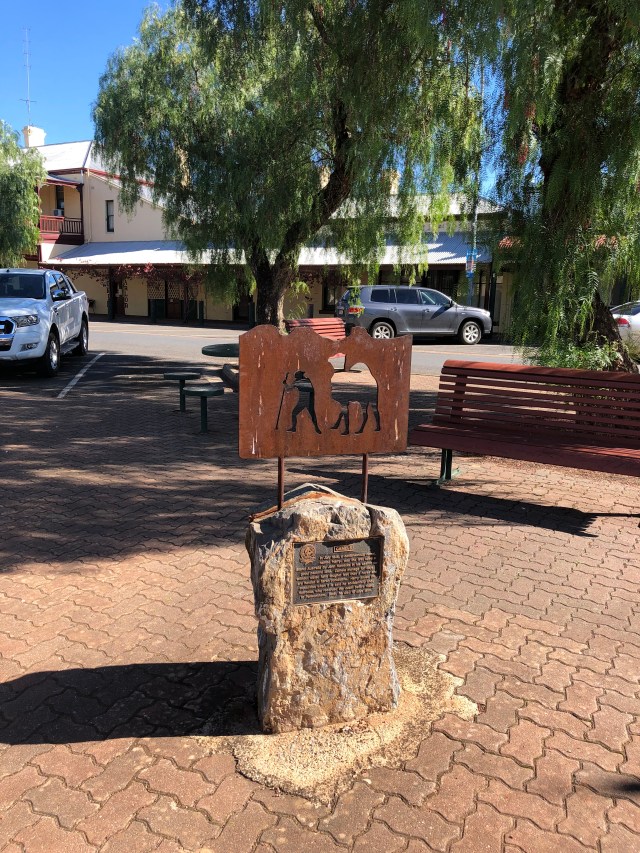
Beautiful shady peppercorn trees line the main street and there are several art pieces in iron, reminders of the part the camels played in this part of the country in the early years.

UNADJUSTEDNONRAW_thumb_8e2.jpg

IMG_4488

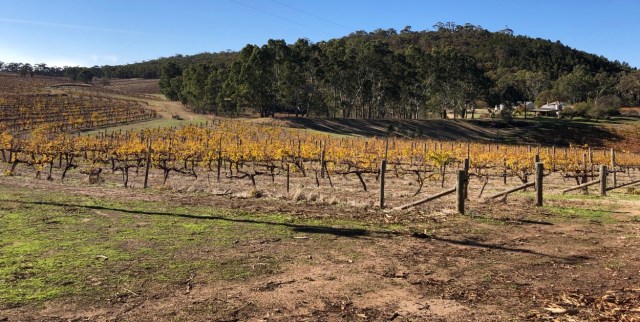
The Clare Valley is one of Australia’s oldest wine regions where there are heritage towns, boutique wineries, galleries and beautiful scenery.  We had booked lunch at the Skillogallee Winery where we had been before.  The vineyards here are resting – grapes picked and wine made but the vineyards still looked beautiful.

%gAxGg+fTt6jpa%M20OSLw_thumb_8ea.jpg

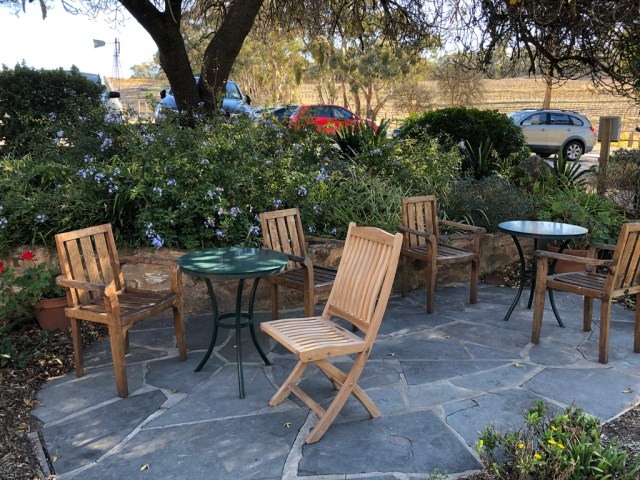
The road to the boutique winery is shady and winding at the end of which is the restaurant which seats both indoors as well as in the garden.

IMG_4495

UNADJUSTEDNONRAW_thumb_8e5.jpg

The menu features local produce with wine suggestions matched with each dish. Unable to resist the sashimi, I had, yet again, fabulous South Australian Kingfish and tuna served in a very artistic way.

UNADJUSTEDNONRAW_thumb_8e4.jpg

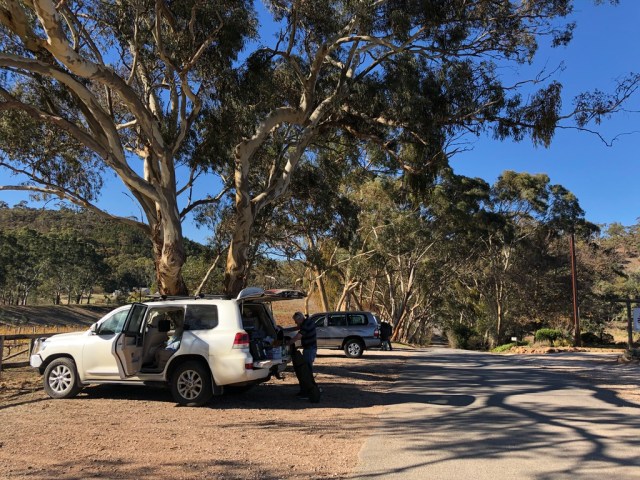
Then came the wine tasting and purchasing – thank goodness we had a large car !

UNADJUSTEDNONRAW_thumb_8e9.jpg

Staying in a little apartment in the centre of the town, we were perfectly placed for a choice of restaurants in the evening.  And that is what you do in these regions – eat great food and drink fabulous wine!

UNADJUSTEDNONRAW_thumb_8e7.jpg


The Coastal Road To Kalbarri and Perth

mN5gULQUTb298ukYO5SEfg_thumb_4b7.jpg

There is something special about being close to the sea – at least for me.  I am in my element when watching the moods of the ocean, the vegetation, coastal scenery and the different lifestyles of the communities all along the coastal stretch.  For a while we are out of the red dust, the dramatic landscapes and rock faces, the vast distances between places – not to mention the flies and the heat!

Leaving Shark Bay we visited the remarkable Hamelin Pool stromatolites.  I had no idea what these were until we visited the Discovery Centre and so we were keen to see what it was all about.  These Hamelin Pool stromatolites are the oldest and largest living fossils on earth.  These are considered “living fossils” and are part of the Earth’s evolutionary history.

UNADJUSTEDNONRAW_thumb_4e6.jpg

Now part of the Word Heritage Area, a purpose built jetty has been built over these amazing life forms so people can walk and observe without causing damage. This gives everyone has a chance to see what is of great interest to botanists and geologists and give an indication of what the earth may have looked like about 3.7 billion years ago when stromatolites grew widespread across the water.

HZylG72FTVavoNaA8SHyug_thumb_4be.jpg

UNADJUSTEDNONRAW_thumb_4bc.jpg

Some scientists are now saying that this is what life on Mars may look like right now.

An easier explanation is the following quote:

The oldest Stromatolites in the world are found in Western Australia, and date to 3.7 billion years old. As such, the stromatolites provide a record of local environmental changes. Hamelin Pool in Western Australia is one of only four places on earth where living marine stromatolites exist and the location contains by far the biggest colony on earth. 

Stromatolites which are found up to a metre high are believed to grow at a maximum of 0.3mm per year – they are truly “living fossils”. 80% of the history of all life was stromatolites – for that time, stromatolites were king.

Our next destination was Kalbarri.  This little town on the mouth of the Murchison River is known for its seaside cliffs, estuary beaches, pelicans and birdlife and the National Park nearby.  Once again there are gorges and and natural bridge forms and several scenic walks and climbs for those who are more adventurous.

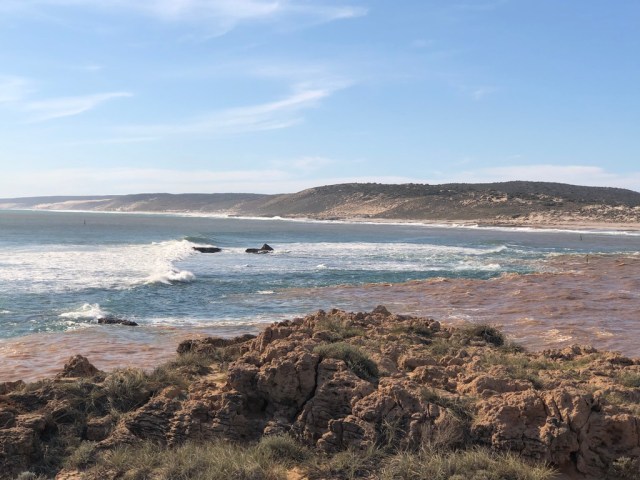
When I did my first Road Trip all those years ago, there was nothing here except a couple of holiday houses and fishing shacks.  Now it is a thriving tourist destination and very popular with families.  The first thing you notice on driving into the village is the river – which is currently very muddy and so it is easy to see where the river meets the ocean.

UNADJUSTEDNONRAW_thumb_4ed.jpg

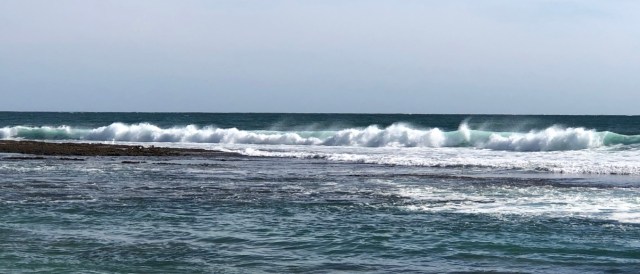
There are sandy beaches close by which are protected by a reef – and the thundering surf beyond is quite spectacular.

UNADJUSTEDNONRAW_thumb_4ea.jpg

m1kVpf6iT2SF4OtP62yWdw_thumb_4ef.jpg

Red Bluff is where ancient rock meets the ocean and the history of this area is interesting.

UNADJUSTEDNONRAW_thumb_4f0.jpg

The first European people to visit the area were the crew of the trading ship Batavia belonging to the Dutch East India Company who apparently put ashore two mutinous crew members here.  The wreck of another ship – the Zuytdorp – which sank in 1712 is also here.

There is a lovely little walk along the cliff top which illustrates clearly the problem ships would have had sailing into this area.

UNADJUSTEDNONRAW_thumb_4f3.jpg

UNADJUSTEDNONRAW_thumb_4f2.jpg

UNADJUSTEDNONRAW_thumb_4f5.jpg

At the bottom of the cliff is a trail from the beach leading up to the top and here the contrast between the red rock and the beach is obvious.  This is a popular fishing spot.

UNADJUSTEDNONRAW_thumb_4f7.jpg

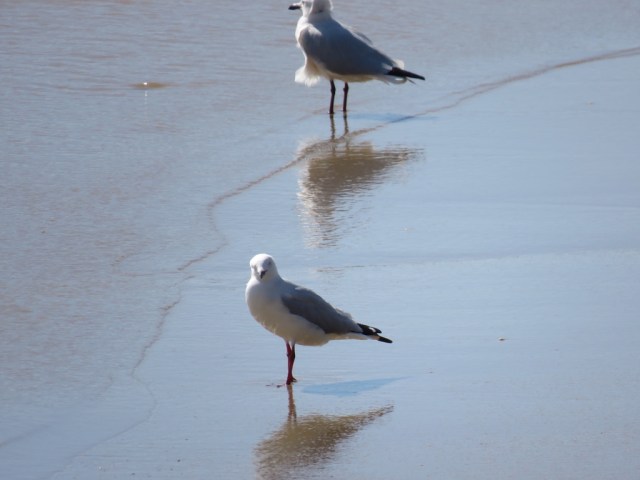
Bird life is prolific and at times, walking on the beach, the only company you have is our feathered friends.

UNADJUSTEDNONRAW_thumb_4fa.jpg

UNADJUSTEDNONRAW_thumb_4c9.jpg

UNADJUSTEDNONRAW_thumb_508.jpg

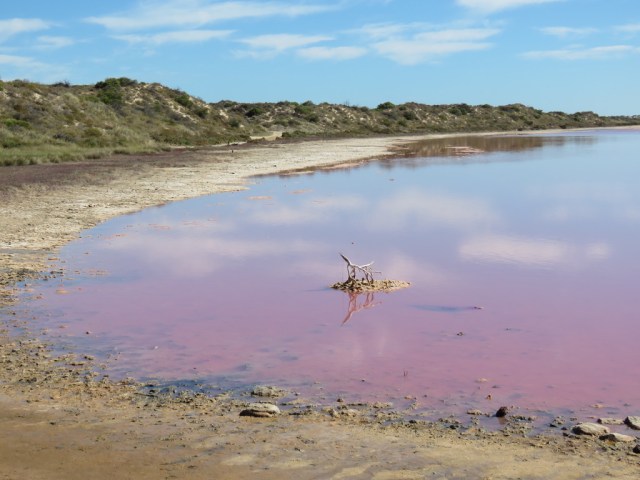
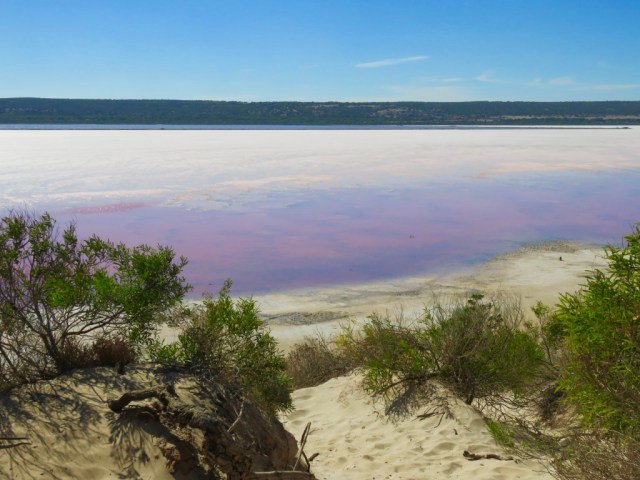
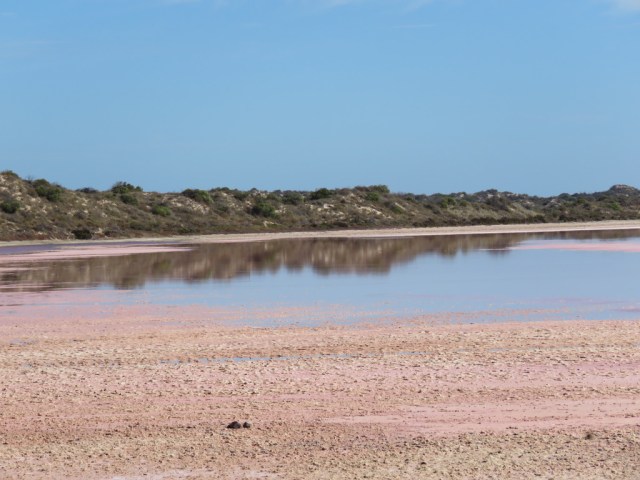
Another interesting place to visit is Port Gregory and the “Pink Lake” .  This is on the road south of Kalbarri and we were told one should see it in the morning when the sun is overhead.  We were not disappointed.

UNADJUSTEDNONRAW_thumb_51b.jpg

3OGhjb1aSXOfP7aKuU4fTA_thumb_510.jpg

UNADJUSTEDNONRAW_thumb_516.jpg

The Hutt Lagoon has a pink hue created by the presence of carotenoid producing algae which is a source of B carotene, a food colouring agent and a source of Vitamin A.   There are other pink lakes in WA and hopefully we will get to see more on this “Big Loop”.

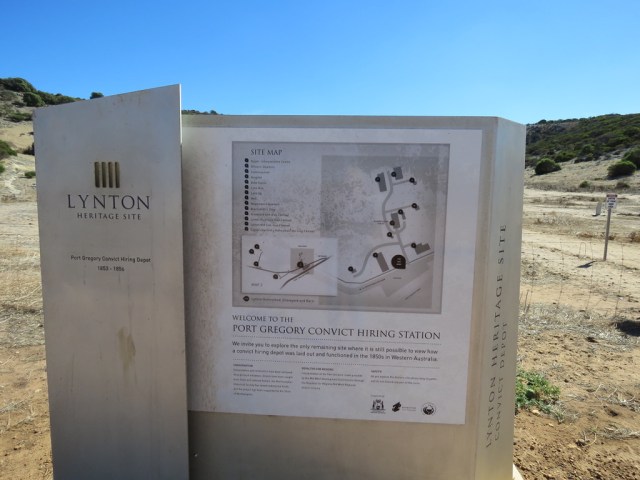
History has always been a passion of mine and so a stop at Lytton close by was a must as this was a Convict Hiring Station and there are several ruins and many tales to tell here.

UNADJUSTEDNONRAW_thumb_522.jpg

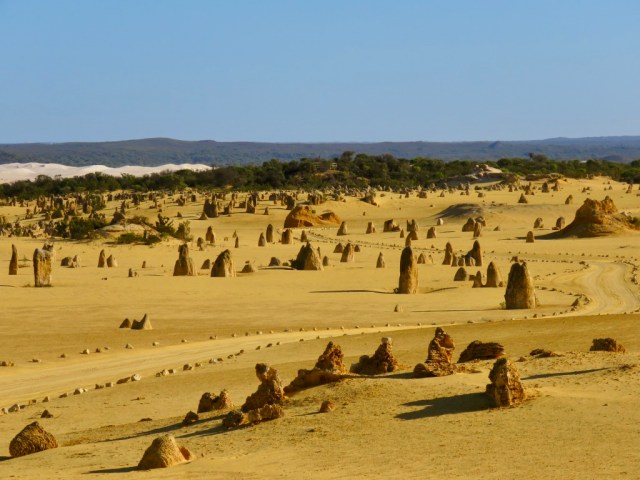
And finally – not far from Perth we came across an amazing sight – a desert in the bush. This is The Pinnacles – in Nambung National Park and is incredible.

UNADJUSTEDNONRAW_thumb_528.jpg

These are limestone formations and some reach 3.5m.  Some are jagged, sharp edged columns and others are smooth and rounded.  There are thousands of them and they literally take your breath away.

UNADJUSTEDNONRAW_thumb_529.jpg

EmlCom0fTkOaIxquTqFujQ_thumb_52b.jpg

And my favourite image is this one, of a little resident of the area out for his morning munchies!

xGE++VAPT4uVNM2FprqMtw_thumb_530.jpg


THE ENDLESS ROAD TO THE COAST – CORAL BAY AND SHARK BAY

aBpuA+1VSoCAzdkvwULlPg_thumb_4b1.jpg

The distances here in Western Australia are so vast that it is almost beyond comprehension – even though we have driven over much of Australia over the years.  Here in the North West the road is endless and there is nothing to break it.  It was with great relief that we arrived at the tiny village of Coral Bay – and here we wanted to stay!

UNADJUSTEDNONRAW_thumb_45c

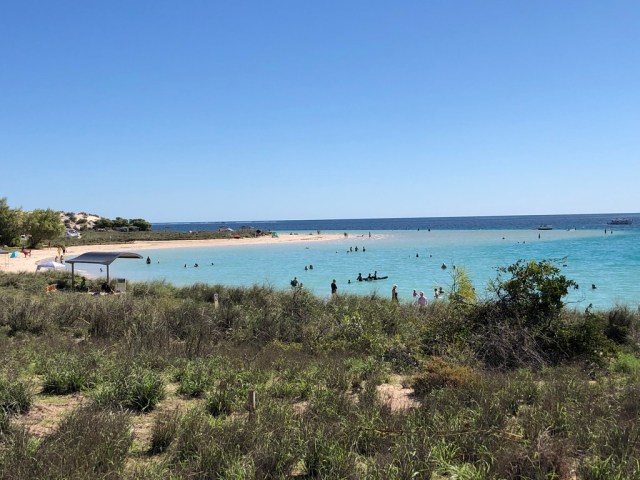
This tiny settlement is perfect for families and for people seeking relaxation or something more adventurous such as diving, fishing or snorkelling.  The beautiful coral reef is just metres from the shore and the beach has pristine white sand and is safe for even the tiniest tot.  We found ourselves in a cabin right on the foreshore

UNADJUSTEDNONRAW_thumb_462

And all we had to do was cross the road and we were on the beach and in the beautiful clear water.

UNADJUSTEDNONRAW_thumb_44c

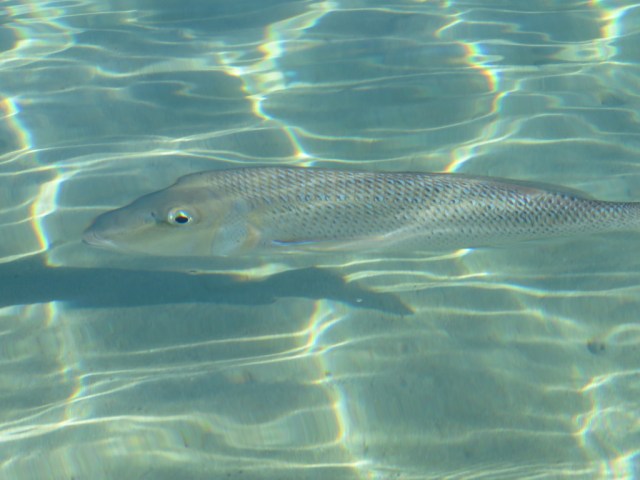
There is a platform for coral viewing or snorkelling and even early in the morning the fish were friendly and just weaving around our legs – probably looking for food!
UNADJUSTEDNONRAW_thumb_44f

UNADJUSTEDNONRAW_thumb_455

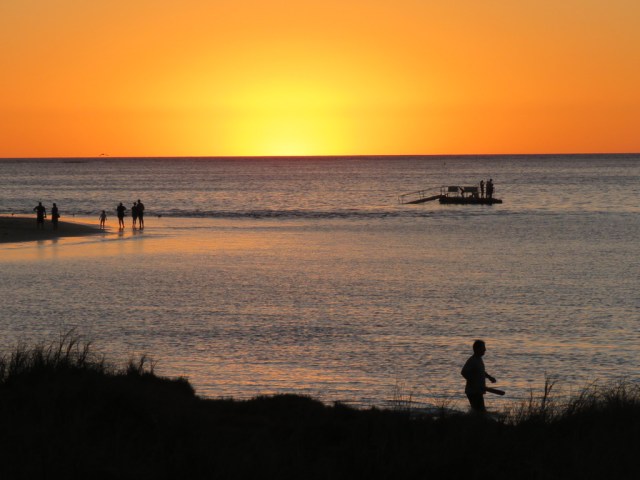
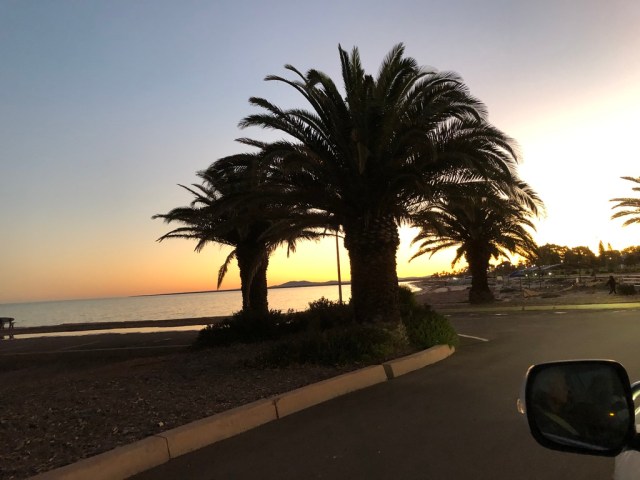
The sunsets here are glorious and with an aperitif in hand, gorgeous view and the total serenity of the place, that long, endless road was forgotten.

UNADJUSTEDNONRAW_thumb_464

UNADJUSTEDNONRAW_thumb_445

The next day we had a 420km drive to Shark Bay – or the little town of Denham. This is the most westerly point of the Australian continent and is on the UNESCO World Heritage list.  It has vast sea beds which are the largest in the world and which support the dugong population – which is also one of the largest in the world.  The Stromatolites are among the oldest forms of life on earth and it is possible to view them at low tide from a specially erected platform.  Apart from these features, we wanted to come here because of its proximity to Monkey Mia which is famous for its dolphin experience.

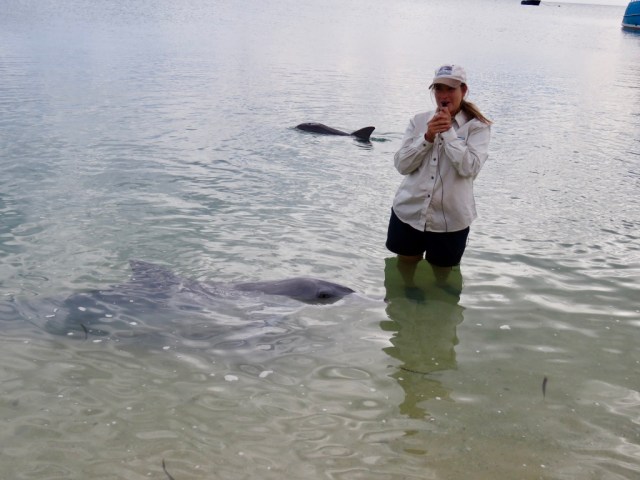
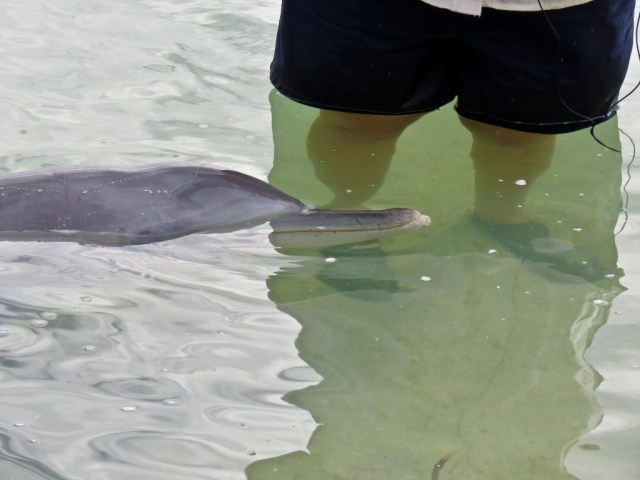
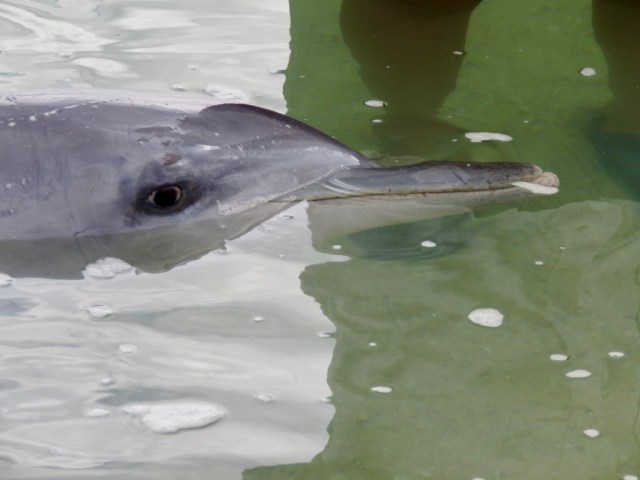
In the past visitors were able to swim and interact with the dolphins which came close to shore to be fed.  Today it is regulated by the Department of Wildlife because the lives of the dolphins were endangered by too much human interaction.  It is still a wonderful experience and the Wildlife Officer also gives a short talk about dolphin behaviour.

Ly5Q+3wSQPKqKSjWYjC0oA_thumb_49c

Feeding occurs in the morning and the amount of fish each dolphin gets is strictly monitored so they still have to go out into the wild to hunt.

usO51YLHTZquycV492Ylrw_thumb_49e

Bq6Zcw%tQma%XjSxcczPBw_thumb_497

XapEpX5kTA6Ftvyamrr35A_thumb_494

These are such beautiful creatures and I almost had the feeling that Piccolo was human when looking at her eye.

UNADJUSTEDNONRAW_thumb_496

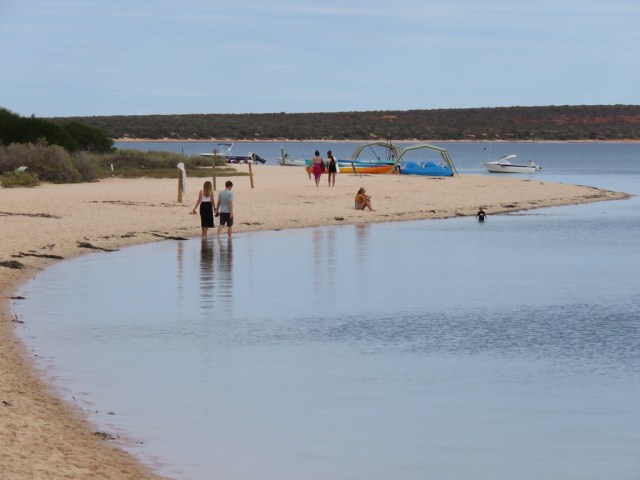
Monkey Mia is a tiny place with just one caravan park/hotel and is where tourists come especially for the dolphins and perhaps a little fishing. There are boat trips on offer as well.

UNADJUSTEDNONRAW_thumb_4a2

OeQes6B6SLCNNVATzjCybg_thumb_4a1Denham is a great little town and was settled by Europeans first in the 1850’s who began pearling, pastoralism and guano mining.  The original inhabitants were the Aboriginal people – the Mulgana – who were here for thousands of years and evidence of their presence can be seen in cave shelters and shell middens around the peninsula.  It is said that they were probably the first Australian Aboriginals who had contact with European explorers who came in the 1600’s.

We walked along the foreshore and found a sweet little building which is a restaurant called The Old Pearler.  Deciding to have dinner there, we then discovered its interesting history.

rX1uT5oxQWitRwK2mt1lkQ_thumb_4a6

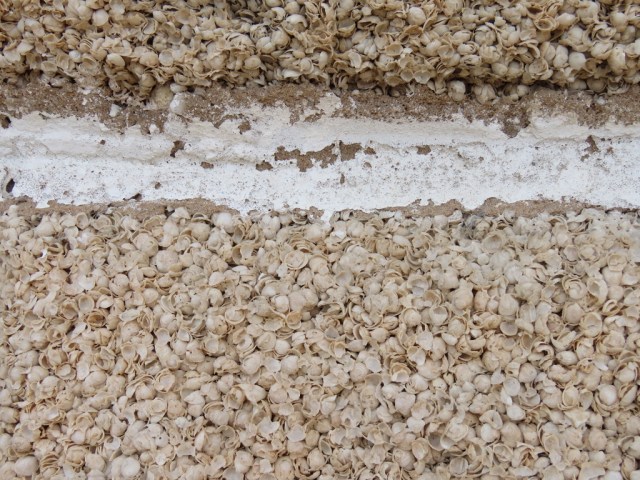
This is the only restaurant in the world to be built predominately of sea shells. The shells are essentially of the small molusc family being bonded together by pressure and calcium.  The shell stocks came from the Hamelin Pool area and blocks were cut by saw from the ground.  An Englishman, Tim Hargreaves, took three or four years in 1974 cutting and laying the shell blocks.

UNADJUSTEDNONRAW_thumb_4a7

Railway sleepers were used for doors and window frames and the tables were made of timber salvaged from the original Peron Station shearers quarters.  Various artefacts are on the walls inside and the acoustics are exceptional which is due to the myriad of air pockets in the shell blocks.  These also ensure there is coolness in the hot summers without resorting to fans or air conditioners.

IMG_3974

This is also the most westerly restaurant on the continent.  We had seafood both nights we visited and the crayfish was sensational.

Several years ago we visited the area on board “True North” and also went to Dirk Hartog island which is close to Denham as well as Steep Point.  This is a rugged area which is the westernmost point of mainland Australia.  Access is by 4 wheel drive only as the track is through sand dunes.  We were fortunate to land by boat and this time is it good to see from the land perspective. Steep Point is also a renowned land based game fishing place with over 320 species of fish caught off the point.  We saw fishers harness themselves to the cliff and then float their baits off the cliff using helium balloons.  They then hauled their catch up the cliffs – no easy task as a shark very often gets it first!

Anyone visiting this part of Western Australia simply has to disregard that long, long road and come to Denham.  I promise you will not be disappointed!


MORE ROAD TRAINS ON THE ROAD TO KARIJINI


oGZOvvN0QoyIPiGekLyKag_thumb_3e1.jpg

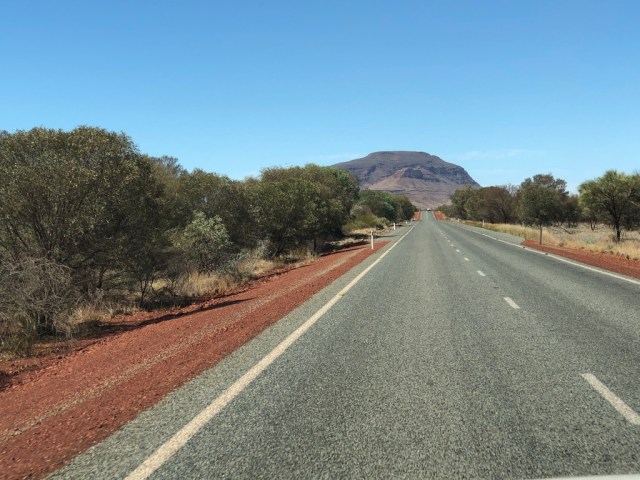
Our next destination was Karijini National Park in the Pilbara.  It is a long way from the coast and so we had to drive via Port Hedland for an overnight stop.  To be honest, the road from Broome to Port Hedland is the most boring we have yet had to tackle.  It is very long and very straight and there is nothing to see even though it runs parallel to 80 Mile Beach. Access to the beach is denied except through the caravan park.

IMG_0956.JPG

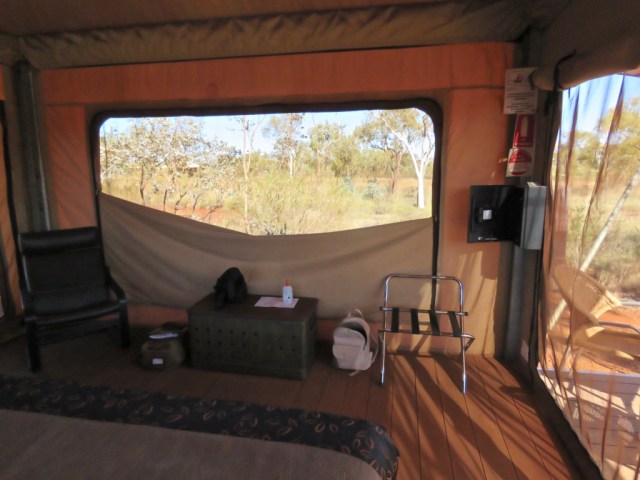
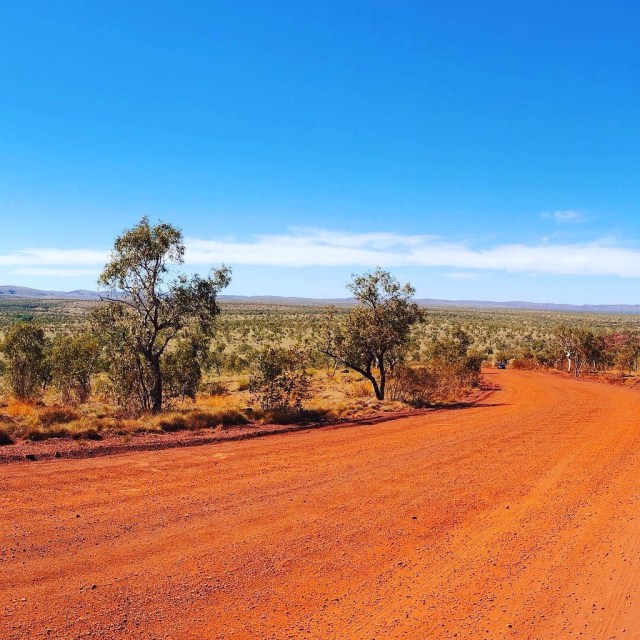
Setting off for Karijini we were again to find the road long and mostly straight but this time we had dozens of huge road trains travelling to Port Hedland with their loads of iron ore.  This is the Pilbara and the area is rich with culture and a huge array of natural rock formations, deep red in colour. The soil is a fine red sand which gets into everything and is hard to remove! There are gorges, rock pools and canyons in the two National Parks of the area and we were heading for Karijini which has beautiful scenery and much of it is accessible by car. We booked into an “Eco Tent” which was said to be “luxury” but having been on several African safaris, this was not at all up to the standard they were trying to attain. This being an Eco Resort comfort was minimal in the so called “glamping” tents.  We used torch light at night as electricity was solar and we were conscious of waste. The tents were cooled by natural breezes – if there were any – with the result that the afternoons were very, very hot and early mornings freezing cold!  We did have a small ensuite bathroom though which was roofless and it was fabulous to shower late at night and look up at the billions of stars.  Being in such a remote location, the stars were simply amazing with no light to detract.

UNADJUSTEDNONRAW_thumb_3ed.jpg

UNADJUSTEDNONRAW_thumb_40c.jpg

UNADJUSTEDNONRAW_thumb_3f6.jpg

yPmQnCOnT6CLCy7JJxO8Tw_thumb_3ef.jpg

IMG_3625

We were told of several walks which culminated in rock pools for a refreshing swim.  Unfortunately it has been a very dry season and several waterfalls have dried up and the pools in which you are able to swim are hard to get to unless you are very fit.It was also very hot but the worst problem was the bush flies.  There were millions of them and they were relentless. 

On arrival at the Eco Resort,  we noticed people walking around with fly nets covering their heads.  It was comical really as they resembled aliens from another planet – dark nets covering faces and over hats of all shapes giving their heads an oddly conical or flat shape.

O67uHv4sSEas2G07sTgbsw_thumb_3fc.jpgUnfortunately everywhere had sold out of the nets so we were not able to “join the party” and instead had to either stay in our flyproof tent or explore in the airconditioned car!

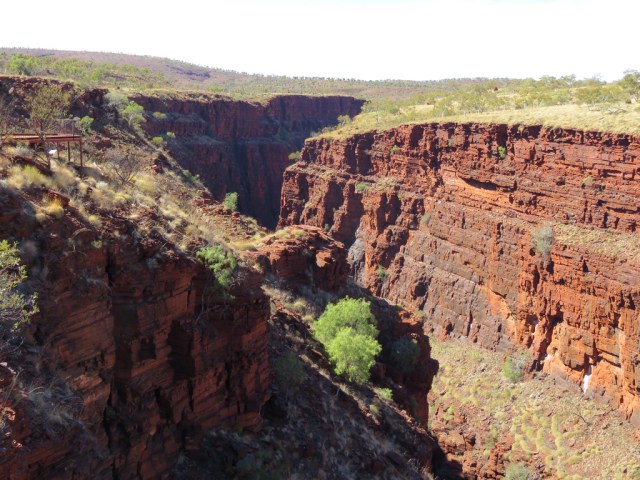
Weano Gorge is probably the best introduction to Karijini as there are easy walks around the top of the gorge as the more adventurous can venture down the rocks into the canyon. The lookout we went to gave unsurpassed views out over the Weano, Red, Hancock and Joffre Gorges.  The sheer enormity and grandeur is awesome and must be really spectacular when the waterfalls are running.

UNADJUSTEDNONRAW_thumb_400.jpg

The path in is sandy – the deep red of the Pilbara – and fortunately there was a breeze so the flies were not so aggressive!
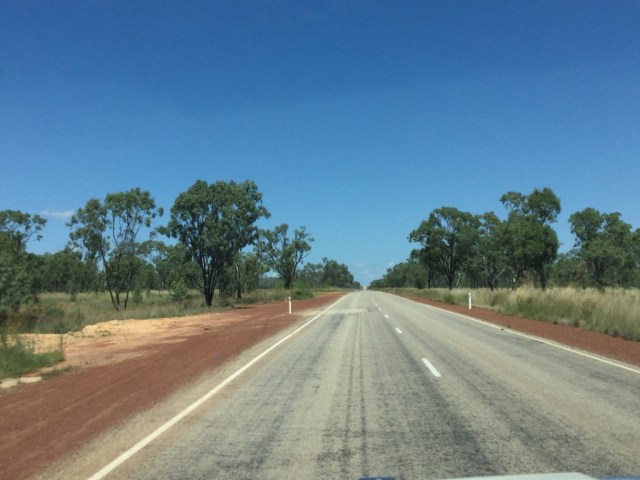
GpiHKKzAQk2aO%wELyX0Qg_thumb_404.jpgUNADJUSTEDNONRAW_thumb_401.jpg

3l7OAdX+S3iHe6Np1FZP5w_thumb_413.jpg

IMG_3881

The colours of this part of the Pilbara are amazing at any time of day.  This I remember from the road trip so long ago – but then this was not a National Park and we ventured in on our way to Wittenoom township which is now closed because of asbestos.

UNADJUSTEDNONRAW_thumb_41c.jpg

UNADJUSTEDNONRAW_thumb_42b.jpg

The roads are red dirt and the silver and green of the leaves plus the groundcover colours give a special sense to this place which is sacred to the indigenous people.

UNADJUSTEDNONRAW_thumb_42a.jpg

fQizd4qeQ1yVLreb+XZHMw_thumb_421.jpg

We drove to Tom Price which is a mining town and a really impressive little community.

IMG_3904 (1)

With huge mining machines on display!

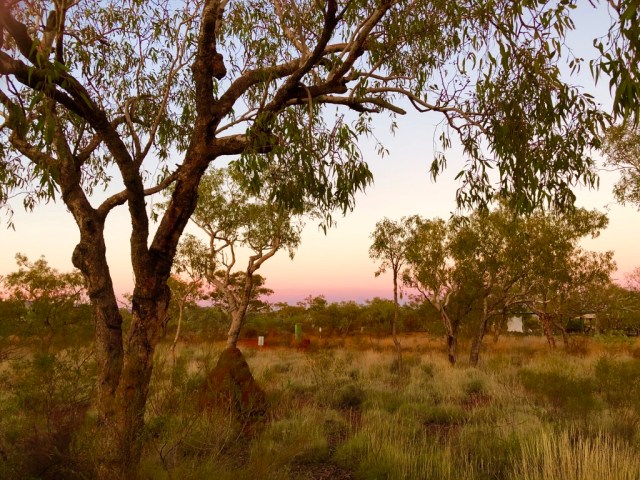
Sadly the flies and the heat drove us out of the beautiful Karijini Park but the drive was spectacular after a beautiful dawn rising viewed from our tent.

5ohPZ4vnTfisF0Zi7CZO%g_thumb_428.jpg

UNADJUSTEDNONRAW_thumb_432.jpg

Next stop – Exmouth on the Coral Coast – maybe the flies will be gone by then?


The Red Road Deep in the Kimberley

mme5c2bhS9mnbit%LJjwkg_thumb_338

The road to Fitzroy Crossing and beyond is long and parts of it are gravel and the soil very red.  This makes for quite stunning colours everywhere even though the car gets covered in a fine silt.

We had heard about China Wall near Hall’s Creek and decided to make a little detour to see what it was all about.  Located on a private property, we had to enter through the station gate and drive on a rough track for about six kilometres and suddenly, there it was!

UNADJUSTEDNONRAW_thumb_320

This was so surprising and is a natural vein of sub-vertical white quartz rising up to 6 metres above the surrounding country in some places.  It rises high out of the ground and then disappears again only to reappear further on.  Apparently it transects the country for many kilometres but we only saw this section.

UNADJUSTEDNONRAW_thumb_32f

Aborigines have a theory about how this came about but for us, it was just a fabulous little detour to witness a wall similar to the Great Wall only right here in the Outback!

UNADJUSTEDNONRAW_thumb_336

We came across many more termite mounds but these were a different shape and I have to admit a fascination for them.  A local told us that the Aborigines used them as a burial place for their dead by placing the remains of the deceased inside the mound which would then be sealed naturally by termite activity.  Thus these formations are sacred to many tribes and explains why, in some places especially in the Northern Territory, we saw mounds with clothes placed over them – a t shirt, cap or a dress.

UNADJUSTEDNONRAW_thumb_32b

Fitzroy Crossing was our next stop and this place I remember from my road trip way back in 1969.  There wasn’t much there then but now it is quite a thriving community which serves the stations in the area – many of which are now owned by Indigenous groups.  It is very, very dry at the moment, so the mighty Fitzroy River looked a bit sad.

jGCePUs%S56bblOIYznXFQ_thumb_339

UNADJUSTEDNONRAW_thumb_33b

KXmIj9wFRYKVHn+hftfqDA_thumb_33c.jpg

We did see some water birds making most of the calm conditions.

kQ8TI%9RRx6e1YjsHSKcTg_thumb_33d

glxb5TTMRdmK6rp0HXW0SQ_thumb_343

I also remember doing a little boat trip down Geikie Gorge when I stayed on Fossil Downs Station all those years ago.  The gorge runs through part of the station and I remember being awestruck by the cliffs and the colours of the rock.  Sadly there were no boat tours available yesterday but we walked down to the water’s edge and looked at Linyjiya Rock – or Old Man’s Rock – the story here from the Dreamtime is that an old, blind elder left his tribe to go wandering and drowned.  He sneezed and sighed before he sank to the bottom and it is said that if you sit quietly and listen, you will hear the sighs of the old man.

YFXTsFd6SOy7PoatcuFy4Q_thumb_349.jpg

We left the gorge and continued on the gravel road towards Tunnel Creek and Windjana Gorge before joining the Gibb River Road.  Along a very lonely stretch we came across a young man on a bicycle.  We stopped to see if he was OK only to learn that he was actually cycling to Kununurra some 550km away along the notoriously rough stretch of road.  No smooth riding for him!  We gave him cold water, learned he was from the UK and decided he must be mad – but a very happy mad man!

qB57ycTJTbqqC91CQbcxjA_thumb_352.jpg

This is Boab country and as we neared Tunnel Creek National Park we drove into a landscape peppered with black rocks, cliffs and hilly mounds.  This is an ancient 350 million year old Devonian Reef and is now part of the WA National Parks.

orlfWLkiQBCmY7nWSdPM5w_thumb_34d

wBSVyb05S4CS7iET+U3xdw_thumb_354

MjjkAi0STkuldLd2hEFSPg_thumb_353

Tunnel Creek itself is a 750m long underground water worn natural tunnel and it is possible to wade all the way through.  We opted to walk to the entrance and learn the stories that lie beneath the walls.

FHErkEKzSxWM0IpXmU2IEg_thumb_358

Jandamarra was a young man of the Banuba tribe at the time of white colonisation of the Kimberley.  He became entangled in a war between two worlds. He learnt English and worked with stock, horsemanship and shooting. However he became greatly attracted to the secret life of the Banuba male world of ritual, secret sites, mythology and  the law of the Banuba country.  He left the station and took up life with the tribe but then returned to station life, turning his back on his Aboriginality.  Finally he went back to the tribe and led a resistance against the settlers.  In 1894 he tragically shot his friend, the white policeman he had worked with for years, released prisoners and distributed weapons. An armed resistance followed and Jandmarra was killed here at Tunnel Creek. The area is obviously very sacred to the indigenous people but is also one of interest and history to everyone.

SPUG9PFyQUODgIR%rHV2aA_thumb_360

eYA9dbK1Q7u3Qp29728RSA_thumb_362

The entrance to the tunnel where Jandamarra hid

+aEhfJC4QhSAyxhVd%qQZQ_thumb_363

We went on to Windjana Gorge which is part of the Jandamarra story and is an open air gorge through the Lennard River.  There are beautiful rock formations and freshwater crocodiles, birds, bats and other wildlife as well as amazing fossils which I managed to find. The entrance to the gorge is narrow and would have been a perfect hideout for Jandamarra and his gang.

D72kmWdtTfi2t3gqxB8Mzw_thumb_370

IMG_3513

The gorge itself is quite dry but the little water there is had a few little crocodiles as well as a number of water birds searching for food.

The rock formations are impressive and the shady areas along the water are a respite from the intense heat of the day.

jamg7dxcQdqpfWq8uA5kqg_thumb_397

UNADJUSTEDNONRAW_thumb_371

With our minds full of history of the past and totally absorbed by the beauty of the area and tired from walking the trails, we went back to the car and headed on to our next stop – the little town of Derby.


Straight Road to Timber Creek

UNADJUSTEDNONRAW_thumb_218.jpg

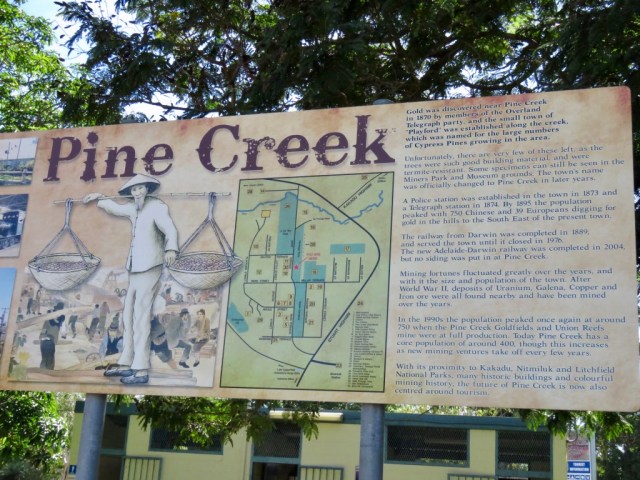
The endless blue skies and long straight road led us out of Darwin south towards Katherine.  First we stopped at Pine Creek, a small town with a historical past.  I was interested to see that at one time the Chinese well outnumbered the Europeans who were all there for the Gold Rush.

35+53liATrK7HJ2UPkqSig_thumb_1c3.jpg

Today it is a quiet town which services the tourist industry mainly. However, it is a good stopping point to take a small rest before conquering many more kilometres.

IMG_3203.JPG

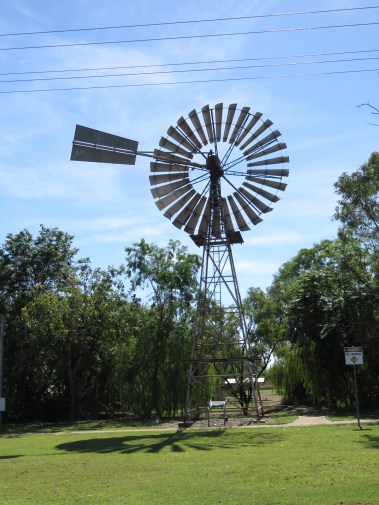
The iconic windmill which was so common in the past and now is seen less often in favour of solar power.

The next stop was Victoria River Roadhouse which also has accommodation and where many keen fishermen make their base before setting off on the Victoria River for barramundi.  It was very hot, very dry and there were lots of flies, so I was keen to keep moving but not before we called in for a chat with the owners.  Someone has a great sense of humour – see below:

gqhi728WTtSqZWLnqL7qHg_thumb_1c5.jpg

UNADJUSTEDNONRAW_thumb_1ca.jpg

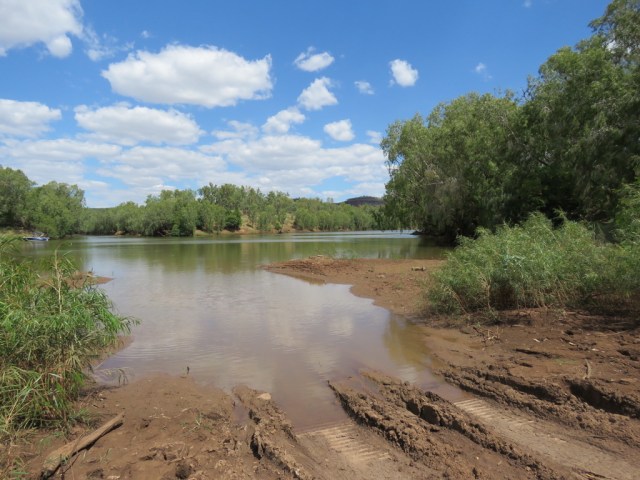
Crocodiles live here so no swimming and great care is taken to put boats in and out of the water.

D8%oZ8MRSLigOnVfnCivJQ_thumb_1c8.jpg

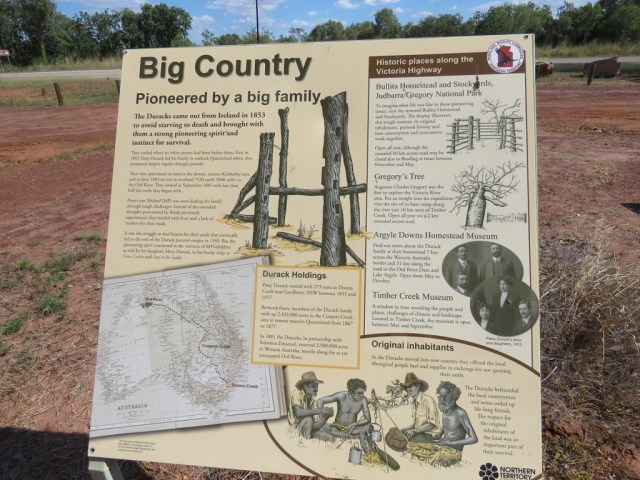
The road began to curve after this and the scenery started to change to hills and escarpments. A nice change from the flat terrain we had become accustomed to. Now we are in The Big Country and this is where the Durack Family made their mark by settling on leases in the Northern Territory and walking hundreds of cattle up here from Queensland.  Several books have been written about the family at this time – the most well known being “Kings in Grass Castles” by Mary Durack.

UNADJUSTEDNONRAW_thumb_1cd.jpg

Finally we arrived at Timber Creek after some 610km from Darwin. It was a relief to find the Hotel/Motel/Caravan Park and the big surprise was the amazing location.  In a dry, dusty landscape, this was a little oasis.

xwCKR4lIRaOtoZDYYaYcAw_thumb_1d5.jpg

UNADJUSTEDNONRAW_thumb_1d4.jpg

Lovely grassy areas where children could play and shady barbecue and picnic areas were dotted around all with the creek in the background.  8MECkBhQRf6lNkFEZH4Y6g_thumb_1f4.jpgOHnUrFO0SL2qqMlSA%2fdg_thumb_1f2.jpg

UNADJUSTEDNONRAW_thumb_1fb.jpg

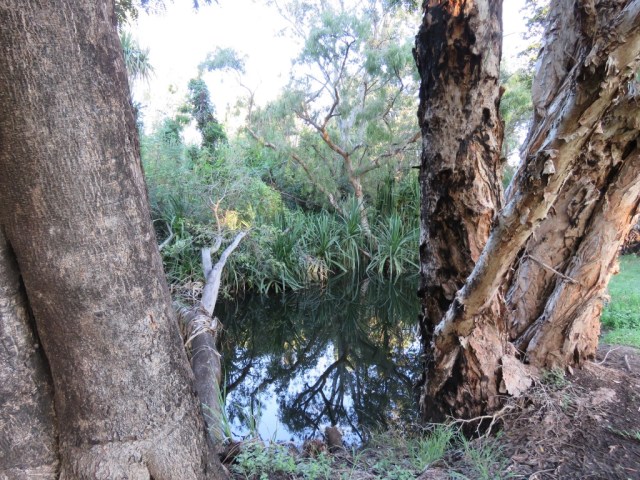
Huge timber trees along the creek edge obviously gave the place its name and the creek now has several resident freshwater crocodiles.  Wandering down to the water’s edge I was amazed to see quite a large croc just slowly surface from what seemed the calmest millpond.  There was absolutely no indication that the reptile was there!

UNADJUSTEDNONRAW_thumb_1d3.jpgDkiEgurOQwSHOmsHiNcj5g_thumb_201.jpg

Other residents of this gorgeous place are the fruit bats – of which we have lots in North Queensland and consider them a pest – however there are some people who think they are “cute”.

COQNBDOTTM+Rj4E0gMJgGg_thumb_1f8.jpg

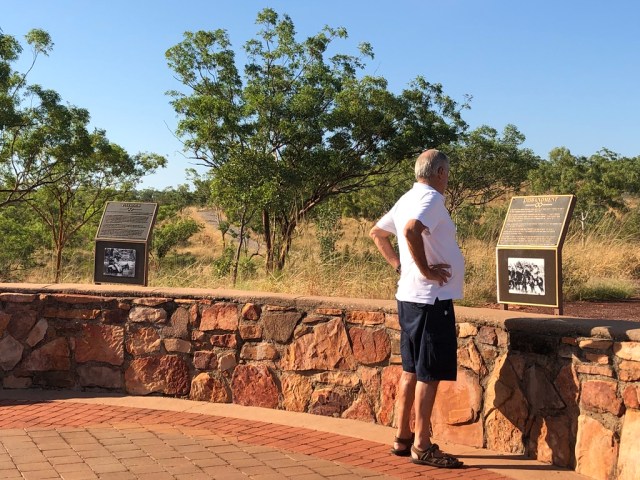
This morning we drove up to a lookout and learned the story of the “Nackeroos” – The North Australian Observation Unit (NAOU)  or “Curtin’s Cowboys” which was formed in March 1942 after  the bombing of Darwin and was made up of a group of soldiers and Aboriginal guides who patrolled Northern Australia looking for signs of enemy activity.  They operated in small groups and most of the patrols were on horseback. They lived in the harsh bush conditions and were aided by Aboriginal locals who had knowledge of the area. Their story is inspiring and a monument has been built to honour them.

UNADJUSTEDNONRAW_thumb_1d9.jpg

IMG_3670.jpg

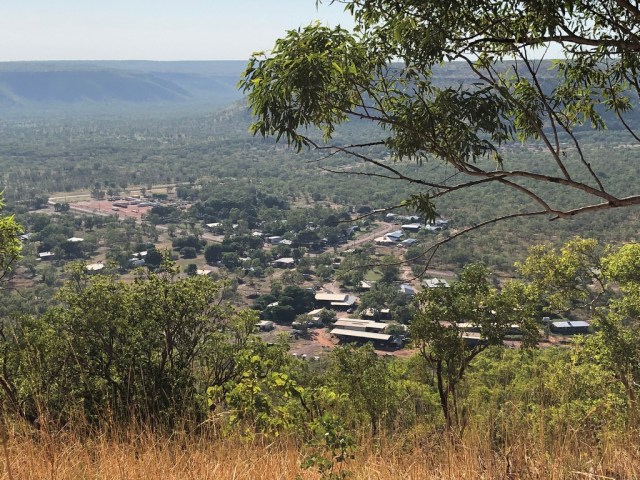
From this location is a great view of the town of Timber Creek and the Victoria River in the distance.

UNADJUSTEDNONRAW_thumb_1de.jpg

UNADJUSTEDNONRAW_thumb_1d8.jpg

Now it is on to Western Australia and Lake Argyle in the Kimberley – the road changes from here on!


WORLD WAR II HISTORY IN THE TOP END

During World War II Darwin became the first mainland state in Australia to come under direct attack from the Japanese when it was the target of over 64 air raids causing huge devastation and many casualties.  The attacks were totally unexpected at the time – in fact the sight of some 180 aircraft over the city caused many to believe the Americans had come to help.  Instead, the bombing began and caught everyone unawares.

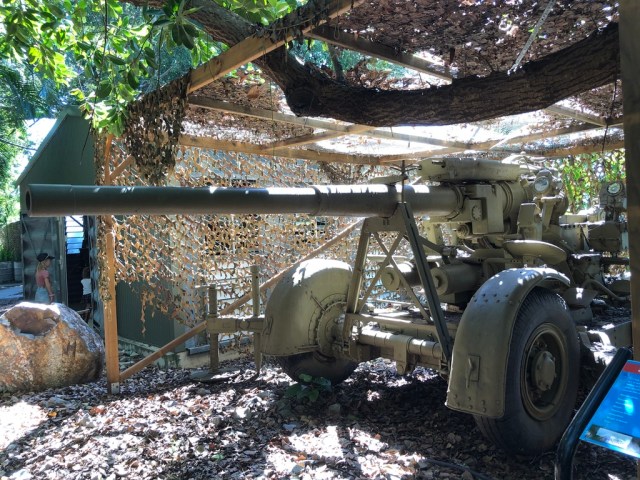
Much of this unique military history is preserved and scattered around the city. We drove to the East Point Military Reserve which is a beautifully tended area with picnic bays and shady rest points from which you can get a view of the city of Darwin across the bay.

CbF5SYNuSTinDS0vM3MxrQ_thumb_187.jpg

This is where the Darwin Military Museum is located – some 8 kms from the city centre – and it is absolutely incredible with fantastic relics, photographs, displays, interactive stories and a very realistic film about the day Darwin was bombed.  UNADJUSTEDNONRAW_thumb_1c2.jpg

Outside there are numerous displays set up in huts and hangars portraying the various roles the Army, Navy and Airforce played.

UNADJUSTEDNONRAW_thumb_1b6.jpgUNADJUSTEDNONRAW_thumb_1b7.jpg

UNADJUSTEDNONRAW_thumb_1bc.jpg

Guns, trucks, ammunition magazines and camouflaged vehicles also take pride of place in the grounds

UNADJUSTEDNONRAW_thumb_1ba.jpg


UNADJUSTEDNONRAW_thumb_1b8.jpg

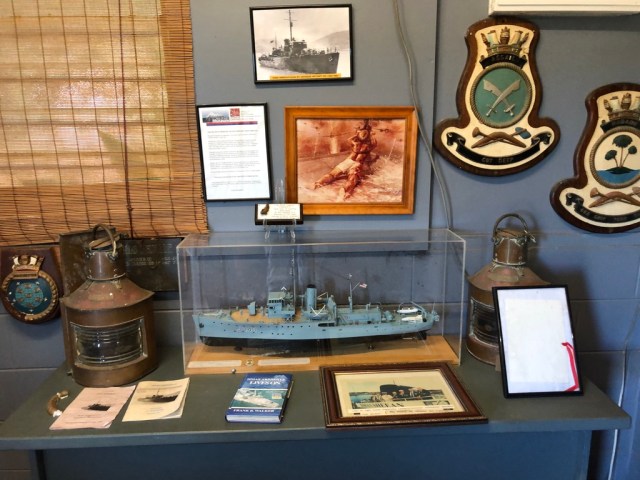
One story which brought me to tears was of the selfless courage and bravery shown by a young gunner on board a ship the day the bombing occurred.  He was strapped to his gun, had been hit and the ship was going down but he continued to fire allowing some of his mates to dive into the water and perhaps survive – he was fatally wounded whilst firing his gun – and he was 27 days short of his 19th birthday. The photo on the wall shows a painting of him firing whilst wounded.  In later years the Navy honoured his bravery by naming a ship after him.

UNADJUSTEDNONRAW_thumb_1a7.jpg

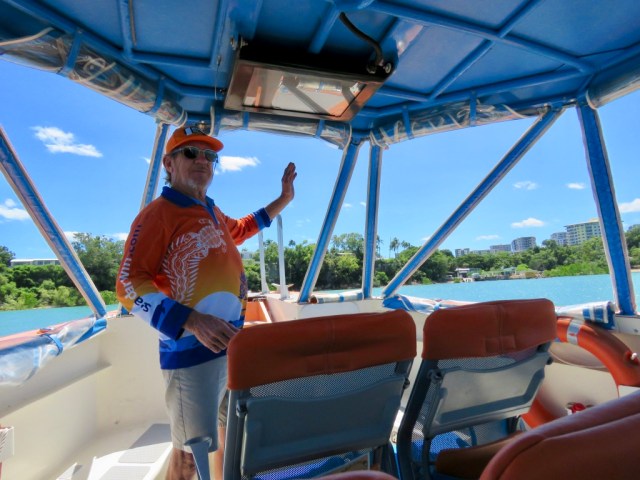
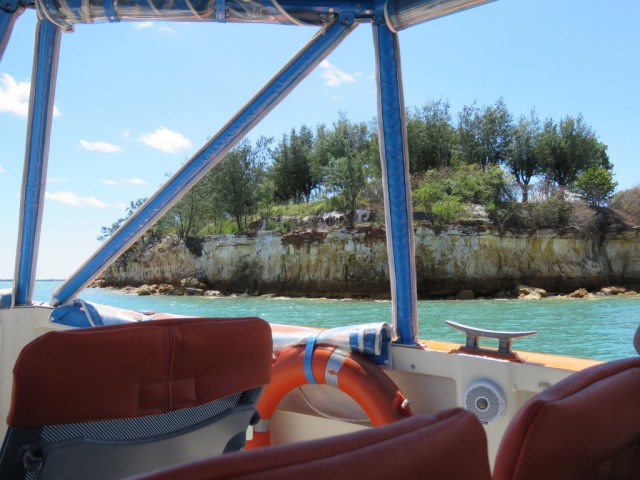
Following this visit we then joined Sea Darwin for a one hour tour of the harbour showing where the action occurred and where several wrecks are located including the USS Peary.  The commentary included some stories which have since been related by survivors of the attacks.

dFF%PLRXT9qEecR2igt0Ug_thumb_191.jpg

UNADJUSTEDNONRAW_thumb_192.jpg

Various tunnels and lookout posts were pointed out and we had a really good perspective from the sea.

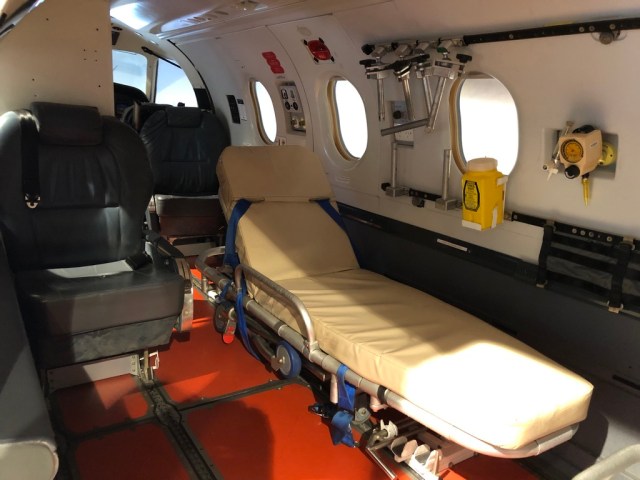
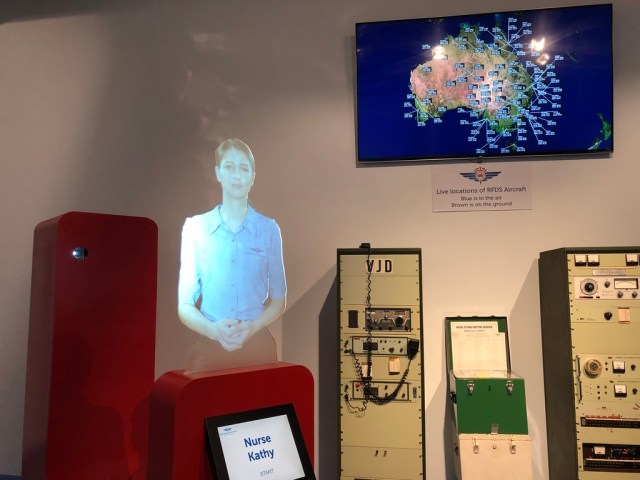
Finally we visited the RFDS (Royal Flying Doctor Service) museum on the wharf which not only gave the history of the Service (which we also saw in Cloncurry, where it all began) but also were able to board a plane as well as see a map of Australia showing where all 73 aircraft are currently located. This is, of course, constantly moving as many flights are in operation day to day.

UNADJUSTEDNONRAW_thumb_1c1.jpgUNADJUSTEDNONRAW_thumb_1be.jpg


UNADJUSTEDNONRAW_thumb_1c0.jpg

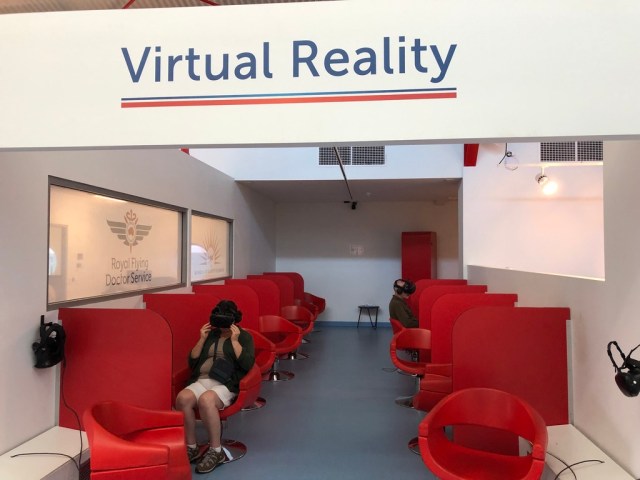
There is also an excellent interpretation of the bombing of Darwin which is shown by Hologram film as well as by Virtual Reality.

UNADJUSTEDNONRAW_thumb_1bd.jpg

This was the most amazing experience.  One moment you are flying in the plane with a  pilot shooting down the Japanese, the next you are wallowing in the sea with boiling timber, metal and oil all around.  Bombs are flying everywhere and as you spin around and look up and down, the whole scene becomes so real that it is quite terrifying at times!

Interactive mini ghosts tell their story – including that of the first Japanese Pilot captured in Australia – Hajime Toyoshima.  There is a full size replica Japanese Zero aircraft hanging from the ceiling and a replica of Camilla, the Flying Boat that escaped from Darwin Harbour during the raid.

For those interested in World War II history in Australia, Darwin is most definitely a place to visit as you can certainly have a very powerful, immersive and interactive experience at several locations.