
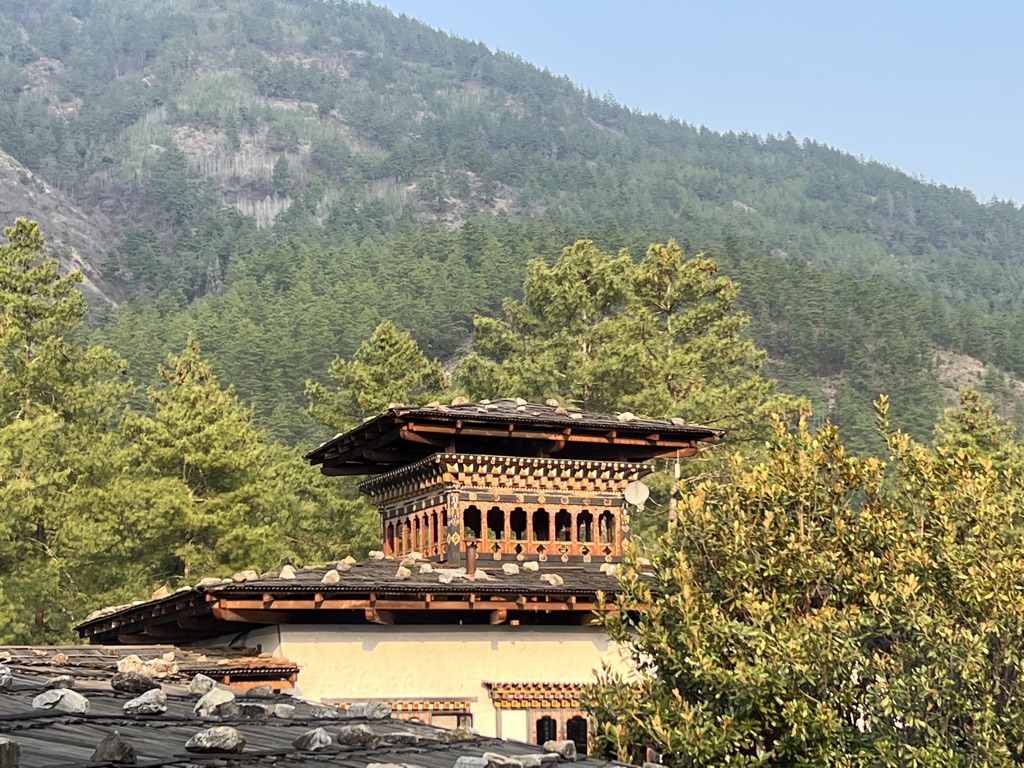
DAY SIX – BACK TO PARO AND FUN AND GAMES
Time to retrace our steps back to Paro and see more of everyday life in this beautiful country.
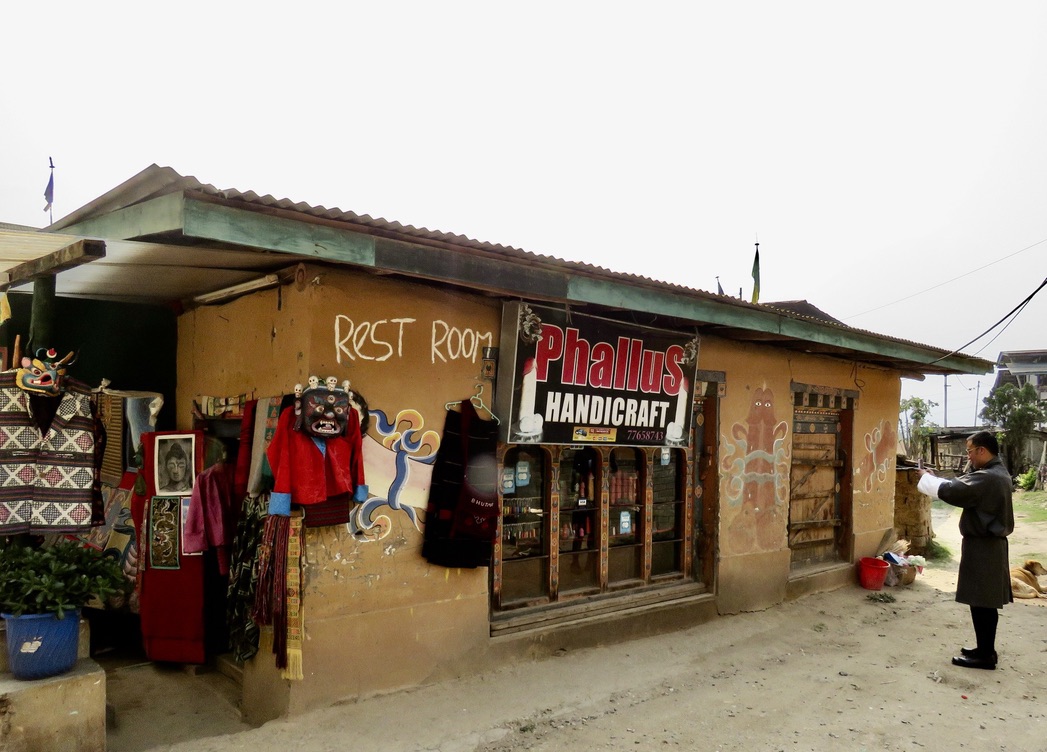
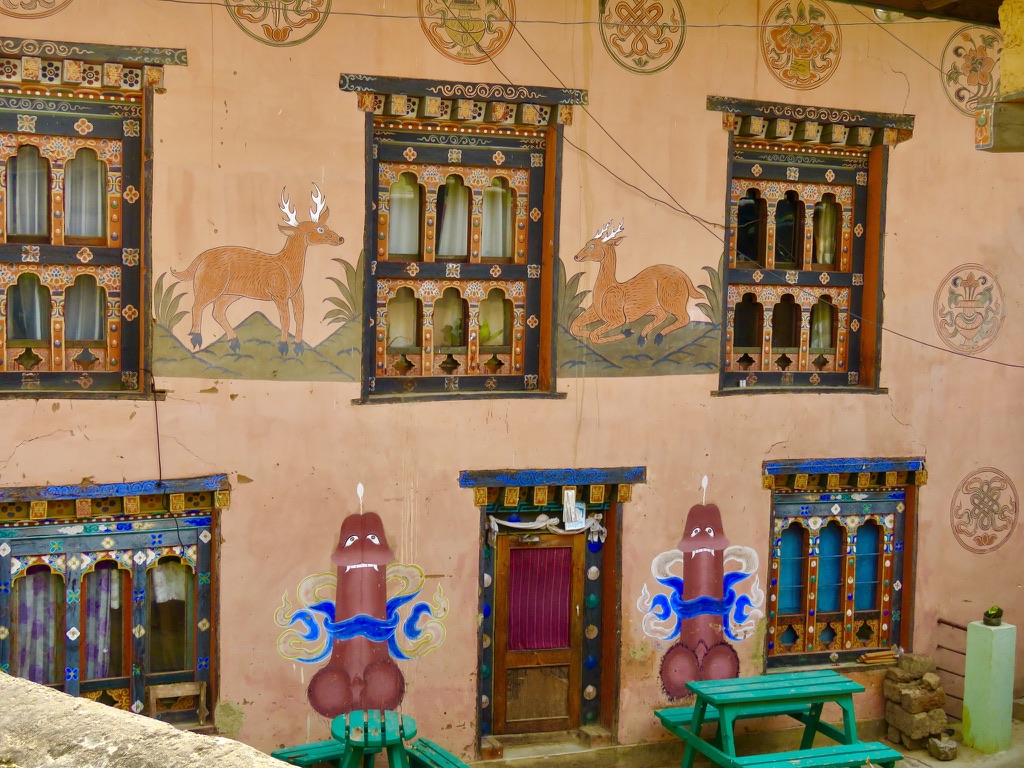
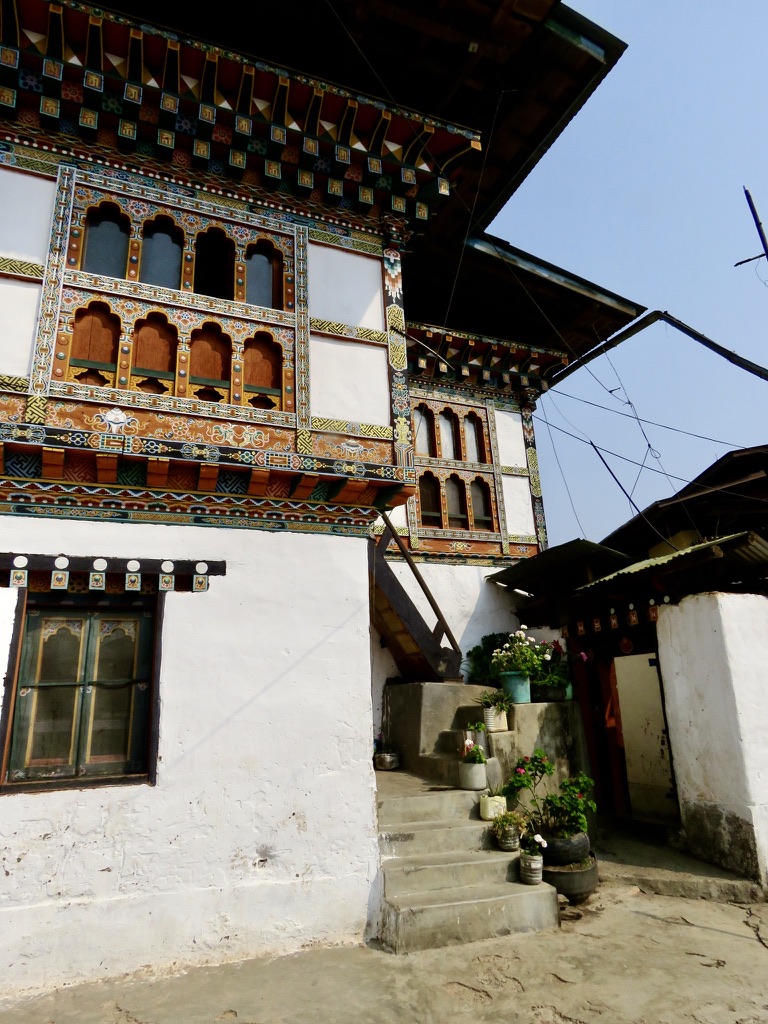
We set off early through winding mountain roads and stopped in the Divine Madman’s village primarily to see the painted houses and see how much the people revere this god. To us westerners the worship of the “flaming Thunderbolt” seems a little shocking and quite bizarre but during our drives around this western region we came across many houses with the art in different villages and towns. Clearly this is accepted and no one thinks anything of it. This is the god of fertility and so it is quite natural.
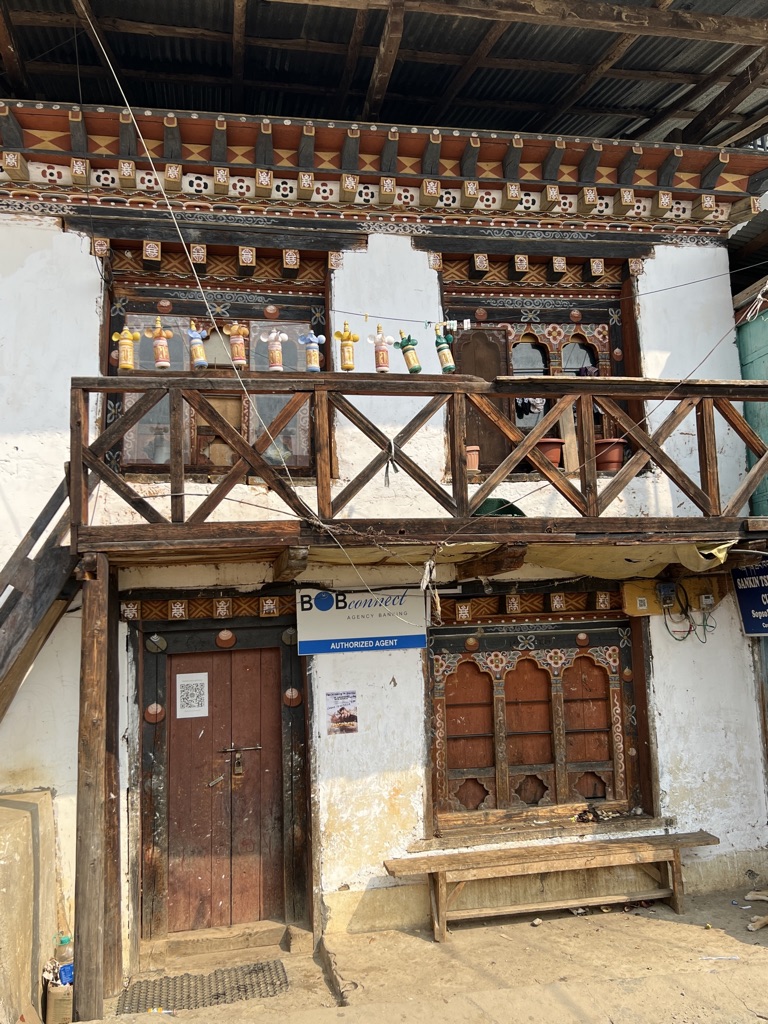


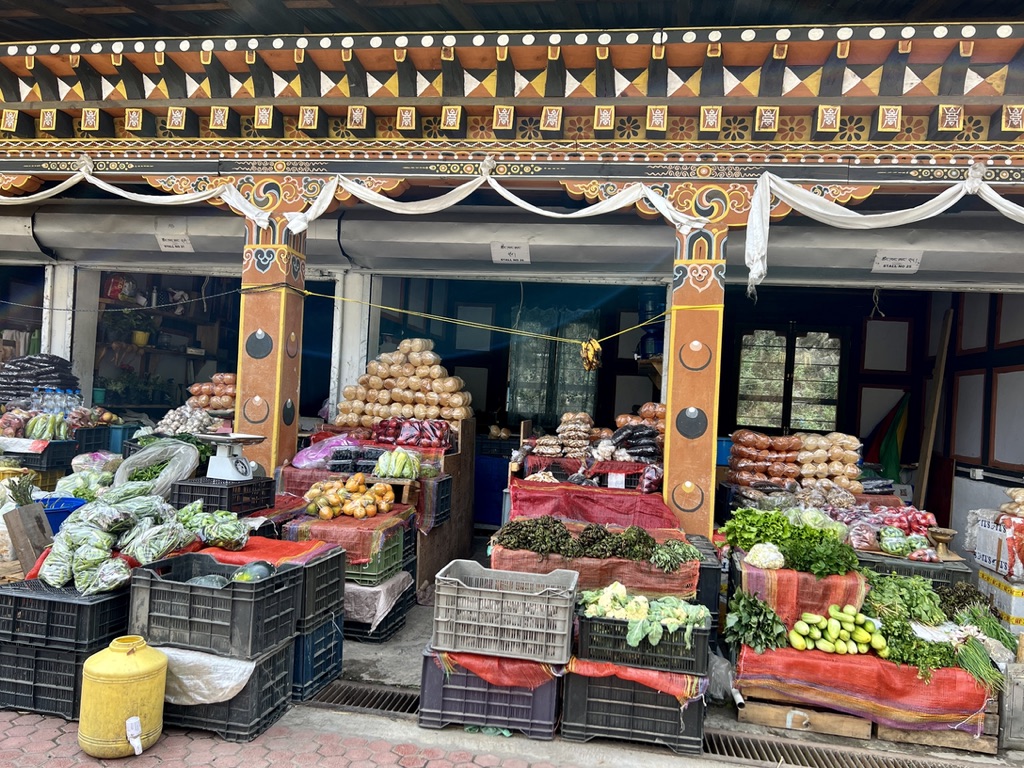
Once again we drove up to the Dochu La pass but this time the view was marred by smoke from the forest fires – deliberately lit by farmers to improve the soil. However driving through the forests of cypress pine and spruce amidst tiny waterfalls and memorial chortens was just as breathtaking. Once over the Pass we saw several traditionally built roadside markets. Obviously the farmers do well with the local travellers who stop to buy the fresh and very colourful produce. The variety was staggering much of which I had never seen before.

By the time we reached Thimphu it was time for a break and where better than a stop at the Ludrong Memorial Garden which is an oasis in the middle of the city. There we found walking trails, gazebos and bridges, ponds and ornamental gardens, woodlands and lots of picnic areas. The local population come here for family time on weekends and holidays and the dogs in this area are very well looked after!


The National Textile Museum was our next visit. Located in a modern building, the museum is under the royal patronage of the Queen Mother and was opened in 2001 and gradually added to since that time. Showcasing the beautiful Bhutanese textiles and the traditions of weaving and embroidery, it is fascinating to see the weaving techniques – demonstrated by a weaver of great skill – and the styles of local dress for both men and women. No photography is allowed but there is a gift shop and, of course, I bought a scarf as a souvenir!


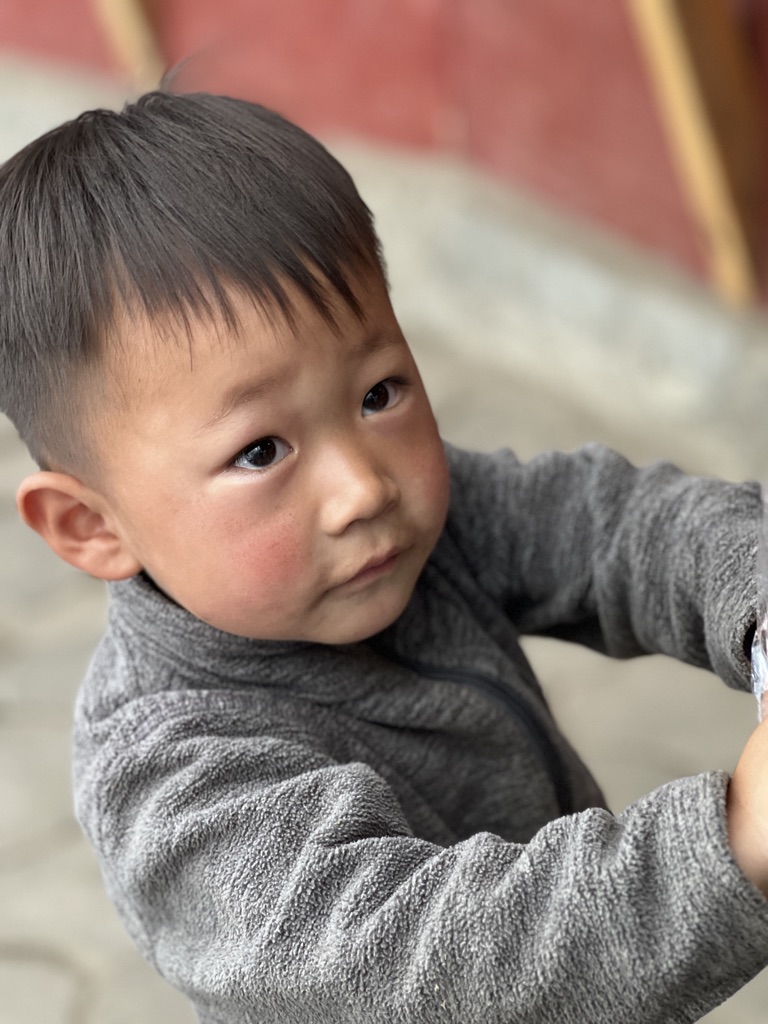
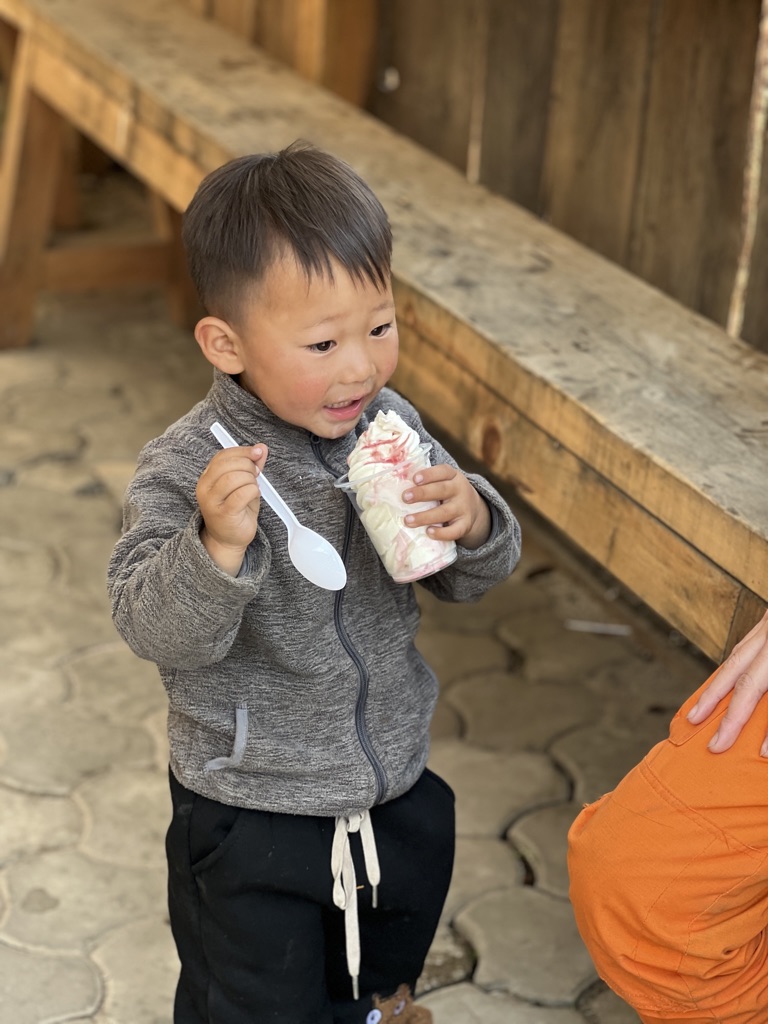
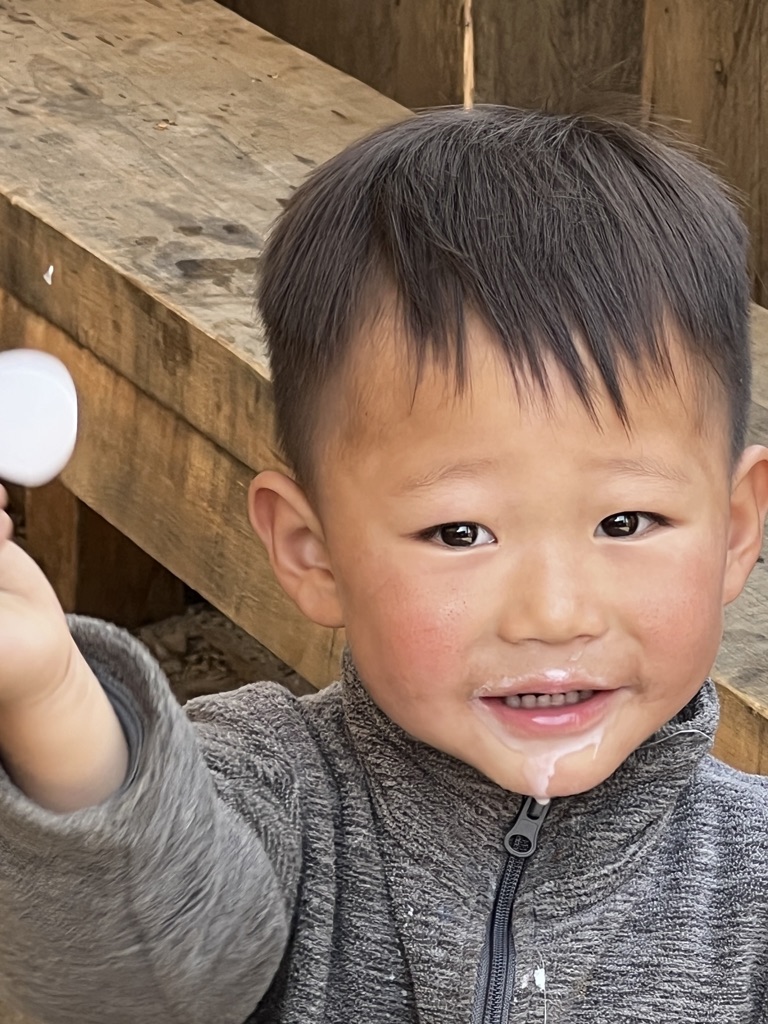
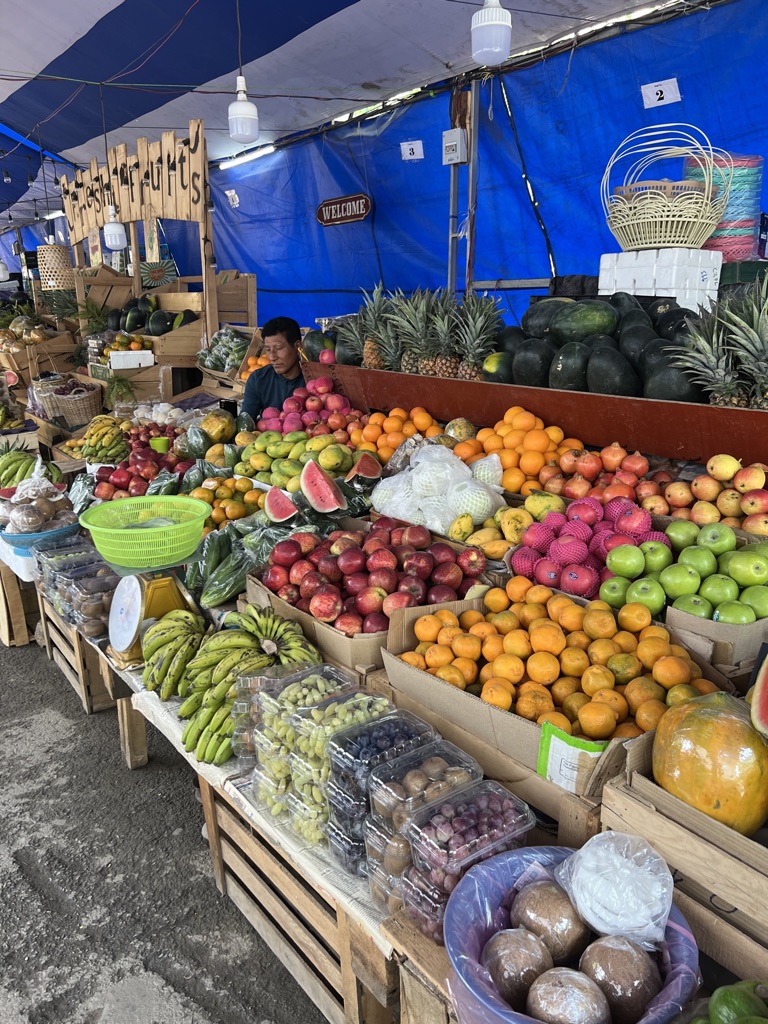
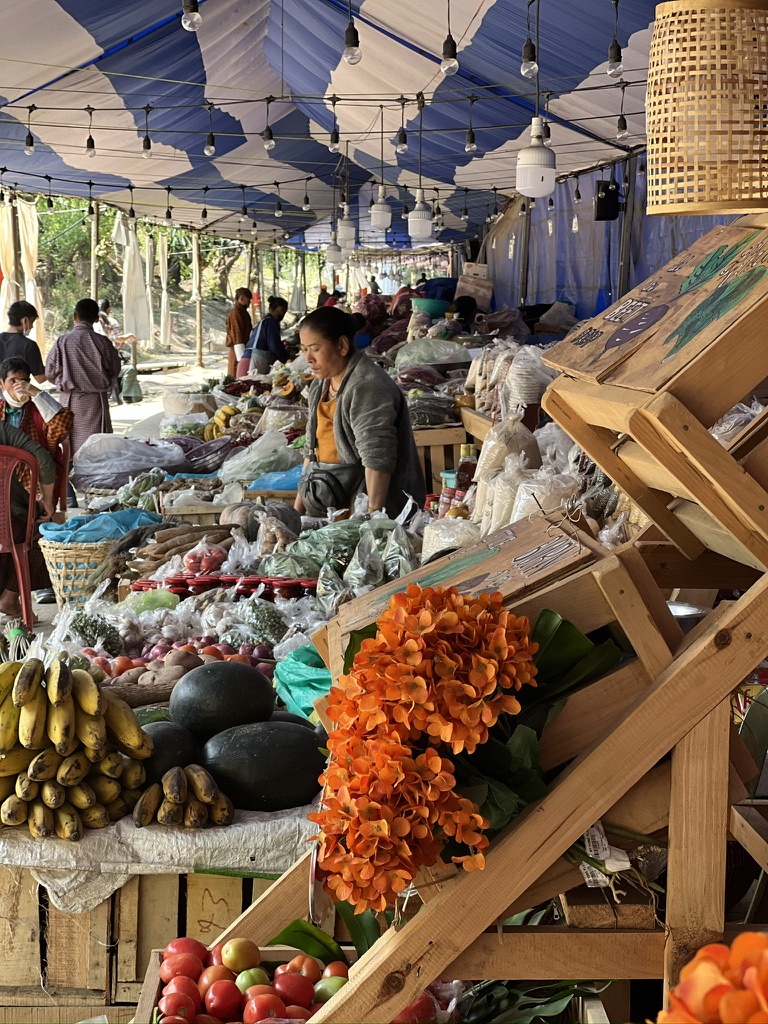
Before we hit the road back to Paro we went to the weekend market. People from surrounding villages start arriving on Thursday evening and come to buy and sell produce, ranging from dried chillies and yak butter to textiles and bamboo products. The market continues until Sunday afternoon. Here again was such an enormous variety of produce it was mind boggling. Small food stalls and cafes were inside where we could have lunch. We met a little boy, obviously the child of one of the stall holders, who followed us around and in the end asked for an ice cream. How could you refuse such an appealing little face? We got permission from a parent and then he indulged in a very messy fashion!
The market is held in a large open space which is undercover and is divided into sections according to the product.



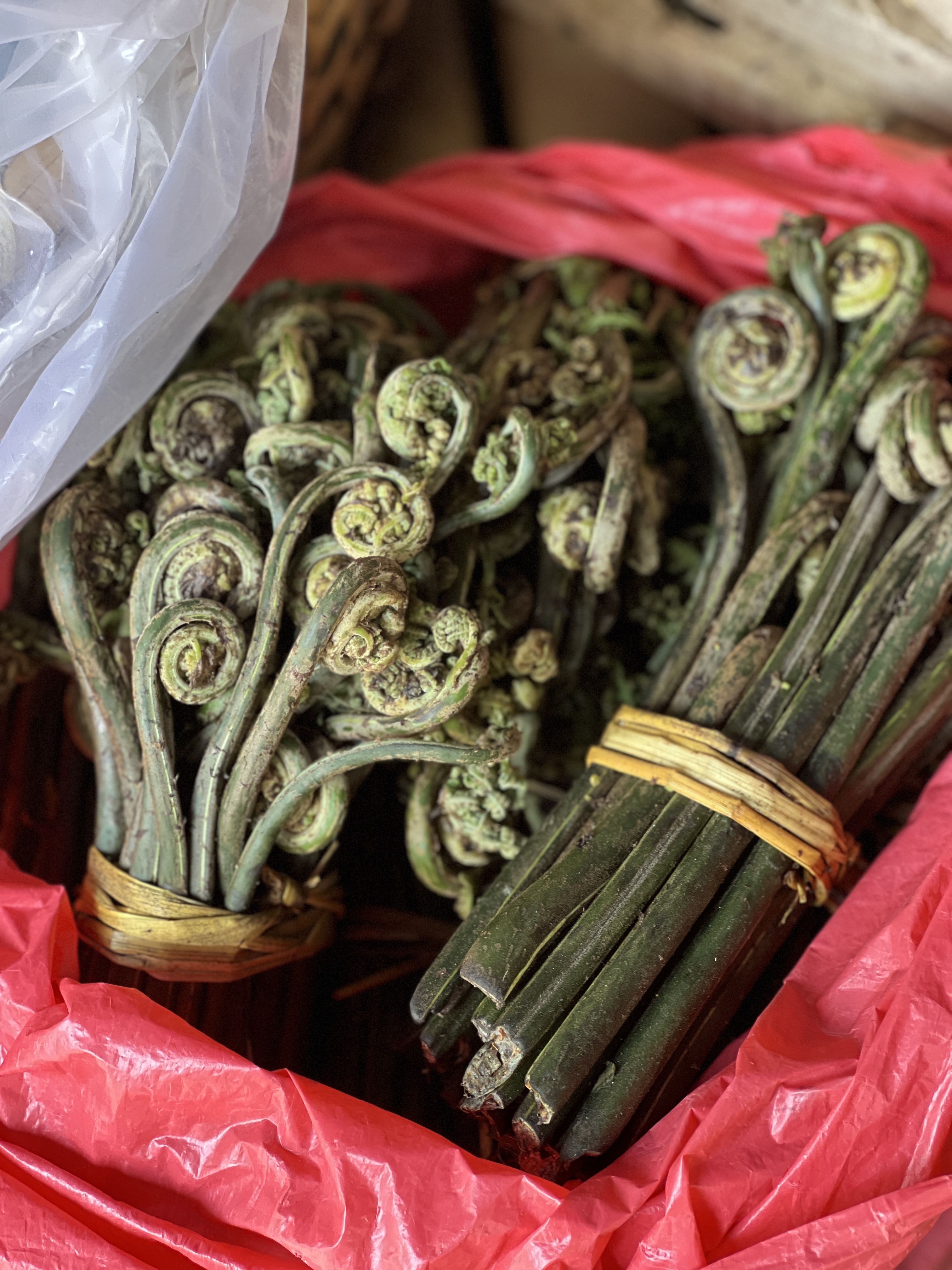
One of my favourite vegetables in Bhutan was fern – cooked in a variety of ways. Here were huge bundles of it ready to take home.
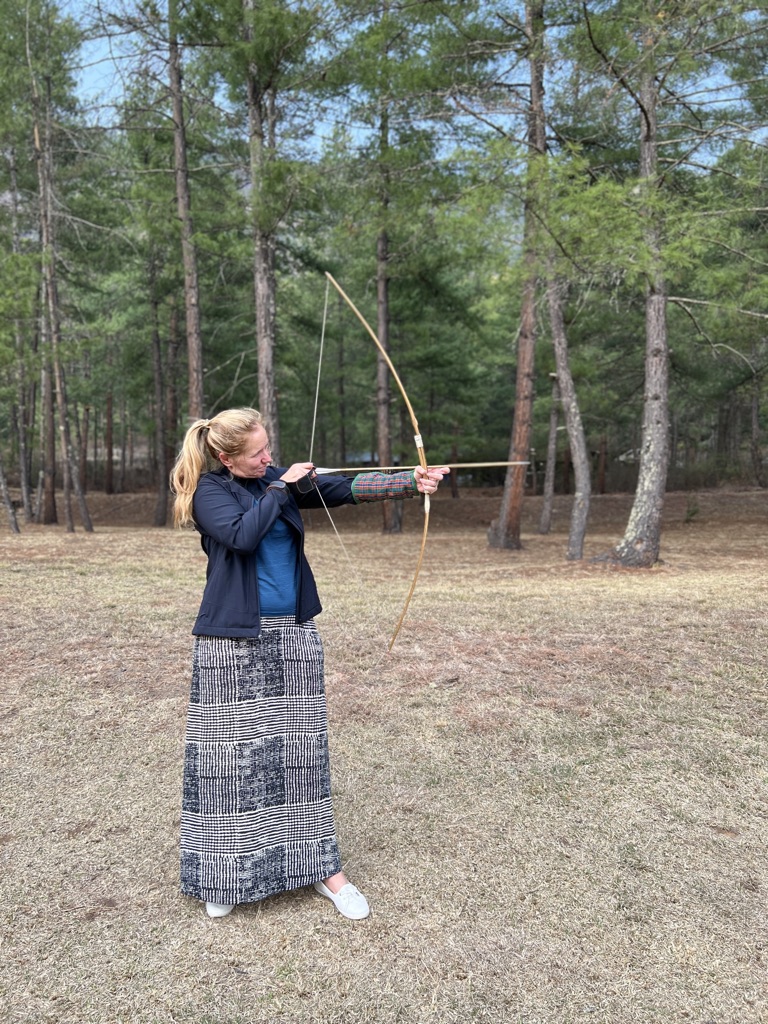
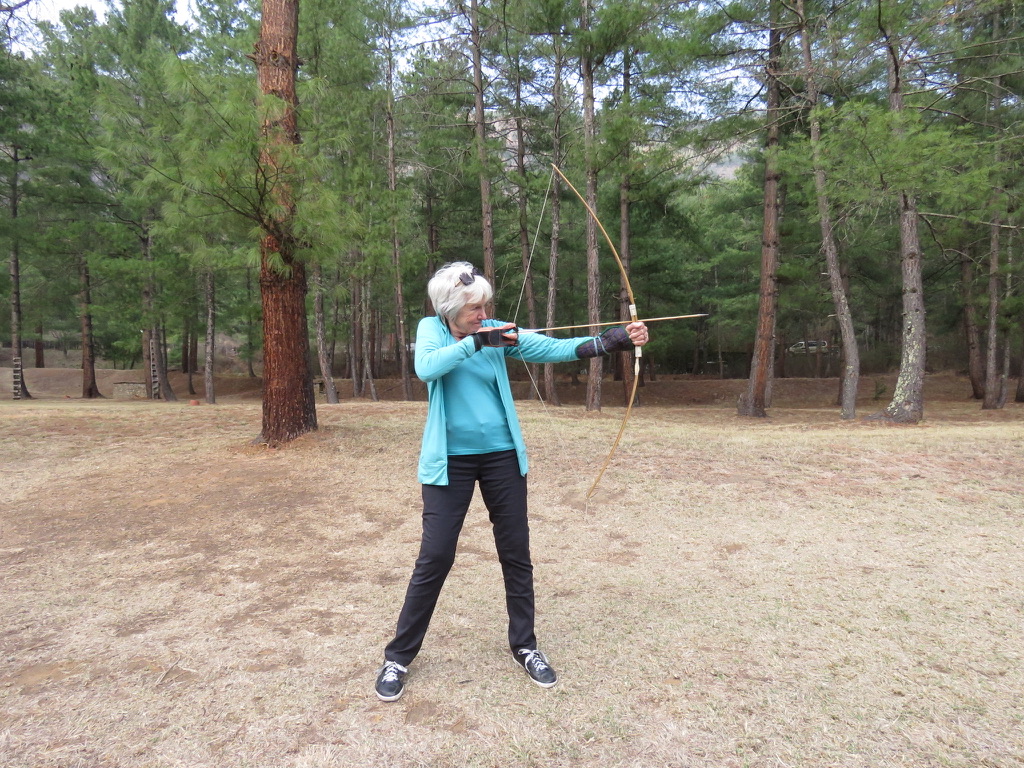
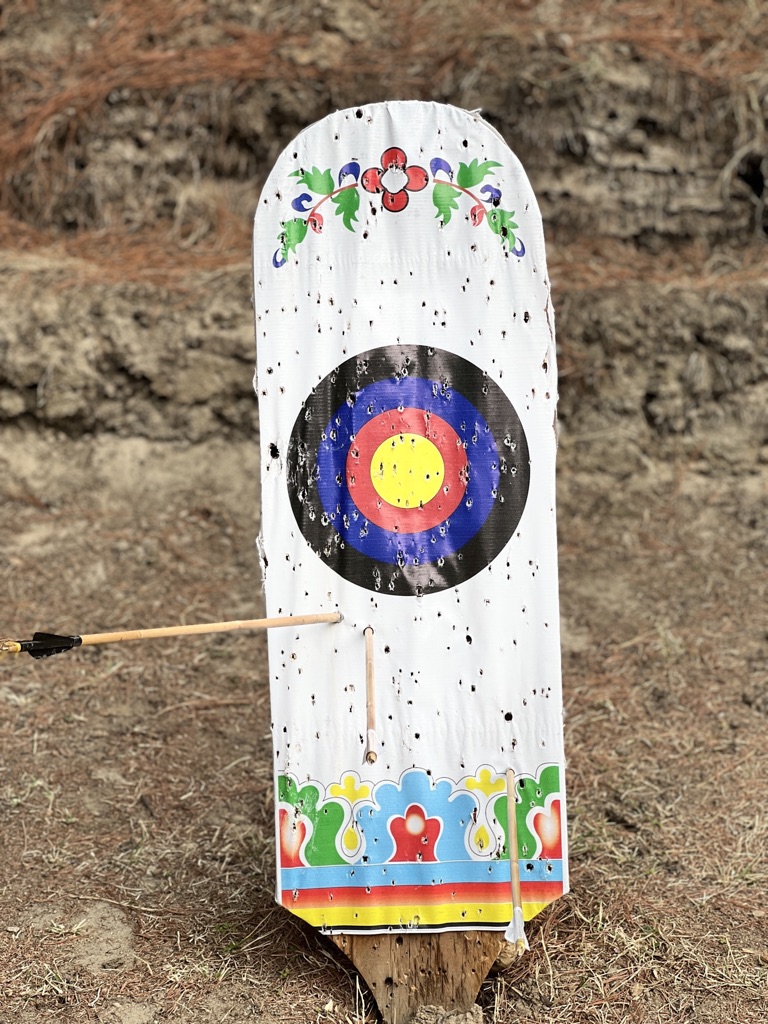
Archery is a National sport in Bhutan and people partake for fun and physical exercise. It is said that it builds concentration and is important for socialization and mental development. Bhutan has competed in the Olympics since 1984 and maintains an Olympic team. Every village has an archery field and our hotel, Como Uma Paro, is no different. That afternoon we tried our hands in this very unusual sport using traditional equipment. Bows are made of bamboo and arrows are reeds or bamboo. The target is normally 100 – 145 metres away but in our case it was somewhat closer. I managed to hit the target but it wasn’t quite bullseye!

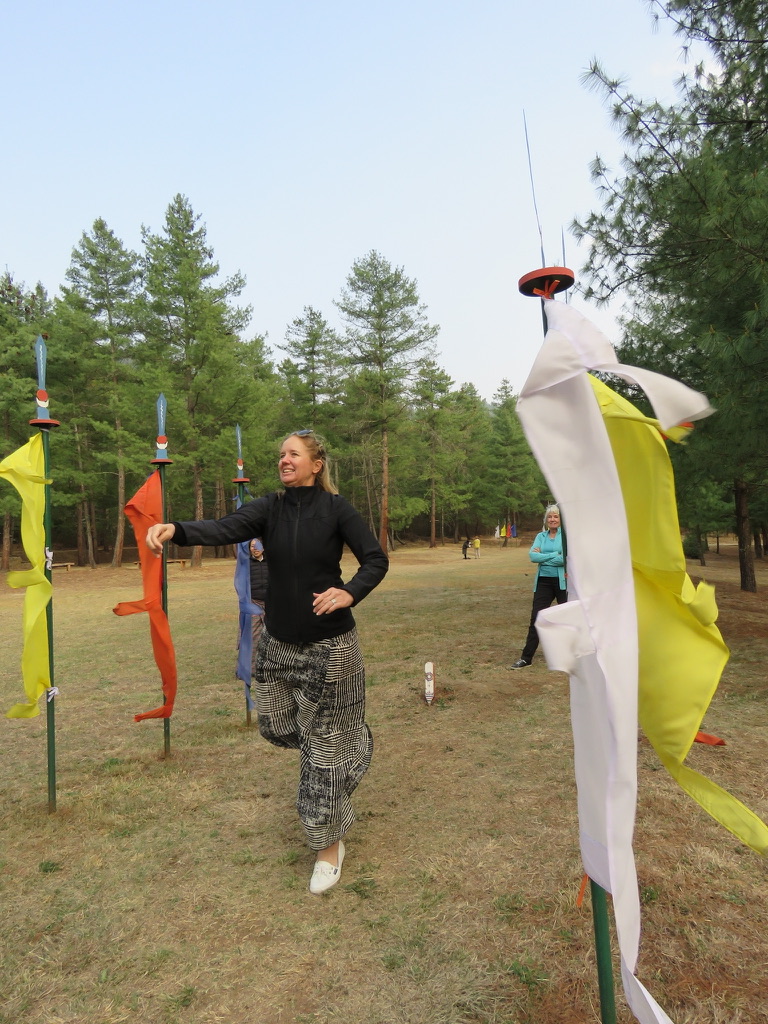
The other fun game they play is dart throwing, Khuru in Dzongkha, which involves throwing darts outdoors some 15 to 20 metres away. The darts are wooden sticks with a pointed end and the target is a wooden post. Once thrown the competitor turns around and tried to hit the target on the opposite end. I had no luck at all but Jacqui was a natural!

Time to call it a day and prepare for our last day of adventure tomorrow.

















 IT'S ABOUT THE JOURNEY...........