
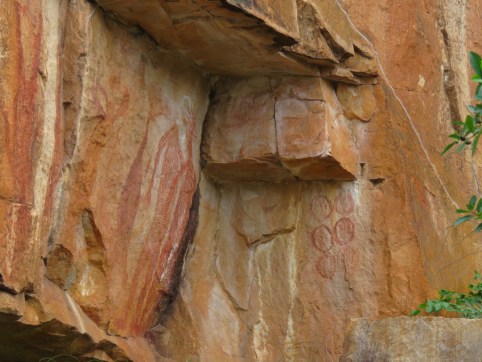
When you think of Kakadu the image conjured immediately is one of huge open spaces, billabongs, birds, buffaloes and crocodiles. Kakadu is all of that – and more. It covers 20,000 square kilometres and is on the U.N.E.S.C.O World Heritage List in recognition of both its outstanding natural values and as a living cultural landscape. Certainly one gets the feeling on entering the Park that this is a special place. Aboriginal people have inhabited Kakadu continuously for more than 65,000 years and ancient rock art shows long extinct animals, abundant wildlife, landscapes and stories which deliver a profound experience for visitors. We found all this explained very thoroughly at the Visitor Centre and again at the Warradjan Cultural Centre nearby which is totally fascinating and not to be missed.
We stayed in Jabiru at the uniquely shaped Crocodile Hotel – now indigenous owned and very distinctive in the landscape.

The restaurant served bush tucker as well as international food and the barramundi rolled in lemon myrtle was mouthwateringly delicious! There is also an excellent Aboriginal Art gallery there with numerous paintings I really wanted!
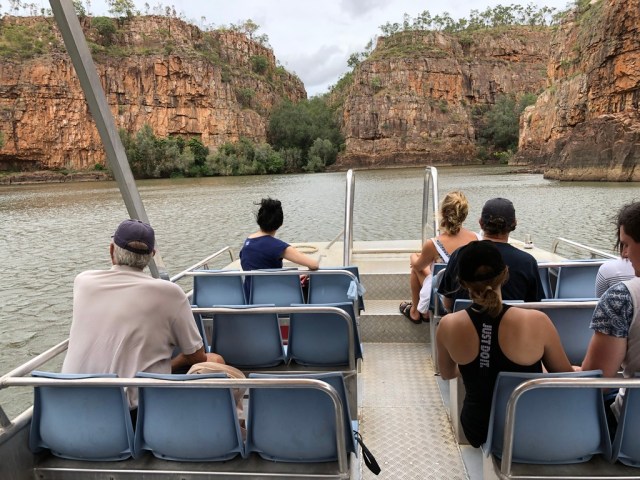
We found that we were somewhat limited in the places we wanted to go to because of the recent ‘Big Wet’ and there was an awful lot of water about with lots of roads and turn offs closed. One activity that runs all year round – with different departure points according to the amount of water on the road or in the river – is Yellow Water Billabong Cruises. We decided to do the morning cruise which was led by an Aboriginal guide with very strong connections to the Park. He knew everything about it and even where to spot the elusive crocodiles and the hundreds of different species of birdlife.

The cruise lasted an hour and a half and we were not disappointed. It was breathtakingly beautiful as we cruised along the river, through the billabong and across wetlands thick with water lilies, grasses and lotus plants.

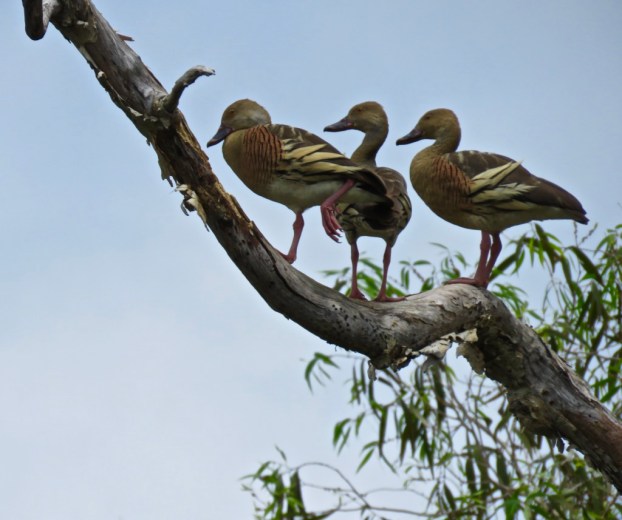
Then we found birds of all types including the whistling duck – the flock resting high in the trees and some on the lowlands.

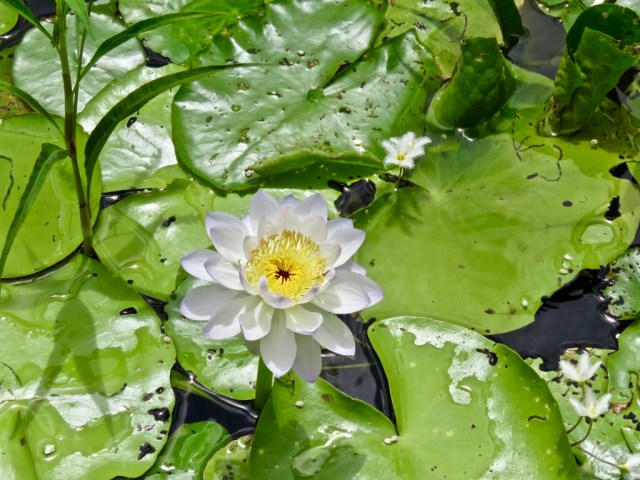
Beautiful lotus flowers and water lilies were everywhere and our Guide explained how the local people pick them and use every part either for food or for craft – as, for example, the inner silk fibres used to make fabric.
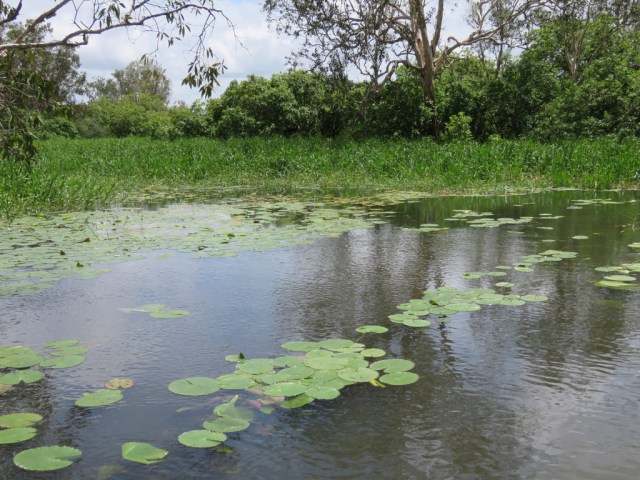
Several water birds were waiting in the reeds to catch bugs or fish and they in turn were in danger of becoming a meal themselves for the resident crocs!


Then, to the delight of passengers, the Guide found a young male croc cruising quietly down the waterway, at times he submerged himself and it was impossible to tell where he would surface. For a reptile that is so huge, it is amazing how they can make themselves almost invisible and disappear without a trace.


We learned more about Bush tucker and the different plants that grow around or in the water – essential for survival in the Bush. I actually have a new respect for the bushmen and their ancient way of life.

This is actually a road in the dry season. We were really feeling that we wanted to get more out of the Kakadu experience so we opted for an early morning Scenic Flight with Kakadu Air. At least we would see the waterfalls and the ‘stone country’ as well as get an idea of the vastness of the area.

Our pilot was Henry – a young Kiwi who has fallen under the spell of flying in Kakadu. He took us to the edge of the Park and into Arnhem Land as well as over Jim Jim Falls and Twin Falls, the spectacular escarpments and the vast wetlands west of Jabiru.


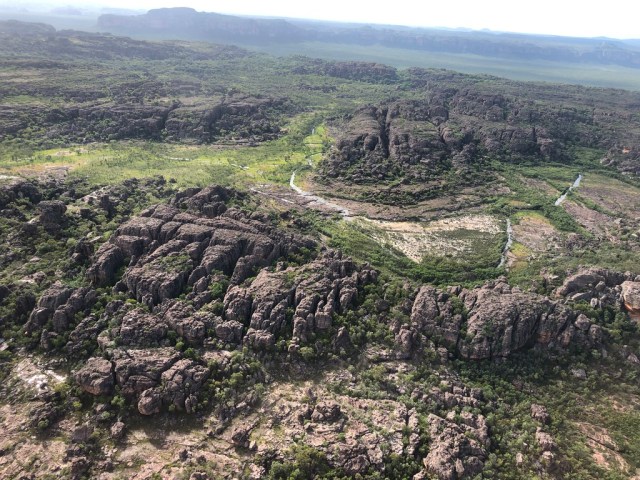

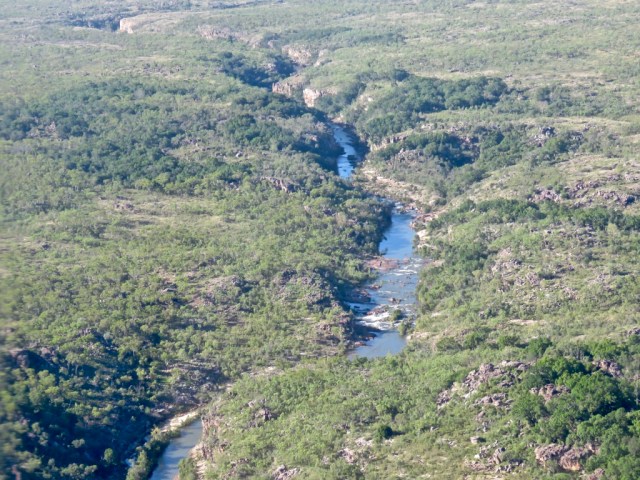
From the air we could see all six of the Top End’s ecosystems – wetlands, savanna woodlands, tidal flats, hills, floodplains as well as the amazing escarpments. The wet season up here is truly amazing. I was thinking of the early inhabitants of this area, their stories and how they respect the earth, the country and its spirit. Somehow it gets into your own psyche.
Finally, on the way back to Jabiru we flew over the Ranger Uranium mine which is in the process of closing down. It was thanks to the mining company ERA that the township of Jabiru was built some years ago and our Guide mentioned that it has benefited the area and the people and for that they are grateful.
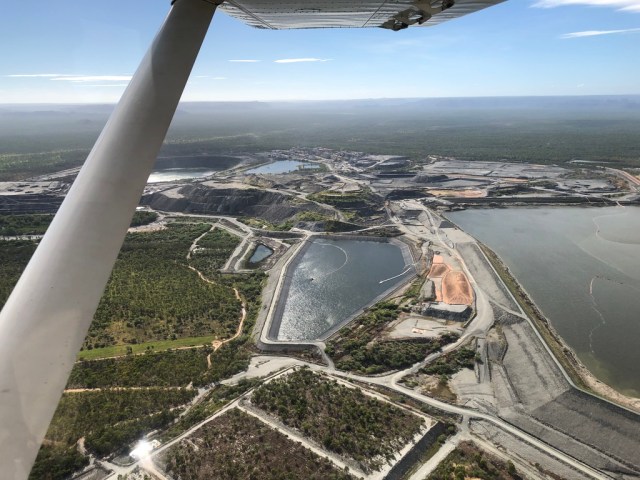
However, the mine has done its job and now it is time to listen to the country, see the birds and wildlife and watch quietly in this special place called Kakadu.






 IT'S ABOUT THE JOURNEY...........