
It has been a few months since the last blog thanks to Covid 19 and all the restrictions placed on us. At the start of the year I imagined the travel side of this blog would be all about Iceland. Our trip was booked, the wedding planned and all was in place – until the Pandemic struck! So, we are biding our time and hopefully will be able to get to Iceland in the future.
Meantime we are exploring our own backyard and last weekend we did a little road trip to Ravenswood. This charming heritage listed township is 89 kilometres west of Charters Towers and was once a thriving gold mining town. There are lots of stories and history is at every turn you make. Apparently in 1868 whilst mustering cattle, a local pastoralist by the name of Marmaduke Curr stopped to have a drink of water from Elphinstone Creek and saw specks of gold at the bottom of his pannikin. The area quickly became part of the gold rush. IN the boom era there were over 50 pubs and a population of over 5000. Today it is a virtual ghost town with a population of around 255.
We set off on the 130 km drive from Townsville on an all bitumen road. Recent rains had turned the country into a palette of greens and small farms with Brahmin cattle are interspersed along the route. An hour and a half later we drove into the historic town.

It was quiet and the first stop we made was at the Miner’s cottage – on the right in the above picture. This was a brief history lesson for Bea – age 9 – who has not spent a lot of time in the bush and who was fascinated in the lives of the children at that time.


The last time I was here was years ago with my daughter’s school class and we visited the school at the time. Bea was intrigued to know it was a one teacher school, with all students from years 1 – 7 in the same room and taught by the same teacher! Then there were about 17 students in total.
The old cottage is original and displays how the miner and his family would have lived in the late 1800’s.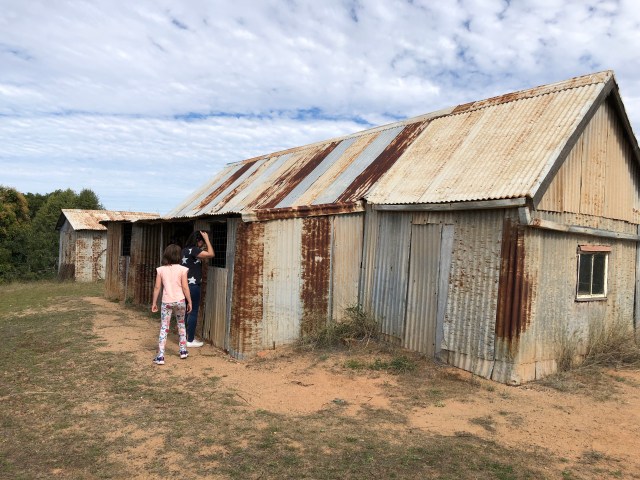


The kitchen was an eye opener, as was the bedroom. Seeing this made young Bea thankful for what she has at home!
Outside was the laundry and the outhouse – I had to marvel at the fortitude of the pioneers, both male and female, who sacrificed so much to live the dream of finding that large gold nugget. For many it was hardship and disappointment and for others there was success in measured amounts. This is related as well at the local cemetery where gravestones tell of mining and horse accidents, illness and child influenza. Pioneers came from all over the world in search of a new life and many descendants are still in the area.

The old London Mine built between 1903 and 1915 consists of a headframe with mullock heaps to the north and south. Today we can walk to the entrance and stare down and imagine the miners toiling in impossible circumstances years ago. There are old chimneys, rusting machinery and old shafts throughout the town making the journey an informative one, especially for eager young minds.
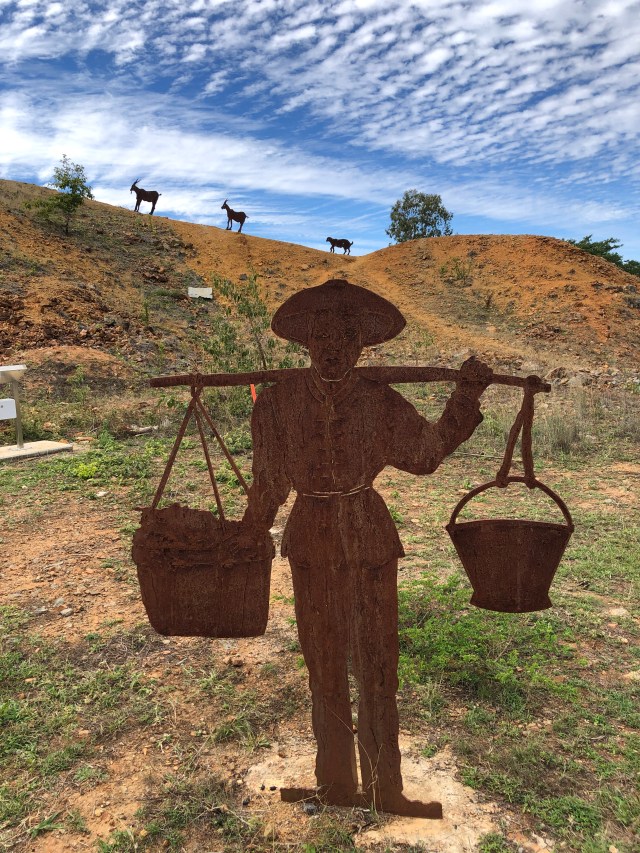

The quaint shops – no longer trading – show some of the merchandise that would have been available at the time. A fun thing to do is to pose for a photograph outside and imagine you are out for a Sunday stroll in the early part of the century, dressed in your Sunday best and carrying a parasol for the sun. Note the bag of money held by the male!
We had lunch at the historic Railway hotel where little has changed. There are some original fittings and furniture, the ceilings are pressed metal and there are large french doors opening onto the verandas at the side. It is possible to stay here and during the winter season it becomes quite busy with passing travellers keen to experience a night in the old town – along with ghosts and wildlife!
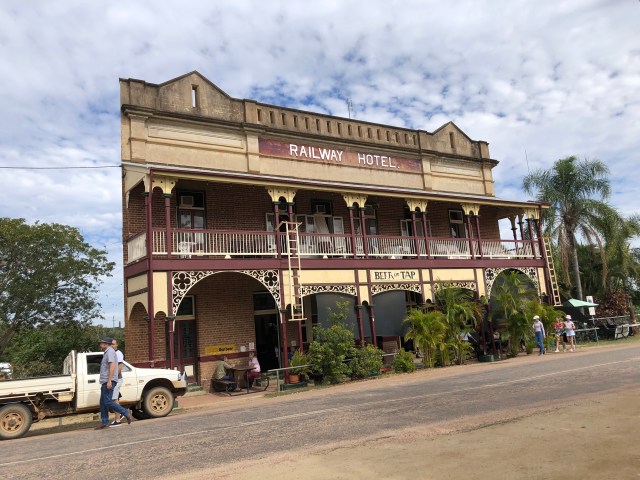
We had a delicious home cooked lunch here and wallowed in the feeling of yesteryear.
On the way home we stopped at the White Blow Environmental park which is about 4km from town along the road to Ayr. The large quartz outcrop is a prominent feature of the park and is about 15 metres in height with a diameter of 45 meters and is the largest of several masses of quartz in the area. The quartz is estimated to be about 300 million years old.


We took the road to Ayr which gave us spectacular views of the Leichhardt ranges and was devoid of any traffic. We did see wildlife, including this curious little fellow out for a munch of newly grown grass.


An easy day trip and a little bit different. Now to explore some more although the island calls this weekend!
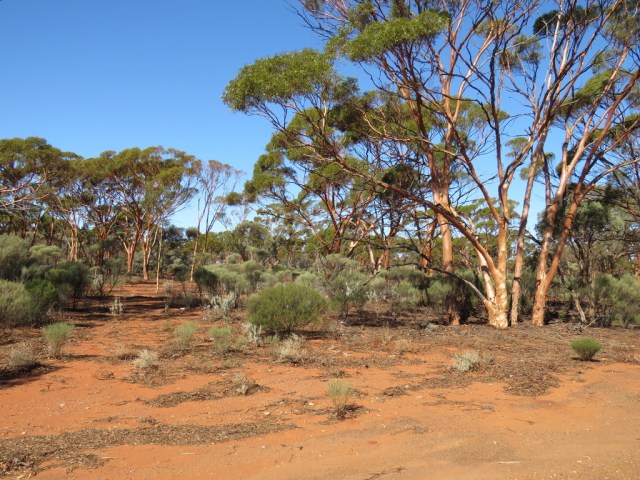








 IT'S ABOUT THE JOURNEY...........