LAST DAY IN BHUTAN

DAY SEVEN – DRUKGYAL DZONG AND A TRADITIONAL FARMHOUSE VISIT

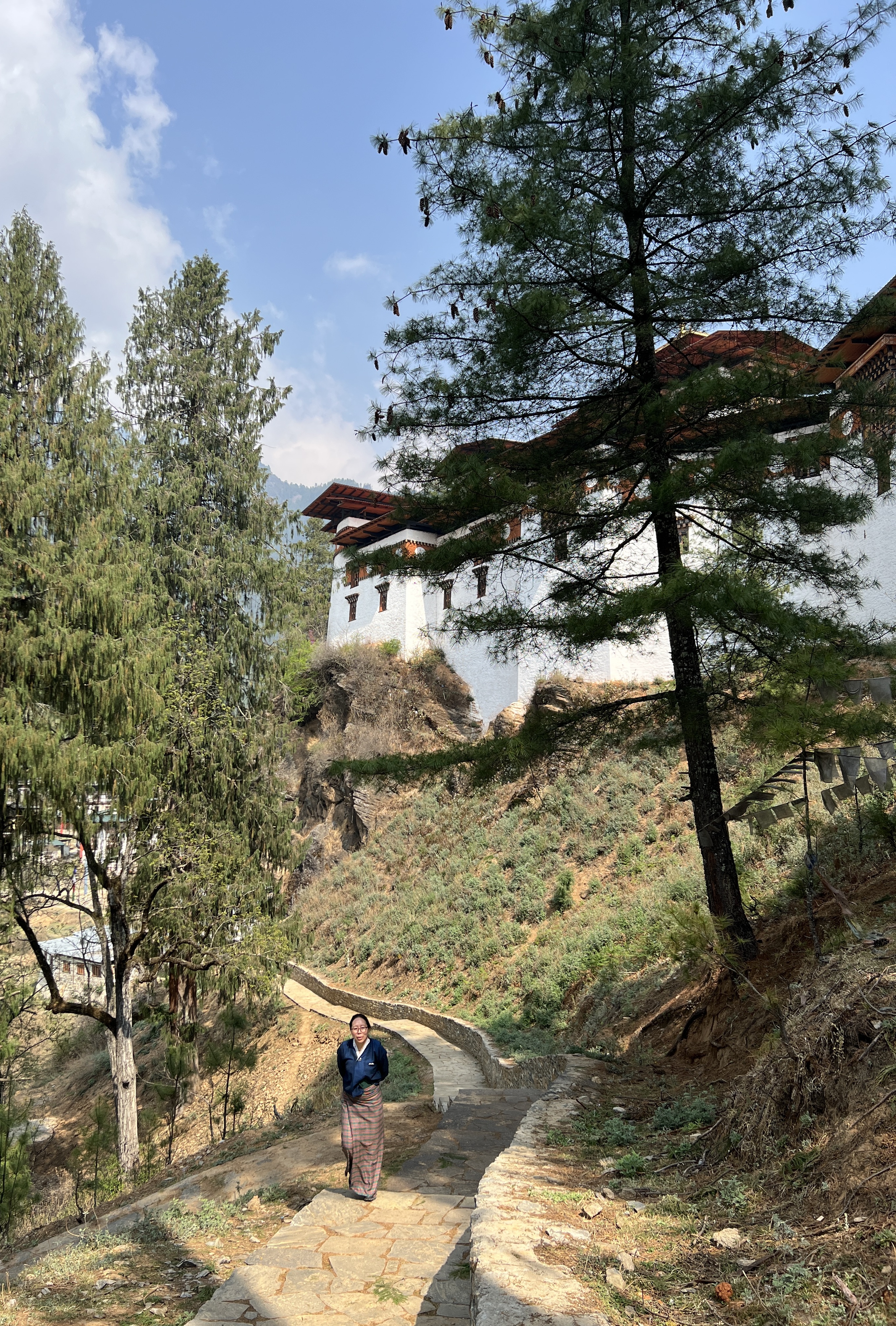
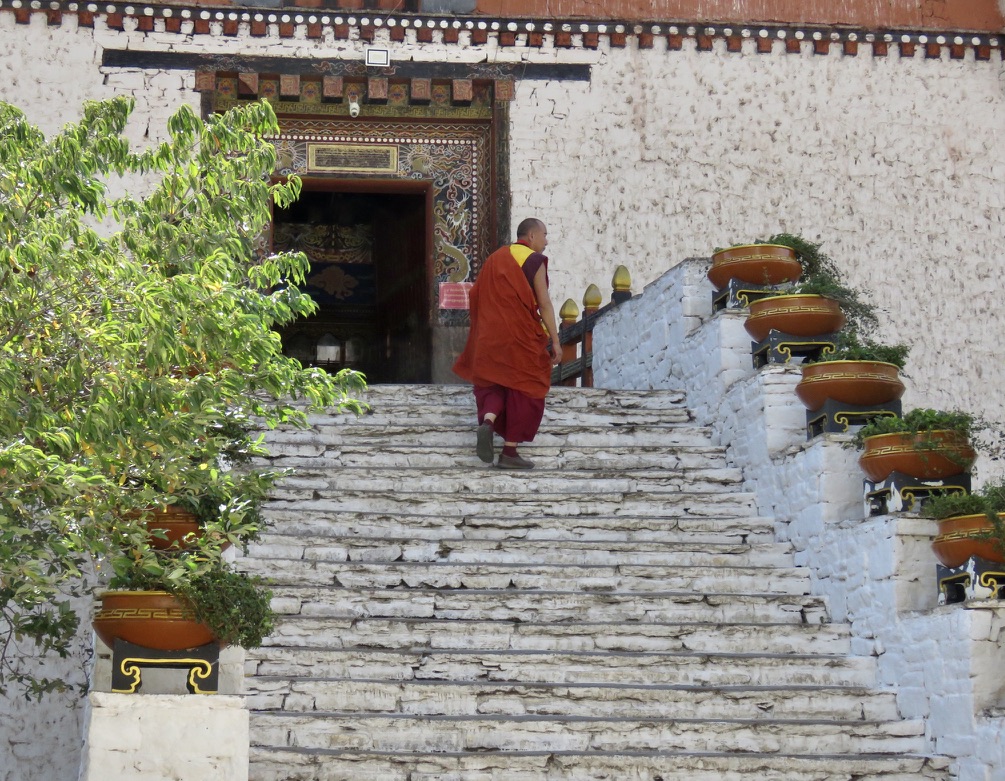
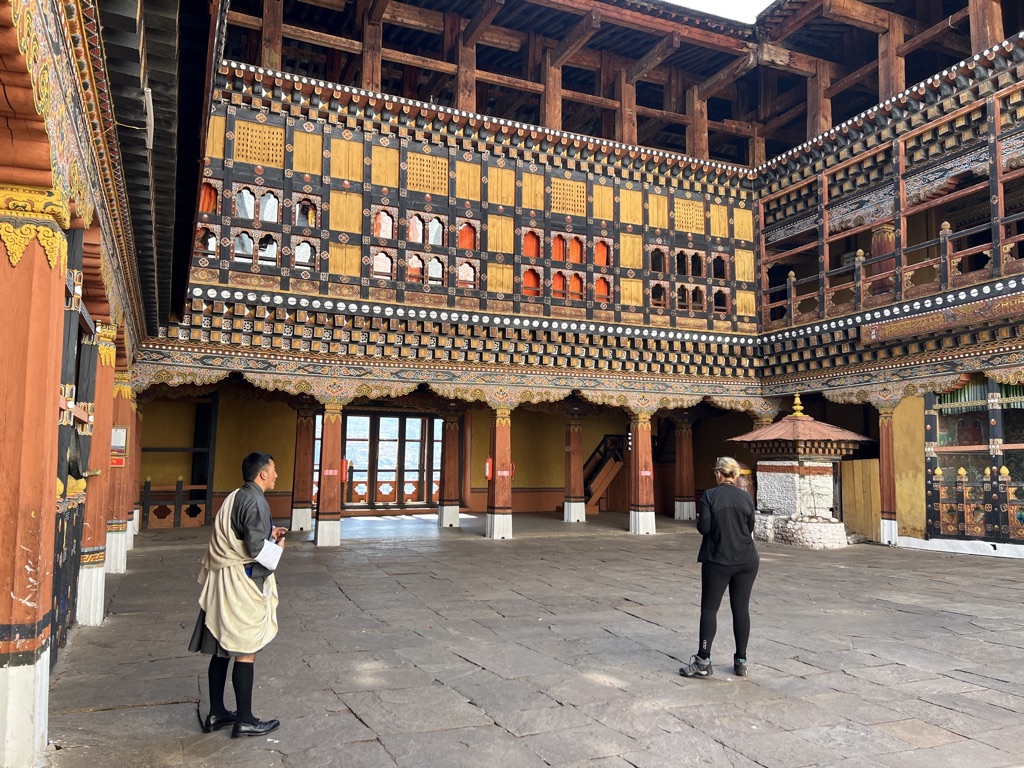
Our last day and we had the option of walking up to the famous Tiger’s Nest or a drive to the countryside and a visit to a farmhouse which is also used as a Homestay for visitors. We opted for the latter and drove out to another important landmark in Bhutan, Drukgyal Dzong which is heritage listed by UNESCO and was built around 1649. It was completely destroyed by fire in 1951 and lay in ruins until 2016 when the King announced that restoration would begin in 2016 to commemorate the birth of the Prince.

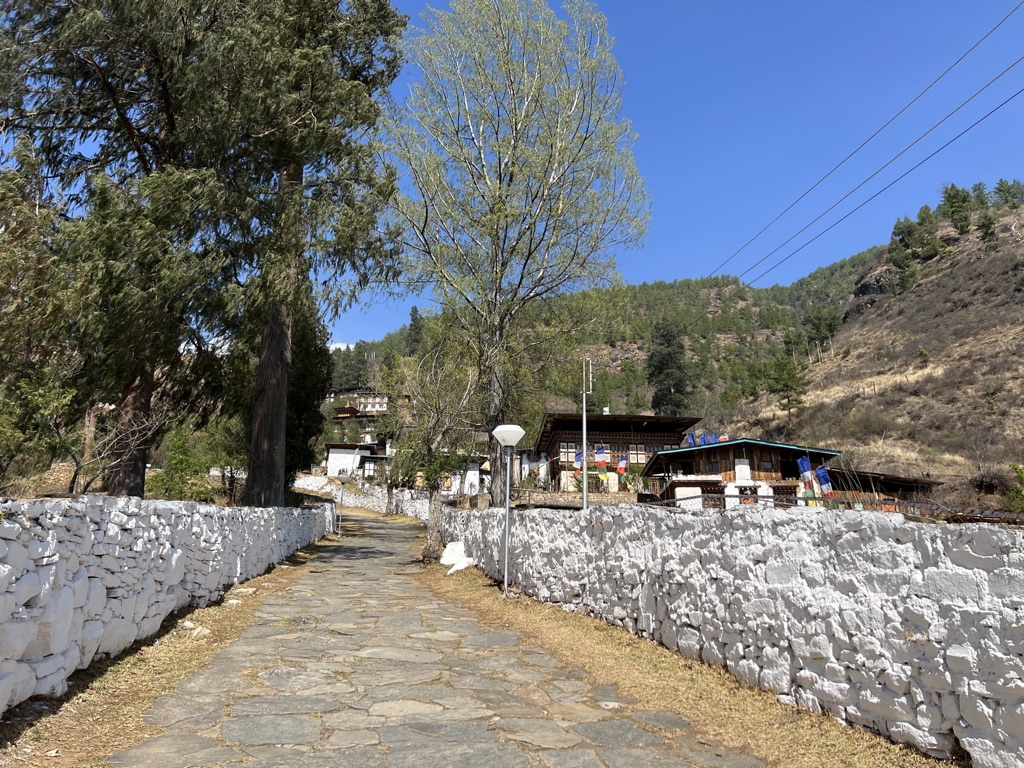
We stopped at the local village and walked up a tiled path to the Dzong but as it was still under renovation we were unable to go inside. The views were lovely and there was a sense of peace and serenity. The fortress was built to repel the invasion by Tibet at that time. Modern Bhutan was once part of Tibet and a succession of wars and invasions followed for years before Bhutan gained sovereignty. The Dzong was used after the war as a trading post and rice was sent to Tibet and salt and tea were imported.

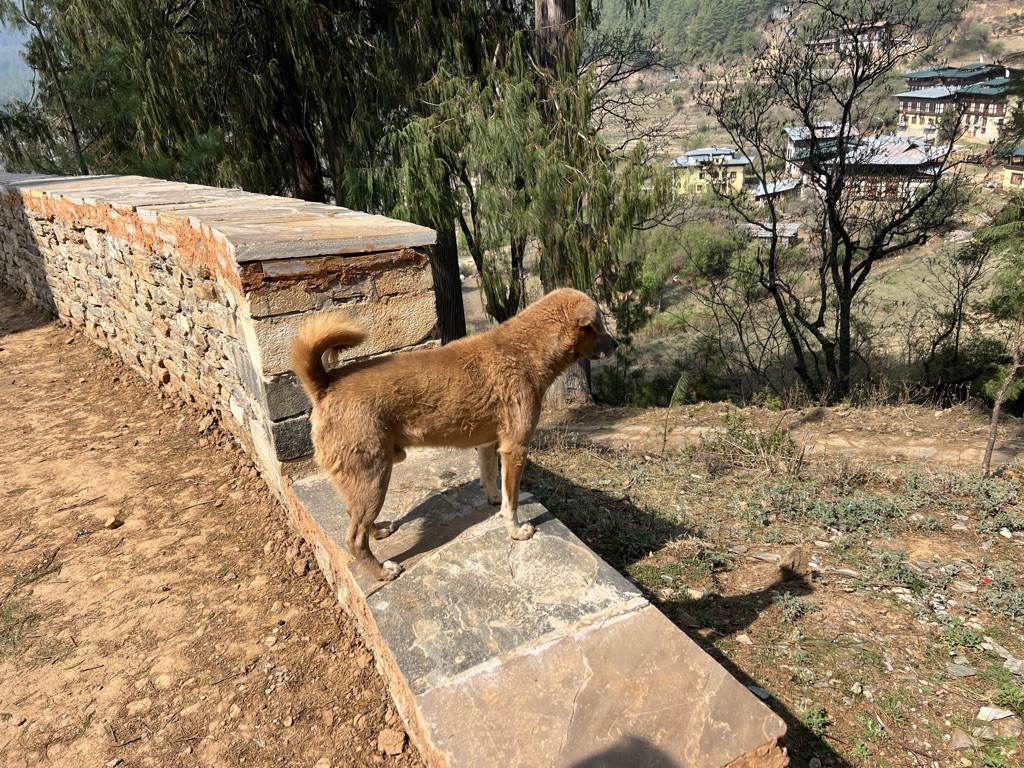
On the way to ur farmhouse visit we stopped at the area where tourists begin the walk up to the Tiger’s Nest. There were crowds of people and many opted to go on the backs of ponies – not something I was totally in agreement with – thinking of the ponies rather than the tourists. However, again the tourist dollar reigned supreme.

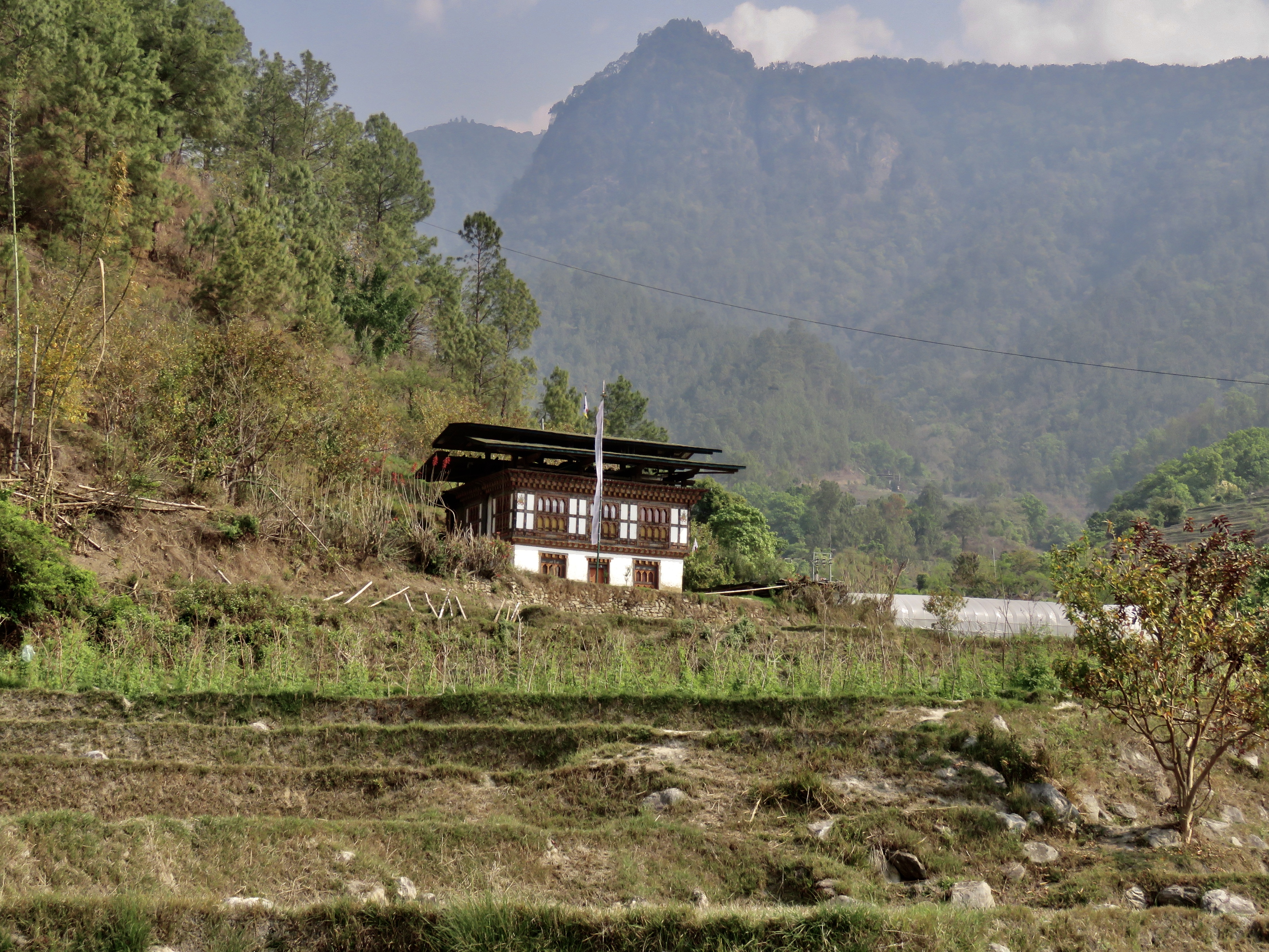
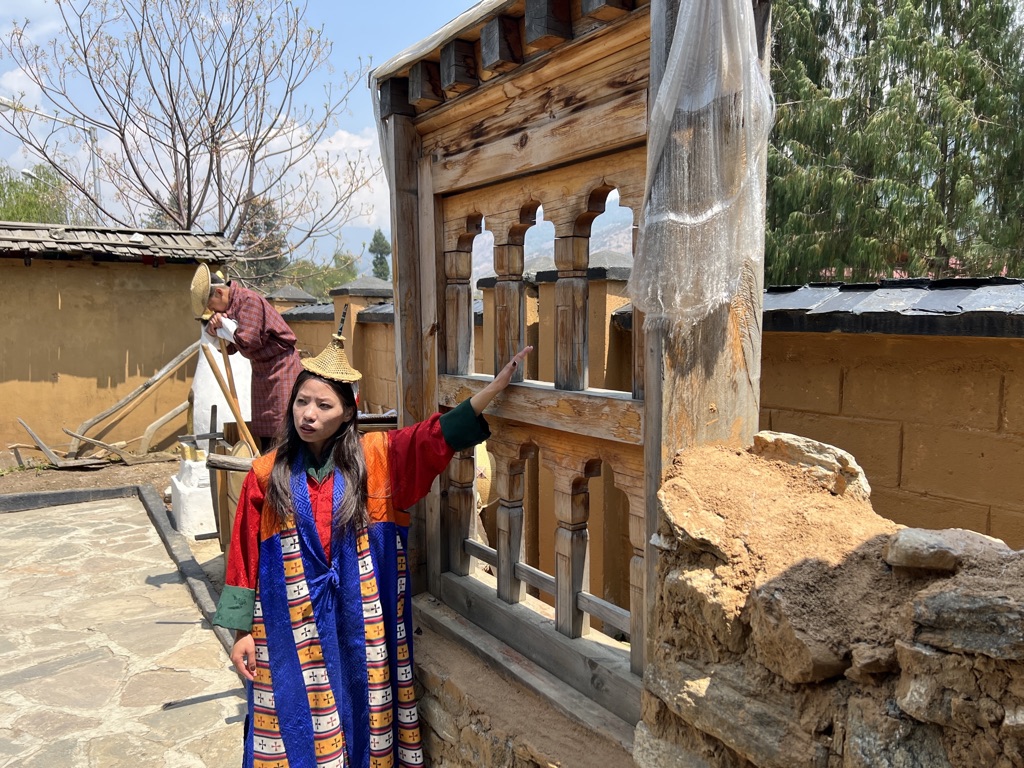
Something far more appealing to me was an introduction to a family who lived in a typical farmhouse close to the Tiger’s Nest area. Our hostess spoke excellent English having worked for some years with the Aman Hotel group. Through her experience she knew that some visitors might prefer to have a traditional Homestay with a family rather that stay in a western style hotel so she opened her home a couple of years ago and is accredited with the Government as a legitimate host.
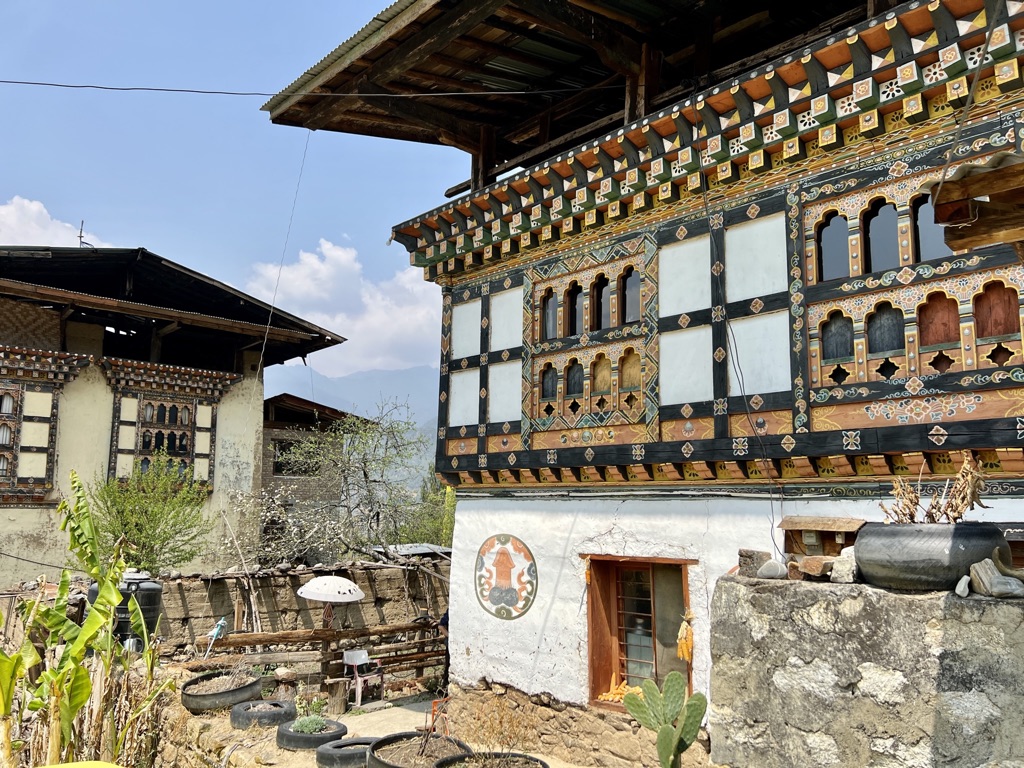
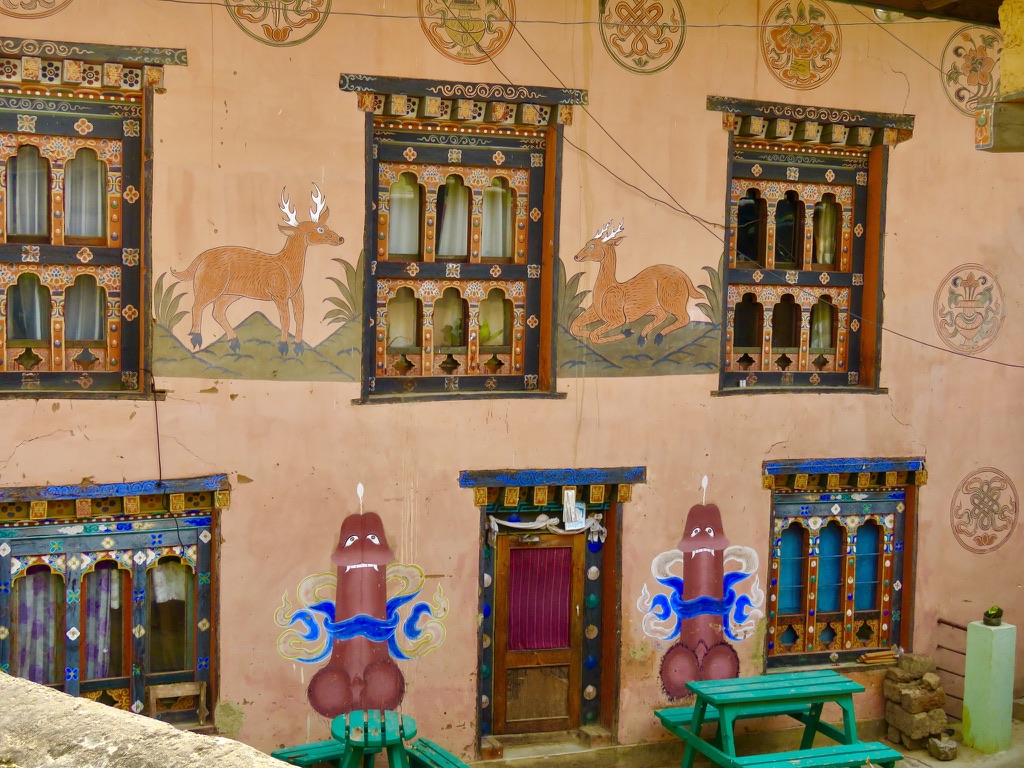
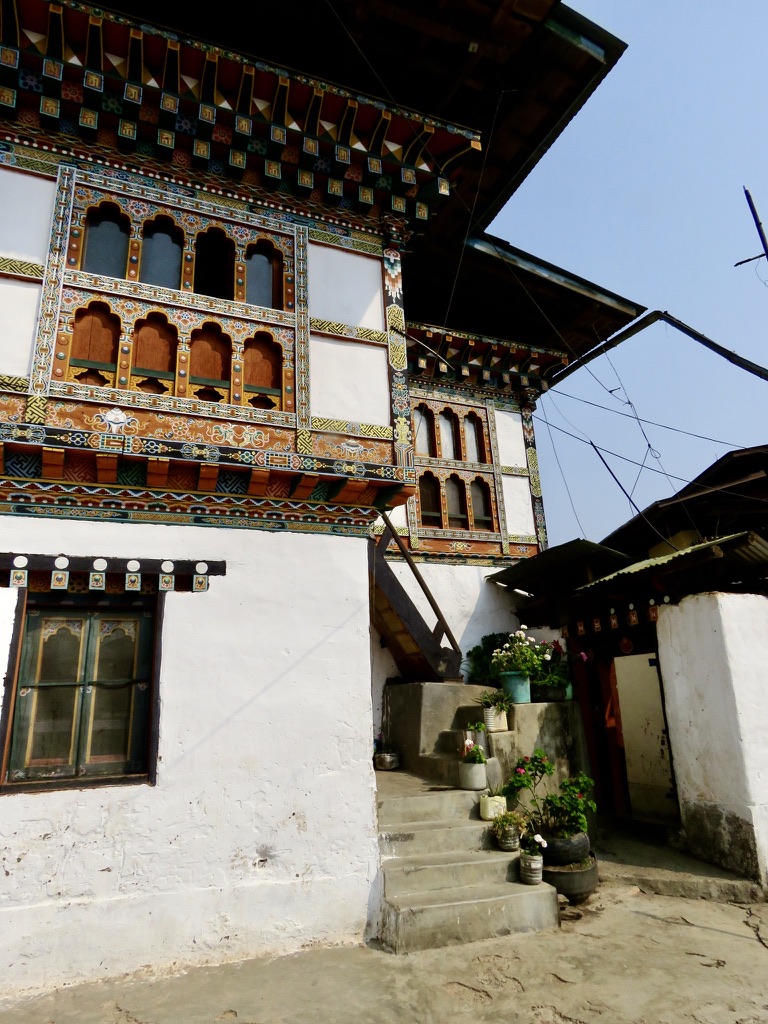
The farmhouse – note the phallus painting on the wall

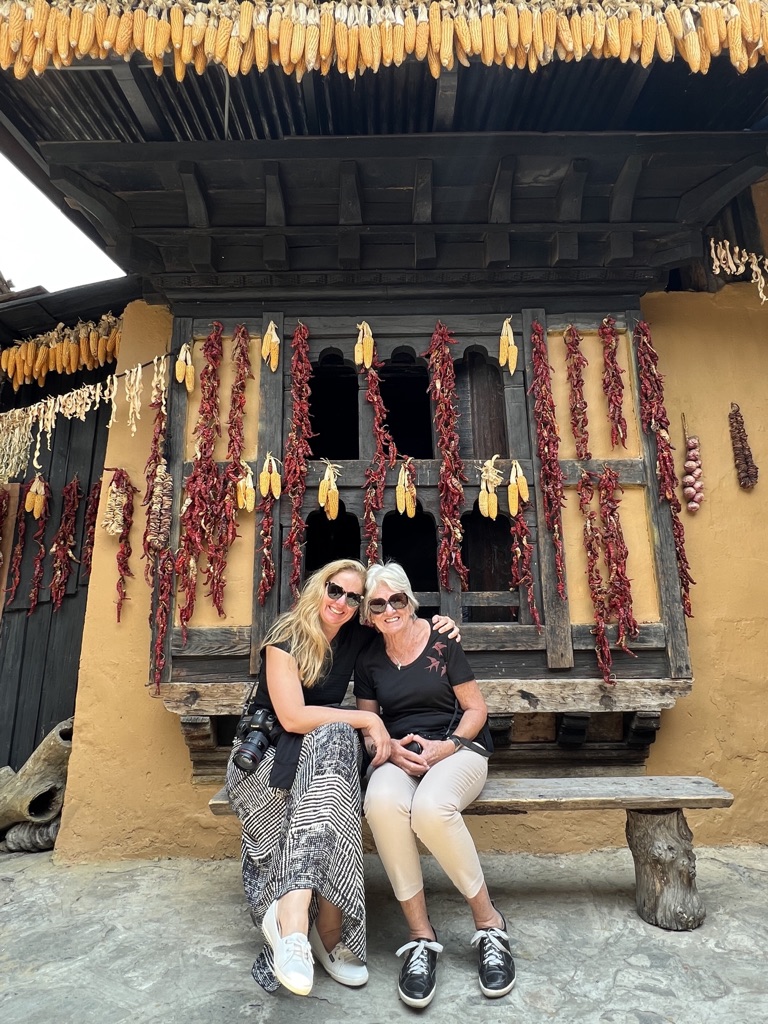
Corn and chillies were drying in the sun at the entrance to the house and pots of herbs were growing on the wall opposite. As with traditional houses this one was elaborately decorated with paintings and carvings. We noticed the phallus painting at the entrance such as we had seen at the Divine Madman’s village yesterday but that was many kilometres away and proved that this god is revered all over the country.

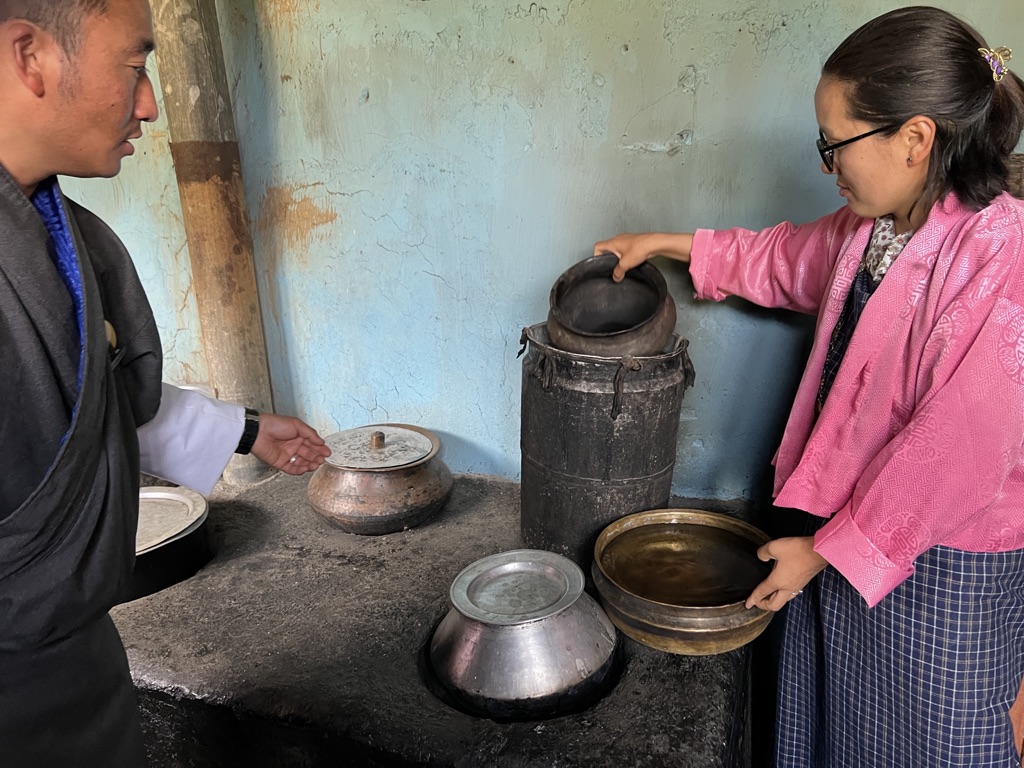
We climbed a ladder to reach the upstairs area where guests are accommodated. The large kitchen was downstairs and several family members were there chatting and cooking.

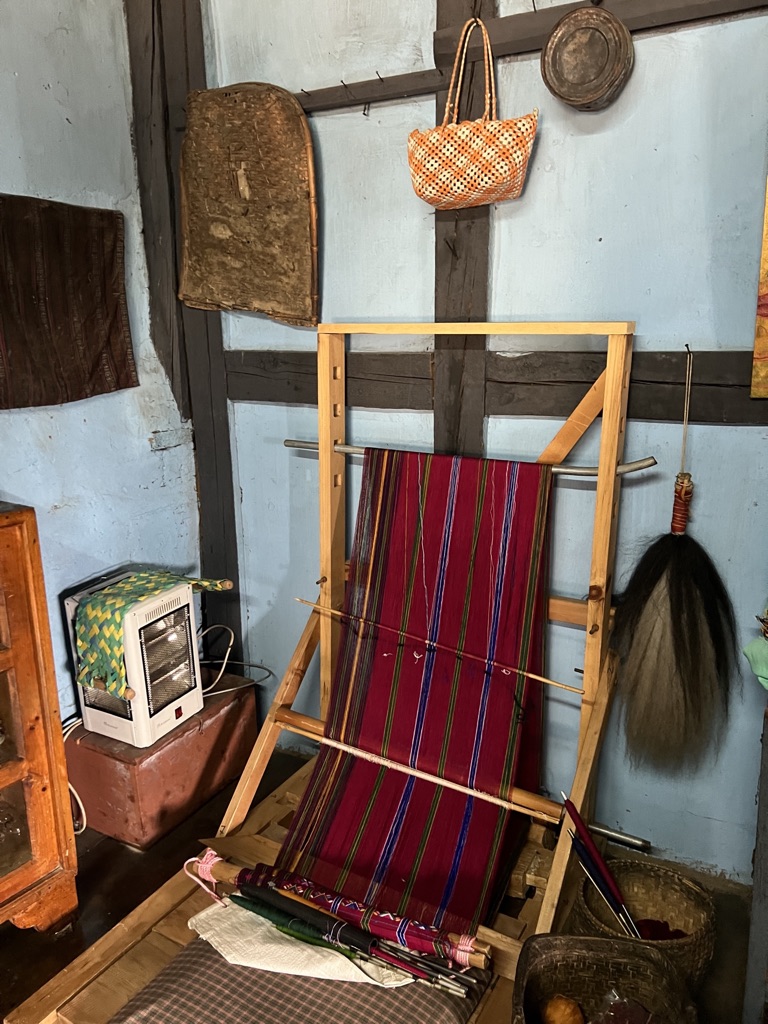
Very ornately decorated, the upstairs area was comfortable and a large loom with a weaving work in progress was against one wall.

There were no chairs and tables – cushions on the floor and a tray serving as a table were placed for our use. The windows were small to keep the heat in during the long winter days and nights and everyone slept in the same room on the floor on futon style mattresses which are rolled during the day.

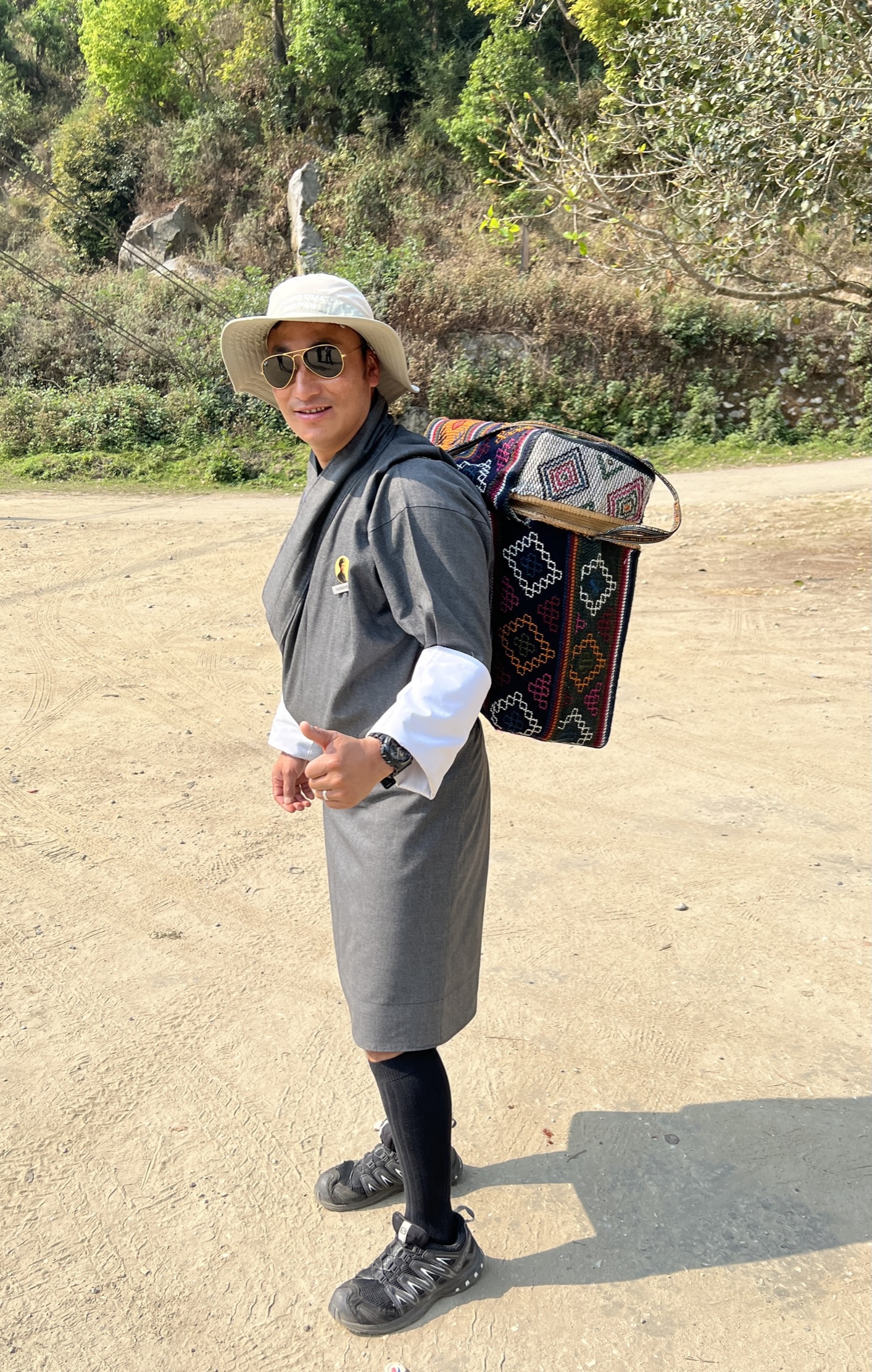
Chencho had come prepared with his famous ginger tea and delicious snacks consisting of banana bread, cookies and roasted nuts. He immediately sat on the floor and prepared our little feast under the watchful eye of our hostess.

Hot stone baths are well known in Bhutan and here was no exception.

It is interesting to note that one of the ancient names for Bhutan is Menjung, which means “The Land of Medicinal Herbs”. The history of medicine in Bhutan dates back to Tibet in the 7th century, and has borrowed heavily from Indian Ayurvedic practices. 

Bhutanese hot baths are not like the other hot baths around the world. It uses Menchu, which means medicinal water. Menchu consists of fresh water and Artemisia absinthium (wormwood) leaves. The combination is heated with river stones that have been roasted over a fire until they are burning hot. To increase the temperature of the water, more heated stones are added into the main tub through a chute.

At this farm, stones are fetched manually from the riverbed nearby and placed in a wooden tub on the ground floor after they have been heated and then copious receptacles of water are heated and poured into the bath. This can only be used a couple of times before the whole process starts again!

It was a fascinating insight into the lives of farming people. Apart from Homestay this was a working farm growing crops in particular corn and chillies.
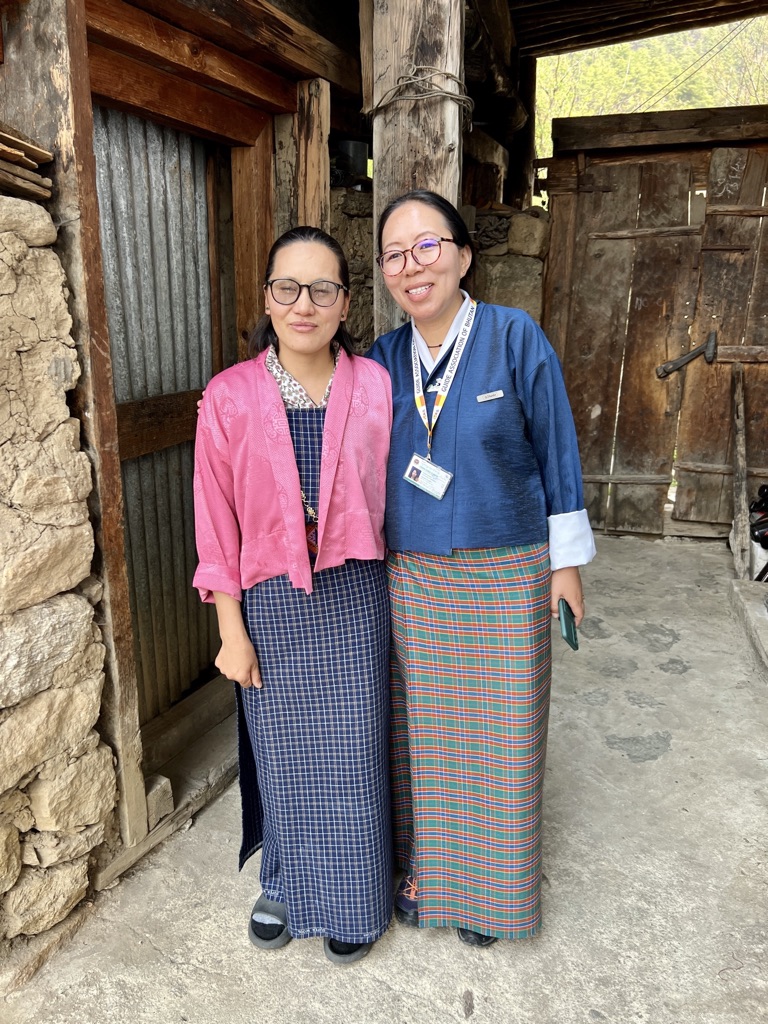
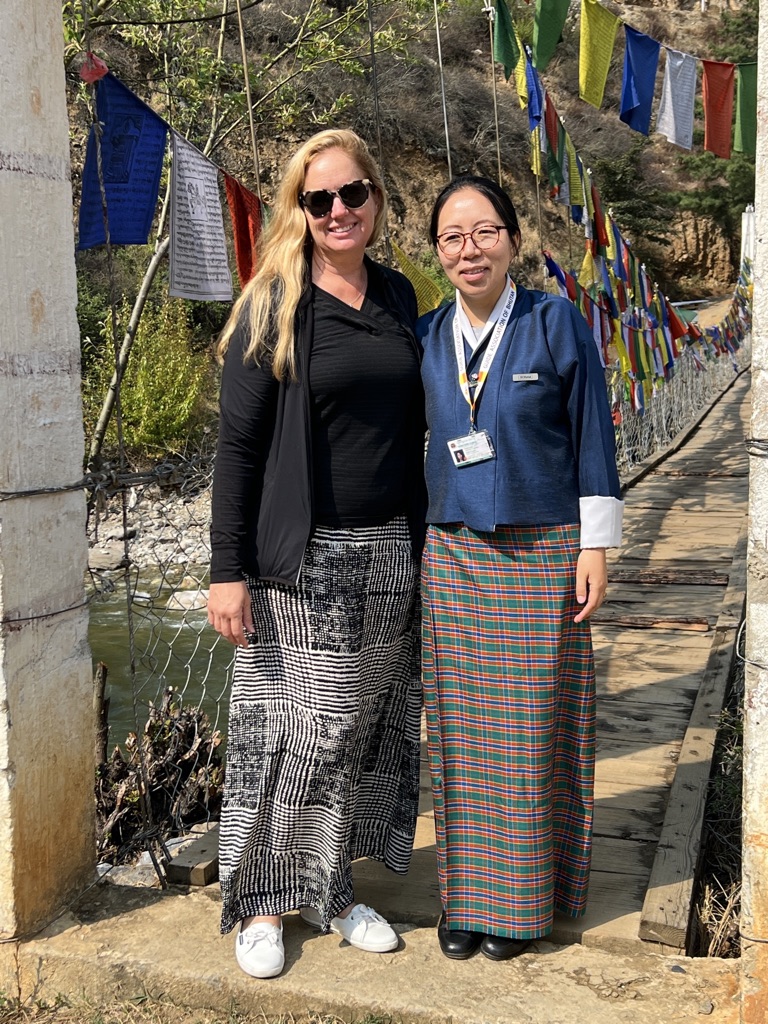
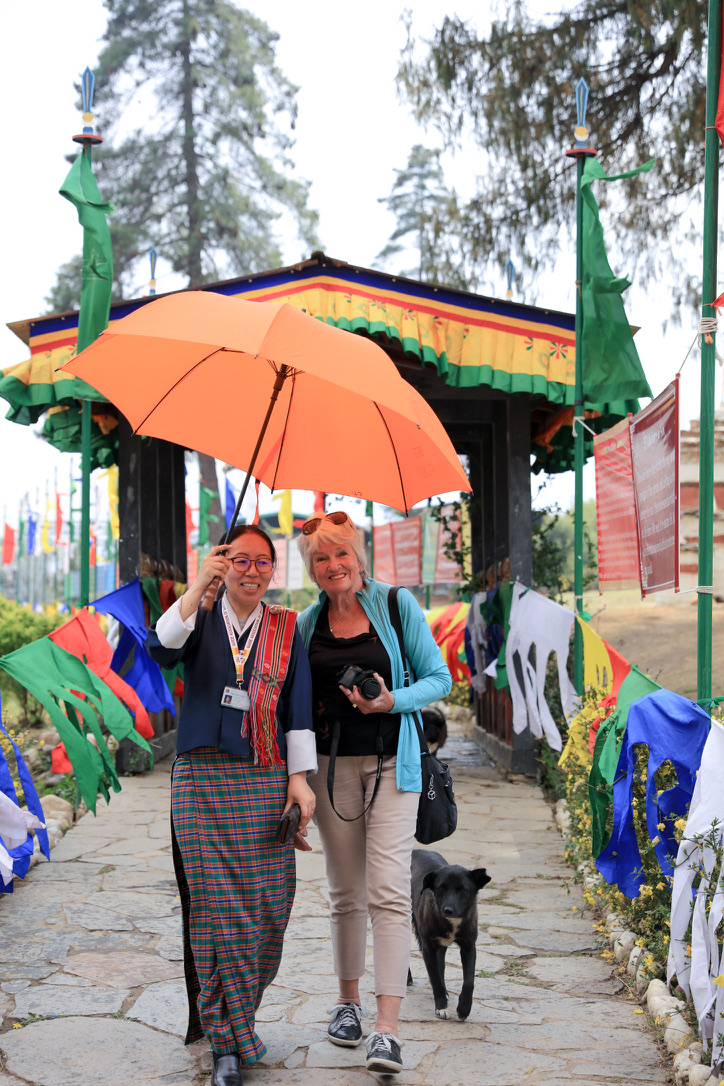
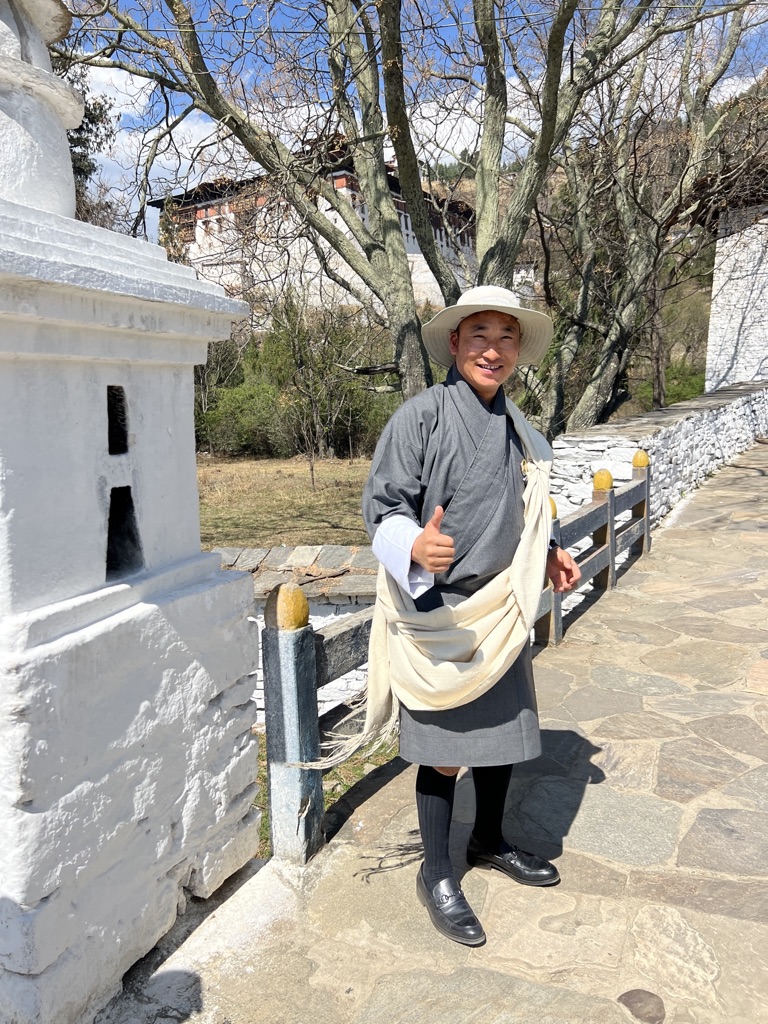
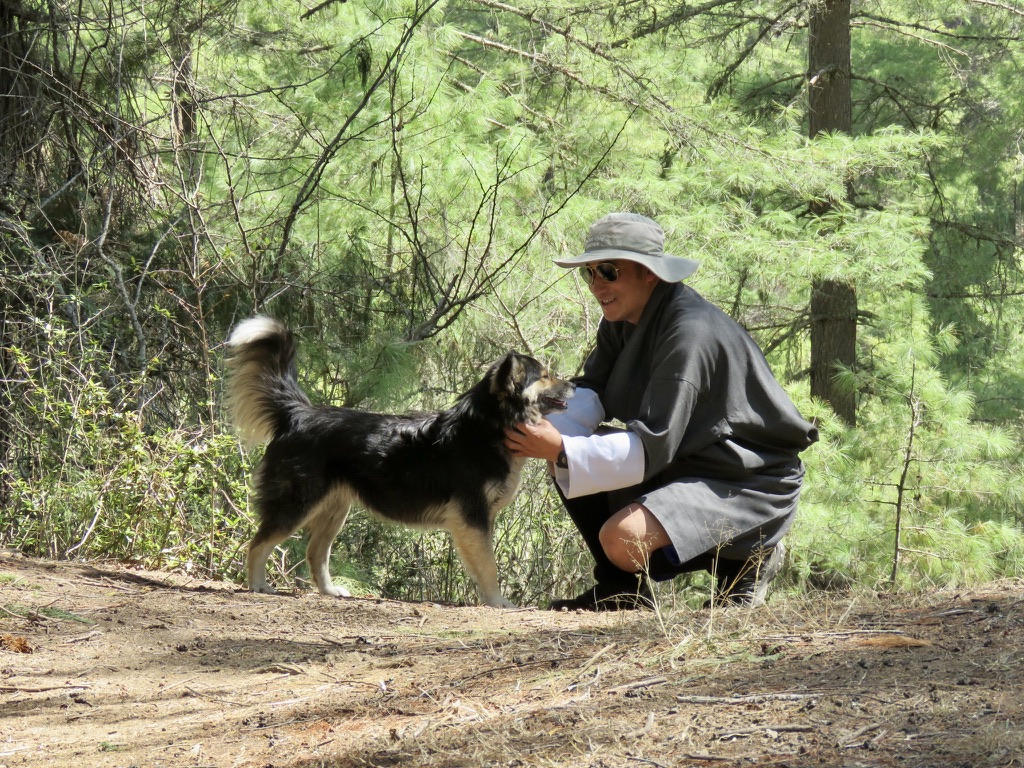
Sonam and our hostess

Thus ended our last day in Bhutan. We had an amazing dinner that night and reflected on all we had experienced in the past week. The memories are indelible and I will forever remember the beautiful dogs and the endless prayer flags, prayer wheels, the red and saffron robed monks, the temples, architecture, landscapes and the happiness of the people. And it goes without saying we will not forget Chencho and Sonam – our wonderful guides. “Log jay gay – Tashi Delek”
MORE OF BHUTAN

DAY SIX – BACK TO PARO AND FUN AND GAMES

Time to retrace our steps back to Paro and see more of everyday life in this beautiful country.

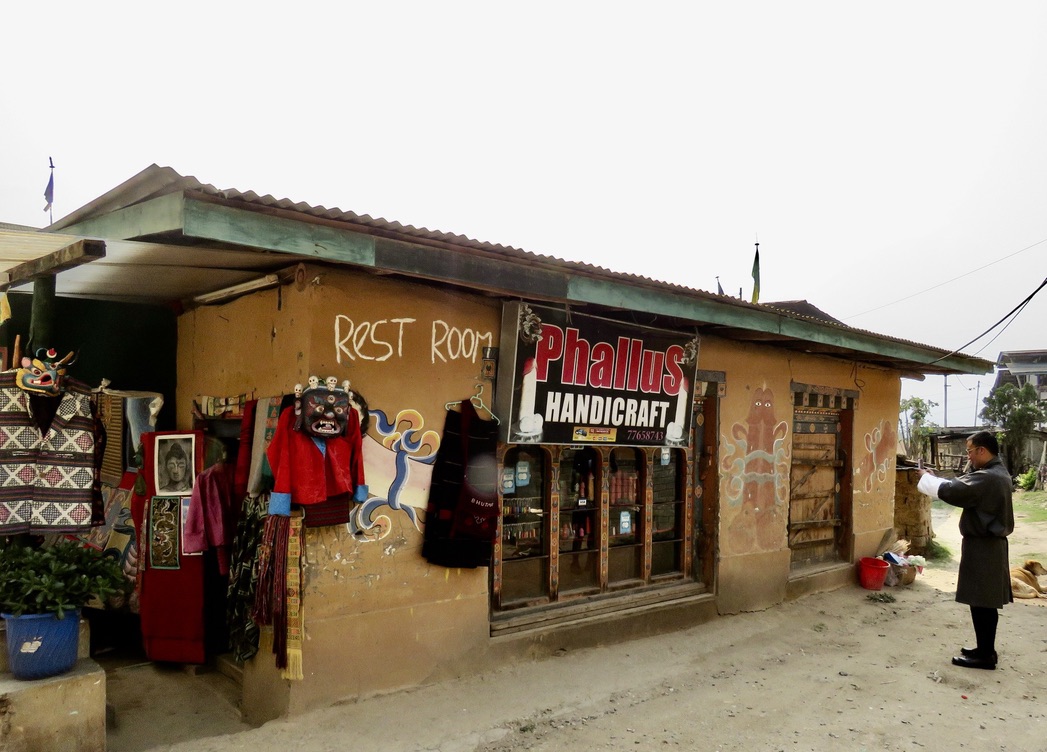
We set off early through winding mountain roads and stopped in the Divine Madman’s village primarily to see the painted houses and see how much the people revere this god. To us westerners the worship of the “flaming Thunderbolt” seems a little shocking and quite bizarre but during our drives around this western region we came across many houses with the art in different villages and towns. Clearly this is accepted and no one thinks anything of it. This is the god of fertility and so it is quite natural.
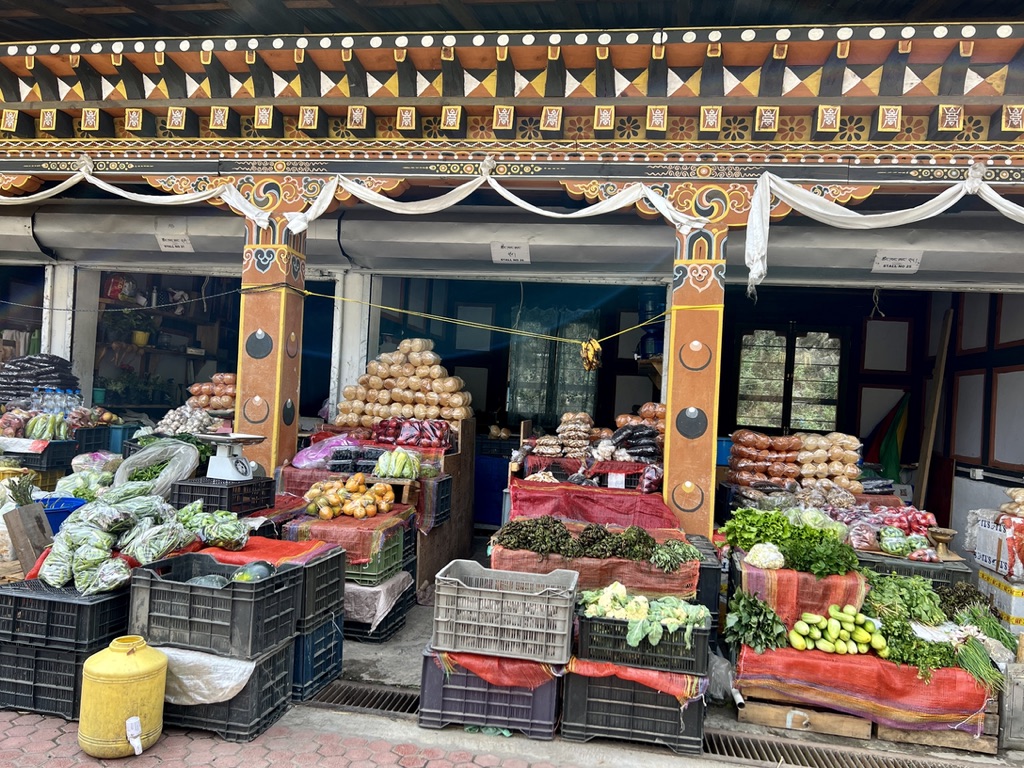
Once again we drove up to the Dochu La pass but this time the view was marred by smoke from the forest fires – deliberately lit by farmers to improve the soil. However driving through the forests of cypress pine and spruce amidst tiny waterfalls and memorial chortens was just as breathtaking. Once over the Pass we saw several traditionally built roadside markets. Obviously the farmers do well with the local travellers who stop to buy the fresh and very colourful produce. The variety was staggering much of which I had never seen before.

By the time we reached Thimphu it was time for a break and where better than a stop at the Ludrong Memorial Garden which is an oasis in the middle of the city. There we found walking trails, gazebos and bridges, ponds and ornamental gardens, woodlands and lots of picnic areas. The local population come here for family time on weekends and holidays and the dogs in this area are very well looked after!

The National Textile Museum was our next visit. Located in a modern building, the museum is under the royal patronage of the Queen Mother and was opened in 2001 and gradually added to since that time. Showcasing the beautiful Bhutanese textiles and the traditions of weaving and embroidery, it is fascinating to see the weaving techniques – demonstrated by a weaver of great skill – and the styles of local dress for both men and women. No photography is allowed but there is a gift shop and, of course, I bought a scarf as a souvenir!

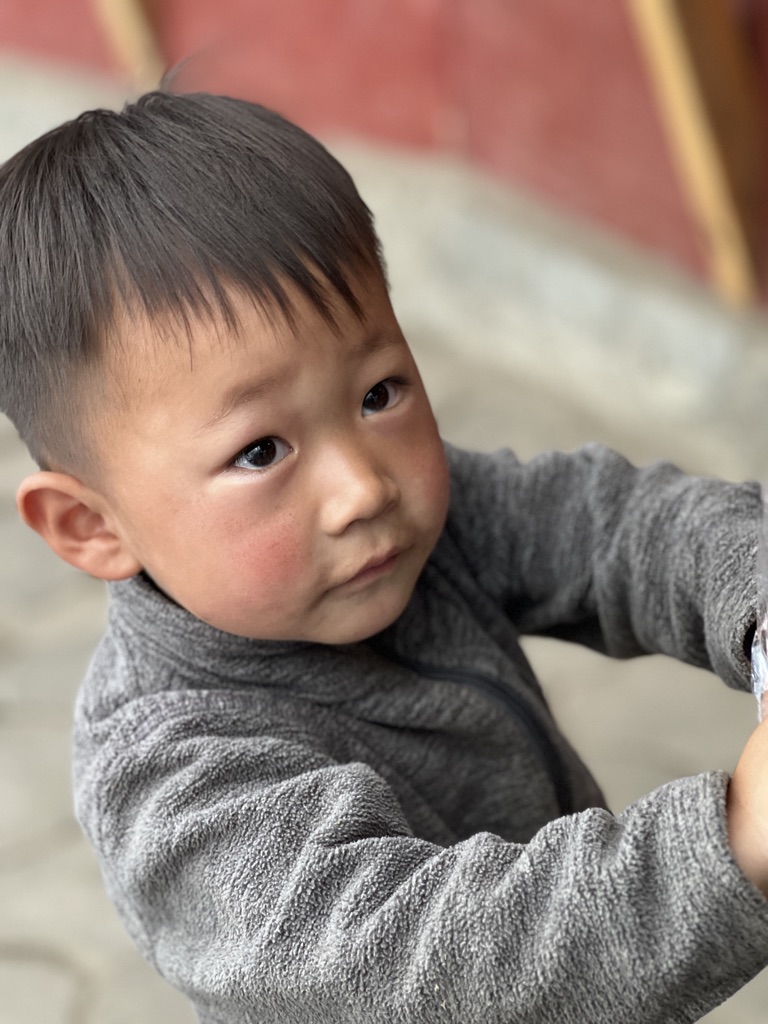
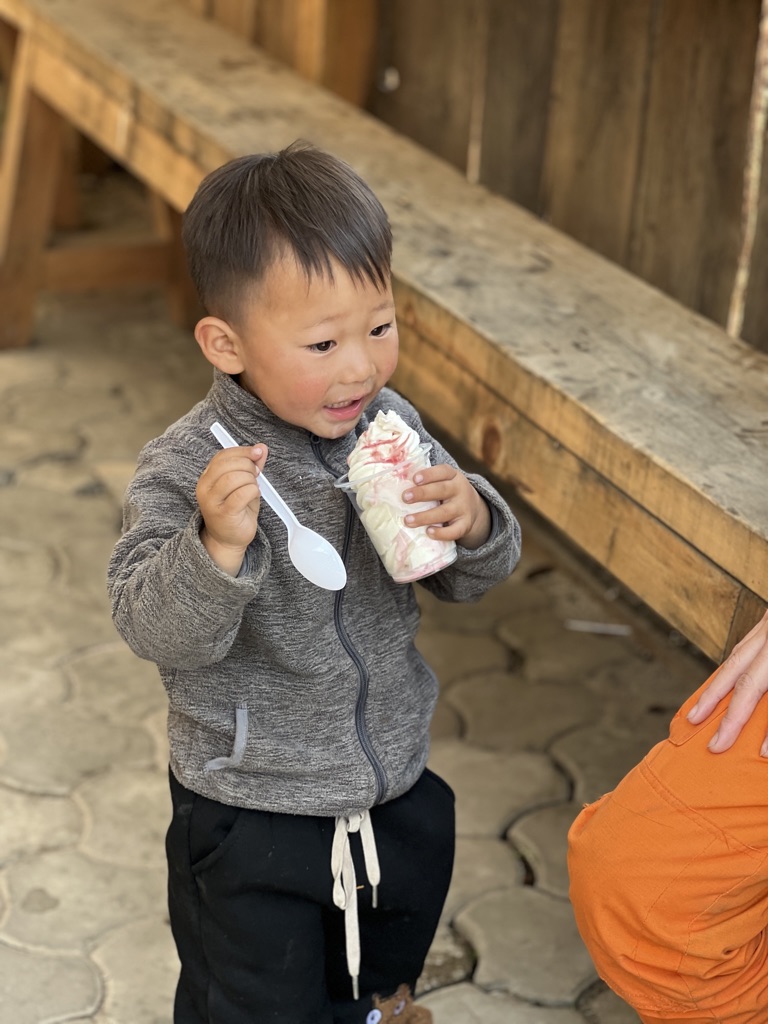
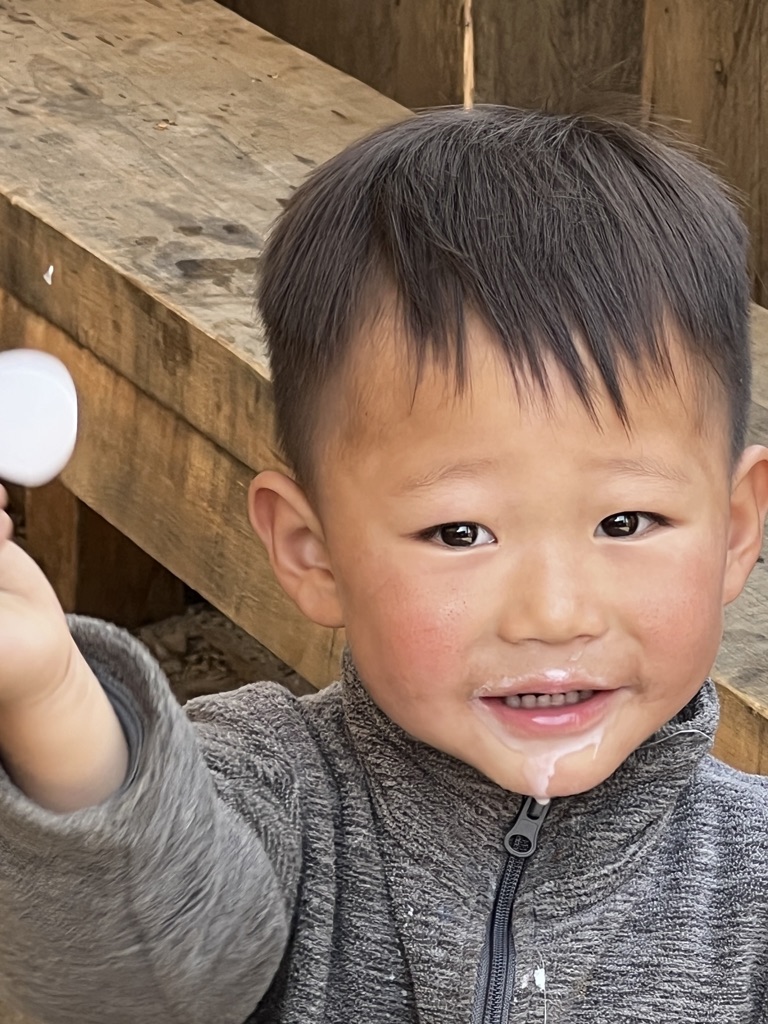
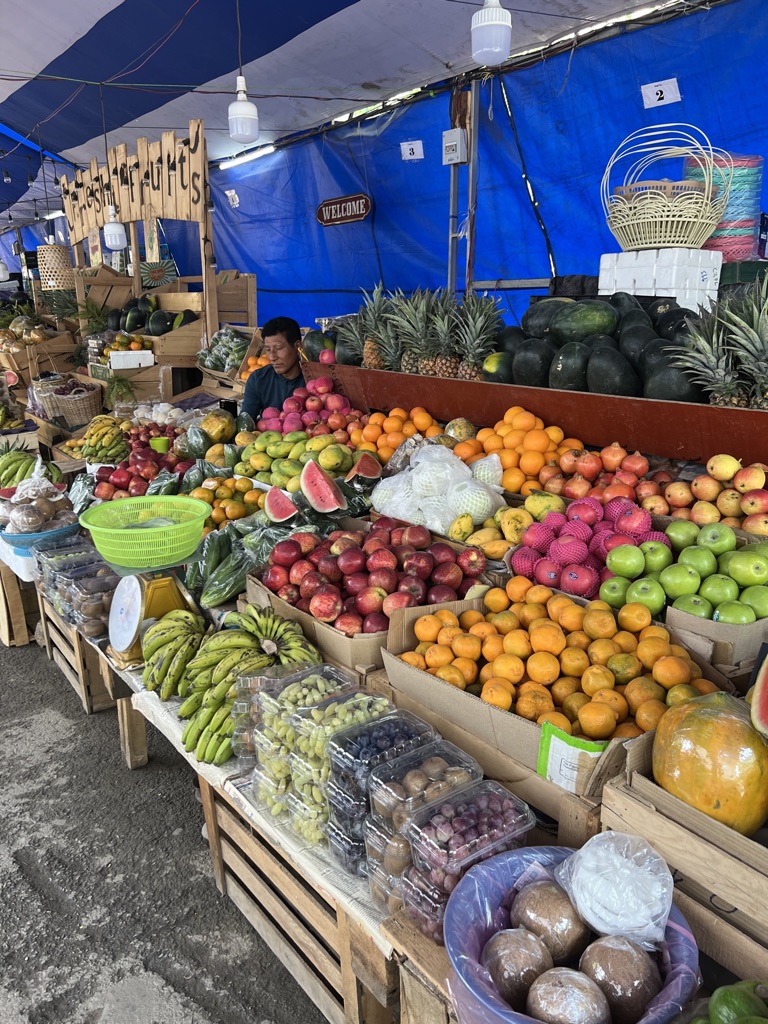
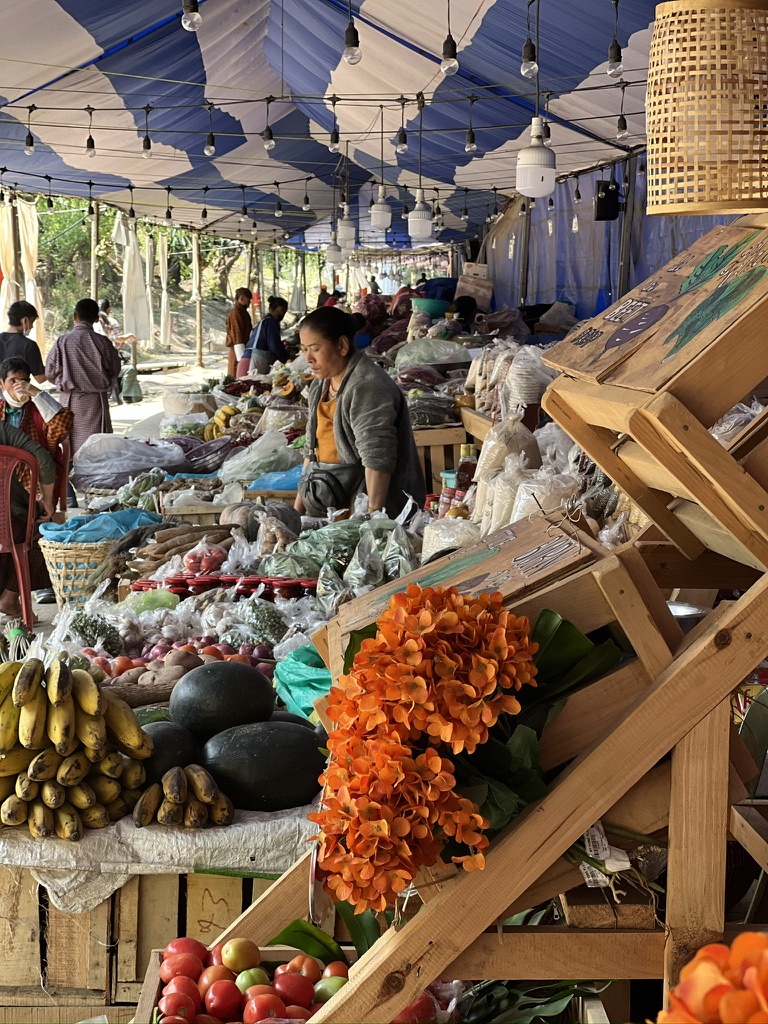
Before we hit the road back to Paro we went to the weekend market. People from surrounding villages start arriving on Thursday evening and come to buy and sell produce, ranging from dried chillies and yak butter to textiles and bamboo products. The market continues until Sunday afternoon. Here again was such an enormous variety of produce it was mind boggling. Small food stalls and cafes were inside where we could have lunch. We met a little boy, obviously the child of one of the stall holders, who followed us around and in the end asked for an ice cream. How could you refuse such an appealing little face? We got permission from a parent and then he indulged in a very messy fashion!

The market is held in a large open space which is undercover and is divided into sections according to the product.

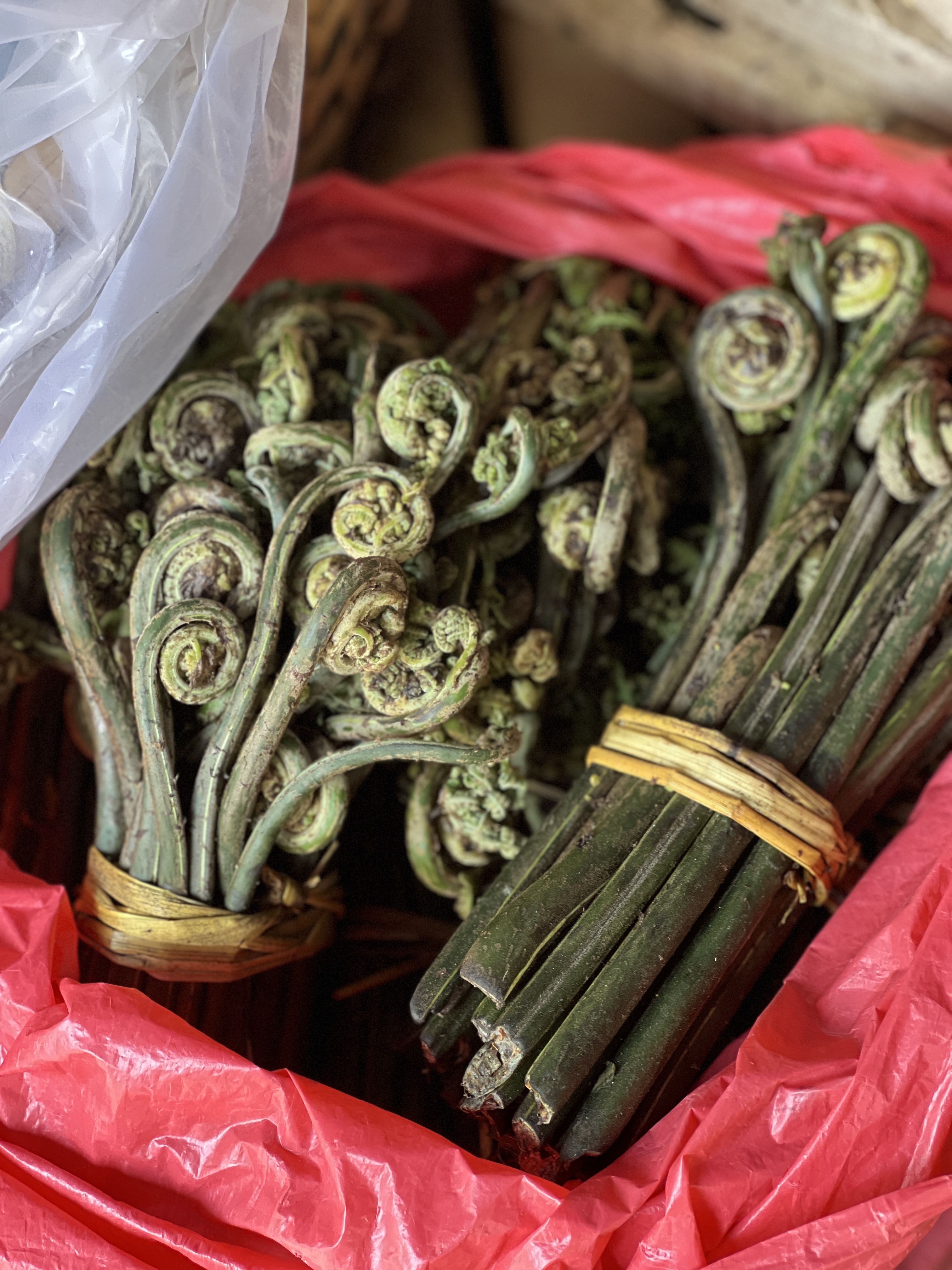
One of my favourite vegetables in Bhutan was fern – cooked in a variety of ways. Here were huge bundles of it ready to take home.

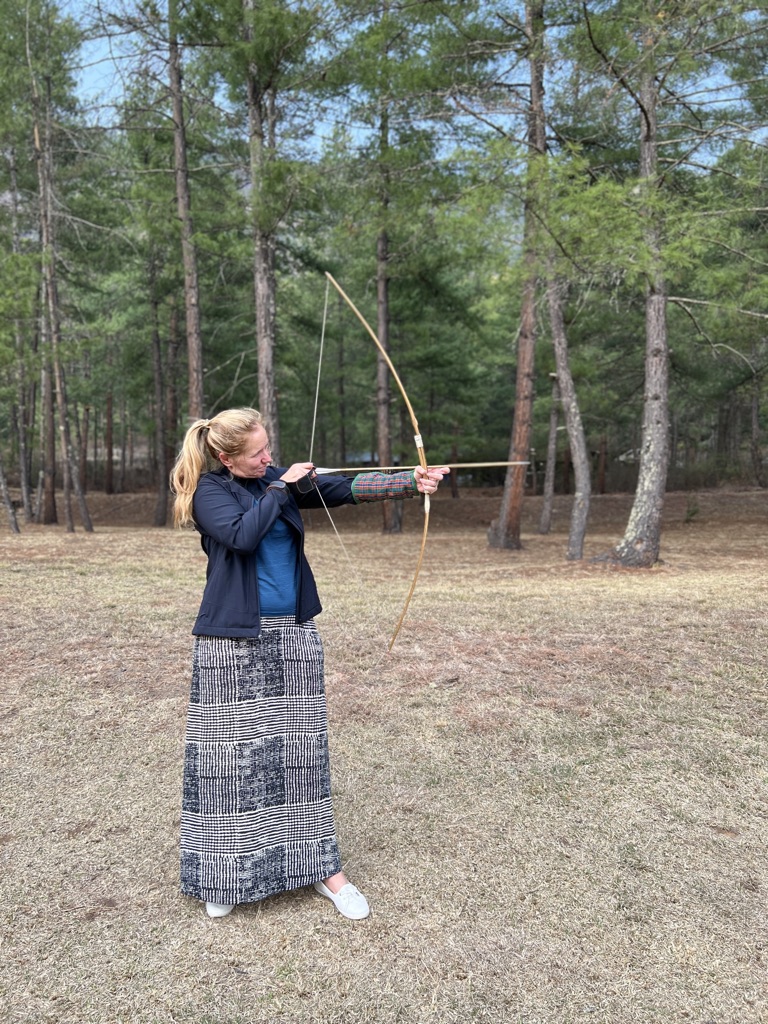
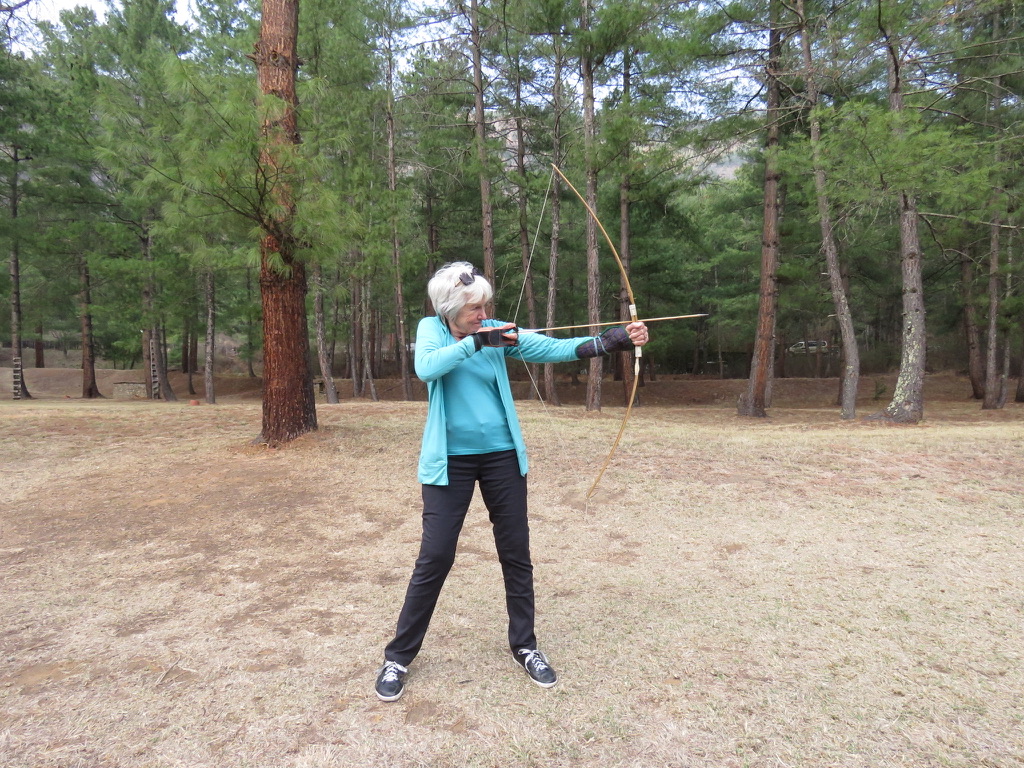
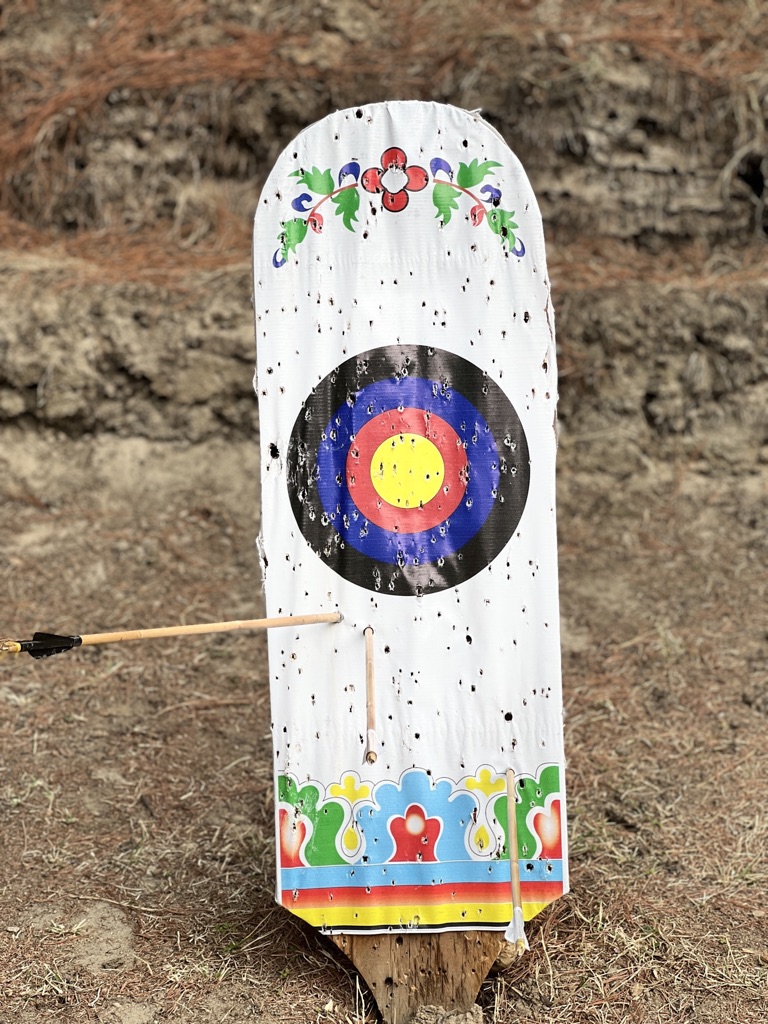
Archery is a National sport in Bhutan and people partake for fun and physical exercise. It is said that it builds concentration and is important for socialization and mental development. Bhutan has competed in the Olympics since 1984 and maintains an Olympic team. Every village has an archery field and our hotel, Como Uma Paro, is no different. That afternoon we tried our hands in this very unusual sport using traditional equipment. Bows are made of bamboo and arrows are reeds or bamboo. The target is normally 100 – 145 metres away but in our case it was somewhat closer. I managed to hit the target but it wasn’t quite bullseye!

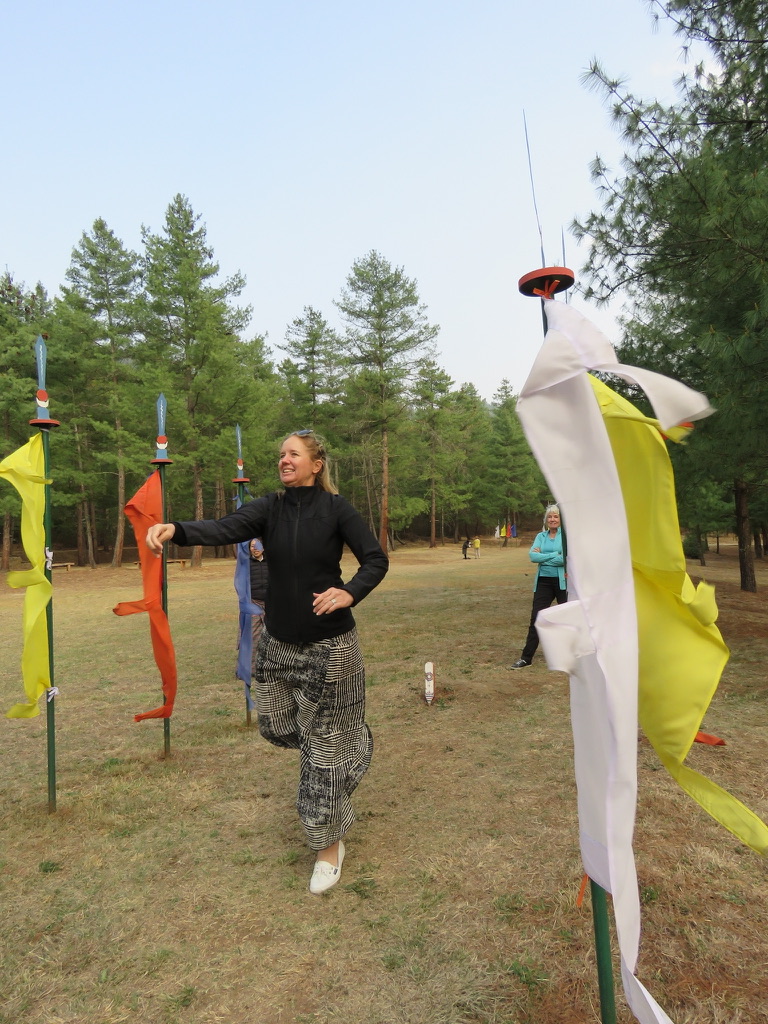
The other fun game they play is dart throwing, Khuru in Dzongkha, which involves throwing darts outdoors some 15 to 20 metres away. The darts are wooden sticks with a pointed end and the target is a wooden post. Once thrown the competitor turns around and tried to hit the target on the opposite end. I had no luck at all but Jacqui was a natural!

Time to call it a day and prepare for our last day of adventure tomorrow.

PUNAKHA VALLEY , BHUTAN

DAY FOUR: KHAMSUM YULLEY NAMGYAL CHORTEN AND PUNAKHA DZONG

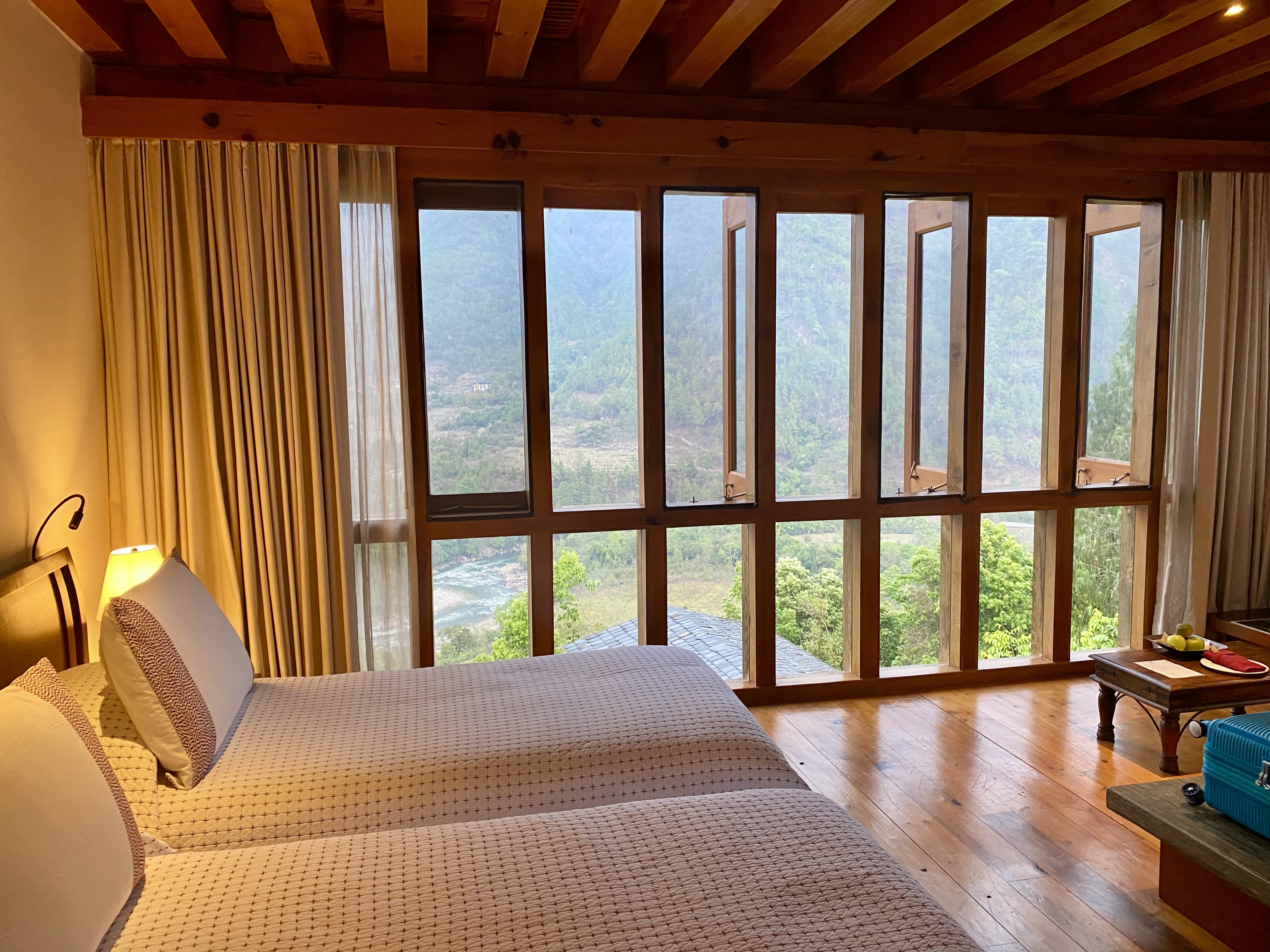
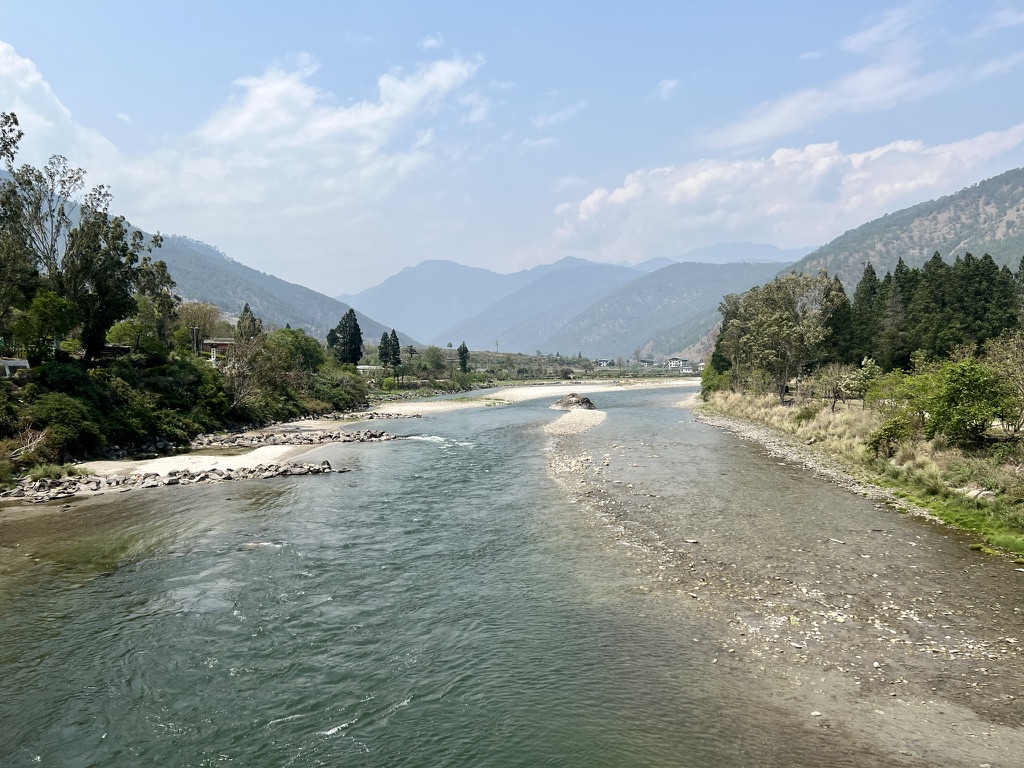
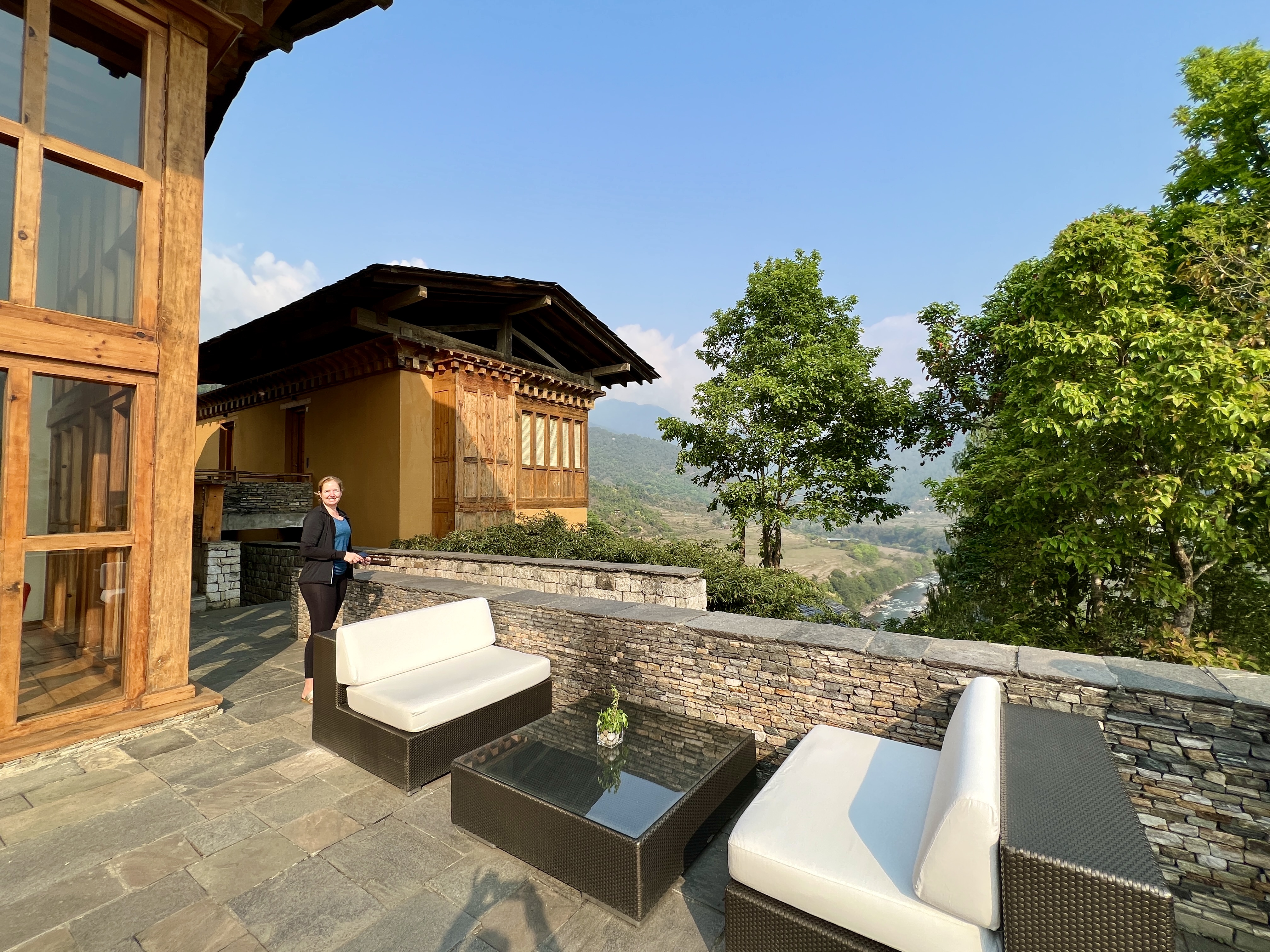
We awoke to stunning views of the valley from our hotel room. This location is absolutely divine. Quiet, serene and surrounded by tall mountains of green. The town of Punakha is at the junction of two beautiful rivers, Po and Mo Chuu which translate as Mother and Father rivers. The valley is known for rice farming – both red and white rice.

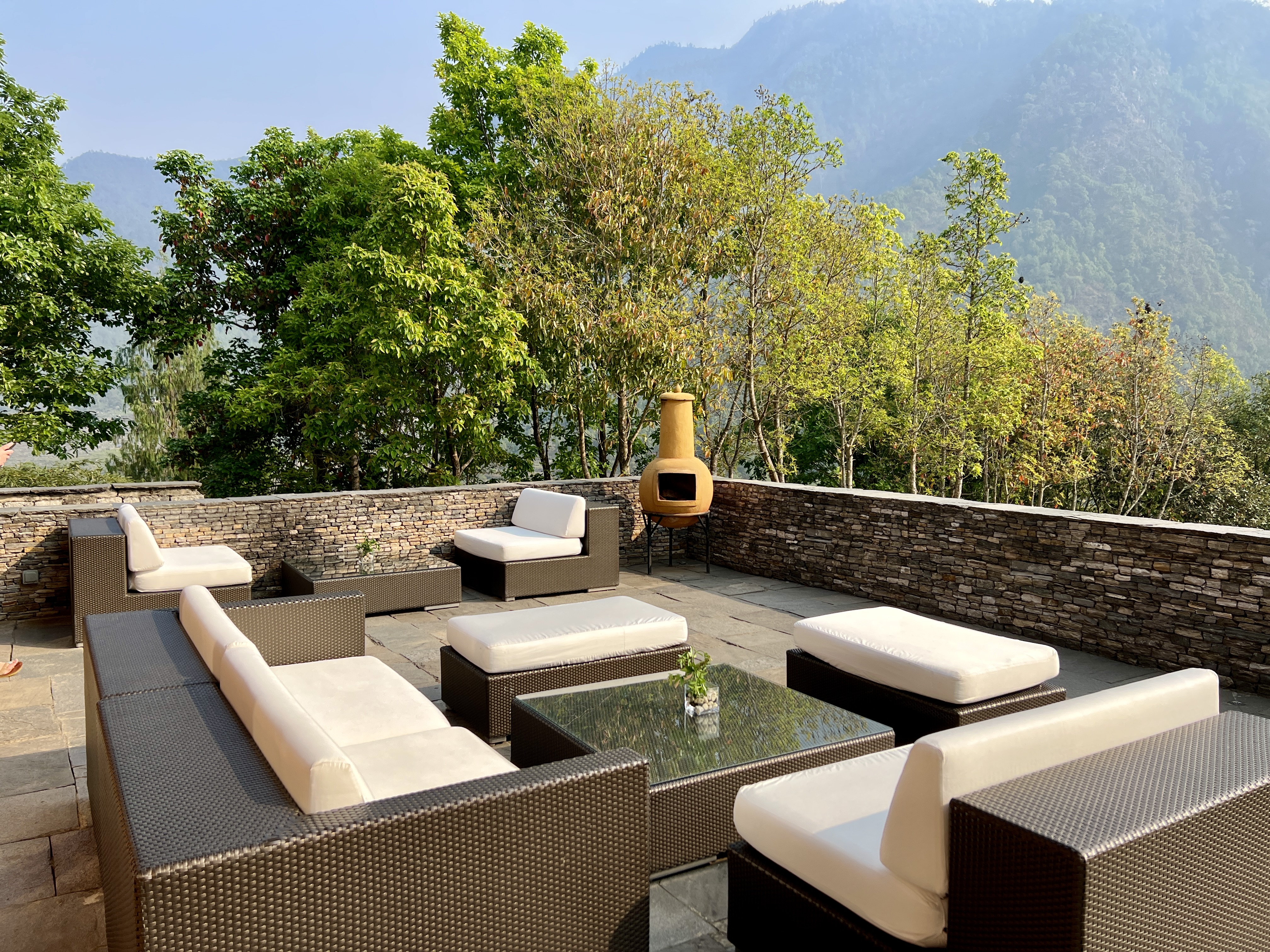
Como Uma Punakha hotel is built in the Bhutanese style but with modern comforts. A small hotel, the terrace is the focal point for visitors to enjoy the view, have drinks and or meals and to relax. It was wonderful to sit out on the terrace in the early morning, drink coffee and have breakfast whilst gazing at the mist covered mountains. As usual we were accompanied by dogs and a resident cat as well as birds of all colours.

View from our room
Our room

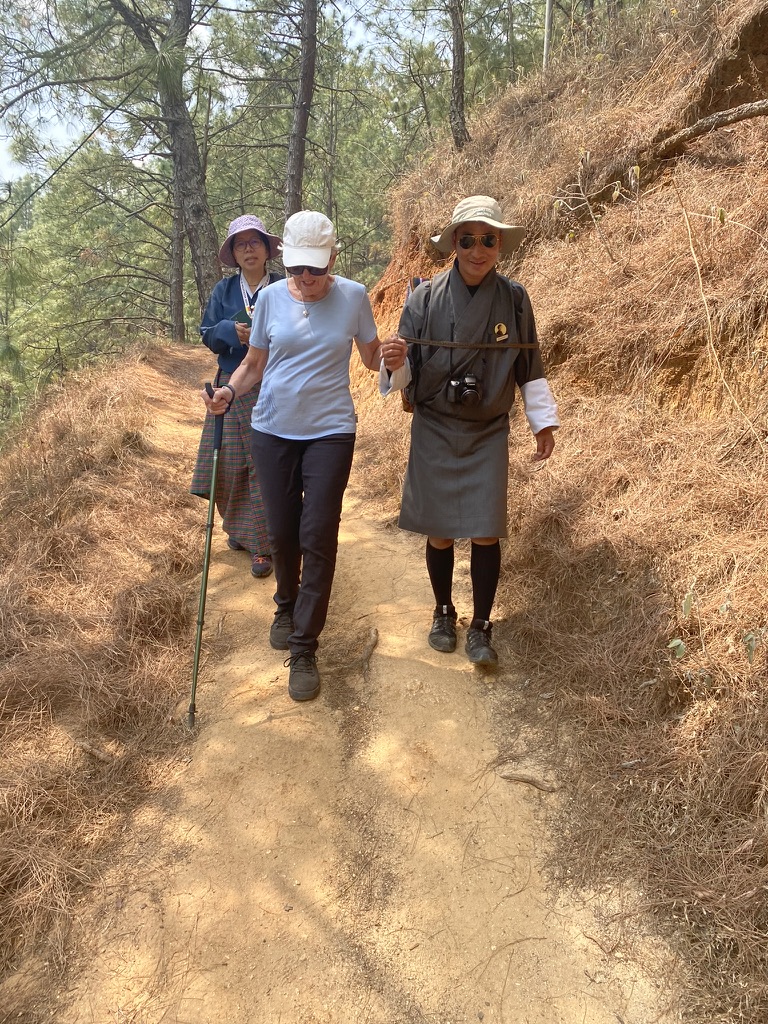
“Today we are going for another hike” said Sonam. It was to a beautiful temple built by the Queen Mother in 2004 to ward off evil spirits in Bhutan and around the world and to bring peace to all living things. “It will take about an hour going up” she said. Thank goodness for the walking poles! There is no road to the stupa and everyone – even the Queen Mother – has to walk up a narrow path through farmlands.

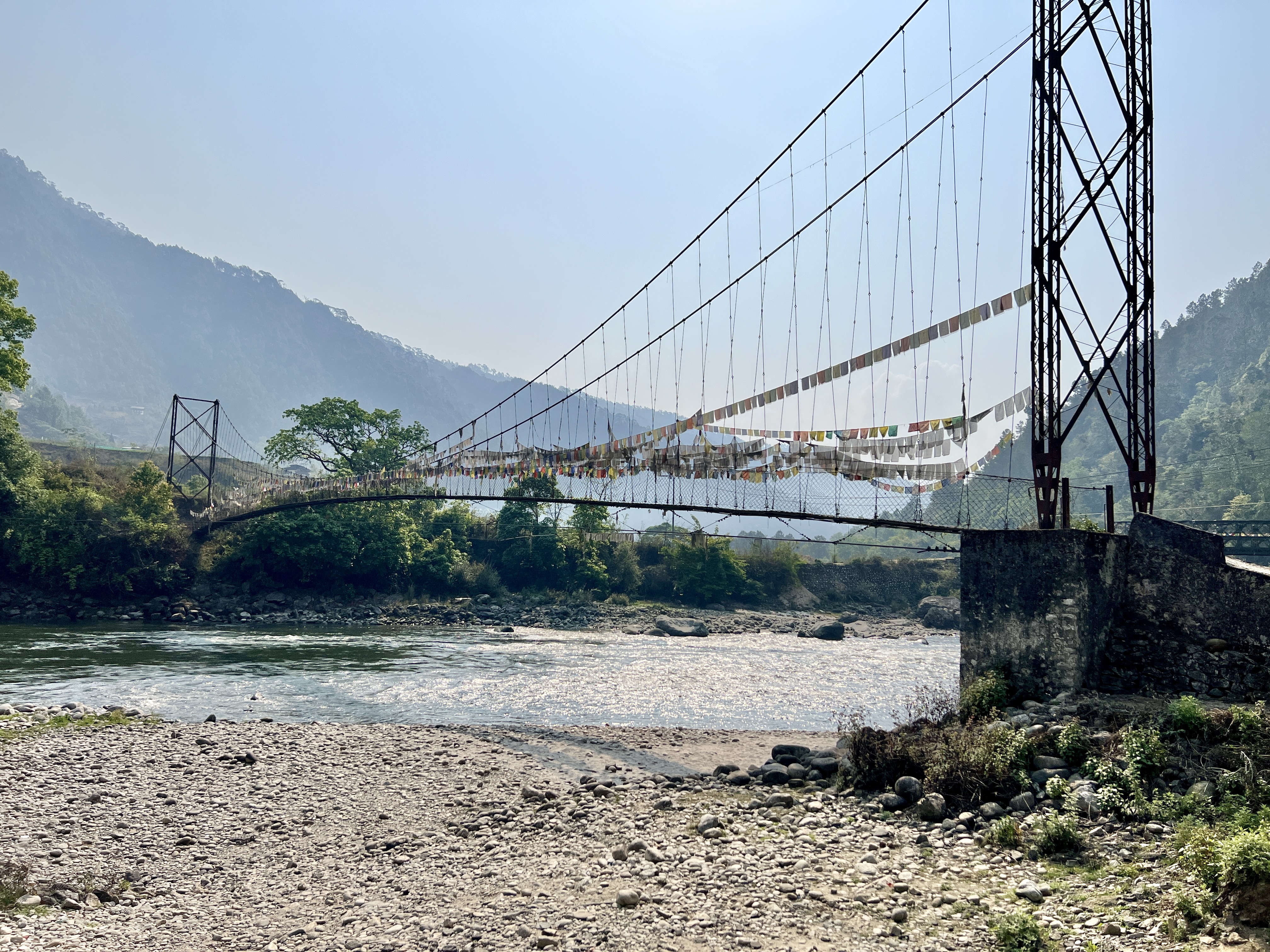
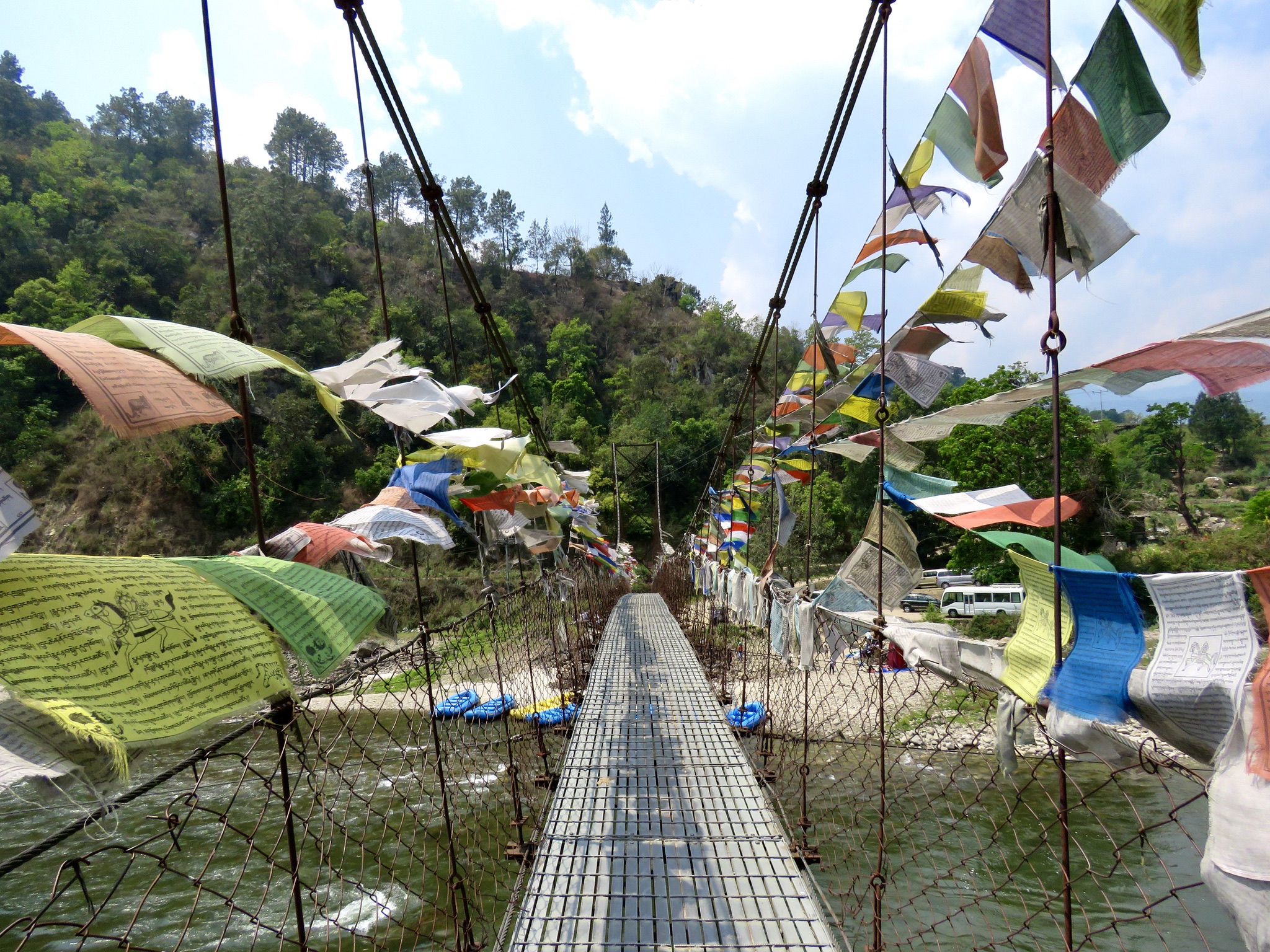
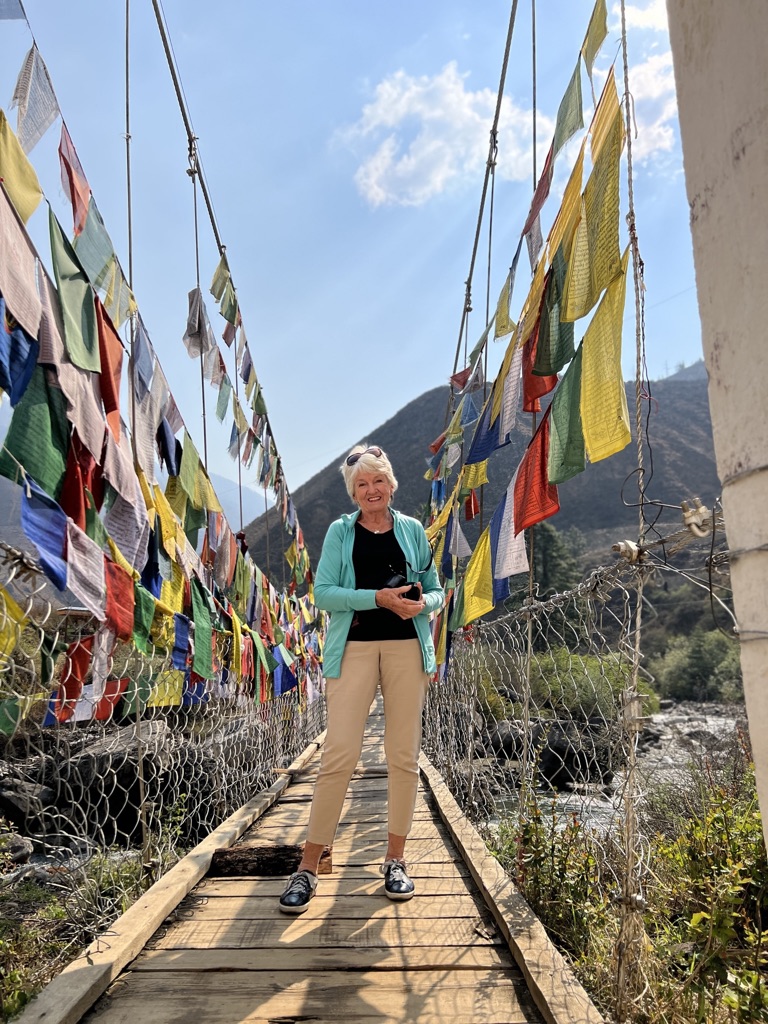
Chencho arrived with the car to take us to the river crossing where we had to walk across a suspension bridge, again adorned with hundreds of prayer flags. The bridge sways as you walk on it so it is best to look ahead and not down to the rapidly moving river below!

Once on the other side we set off along a small path and the scenery was so exquisite that several photo stops were required. We walked through acres of rice fields and other vegetables and eventually came to a rest stop with a large prayer wheel. Here Chencho produced delicious watermelon juice and ginger tea with snacks whilst we paused to take everything in.

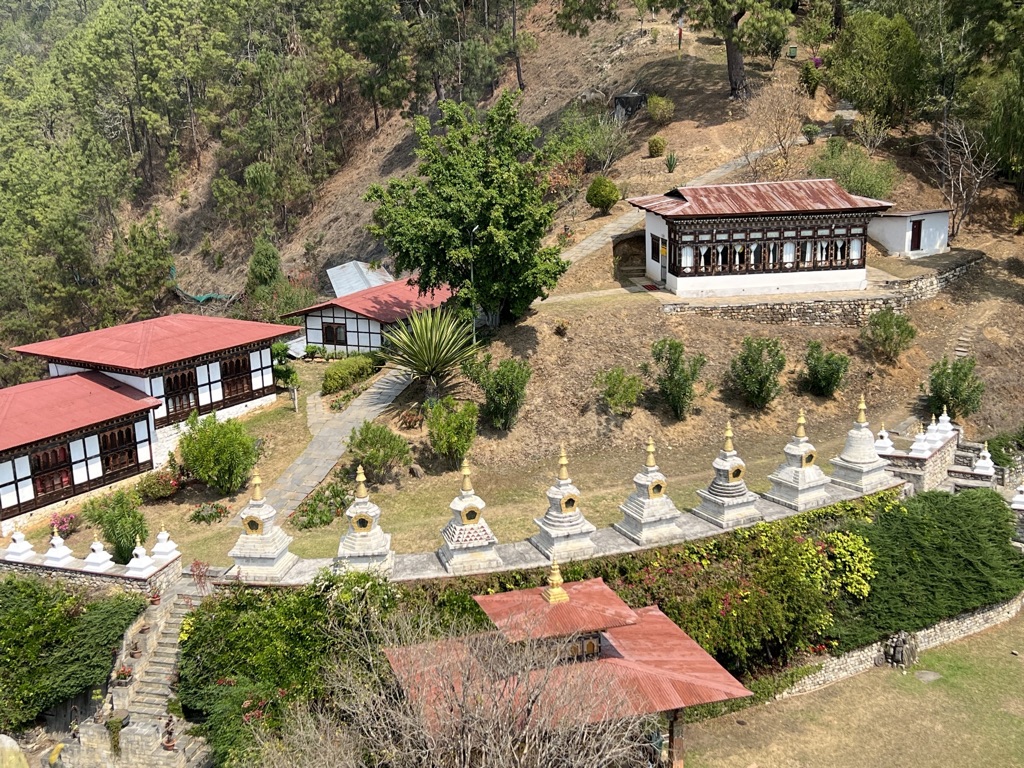
Finally we could see the beautiful stupa high on the mountainside, it’s golden roof glowing in the sunlight.

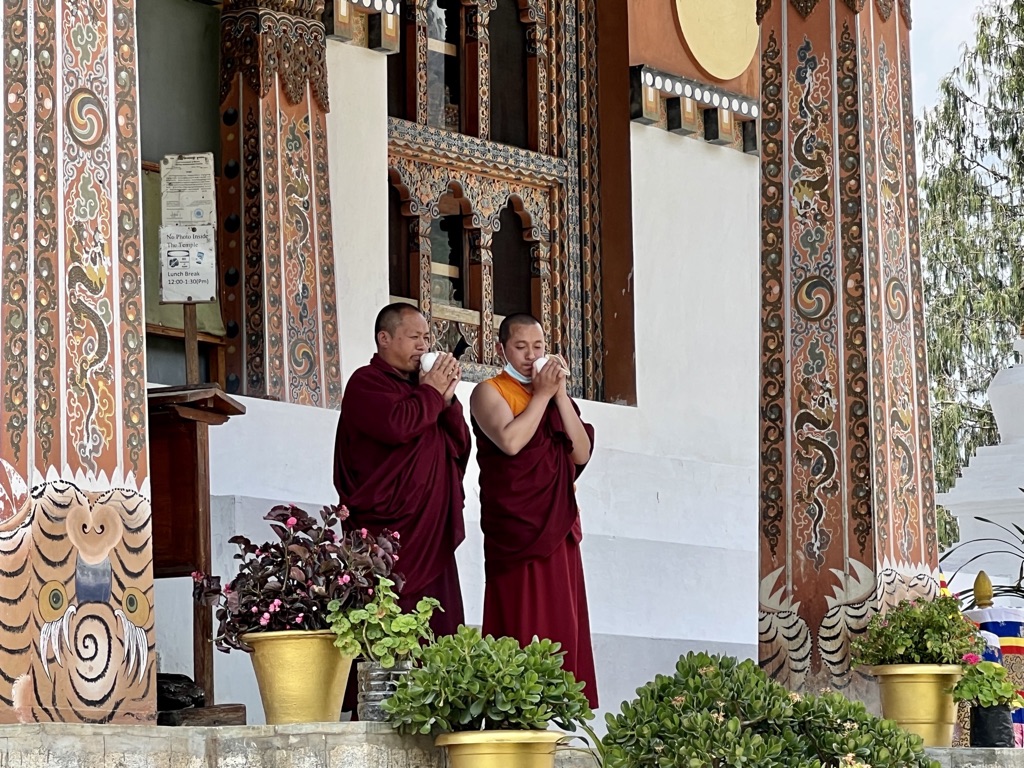
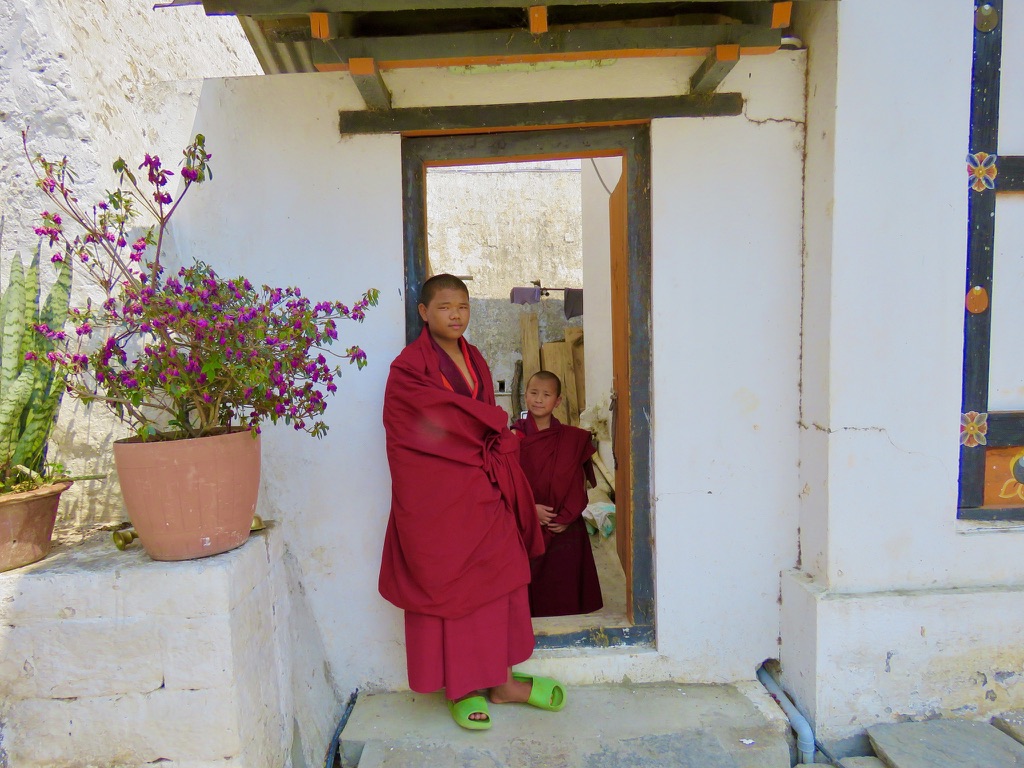
The four storey pagoda style building has a powerful presence and one can feel the peace and harmony that was the intention. Several smaller stupas surround it and from the rooftop there are spectacular views. Monks dressed in red were gathering for prayers and as we entered we heard the wonderful chanting which is very meditative and for which Tibetan monks are famous.

View from the rooftop

Going down was easier than the ascent and again we crossed the bridge with the flags promising us a safe journey.

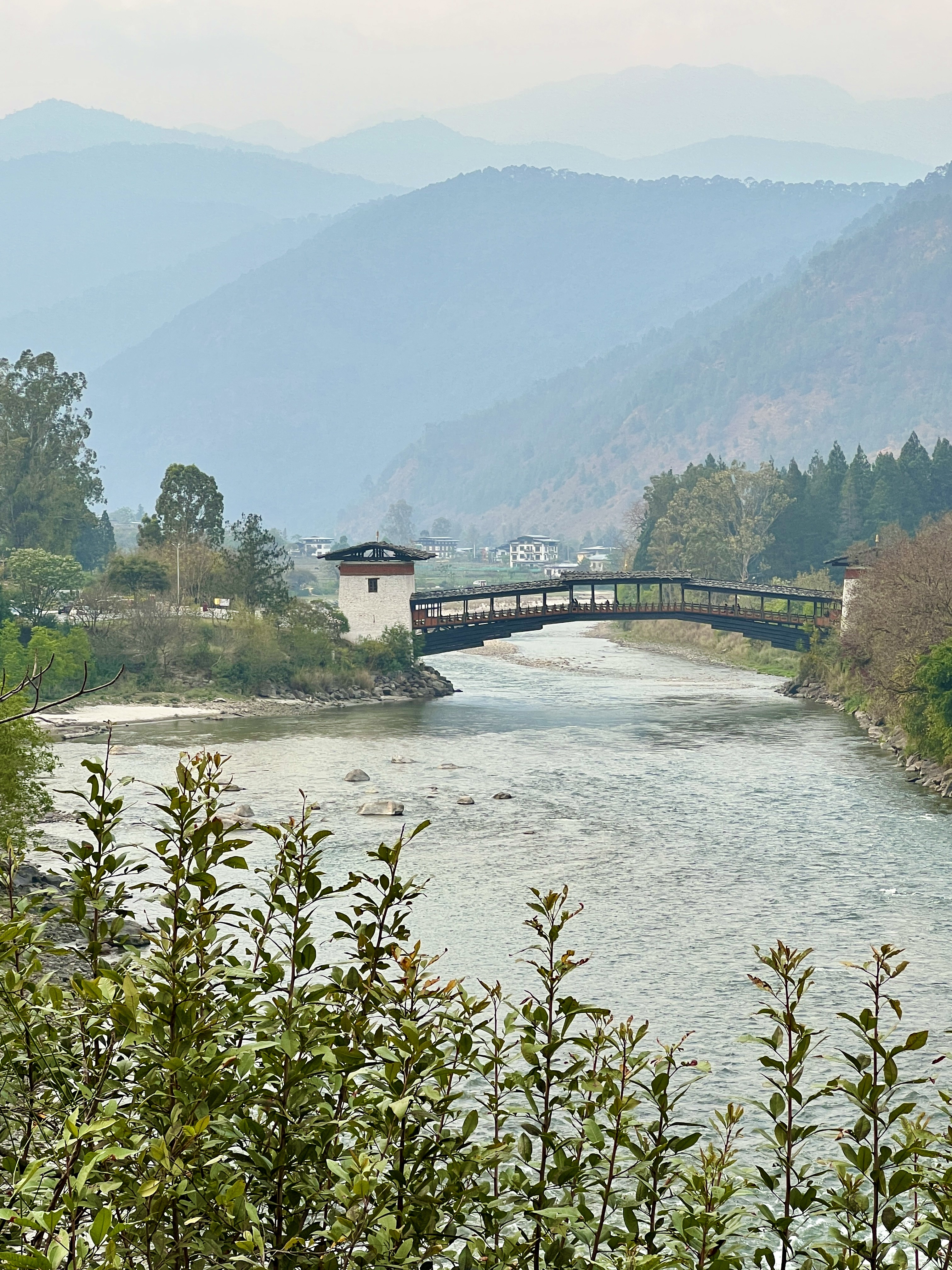
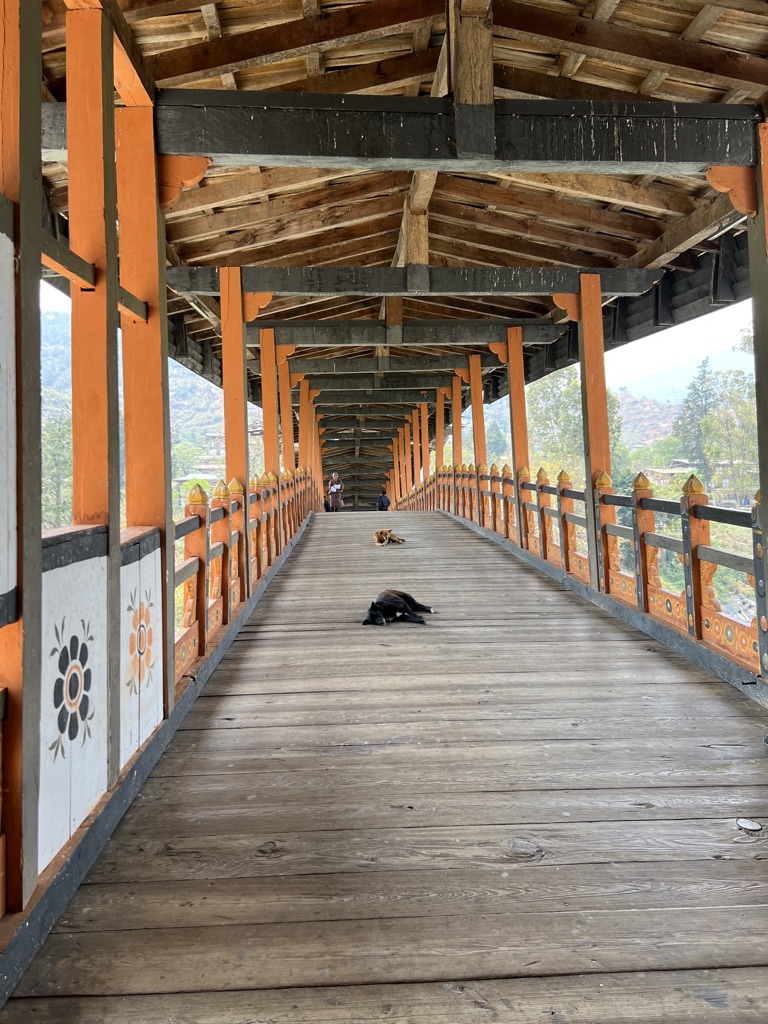
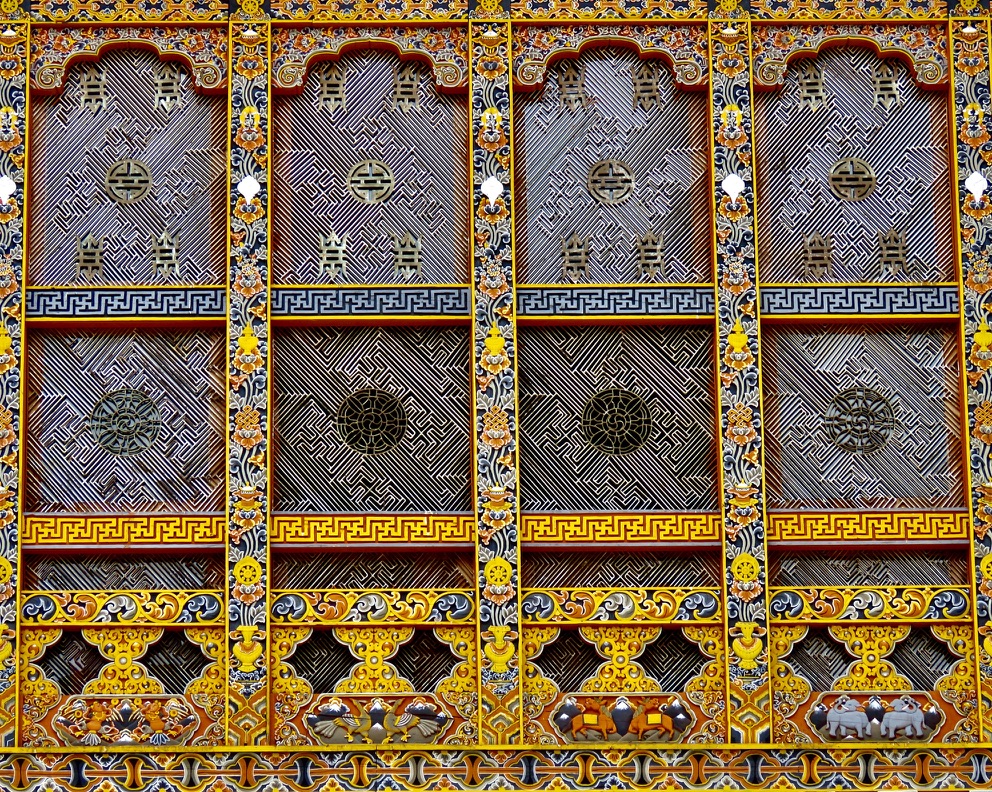
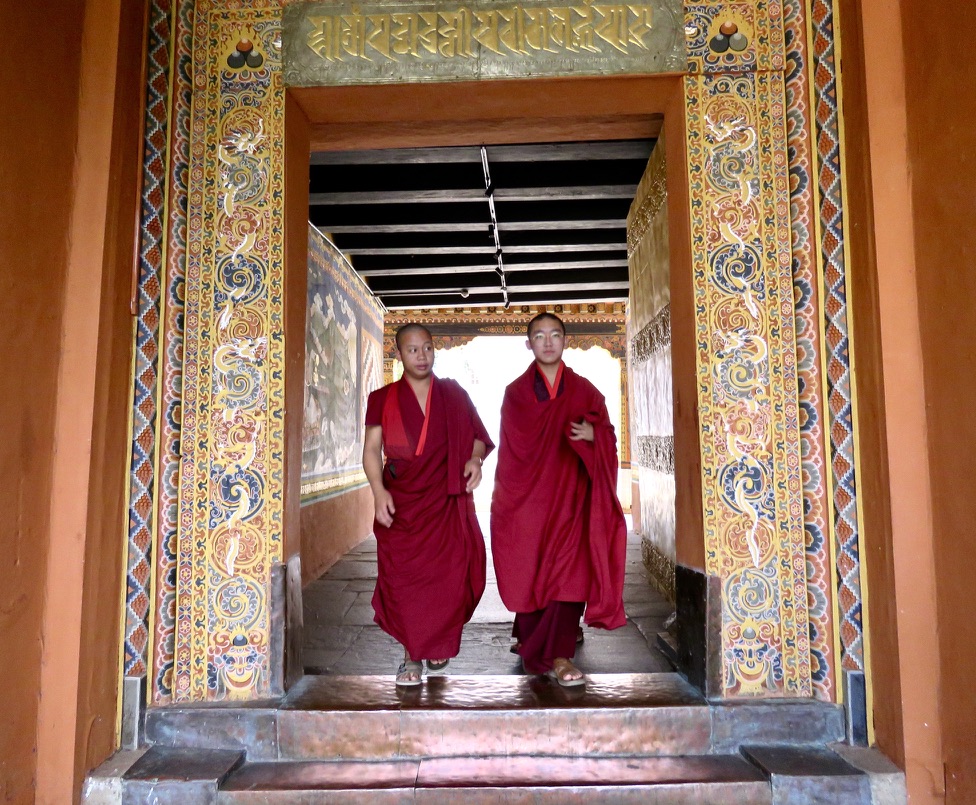
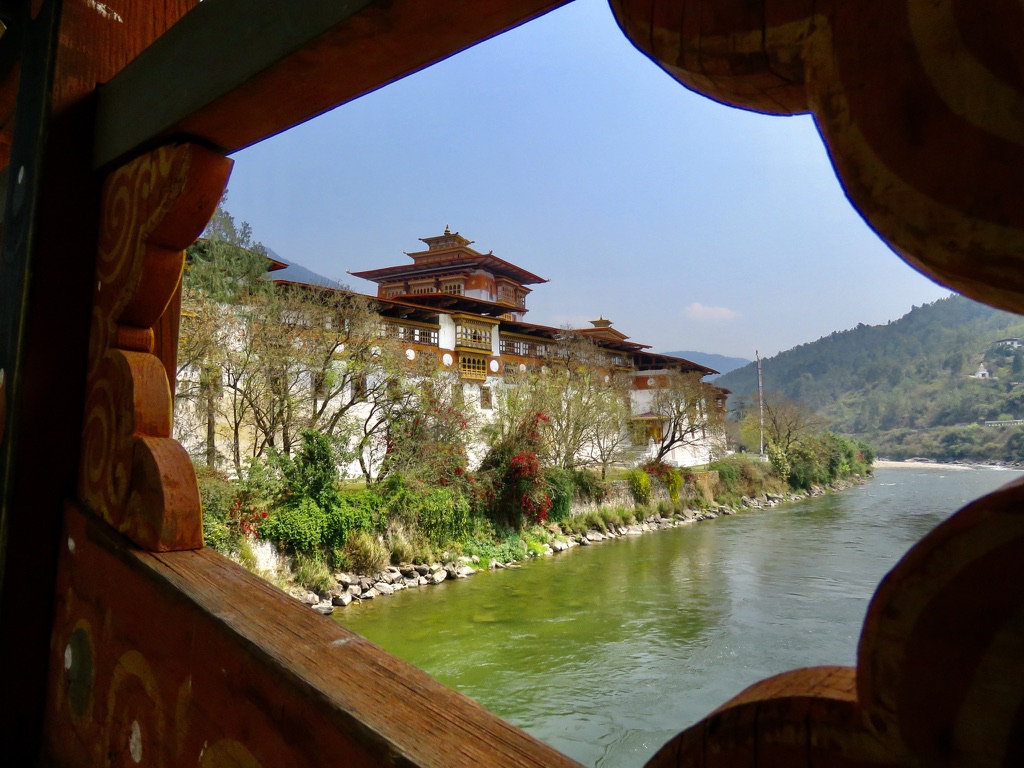
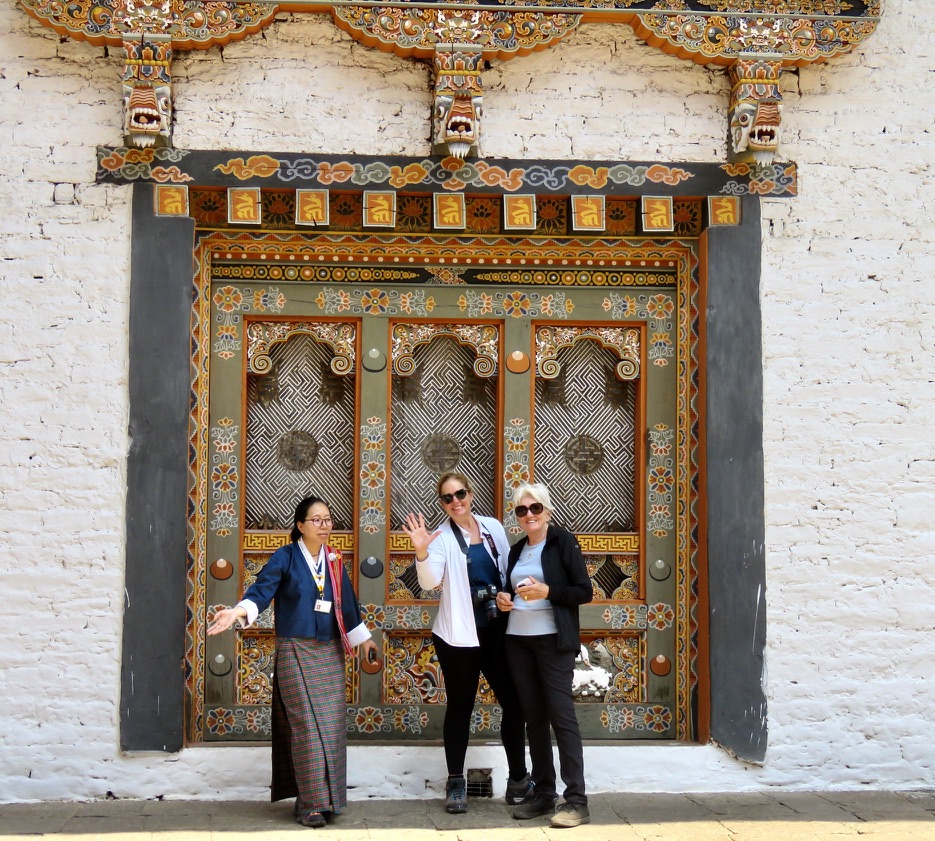
After lunch we drove to the majestic Punakha Dzong which is said to be the most beautiful in Bhutan. It is built where the two rivers meet and is the winter residence of the Head Abbot and the central monastic body. It is also where the King was crowned and it houses several very important and ancient relics. To enter the building we had to cross the wooden covered bridge. Inside we found the most beautiful buildings built in traditional style and colourful doors and windows. Monks were mingling, their red and saffron robes swirling in the breeze.

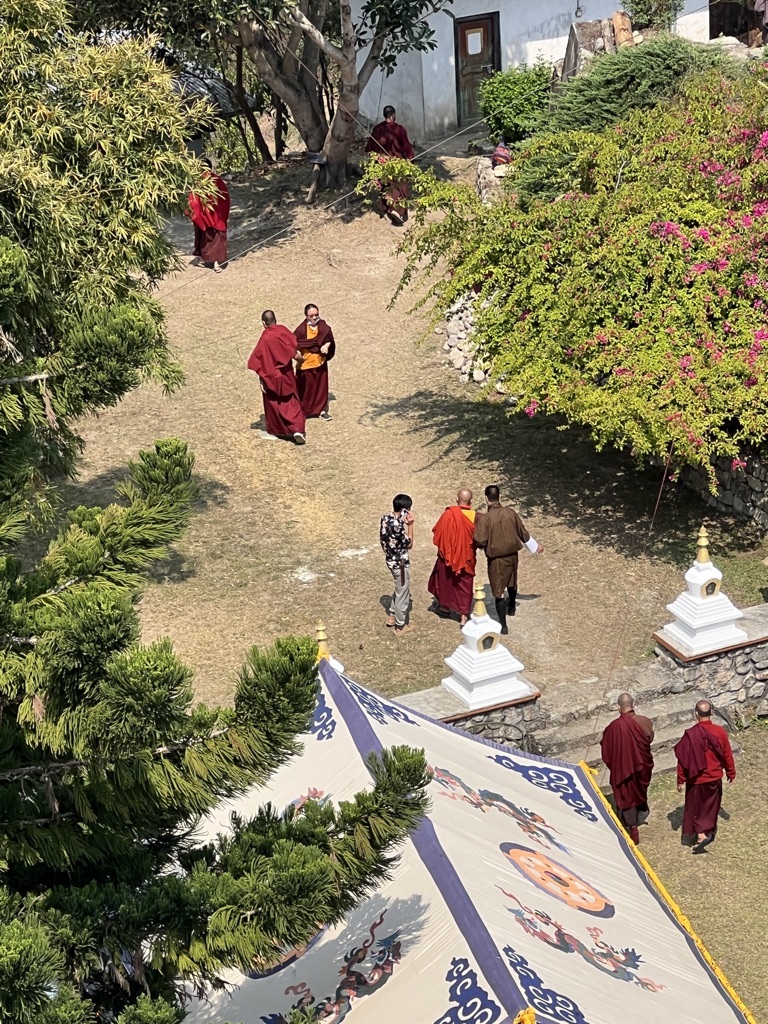
We were lucky to meet one of the chief Abbots who asked if we would like to light candles in memory of a loved one – this we did and felt very privileged and honoured. I felt this Dzong has a special significance and will always remember this place.

THIMPHU / PUNAKHA BHUTAN

DAY THREE – THE CAPITAL AND A BEAUTIFUL VALLEY

We set off early for our next stay in Punakha which is 125.6 km from Paro – approximately four hours drive away. This seems slow to us but this is due mainly to the winding roads and mountain passes. Very different road conditions to what we are used to!

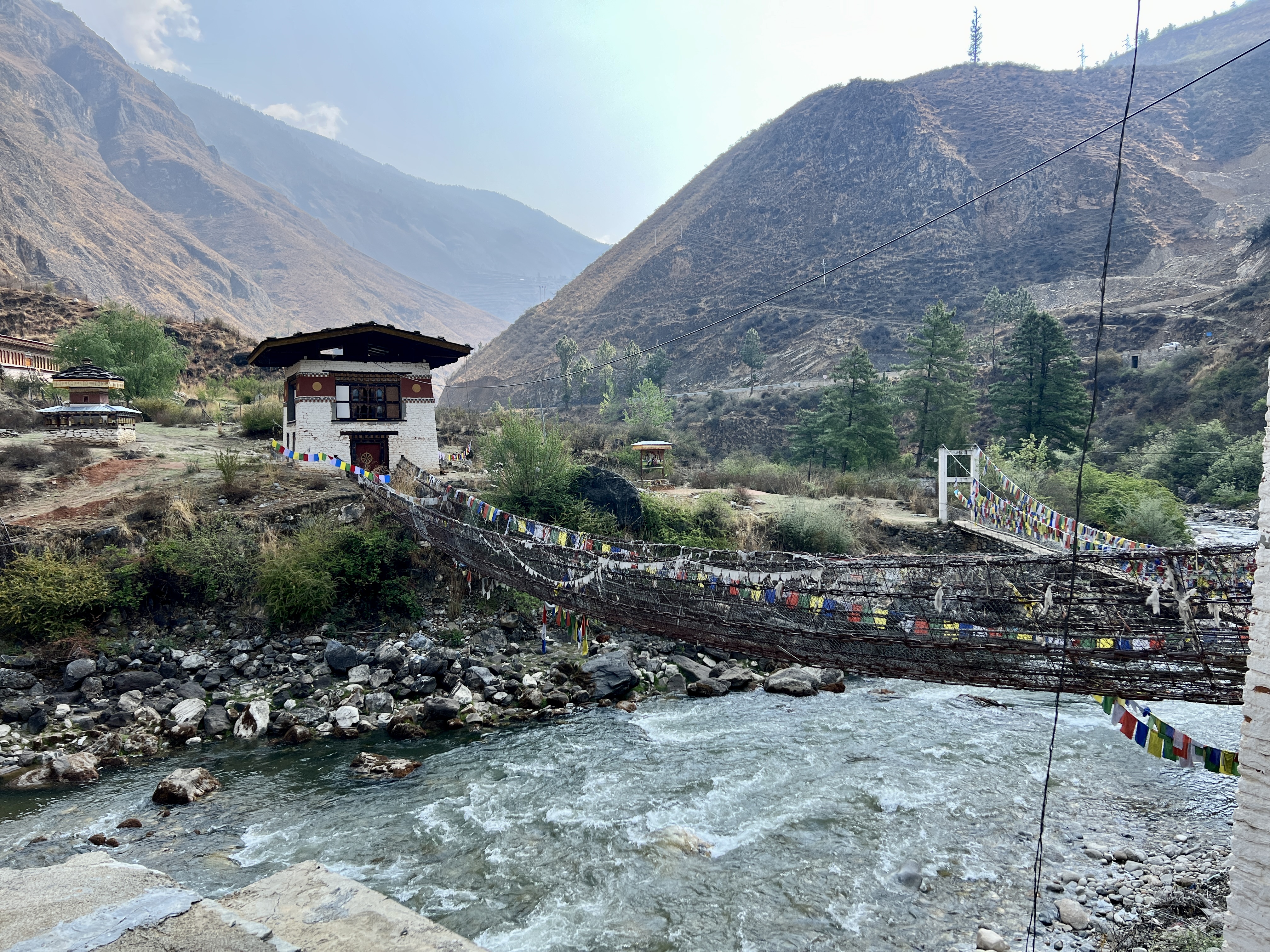
Our first stop was at Tachog Lhakang – or the Iron Chain Bridge. This remarkable structure is 600 years old and made of wood and metal and crosses the Paro Chuu river. It was built by Thangtong Gyalpo in the late 1300s, who is said to have built 108 bridges all over Tibet and Bhutan. His intent was to help pilgrims get to holy places. This is the first bridge to have ever been built in Bhutan. It is fragile now so a new wooden swinging bridge, decorated with masses of prayer flags, has been built close by for those who wish to cross the river to the temple opposite.

Next to the bridge on a hill is a private temple with a chorten housing more of the Tsa Tsa memory cones. As you cross the bridge there is a beautiful shrine depicting the Bhutanese Royal Family who are very revered in the country.

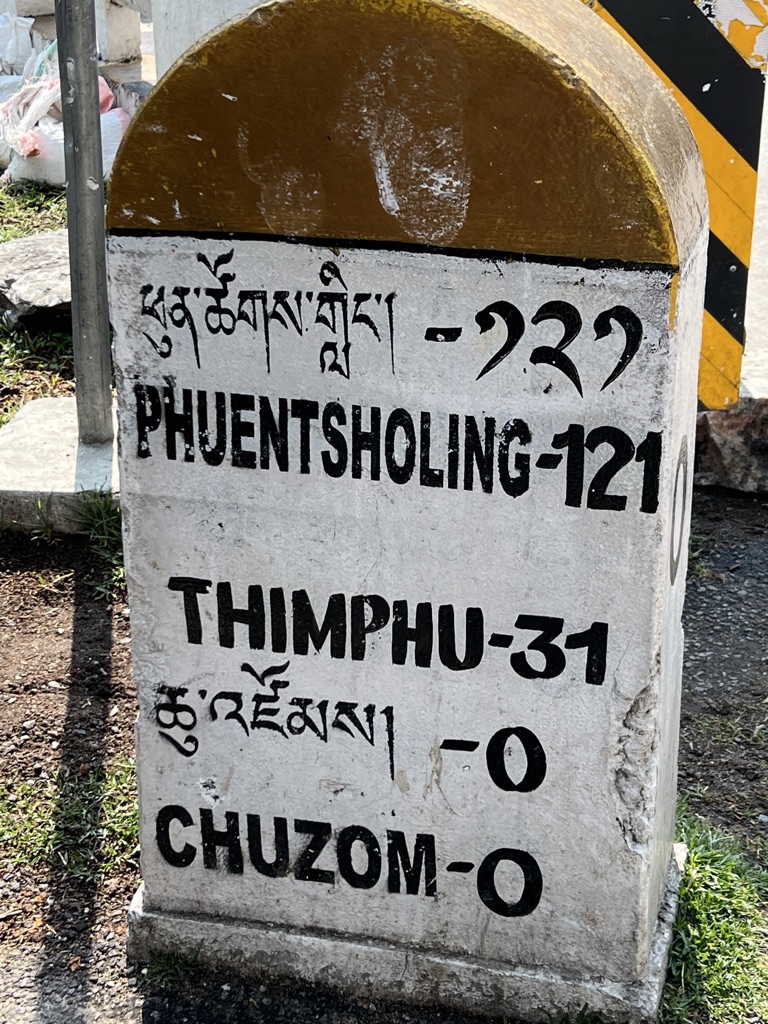
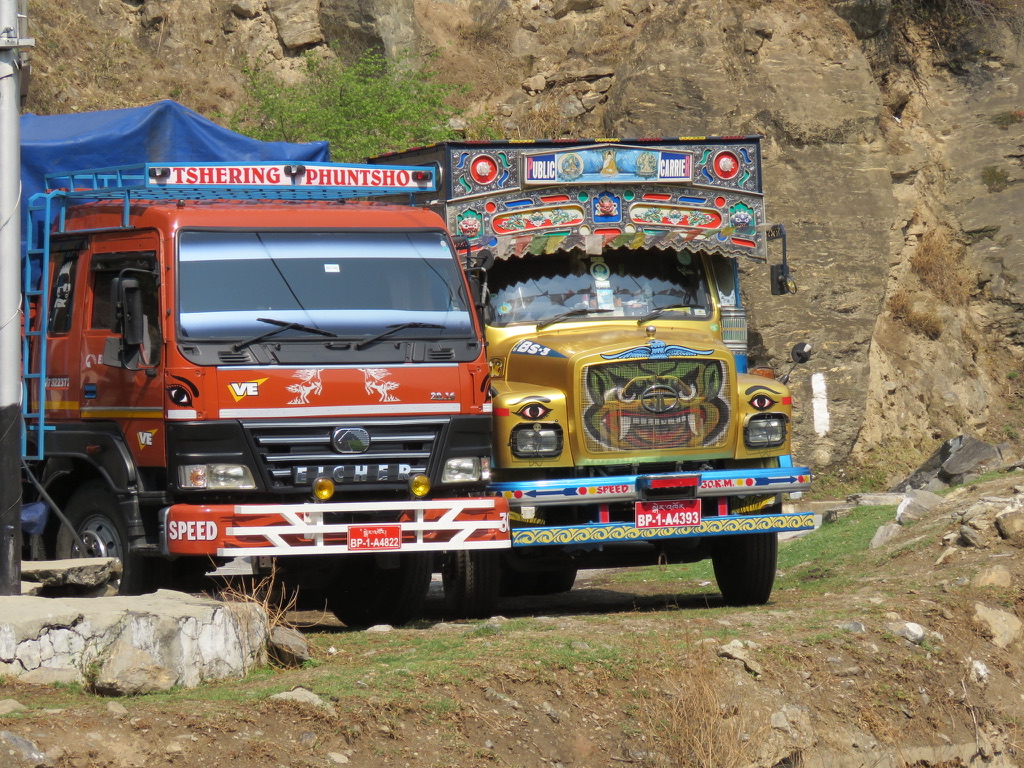
A little further on we stopped at the road junction – signposts to the border to India close by and colourful trucks about to make the journey were lined up. There were coffee shops and a little general store were open for travellers but the nearby market stall was what captivated me. The stacks of fresh fruit and vegetables, not to mention baskets of red hot chillies, had been brought in earlier that morning and according to our guide, would be gone by evening.

Here also just below the road bridge was a trio of chortens at the place where the two rivers meet – the chortens represent the three primary styles – Tibetan, Nepali and Bhutanese.

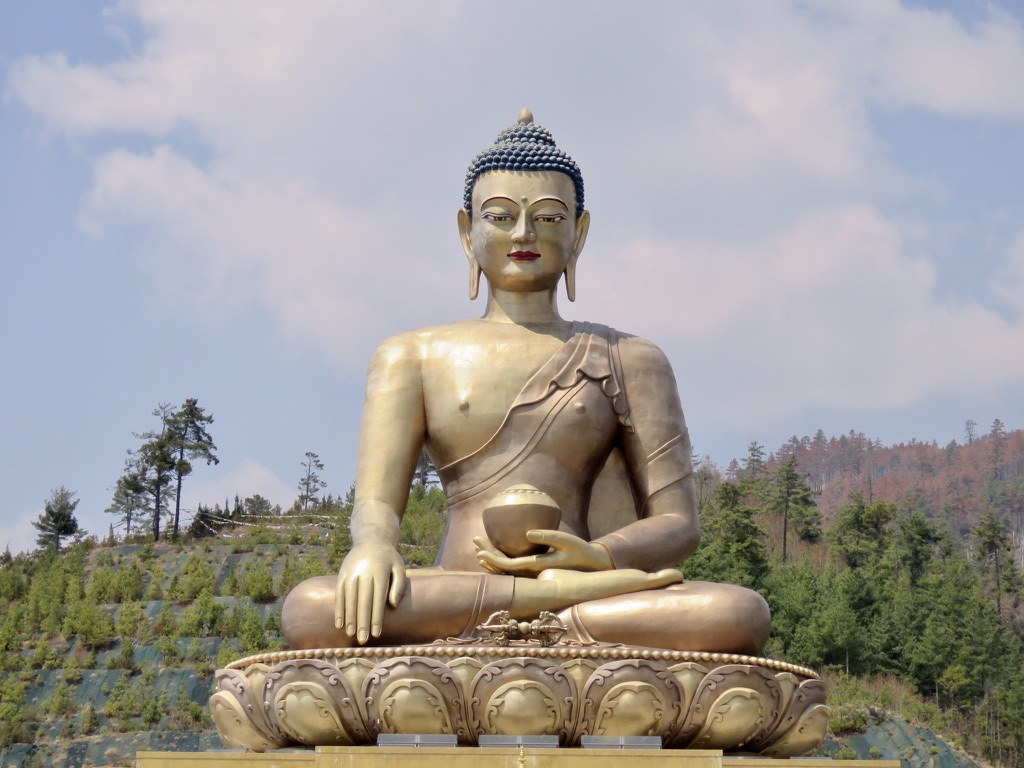
Thimphu, the capital city, is 52 kilometres from Paro and is the fifth highest capital in the world by altitude – a fact mentioned to us by Sonam as the city ranges in altitude from 2246 m to 2648m and it is not unusual to feel breathless. That fact was proved as we drove up the mountain to visit the giant Buddha Dordenma statue. This massive Buddha sits at the top of the mountain overlooking the city of Thimpu and surrounded by valleys. Said to be the largest sitting Buddha in the world it is 52 metres tall and is made of bronze and gold plated. To reach the statue and temple we had to climb what seemed to be about a thousand steps!

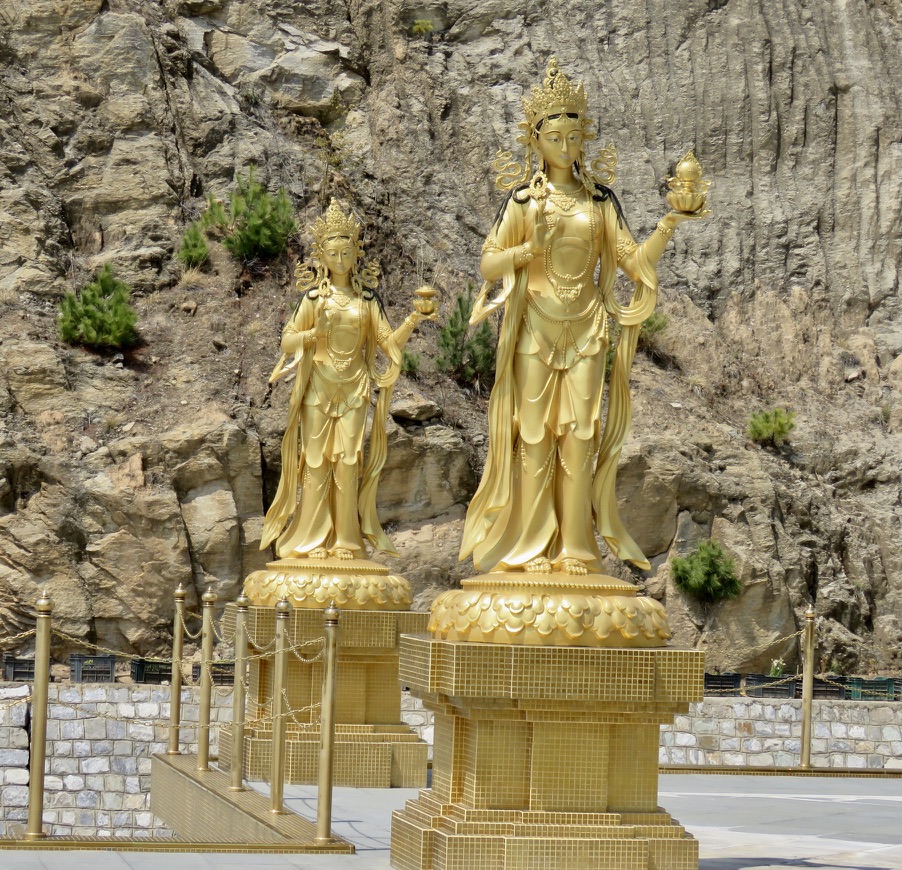
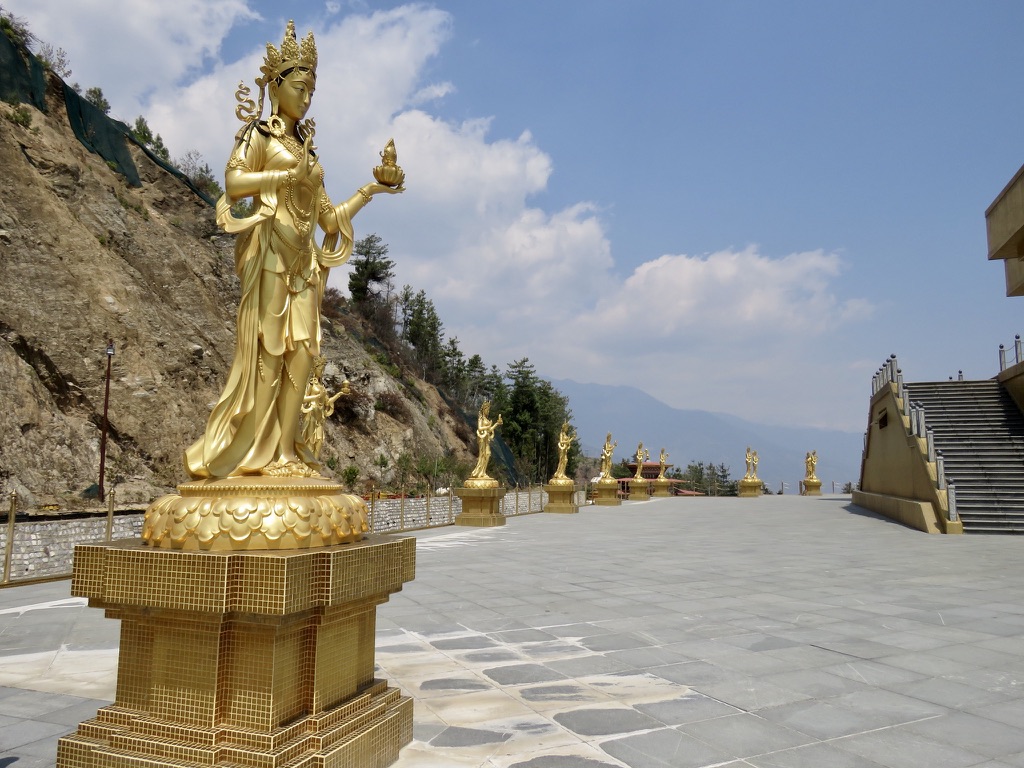
Inside the temple itself there are 100,000 smaller gold buddhas embedded along the interior walls and we were told we could buy one to put in the wall and that would guarantee many blessings. It was all overwhelming but there was a sense of peace and a strong energy all around. On the perimeter were golden goddesses and other icons pertaining to the creator.

The view of the city of Thimphu from the statue

Being very interested in the traditional way of life in Bhutan, Sonam suggested we go to Simply Bhutan which is an interactive ‘living’ museum and probably the next best thing to learn about life there without having to spend months in the country. Visitors are greeted with a shot of local arra (rice spirit), before being guided through mocked-up village scenes. Along the way, you can dress up in traditional clothes, try out archery and hear songs sung by Bhutanese women as they build houses out of rammed earth.

Here we are at a traditional farmhouse where corn and chillies are dried on the roof.

Thimphu is a rapidly growing city and to date has no traffic lights however, there is one traffic policeman at the busiest intersection who guides the traffic in an almost theatrical manner on his little “stage”.

Astrology is an important part of Bhutanese life and locals rely on astrologers for advice on their health, money, luck and careers. Farmers will plant crops when the astrologers predict is the right time. The only college of astrology in the Himalayan Kingdom is Pangri Zampa and we visited there just as an important nine day festival was about to begin. Monks were busy setting up stalls and decorating the temple ready for the throngs of people who visit to pray for the wellbeing of all and peace and prosperity for the country. I also had a reading from a senior monk who spoke no English, so a lot of interpretation was required and I am still processing it all! As usual there were a few dogs around and one in particular seemed to take a liking to me and followed me everywhere. I wished I could take him home but apparently he had spiritual connections to the location of the monastery.

It was time to set off for Punakha and we drove out of town and up to the incredible Dochula Pass. One of the highest in Bhutan at 3,140 m and has amazing 360 views across the Himalayan mountains which apparently are very clearly visible in the winter months. For us, there was haze due to the many “forest fires” the farmers had started but we enjoyed the whole experience and the scenic views. It was cold but Chencho had brought flasks of home made ginger tea and delicious apple cakes which gave us some sustenance! There was a restaurant at the top and 108 chortens which are visited by locals as well as tourists. The Pass is in commemoration of Bhutanese soldiers who lost their lives for their country.

The drive down to Punakha was through forests of cypress pine, spruce and oak trees, Prayer flags were fluttering at almost every corner and small chortens by little waterfalls on the hillside had prayer wheels spinning. It was amazingly peaceful even through the road was winding and steep and probably a little scary, we felt quite calm.

The road to our hotel – Como Uma Punakha – passed by the really beautiful Punakha Dzong which we were to discover more about in the coming days.

And a warm welcome awaited us…….

PARO, BHUTAN

DAY TWO – DISCOVERING MORE

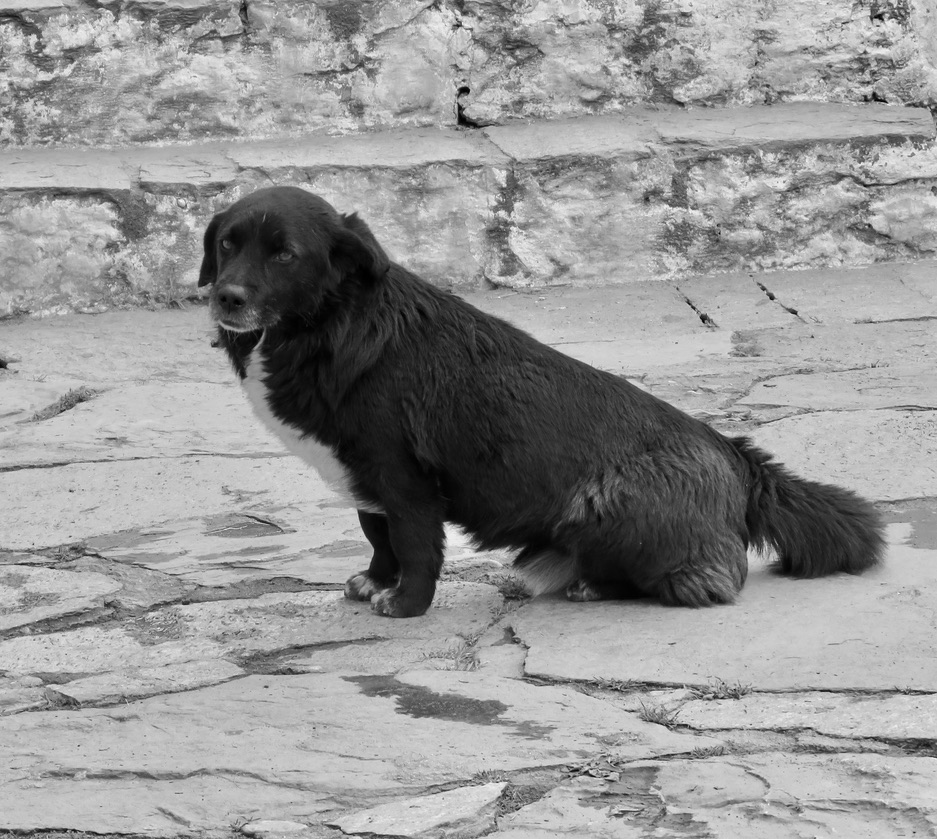
“We are going on a little hike today” announced Sonam, our guide. To say I was slightly apprehensive would be an understatement. I had heard about “hikes” in Bhutan and slogging up and down forest hills was not exactly my idea of fun. However, there was to be no discussion so off we set from the Hotel winding through the pine forests to the pretty grounds of the fortress like monastery of Zung Dzong. A little dog befriended us and showed us the way, darting off periodically to find the odd critter in the grass. The views were spectacular and as we climbed higher the whole of the town of Paro spread out before us and the snow capped Himalayas sparkled beyond.

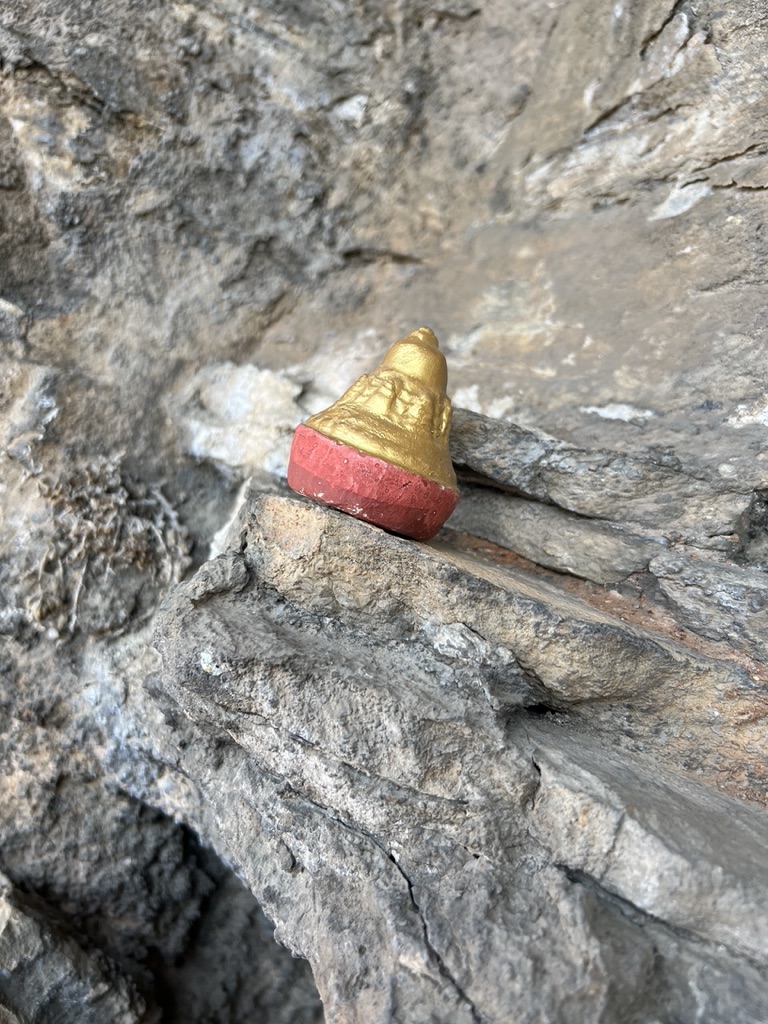
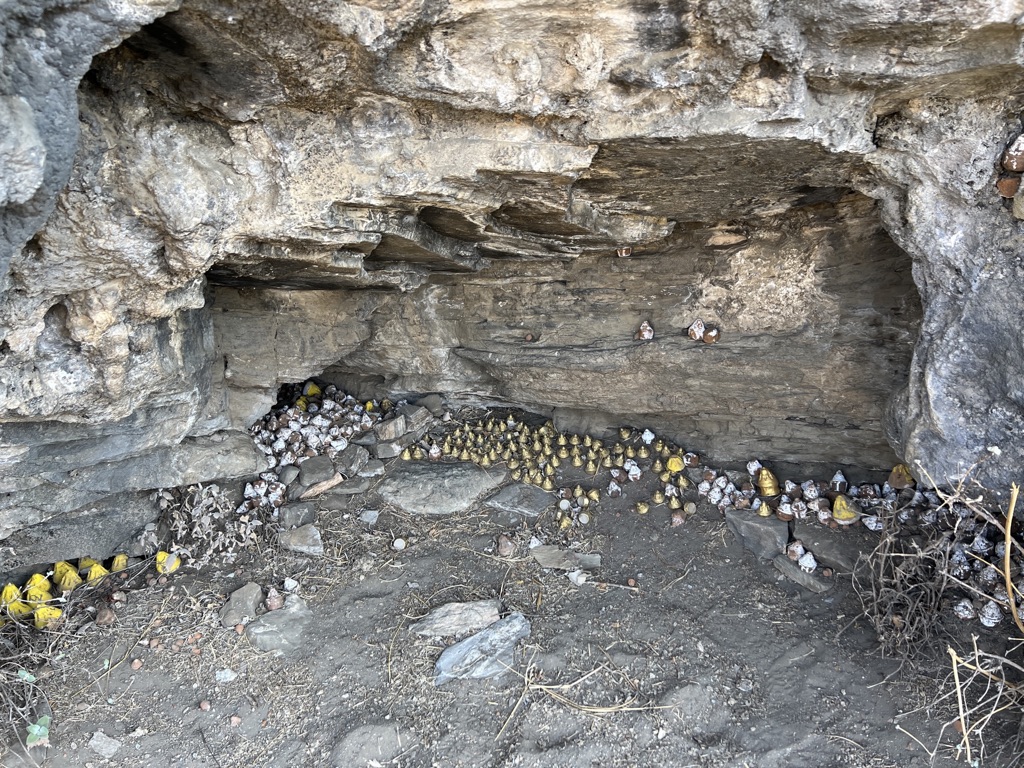
Sonam told us stories of various spiritual beliefs and traditions particularly in the mountains and we came across a little cave with a lot of cone like objects casually placed inside. These are Tsa Tsas and are commonly found in the hillsides in places sheltered from the elements. They are made by monks commissioned by bereaved families and are an expression of farewell – a memorial if you like. Inside there are often printed mantras. The cones are around 3 inches tall and are made of ash collected from the funeral pyre. Sometimes they are painted gold or red but often are just left white. I found this quite a moving tribute.

At the top of the hill we came across the monastery which was closed and is not used at the moment, however there is a monk who looks after the property. Feeling somewhat out of breath and tired from the hike, I was thrilled to find Chencho, our driver, appear with a couple of bottles of ice cold home made watermelon juice. That was so welcome! He had driven to another point at the bottom of the hill, ran up to meet us and give us refreshments and then joined us in walking down again. The little dog was still with us and gave him a welcome almost as good as we did!

Along the way colourful prayer flags fluttered in the breeze. These are hoisted for happiness, long life, prosperity, luck and merit and to offer karmic merit to all beings. Sonam told us that the benefit of prayer flags is to guide the souls of the dead from the netherworld. I rather like that belief. We saw them everywhere we went in Bhutan, in the towns, villages and on the hills. When we were leaving Sonam presented me with a roll which is a wonderful memory of our visit.

The hike had not finished – we walked across the hills to Ta Dzong which is the home of Bhutan’s National Museum. This conch shaped fortress was built in 1649 and the aim was to protect the population against assaults from Tibet and India. Sonam told us it was built entirely of stone and wood and no nails were used in the construction. It survived an earthquake in 1714 which apparently rumbled for 15 days and was converted into a museum in the 17th century.

We climbed down to the bottom of the building via a staircase which encircled the building. It was easy to see how it was a prison in those days with small cells and dungeons at the base – now filled with artifacts and so much history.

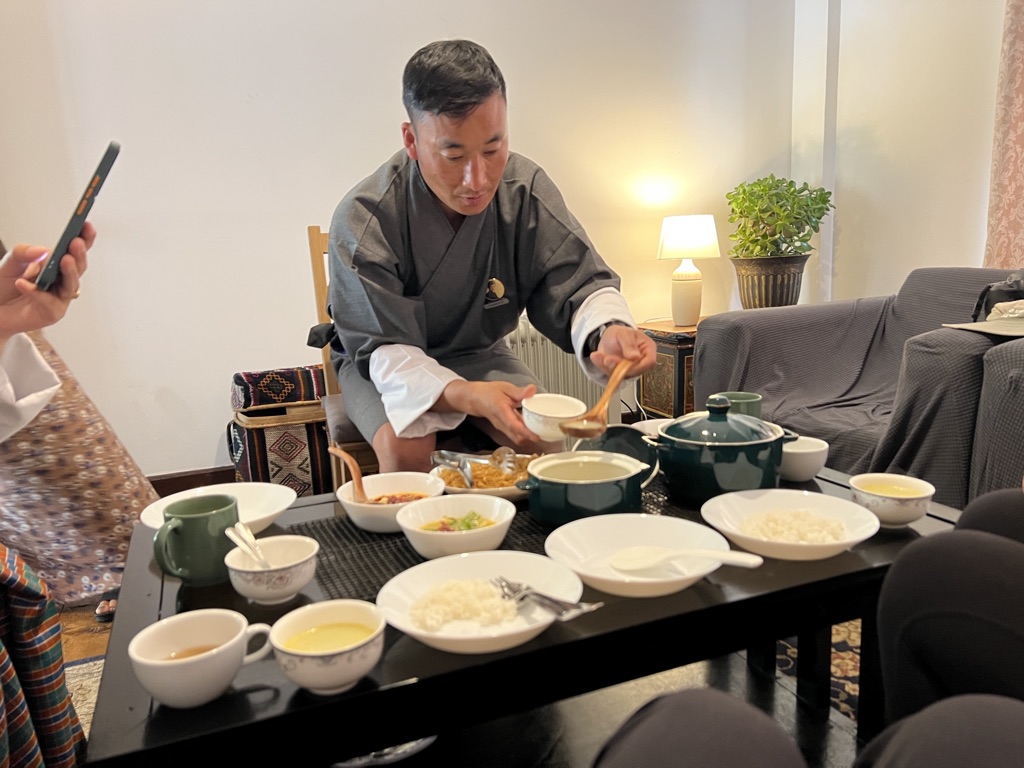
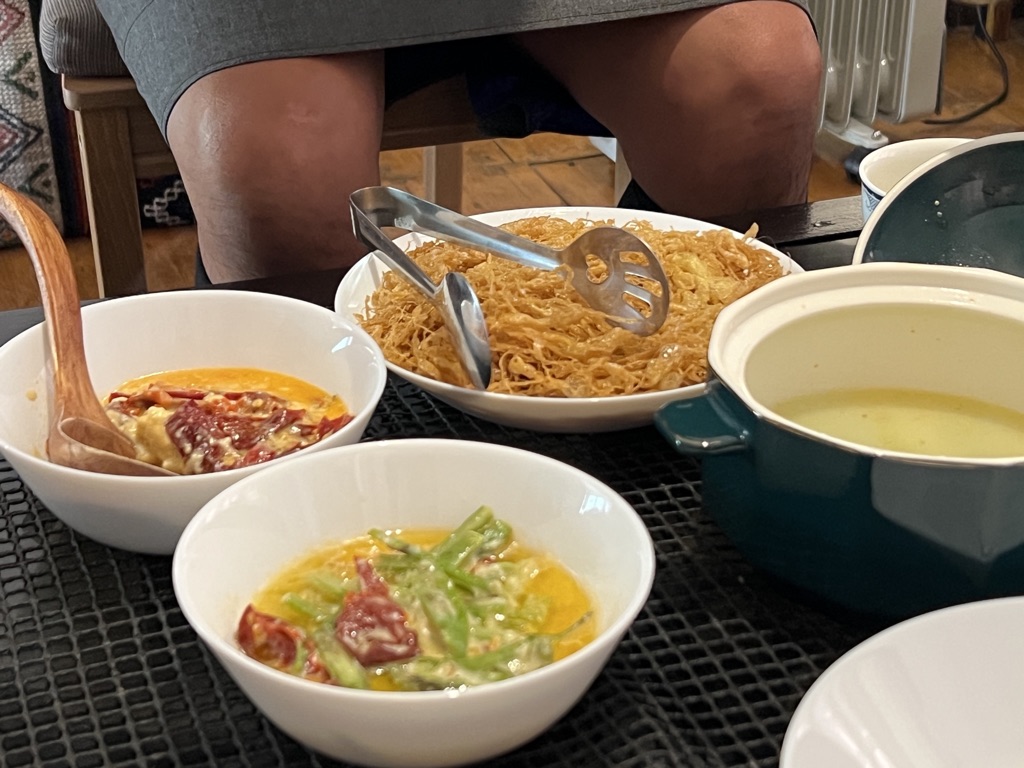
It was time for a break so we drove into Paro town for a traditional Bhutanese lunch. This was in a small restaurant in a group of shops and was owned by friends of Chencho. We were ushered into a private room at the back and sat around a rectangular table. The food was then brought in steaming hot and in bowls of various sizes. Curries, potatoes, vegetables and rice plus a delicious soup full of ginger were on offer. The most popular dish is chilli cheese made from locally produced cheese – usually from yaks – and fiery locally grown chillies. I had to pass up on that one!

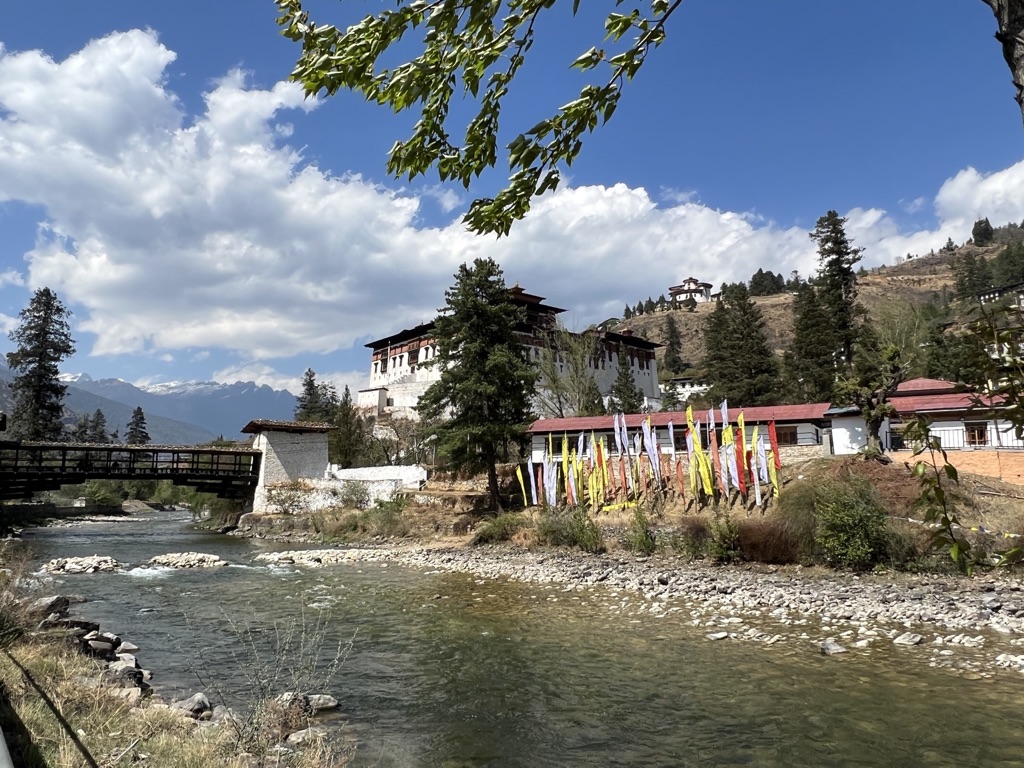
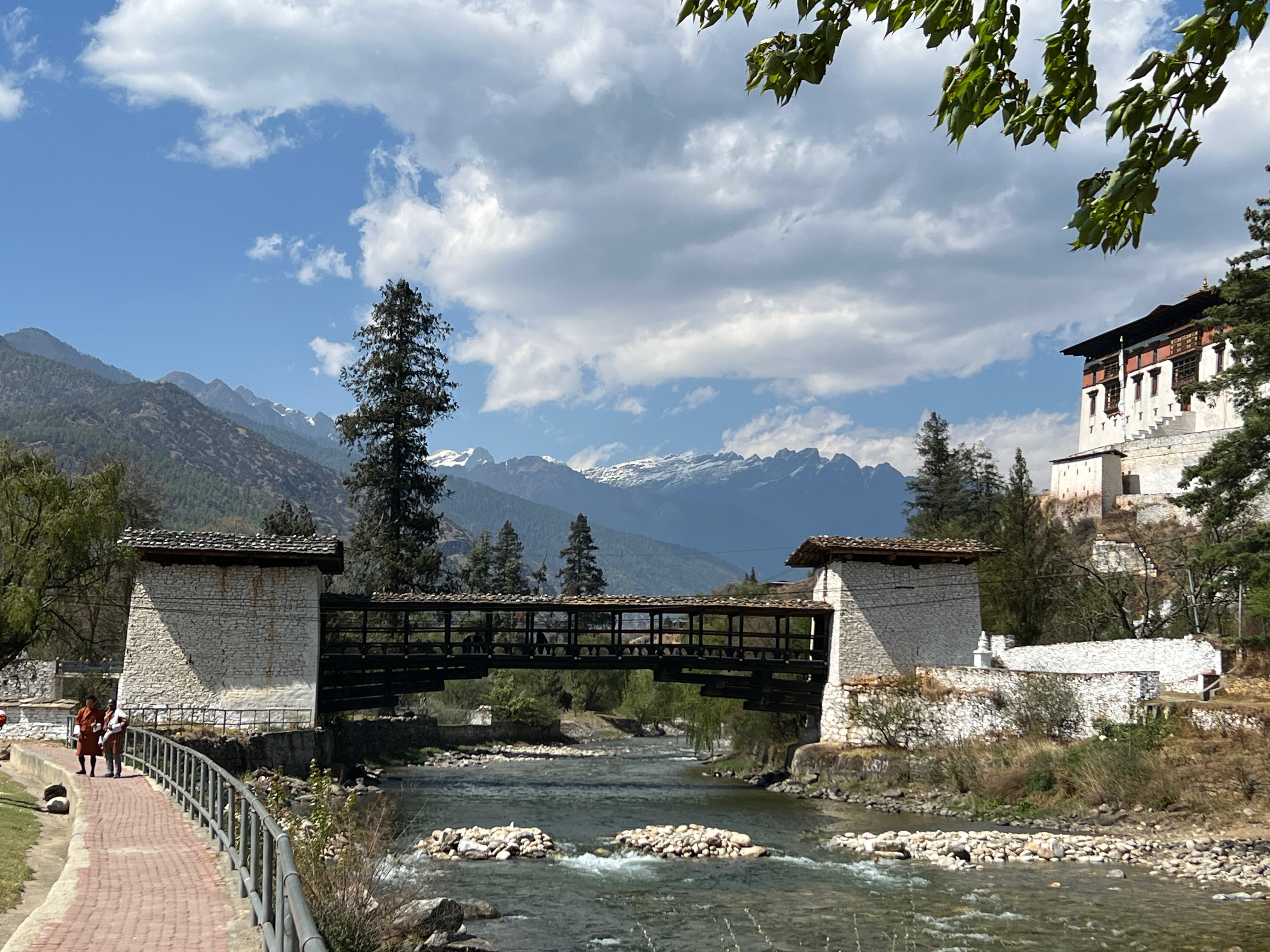
Our next visit was to Rinpung Dzong – or Paro Dzong. During the 17th and 18th century, Paro Dzong was an important bastion for the Kingdom of Bhutan against invasion from the north. At present, it houses the monastic body and government offices, and serves as the religious, military, administrative, and social centers of their district. Located on the Paro Chuu river we had to cross a covered bridge and then walked up a steep path passing monks and houses along the way.

We walked around the intricate buildings and gazed at the view of the town from up on high. There was a sense of calm everywhere and there was no noise at all except the faint murmur of monks chanting within the walls. This Dzong was the location for the filming of the movie “Little Buddha” in 1993 by Bernard Bertolucci and is the scene of many festivals and masked dances.

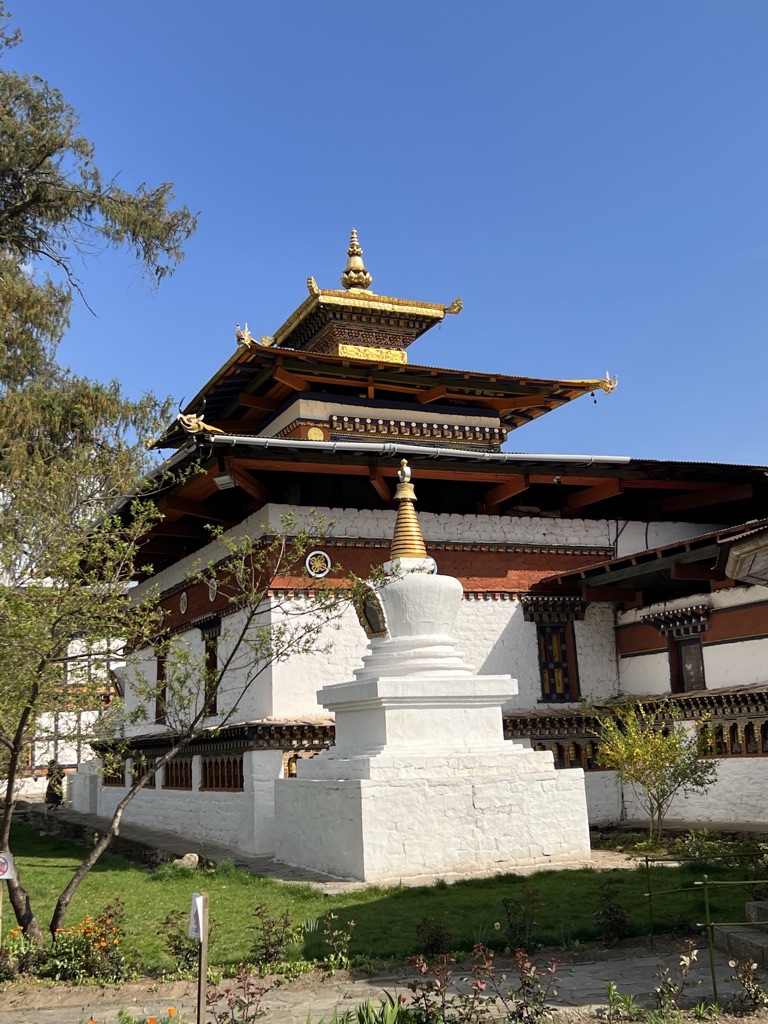
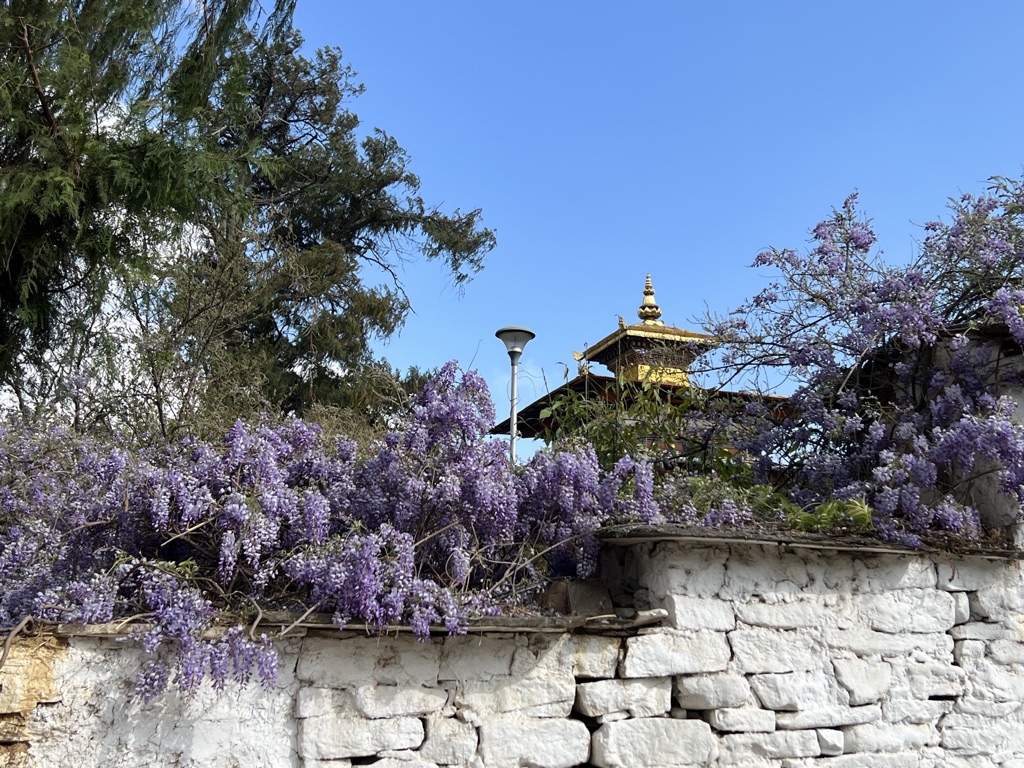
Our final visit was to the beautiful Kyichu Lhakhang temple which is a short drive a few kilometres north of Paro. This is said to be the oldest temple in Bhutan built in the 7th century. It is charming and is known for its orange tree which bears fruit all year round. We stepped inside and found the usual offerings around the Buddha images but what amused us was a little girl who was visiting with her family and was intent on taking the chocolate biscuits off the altar. When told she couldn’t she had a meltdown and the monk finally caved in! It turned out the family was well known and the father was a famous film celebrity. What surprised me was that they were all speaking in perfect English!

Here the cloisters are a contemplative place with prayer wheels and fruit trees. There are also butter lamps flickering in the dimness of the temple. We were invited to make a butter lamp offering which we did in memory of a loved one. This light offering is closely linked to transitional phases in life and is a strong belief in Tibetan Buddhism. For us it was a lovely way to end a very inspirational day.

BHUTAN

The Real Shangri-La

DAY ONE: PARO

It has always been my dream to visit Bhutan, a tiny landlocked country about 300km long and 150km wide encompassing 46,500sq km. It’s northern boundary is Tibet and the rest is surrounded by India and the Himalayas. Tourism is relatively new and it was only in 1974 that the first foreign tourists were permitted to enter the country.

The story that started me on this journey was that of an American girl, Hope Cook, who married into the Royal Family in Sikkim, a tiny state in north eastern India. That was in 1963 and I thought it was the most romantic thing I had ever heard! Stories of life in the tiny Himalayan kingdom and how a westerner adapted to a strict Buddhist community fascinated me. From there I learned about Bhutan and later met several Sikkimese people through my work in tourism who spoke warmly of their little known neighbour.

Fast forward many years and as tourism opened up I had a yearning to experience for myself this beautiful country but it was expensive and difficult to get to. Life intervened and the dream was pushed from my mind until one day last year I read that Bhutan was opening to the world again after strict lockdown during Covid. Now was my chance!

My daughter and I finally landed in Paro in April this year. We did a lot of research and decided on an eight day trip covering the western part of the country. Travelling from Australia we flew first to Singapore, then Bangkok where we overnighted at the airport and finally an early morning flight to Paro with a short stop in Bagdogra in India.

Fellow passengers were a few other tourists from the US, Asia and Europe but mostly residents of Bhutan both expat and local as well as several Monks in their orange robes and carrying shopping bags of all sizes. I was surprised to find good old fashioned service on Drukair where the passenger mattered and was not just a number in a seat. The crew were friendly and willing to help in any way and our seats were spacious. I immediately fell in love with the language – Dzongkha – its soft, flowing melodious tones sounded just right in the PA announcements which were, naturally, followed in English. Dzongkha is one of 53 languages in the Tibetan language family and is the national language of Bhutan whilst the medium of instruction is English.

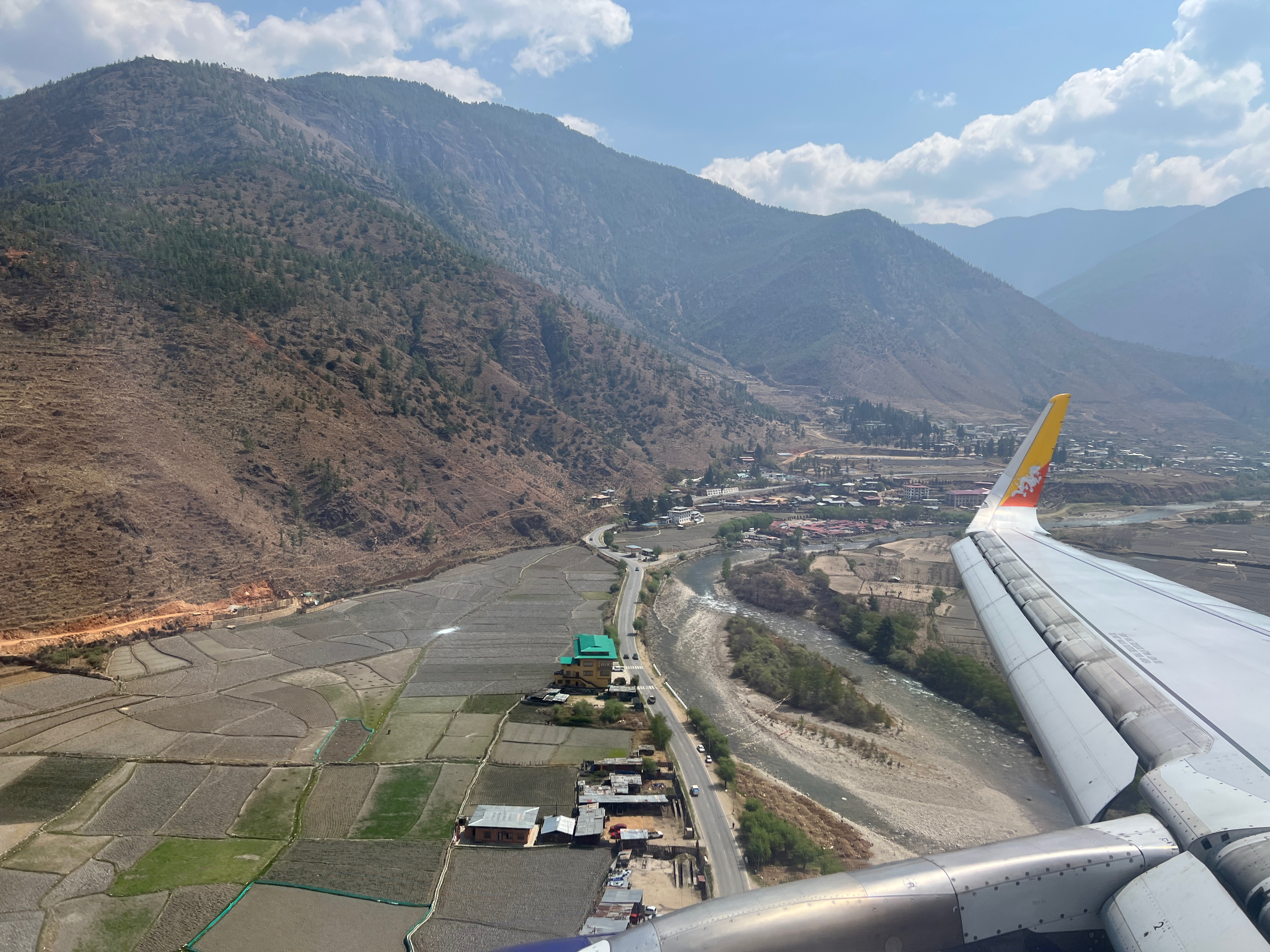
Paro International Airport is one of the world’s most dangerous airports and just a small handful of pilots are certified to make the manual by-daylight-only approach between 18,000 feet peaks, through a long, winding valley, and onto a runway that is only 7,431 feet long and visible for only moments before landing.  We had heard countless stories about the approach to Paro and as we flew between snow capped mountain peaks we began to feel some trepidation. Then, over the PA, came the Captain’s reassuring voice. “Please do not be alarmed” he said. “This looks hair raising but believe me, we have done it many times before!” With a collected sigh of relief, we settled down to admire the view and concentrate on the moment!

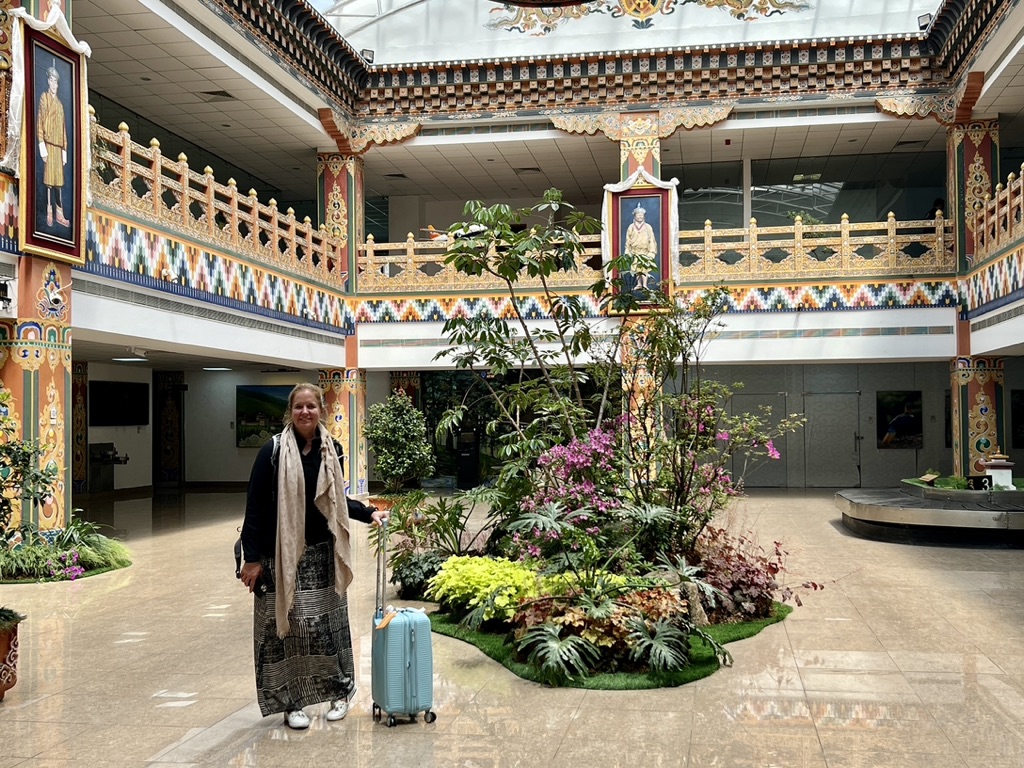
The first surprise came on disembarking the aircraft. There were no jet bridges, no airport traffic, no other aircraft. It was peaceful and serene. We disembarked via the stairs and walked across the tarmac to the beautiful little terminal full of plants and images of Bhutan’s Royal Family. Only one carousel carried checked luggage and there was only a small line at immigration. It was all so organised and there was absolutely no stress. Our guides met us at the entrance to the terminal and presented us with white silk welcome scarves. I felt totally at home!

Our guides were Chencho, the driver and Sonam, the guide and we had the luxury of a large four wheel drive vehicle for the whole of our stay. Inevitably our guides became our friends and we learned so much about Bhutanese customs and way of life. We were to stay at Como Uma Paro, a small hotel about fifteen minutes from the airport in the foothills.

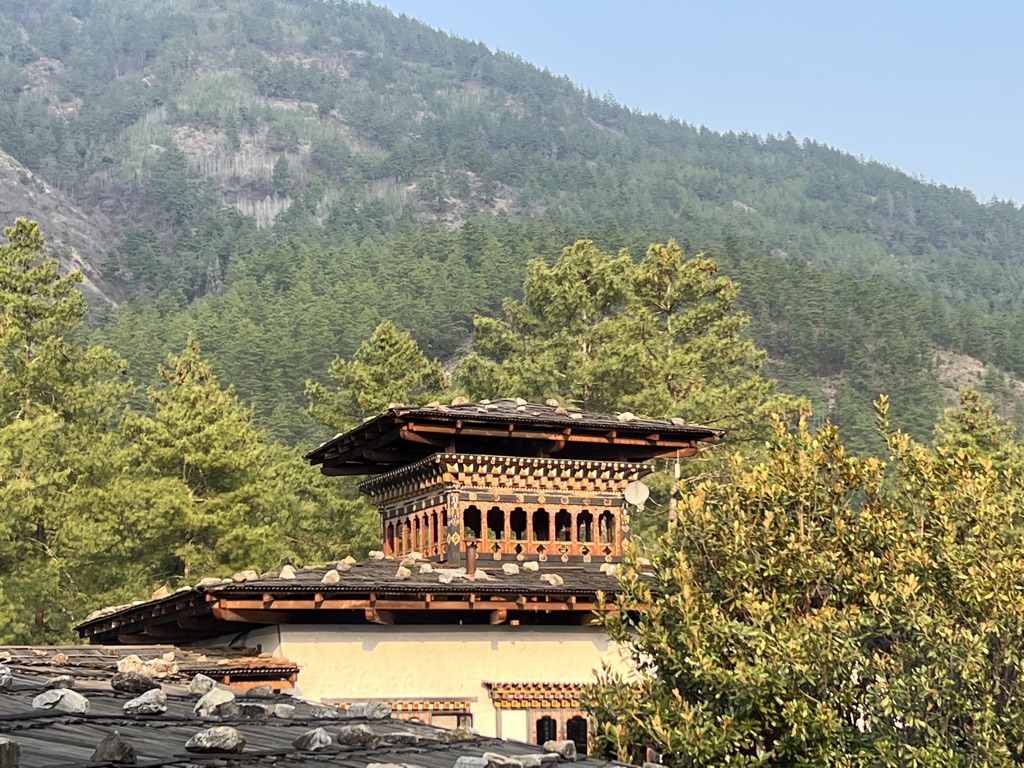
The lodge sits in the middle of a pine forest and is built in the traditional Bhutanese style of wood, stone and tiles. Windows are elaborate and painted with buddhist motifs and in traditional colours. The rooms are contemporary and ours had a stunning view of the valley and mountains beyond.

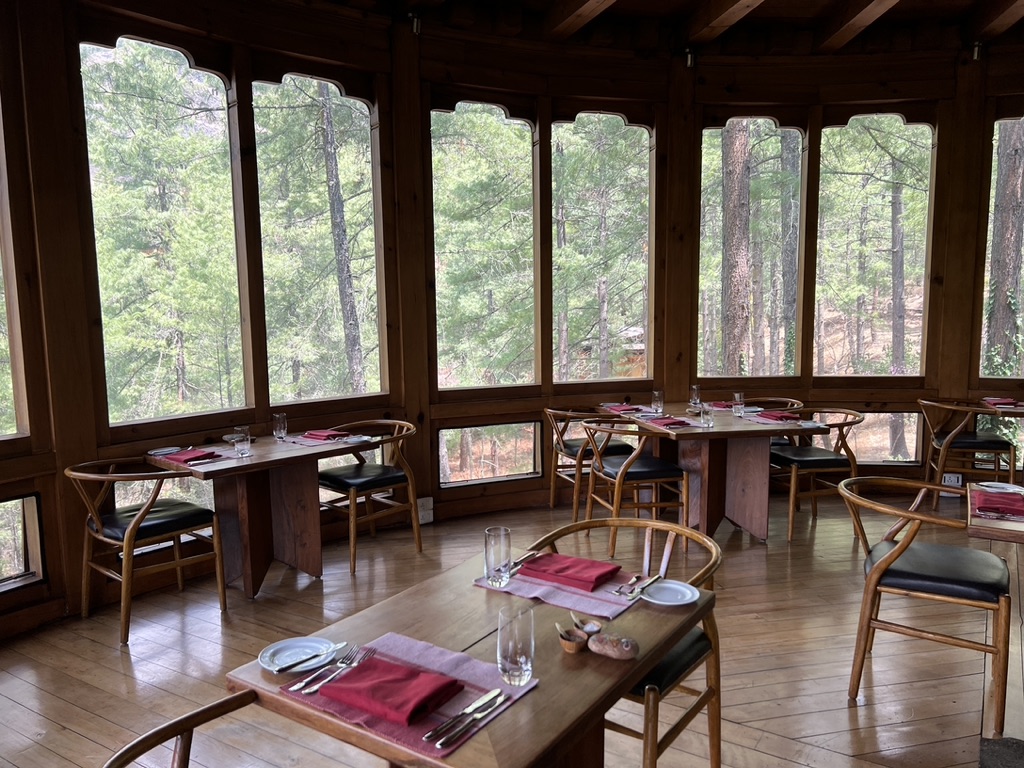
We had heard about the restaurant where we could have Bhutanese food or western style meals. We were not disappointed. It was sensational and sitting in the light filled room perched above the trees, we felt as though we were at one with nature. Apparently the King often calls in for lunch, quite unobtrusively, and sits amongst the guests many of whom would have no idea who he is. Unfortunately it didn’t happen during our visit but I was willing the gods who obviously took no notice!

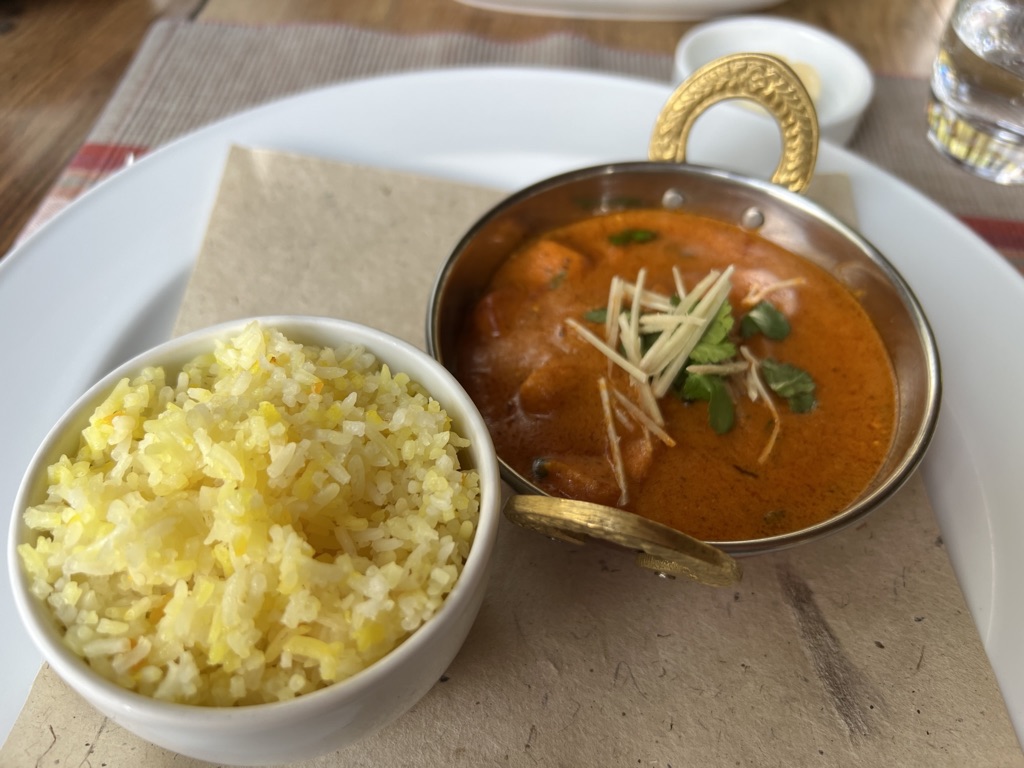
My favourite lunch was Paneer cheese in a delicious home made tomato herb sauce with local rice.

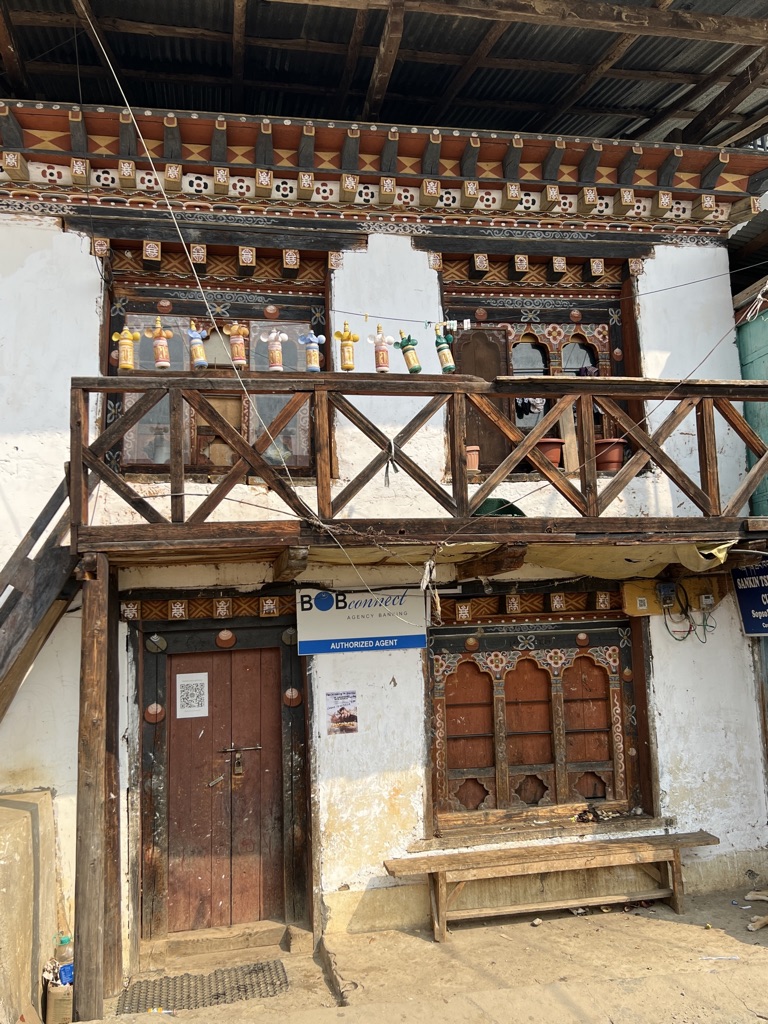
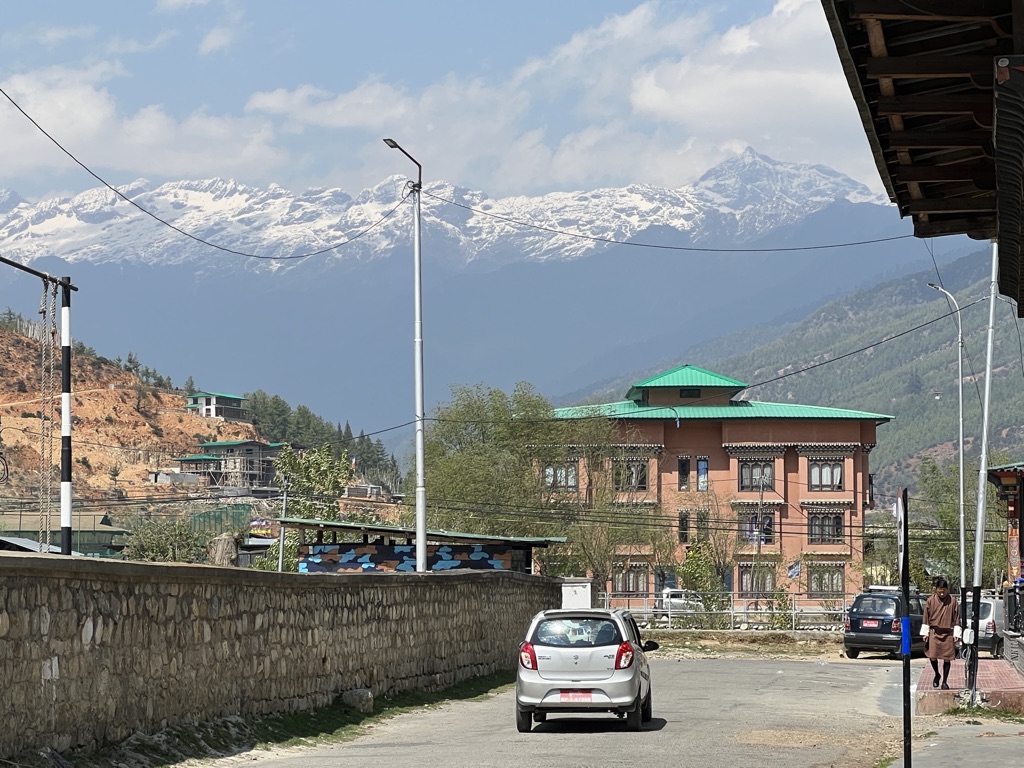
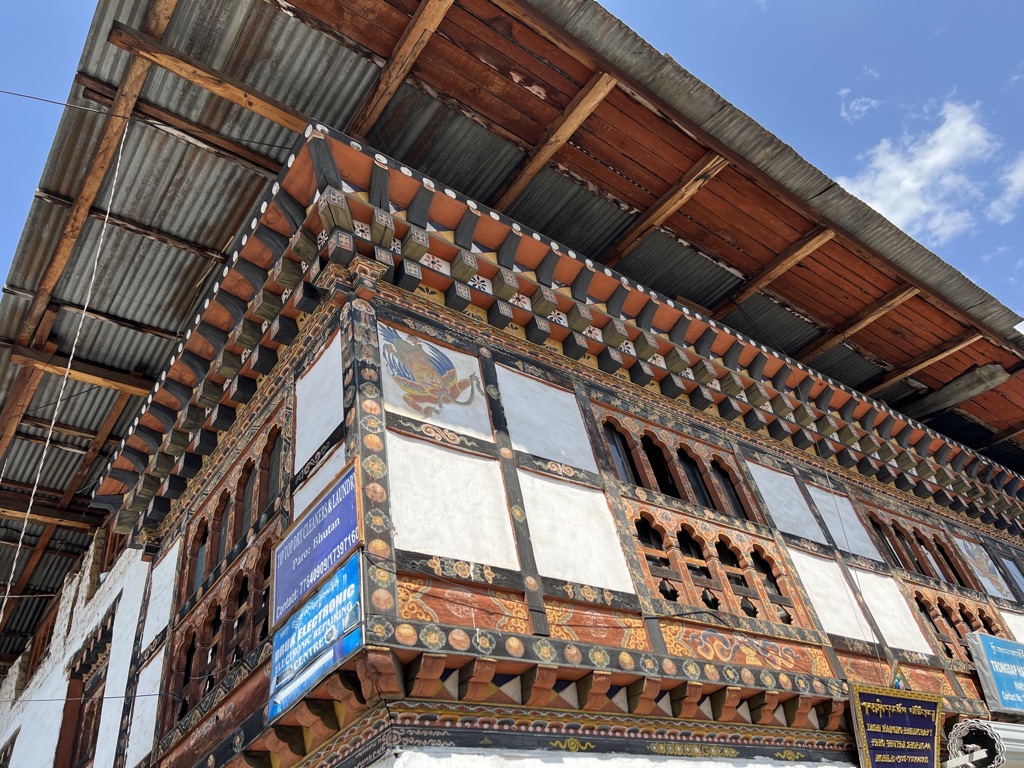
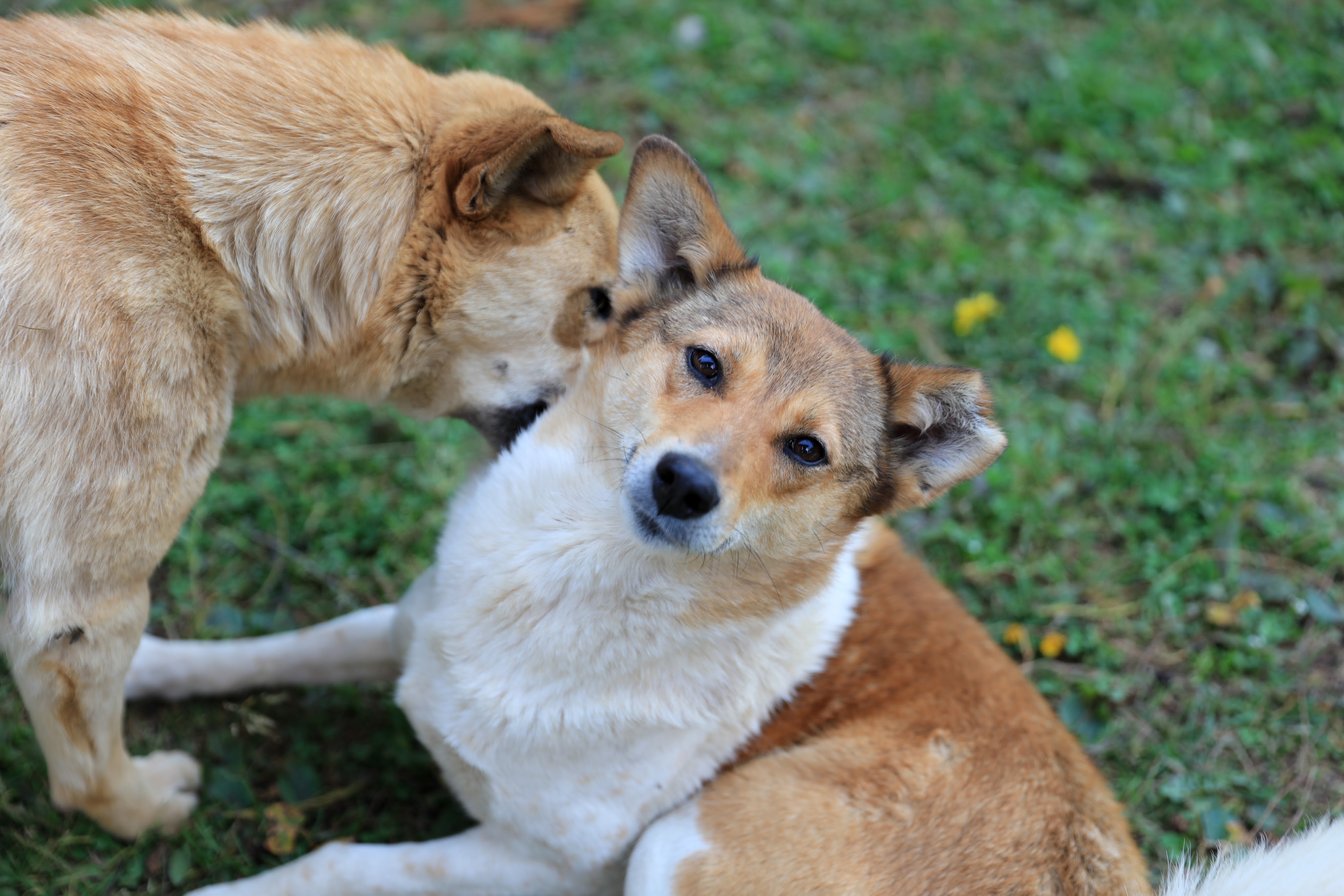
Adjusting to the altitude could be a problem for some. We were at 2,200 metres and at times I felt a shortness of breath. With this in mind Sonam and Chencho suggested we do a short walking tour of Paro town to familiarise ourselves. Here we found that buildings can be built no higher than 6 storeys and must be in the traditional style including wood carvings and paintings. This means the town has a very charming feel. There is little traffic and it seems as if life is in the slow lane. The streets are uneven and potholed, there are no crowds and the footpaths were broken in places. This does not deter from the overall impression one gets. Dogs are everywhere and are revered. They are well fed and mostly strays but everyone respects them and we found that even if one was lying in the middle of the road, the cars would go around rather than move it!

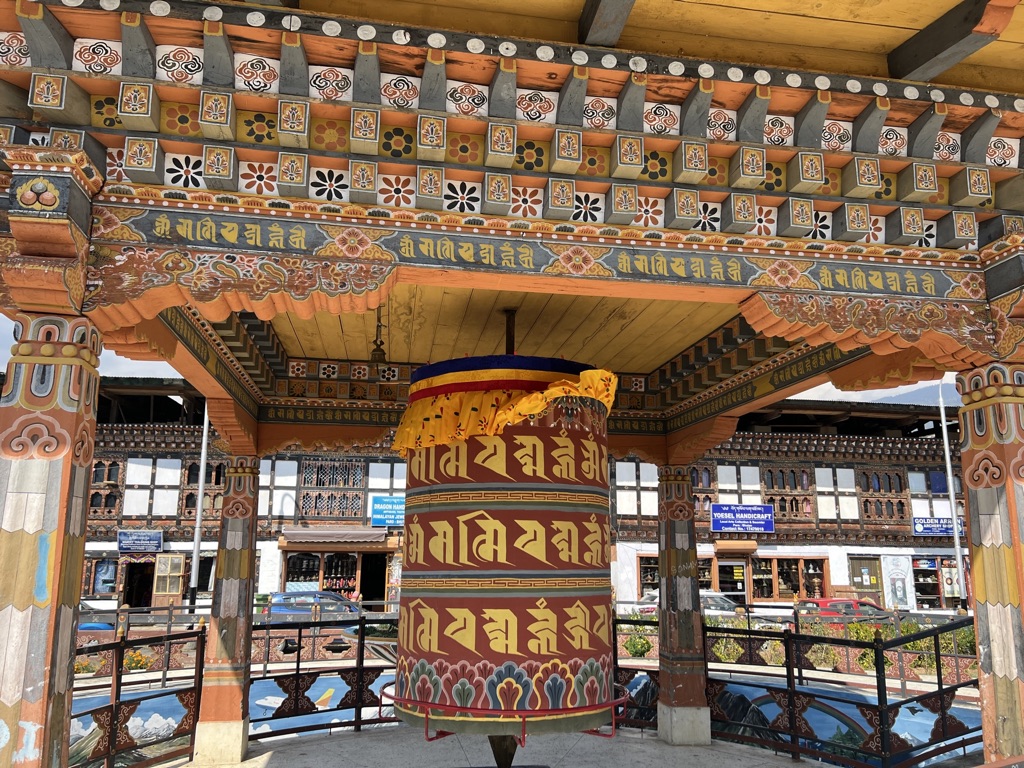
A huge prayer wheel sits in a shrine in the middle of Paro. This was the first of many we encountered during our stay in the country. Prayer wheels are a cylindrical wheel on a spindle made from metal, wood, stone or leather. These are beautifully embossed and contain a written prayer or mantra. Tibetan Buddhists use the prayer wheels to evoke good fortune and spirituality and may spin them several times a day or whenever they find one either in a temple, on the mountain side or in a small shrine in a village. The mantra is often “Om mani padme hung ” which one recites as the wheel is spun. It doesn’t take long to copy the locals and I quickly felt a sense of calm after spinning the wheel and murmuring the mantra.

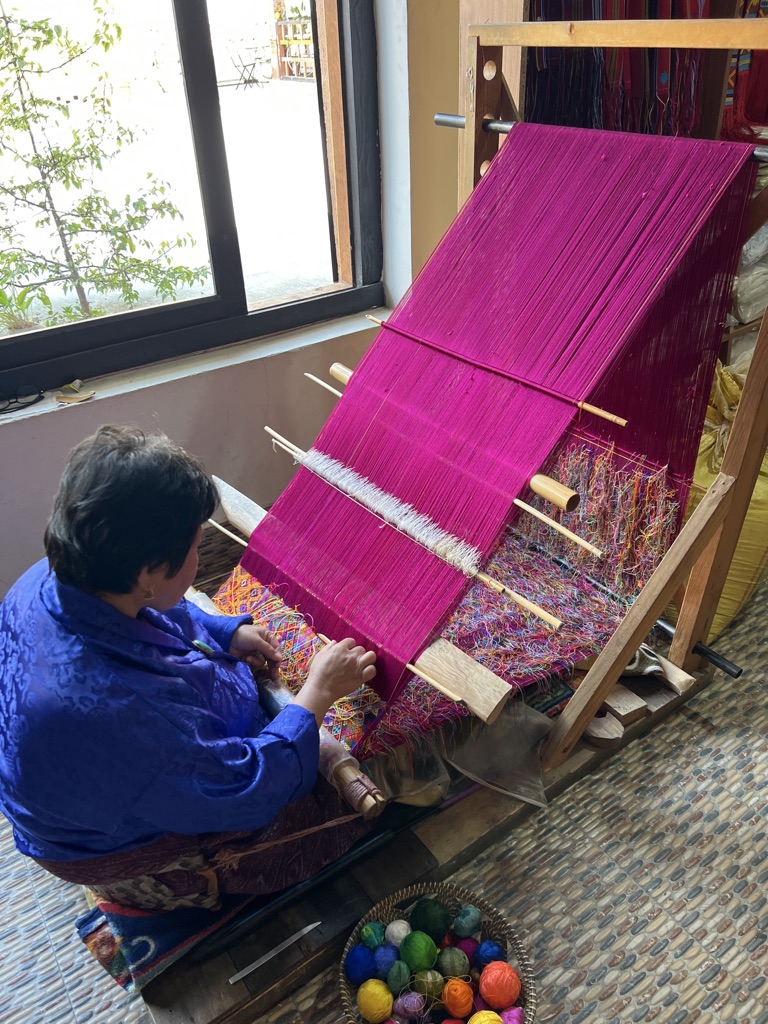
We strolled through the town, in and out of various shops selling all manner of things including art and souvenirs. Weaving is a traditional art in Bhutan so Sonam took us to a small shop where a weaver was at work creating an incredibly intricate design. Watching her handling a myriad of threads in various colours was fascinating – how she managed to keep a pattern going was obviously after a lifetime of working at the loom, probably from childhood.

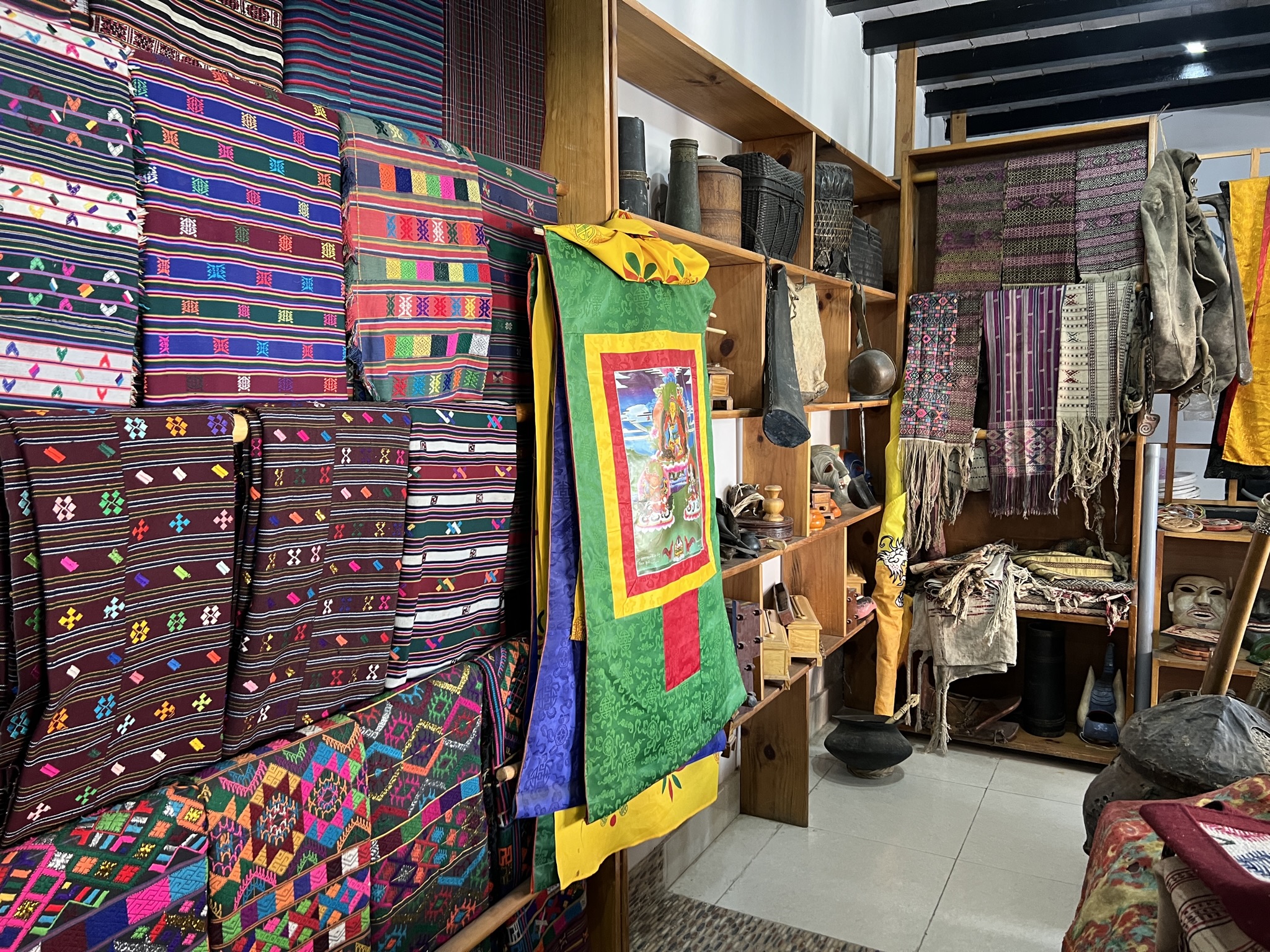
The shop was filled with the finished garments, jackets, scarves, lengths of fabric to make the kira (the female dress).

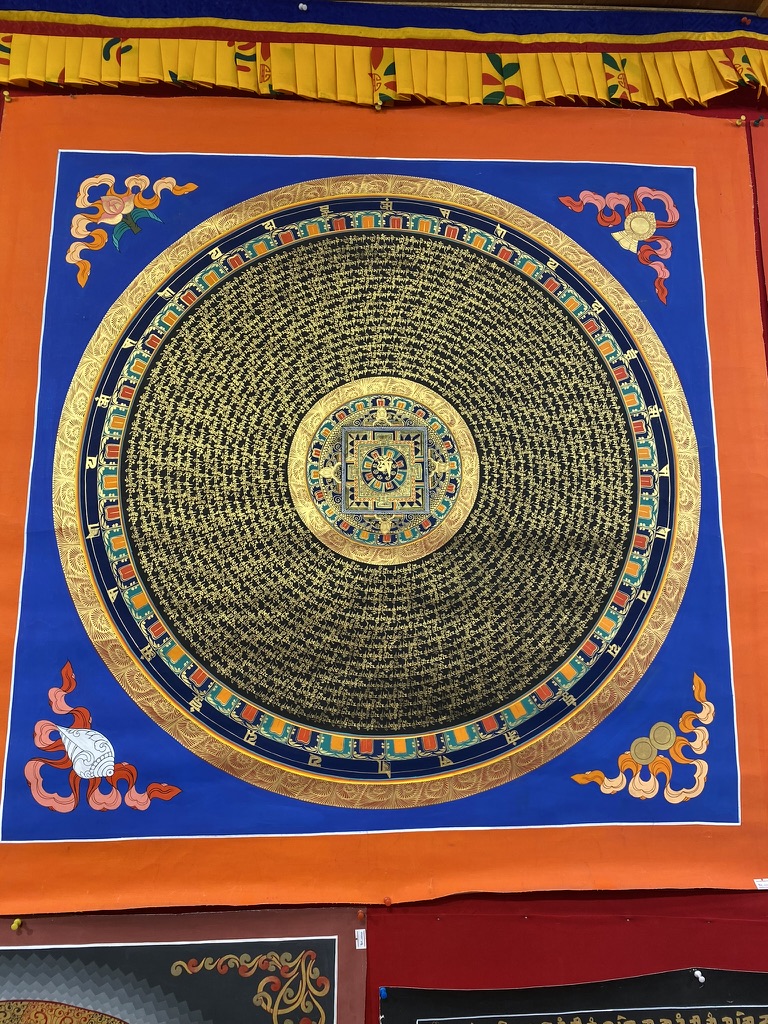
Then we went into a gallery where I was blown away by the beautiful and very intricate paintings depicting various gods and mantras.