
DAY TWO – DISCOVERING MORE

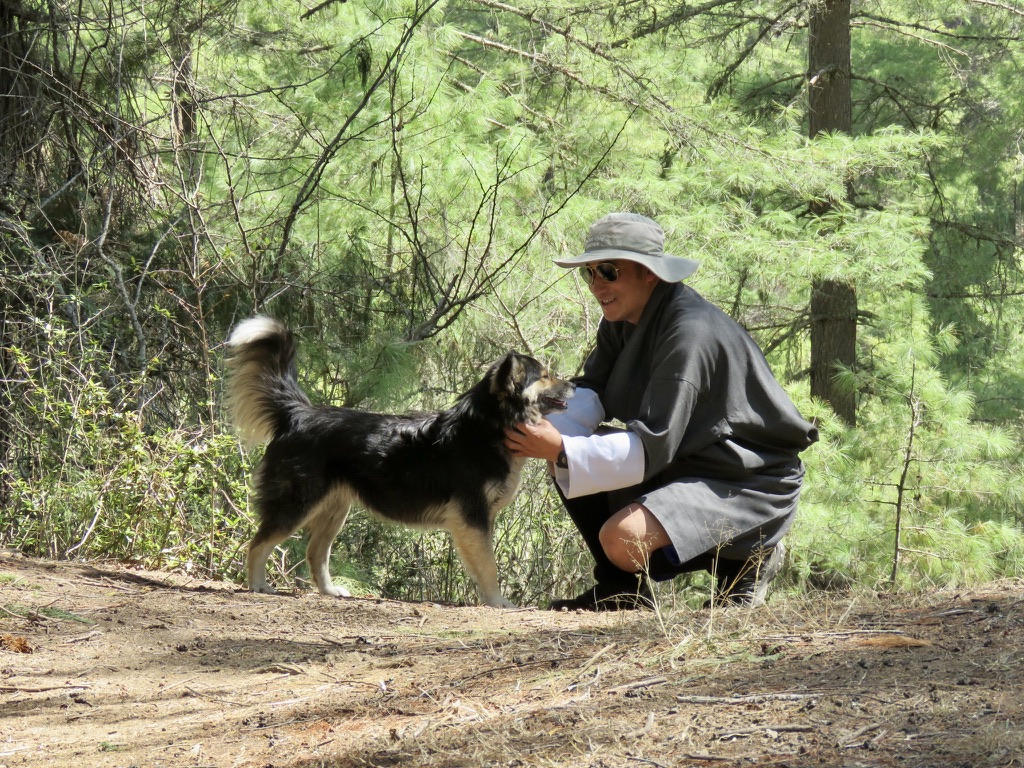
“We are going on a little hike today” announced Sonam, our guide. To say I was slightly apprehensive would be an understatement. I had heard about “hikes” in Bhutan and slogging up and down forest hills was not exactly my idea of fun. However, there was to be no discussion so off we set from the Hotel winding through the pine forests to the pretty grounds of the fortress like monastery of Zung Dzong. A little dog befriended us and showed us the way, darting off periodically to find the odd critter in the grass. The views were spectacular and as we climbed higher the whole of the town of Paro spread out before us and the snow capped Himalayas sparkled beyond.


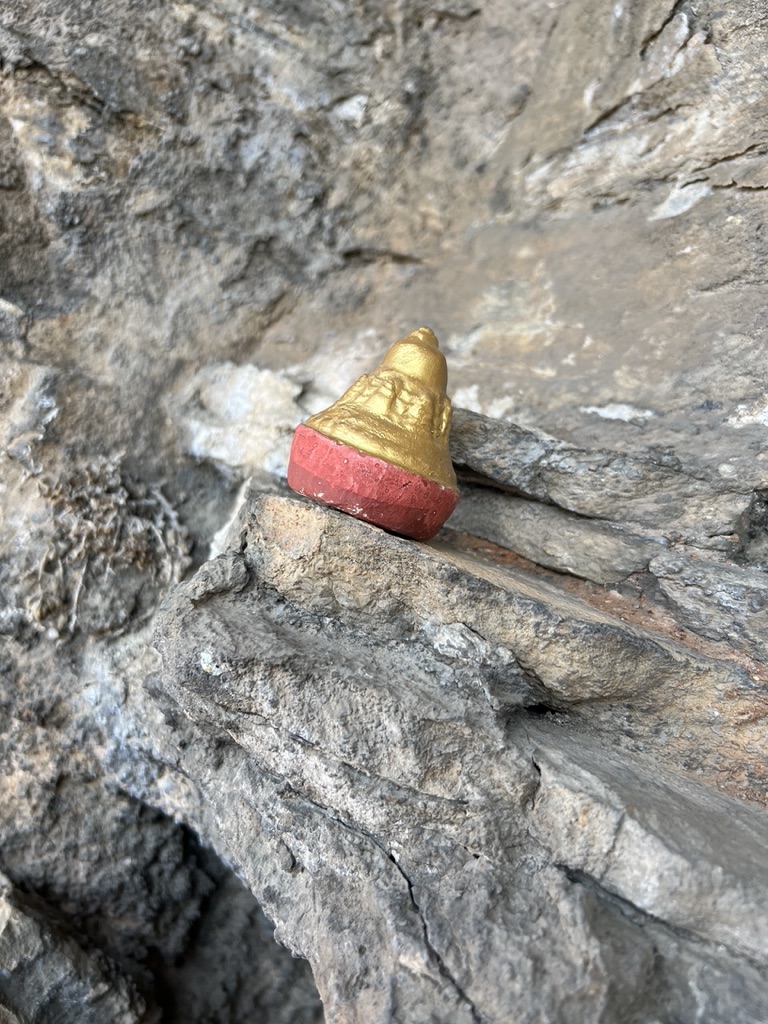
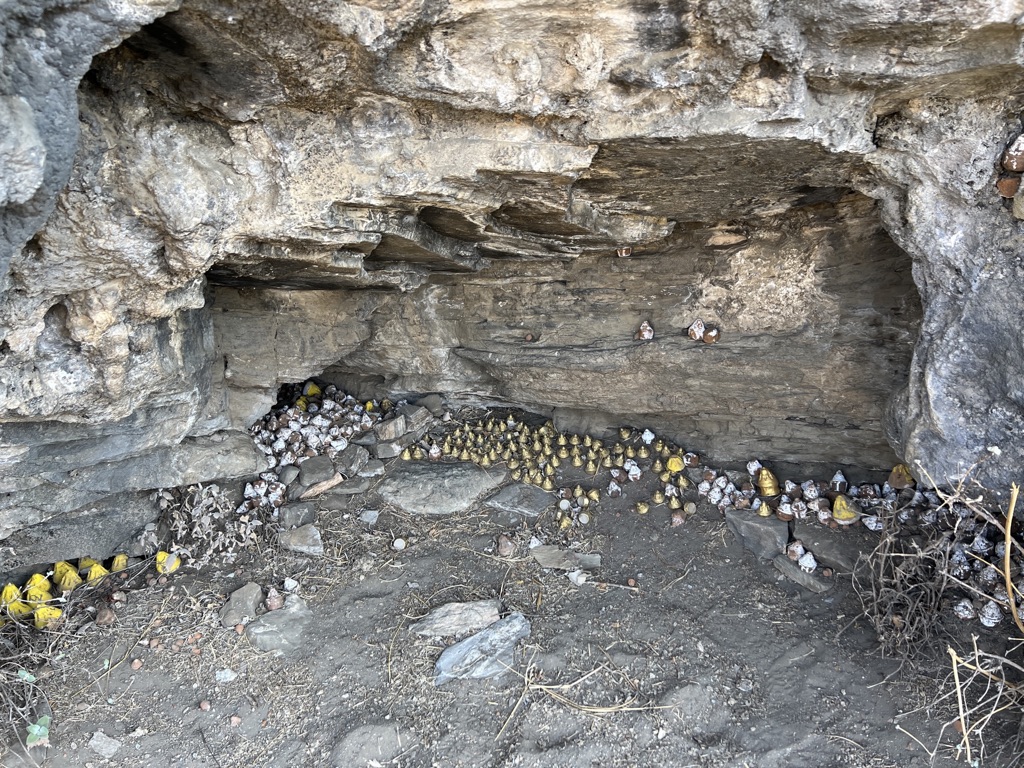
Sonam told us stories of various spiritual beliefs and traditions particularly in the mountains and we came across a little cave with a lot of cone like objects casually placed inside. These are Tsa Tsas and are commonly found in the hillsides in places sheltered from the elements. They are made by monks commissioned by bereaved families and are an expression of farewell – a memorial if you like. Inside there are often printed mantras. The cones are around 3 inches tall and are made of ash collected from the funeral pyre. Sometimes they are painted gold or red but often are just left white. I found this quite a moving tribute.
At the top of the hill we came across the monastery which was closed and is not used at the moment, however there is a monk who looks after the property. Feeling somewhat out of breath and tired from the hike, I was thrilled to find Chencho, our driver, appear with a couple of bottles of ice cold home made watermelon juice. That was so welcome! He had driven to another point at the bottom of the hill, ran up to meet us and give us refreshments and then joined us in walking down again. The little dog was still with us and gave him a welcome almost as good as we did!


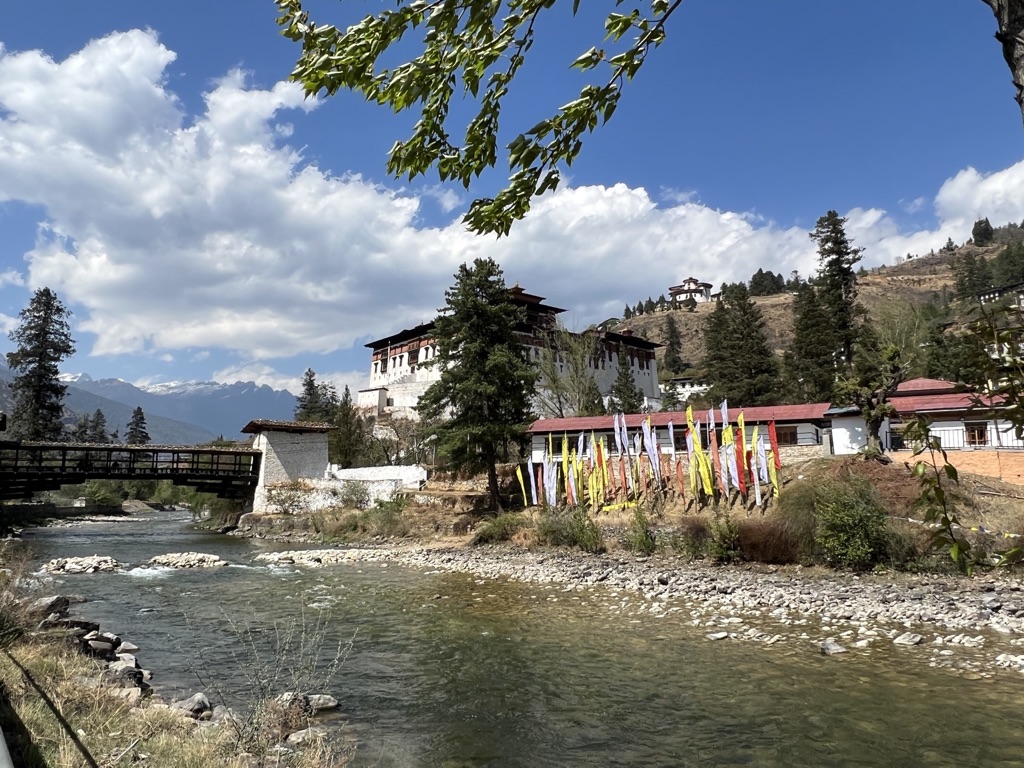
Along the way colourful prayer flags fluttered in the breeze. These are hoisted for happiness, long life, prosperity, luck and merit and to offer karmic merit to all beings. Sonam told us that the benefit of prayer flags is to guide the souls of the dead from the netherworld. I rather like that belief. We saw them everywhere we went in Bhutan, in the towns, villages and on the hills. When we were leaving Sonam presented me with a roll which is a wonderful memory of our visit.
The hike had not finished – we walked across the hills to Ta Dzong which is the home of Bhutan’s National Museum. This conch shaped fortress was built in 1649 and the aim was to protect the population against assaults from Tibet and India. Sonam told us it was built entirely of stone and wood and no nails were used in the construction. It survived an earthquake in 1714 which apparently rumbled for 15 days and was converted into a museum in the 17th century.

We climbed down to the bottom of the building via a staircase which encircled the building. It was easy to see how it was a prison in those days with small cells and dungeons at the base – now filled with artifacts and so much history.
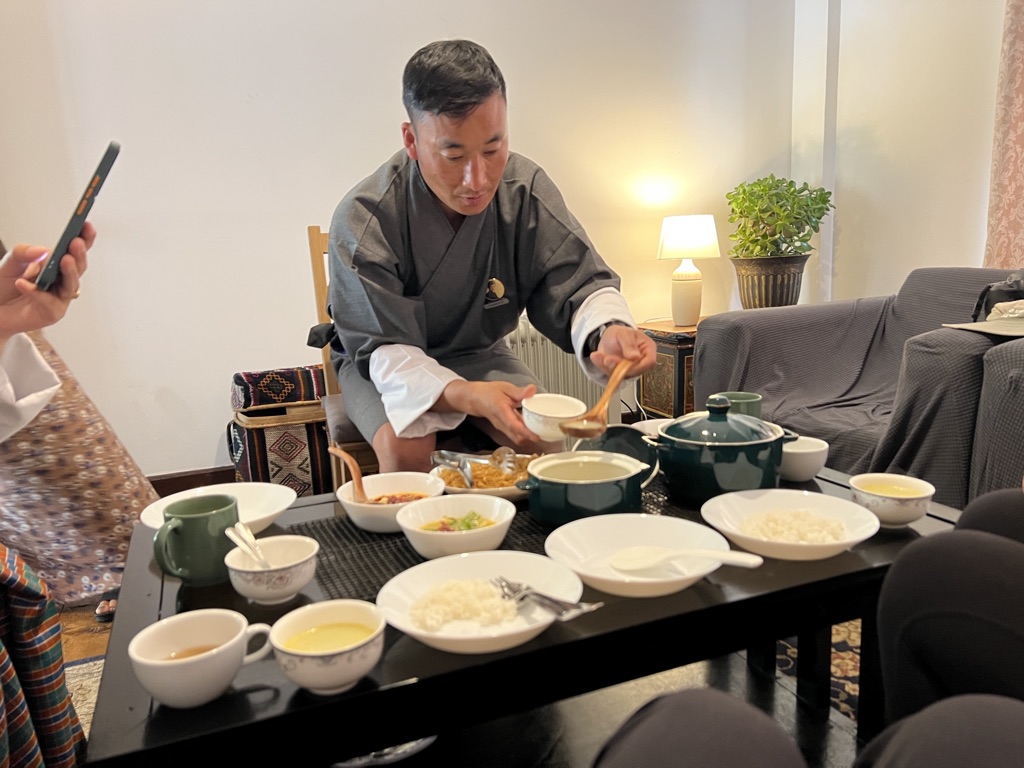
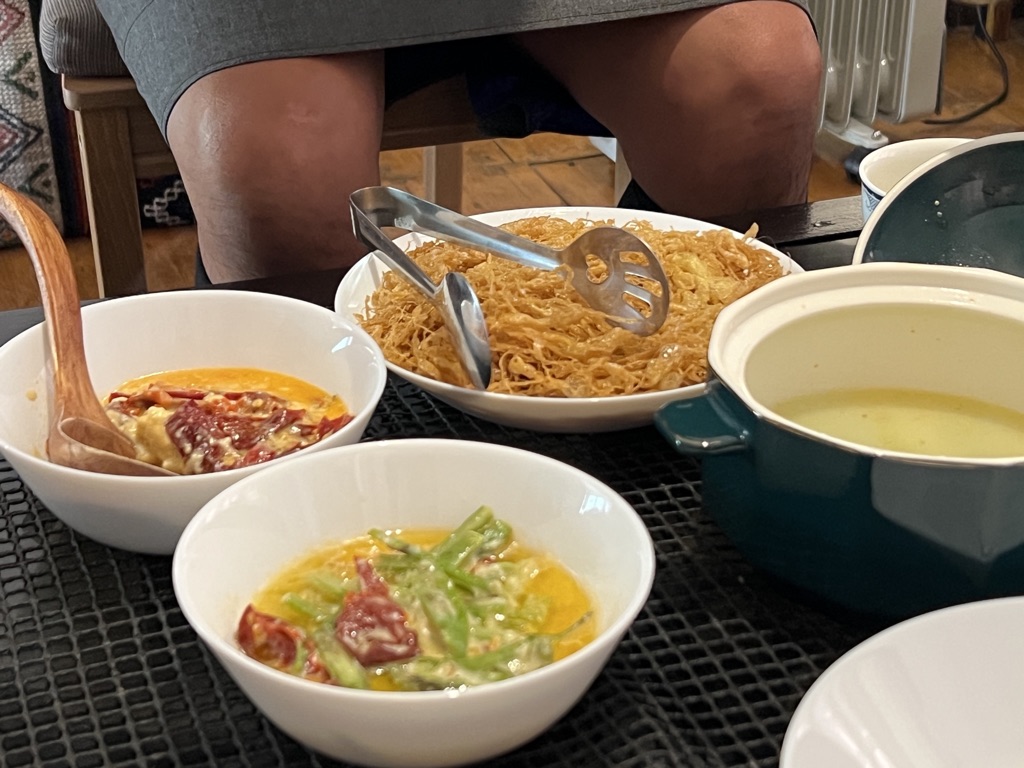
It was time for a break so we drove into Paro town for a traditional Bhutanese lunch. This was in a small restaurant in a group of shops and was owned by friends of Chencho. We were ushered into a private room at the back and sat around a rectangular table. The food was then brought in steaming hot and in bowls of various sizes. Curries, potatoes, vegetables and rice plus a delicious soup full of ginger were on offer. The most popular dish is chilli cheese made from locally produced cheese – usually from yaks – and fiery locally grown chillies. I had to pass up on that one!
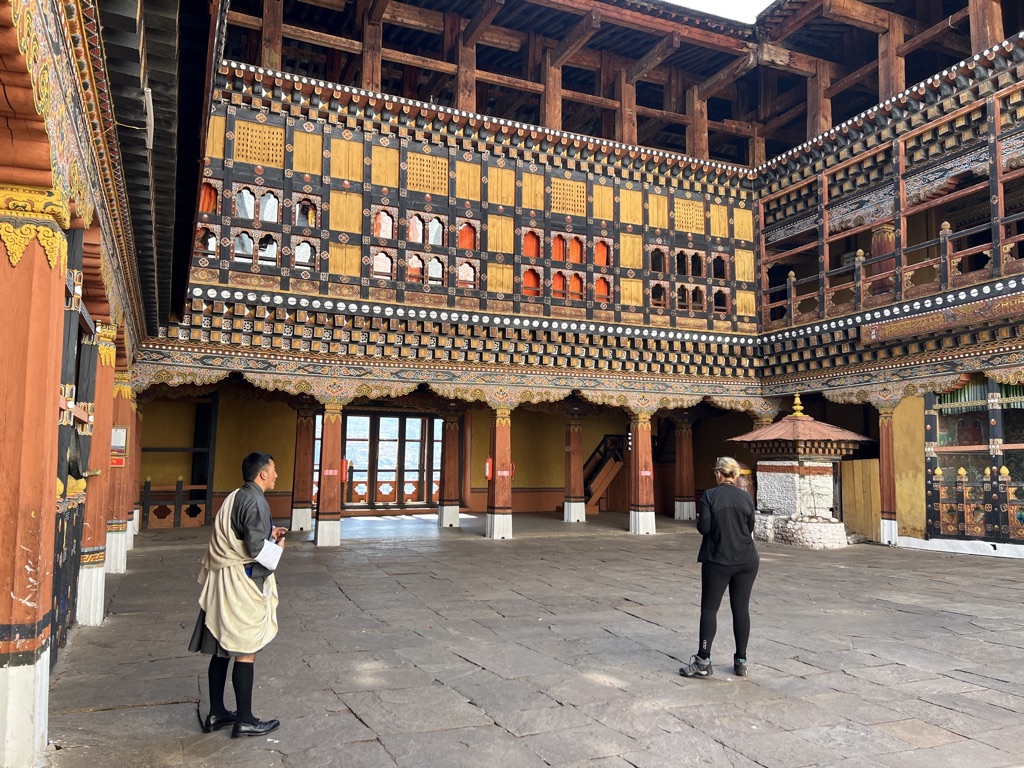
Our next visit was to Rinpung Dzong – or Paro Dzong. During the 17th and 18th century, Paro Dzong was an important bastion for the Kingdom of Bhutan against invasion from the north. At present, it houses the monastic body and government offices, and serves as the religious, military, administrative, and social centers of their district. Located on the Paro Chuu river we had to cross a covered bridge and then walked up a steep path passing monks and houses along the way.

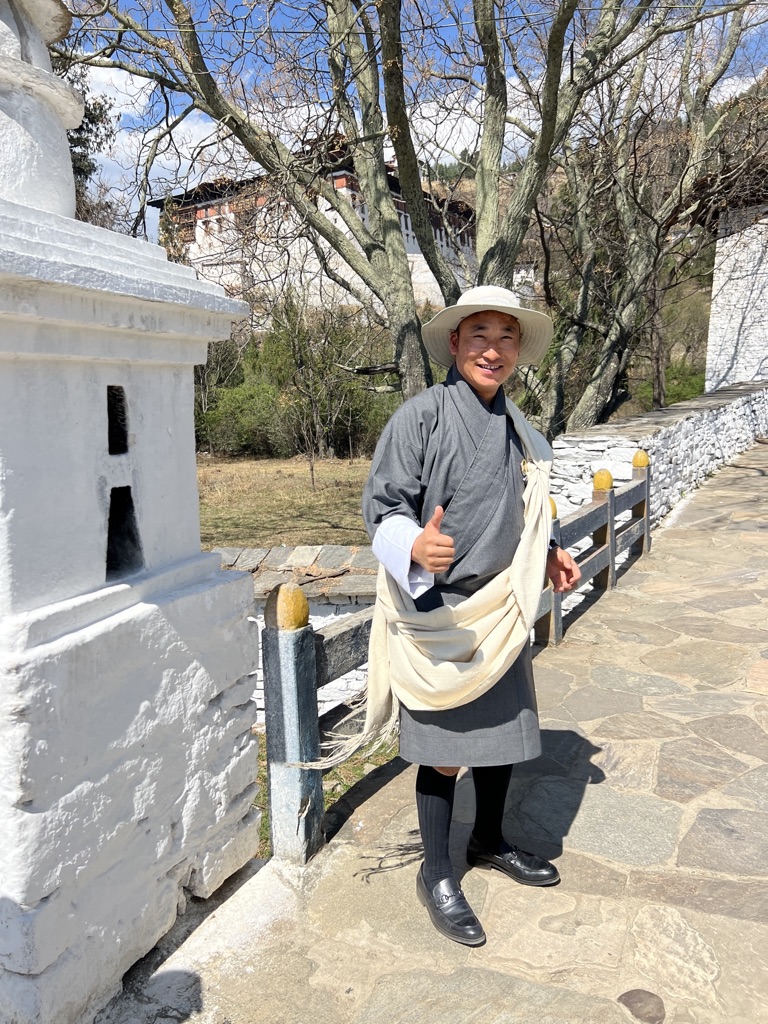

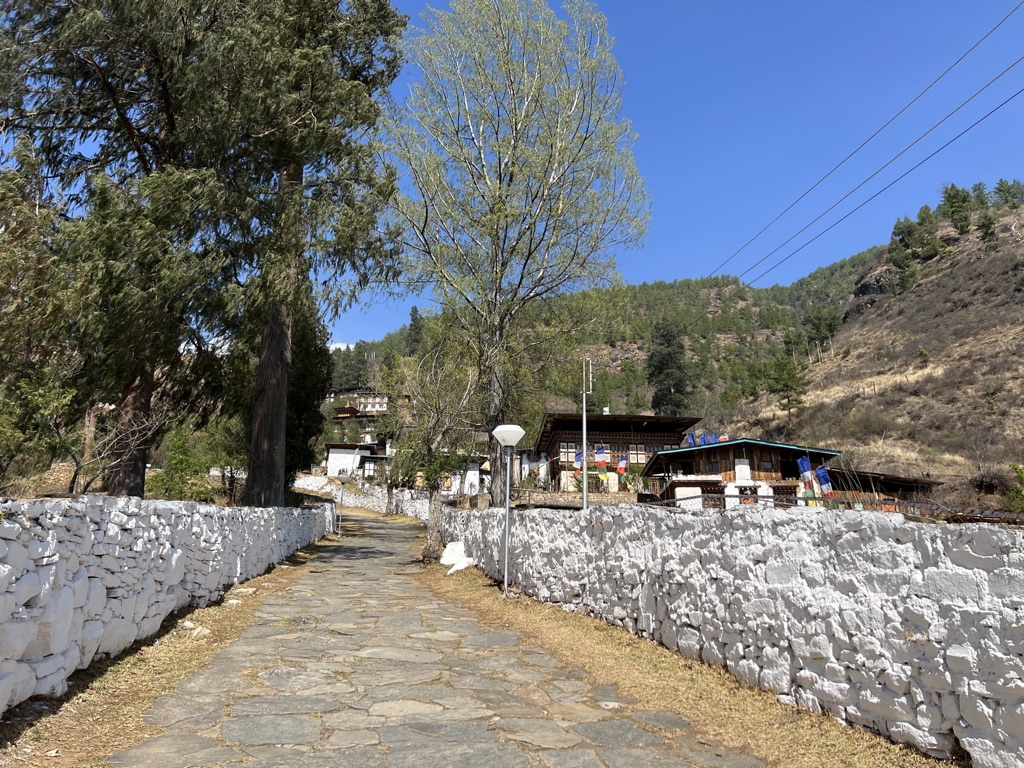

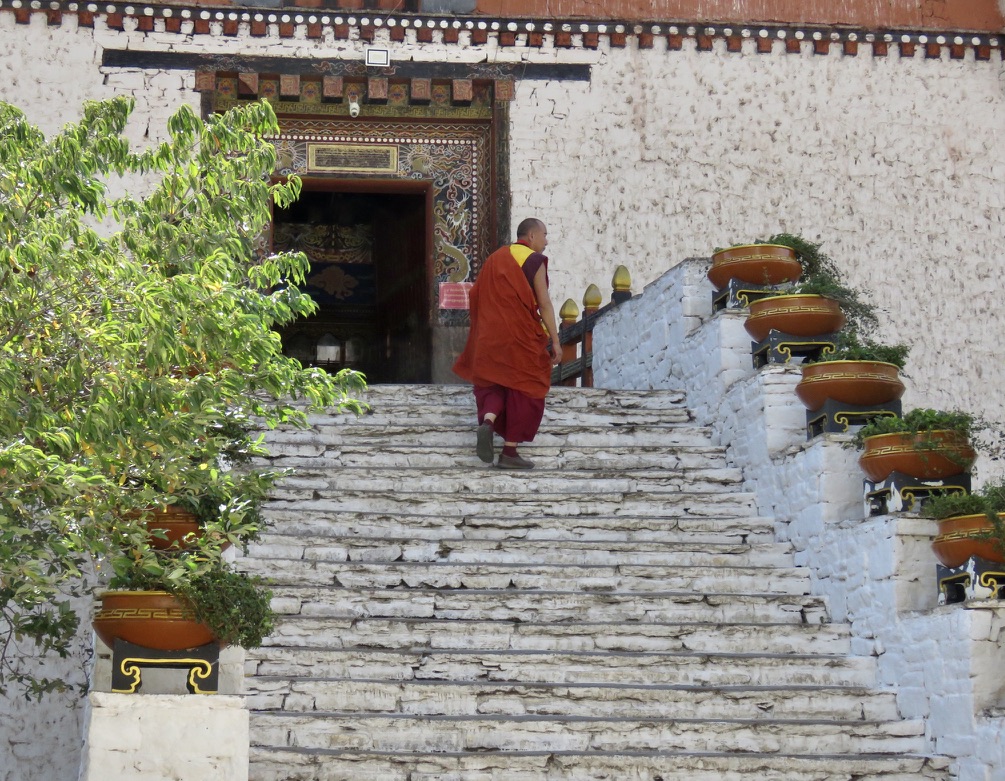
We walked around the intricate buildings and gazed at the view of the town from up on high. There was a sense of calm everywhere and there was no noise at all except the faint murmur of monks chanting within the walls. This Dzong was the location for the filming of the movie “Little Buddha” in 1993 by Bernard Bertolucci and is the scene of many festivals and masked dances.


Our final visit was to the beautiful Kyichu Lhakhang temple which is a short drive a few kilometres north of Paro. This is said to be the oldest temple in Bhutan built in the 7th century. It is charming and is known for its orange tree which bears fruit all year round. We stepped inside and found the usual offerings around the Buddha images but what amused us was a little girl who was visiting with her family and was intent on taking the chocolate biscuits off the altar. When told she couldn’t she had a meltdown and the monk finally caved in! It turned out the family was well known and the father was a famous film celebrity. What surprised me was that they were all speaking in perfect English!
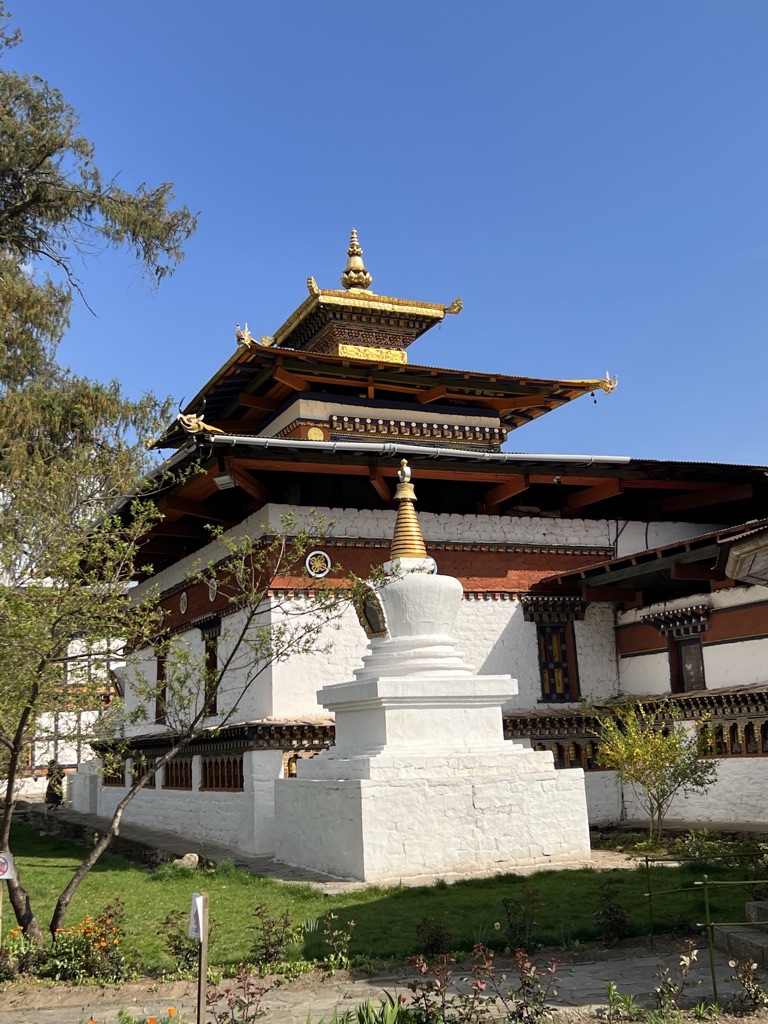
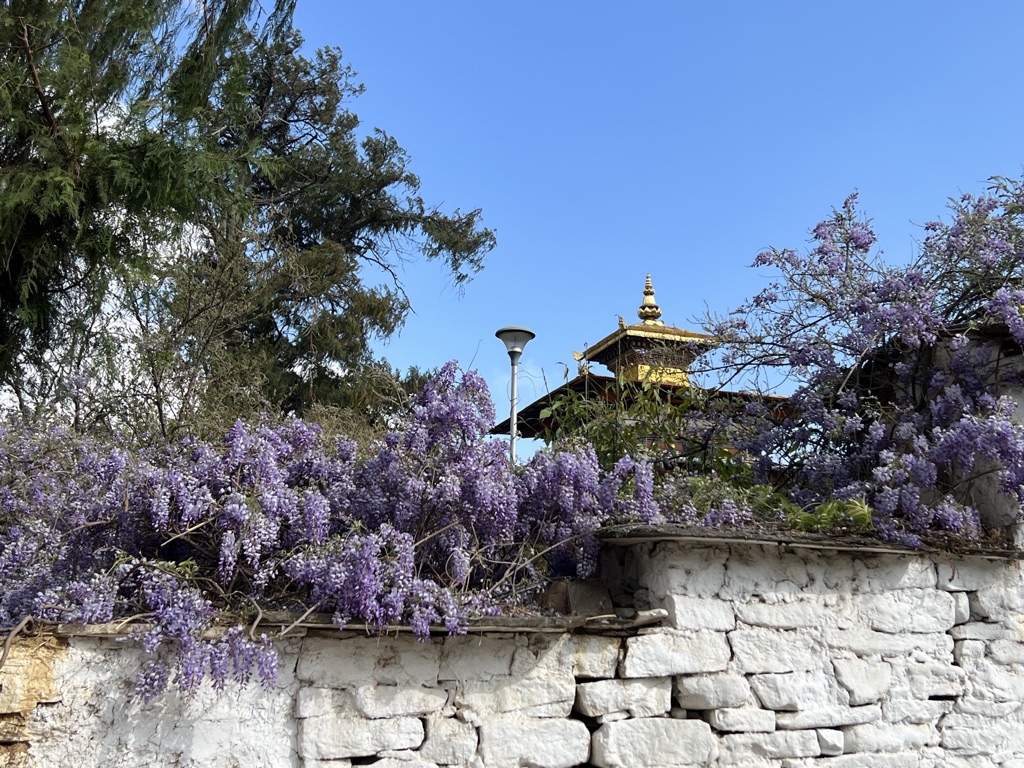

Here the cloisters are a contemplative place with prayer wheels and fruit trees. There are also butter lamps flickering in the dimness of the temple. We were invited to make a butter lamp offering which we did in memory of a loved one. This light offering is closely linked to transitional phases in life and is a strong belief in Tibetan Buddhism. For us it was a lovely way to end a very inspirational day.


 IT'S ABOUT THE JOURNEY...........